
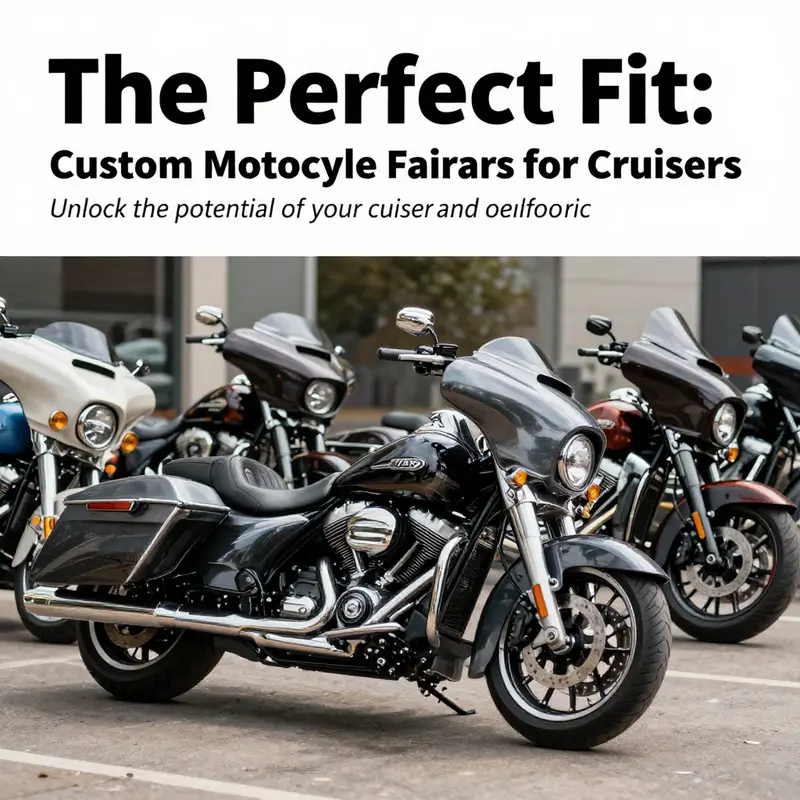
The art of customizing motorcycles transcends mere aesthetics; it touches on enhanced performance and rider experience. For cruiser motorcycle enthusiasts and business owners alike, selecting the right custom fairing is pivotal. This guide delves into essential considerations when choosing cruiser fairings, highlights the importance of high-quality materials, and ultimately illustrates how a well-designed fairing not only complements the motorcycle’s visual appeal but also enriches the overall riding experience. Each chapter unpacks a critical aspect of custom fairings, ensuring you have the knowledge needed to make informed decisions for your business and customers.
贴合与风阻的抉择:在巡航摩托定制整流罩时的综合考量
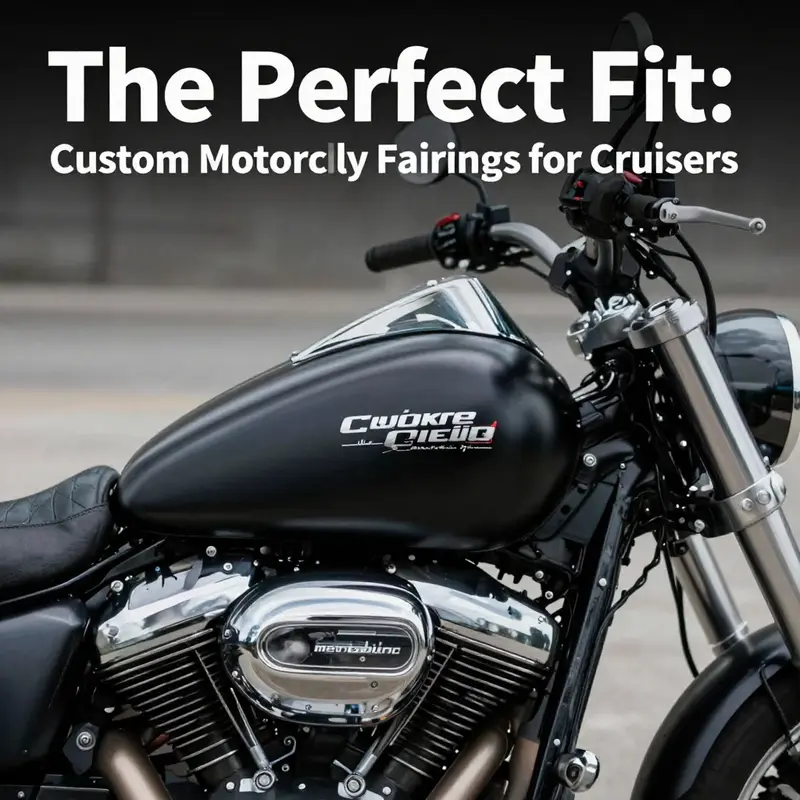
在巡航摩托的改装旅程中,整流罩往往不是一个简单的外观滤镜,而是一项涉及空气动力学、工艺水平与个性表达的系统性选择。
巡航车身的设计语言强调线条的缓和、眼前宽阔的坐姿以及低矮的轮廓。
将整流罩引入这套结构时,首先要问的是它能否与现有车架、油箱轮廓、仪表盘布局和前部部件实现真正的无缝对接,而非仅以视觉上“贴上去”为目标。正因如此,选择定制整流罩时,需要在功能性、安全性、适配性和个人风格之间找到一个稳健的平衡点。只有当这些维度协同运作,整流罩才能真正成为提升骑行体验与外观气质的关键部件,而不是带来额外麻烦的配件。
null
null
Shaping the Road: How Custom Fairings Elevate the Cruiser Riding Experience
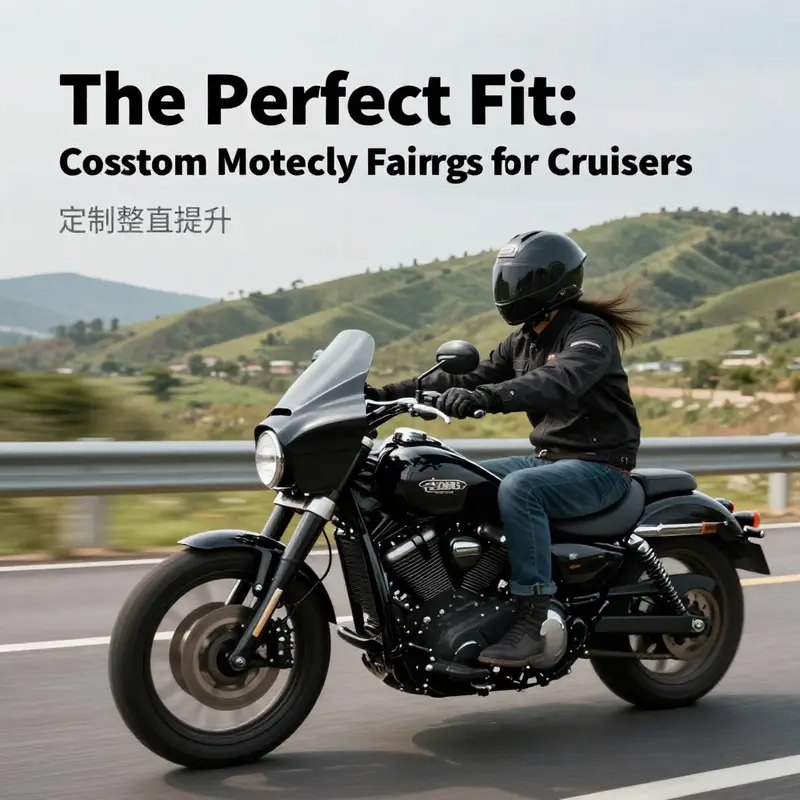
Cruiser riders have long valued a certain lineage of presence on the road—a posture that blends relaxed dominance with aerodynamic restraint. The stock look often emphasizes a timeless silhouette: low, elongated lines, a wide stance, and a practical, rider-first cockpit. Yet in the real world of long-distance riding, the gap between the bike’s inherent design and a rider’s comfort, control, and personal expression can widen quickly once the road stretches out. Custom fairings for cruisers are more than cosmetic upgrades; they are carefully engineered responses to specific cruising geometries. They act as both exterior armor and sophisticated flow modifiers, shaping air streams to reduce turbulence, protect the rider from wind fatigue, and bring the bike’s appearance into sharper alignment with the owner’s riding identity. The bookends of this shift are form and function working in concert. A well-made, properly fitted fairing does not merely look fast; it creates a sense of speed by smoothing the path that air must travel around the bike and rider. The result is a riding experience that feels more composed, more efficient, and more personal than before.
The cruiser’s distinctive architecture—low-slung frames, foot-forward controls, broad handlebars, and often limited natural ground clearance—presents unique challenges when adopting generic, off-the-shelf fairings. The bespoke or semi-custom route becomes more appealing when a rider wants a fairing that respects floorboard geometry, avoids interference with the ignition and instrument cluster, and still preserves the bike’s iconic lines. Typical universal fairings may require extensive trimming, elongation of mounting points, or even radical re-routing of cables and hoses. The more advanced routes, such as ZXMT-style fairings noted in industry practice, may entail precision-mounted brackets, custom filler panels, and targeted reshaping to ensure alignment and stability at highway speeds. In other words, the journey from a stock cruiser to a tailored fairing is a conversation between geometry and physics, aesthetics and endurance, and, importantly, between rider preference and bike capability.
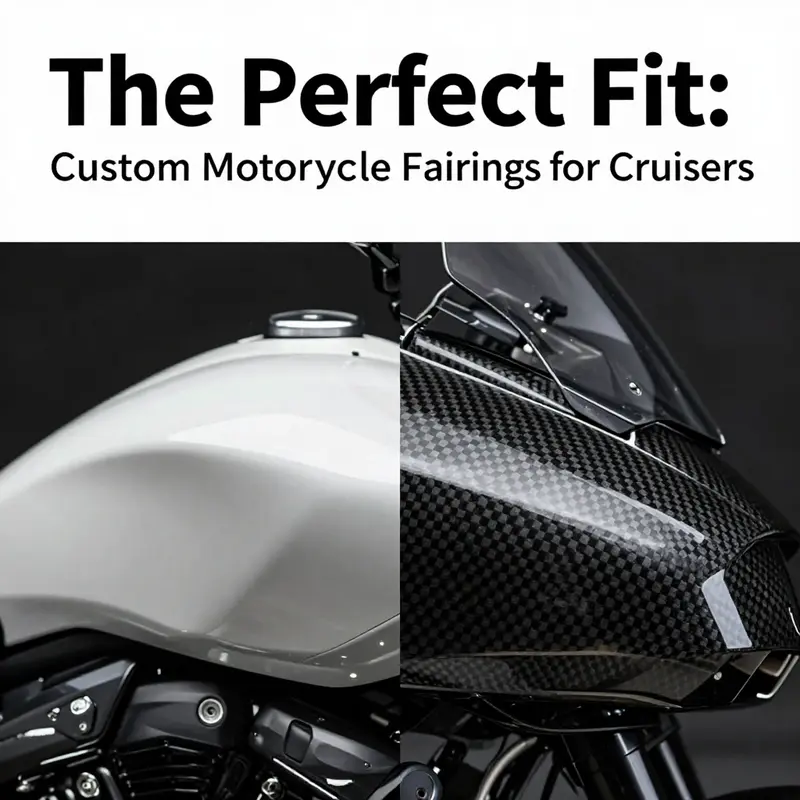
Material choice is central to this conversation. When the goal is to balance lightweight performance with high impact resistance, composite materials emerge as a clear winner. The practical truth is that cruisers benefit most from fairings crafted from high-quality fiberglass or carbon fiber composites. Fiberglass provides excellent tuning for complex curves, relatively forgiving cost, and workable repairability if a panel takes a hit on a backroad or during a fall. Carbon fiber, though pricier, offers superior stiffness-to-weight and exceptional impact resistance, contributing to a crisper ride feel and a more confident front-end stance at speed. Thermoplastics and sheet metal have their places, particularly in budget builds or restoration projects, but for the rider who wants the best balance of rigidity and lightness, composites are the most compelling option. The stability of a fairing under wind pressure is not only about weight, but about the way the chosen material interacts with the bonding system, with surface finish, and with the mounting hardware that anchors the piece to the bike. For cruisers, where torsional stiffness at the fairing-mount junction matters as much as the fairing’s own stiffness, investment in a carefully chosen composite solution becomes a practical imperative.
Beyond materials, the fitment and integration story matters just as much as the aesthetic. A custom fairing should harmonize with the handlebar geometry, the fuel tank’s curvature, and the rearward sweep of the front fender. The rider’s line of sight matters too; visibility to the instrument cluster and the rider’s hands must be preserved. The mounting points on cruisers are often designed for a certain tolerance and vibration profile; a fairing that ignores these realities can become a source of unwanted rattles, misalignment, or even mounting failure at high speeds. In practice, this means the best custom fairings are not merely bolt-on add-ons; they are designed with a bike’s existing architecture in mind. Some premium solutions incorporate a modular approach: a main shell that anchors securely to a defined set of brackets, plus auxiliary panels that can be trimmed or extended to accommodate various fuel-tiller shapes or dash configurations. The goal is a seamless interface where the fairing and the bike’s core systems—fuel delivery, ignition, electrical harness, and instrument cluster—interlock without forcing compromises elsewhere in the chassis.
From an ergonomic perspective, the impact of a properly engineered fairing is often most noticeable in wind management. The typical cruiser rider sits in a more relaxed, slightly upright angle, with long-range comfort depending on how air is channeled past the rider’s shoulders, neck, and helmet. A tailored fairing can redirect air to glide around the rider’s sides rather than slam into the chest and helm, softening the wind’s buffet and reducing the repetitive fatigue that accumulates on long slabs of highway. The design nuance here is not simply about blocking wind; it is about guiding it so that pressure fields form a gentle, predictable boundary layer that the rider can read and adapt to without muscular strain. In many cases, the most noticeable improvement comes from a combination of a lower frontal area and an intelligently contoured windshield or windscreen that aligns with the rider’s seated height. The resulting effect is not just less wind noise or a quieter helmet; it is a calmer torso, a relaxed neck, and a head-up posture that remains sustainable after hours on the road.
The aesthetic payoff is not incidental. Cruisers carry a strong emphasis on personal expression, and the fairing is a highly legible canvas for that expression. The right combination of color, texture, and line work can unify the bike’s overall silhouette, making the front end feel like an extension of the fuel tank and side panels rather than a separate, contrasting shell. Material choices can echo the bike’s branding language: a high-gloss carbon fiber weave with chrome accents, or a matte, textured composite with subtle metallic inlays to catch light at certain angles. The design language must respond to the bike’s existing cues—downturned headlamps, subtle rake, and the visual weight distribution of the engine—and then extend those cues into a cohesive front-end expression. For the rider who seeks a consistent visual story, this is where the fairing earns its keep, proving that form can indeed follow function without sacrificing personality.
In the realm of practicality, modern custom fairings increasingly embrace functional add-ons that enhance everyday riding. Some riders appreciate the potential to incorporate a built-in or integrated windscreen with adjustable height or angle, allowing quick adaptation to rider stature or load conditions. Others seek integrated or semi-integrated features such as a mirror mounting arrangement, which keeps original visibility while presenting a clean, uninterrupted surface. A growing subset of designs explores practical internal routing: channels that funnel rain away from key sensor housings, anti-splash geometry that reduces spray at the front wheel, and even dedicated compartments that protect electrical connectors from the elements. The integration philosophy extends beyond weather and weathering; it also touches on the rider’s convenience. Concealed compartments and exits for wiring can keep the cockpit tidy, while carefully placed access points ensure serviceability without requiring a disassembly of the main fairing during routine maintenance. When done well, these elements contribute to a sense of ease: a bike that feels engineered to respond to the rider’s needs rather than simply to look a certain way.
Assorted features that once belonged only to high-end prototypes are now finding real-world traction in cruiser applications. Among them are embedded camera mounts that position a small action camera in an optimal line of sight for record-keeping or scenic documentation. A wireless charging pocket for smartphones promises a clutter-free cockpit where cables do not intrude on grip or instrument readability. Ambient lighting and subtle edge lip lighting provide nighttime visibility and an enhanced stage presence, which can be especially appealing to riders who enjoy cruising after dusk. Equally important is the thoughtful approach to weather and rain management. A well-designed fairing channels rain away from critical interfaces, reducing the risk of moisture ingress into switches or gauges and keeping the rider’s grip and arms dry during a sudden shower. The engineering logic here is straightforward: when riders stay comfortable and their controls stay dry, their focus remains on the road, not on the next leak or the next wet patch on the dash.
The data from the field and research conversations consistently underline a practical truth: a quality, properly fitted custom fairing can make the cruiser more than a monument of style; it can be a tool that sharpens performance and improves rider endurance. In controlled tests conducted by industry bodies, optimized fairings have demonstrated meaningful reductions in aerodynamic drag, as well as measurable improvements in subjective comfort. The perception of performance matters as much as the numerical values, because the rider translates those changes into smoother throttle management, steadier steering input, and lower fatigue across a day of riding. The rider’s feedback—less wind buffeting, quieter hours spent at speed, and a more stable sense of control—often correlates with objective metrics such as lower drag coefficients and improved high-speed stability. This alignment of perception and performance is one of the reasons why the custom fairing conversation has evolved from a niche modification into a recognized pathway for upgrading the cruiser experience.
For riders who crave a deeper personalization, the fairing also offers a canvas for visual storytelling. The choice of materials—whether a carbon-fiber weave that catches the light with a high-tech gleam or a sculpted fiberglass shell that highlights traditional craft—tells a story about the rider’s values and priorities. The finish options enable further customization: gloss, satin, or matte surfaces; clear-coat protection to guard against stone chips; and subtle accents such as brushed aluminum edges or restrained chrome. These decisions, while seemingly cosmetic, contribute significantly to how the machine reads when it’s parked and how it feels when it’s in motion. The line between a rider’s identity and the machine’s identity becomes a single, coherent conversation as the fairing’s surface language mirrors the bike’s mechanical soul.
In practice, choosing a custom fairing is a process that blends measurement, machining, and a listening approach. A skilled fabricator will start with precise measurements of the bike’s points of contact—the mounting rails, the fuel tank geometry, the instrument cluster housing—and then map how those points interact with the fairing’s own geometry. A prototype or test panel often helps the rider and technician visualize how air will flow across the chassis and where adjustments are needed to avoid contact with cables, fuel lines, or the rider’s knees. The installation must account for the inevitable vibrations and flex that occur on the road; a robust mounting strategy uses a combination of rigid brackets and flexible fasteners that permit a small amount of give without compromising alignment. The result is a fairing that feels integral to the bike, not an add-on that sits on top. In this sense, the best fairings respect the cruiser’s original design language while delivering a new capability—an improvement in aero performance and rider comfort that does not demand endless compromises elsewhere on the machine.
For riders who want to make a considered choice about one specific brand or style, the market offers a spectrum of options that are tailored to cruiser geometries. The most compelling proposals provide a balance between weight, stiffness, and ease of installation, and they acknowledge the cruiser’s unique riding posture. Catering to this balance means not just matching a shape to a frame, but ensuring that the shape contributes to an integrated, ergonomic experience. And because cruisers are often customized to reflect the rider’s experience and road history, the fairing becomes part of a longer conversation about how to best preserve the bike’s essential character while enhancing its performance envelope. The path to a satisfying result lies in a thoughtful approach to fitment, materials, and a design language that respects the bike’s lineage while embracing the rider’s ambition to ride farther, more comfortably, and with greater endurance.
In closing, the practical and aesthetic windfalls of a well-executed custom fairing are not accidental. They stem from a disciplined design process that places the rider at the center, but never at the expense of the bike’s integrity. The best fairings do not merely change how a cruiser looks; they alter how it behaves on the highway, how long it can be ridden in a single stretch, and how its owner experiences daily commutes and weekend adventures alike. They are, in effect, the road-shaping elements that transform a cruiser’s silhouette into a well-tuned instrument of travel, comfort, and personal expression. For riders who view long-distance cruising as a personal ritual rather than a simple means of transport, a custom fairing that fits well, performs reliably, and harmonizes with their bike’s character is a worthy investment—a decision that pays dividends in reduced fatigue, improved control, and a front end that communicates confidence with every mile.
As cruising culture continues to evolve, the conversation around fairings will likely keep refining the balance between optimization and identity. The best solutions will be those that treat the bike as a complete system: a chassis in motion where the fairing, windscreen, and mounting architecture together form a coherent aerodynamic sculpture that works in concert with the rider’s posture, the engine’s temperament, and the road’s demands. In this sense, a well-crafted fairing is not merely a shield from wind; it is an instrument of immersion, a way to ride farther and more comfortably while expressing the rider’s own story through the bike’s line and finish. For enthusiasts who want the road to feel more predictable, more manageable, and more personal, the pursuit of a properly designed, expertly installed fairing offers a surprisingly tangible payoff that extends beyond aesthetics into everyday riding reality. And for those who seek a practical example of how form and function harmonize, the journey from a cruiser’s stock profile to a tailored aero shell can be as rewarding as the miles that await on the horizon. With careful selection, precise fitment, and a clear sense of the rider’s priorities, a custom fairing becomes not just an accessory but a vital element of the cruising narrative—the point where style meets stamina, and where the road begins to feel more friendly, more predictable, and more yours.
To explore a related facet of personalization and to see how a particular brand approach translates into a cruiser context, consider the Yamaha fairings category as a reference point for design language and mounting compatibility. Yamaha fairings can serve as a starting point for understanding how one well-established platform handles geometry, articulation, and finish choices that riders may want to echo in a custom cruiser build. While every bike is unique, this category demonstrates how a modular approach to fairing components can yield cleaner integration with existing handlebars, fuel tanks, and dash layouts, while still offering room for personal detailing and finishes that reflect the rider’s taste.
External resource:
https://www.motorcycleindustry.org/research/airflow-efficiency-in-cruiser-motorcycles-2025
Final thoughts
The judicious selection of custom motorcycle fairings can significantly transform a cruiser’s aesthetics and riding experience. By focusing on compatibility, prioritizing high-quality materials, and understanding the impact of design on rider comfort, business owners are better equipped to meet the evolving demands of motorcycle enthusiasts. Custom fairings are not just add-ons; they are essential components that enhance performance, safety, and style, establishing a valuable connection between the motorcycle and its rider.