
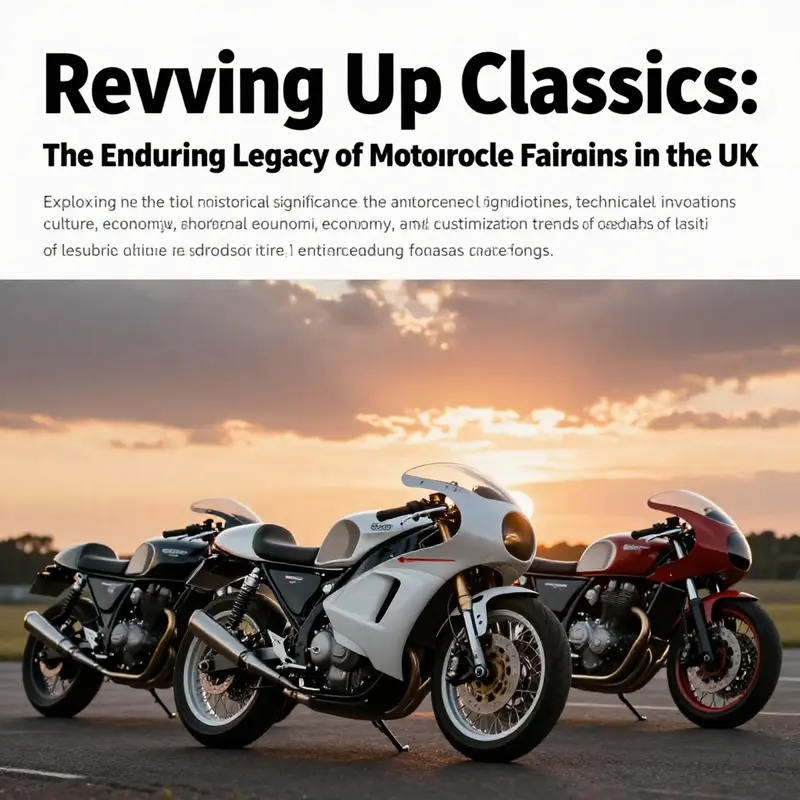
Classic motorcycle race fairings in the UK represent more than just aesthetics; they are a testament to a rich history and a vibrant racing culture. In this exploration, we delve into the historical significance of these fairings, revealing how they evolved alongside the motorcycles themselves. We will also examine the technical innovations that have enhanced performance and aerodynamics, shaping the modern retro racing scene. Additionally, the cultural impact on UK motorbike racing illustrates how these fairings have become symbols of pride and identity for riders and enthusiasts alike. The economic landscape surrounding classic motorcycle race fairings highlights emerging business opportunities within this niche market. Finally, customization trends showcase how riders personalize their bikes, balancing performance and style. Each chapter builds an intricate tapestry, collectively representing the passion for classic motorcycles within the UK.
Aero Heritage: The Historical Significance of British Classic Motorcycle Race Fairings
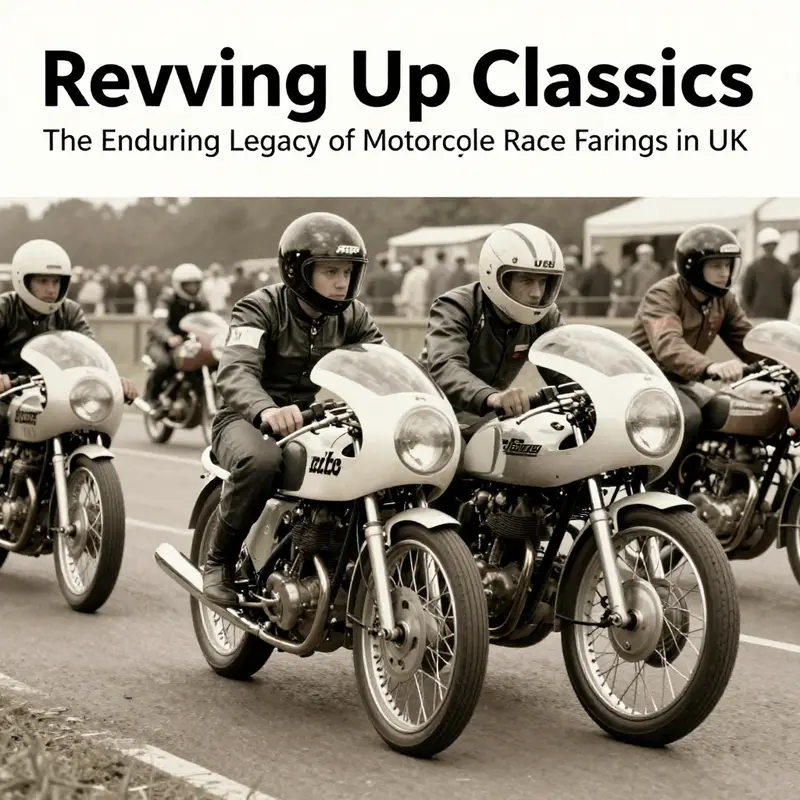
Across Britain’s racing epochs, the race fairing has worn many identities. It began as a practical shell designed to reduce drag and shield a rider from wind and debris. In the early decades of the 20th century, progressive engineers at British workshops introduced streamlined forms to a growing variety of machines. The aim was not only speed, but control—less buffeting at high velocity, less fatigue across long laps, and fewer interruptions caused by wind gusts. Those first successes proved that air, once managed, could unlock more than a few tenths; it could redefine how riders approached corners, braking zones, and sprint straights. The fairing thus joined the core vocabulary of British race engineering, evolving from an optional accessory into a deliberate, craft‑driven component. In many cases, it carried with it the promise of greater reliability on a track where risk demanded precision, and it did so while bearing the marks of a nation that valued both utility and artistry in equal measure.
Visually, the fairing became a canvas upon which a country’s racing identity could be projected with speed and clarity. The silhouette—curved edges tracing a rider near the machine’s axis—carried a message about modernity. Bold color schemes, stark contrasts, and occasional sponsor marks turned a practical shell into a moving billboard, linking engineering to national pride. The look of a fairing told spectators something about the maker’s philosophy: a preference for clean lines and predictable balance, or a willingness to push a shape toward greater aggression. These choices were not arbitrary; they helped alike the rider and the team stand out in a field of machines, making it easier for fans to identify a favorite with just a quick glance. The aesthetic language of fairings thus became inseparable from the sport’s storytelling, shaping how history would be remembered on race days and in the magazines that followed them.
Culturally, the Isle of Man TT and Britain’s domestic championships embedded the fairing in more than performance data. The wind tunnel of public perception shaped how riders were celebrated and how machines were remembered. The fairing acted as a windbreak, but it also framed the rider’s posture, balance, and line through a corner. As speeds climbed, fairings grew more sculpted and more technically refined, reflecting a broader postwar culture of clever reuse and resourceful manufacturing. The design language shifted from bulky, protective forms toward shapes that integrated with the bike’s chassis, yet still honored era cues. In the stories recounted by fans and journalists, a particular curve could stand for a season, a set of compromises, or a triumph against the elements. The fairing became both artifact and actor in a narrative about risk, skill, and national ingenuity, a reminder that technology and courage travel together on a single chassis.
Today, classic race fairings are sought after by collectors and restorers who want a tangible bridge to the past. They speak of a time when speed and craft coexisted in the workshop and paddock. Restorers often begin with archival drawings, then translate them into lightweight, hand-laid composites that preserve the historic silhouette while reinforcing the inside for modern safety standards. The painting, the rivets, and the way the fairing meets the fuel tank—these details matter as much as the wind tunnel numbers. In many cases, the original shapes are replicated with painstaking accuracy, but the frames beneath are upgraded, yielding a more reliable base for competition. The result is a confluence of heritage and performance; a museum piece that can still be ridden with confidence. That dual appeal explains why the fairing remains a centerpiece of the story of British racing, a reminder that history and performance are not mutually exclusive but mutually reinforcing.
Preserving the past in a modern context means embracing lightweight materials and precise manufacturing while honoring the look and feel of earlier years. In the current UK scene, the fairing is often a hand-built product of a small team rather than a mass-market item. Builders weigh form against function, ensuring that the period-evoking curves do not compromise handling or rider protection. The materials—glassy-fiber composites and, where appropriate, carbon alternatives—offer significant gains in stiffness and impact resistance. The process blends technique with respect for heritage: moulds drafted from period references, layups cured to tight tolerances, and finishes chosen to evoke the vintage finish without sacrificing durability. This artisanal approach keeps pace with a broad appetite for authenticity, ensuring that classic racers can be enjoyed safely on today’s grid while preserving the aesthetics that enraptured fans decades ago. It is a rare instance where nostalgia and technical progress partner to extend a tradition rather than fade it.
Because mainstream catalogs rarely present a generic “classic race fairing” category, the UK ecosystem remains a grassroots tapestry. Specialist workshops, clubs, and auction houses keep the conversation alive, filtering archival influence through contemporary engineering. The Legend of Classic and similar gatherings demonstrate how a well‑designed fairing can anchor a machine’s identity without overpowering its original character. The practical workflow typically begins with precise measurements, followed by custom tooling and a tailored layup. The rider’s preferences—soundness of fit, steering feel, and air flow—determine the final geometry, while safety standards and homologation rules ensure that performance lines stay within responsible bounds. In such environments, a fairing is more than a shell; it is a partner in a shared pursuit of speed, style, and stewardship. The dialogue across generations—riders, makers, and fans—has kept the craft resilient even as fashion trends come and go.
Looking forward, the story of British classic race fairings remains dynamic. Reproductions and new tooling show how a heritage aesthetic can be compatible with modern engineering practice. For readers exploring current options while honoring authenticity, see the 2023new category. This approach signals a practical optimism: the same hunger that drove early designers can still fuel careful improvisation, better materials, and safer riding. The result is not mere cosplay; it is a disciplined extension of a living tradition that continues to influence contemporary race culture in the UK. For those seeking broader context about the evolution of British motorcycle design and its broader significance, an external resource offers historical perspective and ongoing coverage of developments in the field: https://www.ducatinews.co.uk.
Shaping the Wind: Aerodynamics, Heritage, and the Craft of UK Classic Race Fairings
In the lanes of the United Kingdom, where old barns become workshops and paddocks hum with metal, classic race fairings are more than protective shells. They are a marriage of memory and mathematics, a tangible link between a rider’s instinct and the engineering that keeps it steady at high speeds. The culture surrounding vintage racing in Britain has long valued a balance: the visual poetry of a legacy machine paired with a disciplined, almost surgical, approach to performance. Fairings in this world are not disposable aero kits; they are carefully shaped identities. Builders and riders alike treat them as living parts of the motorcycle that must breathe with the bike’s historic silhouette while contributing real gains on the track. The emphasis is not only on speed but on delivering a controlled experience where every line of the fairing helps the rider hold the line through a corner and every contour guides air with precision rather than making a spectacle of it. This philosophy, rooted in centuries of British motorcycling, informs every decision about material selection, fabrication technique, and the way a fairing speaks to the original frame.
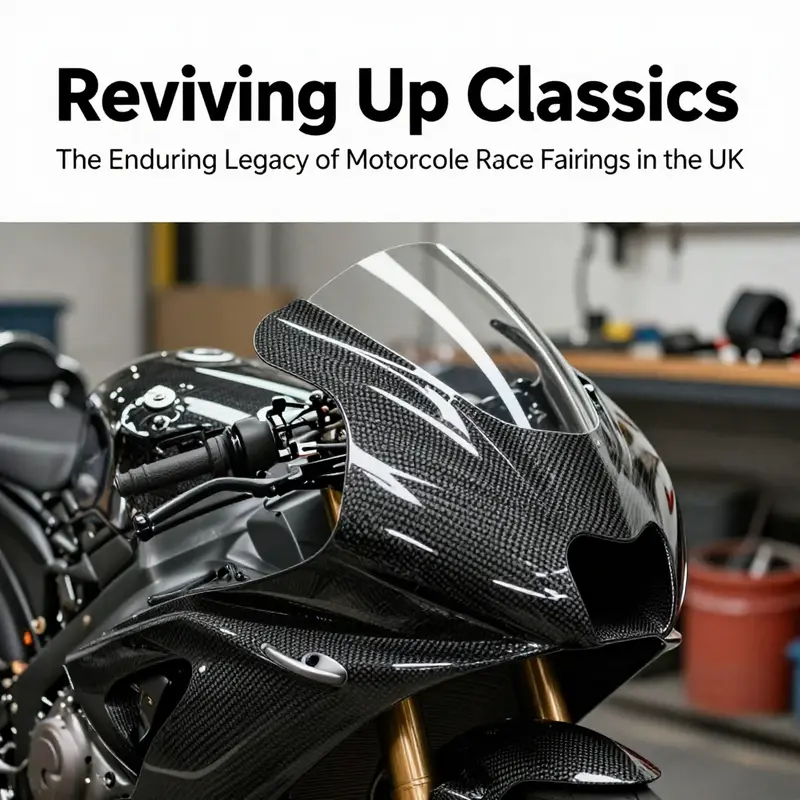
Design in this scene is a quiet negotiation between form and function. A classic twin, long and purposeful in its stance, asks for a fairing that smooths the air without erasing the bike’s character. The aerodynamic question is simple yet stubborn: how do you reduce drag and lift without erasing the vintage race identity? The answer in many UK paddocks comes down to a blend of classic shapes and modern manufacturing discipline. Light weight composites, such as glass fiber and carbon fiber layups, are crafted by hands that know the curvature of the past as well as the demands of today’s wind. These materials are not chosen for trend; they are chosen for predictability, resilience, and the way they respond to careful shaping under heat, pressure, and time. The craftsman learns the language of a bike’s silhouette, then writes new sentences in a language the rider can read at warp speed. The result is a fairing that speaks in a familiar voice—the silhouette of a bygone era—yet performs with the quiet authority of contemporary engineering. In the best instances, the finish is so integrated that the rider forgets where the bike ends and the air begins, and the line between heritage and performance becomes almost invisible.
The practicalities of making a fairing suitable for a classic racer are as important as the aesthetics. In the UK, the race environment has trained everyone to respect weight, balance, and the stress that high speed air imposes on chassis and rider. The fairing must be strong enough to withstand the occasional bounce of a ripple strip or a track wide gust, yet light enough not to upset that delicate balance of mass and inertia. This is where craftsmanship shines. Panels are often hand laid or vacuum formed to preserve the curves that give a bike its nervous clarity at high speed. Edges are trimmed with care, mounting points are reinforced without adding unnecessary bulk, and openings for radiators, ducts, and instruments are tuned to avoid turbulence behind the screen. While the design language nods to the classic look, the execution borrows from modern practice: controlled resin systems, compatible with long term durability, and layups that tolerate heat cycles without cracking or warping. The outcome is a fairing that resists fatigue while aging gracefully, a companion to riders who value both performance and provenance.
In conversations across venues and within the circles that have kept vintage racing alive, the purpose of a race fairing shifts from mere speed hardware to a chassis of trust. Riders speak of stability in the high speed sweep and the quiet confidence that comes when the wind is coaxed, not bullied, by the shape in front of them. A well executed fairing contributes to predictable behavior under braking and cornering, helps the rider stay on throttle through transitions, and reduces cockpit fatigue on long afternoon races. Yet the most celebrated examples maintain a reverence for the original platform. The fairing does not overwhelm the bike’s character; it augments it. The mid century forms that may once have looked fragile in a wind tunnel now appear to have learned to negotiate air in a very British way – with discipline, restraint, and a steadfast respect for heritage. For many teams, this means that the fairing becomes a canvas where history and function converge, a surface that tells the story of a machine’s life on the road and the way it has evolved within a close knit racing community.
The material choices reflect another layer of this unfolding narrative. Fiberglass and lightweight laminates carry the discipline of DIY workshops and small scale production that characterizes much of the UK’s classic motorsport ecosystem. When fans and builders alike walk through workshops, they see shelves of hand made templates, run out gauges, and spray booths where color and contour are perfected in tandem. The craftsperson’s hands matter in the shaping process, and the bespoke nature of each fairing becomes part of the garment that the rider wears on the track. In parallel, there has been a quiet cross pollination from modern racing and automotive wind tunnel insights. While the end products retain their vintage aura, the underlying approach borrows efficiency driven techniques: optimized ribbing for stiffness, strategically placed vents for cooling, and edge profiling that minimizes drag without sacrificing the bike’s silhouette. The net effect is a modern respect for aerodynamic efficiency, tempered by a fan’s memory of the machine’s original lines and era defining sounds.
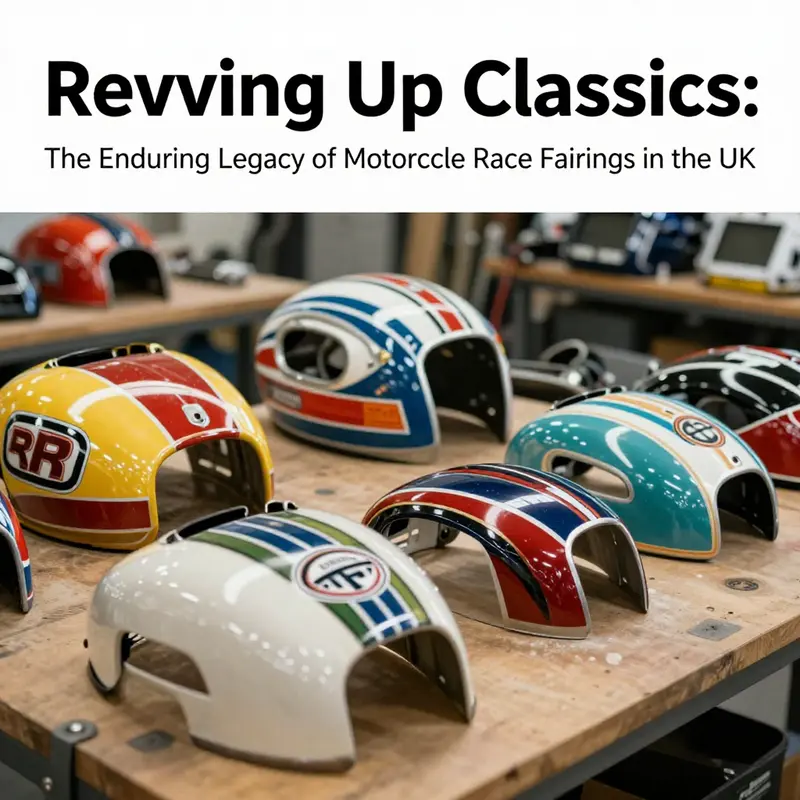
Within this ecosystem, the UK’s unique racing culture creates a fertile ground for customization. Instead of a single, mass produced catalog, the supply chain for classic race fairings grows through skilled fabricators, renegade upholsterers, and restoration specialists who understand the delicate balance between a bike’s visual heritage and its dynamic demands on the track. The result is a market built on trust and reputation, where a rider may commission a fairing tailored to a particular chassis, an exact replica styled to its era, or a hybrid solution that nudges performance forward without erasing the bike’s story. The practice often entails meticulous hand finishing, precise mounting hardware designed to align with period fixtures, and finishes that resist the oils, fuels, and heat of years of competition. It is a process that rewards patience and precision. The fairing’s surface becomes a narrative surface, a story told not with loud accents but with the quiet confidence of a well chosen curve, a testament to the hybrid of kunst and science that defines Britain’s approach to classic racing.
For riders who want their machine to carry both a living memory and a credible racing edge, the choice of fairing is as much about fit as about form. A bespoke fairing must align with the bike’s geometry, preserve headstock clearance, and respect the rider’s posture, all while delivering the anticipated aerodynamic gains. It is a careful dance: too aggressive a profile returns to the era’s romance at the expense of control; too conservative a profile may feel like a costume when the throttle is wide open. The magic emerges where the rider and the fairing speak the same language at once. In this dialogue, the wind is not simply an adversary to be conquered but a partner to be negotiated with; a well chosen fairing helps the rider read the air as a co-driver reads the track map. The result is a machine that feels alive on the straight and forgiving in the bend, a true marriage of heritage and engineering.
External links and context help anchor this world. One route riders and builders explore is dedicated catalogs and suppliers that offer components compatible with classic machines. You can explore options in the Triumph fairings category to see how British design heritage informs modern fabrication while preserving the look fans cherish. The process is mindful and iterative; it honors the bike’s origins while inviting a new generation of riders to experience the thrill of a machine that speaks with both old soul and new precision. As rules and expectations evolve, what remains constant is the rider’s appetite to ride with the wind rather than against it, accompanied by a fairing that understands the history it carries.
External resource: for a broader overview of motorcycle aerodynamics and racing principles, see https://www.britannica.com/topic/motorcycle-racing.
Speed as Style: The Cultural Impact of Classic Motorcycle Race Fairings on UK Racing Heritage
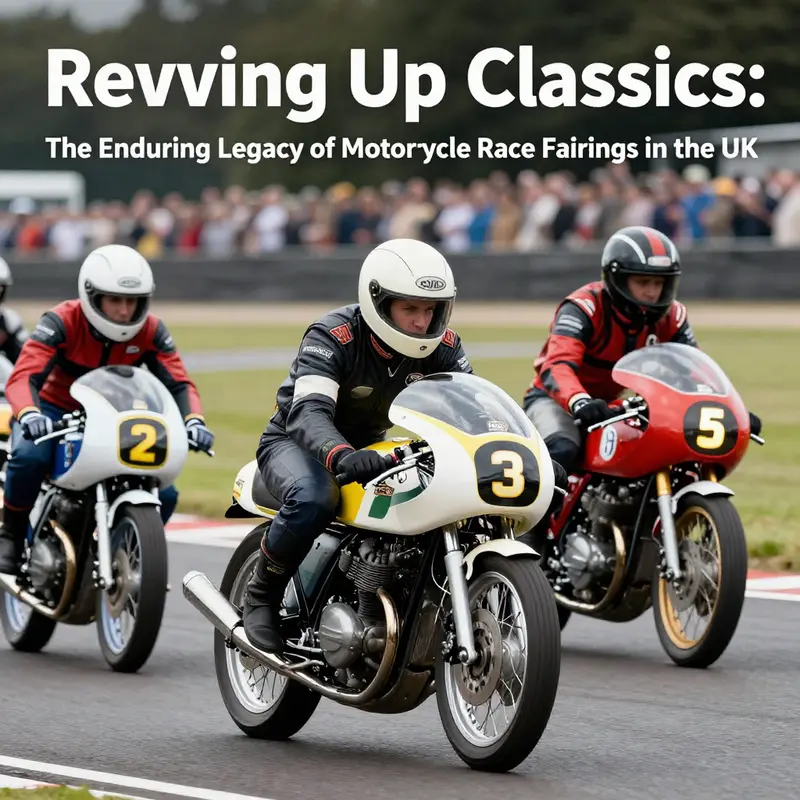
Across Britain’s lanes and race grids, the classic motorcycle race fairing is more than an aerodynamic shell; it is a cultural emblem linking engineering legacy with contemporary practice. In the UK, where racing history is woven into club meetings and paddock conversation, the fairing signals a rider’s intent and a sense of belonging to a tradition that values craftsmanship, community, and period-correct detail.
Events such as the Isle of Man TT and national championships make the fairing’s silhouette instantly legible: smooth lines that speak of wind-tunnel thinking, color schemes and decals that recall teams and triumphs, and graphics that announce allegiance as clearly as a race number. Builders and restorers reinterpret these forms, marrying traditional shapes with modern composites, resins, and fastening systems so classic frames remain competitive and reliable on contemporary tarmac.
The UK’s fairing culture revolves as much around small workshops and vintage specialists as around riders. Restoration and customization are collaborative crafts: glass fiber and carbon often sit alongside hand-formed panels, and practical upgrades—better mounts, modern fasteners, compatibility with contemporary brakes and suspension—are applied without erasing historical character. The result is an object that whispers nostalgia while delivering predictable handling and durability for hill climbs, club races, and weekend track days.
Color and detail act as shorthand for heritage. Iconic palettes evoke touring and racing lineages, while exposed rivets, curved leading edges, and high-contrast graphics communicate handcraft and intent. For fans and newcomers alike, a period-inspired fairing on a classic frame invites a tour of lineage—from postwar steel-framed racers to today’s meticulously engineered recreations—and serves as a mnemonic for memorable races and the distinctive soundscapes of British paddocks.
From a market perspective, the UK supports an ecosystem that keeps this culture accessible. Dealers and aftermarket specialists offer vintage-inspired and race-ready shells that respect period aesthetics while meeting modern performance expectations. Retail narratives and contemporary manufacturers translate classic forms into products engineered for strength, predictable aerodynamics, and compatibility with modern components, preserving both look and function.
Social and academic interest reinforces the fairing’s cultural role: they appear in photo essays, clubhouse debates, and feature events celebrating vintage engineering. The fairing becomes a source of pride and identity, binding builders and riders to a shared history. It is a portable museum, a performance enabler, and a social connector that keeps national racing culture vibrant.
Practically speaking, modern retail and supplier offerings illustrate how tradition and commerce coexist: fairings that echo classic lines yet incorporate contemporary materials and mounting standards allow new generations to experience the heritage on roads and circuits alike. In this way, classic race fairings remain both collectible artifacts and practical parts of a rider’s toolkit, sustaining a continuity of style and purpose across decades.
Internal link: Honda fairings catalog offers examples of how contemporary designers reinterpret classic aesthetics within modern lineups.
External resource: For an overview of UK suppliers offering vintage-inspired and contemporary fairings, see https://www.motorcycle-parts.co.uk/.
Between Heritage and Price Tag: The Economics of UK Classic Motorcycle Race Fairings
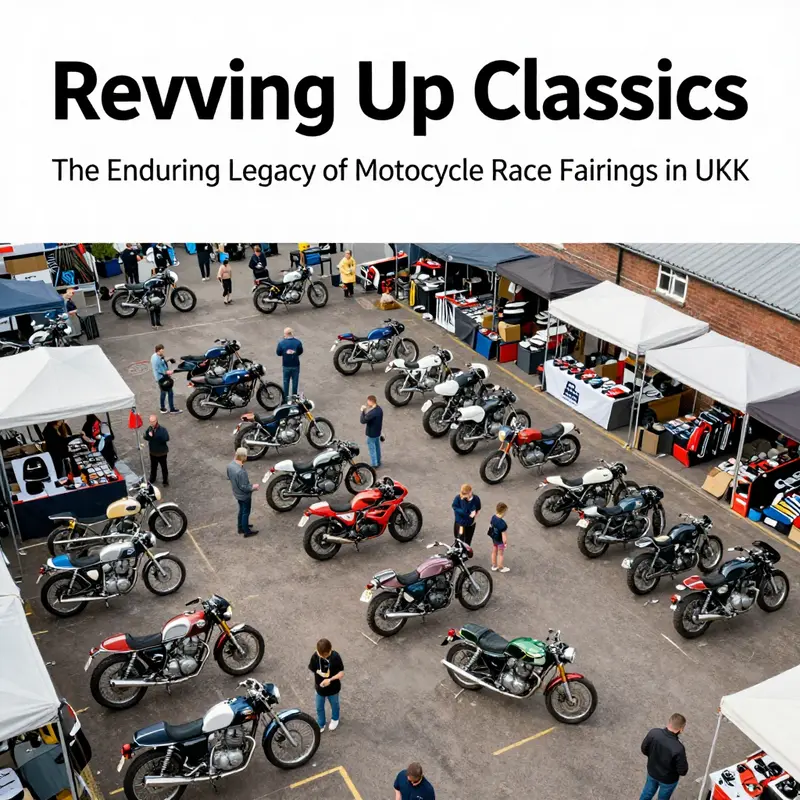
In the United Kingdom, classic motorcycle race fairings occupy a unique space where heritage, craftsmanship, and performance intersect. They are not mere shells on a vintage bike; they are artifacts that carry the memory of high-speed trials, tinkered machines, and late-night bodywork sessions in workshop corners. This is a market born from enthusiasts who want authenticity as much as aerodynamics, who value the sculpted lines of a century-old design as much as the reduced drag that modern composites can offer. The economics of that niche are stubbornly practical. Demand is fed by a steady stream of vintage racing events, regional rallies, and a growing community of restorers who see fairings as an essential part of a bike’s character. They understand that the right fairing can transform a ride from a static display into a moving homage to a storied era, all while delivering a touch more stability at speed. The market’s rhythm is dictated less by mass-market sales and more by the cadence of auctions, restoration milestones, and the collectors’ calendar. A good fairing is a badge of credibility, a sign that a project has progressed beyond cosmetic repair into a serious, story-filled rebuild. The UK’s weathered roads and breezy lanes also influence choices. Enthusiasts weigh the risk of exposure and use against the joy of seeing a machine shed its dull coat for something that resembles the racing machines of yesteryear. In short, classic fairings in the UK are a curated blend of aesthetics, aerodynamics, and authenticity, and that blend drives the economics more reliably than any trend could alone.
Demand for these components is driven by a few clear currents. First, there is the appreciation that original designs carry. The distinctive, sweeping front-end shapes that defined many late-20th-century race bikes remain highly desirable for those seeking a faithful restoration or a visually striking tribute. Second, the growing number of vintage events and club-level meetings keeps the appetite alive. Riders want to look the part as they push their machines through timed laps or display them in paddocks where the crowd habitually slows to study every line of the fairing. Third, there is the community’s emphasis on craftsmanship. Buyers are willing to pay a premium for pieces that are hand-made to fit a specific frame, with a finish that mirrors the original gloss, grain, and panel gaps. This last point is crucial. In a world of mass production and instant gratification, the UK market rewards a meticulous approach. A fairing that has been carefully replicated or restored—where the curves meet the tank and the mounting points align with the original brackets—conveys more than aesthetics. It speaks to the owner’s commitment to preserving a historical narrative while ensuring the bike performs on the track with a respectful degree of modern reliability.
Pricing reflects these values and the realities of materials, labor, and provenance. The market shows a wide spread. A rare or originally fitted fairing from a classic model can command prices well beyond a thousand pounds, particularly if it preserves a high degree of authenticity, has documented provenance, and remains free of structural compromise. Such pieces are prized not only for their look but for the story they carry—the eras of racing life they witnessed and the hands that once dialed in the tools to shape them. On the other end of the spectrum, modern reproductions crafted for vintage aesthetics—often using lightweight composites like fiberglass or carbon fiber—tend to sit in the several-hundred-pound range. The cost here is a function of material quality, precision of fit, and the reputation of the producer. The difference between OEM accuracy and aftermarket reproduction is not mere brand envy; it is a reflection of how far a piece must travel from the original tooling, how faithfully it reproduces the texture of the original surface, and how much post-production work is required to achieve a seamless look with a modern paint job. In the UK, the expectation that fairings will be both visually authentic and technically reliable adds to the price discipline. Consumers are often willing to invest more when a fairing is documented, when the fit is exact, and when the installation can be completed with minimal modification to the frame or cockpit electronics.
Market trends reinforce the price signals. The revival of interest in classic motorcycling, manifest in flagship events and regional rallies, has created a premium for authentic-looking components. Buyers are drawn to pieces that can be demonstrated on the road or on the track without invoking a sense of historical compromise. The desire for authenticity goes hand in hand with the appeal of modern manufacturing methods. Contemporary fairings that blend classic silhouettes with the benefits of lighter materials and integrated features—such as improved fastening systems, internal cable routing, and neatly integrated mounting brackets—offer a practical upgrade path. This fusion appeals to restorers who want a faithful aesthetic without sacrificing contemporary reliability. The result is a niche economy where the premium for craftsmanship sits alongside the modestly priced but high-value reproductions. The market’s health is bolstered by the visibility of vintage racing at events such as major rallies and club championships, where fairings become both functional components and canvases for personal expression.
From a manufacturing perspective, the economic model of classic race fairings in the UK leans on small-batch production and artisanal skill. Each piece in a one-off restoration or a limited-run replica often involves careful measurement, hand-laying of composite layers, surface finishing, and meticulous paint matching. The labor time can be significant, and with skilled joiners, laminators, and painters operating at boutique scales, the price reflects the level of craftsmanship. The economics thus combine the romance of a handmade object with the realities of a modern supply chain: sourcing lightweight materials, negotiating with small workshops, and balancing lead times against the owner’s event calendar. Suppliers in this space frequently offer customization options that further shape the final price. Integrated lighting or GPS-enabled navigation aids, when properly installed, can elevate a fairing from a visual homage to a functional upgrade. These features, while practical, also carry a premium because they require additional engineering, water-tight seals, and testing to ensure reliability on the track.
The sustainability of the market hinges on a delicate balance. Supply can be limited by the aging of original molds and by the sheer difficulty of re-creating the exact curvature and thickness of vintage panels. Where original parts exist, owners face the decision between preserving authenticity and replacing with a faithful reproduction that improves longevity. In either case, the value proposition centers on the ability to maintain a bike’s aesthetic integrity while ensuring the machine remains rideable and competitive in historic races. For sellers, this means marketing in terms of provenance, condition, and the narrative power of the piece—how many races it witnessed, which rider might have tested it, and how its silhouette contributed to the bike’s on-track behavior. For buyers, it means assessing fitment risk, potential alignment issues with mounting brackets, and the long-term costs of maintaining a non-standard component in a rapidly aging mechanical ecosystem.
An underappreciated layer of this economics is the role of community networks. Specialist restorers, traditional coachbuilders, and small workshops rely on repeat business from a tightly knit cohort of enthusiasts who travel to auctions, sale days, and restoration clinics. The social value of these exchanges reinforces trust and reduces risk. A buyer who knows a workshop’s portfolio can gauge whether a reproduction will align with the bike’s geometry and whether it will hold color and gloss across seasons. This trust translates into price stability and a predictable resale value that helps sustain the market even when broader motorcycle demand ebbs and flows. It also feeds into the broader culture of the UK’s vintage racing community, where the fairing becomes a badge of commitment rather than a simple accessory.
For those navigating this market, one practical takeaway is the importance of due diligence in provenance and fitment. Original documentation, condition reports, and a clear history of the bike’s race-life can add tens or hundreds of pounds to an item’s price. Conversely, a well-made reproduction with a precise fit can outperform a decaying original that has suffered structural damage. The balance between authenticity and practicality is what ultimately defines value. In this sense, the UK market’s strength lies not in a single dominant brand or product line but in a robust ecosystem. It encompasses restoration shops, private collectors, regional clubs, and sellers who understand the subtle art of pairing a fairing with a machine’s character and the rider’s ambitions.
For readers exploring this space, a practical path is to view fairings as more than decorative skins. They are engineering decisions, cultural artifacts, and investment pieces rolled into one. When evaluating a potential purchase, it is wise to weigh the fragmentary beauty of a pristine original against the reliability of a high-quality reproduction, considering maintenance needs, panel alignment, and the specific racing regulations of the intended events. The reward, of course, is the chance to ride a bike that feels both true to its era and capable of performing with a modern sense of predictability. In the UK, where the line between past and present is always a little blurred, that convergence is what fuels such a vibrant economy around classic race fairings.
null
null
Final thoughts
The world of classic motorcycle race fairings in the UK not only reflects a deep-seated passion for history and artistry but also embodies the spirit of innovation and individuality in motorcycle culture. Through our detailed exploration of their historical significance, technical advancements, cultural impacts, economic relevance, and customization trends, it is evident that these race fairings play a crucial role in the ongoing narrative of motorcycling in the UK. As business owners look to tap into this vibrant market, understanding these layers will help inform product offerings, marketing strategies, and ultimately foster deeper connections with a passionate community of motorcycle enthusiasts.