
Body fairings are more than just aesthetic features on motorcycles; they play a pivotal role in optimizing performance and enhancing rider comfort. These external components serve as protective shells for the engine and mechanical parts while significantly improving the bike’s aerodynamics by reducing drag. For business owners in the motorcycle industry, understanding the relevance of body fairings is vital for product offerings and customer satisfaction. This article will delve into several key areas: the importance of body fairings in aerodynamics and design, the materials used considering strength and weight, market trends regarding availability, and real-world performance enhancements experienced by riders. Each chapter builds on one another to provide a comprehensive view of the significance of body fairings in the motorcycle industry.
Streamlining Speed: The Aerodynamic Power and Design Language of Motorcycle Body Fairings
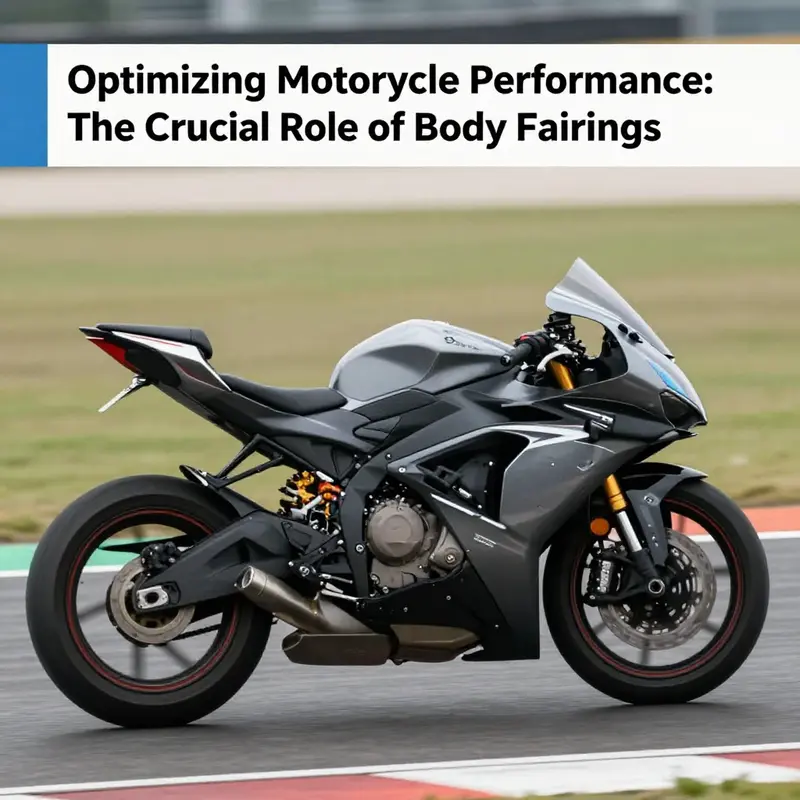
In practice, fairings are designed to minimize drag by smoothing the air as it encounters the bike’s silhouette. When air flows smoothly over the surface, the high-pressure region at the front of the motorcycle pushes less against the moving body, while the flow remains attached to the surface longer, delaying separation. The result is a lower overall drag coefficient, which translates into higher top speeds, improved fuel economy, and reduced rider fatigue during long highway stints or track sessions. This is not a theoretical ideal; it is an engineering outcome that emerges from careful shape optimization, attention to the junctions with the engine, frame, and fuel system, and a robust understanding of how air behaves around moving masses. Research that dissected the impact of small fairing changes—such as handlebar covers—shows that targeted modifications can measurably alter the airflow in the most sensitive regions of the front end. In other words, every contour matters; every aperture, line, or cut can either sharpen the bike’s aerodynamic profile or, if mishandled, introduce turbulence that erodes stability at speed. The physics is not abstract. It is a practical guide to how to shave seconds from a lap time or how to sustain a settled feel on a long straight at high velocity. This is the reason why the fairing’s geometry—how it wraps the engine bay, how it caresses the fuel tank, how it blends into the tail—has long been a primary focus for designers who want a ride that feels both efficient and controlled.
The material story behind fairings mirrors the performance story. Traditional plastics remain a benchmark for mass-market motorcycles because they balance cost, formability, and repairability. They allow for complex shapes, rapid production cycles, and straightforward maintenance. In performance-oriented builds, composites and carbon fiber blends offer substantial weight savings and stiffness. A full carbon fiber fairing assembly can markedly reduce the unladen weight of the front end, contributing to a lighter overall ride feel and a more favorable moment of inertia around the steering axis. The benefit is not just in mass reduction; it also improves the bike’s agility, especially at the apex of a corner and during aggressive transitions. Weight reductions around the front end can help the rider feel lighter steering input, which becomes a meaningful advantage as speeds climb and the demands on the chassis escalate. Modern carbon fiber fairings often emphasize a 3K weave, balancing rigidity with a refined aesthetic that appeals to riders who value both performance and a premium look. In parallel with these performance goals, some fairings are designed with environmental considerations in mind. A growing subset of high-end configurations carries environmental packaging certifications, indicating attention to the lifecycle of materials from production through end-of-life disposal. This emphasis on sustainability is a reflection of broader market expectations, where the responsible use of materials and efficient packaging align with a rider’s desire to minimize environmental impact without sacrificing performance or safety.
The geometry of fairings is not static; it adapts to the intended riding context. Full or three-quarter fairings maximize aerodynamic efficiency by enclosing the front end and the upper body, shaping a clean streamline that minimizes drag and helps maintain stability at speed. In contrast, half fairings concentrate more on the front portion while leaving parts of the chassis exposed, offering a lighter approach that reduces weight and cost while still providing significant wind protection for the rider. Lower fairings, installed beneath the bike, protect the undercarriage and help manage ground clearance and debris, a practical feature for urban riders and those navigating rough road surfaces. The choice between these configurations is a matter of use-case and philosophy: if top speed and straight-line stability are the priority, full or three-quarter fairings can deliver substantial aerodynamic dividends; if cost, weight, and accessibility take precedence, half or lower fairings offer a leaner, more economical path to a sport-inspired look and feel. The evolution of production techniques—which includes precision molding, advanced bonding methods, and surface finishing—shapes how closely a production fairing can replicate its aerodynamic ideal while retaining durability under real-world riding conditions. The result is a set of surfaces that not only look integrated with the bike but behave as a coherent, aerodynamically tuned system when the rider pushes toward the limits of speed and flow.
Beyond the front-end aerodynamics, the fairing’s contribution to a bike’s overall character cannot be overstated. The silhouette they create defines a brand’s visual signature and communicates an attitude—an aggressive intake that hints at speed, or a more understated line that speaks to efficiency and control. Designers balance the visual language with functional features: air intakes tuned for engine cooling, carefully positioned vents to manage heat while preserving laminar flow, and smooth transitions that reduce flow separation at high speeds. This integration is not accidental. It is the outcome of multi-disciplinary collaboration across aerodynamics, materials science, structural engineering, and industrial design. The goal is a holistic solution in which aesthetics and performance are inseparable. That harmony is evident in how the skin lines and panel gaps are treated; it shows in how a fairing meets the fuel tank seam, how it anchors to the frame, and how it interacts with the rider’s torso and hands. The rider’s experience—wind pressure on the shoulders, the feel of the wind against the chest, the noise envelope around the cockpit—becomes part of the design specification. Fairings are thus a primary vector of rider comfort as well as velocity potential, connecting the mechanical heart of the motorcycle to the rider’s perception of speed, stability, and control.
These considerations become even more important when the rider prioritizes long-distance travel. On fatigue-free highway rides, the fairing acts as a wind shield that reduces buffeting and accelerates the transition of air from the front into the rider’s torso area. By smoothing the airflow over the rider’s position, fairings lower the dynamic pressure at the chest and shoulders, translating to less muscular strain and a more comfortable posture after hours in the saddle. The combined effects of reduced drag and improved rider protection contribute to a track-informed stability that translates into smoother steering and steadier control at the limit. The engineering takeaway is clear: fairings are a strategic decision that touches several domains—drag, weight, heat management, and rider experience—rather than a solitary improvement in one dimension.
In the marketplace, this multidisciplinary value proposition is reflected in the way fairings are marketed and installed. The emphasis on “precision match” and “OEM-style installation experience” that appears in many supplier descriptions signals a broader expectation: riders want surfaces that fit as if they came from the factory, aligned with the bike’s contours and mounting points, and capable of withstanding road hazards with minimal maintenance. The practical implication is that choosing a fairing is not only about airflow; it is about matching the right geometry, thickness, and joint configuration to a given chassis. The aesthetic and the technical must cohere, and the best-fit fairings succeed by delivering both a striking look and predictable, reliable performance over time. The result is a rider who can ride with the confidence that the surface around the engine and cockpit is doing its part to keep speed sustainable and handling precise.
For readers who want to explore the options visually, a curated fairings category can help ground the discussion. The internal link above points to a concrete catalog that demonstrates how a single brand’s fairings are organized to reflect the diversity of configurations available. It illustrates how the same lines can be adapted to accommodate different rider preferences and mechanical constraints while preserving a coherent aerodynamic envelope. This is not mere marketing; it is a practical demonstration of how design and engineering converge to produce a surface that serves both function and identity. The fairing’s role is to translate the rider’s intent into measurable aerodynamic behavior, while also establishing a recognizable visual language that situates the rider within a lineage of performance-focused machines.
As the field evolves, new materials and manufacturing techniques promise lighter, stiffer, and more aerodynamically efficient surfaces. The trajectory points toward surfaces that combine low weight with high impact resistance and easier manufacturability, all while preserving the intricate curves and smooth transitions that keep the airflow attached to the body. Such progress will continue to push the boundaries of how much drag can be reduced, how cleanly the air can flow around complex shapes, and how the rider perceives the resulting dynamics. The fairing remains a central hinge between engineering rigor and riding experience, a reminder that speed, efficiency, and comfort are not incidental to motorcycle design but are woven into the very skin of the machine. In this sense, the body fairing is not only a component; it is a statement about how we understand performance, how we care for the rider, and how design can shape the relationship between human and machine on every mile of road and track.
External resource: https://doi.org/10.4271/830156
The Material DNA of Motorcycle Body Fairings: Balancing Strength, Weight, and Performance
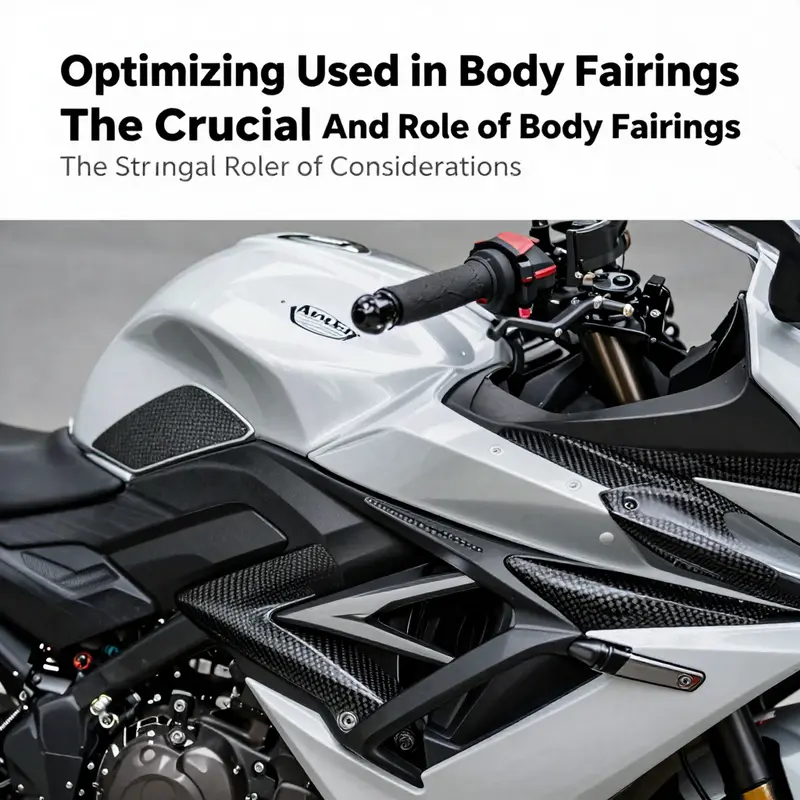
Body fairings are more than skin on a motorcycle; they are a carefully engineered system that governs aerodynamics, rider comfort, and even the machine’s handling feel. The material chosen for a fairing sets the tone for how the bike slices through air, how it reacts to road debris, and how a rider perceives control at speed. In the modern market, three materials dominate the conversation: ABS plastic, fiberglass, and carbon fiber. Each carries a distinct blend of strength, weight, and practical constraints, and together they illustrate why fairing design is as much about material science as it is about form. When we talk about the fairing’s material DNA, we are tracing a lineage from durability and cost through rigidity and stiffness to the ultimate pursuit of lightness and precision in dynamic response. The decision is rarely about a single property in isolation; it is about how a composite set of traits works in concert with a rider’s needs and the bike’s intended use.
ABS plastic, the workhorse of mass-market fairings, offers a pragmatic foundation for everyday riders. Its properties sit at a sweet spot: good impact resistance, reasonable stiffness, and an affordable price point. ABS is a thermoplastic that can absorb and dissipate shocks from minor road debris without cracking instantly, which translates into lower repair costs and shorter downtime after a tumble or a brush with a curb. This repairability matters in daily riding where minor scrapes and scuffs are part of the journey. ABS fairings are often produced through high-volume processes such as injection molding, which keeps part tolerances tight and allows for fast, repeatable production cycles. From a rider’s perspective, the ability to source replacements quickly and repair them with commonly available tools is a practical advantage that reduces total ownership cost. The down side, of course, is weight. While ABS is light for its class, it cannot achieve the stiffness-to-weight ratio of more exotic materials. It tends to flex a little and can stand up to road wear without catastrophic failure, but its long-term rigidity is not on par with fiberglass or carbon fiber when pushed into high-speed aerodynamic regimes. Still, for most street-focused applications, ABS provides predictable performance, easy customization, and a forgiving resilience that suits riders who value reliability and affordability over ultimate weight savings.
Fiberglass sits at a different point on the spectrum. It is a relatively light and strong material that can be tailored through the layup and resin system to emphasize stiffness and damage resistance. The strength-to-weight ratio of fiberglass is impressive, especially when the laminate is engineered to resist deformation under wind pressure and road loads. This makes fiberglass a popular choice for riders who want a more solid, ridge-like feel in the fairing’s structure, especially in track-ready configurations where torsional stiffness matters for high-speed stability and precise steering response. Yet fiberglass carries trade-offs that require careful consideration. It can be more brittle than ABS, meaning that under a sharp impact, it is more prone to cracking or shattering rather than absorbing the energy as a ductile plastic might. Repairs are not as simple as with ABS; damaged sections often require fiberglass repair techniques, resin work, and careful matching of finish, which can be labor-intensive and sometimes costly. Additionally, depending on the fiber orientation and the quality of the layup, fiberglass components can be heavier than their carbon fiber counterparts yet not always as light as the best ABS options for equivalent stiffness. For riders who take pride in a balance of strength and weight with a dash of customizability, fiberglass offers a compelling middle path—more rigidity than basic ABS while allowing for more flexible shaping and repair options than carbon fiber with a more approachable budget.
Carbon fiber represents the pinnacle of performance-oriented fairings in terms of weight reduction and tensile strength. A carbon fiber fairing can deliver a dramatic decrease in mass, often yielding weight savings in the tens of percent compared with traditional ABS or fiberglass parts. The allure is clear: lower weight translates to quicker acceleration, more responsive handling, and improved efficiency by reducing the inertia the rider must overcome in transitions and cornering. The stiffness of carbon fiber also means the fairing can better resist deformation under aerodynamic loads, enhancing stability at high speeds and enabling more precise steering inputs. However, carbon fiber’s advantages come with substantial costs and practical caveats. The material itself commands a premium price, and the manufacturing process—typically a careful layup of woven fibers with epoxy or other resins—requires specialized fabrication know-how. Repairs, when damage occurs, can be difficult and expensive because carbon fiber does not “heal” easily; a crack in one ply blade may require specialty repair, full or partial replacement, and meticulous finish work to restore aesthetics. The structural benefits of carbon fiber are most fully realized in track-focused or high-end sport bikes, where the rider’s priorities are minimal weight and top-tier rigidity. In everyday riding, the incremental performance gains can be outweighed by cost, repair complexity, and even the potential risk of catastrophic failure in certain high-energy impacts that can cause delamination. Yet the allure remains potent: for those who pursue the closest possible alignment between rider input and machine response, carbon fiber offers a pathway to a more agile, alert, and athletic ride.
These three materials illuminate the broader truth about fairings: there is no universal best choice. Instead, there is a spectrum of options aligned to rider intent, budget, and the bike’s intended role. The decision is not merely about the raw numbers of weight and strength; it is about how the material behaves in real-world conditions. ABS, with its forgiving resilience and ease of repair, excels in urban daily use where impact scenarios are common and serviceability matters. Fiberglass, with a tuned balance of stiffness and repairability, can serve riders who demand more rigorous performance without stepping into the most extreme price tier. Carbon fiber—reserved for those who measure every gram and seek the highest levels of dynamic clarity—demands a willingness to invest and to accept the care and precision required for upkeep. In the marketplace, this translates to a tiered ecosystem of fairings that allow riders to craft a package that matches their expectations of performance, aesthetics, and ownership experience.
Beyond the core mechanical properties, a broader ecosystem influences fairing material choices. The manufacturing route has a powerful impact on cost, consistency, and finish quality. ABS parts can be produced at scale with consistent color and texture, benefiting from the maturity of automotive-grade plastics supply chains. Fiberglass, while versatile for custom or semi-advanced production runs, introduces variability depending on resin systems, fiber quality, and layup techniques. The result is that fiberglass parts can be highly customized, offering a unique look and tuned stiffness, but with a potential risk of weight variation or inconsistent surface finishes if not manufactured under stringent quality controls. Carbon fiber, demanding as it is to work with, ultimately rewards disciplined production with exceptional surface finish and precise tolerances. The upshot is that the market encourages a spectrum of choices that align with a rider’s capacity for upkeep and their appetite for advanced engineering.
The environmental footprint of fairing materials also enters the conversation, a topic that has become increasingly prominent as riders and manufacturers seek sustainable design solutions. While ABS is recyclable and widely adopted, the end-of-life considerations for a full fairing set encourage manufacturers to think about the entire lifecycle—from resin systems to mold release agents, to the recyclability of the final product. Fiberglass, though robust, presents its own recycling and disposal considerations, particularly with respect to resin matrices that complicate recycling streams. Carbon fiber, while offering performance benefits, poses recycling challenges that are still being actively addressed in the industry. In some examples, premium suppliers have embraced packaging and process certifications that reflect a broader commitment to environmental responsibility, signaling a shift toward more sustainable practices even within high-performance applications. For riders who weigh environmental performance alongside mechanical performance, these nuances matter. The choice of material thus becomes a proxy for a rider’s values as well as their riding goals.
Another layer in the material conversation relates to the integration of the fairing with the bike’s overall aero design and structural integrity. A fairing does not operate in isolation; it contributes to drag reduction, lift management, and stability around the rider’s position. The interplay between the chosen material and the fairing’s aerodynamic contours is critical. A stiff, well-supported carbon fiber shell can maintain a clean aerodynamic profile at high speeds, preserving a predictable flow pattern that translates to steadier steering inputs and more confident line selection through corners. A well-designed ABS or fiberglass fairing, though heavier, can accommodate more aggressive shaping around key passageways for air intake, radiators, and rider protection without incurring excessive risk of panel flutter at cruising speeds. The surface finish matters too. The uppermost layer and the resin system must withstand UV exposure, abrasion from wind-blown debris, and the heat of the engine bay. Carbon fiber’s resin system is especially important to prevent micro-cracking and discoloration that can undermine both aesthetics and structural performance over time. Each material route has its own best-fit envelope where aero performance, structural rigidity, repairability, and cost align to offer an optimal ownership experience.
The practical takeaway for riders considering fairing upgrades or replacements is to harmonize material choice with riding discipline and maintenance expectations. For city commuters who encounter a lot of vibration, pinching potholes, and occasional scrapes, ABS often provides the most pragmatic balance. For riders who crave enhanced rigidity for aggressive cornering and who may participate in occasional track days, fiberglass offers a lever to increase stiffness without breaking the bank or compromising repair workflows too severely. For those pursuing peak performance and lightness on a track bike or a limited-production superbike, carbon fiber can be a transformative element, but it demands a plan for upkeep, potential repair costs, and a willingness to invest in the broader system that supports the bike’s aero integrity. The material choice also informs aftermarket compatibility, as some bikes in the sport and sport-touring segments rely on standardized mounting interfaces and fitments that can simplify or complicate upgrades. In this sense, the fairing material influences not just how the bike looks or handles, but how accessible the upgrade path becomes for a rider who wants to refine the bike’s performance envelope over time.
For readers who want to explore the spectrum of options in a way that connects to real-world aftermarket opportunities, a practical approach is to consider the fairing as a modular system. The base geometry of the fairing must be compatible with the bike’s chassis and rider position, but the material choice then calibrates the dynamic response. If you are drawn to a visual makeover that also changes the mental model of how the bike moves through air, a fiberglass or carbon fiber fairing can provide that sense of immediacy and precision. If you seek a more conservative upgrade that preserves daily usability while reducing fragility in urban riding, an ABS set can deliver a refreshed look with dependable durability. The key is to identify how you ride, what you expect from the ride, and how much you are willing to invest in both upfront and ongoing maintenance. A well-considered material choice, paired with a careful aero design and a robust finish, yields a fairing that feels less like a cosmetic shell and more like an integrated system that enhances riding discipline, control, and enjoyment.
For readers who want a broader view of the material landscape in fairings and how it translates to current market offerings, one practical resource is the Honda fairings category, which aggregates aftermarket options and compatibility notes in a way that helps riders gauge fit and finish without getting lost in model-specific chatter. Accessing a targeted category such as this can illuminate how different manufacturers approach compatibility, styling, and construction while offering a concrete sense of what is achievable with each material path. Honda fairings provides a useful starting point for exploring how aftermarket components align with a rider’s expectations for fit and aesthetic integrity while respecting the unique geometry of each bike’s bodywork.
In closing, the material choices for body fairings reveal a nuanced balance between strength, weight, cost, and real-world usage. ABS, fiberglass, and carbon fiber each occupy a distinct position on the spectrum but collectively illuminate the material DNA that underpins modern fairings. The goal is not to declare a universal victor, but to recognize that the optimal choice depends on how riders ride, what they value most in performance, and how they plan to maintain or upgrade their machine over time. As technologies evolve and manufacturing processes become more efficient, new composite approaches may blur the lines between traditional categories, offering even more refined blends of stiffness, lightness, and resilience. The journey through these materials is, at its core, a journey through the rider’s relationship with the bike: a dialogue between form, function, and the road that binds engineering to experience.
External reading: For a broader treatment of materials in motorcycle fairings, see this guide on material options and their real-world implications: https://www.motorcycle.com/motorcycle-fairings-materials-guide/ .
Riding the Curve: How Market Dynamics and Availability Are Shaping Motorcycle Body Fairings
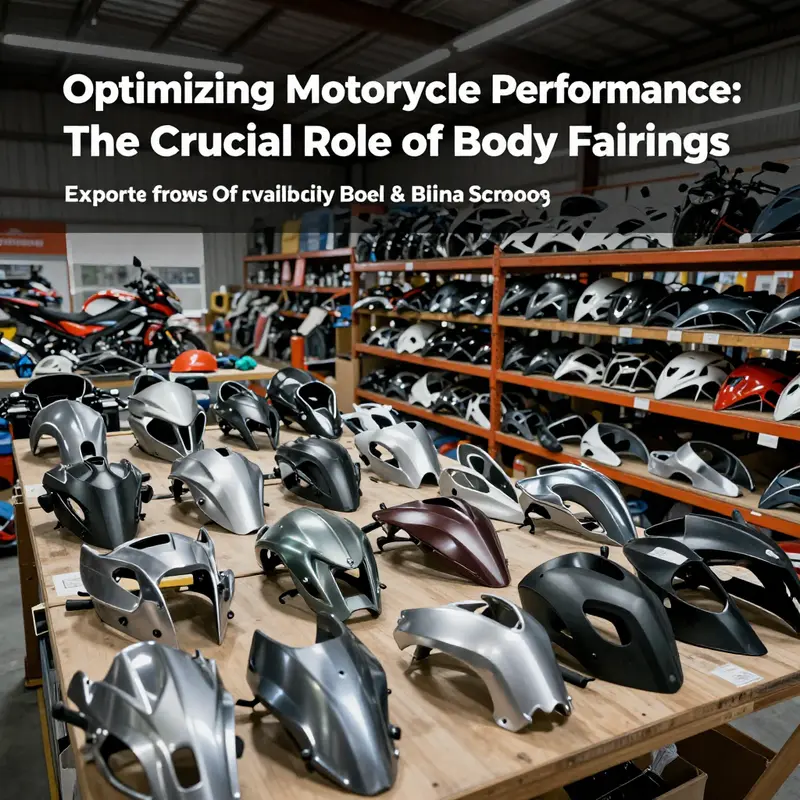
Body fairings are more than a glossy shell that wraps the engine and chassis. They are a finely tuned interface between a motorcycle and the air it slices through. In modern bikes, fairings serve a triad of roles: they sculpt the vehicle’s silhouette, optimize aerodynamics to reduce drag and improve stability at speed, and shield the rider from wind and debris while contributing to overall structural integrity. The research landscape around body fairings reveals a field that blends aesthetics with engineering precision. Materials—ranging from engineering plastics and composites to carbon fiber—are chosen not just for looks but for how they behave under wind load, heat, and vibration. The right curvature, fuel-tueled underbody airflow, and venting pathways can shave seconds off acceleration through reduced drag and lower lift at high speeds while preserving agreeable tactile feedback for riders. In this sense, body fairings are a keystone component in the quest for faster, safer, more comfortable riding experiences. They are also a visible signal of a brand’s commitment to engineering rigor and rider experience, which increasingly matters in a market where customization and performance upgrades are a defining consumer expectation.
Market dynamics surrounding motorcycle body fairings sit at a crossroads of heritage manufacturing, rapid material innovation, and expanding global demand. The broader market for motorcycle parts and accessories reached a value of roughly $785 billion in 2025, with continued momentum anticipated as ownership grows and enthusiasts pursue personalization and performance upgrades. This growth is not simply additive; it signals a shift in how riders think about their machines. Rather than viewing a fairing as a static cosmetic piece, many buyers now expect components that deliver measurable gains in performance while still aligning with the bike’s character. The aftermarket segment, in particular, has flourished as riders seek lighter, stronger, and more aerodynamically efficient options. The convergence of performance engineering and design aesthetics has turned body fairings into a focal point for both manufacturers and distributors, inviting a broader ecosystem of suppliers, fabricators, and retailers to participate in a market that rewards precision, reliability, and speed of delivery.
In the domestic market context, attention to protective gear and integrated safety systems has become a bellwether for fairing adoption. While the protective gear category itself operates at a different tier of PPE, its market robustness—evidenced by multi-billion RMB scales and double-digit growth rates—reflects a broader appetite for safety-driven design in two-wheel transportation. The data indicate a strong underlying demand for components that enhance rider protection and performance, suggesting that body fairings will be increasingly treated as essential elements of protective and performance-oriented systems. In practical terms, this translates into a growing willingness among consumers to invest in fairings that deliver tangible aerodynamic benefits, improved crash resilience, and better tactile feedback at speed. Such expectations push manufacturers to accelerate material research, integrate digital design tools, and pursue more rigorous testing protocols to validate real-world performance gains.
Material science remains a cornerstone of fairing development. The field continuously weighs traditional options like aluminum alloys against engineering plastics and advanced composites. Each material set offers a different balance of stiffness, weight, impact resistance, and manufacturing feasibility. Composites, particularly carbon fiber variants, promise weight reductions that can meaningfully affect handling and acceleration, provided the cost and manufacturing workflows fit the product’s intended market. The trend toward lighter components dovetails with the ongoing push for more efficient manufacturing processes. Digital technologies, including CAE simulations and digital twins, enable designers to anticipate how a fairing will perform in real-world conditions before any physical prototype is produced. These tools shorten development cycles, reduce material waste, and enable more aggressive aerodynamic shaping without sacrificing structural integrity. As a result, the gap between concept and production has narrowed, allowing more manufacturers to bring high-performance fairings to a wider audience.
The engineering and design of fairings increasingly reflect a systems view of the motorcycle. Aerodynamics cannot be considered in isolation from other performance attributes such as weight distribution, ride feel, and rider protection. The shape of a fairing affects crosswinds, stray flow around the rider’s torso, and the pressure fields that contact the chest and helmet. When done well, a fairing can contribute to lower drag and improved downforce at speed, which helps keep the front end planted and reduces rider fatigue over long stints. Conversely, a poorly conceived fairing can introduce buffeting, add unnecessary weight, or complicate maintenance. This is why modern development relies on digital twins and CAE to iteratively optimize a fairing’s geometry for a given bike platform. The synergy between aerodynamic insight and structural engineering is what separates a visually striking shell from a high-performance component integral to the machine’s handling envelope. Notably, this emphasis on rigorous design is accompanied by sustainability considerations. Some high-end fairings in the market are now accompanied by environmental certifications or packaging standards that reflect a broader corporate responsibility ethos, signaling that performance and sustainability are not mutually exclusive goals.
Availability and access to body fairings have also evolved. The expansion of online commerce and cross-border logistics has made a wider array of fairings accessible to riders and builders around the world. Online marketplaces and direct-to-consumer channels enable enthusiasts to acquire both OEM-inspired replacements and aftermarket performance parts with greater ease. In parallel, traditional distribution networks—retailers and authorized service centers—remain important for fitment guidance, installation support, and warranty services. This blend of channels is reshaping how riders select, purchase, and install fairings. The emphasis on exact fit and “original factory installation experience” remains a persistent objective for many suppliers, reflecting a demand for plug-and-play compatibility that minimizes installation time and preserves ride quality. The availability story is also tempered by regulatory considerations. Compliance with safety and environmental standards—ECE in Europe and DOT or other regional certifications elsewhere—forms a kind of market gate, ensuring that components not only perform but also meet safety and environmental expectations. This regulatory backdrop encourages suppliers to align product development with formal standards, reducing risk for buyers who demand reliable performance in daily riding and on race tracks alike.
Beyond the physics and the supply chains, the market’s geography shapes what is available where. In mature markets, the blend of OEM replacements and high-performance aftermarket options creates a spectrum of fairings tuned for different riding philosophies—from street riders seeking elegant, aero-leaning lines to track enthusiasts chasing peak stability at elevated speeds. In emerging markets, the growth narrative is driven by rising ownership rates and a broader appetite for customization. Local manufacturers and artisans are increasingly embracing digital design workflows and CNC-based fabrication to deliver fairings that balance cost with performance. These changes are enabling faster turnarounds and more tailored fitments, which in turn expands the audience for fairings across a wider range of bike platforms. The result is a more dynamic, multi-layered market in which buyers can adapt the aesthetic and aero characteristics to their own preferences, without sacrificing the predictability and reliability that come from standardized fitment and testing.
For riders exploring model-agnostic options or looking to upgrade without compromising compatibility, the choice of a fairing becomes a discussion of fit, durability, and care. The market’s most successful products are those that clearly articulate what a fairing does beyond looks: the way it threads into the bike’s air stream, how it contributes to rider comfort, and how its construction tolerates vibration and debris over thousands of miles. This is why modern fairings are often presented with performance claims that translate into measurable outcomes—reduced weight, lower drag coefficients, improved handling at high speed, and enhanced rider protection. When evaluating potential upgrades, consumers increasingly demand information about materials, the expected weight savings, the degree of aerodynamic refinement, and whether the product carries any environmental or packaging certifications that align with a broader sustainability strategy. The narrative around materials is complemented by a narrative around manufacturing quality: how the part is produced, how consistently it fits, and how dependable the supply chain will be for future replacements or upgrades.
From a consumer perspective, the decision to invest in a new fairing is also a statement about identity. Riders want their machines to reflect their values and riding style, and fairings offer a visually expressive medium while delivering practical gains. The market evidence suggests that buyers are willing to pay a premium for lighter, stiffer, and better-fitting fairings that do not compromise safety or maintenance convenience. At the same time, the industry is responding with more flexible production processes and smarter logistics, which helps keep costs in check and ensures that a broader set of models can be served with credible, high-quality components. The convergence of performance engineering, design aesthetics, and sustainability considerations is redefining what it means to own and customize a motorcycle in the modern era.
For readers who want to explore concrete options in a way that honors both the practical and aspirational aspects of fairings, model-specific browsing remains valuable. A useful point of departure is the Honda fairings category, which showcases how aftermarket and OEM-inspired solutions can be organized around fitment and design language while preserving the integrity of the rider’s experience. This approach underscores how availability and fit are prioritized in the market, reinforcing the idea that a well-chosen fairing should feel like a natural extension of the bike rather than an afterthought. By understanding the interplay of materials, aerodynamics, and logistics, riders can approach upgrades with clarity and confidence, recognizing that every choice affects handling, protection, and the bike’s overall character. The market’s trajectory points toward continued refinement: lighter materials, smarter manufacturing, and a broader ecosystem that can deliver high-performance, compatible, and responsibly packaged products to riders around the world.
External reading can deepen understanding of the aerodynamic principles that underlie fairing design. For a foundational overview of fairing concepts and how they influence performance, see this external resource: https://en.wikipedia.org/wiki/Fairing.
Aero Shields in Action: Real-World Performance Gains from Motorcycle Body Fairings
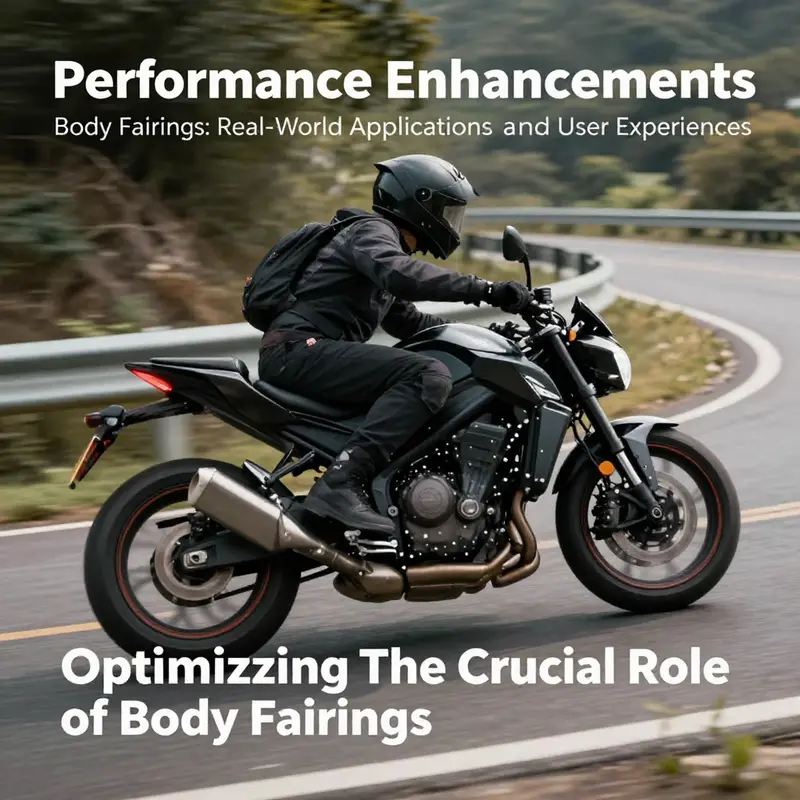
When a rider leans into a bend or accelerates toward the horizon, the motorcycle ceases to be merely a mechanical bundle of parts and becomes a dynamic system where air and rider meet engineering choice. The body fairing is at the center of that conversation. It is more than a stylish shell; it is a carefully sculpted interface that shapes how air flows around the bike, how the rider interacts with that flow, and ultimately how the machine performs in the real world. In the broadest sense, fairings exist to tame the air—to reduce drag, minimize turbulence, and stabilize the machine at speed—while also sheltering the rider from buffeting and wind pressure. Yet the story of modern fairings goes beyond wind tunnels and top speeds. It is a story of material science, of evolving manufacturing techniques, and of clever design choices that couple aerodynamics with ergonomics, safety, and even sustainability.
Material choice remains one of the most straightforward levers for performance. Early models relied on sturdy, inexpensive plastics that provided a clean silhouette but offered limited stiffness and energy absorption. Today, riders can choose from ABS plastics, advanced composites, and, in the upper reaches of the market, lightweight carbon fiber faҫades. Each material carries its own balance of weight, rigidity, impact resistance, and cost. ABS plastic is often favored for its durability and ease of repair, making it a practical option for riders who want ready-fit aftermarket parts that resist everyday wear. Composites, including fiberglass and advanced carbon/epoxy laminates, push the envelope on rigidity and the ability to tailor thickness and layup to control stiffness along critical load paths. Carbon fiber, celebrated for its extraordinary strength-to-weight ratio, can deliver dramatic reductions in weight while also allowing designers to sculpt exceptionally thin, aerodynamically efficient profiles. The geopolitical of the bike world has shifted toward carbon composites for high-performance machines, where the fraction of a kilogram shaved from the shell translates into measurable gains in acceleration, handling, and even fuel efficiency.
In practical terms, those gains show up as reduced inertia in the air. When a bike cleanly slices through the atmosphere, the rider encounters less wind push on the chest and helmet, and the chassis feels more willing to settle into a stable rhythm at highway speeds. For riders who frequently cruise above 60 mph, a well-designed fairing can lower overall drag and smooth the re-circulating air behind the rider’s hands. The effect compounds: less drag means less work for the engine to maintain speed, which in turn can yield noticeable improvements in fuel economy, especially on long rides. It also means the bike is less prone to high-speed buffeting and turbulence that can fatigue the rider over hours of exposure. These real-world benefits are not merely theoretical; riders consistently report more relaxed long-distance comfort and a more confident sense of control when the wind is a constant companion.
A telling dimension of modern fairings is how they manage the air instead of simply enclosing it. The most effective designs streamline the air path around the engine and intake region, reduce pressure differentials that create drag, and minimize wake that can destabilize the rear wheel at speed. Some architectures even integrate features that influence cooling airflow, directing quieter exhaust of heat without creating new drag pits. This is where design becomes both art and engineering: the shape must maintain a sleek silhouette while accommodating component tolerances, wiring, sensors, and sometimes cooling louvers. The resulting shell is not just a cover but a living part of the bike’s aerodynamic system. In top-tier builds, you might see 3D-printed fairings used to tailor a model’s airflow for a specific rider’s posture or preferred riding style. Although those high-tech shells may command a premium, they point to a broader trend: the fairing as a modular, adaptable subsystem rather than a fixed veneer.
Another frontier in fairing technology is the emergence of smart and modular features. The newest fairings often come with quick-release mechanisms that let riders swap shells rapidly for track days or street stints, a convenience that truly respects the rider’s time and intent. Beyond convenience, modular designs facilitate different aerodynamic balances. A rider seeking maximum straight-line speed might opt for a more enclosed, lower-drag panel arrangement, while a rider prioritizing nimble handling could choose panels tuned for lower weight and different load paths. Some manufacturers and suppliers are exploring the integration of smart sensors directly into the fairing slabs. Temperature sensors near the engine and radiators, pressure sensors in the air plenum, and even structural health sensors embedded in the panel can provide data to riders and technicians about how the shell behaves in various conditions. This kind of data feedback helps inform maintenance decisions and can guide refinements in subsequent model years.
Weight reduction represents a straightforward but powerful lever. A full carbon fiber fairing—a rare but increasingly accessible option for the performance-focused rider—has the potential to cut overall mass by a substantial margin. The effect of weight loss on a motorcycle is not limited to acceleration alone. Lighter shells reduce the moment of inertia around the steering axis, easing the rider’s inputs and allowing more immediate responses when quick direction changes are needed. In addition, lower weight reduces the gyroscopic burden on the front wheel and can improve braking behavior by reducing the load carried by the front end during deceleration. Yet the picture is nuanced. Carbon fiber panels must be handled with care, and the benefits depend on how well the shell integrates with the bike’s chassis. The most successful carbon layouts do not simply replace a standard shell; they reimagine how the fairing connects to the frame, how it diverts cooling air, and how it accepts fasteners without introducing unwanted flex in critical load regions. When done right, the weight savings translate into faster handling, quicker throttle response, and a more composed ride at high speed. In some high-end applications, manufacturers claim roughly a 40 percent reduction in weight compared with traditional plastic shells, paired with drag reductions in the neighborhood of 25 percent. These numbers are model-specific, of course, but they illustrate a pragmatic truth: even modest weight savings in the right places can produce meaningful performance dividends on a sport or touring machine.
Beyond raw performance, the environmental footprint of fairings has become a topic of growing importance. In the most advanced supply chains, carbon fiber variants may be paired with packaging certifications that reflect a commitment to responsible manufacturing and end-of-life considerations. This alignment between performance and sustainability signals a broader shift in motorcycle engineering, where the pursuit of speed and efficiency sits alongside careful stewardship of materials and processes. In some regions, fairing designers also explore recyclable or reusable fastening systems that reduce waste and simplify maintenance, reflecting a holistic approach to modern sport biking.
The design vocabulary of fairings has grown more adventurous, too. Three key trends exemplify this evolution. First, the rise of 3D-printed fairings enables model-by-model customization and rider-specific tailoring without the typical tooling costs of traditional molds. Second, the concept of modular fuel tanks integrated with fairing sections offers a more seamless aesthetic while preserving or improving fuel capacity and weight distribution. Third, the fusion of form and function through embedded sensors and quick-release mechanisms turns the shell into an active partner in performance. The rider can swap configurations mid-season to suit commuting demands, touring ambitions, or track-oriented goals. These innovations collectively reflect a shift from the fairing being a passive external cover to it being an active component of the bike’s performance envelope and user experience.
In real-world riding, riders consistently describe the most palpable benefits in long stretches of highway or canyon roads where air is a constant adversary. A well-designed fairing yields smoother, more predictable airflow, which translates to steadier high-speed cruising and less rider fatigue on extended trips. The body’s exposure to wind pressure is reduced, keeping the upper body and head more comfortable and allowing the rider to maintain an ergonomic posture without fighting against the air. The balance between downforce and drag becomes a tangible factor in ride quality, with some riders noting that a clean, stable air cushion under the fairing makes the whole machine feel more planted in gusty conditions.
Of course, every rider’s needs differ. Some prefer larger, fully enclosed fairings that maximize wind protection and aero efficiency at the expense of weight and access. Others favor lighter, more modular shells that favor handling and cost, accepting a bit more wind if it means easier maintenance and faster repairs. The choice depends not only on speed or track ambitions but also on the type of miles a rider plans to accumulate. Touring riders may emphasize comfort, cabin-like wind protection, and weather-sealing, while sport riders might chase the tightest drag figures and the crispest, most responsive handling. Across these preferences, the core rationale remains consistent: fairings are a tangible interface between the bike and its environment, and the better that interface is engineered, the more consistently a rider can exploit the machine’s capabilities without compromising comfort or confidence.
For riders who want to explore compatible replacements or new styling while avoiding the clutter of excessive naming, the market offers a wide spectrum of options. Within the broader ecosystem of fairing designs, there are categories and collections tuned for different riding goals. If you are considering a future upgrade or retrofit, a practical starting point is to browse the 2023 new fairings category, which aggregates recent options designed to fit a range of bikes and riding styles. This centralized hub makes it easier to compare shapes, materials, and mounting approaches without sacrificing performance goals. 2023 new fairings provides a window into contemporary design language and the kinds of fitment considerations that accompany the latest shells. As with all performance components, a careful fit and a credible installation process matter as much as the shell’s aesthetic appeal or lab-tested numbers.
The real-world takeaway is simple, yet powerful: a well-conceived body fairing elevates the motorcycle’s performance envelope by reducing drag, trimming weight, and smoothing wind forces on both the machine and rider. It also introduces a flexible platform for innovation—whether through smarter sensor integration, modular configurations, or lightweight composites—that invites riders to tailor their bikes to their exact needs. In this sense, fairings are not merely cosmetic or protective accessories but essential contributors to how a bike behaves at speed, how comfortably a rider can travel, and how efficiently a bike can convert fuel into motion. As technology advances, these shells will continue to shrink their role as passive enclosures and grow into active partners in the bike’s performance narrative, harmonizing aerodynamics, handling, safety, and sustainability in a single, streamlined form.
External resource: https://www.motorcycle.com/technology/2025/12/21/motorcycle-fairing-innovations-2025
Final thoughts
In summary, body fairings are instrumental in not only enhancing the aesthetic appeal of motorcycles but also significantly improving their aerodynamics and performance. As business owners, recognizing the importance of selecting the right materials and understanding market trends is essential for catering to customer preferences and maximizing sales. Moreover, real-world performance enhancements validate the value of investing in quality body fairings. Thus, focusing on these components can lead to better customer satisfaction and an enhanced reputation in the competitive motorcycle industry.