
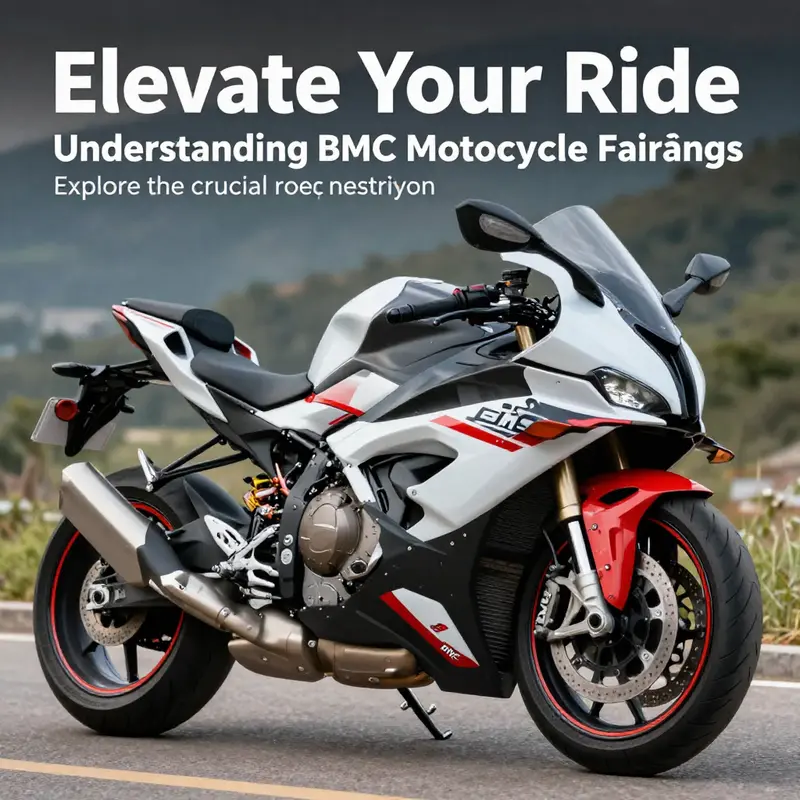
BMC motorcycle fairings are not just mere cosmetic enhancements; they are essential components that significantly influence the aesthetics, aerodynamics, and overall performance of motorcycles. Designed for a variety of models, BMC fairings ensure a perfect fit while promoting safety and visual appeal. This article delves into the intricacies of BMC motorcycle fairings, starting with the innovative materials and technologies that define their manufacturing process. It will then evaluate market trends and the economic implications for business owners in the motorcycle industry. Lastly, we will cover installation and maintenance considerations, vital for ensuring the longevity and functionality of these sophisticated parts. Join us as we uncover the multifaceted world of BMC motorcycle fairings, equipping business owners with the knowledge necessary to navigate this vibrant market.
Fibers, Fit, and Flow: The Materials and Technology Behind BMC Motorcycle Fairings

BMC motorcycle fairings sit at an intriguing crossroads where aesthetics meet aerodynamics, where the language of form is spoken through the materials that carry it and the processes that give it shape. In the broader landscape of motorcycle customization, fairings do more than cloak a bike in a glossy shell. They influence the rider’s experience at speed, protect critical components from the elements and debris, and define a machine’s silhouette in a way that communicates character as effectively as any paint job. This chapter follows that marriage of art and engineering, tracing how materials, manufacturing techniques, and fitment philosophy come together in BMC’s approach to fairings. The goal is not merely to describe a product but to illuminate how the choices behind it ripple through performance, installation, and the everyday life of riders who care about the long game of their bikes’ appearance and capability.
First, consider the canvas on which these ideas take form: the material itself. Fiberglass remains a foundational choice for many fairing lines because it strikes a practical balance between strength and weight. It offers a robust strength-to-weight ratio that translates into real-world benefits—less inertial mass to move through the air, while still delivering a surface that can bear the knocks of road life and occasional tip-in mishaps. The beauty of fiberglass lies in its versatility. It can be laid into complex molds to create sweeping curves that hug the rider and the bike’s frame, or thinned and reinforced in targeted areas to optimize stiffness where it matters most. In a market that values both retro flair and modern performance, fiberglass is a reliable workhorse for producing classic shapes without surrendering structural integrity or finish quality. Handmade fiberglass fairing kits, for example, demonstrate how craftsmen can tune thickness, layering, and reinforcement to balance rigidity with resilience. The result is a shell that presents a clean external face while maintaining predictable behavior under impact and at speed.
But a fairing is only as good as the fidelity of its surface and the stability of its shape across a range of temperatures, speeds, and stresses. Here, manufacturing technologies enter the story in meaningful ways. Resin Transfer Molding (RTM) and vacuum bagging are two techniques that have become more common in the fairing industry because they improve surface finish, dimensional stability, and consistency across production runs. RTM involves infusing a closed mold with resin after the fiber preform has been placed, allowing designers to push resin distribution and fiber alignment in a controlled fashion. This yields a surface that reads as smooth and uniform, with fewer voids and less resin-rich blemishes that can mar paint adhesion or create subtle distortions over time. Vacuum bagging, meanwhile, exerts uniform pressure on the laminate during curing. The result is better fiber compaction, fewer air pockets, and a more predictable thickness profile. In practice, these techniques translate into a more reliable base for finishing, as well as a more repeatable product for kits sold across multiple model ranges. Although the specifics of any one company’s process remain confidential, the general trajectory in the industry is clear: techniques that push toward precision, repeatability, and a consistently high-quality surface.
The interplay between technique and final appearance cannot be overstated. A fairing that begins life as a precise RTM or vacuum-bagged laminate will still require careful surface preparation and finishing. The path from mold to rider involves meticulous steps: sanding, priming, and a paint system that adheres to the laminate without staining or cracking under temperature swings and UV exposure. In this space, the emphasis on surface finish becomes a material advantage. The better the surface, the crisper the paint lines, the more lifetime the color survives before fading or crazing becomes noticeable. The fairing’s visual impact—its gloss, its depth of color, its ability to reflect light in a way that enhances the bike’s lines—depends just as much on these finishing steps as on the raw strength of the base laminate.
Customization is another axis along which materials and processes intersect with rider goals. In many aftermarket lines, kits offer options for a range of finishes, textures, and paint-ready surfaces that riders can tailor to their own tastes without compromising structural performance. The underlying resin systems, the makeup of the fiber layup, and the quality of the mold all influence how forgiving a surface is to custom painting or pinstriping. A well-considered fairing design will tolerate paint layers and specialty finishes without developing micro-cracks around mounting points or along edge radii. The story here is not simply about making something look good; it is about ensuring that the layer–layer interactions remain stable throughout miles of riding and through the heat of sun exposure and the stress of vibration that accompanies road use.
These technical strands—fiberglass as a base material, RTM and vacuum bagging as core processes, and the finishing discipline that binds them—create a chain of effects that touches installation, safety, and longevity. A fairing designed with a smart layup and a well-controlled curing process contributes to a secure fit. The mounting points must align with minimal flex, and the fairing must remain seated through wind gusts and the rumble of the road. The practical upshot is that a rider can count on a panel that not only looks the part but also maintains its geometry as the machine ages. In that sense, the technology of fabrication becomes a material guarantee of performance: the fairing performs as designed, and the rider’s confidence is reinforced each time they reach for the throttle or lean into a corner.
In the broader aftermarket ecosystem, these material and process choices carry practical implications for compatibility and installation. A kit that relies on robust fiber laminates and precise molding typically ships with well-defined fitting features: mounting tabs that align with standard hardware, clear cutouts for cable and vent routing, and an edge geometry that mates cleanly with the frame and other body components. This emphasis on fit is echoed in the industry’s attention to quality control and manufacturing standards. Even without access to every supplier’s internal data, the outward signs of meticulous engineering—consistent panel thickness, smooth edge radii, and uniform resin distribution—signal a product designed for reliable installation and long service life. A buyer can infer that behind the scenes there are rigorous checks, jigs, and molds that help ensure that every piece that leaves the shop can slot into a bike with confidence, rather than needing a series of ad-hoc adjustments. In practical terms, this reduces the time and risk involved in the installation process and helps protect the rider from accidental misalignment that could stress fasteners or compromise the fairing’s aerodynamic profile.
The installation narrative—how these pieces come together on a concrete stand or a mid-project bike build—further illustrates the value of a thoughtful material and process strategy. When a fairing kit is conceived with universal fit in mind, it anticipates the variability that exists across model families and subvariants. A well-engineered kit will have straightforward mounting points, standardized hardware, and a geometry that accommodates common frame dimensions and sensor placements where applicable. For riders, that translates into a smoother journey from unboxing to riding. It also reduces the risk of damage during installation, because the parts are designed to align with predictable reference lines and fastener locations, rather than requiring field improvisation with tools and adhesives that may not be ideal for the laminate. The result is a fairing that completes the look and performance package with minimal guesswork and a high degree of reliability.
Of course, the aftermarket environment amplifies the importance of compatibility and authenticity. A broad market means a breadth of choices, from complete body kits to individual pieces tailored to specific aesthetics or repairs. The practical reality is that riders often pursue a mix of parts to achieve a particular look or balance of protection and weight. This flexibility is one of the strengths of the BMC approach—recognizing that riders value not just a single mass-produced piece but a spectrum of options that can be combined to suit different bikes and riding styles. In this context, the fairing becomes a canvas upon which a rider writes the story of their machine, and the materials, from glass fibers to resins and sealants, are the ink that holds the lines together and the color that gives them life.
As a closing thread in this exploration, a key insight from the current landscape is the emphasis on fit and finish as a competitive differentiator. The fairing is not merely a sculpture to admire at a standstill; it is a performance component whose geometry interacts with the wind, the rider’s posture, and the bike’s handling characteristics. The best examples of BMC’s philosophy in practice translate into a sense of precision that riders can feel under their gloves. When a panel lines up with the tank, a seam falls away from the rider’s view, and the surface reflects light evenly across its length, the rider experiences a quiet confidence: this is a part that was designed with care, built with quality controls, and finished so that it can endure the realities of road life.
For readers who want a practical lens into how model families influence fairing design and fitment, a broader exploration of category pages in the aftermarket ecosystem can be illuminating. For example, the Honda fairings category provides a sense of how a common frame family maps to a range of cosmetic and protective components across different models, highlighting the way fitment is engineered to accommodate shared interfaces while still delivering unique styling cues and functional details. This example underlines the principle that compatibility and customization work hand in hand, guided by the materials and processes that shape every panel. See Honda fairings category for a representative view of how model-family mapping informs product design and selection in this space.
Externally, the market remains dynamic and responsive to both performance demands and visual preferences. A reliable, well-made fairing in fiberglass, finished through RTM or vacuum bagging, offers a durable platform for customization, with predictable results when riders choose to switch colors, add decals, or experiment with different textures. The blend of traditional handcrafting with modern fabrication technologies makes it possible to preserve the classic aesthetic that many riders prize while delivering the durability and precision expected from contemporary engineering. In the end, the conversation about BMC fairings rests on a simple truth: the value of the product is amplified when materials, methods, and fitment strategies are aligned to support both the rider’s experience and the bike’s integrity. The ability to install confidently, to ride with assurance, and to enjoy a finish that endures is what turns a fairing from a decorative shell into a trusted partner on every ride.
External resource reference: https://www.ebay.com/b/BMC-Motorcycle-Scooter-Fairings-Plastics-Body-Kits/173862/bn15894025?rt=nc&LHBIN=1
Ahead of the Wind: How BMC Fairings Drive Performance, Personalization, and the Global Aftermarket Economy
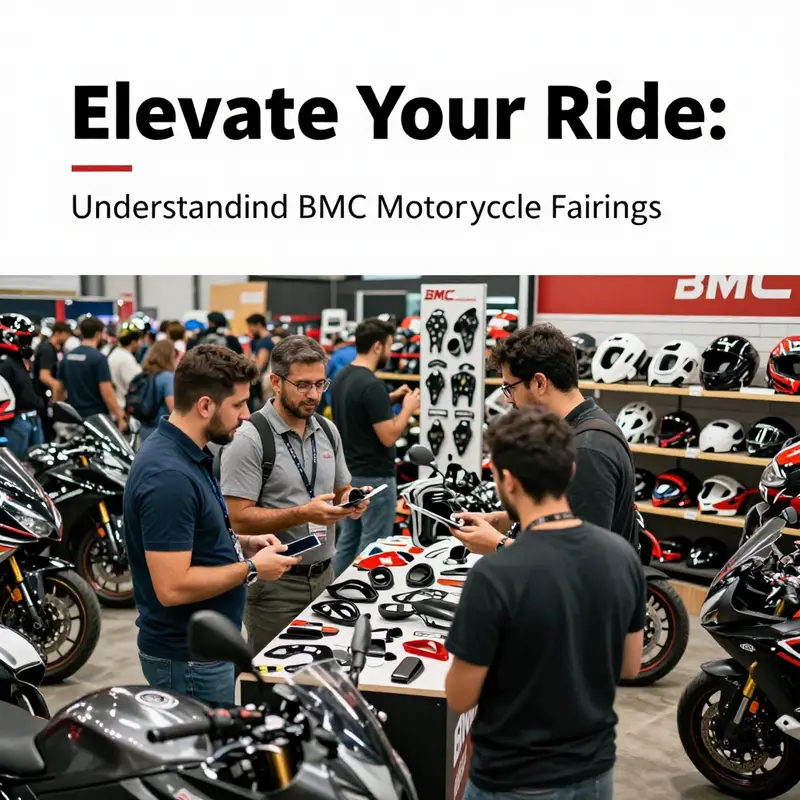
BMC fairings occupy a distinctive niche in the motorcycle world. They are more than molded shells that hide the frame and protect riders from wind and debris. They are statements of intent, sculpted to cut drag, shed weight, and sharpen visual language. Within the broader context of the motorcycle fairing market, BMC’s approach is recognizable for its emphasis on secure fit, precise installation, and an aesthetic that signals performance without sacrificing everyday usability. This chapter threads together the practical realities of fairing design with the bigger economics of the aftermarket and the evolving expectations of riders who want their machines to look, feel, and perform a certain way. It is a narrative about how a single component family can reflect technological advances, consumer desires for customization, and the economic dynamics that shape an entire industry.
The global outlook for motorcycle fairings, in raw numbers, points to a market that is expanding rapidly, even when estimates disagree on the pace or the size. One widely cited projection suggests the market could grow from around fifteen billion dollars in the mid-2020s to roughly twenty-five billion by the early 2030s, a compound annual growth trajectory in the neighborhood of seven to eight percent. A separate forecast places the base size a bit lower today—under seven billion dollars—with an even more vigorous CAGR that approaches double digits in some scenarios. These divergent figures are not the point of contradiction so much as they are a reminder that the fairing market is an ecosystem where regional dynamics, material science, and the pace of electrification can tilt the playing field. What remains consistent across these analyses is a shared sense that the market will not merely expand in volume but will transform in character as new technologies and new riders enter the space.
Several forces underwrite this expansion. First is the enduring appeal of high-performance and sports motorcycles, where aerodynamic efficiency directly translates to acceleration, stability, and fuel economy at speed. Fairings are where those gains are won or lost. A well-designed shell reduces parasitic drag, helps the bike slice through air with less effort, and can even influence cooling and radiator efficiency when integrated with venting and ducting strategies. Second is the rapid rise of electric motorcycles, which carry a different aerodynamic language. Without an internal combustion engine to disrupt the airflow, electric powertrains allow designers to rethink the silhouette. The design language favors smooth, uninterrupted lines and compact, integrated electronics clusters. In this context, fairings become not just protective covers but performance enablers—houses for sensors, chargers, and display interfaces as the rider’s interaction with the machine becomes more sophisticated.
A third driver is personalization. Consumers increasingly want vehicles that reflect their identity through color, texture, and finish. They seek options that range from race-inspired schemes to urban, streetwise aesthetics. The fairing, as the most visible part of the bike, becomes a canvas for self-expression. This trend has broadened the market beyond factory colors to a surge of aftermarket finishes, decals, and custom paint workflows. The result is a two-way dynamic: riders demand more variety, and manufacturers and aftermarket suppliers respond with modular, compatible systems that can be mixed and matched without compromising fit or safety.
Technology underpins all of this. Advances in materials science have introduced new composites and plastics that are lighter, stiffer, and more resilient to weathering. Carbon fiber composites, long associated with premium performance, are steadily becoming more accessible in high-end fairings while still being used selectively for weight-critical components. Modern plastics used in fairings resist impact and flex, offer better UV stability, and permit more complex, aerodynamically efficient geometries. At the same time, the incorporation of smart features—integrated lighting, sensor housings, and even modular electronics—calls for fairings designed with pass-throughs, mounting points, and electrical routing that keep systems protected yet serviceable. The net effect is a cycle of iterative improvements: lighter shells that maintain strength, better protection that enables longer riding seasons, and aesthetics that stay contemporary even as design language evolves.
For a reader evaluating the market through the lens of a brand like BMC, several implications emerge. BMC operates in a space where quality of fit and ease of installation translate directly into rider confidence. A catalog that emphasizes secure attachment points, precise contours, and consistent color matching speaks to enthusiasts who ride hard and demand reliability. In practice, BMC’s value proposition rests on more than just the shell. It extends to how the fairings interact with the bike’s frame geometry, how the edges align with tank covers, and how the top and bottom components meet the wind at the rear without creating flutter or buffeting. The installation experience matters as much as the finished look, because a fairing that is hard to fit or difficult to align quickly erodes the appeal of customization and undermines the rider’s sense of ownership.
Distribution channels play an equally important role in shaping the market. Online marketplaces and specialty retailers broaden the reach of high-quality fairings, enabling riders to compare options across models and brands with relative ease. Platforms dedicated to aftermarket parts, including large global marketplaces as well as regionally focused shops, help riders source complete kits or individual panels, depending on their need. The breadth of choice is a double-edged sword: it spurs innovation and fosters competition, but it also raises concerns about authenticity, fit, and longevity. BMC, along with other premium players, benefits from a reputation for consistent fitment and robust finish. That reputation helps differentiate genuine products from counterfeit or poorly engineered alternatives, a risk common to any growing aftermarket space. In this environment, tooling, molds, and surface finishing become differentiators as important as the raw material choice.
Brand positioning in this market hinges on a coherent narrative about performance, safety, and customization. BMC’s messaging tends to emphasize a blend of lightweight design and rugged durability, coupled with a fit meant to feel factory-installed even when it is a non-OEM (original equipment manufacturer) aftercare option. The result is a perceived value that aligns with riders who want to push the envelope on track performance or street performance while maintaining a degree of daily practicality. In markets where riders routinely ride year-round, the protective benefits of a well-sealed fairing are not merely cosmetic; they translate into longer component life, reduced maintenance intervals, and better protection for sensitive electronics in damp climates.
From a manufacturing perspective, the fairing value chain is a network of interdependent functions. Upstream suppliers provide engineered plastics and composite materials with properties tailored for impact resistance, weather resistance, and thermal stability. Tooling and mold-making are essential, because the geometry of a fairing is as much about flow as it is about shading and protection. Surface treatment—painting, priming, clear coats, and UV protection—determines how well the finish withstands sun exposure and road debris. Post-production processes like sanding, polishing, and color matching ensure a seamless appearance that resists visible seams and misalignments after installation. All of these steps contribute to a product that not only performs well but endures the realities of wheel torque, engine heat, and the harsher wear that comes with aggressive riding.
The role of a brand like BMC in this ecosystem also reflects the maturity of the aftermarket as a design-led field. Rather than simply marketing a cover at a price, credible fairing producers pair design intent with engineering rigor. They test fit across a range of model years, account for variations in frame geometry, and anticipate how dealers and enthusiasts will swap panels. This attention to detail reduces returns, builds trust, and fosters repeat business. In turn, a rider who has had positive experiences with fitment and finish is more likely to invest in additional pieces—perhaps a full kit for a new look, a windswept-set for track days, or a weather-ready shell for changing seasons. The cumulative effect is a more robust aftermarket ecosystem that rewards quality, depth of catalog, and the ability to deliver consistent performance across multiple models.
The relationship between BMC and the broader market is thus twofold. On one hand, macro forces push demand toward products that optimize aerodynamics, lightness, and durability, especially as electrification reshapes the performance envelope. On the other hand, consumer psychology—desire for personalization, readiness to upgrade, and willingness to invest in aesthetics—pushes manufacturers to offer more options with better fit, more precise color fidelity, and easier installation. The result is a market where the fairing is no longer a mere accessory but a strategic component of the rider’s overall package. In such a landscape, BMC’s emphasis on secure fit and a look that communicates both performance and refinement positions the brand to leverage rising demand for high-end, customized fairings while also meeting the practical expectations of riders who rely on quality to protect valuable electronics and frame hardware during daily use and high-speed runs alike.
A practical lens on the consumer experience helps illuminate how these trends translate into everyday decisions. For many riders, the fairing is the first decision point when shaping a bike’s identity. They ask questions about compatibility with their specific model year, whether the panels can be installed without removing the fuel tank, or how the finish will hold up after a winter of salty roads. They also consider whether the product supports easy maintenance and whether replacement parts are readily available when chips or scratches appear. The marketplace responds with curated catalogs, installation guides, and community-driven content that helps buyers evaluate fitment and real-world durability. In this context, the fairing becomes not only a protective article but a reliable interface between the rider, the machine, and the environment.
To illustrate how market breadth manifests in practice, one can look at how the aftermarket supports a range of options—from complete kits to individual panels. This modularity is a direct response to rider needs for customization, repair, and upcycling. It also creates a resilient business model for brands like BMC, which can offer streamlined upgrade paths without forcing a full kit purchase every time a rider wants a change. The ability to swap just a side panel or a small nose cone can extend the life of a bike’s appearance and performance at a fraction of the cost of a full rebody. For enthusiasts who value speed and aesthetics, this modular approach is a practical advantage and a philosophical alignment with the idea that riding is as much about personal expression as it is about speed.
As a closing note on the macro-financial context, consider how the fairing value chain can stimulate related sectors. Growth in demand for lightweight materials and advanced finishes spurs investment in upstream plastics, composites research, and paint and surface treatments. It fosters employment in design studios, molding facilities, and workshops that specialize in color matching and finishing. It also encourages tech-enabled features—such as integrated lighting and sensor housings—that can be embedded into fairings without compromising their core duties of protection and aerodynamics. In a period when the broader automotive and transport sectors are pursuing smarter, lighter, and more visually compelling products, the fairing segment offers a concentrated lens on how design, engineering, and consumer culture intersect.
Readers exploring the breadth of aftermarket bodies will find a useful illustration in the Honda fairings category, which demonstrates how fitment breadth and finish quality translate into real-world options for riders. The scale of variety, the attention to mounting points, and the consistency of surface finish underscore what a disciplined, quality-focused brand brings to the table. This example, while specific, echoes the broader logic that underpins BMC’s strategy: a commitment to reliability, a well-curated catalog, and a design ethos that respects both performance and aesthetics. For a deeper look into how such categories function within the market, see the Honda fairings category as a representative snapshot of the mechanisms at work in the aftermarket.
External resource: Global Motorcycle Fairing Market Analysis, Share & Industry Report (2024-2033) https://www.marketresearchfuture.com/reports/motorcycle-fairing-market-2965
The Art of Fit and Finish: Installing and Maintaining BMC Motorcycle Fairings for Peak Performance and Style
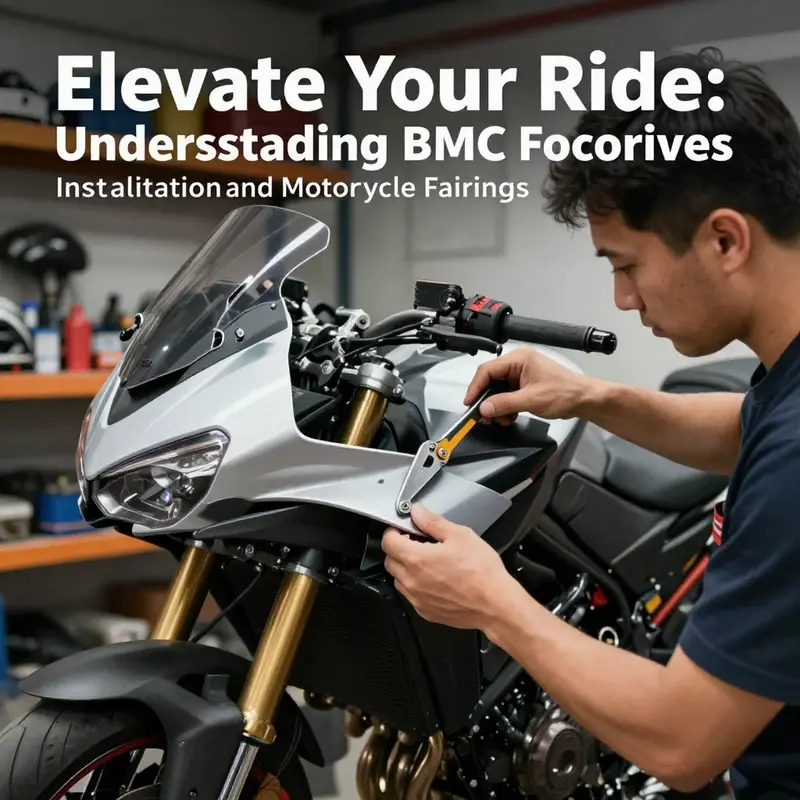
When riders talk about shaping a motorcycle’s character, what often matters most is the invisible balance between form and function. This balance is built into every BMC motorcycle fairing, not merely as a glossy exterior but as a carefully engineered shield that guides airflow, protects critical components, and frames the rider’s perception of speed and control. The chapter that follows delves into installation and maintenance as a disciplined craft, one that honors both aesthetics and aerodynamics. It treats fairings as integrated systems rather than decorative shells, recognizing that a precise fit, proper sealing, and thoughtful conditioning are essential to maximizing safety, efficiency, and long-term value. In this sense, the art of fit and finish becomes a practical, repeatable discipline—one that allows riders to tailor their machines while preserving the integrity of the original design philosophy that defines a BMC fairing family.
Material choices lie at the heart of this discipline. Most aftermarket fairings use thermoplastic materials such as ABS or polycarbonate, each bringing a distinct set of properties to the table. ABS, with its balance of rigidity and impact resistance, tolerates reasonable heat and temperature swings but can become more brittle over time when exposed to harsh UV radiation. Polycarbonate, by contrast, offers exceptional impact resistance and clarity but can be more sensitive to certain solvents and heating cycles. The interplay between these materials is not a matter of preference alone; it determines how fasteners align, how well weather seals compress, and how long a given finish will hold its integrity under road spray, sun, and road grime. For riders, this means recognizing that a fairing kit must be treated as an engineered assembly: the mounting points, the fasteners, the seals, the inner panels, and the outer shells all meet a design spec that assumes compatible coatings, cleansers, and reinforcements.
A practice emerges from this understanding: preparation precedes any attachment work. Surface preparation is not a chore but a calibration step. Begin with a thorough rinse to remove loose dust, followed by a mild cleaning solution that respects the surface chemistry of ABS or polycarbonate. Abrasive cleaners should be avoided, as their action can micro-scratch the surface or dull the finish. The goal is a surface that is clean, dry, and chemically stable so that subsequent products can cure and bond without interference. In this context, compatibility matters more than cosmetic convenience. Using a product intended for inner fairings or trim can help prevent surface degradation or hazing that would later spoil the line of the fairing edges or the look of a color-matched panel.
The installation sequence itself is a choreography. Aligning fairings to the motorcycle’s geometry requires checking every mounting point for integrity. Hardware should be inspected or replaced if signs of wear appear, including threads that feel stiff or stripped sleeves. The goal is to achieve a secure fit that resists vibration without introducing gaps at the seams. When mounting, the rider should work from the center outward, securing brackets and fasteners in a balanced pattern to avoid warping or misalignment. Once the core components are fastened, the sequence should be repeated to confirm repeatability for any subsequent installation tasks. Even minor misalignment can translate into audible rattles, increased drag, and uneven paint lines, undermining both the efficiency and the visual unity of the assembly.
A nuanced but essential facet of maintenance centers on surface care and protection. Protecting the surface from UV exposure, weathering, and dirt is not merely about keeping paint pristine; it is about maintaining the clarity of the surface profile and the effectiveness of seals and gaskets over time. A dedicated maintenance routine emphasizes conditioning the fairing’s surface while preserving the underlying material. The conditioning step should be chosen with the material in mind and performed according to the manufacturer’s instructions. The aim is to replenish lost protective inhibitors that guard against fading, cracking, and embrittlement, while avoiding any over-application that could alter the surface texture or interfere with future coatings.
Because UV light is relentless, a proper maintenance plan must include a cautious approach to rejuvenation. In practice, a targeted rejuvenation for the inner black panels and trim can help restore a near-original appearance. The principle here is to replenish lost inhibitors and restore flexibility without coating the surface with layers that could peel, crack, or cloud the finish. The process is intentionally conservative: a small amount applied with a microfiber cloth, in a circular motion, and allowed to cure before exposure to sunlight or moisture. The lesson is clear: reconditioning should be a gentle, model-specific operation rather than a brute-force restoration. Excess product can accumulate in crevices and seams, leading to long-term staining or softening that undermines the very seal integrity the fairing system relies on.
Safety and environmental considerations thread through every step. Work should occur in a well-ventilated area, with protective gloves worn to reduce skin contact with chemical formulations. Readers will encounter terms such as Safety Data Sheets in the product literature, which outline handling precautions, storage requirements, and first-aid measures. These documents are not mere bureaucratic formalities but practical guides to prevent inadvertent exposure and to surface any compatibility caveats with other cleaners or solvents. The broader lesson is that maintenance is not an activity isolated from safety; it is a discipline of risk awareness and controlled care, particularly when working with plastics that can soften, craze, or cloud if exposed to incompatible substances.
The practical path to reliable results also hinges on timing. Curing time matters just as much as the initial application. A newly rejuvenated or reassembled fairing will perform best when given sufficient time to cure before it sees sunlight, rain, or road spray. Rushing the process increases the risk of surface defects or compromised bonding at critical junctions. The curing window is a subtle but telling indicator of the overall quality of the installation, signaling whether the panel edges will remain tight or begin to separate at the seams after a few rides. Patience, in other words, is not a luxury but a performance factor that preserves aerodynamics, weather sealing, and the crisp appearance intended by the design team.
Riding a motorcycle with BMC fairings is an experience that blends engineering precision with personal expression. A complete kit offers a coherent aesthetic and a harmonized airflow management scheme, while individual pieces enable a tailored approach to repairs or upgrades. The choice between a full kit and discrete parts is more than a budget decision; it affects how the panels align, how easily a rider can access underlying systems for maintenance, and how seamlessly the look holds up under use. Complete kits reduce mismatch risk and simplify installation in ways that can pay dividends across years of ownership. That said, a thoughtful selection of individual panels can be the prudent option for riders who are pursuing a specific colorway, a particular ergonomic profile, or a targeted upgrade to the bike’s appearance and performance without replacing the entire ensemble.
In today’s aftermarket landscape, the ability to source parts from trusted platforms matters as well. Platforms that curate a wide range of BMC parts contribute to a broader ecosystem, ensuring a path to compatibility and a realistic chance of authentic fitment. When evaluating candidates, it pays to reference model-specific pages that detail the alignment of mounting points, the routing of cables and hoses, and the contour of the panel interfaces. Those interfaces determine not only how securely a panel seats but also how well a rider can move the machine through corners, how cleanly the air follows the bodywork, and how the color and finish hold up under acceleration and sun.
To illustrate the relevance of model-specific fitment without drifting into a catalog-like detour, consider a representative case of model families that command attention in the aftermarket. The fit and finish story is anchored in each bike’s unique geometry and the way the fairing curves meet the frame, tank, and seat. The same fundamental principles apply whether the panels are for a sport-focused machine or a street-oriented tourer: precise alignment, secure mounting, clean seals, and a maintenance routine that respects the material’s limits. Even when the aesthetics are bold or the color choice is highly personal, the underlying physics of airflow and drag reduction remain constant. A rider who internalizes this truth can approach installation with the confidence that every panel contributes to both the bike’s silhouette and its performance envelope.
The broader market context reinforces the idea that quality is inseparable from fitment. Buyers increasingly seek aftermarket offerings that deliver a seamless appearance, reliable weather protection, and a surface that resists fading as the years pass. The best fairings in this space are designed with a clear understanding of how they will be installed, how they will be maintained, and how they will behave under real-world conditions. This is not about chasing the newest trend; it is about building a durable, cohesive system that remains visually compelling and aerodynamically efficient across riding seasons and miles traveled. In that spirit, a conscientious installer or owner treats each step as part of a longer conversation between rider, machine, and the outboard surfaces they assemble.
For readers who want a point of reference that connects practical care with model-specific fitment, a useful anchor is the broader catalog of fairings that documents mounting points, hardware types, and seal configurations aligned with the bike’s original design language. Where relevant, model-specific pages provide concrete guidance on how to achieve a flush, seamless joint between panels, how to avoid warping during tightening, and how to preserve the crisp line that defines the bike’s profile. It is not merely about keeping panels attached; it is about preserving the intended sculptural form that contributes to the bike’s presence on the road and in photographs. A fairing that fits well and ages gracefully adds value in ways that far exceed the initial investment, reinforcing the perception that performance and aesthetics can coexist in the aftermarket ecosystem.
In practical terms, the installation and maintenance philosophy outlined here emphasizes a disciplined, iterative approach. A rider should start with a clean baseline, assess mounting points, apply appropriate protective and conditioning products with restraint, and observe the cure periods before reintroducing the motorcycle to the elements. The goal is not to achieve a perfect first attempt but to refine a repeatable process that yields consistent results in fit, finish, and durability. Over time, this approach yields a smoother, quieter, more confident ride because the fairings work as an integrated system, with fewer leaks, fewer wind noise issues, and a more uniform appearance that remains true to the bike’s character. The sense of continuity between the bike’s mechanical heart and its outer skin is what makes the difference between a passing look and a genuine craftsmanship moment on the road.
The chapter thus returns to its core premise: BMC fairings are designed to enhance both safety and aesthetics through precise fitment, thoughtful materials, and careful maintenance. The best outcomes arise not from a single step but from an ongoing habit of care, a respect for the materials’ behavior, and a clear-eyed plan for how each panel will age with the bike. That is the living art form of fit and finish—a discipline that rewards patience, attention to detail, and a willingness to invest in the longevity of the machine. For riders who embrace this approach, the fairing becomes more than a shell. It becomes a reliable partner that helps the motorcycle glide through air, weather, and time with a confidence that only well-built, well-maintained bodywork can provide.
Internal reference for model-specific fitment guidance can be found in dedicated catalog pages such as the BMW S1000RR fairings, which illustrate how precise alignment and consistent hardware choices translate into reliable performance across the life of the bike. This kind of resource supports a practical, hands-on approach to installation, where attention to mounting points, gasket integrity, and edge alignment becomes a diagnostic framework for evaluating whether a given panel will meet the rider’s expectations for both form and function. In short, the aim is to ensure that each piece contributes to a coherent whole, rather than becoming a disparate element that looks the part but fails to deliver under pressure.
External reference: For broader guidance on fairing care and maintenance directly tied to BMC’s own recommendations, see the official product page: https://www.bmc-motorcycles.com/support/maintenance-fairing-care
Final thoughts
In conclusion, BMC motorcycle fairings represent a fusion of technology, quality, and aesthetic enhancement that is vital for both motorcycle enthusiasts and business owners. Understanding the materials and technological advancements in fairing design allows companies to make informed purchasing decisions. Recognizing market trends equips business owners to adapt their strategies effectively, thus maximizing profitability in the burgeoning aftermarket sector. Lastly, proper installation and ongoing maintenance ensure that these fairings not only enhance visual appeal but also provide the necessary protection and performance benefits for motorcycles. With this knowledge, stakeholders can confidently navigate the world of BMC motorcycle fairings, ultimately leading to better motorcycles on the road.