

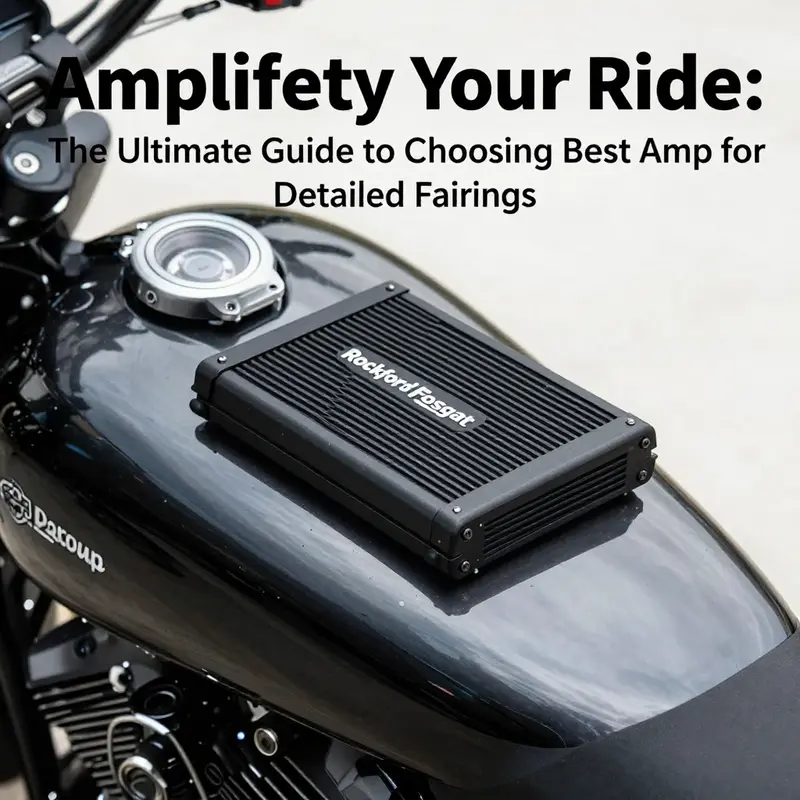
Selecting the right amplifier for motorcycle fairings is crucial for enhancing audio quality and overall riding experience. Business owners in the motorcycle accessory market can greatly benefit from understanding the intricacies of amplifier choices. This guide delves into key considerations for choosing the best amplifier tailored for motorcycle applications, exploring technical specifications that ensure compatibility and performance. We’ll also cover installation essentials, providing insights into what it takes to achieve seamless integration with the motorcycle’s audio system. Finally, this guide aims to offer a comparative analysis between Harley-Davidson options and aftermarket alternatives, helping you make informed decisions when stocking products or recommending models to customers.
null
null
Power, Protection, and Precision: Choosing the Right Amplifier for Motorcycle Fairings
The open road is a moving stage, and the rider becomes both listener and conductor. When a fairing cuts through wind and rain, it can transform from a mere shell into a sophisticated acoustic chamber. The challenge is not merely to push more watts into a speaker; it is to preserve clarity, reliability, and balance as speed, weather, and vibration compete for the same space. In this chapter, we explore how a carefully chosen amplifier plays a pivotal role in a motorcycle fairing audio system. The aim is to provide a cohesive understanding that helps riders navigate the options without getting tangled in hype or vague claims, and to connect the decision to the broader architecture of the bike’s audio environment rather than to isolated components alone.
A modern fairing audio setup hinges on integration. The fairing is a weather-exposed, compact housing that must accommodate speakers, routing, and electronics in a single, durable package. The amplifier, in this context, is not an afterthought but a central hub that dictates how well the system behaves as the bike accelerates, bends through corners, or cruises on a highway. The ideal amplifier for a fairing installation should do more than amplify voltage. It should deliver clean power, handle the impedance presented by the speakers, manage heat under riding conditions, and interface smoothly with the bike’s existing control and audio chain. This means attention to channel count, power headroom, and the presence of built-in or compatible crossover and filtering—all within a form factor that fits the tight confines of a fairing interior.
A key starting point is to acknowledge the relationship between amplifier capabilities and speaker design. Street and touring riders commonly equip weather-resistant 6.5-inch speakers, often configured in two main impedance options, such as 2 ohms or 4 ohms. The impedance the amplifier must drive influences both the raw output and the signal integrity reaching the speaker coil. A capable amplifier will present a stable load to the audio source and avoid dramatic sensitivity to small variances in the speaker’s electrical characteristics. In practical terms, this reduces the likelihood of audible hiss, buzz, or subtle distortion that becomes more noticeable when wind noise rises at highway speeds. The amplifier’s input stage should be robust against vehicle-generated interference, and the signal path should preserve the fidelity of the original audio signal even after long runs through rugged wiring harnesses.
Power delivery, often framed as watts per channel, can be misleading if not contextualized. On a motorcycle, the available electrical system is compact and sensitive to the rider’s needs—charging, headlights, and other accessories all demand power at the same time. A practical approach is to prioritize clean, efficient amplification over brute force. The goal is headroom: enough reserve to maintain loudness and clarity when the music needs to cut through wind, engine rumble, and road surface textures, without overtaxing the electrical system. In real-world terms, this translates to selecting an amplifier that provides ample channel control and clean clipping thresholds rather than simply chasing peak numbers. When the system has proper headroom, you can sustain comfortable listening levels at speed with minimal distortion and a more natural dynamic range.
Integration with the fairing’s speaker kit is as important as the amplifier itself. The most seamless installations come with a matching installation kit and spatially aware speaker components designed to work together. The installation kit often includes weatherproof mounting brackets, sealed enclosures, high-quality wiring harnesses, and connectors rated for exposure to sun, rain, and temperature fluctuations. The right kit reduces the risk of moisture infiltration, which can compromise both the wiring and the performance of the amplification chain. It also makes service and replacement simpler, because standardized harnesses and mounts align with the bike’s geometry and the fairing’s contours. This is not a luxury; it is a practical safeguard that protects the investment and keeps maintenance straightforward.
Beyond physical fit, tone shaping and filtering are essential to achieving a balanced soundscape. Many riders appreciate built-in crossovers that can separate the audio signal into high- and midrange bands before amplification, reducing the chance that overpowering bass or shrill highs overshadow the midrange clarity. A well-designed fairing system may offer multiple channels that can be configured as dedicated front channels, with a separate channel handling a subwoofer if the setup includes one. In a compact fairing, a two- or four-channel amplifier paired with intelligently placed high-pass filters can yield a crisp, controlled sound that mirrors the rider’s listening preferences. The aim is to minimize phase issues and maintain coherent imaging so that the sound appears to emanate from the speaker positions rather than from a generic, disconnected source. This coherence matters more on the open road, where the spatial cues that help locate vocal detail and instrumental textures can easily blur under wind and engine ambience.
Another layer of consideration is weather sealing and thermal management. A motorcycle’s environment can be harsh: water spray, sun exposure, and heat generated by the engine and charging system all conspire to test electronics. The best amplifiers designed for fairings incorporate weather-resistant enclosures, gasketed mounting plates, and sealed connectors. Thermal management is equally critical: an amplifier that runs hot can degrade audio performance, reduce efficiency, or shorten service life. Designers often combine heat sinks with strategic airflow paths or mount the unit in a way that capitalizes on natural convection. A discreet, well-ventilated position inside the fairing can be a boon for performance and longevity. When you pair the amplifier with reliable speakers and a secure installation kit, you create a chain of resilience that stands up to exposure and vibrations, maintaining sound quality even after long rides or rough pavement.
The process of choosing a specific amplifier should be grounded in the rider’s goals and the bike’s electrical environment. If the objective is to preserve stock aesthetics and achieve a noticeable uplift in sound without intrusive modification, a purpose-built amp designed for motorcycle fairings is the right fit. The installation approach should respect the bike’s original wiring harness and electrical architecture, minimizing the need to cobble together power feeds or ground points. A clean, professional installation reduces the risk of electrical noise entering the audio signal or creating interference with other electronic systems. It also makes future upgrades or maintenance more straightforward, since the harnesses and connectors used in the kit provide predictable interface points.
In evaluating options, the rider should consider how a given amplifier handles the Stage I or Stage II configurations that often accompany fairing speaker kits. Stage I configurations typically involve the core fairing speakers, while Stage II adds additional lower speakers or supplementary channels. The amplifier should be capable of accommodating these configurations without forcing drastic compromises in tone or reliability. Ideally, the system offers built-in processing that aligns with the expected speaker array and a wiring plan that supports both stages with minimal reconfiguration. The practical upshot is that the best amplifier for a fairing installation is one that is comprehensively compatible with the intended speaker setup, rather than a one-size-fits-all unit that may require awkward adapters or alternate modes of operation.
Riders also weigh the long-term value of a complete ecosystem. A high-quality amplifier is most effective when paired with a compatible speaker kit and an appropriate installation solution. The synergy between amp, speakers, and fairing hardware matters as much as raw power. When all elements are designed to work together, the result is a smoother frequency response, less mechanical noise transmitted through the fairing, and a listening experience that remains legible at highway speeds. This integrated approach makes the riding experience more enjoyable, reduces fatigue, and preserves the music’s intent across changing wind conditions and road textures. It is a reminder that the best amplifier for motorcycle fairings is not only about louder output; it is about controlled, immersive, and dependable sound under real-world riding conditions.
For riders who want to expand their knowledge beyond the technicalities of power and impedance, it can be helpful to explore the broader ecosystem of fairings and their compatibility with after-market audio components. A practical reference point is available in the general fairing category that covers a wide range of models and configurations. This resource can offer useful context about how different fairings accommodate equipment and how mounting geometry can influence acoustic results. When you consider the full lifecycle of a fairing audio upgrade—from selection to installation and ongoing maintenance—it becomes clear that the amplifier is the central bridge between the rider’s listening preferences and the bike’s physical design. The bridge must be sturdy, predictable, and forgiving of the harsh environment in which a motorcycle lives.
To put these considerations into a concrete narrative, imagine a rider who values both performance and reliability. The rider wants clean, undistorted sound that remains intelligible at high speeds and through gusty crosswinds. The chosen amplifier should deliver consistent power across a pair of midrange and treble drivers, perhaps with a dedicated channel for a subwoofer if the configuration includes one. It should not require a cosmetic overhaul of the fairing or an invasive rewiring that complicates future service. The installation kit should provide secure mounting, weatherproof seals, and a tidy routing plan that minimizes exposure to heat sources and vibration. In such a setup, the music becomes a companion rather than a distraction, delivering clear vocals and well-defined instrumental textures while allowing the rider to maintain full awareness of road conditions and traffic.
The decision-making process, then, centers on three intertwined questions. First, what level of headroom is truly needed for the rider’s preferred listening level at typical highway speeds? Second, how well does the planned amplifier integrate with the fairing’s speaker configuration, including any Stage I or Stage II arrangements? Third, can the installation be completed with a kit that ensures weather protection, ease of maintenance, and a clean electrical integration that respects the bike’s existing systems? Answering these questions requires thoughtful evaluation of the ride profile, the rider’s audio preferences, and the practical realities of installation. A well-chosen amplifier emerges as a durable, dependable partner that preserves the integrity of the music while withstanding the elements and the rhythm of the ride.
From a practical standpoint, it is worth noting that a few riders prefer to source all pertinent components from a single, professionally designed package. A purpose-built system can reduce the guesswork involved in selecting compatible speaker and amplifier pairings. It also tends to simplify warranty coverage and service, since the components are designed to work as a cohesive unit. While the marketplace features a range of aftermarket options, the most reliable outcomes often come from configurations that emphasize system compatibility, weather resilience, and installation simplicity. In the end, the best amp for a motorcycle fairing is the one that delivers consistent, clean power while integrating seamlessly with the fairing’s physical footprint, the speaker array, and the rider’s expectations for sound quality on the open road.
For riders who want to explore further context about fairing options and compatibility with various audio configurations, a broader catalog of fairings is available that can provide deeper examples of how fairing shapes installation plans and acoustic outcomes. This resource offers an excellent starting point for understanding form and fit, and how thoughtful design choices influence the acoustic performance of a complete system. To explore a related collection of fairing options, you can visit the Honda fairings page, which provides a broad overview of fairing models and configurations that riders often consider when planning upgrades. See: Honda fairings.
In sum, selecting the right amplifier for a motorcycle fairing is less about chasing the most powerful unit and more about aligning power delivery, impedance management, weather sealing, and installation practicality with the rider’s expectations. The best outcomes arise when the amplifier is treated as the keystone of an integrated, weather-ready audio system. With careful choice, precise installation, and an understanding of how fairing design influences acoustics, riders can enjoy a soundscape that is as dependable as their ride—and as expressive as the road itself.
Power in the Wind: Mastering a Weatherproof, Vibration-Resistant Amplifier Installation for Motorcycle Fairings
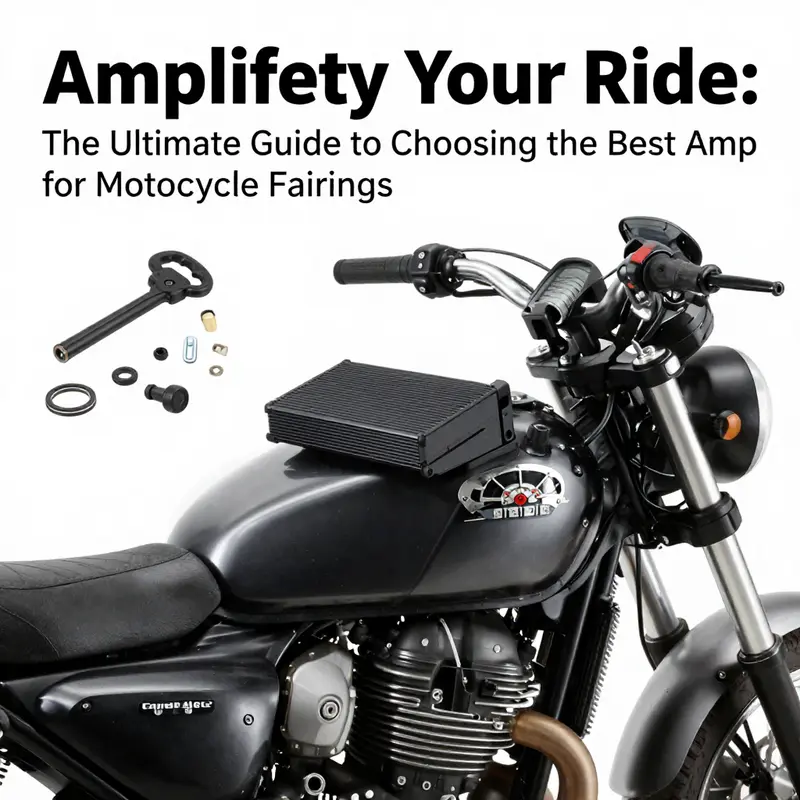
The best listening experience on a motorcycle comes from a carefully engineered chain of components that survive the road as faithfully as they reproduce the source. The fairing, the speakers, the wiring, and the amplifier form a compact ecosystem where every choice affects clarity, dynamics, and reliability at speed. In pursuit of a high-performance audio setup for bikes, riders increasingly demand a solution that not only delivers clean, distortion-free sound at highway velocities but also withstands rain, vibration, and the constant churn of engine heat. The amplifier that powers this system must be compact enough to fit within the fairing’s breathing room, rugged enough to survive the ride, and smart enough to integrate with the factory audio architecture so that stage-labeled speakers reveal their full potential rather than fighting for space against rattles and interference. A purpose-built motorcycle amplifier, designed with these constraints in mind, becomes the keystone of the install. It is the difference between a system that simply works and one that holds up under the longest days on the road.
Choosing the right amplifier is the first, most impactful step. In practice, the ideal unit for a fairing is a compact, rugged design that lives up to the demands of riding conditions. Look for an enclosure that seals out moisture without trapping heat inside. An IP65 rating or higher signals that water, dust, and spray from the road won’t creep into the electronics. Shock absorption is equally important because the bike’s vibrations can otherwise fatigue the internal components, degrade signal integrity, or loosen connections over time. Heat dissipation is another critical factor; high-performance audio electronics generate heat, and the fairing’s limited airflow means the amp must shed heat efficiently. A well-designed motorcycle amplifier will feature minimal footprint, robust mounting options, and internal or external heat-management strategies that keep performance stable across a wide range of ambient temperatures.
Beyond physical robustness, the amplifier should be designed to integrate cleanly with the fairing’s audio system. When possible, choose a unit with mounting patterns that align with standard hardware found inside many aftermarket installation kits. This alignment reduces the need for awkward adapter brackets and keeps the overall install tidy. The goal is to avoid any improvisation that could loosen over time, introduce rattles, or create ground loops. Integration also means predictable electrical behavior. A correctly spec’d amp draws current in a controlled manner and offers protective features such as thermal shutoff, short-circuit protection, and fusing that protects both the audio electronics and the bike’s electrical system. In a well-executed install, the amplifier’s behavior is transparent to the listener: quiet in the background when no music is playing, and loudly responsive to the cue of the input source when the rider wants to tune in a bass-heavy track or a high-frequency guitar line without audible hiss or hum.
Placement inside the fairing is a balancing act between accessibility, ventilation, and protection. The ideal mounting zone is a dry, ventilated pocket within the fairing where there is enough space to avoid squeezing any components. Practical destinations include areas near the fuel tank where room exists for cables yet away from sources of heat and direct contact with metal surfaces that could affect grounding. Another common choice is under the seat, where shielding from the elements is enhanced and cable runs can be kept short. Regardless of the exact spot, it is crucial to avoid direct metal contact that can create ground loops or chafing through the mounting hardware. Rubber grommets or dedicated vibration-dampening mounts help isolate the amp from the frame’s movement. A well-damped installation not only preserves the integrity of the signal path but also reduces the chance of audible vibroacoustic interference that can masquerade as hiss, buzz, or tonal mud in the listening experience.
Wiring and connections form the nervous system of the install. The speaker wires should travel through protected conduits or raceways inside the fairing. This routing protects against chafing from movement and from moisture intrusion at any exposed junctions. It is worth investing in weatherproof connectors at all ends of the cable runs. The last thing a rider needs is a sudden stereo fault at the moment when rain starts to fall or the road becomes harsh. Weatherproof connectors paired with sealed grommets at points where cables pass into the amp housing provide an extra layer of assurance for durability. A clean, shielded signal path is paramount. Shielded RCA cables, run along existing harnesses rather than crisscrossing random wiring, minimize the risk of interference and preserve the fidelity of the audio signal from source to amp.
Power management is another pillar of a robust installation. The amplifier should be powered directly from the motorcycle’s battery rather than through the stock accessory line. This approach avoids overloading sensitive circuits and provides a clean, dedicated supply that can handle the amp’s peak draw without sagging brightness in the instrument cluster or triggering voltage drops that manifest as muted sound or crackling. A fused inline circuit breaker, rated to match the anticipated amp draw, acts as a safety valve. In practice, a 10–20 amp fuse is a prudent starting point, with the exact rating calibrated to the amp’s wattage and the system’s overall energy budget. Keeping the power wiring short and direct reduces voltage drop and heat buildup, contributing to longer-term reliability. Remember that a higher-performance amplifier will demand more robust power distribution, so plan ahead rather than chase performance with ad-hoc upgrades later on.
The audio signal path deserves equal attention. The source—whether a Bluetooth receiver, a dedicated media module, or a smartphone—must feed the amplifier with a clean, balanced signal. Shielded RCA cables are essential here, and routing them should avoid proximity to power lines and heavy gauge speaker wires that could introduce noise. If any ground loops or hums appear during testing, it is a sign that the grounding scheme needs to be revisited. A common strategy is to run the ground from the amplifier directly back to the battery’s negative terminal using a sturdy ground strap or a dedicated ground bus within the fairing. This direct approach minimizes potential ground impedance that can produce hum or crackling under certain engine RPM ranges or electrical accessory loads.
The moment of truth comes with system testing. After the install, a thorough audition of the entire chain confirms that the amplifier is not only performing but doing so consistently. Listen for hum, buzz, or distortion at multiple volume levels and across the full musical frequency spectrum. This is where the design choices made during mounting and wiring prove their value. Properly damped mounts and routed cables will translate into crisper highs, more solid midrange, and deeper, controlled bass without turning the fairing into a speaker tent that flaps at 70 mph. Fine-tuning the equalization becomes a careful exercise in balancing the acoustics of the fairing’s internal volume with the characteristics of the installed midrange and woofer pairs. The goal is a natural, seamless vocal presence and a bass line that feels present without becoming overpowering or muddy. If the system reveals unanticipated resonances, it’s often a matter of adjusting the mounting position, reconfiguring cable runs, or adding dampening material to certain panels inside the fairing. The result is a loudness that stays proportional to the ride rather than a transient spike that competes with the engine’s roar.
Safety is not an afterthought; it is a core requirement of any motorcycle installation. The installation should begin with disconnecting the battery to prevent shorts while components are being handled. Throughout the process, use insulated tools and verify that there are no exposed conductors that could contact metal surfaces or each other. Even small errors in routing or grounding can have outsized consequences when the bike is vibing at highway speeds. A systematic, patient approach reduces the risk of miswiring and simplifies future maintenance. As with any aftermarket upgrade, the aim is frictionless operation that remains stable across rain, heat, cold, and the occasional vibration-induced micro-shocks of rough terrain.
The value of referencing official installation guides cannot be overstated. Reputable guides from leading audio brands provide diagrams, safety precautions, and recommended mounting conventions that translate well to motorcycle fairings. These manuals describe the typical connections, insulation practices, and testing procedures that ensure a solid install. While the assembly and finish should look like a factory integration, the underlying engineering demands careful attention to detail. Following established guidelines not only improves reliability but also helps preserve the integrity of the bike’s electrical system. In particular, consulting installation guides for motorcycle amplifiers can illuminate best practices for routing, protection, and grounding that general automotive advice often overlooks. For readers seeking a practical, stepwise resource, the official motorcycle amplifier installation guide offers a clear blueprint for aligning components with the fairing’s geometry and the bike’s electrical architecture.
In the broader ecosystem of fairing upgrades, readers may also consider exploring the wide spectrum of fairing kits and speaker options that some communities curate for specific models. A well-chosen fairing pair or speaker kit can dramatically influence how the amplifier’s power translates into perceived loudness and clarity. When selecting speaker kits, it’s essential to ensure that the impedance and sensitivity align with the amplifier’s design. Many riders find that pairing weather-resistant speakers with a purpose-built motorcycle amplifier yields the strongest, most consistent performance across riding conditions. The synergy between speaker design, enclosure tuning, and amplifier capabilities defines how faithfully the music reproduces at speed and under varying atmospheric conditions. As part of a thoughtful installation, the entire chain from source to speaker should be evaluated so the system remains coherent as a single, integrated unit rather than a collection of separate parts.
For riders looking to deepen their understanding and expand the setup later, it is worth noting how the fairing environment interacts with system integrity. The fairing’s internal volume, door-like panels, and available mounting planes affect not only micro-resonances but also how heat exits the enclosure. Small design choices—such as the position of a vent, the use of acoustic foam to damp internal reflections, or the routing of cables behind a panel—can yield meaningful improvements in perceived clarity and dynamic range. These nuanced adjustments are often the difference between a loud but fatiguing listening experience and a true, musical, on-the-road audition that remains comfortable through long rides. The key is to treat the installation as an integrated system rather than a collection of add-ons. A coherent system respects the fairing’s geometry, the rider’s sensory expectations, and the bike’s electrical realities.
As readers prepare to embark on this journey, they should keep in mind that the path to optimal sound on a motorcycle is not simply a matter of choosing the most powerful amplifier. It is about choosing the right amplifier for the environment, integrating it thoughtfully, and tuning the entire chain to work as a single, resilient system. The most durable, reliable setups are those that emphasize secure mounting, robust protection against the elements, clean power delivery, and meticulous cable management. When these elements come together, the rider gains a listening experience that feels natural, detailed, and dynamic—whether traversing a canyon sweep, cruising along a highway, or sitting in the rain waiting for a light to change. The wind becomes a companion rather than a variable; the audio becomes a steady companion that enhances the ride without demanding attention away from the road ahead.
For readers interested in further exploring the broader ecosystem of fairing options and their compatibility with audio upgrades, consider visiting a general catalog of fairings. A practical starting point is a Yamaha fairings collection, which offers a range of shapes and mounting schemes that can influence how the amp and speakers fit and perform within the fairing. The visual geometry of the fairing can determine cable routing decisions and mounting locations, making it a useful reference as you plan the install. Yamaha fairings can provide a helpful framework for thinking about space, clearance, and access to important mounting points while you design around the amplifier and speaker kit. This kind of planning helps ensure that the final result looks integrated and professional rather than improvised and temporary.
Ultimately, the best amplifier installation in a motorcycle fairing is as much about patience and precision as it is about watts and volts. The engineer’s eye—attention to cable tension, grounding integrity, and thermal management—will reward the rider with a listening experience that remains consistent across miles and seasons. The fairing is not merely a cosmetic add-on; it is a tailored acoustic chamber that, when properly utilized, unlocks the music’s full potential while preserving the machine’s reliability and the rider’s safety. As the road unfolds before you, the system should disappear into the wind, delivering a soundtrack with clarity, depth, and nuance that matches the precision of the bike’s handling. The result is a riding soundscape that feels purposeful, resilient, and perfectly at home on the highway.
External resource for deeper installation details: For a comprehensive, brand-agnostic installation framework and step-by-step guidance, consult the official motorcycle amplifier installation guide. This resource offers diagrams, safety protocols, and robust recommendations that align with the principles outlined above. https://www.rockfordfosgate.com/support/installation-guides/motorcycle-amplifiers/
Riding on Sound: Choosing the Right Amplifier for Motorcycle Fairings
The thrill of listening to music or clear navigation cues while slicing through wind and weather is a big part of what modern motorcycle fairings offer. A fairing is already doing a lot of work to stabilize airflow, cut drag, and shield riders from the elements. Adding a capable amplifier to drive weather-resistant speakers turns the fairing into a refined acoustic cocoon, where every note and every spoken instruction travels with the rider rather than fighting the wind. But the power to push sound through a fairing does not come from wattage alone. It comes from the careful choreography of integration, impedance, weather sealing, and installation that ensures the system remains stable as the bike accelerates down the highway and heat, vibration, and grime take their toll. In this space, the debate about the best amp for motorcycle fairings unfolds as a balance between factory harmony and aftermarket aggression, between ease of use and customization, and between the realities of a rider’s budget and the long-term reliability they expect from their bike’s audio system.
To begin, many riders start with an OEM approach, especially on models where the bike’s manufacturers have built a factory-integrated audio strategy around the fairing’s silhouette, the electrical harness, and the airflow that characterizes a given model. These factory solutions are designed to deliver a seamless install from the moment the bike rolls off the showroom floor. They are engineered to match the acoustics of the bike, to fit the fairing geometry, and to work with the bike’s voltage and charging profile without demanding custom wiring. The primary advantage here is simplicity: a rider can often count on straightforward installation, minimal modification, and a system that has been tested for the bike’s operating environment. This means less risk to weather sealing, less chance of rattling or water ingress, and a level of reliability that comes from a package the manufacturer designed as a whole. The amplifier in such systems is tuned to the speaker array that ships with the bike, and it is paired with the corresponding installation kit and speaker harnesses to ensure the system behaves as a single, integrated unit.
When riders evaluate these OEM approaches, several practical considerations rise to the surface. The install is typically a clean fit that respects the bike’s aesthetics and structural integrity. The electronics are designed to handle the vibrations and thermal swings that are part and parcel of highway riding. The system’s impedance, wattage distribution, and the signal chain are calibrated to maximize clarity at highway speeds, where wind noise and engine rumble can otherwise mask important cues. A common trade-off, however, is that these OEM configurations are generally tuned for balance and reliability rather than sheer loudness or the broadest possible soundstage. They provide enough power to deliver clear dialogue and music without stripping the rider of the subtle details that give a soundtrack real presence. For riders who prize a clean, factory look and a worry-free install, the OEM path often makes the most sense. The price point on this path tends to reflect the engineering and integration work involved; it is typically positioned to reflect a premium sense of value that comes with factory validation while still remaining accessible to riders who want a turnkey upgrade.
On the other side of the spectrum lies the aftermarket amplifier route. Here the landscape broadens quickly, offering more power, more control, and the possibility to tailor the sound to individual tastes and riding environments. Aftermarket solutions bring with them a suite of advantages that speak to audio enthusiasts who crave a bigger, more precise, and more flexible listening experience. A key advantage is higher available wattage and a broader dynamic range. More power means the system can handle dynamic peaks in music, bass transients, and complex soundtracks without compressing or losing impact when the bike is moving fast. This is particularly appealing to riders whose fairing speaker configurations include multiple channels or higher-sensitivity drivers. In addition, aftermarket amps frequently come with advanced signal processing: built-in equalizers, crossovers, and time-alignment features that let the rider sculpt the soundstage as if they were tuning a high-end home audio system. The result can be a more vivid midrange, crisper highs, and a controlled, tight bass that remains intelligible even at speed where wind becomes the primary soundscape.
Yet there is a price to pay for that freedom. The upgrade from OEM to aftermarket often requires more thoughtful planning, because the integration challenge moves from a single, factory-tested harness to a custom wiring endeavor. Installation kits, weather-sealed connectors, and speaker kits must be chosen with care to ensure the system remains robust in rain, dust, and vibration. The fairing’s internal space can impose limits on amplifier size and wiring routes, and not all installations can be completed without modifications to panels or mounting points. Power management also becomes more critical. More audio power can draw more current, which means riders should consider the overall electrical load, potential voltage drops, and whether the battery charging system can sustain the extra demand, especially on longer rides with engine idle time. In practice, what looks straightforward on a bench can involve a thoughtful, methodical plan on the bike, with careful routing of power and signal wires, secure grounding, and protective shielding to prevent interference or chafing against moving parts.
A practical way to gauge which path to choose is to clarify priorities. For riders who value a straightforward, reliable upgrade that preserves the bike’s original design and ride feel, the OEM approach fits well. It minimizes the risk of water intrusion and misalignment because the entire package is designed to work together from day one. It also keeps maintenance predictable, since the system was designed with the bike’s service schedule in mind. On the other hand, riders who want a more forceful audio presence, a broader sonic footprint, or greater freedom to shape the listening environment will likely gravitate toward aftermarket amplifiers. The payoff is the ability to drive high-quality, weather-ready speakers with a dedicated amp that can deliver clean output, tighter control, and an overall sense of immersion that aligns with personal music preferences and riding style.
In the realm of practical details, impedance matching remains a cornerstone of a satisfying installation, whether OEM or aftermarket. Fairing speakers typically present either 2-ohm or 4-ohm loads, and the amplifier must be chosen to match the speaker impedance closely to maintain efficiency and prevent overheating. An undersized or mismatched amp can struggle to drive a low-impedance load, producing distortion at higher volumes or causing the amp to overheat during long rides. Conversely, a higher impedance with an amp not delivering adequate current can leave the system sounding thinner than desired. The optimal approach is to pair speakers and amplifier with a plan that preserves the intended character of the sound while ensuring reliability across the bike’s usual temperature and vibration range. This is where installation kits and proper speaker kits come into play. They ensure that the wiring, connectors, mounting hardware, and sealing solutions are designed to endure the same weather and road conditions as the rest of the bike. A complete package that includes amplifier power wire harnesses, fuse protection, ground points, and weatherproof connectors can significantly reduce the risk of moisture ingress and intermittent performance that can frustrate a rider during a summer tour or a cold, damp morning ride.
The decision matrix thus comes down to balancing simplicity against sonic ambition, and to weighing how much customization a rider wants against how much risk they are prepared to manage. OEM solutions deliver a clean, predictable upgrade with strong reliability and seamless integration. They preserve the bike’s original aesthetics and function, and they’re easier to install for riders who prefer a plug-and-play approach. Aftermarket amplifiers open the door to a broader sonic palette, with more power, more sophisticated signal processing, and the freedom to craft a sound that mirrors personal tastes and riding scenarios. They demand more planning, a careful selection of compatible components, and a willingness to invest in a robust installation strategy that can weather the elements at high speeds.
For riders leaning toward the aftermarket path, a disciplined, methodical approach pays dividends. Begin with a careful assessment of the existing speaker configuration, noting the impedance, the number of channels, and the physical space available in the fairing lower area. Map out a wiring plan that includes a dedicated power circuit with an appropriately rated fuse, a solid ground, and a route that avoids heat sources, moving parts, and pinch points. Consider an installation kit that provides weather-resistant connectors and grommets designed for motorcycle environments, and couple it with a compatible speaker kit that matches the array required to realize your sound goals. The goal is to maintain a weatherproof barrier while ensuring the amplifier’s heat dissipation doesn’t become a liability when the sun turns the bike’s fairing into a small oven on a hot afternoon.
A final note on integration concerns a rider’s broader aesthetic and functional priorities. OEM solutions are often preferred by riders who want the least modification to the bike’s original wiring or body panels and who value a clean turn-key appearance. Aftermarket solutions, while potentially offering greater sonic depth, can occasionally alter the bike’s line or require more visible wiring channels, especially if the installation is not fully integrated into the bike’s fairing. Each rider must consider how visible the amplifier will be, how it affects the fairing’s shape, and how well it blends with other electronic accessories, such as navigation screens or communication setups. It’s a reminder that the best amp for a motorcycle fairing is not a single model or brand, but the choice that aligns with the rider’s priorities for sound, reliability, ease of installation, and overall riding experience.
To anchor this discussion beyond the general principles, it helps to consider how a rider would approach a real world upgrade on a typical touring or adventure bike with a sizable fairing. If the rider prioritizes a balanced, maintenance-friendly solution, they may opt for a factory-aligned amplifier and speaker kit that is designed to work together in a weatherproof, vibration-tolerant package. If the rider values a deeper sonic field and is prepared to invest in a carefully planned install, they might pursue a higher-output aftermarket amplifier plus a matched set of lower fairing speakers with a dedicated installation kit, ensuring the system remains sealed from the elements and remains stable across miles of highway. The correct choice, in this sense, is less about chasing the loudest possible volume and more about sustaining a crisp, legible sound signature under the varying conditions encountered on long rides.
For readers who want to explore related fairing options and accessory categories while keeping the discussion grounded in practical decisionmaking, one relevant reference area is the Honda fairings category, which demonstrates how aftermarket components are organized and presented for a specific range of bikes. This category embodies the mindset that aftermarket solutions operate within a modular ecosystem: one component is designed to work with another, and the whole system benefits from cohesive packaging that honors both performance and protection. See the Honda fairings category for an example of how fairing-mounted electronics and speaker systems are integrated into a single, compatible package. Honda fairings.
Beyond the choices of OEM versus aftermarket, the rider should also be mindful of how the audio system fits into the broader riding experience. A well-tuned amplifier can transform a fairing from a mere wind-deflector into a confident, immersive listening platform that supports navigation cues, conversations via intercom, and the enjoyment of a well-mixed musical experience during long journeys. The amplifier’s role is to preserve the integrity of the signal as it travels through changes in temperature, humidity, and the rigors of wind pressure, ensuring that the system remains faithful to the source while adapting to the conditions of the ride. In this light, the best amp for motorcycle fairings is not simply the one with the highest wattage; it is the unit that integrates gracefully with the existing system, respects the fairing’s acoustics, and delivers reliable performance ride after ride.
The comparative landscape remains dynamic as new hardware and installation approaches emerge. Riders who are curious about the specific architectural choices behind an OEM solution or about the latest aftermarket innovations should consult reliable sources that describe how factory and aftermarket audio ecosystems are engineered to perform in motorcycles. External resources offer insights into how these systems are tested for weather resistance, vibration tolerance, and electrical stability. For a broader sense of OEM audio architecture and a related perspective on fairing audio integration, an external reference provides useful context about how official options are presented and supported by the manufacturer. External resource: https://www.harley-davidson.com/us/en/.
Final thoughts
Understanding the dynamics of choosing the best amplifier for motorcycle fairings goes beyond just sound quality; it encompasses the entire riding experience. By selecting the right products, ensuring compatibility, and facilitating proper installations, business owners can significantly enhance customer satisfaction and loyalty. Whether opting for the reliable Harley-Davidson Audio Powered By Rockford Fosgate or venturing into reputable aftermarket alternatives, a well-informed decision can lead to remarkable audio performance and make any ride memorable.