

For motorcycle enthusiasts and business owners alike, the quest for superior audio quality on the open road is a key pursuit. With the integration of 6×9 speakers in motorcycle fairings, optimizing sound has never been easier or more rewarding. Accurate sound reproduction enhances the riding experience, allowing riders to enjoy their favorite music, podcasts, or navigation instructions without compromising safety. This article will guide you through meticulously curated recommendations, essential installation guidelines, defining performance features, comprehensive market comparisons, and invaluable user feedback, providing a strong foundation for your audio upgrade. Understanding each aspect ensures you select high-quality speakers that fit seamlessly with your motorcycle, thus enriching your journeys ahead.
Riding with the Right Notes: A Practical Guide to 6×9 Fairing Speakers for Motorcycles

When you turn the ignition on and roll toward the open road, the soundtrack becomes part of the ride itself. The hum of the engine, the slap of wind, the distant whistle of rain—these are the variables a rider cannot escape. What you can control is the audio system that rides with you, especially the 6×9 speakers tucked into the fairing. The goal is not simply louder sound, but a reliable, high-fidelity presentation that holds together at highway speeds, in wet weather, and through the kind of temperature swings that would test any delicate electronics. In the evolving market for motorcycle audio, a few guiding principles mark the path to the best choice: weather resistance, power handling, and a design that integrates cleanly with the bike’s existing fairing mounts. These are not abstract ideas; they show up in how speakers are built, how they mount, and how they respond to real riding conditions. A premium, factory-integrated solution promises a seamless install and precise tuning from the manufacturer, while robust aftermarket options offer the flexibility to tailor performance to your bike and riding style. The decision hinges on balancing durability with acoustic clarity, and on ensuring the system can be upgraded or modified without turning the fairing into a maze of wires and voided warranties.
Think first about weather resistance. A motorcycle is a moving shield against the elements, but rain, dust, and road spray will find their way onto and into most components if they are not designed to withstand it. The best 6×9 fairing speakers use sealing gaskets that keep intrusion out while allowing heat to escape from the back. They employ rugged cone materials and surrounds that resist cracking from temperature swings and UV exposure. They also use protective grilles that deflect spray while not muffling high frequencies. The result is a design that can endure a day-long ride through a late-summer shower or a winter chill without a loss of sonic integrity. Power handling is the second pillar. Riders want clean, distortion-free sound at both low listening levels during city commutes and high volume at speed on the highway. This means speakers that can deliver strong, controlled bass and articulate mids and highs without flanging or clipping as the wind noise climbs. A practical approach is to look for a model that offers a solid continuous power rating matched to a compatible amplifier, or a factory kit that includes an integrated amplification stage designed specifically for the system. The relationship between the speaker and the amplifier matters as much as the speaker’s own voice. If the amplification is undersized, loud riding becomes a loud disappointment, with muddied bass and harsh treble as the motor and wind fight for dominance. If it’s oversized, you risk overdriving the voice coil and generating heat that shortens the speaker’s life. A balanced pairing—moderate impedance, sensible sensitivity, and a high enough RMS rating to sustain clean output—produces a sound that remains musical rather than merely loud.
The third factor concerns installation compatibility. The fairing mounts on many touring and sport touring bikes were designed with original equipment in mind, not a speaker upgrade beyond the base system. The best modern solutions recognize that riders value a clean, factory-like look. They snap into existing speaker pods with minimal modification, maintaining the bike’s lines and the integrity of cooling paths and weather seals. For riders who want the least invasive install, a factory-integrated four-speaker kit can be a compelling choice. It is engineered to fit the bike’s geometry, routing, and power needs, so you get a cohesive soundstage that feels like it came from the factory. For others who enjoy a bit more hands-on customization, a robust pair of 6x9s selected for weather resistance and a compatible external amplifier can unlock a level of control that’s hard to match with stock equivalents. The important point is to verify mounting compatibility, including the fit of grills, mounting collars, and any protective shields, as well as the length and routing of wiring harnesses and the ease of access for future upgrades or maintenance.
In this landscape, riders often weigh the trade-off between a factory-integrated system and a strong aftermarket ensemble. A factory kit that is designed specifically for a given model can deliver a coherent tonal balance, as every component—from the speaker material to the enclosure and the amplifier—has been tuned to the bike’s acoustics and fairing geometry. It also tends to preserve a clean, weatherproof seal around the pods and a seamless appearance that looks as if it belongs there from the start. On the other hand, aftermarket options bring flexibility: you can choose a high-efficiency 6×9 with a weather-resistant design and couple it with an amplifier that suits your preferred listening level, whether you ride solo at dawn or share the bike with a passenger on a long tour. The upside is not just more bass; it is the ability to craft a listening experience that emphasizes clarity and spatial imaging—two qualities that become especially meaningful when wind noise is a constant companion.
The practical path forward begins with a careful assessment of your bike’s specific fairing model and its mounting realities. If you ride a touring machine with large, factory-like pods, you may find a turnkey solution that slots directly in, requiring only a minimal install kit or adapter harness. If your model uses more compact pods or nonstandard mounting points, the upgrade may demand a little more planning but can still yield excellent results. In either case, it helps to think in terms of acoustic architecture. The six-by-nine format is versatile, capable of delivering full-range midrange and bass with the right enclosure geometry and a well-chosen tweeter arrangement. Some riders prefer a hybrid approach that pairs a robust woofer in the fairing with a separate horn-driven or dome tweeter in a dedicated pod, a layout that can provide crisp highs even as the bass anchors the lower end. The key is to avoid forcing an underpowered speaker to deliver more than it can handle. Sound quality fades quickly when you push a midrange-focused cone beyond its natural performance band. The result is fatigue on long rides and a less enjoyable listening experience when city traffic roars in the background.
To make this more concrete, imagine a rider who is planning a multi-state tour, facing variable weather, variable wind, and a desire for a consistent listening level from dawn to dusk. They begin by inspecting the fairing’s existing speaker pods, noting whether the opening is a snug match for a four-segment speaker kit or if the shells require a more customized fit. They consider the weather seals around the pods—how easily water could seep along the wire channels during a downpour and whether the design accommodates a robust grommet system to maintain a tight barrier when the lid closes. They examine power realities: will the system be fed directly from the motorcycle’s battery through a dedicated circuit, and what kind of fuse protection is in place to guard both the bike and the audio gear against voltage spikes? They also think about heat management. A speaker placed in a sealed fairing pod can trap heat when the bike is idling or parked in the sun. A design that allows some breathing or uses heat-resistant materials becomes a practical advantage. In this mental checklist, the rider realizes that the best option is often a balanced one: a well-built, weatherproof speaker paired with a suitable amplifier and a clean, simple installation path that preserves the bike’s aesthetics and resale value.
The choice then becomes a matter of priorities. If the rider places emphasis on simplicity and factory-fit confidence, a premium, factory-integrated four-speaker system is a logical path. It is designed as a turnkey package, with careful attention to enclosure geometry, porting (where applicable), and the mutual tuning of all four channels. If that path does not align with the rider’s budget or if there is a desire to subtly tailor sound to personal taste, a robust aftermarket pair of 6x9s with weather-resistant construction can be a solid starting point. Pairing those speakers with an appropriately rated external amplifier provides headroom for clean, high-volume output. The advantage here is modularity: you can upgrade the amp later, or swap in a different pair of speakers without altering the fairing’s fundamental architecture. When evaluating specific options, it helps to look beyond raw wattage and peak numbers. Real-world performance hinges on a coherent system design. Sensitivity, impedance, and the speaker’s ability to maintain tonal balance as the wind rises are just as important as the advertised power rating.
Beyond the mechanical and electronic considerations lies the user experience. The best sound fills the space with warmth without becoming a distraction. It does not force you to turn the volume up to unbearable levels to hear yourself think. It should feel natural, as if the bike’s aerodynamics and the music are operating in harmony. A good system respects the rider’s cockpit, leaving room for communication devices, GPS prompts, and conversations without the audio stepping on those functions. In practice, that balance is achieved when the system’s tonal character remains consistent whether you are cruising along a coastal highway or climbing a mountain pass. When you consider possible configurations, a useful perspective is to imagine the install as a small piece of the bike’s personality. It should reflect the rider’s style and the bike’s design language, not overwhelm it. This is why compatibility and install simplicity often trump sheer technical prowess in everyday use.
For riders who want a tangible point of reference as they compare options, a reliable source of product information can help anchor decisions. If you are exploring upgrade paths that align with the fairing’s stock aesthetics and mounting geometry, you may find it helpful to browse the catalog that focuses on fairings from your bike’s brand family. For example, the catalog dedicated to Honda fairings provides context on how different mounting points and pod shapes influence the choice of 6×9 speakers and the associated hardware. This type of resource helps frame expectations about fitment and compatibility as you weigh aftermarket versus factory-integrated offerings. You can explore these options in the Honda fairings category here: Honda fairings catalog.
As you move toward a final decision, consider the value of a conservative, well-supported setup over a flashy but poorly integrated system. The best 6×9 speakers for motorcycle fairings are not just about loudness; they are about resilience, coherence, and the ability to support your riding lifestyle. The quiet confidence of a system that simply works—that requires minimal fiddling, that remains reliable in rain and heat, and that preserves the bike’s original lines—often translates into the most satisfying long-term ownership experience. If your intention is to ride across the country with a soundtrack that never feels out of place, you will likely favor a premium option designed for direct fit and weather sealing, paired with a thoughtfully matched amplifier to leverage every watt. If you relish the DIY aspect and want a more configurable setup, a strong aftermarket speaker pair combined with a capable amplifier can deliver the same musical maturity, with a little more hands-on management.
Whatever path you choose, your listening environment on the bike deserves as much care as the rest of your ride. The choice of 6×9 fairing speakers influences not only how the music sounds but how the journey feels. Sound tracks the miles; it makes the wind seem like a collaborator rather than an adversary. That is the essence of getting it right: a weather-tough, power-conscious, installation-friendly system that turns every highway stretch into a moment of shared rhythm. For a deeper look at a premium, factory-integrated option that embodies this balance, you can visit the official product page linked in the source materials. This external resource provides a concrete example of how a four-speaker, fairing-ready package can be designed to harmonize with modern touring bikes.
Seamless Sound on the Move: Installing 6×9 Motorcycle Fairing Speakers
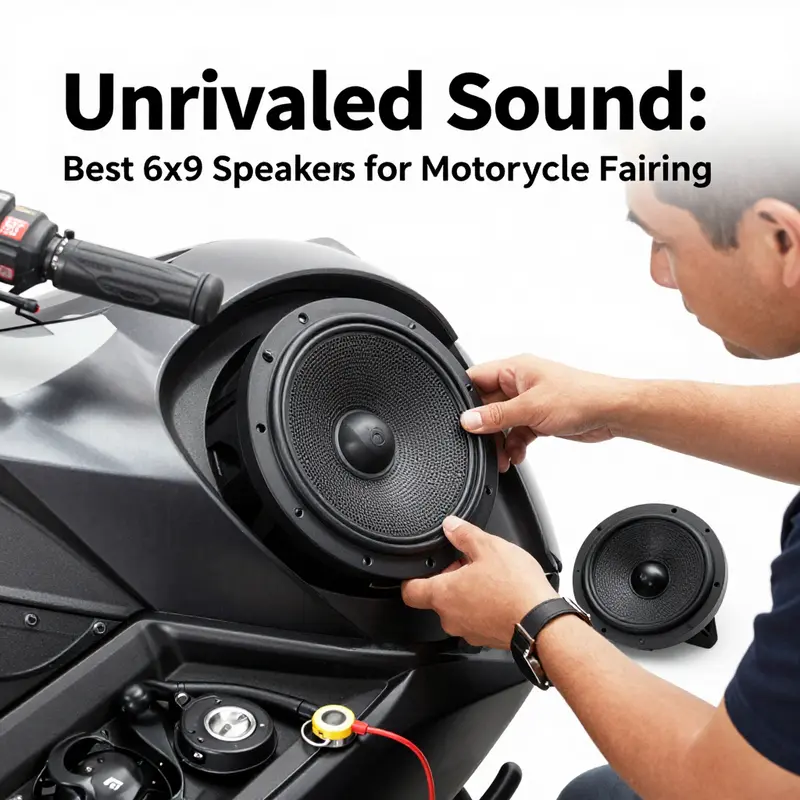
When you set out to equip a motorcycle with 6×9 speakers designed for the fairing, the goal is not just loudness. It is a balance of weather resilience, dynamic range, and a mounting solution that integrates cleanly with the bike’s geometry. A well-executed install preserves rider ergonomics, the bike’s aesthetic, and the electrical system integrity. The installation journey begins with a clear understanding of the fairing’s architecture and ends with a calibrated, road-ready soundstage that handles wind, rain, and vibration without flinching.
Preparation is more than a checklist; it is a mental rehearsal for the ride ahead. Gather a clean workspace and the essential tools: socket set, screwdrivers, wire strippers, crimpers, heat shrink or electrical tape, zip ties, and a multimeter if you want to verify continuity before sealing things up. Disconnect the battery before touching any wiring. Weatherproofing from the outset is not a luxury; it is essential for long-term performance.
Compatibility is the quiet gatekeeper in the installation narrative. Confirm fitment to your model year and fairing configuration. Check inner cavities, mounting brackets, and grille geometry. If you are using an enclosure-ready system, verify enclosure dimensions align with the cavity depth and that the provided mounting hardware is suitable for the fairing’s saddle or lid assembly. The rule here is simple: every fastener should be accessible without forcing parts or compromising seals. If a component must be pressed, clipped, or adhered in a way that risks cracking a molded surface, pause and reassess the mounting plan. In this context, the right choice of enclosure, trim rings, and grille inserts can transform a compromise into a confident, factory-like installation.
The process of removing factory components is a moment to observe rather than hurry. You want a clean canvas, not a cracked panel or a stressed connector. Document how each piece came apart, noting whether a fastener is a clip, screw, or adhesive. A gentle hand here safeguards the fairing’s integrity and preserves the look you’re aiming to maintain. The removal sequence should be deliberate and reversible. When you reach the stage of installing speaker enclosures, you will appreciate the value of precise alignment. The stage-appropriate trim rings and grille inserts that often accompany premium systems are designed to blend with the fairing’s finish. They are not cosmetic extras; they are part of the acoustic ecosystem, providing a snug seal that prevents moisture ingress while ensuring the speakers sit squarely in their pockets. Position the enclosures so that the speaker cones have unobstructed travel and that the wiring exits toward the planned harness route without kinking or contact with sharp edges. Once the enclosures are in place, secure them with the included hardware and, if applicable, with saddlebag speaker lids as an additional mount. A neat approach to cable management can make a noticeable difference in the final outcome; use zip ties to route the harness away from moving parts and heat sources, but avoid over-tightening which can fatigue connections over time.
Wiring and connection is the heart of the install, the moment when electrical psychology meets practical engineering. Route speaker wires through the fairing channels, avoiding sharp bends and staying clear of any area that experiences the most heat or friction during riding. Polarity matters as much for stereo imaging as it does for electrical safety, so keep track of positive and negative leads. The positive and negative terminals should connect to corresponding wires from the amplifier channel, with robust connections achieved through crimp terminals or soldered joints reinforced with heat shrink tubing. Weatherproofing is not an afterthought; it is built into the method. Wherever a connector is involved, you want to ensure that seals maintain their integrity across temperature swings and vibration. If you have access to a multimeter, verify continuity and resistance, then proceed to shield the connections with a weatherproof sleeve or heat-shrink sleeve that keeps moisture out but does not trap heat inside the harness.
The amplifier installation and power source are the second critical axis of the installation. The amplifier should sit in a dry, vibration-damped location, ideally in a space that is shielded from direct weather exposure and shielded from excessive heat. Most riders prefer placing the amplifier in the saddlebag compartment or under the seat where the chassis can provide a natural heat sink. Powering the system typically involves tapping into an ignition-switched circuit so the audio turns on with the motorcycle. A clean, isolated power feed helps minimize noise and hum, while a robust ground connection to a bare metal surface is essential for noise rejection. The mounting strategy should minimize wire length and avoid sagging cables that could loosen over time. As you plan the power distribution, consider the possibility of a relay or a dedicated fuse for the audio system to protect both the bike and the head unit from short circuits. A well-grounded system resists the characteristic interferometric buzz that can plague high-volume audio at highway speeds, especially when the fairing’s internal contours create reflective paths for sound and electrical noise alike.
Final testing and calibration conclude the hands-on phase with a blend of subjective listening and objective checks. Reconnect the battery, power up, and begin with a moderate level of volume. Listen for clarity, presence, and the absence of distortion. Check both front and rear channels, ensuring that the imaging remains stable when you move from city streets to open highway. If your system offers equalization options, adjust them to compensate for the acoustic characteristics of the fairing environment. The aim is to achieve even tonal balance across the spectrum, with crisp highs that avoid harshness and tight, controlled bass that remains articulate at speed. At highway velocity, wind noise and drone alter the perceived tonal balance; this is where a well-calibrated system earns its keep. If you notice buzz, rattle, or loose panels at speed, pause the ride, re-check mounting points, tighten fasteners, and reseal any potential moisture ingress paths. The path to a reliable, enjoyable ride is iterative; small refinements at the bench translate into consistent performance on the road.
Weatherproofing and long-term care are not afterthoughts; they are integral to the lifetime of the installation. The design ethos behind modern fairing speaker systems emphasizes Element Ready or similar ruggedized concepts, meaning the speakers and enclosures are built to withstand a broad range of environmental conditions. Yet even the most capable components deserve regular attention. Periodically inspect the wiring harness for signs of wear, verify that seals remain intact around the enclosures, and clean the grilles with a soft, damp cloth to remove debris without forcing moisture into the pockets. The fairing is a dynamic structure that flexes with wind and heat; your installation should accommodate this movement without stress. A neat, unobtrusive wiring layout reduces the risk of interference at speed and helps maintain the machine’s clean lines. If you approach installation as a craft of harmony—between the bike’s engineering and the audio system’s physics—you will be rewarded with not just volume, but clarity and reliability at all speeds.
In the broader context of choosing and installing 6×9 speakers for motorcycle fairings, the preference for components with a robust enclosure, weather seals, and straightforward integration into factory fairing pods often aligns with riders who tour in varied climates. If you’re exploring compatible options and you want to see a reference point for fairing configurations, a nearby guide to different fairing families can provide useful context for fitment decisions. For example, you can browse Honda fairings to get a sense of how fairing cavities are styled and how their mounting schemes accommodate aftermarket enclosures. This awareness helps you anticipate where best to place the amplifier and how to route the harness to minimize heat exposure and potential interference. The key takeaway is that the best installation practices are about preserving the bike’s integrity while unlocking a sound that remains immersive, even in demanding riding conditions. When done with care, the combination of weather-ready drivers, properly sealed enclosures, and a disciplined wiring strategy yields a system that feels as integrated as the exhaust note itself, delivering a soundtrack that rides along with the wind rather than fighting it.
Rugged Soundscapes: Performance Features of the Best 6×9 Motorcycle Fairing Speakers

Riding with music or navigation guidance humming through the fairing is more than a convenience; it forms part of the riding experience itself. When you choose 6×9 speakers for a motorcycle fairing, the performance features you prioritize translate directly into how well the system survives the open road and how clearly it communicates at highway speeds. A true performance-focused approach looks beyond sheer volume and sits on three pillars that are inseparable in the field: durability, sonic clarity, and seamless integration with the bike’s environment. Each of these pillars supports a system that can endure rain, dust, and relentless vibrations while delivering a soundstage that feels like it comes from inside the helmet rather than from a nearby bin of plastic and metal.
Durability sits at the core of any motorcycle audio decision. The fairing exposes the speakers to weather, temperature extremes, and the constant vibration of the engine and rough pavement. A robust design employs weather sealing that keeps moisture out without sacrificing the speaker’s ability to breathe and move with the signal. The materials matter, too. A well-constructed woofer cone resists cracking under flex and fatigue, while the surround material maintains a consistent edge even when the bike rolls through temperature swings from dawn fog to late afternoon sun. The grille and enclosure are not mere accents; they are protective components that influence wave behavior. In high-speed ride, wind buffeting adds another layer of complexity to the sound path. The most durable configurations account for this by shaping the enclosure and mounting so the acoustic path remains stable, reducing rattles and distortion that would otherwise mask the highs and smudge the mids.
But durability alone does not guarantee a satisfying ride. Sonic clarity is the second pillar and, in a 6×9 setup, it emerges from a deliberate multi-driver arrangement. A high-performing 6×9 speaker system often uses a combination that includes a larger woofer to deliver the bottom end, a midrange driver to anchor vocal presence and instrument timbre, and a pair of compact tweeters to reach the crisp, airiness of cymbals and string details. The exact driver sizes can vary, but the principle remains the same: distributing the workload across drivers minimizes distortion when the power supply is stressed and wind noise is at its peak. In practice, this means a system that can reproduce a broad frequency range with a smooth roll-off, preserving the attack of drum hits and the clarity of a guitar’s high notes even when the fairing is pushing wind at cruising speeds. The crossover design, though invisible to most riders, plays a pivotal role here. A well-tuned crossover ensures the right frequencies reach the appropriate drivers, which translates into a coherent sound stage rather than a patchwork of uncoordinated tones.
Acoustic optimization within the fairing is as much art as science. The internal geometry of the fairing, the location of speaker pods, and the surrounding materials all influence how sound travels to the rider’s ears. Placement is about more than aesthetics; it is about maximizing intelligibility and minimizing stage wash. A smart design leverages the fairing’s contours to guide midrange and highs toward the rider while controlling bass dispersion to prevent boomy pockets that can overwhelm the listening experience at high speeds. In practice, this means the pods and mounting surfaces are engineered to support precise alignment and damping. The result is a sound that feels centered, with a natural balance across voices, strings, and percussion. Even at highway velocity, where wind noise can rival the bass, a well-formed acoustic path keeps the highs crisp, the mids present, and the bass tight and controlled.
Integration with the bike’s environment is the third pillar, and it often determines whether a given speaker kit feels like a factory upgrade or a temporary add-on. The best options are engineered to drop straight into the existing fairing mounts or pods without requiring extensive modifications. This seamless fit is not only about ease of installation; it also preserves the bike’s aerodynamics and weather sealing. In addition, the overall appearance matters. A premium kit considers not just the drivers but the aesthetic around them—grilles, finishes, and even vented or carbon-fiber-like accents that echo the bike’s design language. The integration extends to power and control: many riders discover that a strong, high-performance display of sound quality requires more than the stock wiring can provide. A secondary amplifier can unlock the system’s full potential by delivering clean, ample headroom, especially when the fairing’s power demands spike with revs and wind conditions. The amplifier helps maintain consistent output and reduces clipping, which is particularly valuable when riding at speed where the demand on the system can be unpredictable.
Consistency across models and years is another practical consideration. The newer motorcycle platforms, with their refined fairing shapes and tighter tolerances, can benefit from speakers designed with modern mounting surfaces in mind. The compatibility question becomes more nuanced when riders upgrade to later model years or different trims within the same family. In some cases, packages engineered for a particular model line are described as “ready for installation” but still reward a careful reviewer’s eye toward power handling, impedance matching, and enclosure compatibility. A robust system will specify impedance that aligns with common head units and amplifiers, and it will offer connectors and weather seals that resist corrosion and wear. The aim is a long-term, maintenance-friendly solution that keeps pace with evolving electronics while preserving the bike’s original character.
Beyond the core performance features, riders often look for practical conveniences that reinforce the riding experience rather than complicate it. A popular approach is to adopt a multi-driver kit with a clearly defined structure: a primary 6×9 woofer handles the bass, a dedicated midrange covers the vocal range and guitar body, and a dual-tweeter arrangement handles the shimmer of cymbals and high harmonics. This configuration adds depth to the overall sound without requiring a dramatic increase in enclosure volume or mounting complexity. The enclosure design and the placement of the drivers are not arbitrary choices; they reflect careful acoustic reasoning about how the fairing’s internal cavities interact with the drivers. Vented lower fairing sections, for instance, may be paired with speaker boxes that align with the 6×9 footprint to maintain a coherent sound field and preserve the bike’s styling language. The end result is a system that feels integrated rather than bolted on, contributing to both performance and aesthetics.
When contemplating a purchase, riders must also weigh the need for amplification. Some setups achieve admirable loudness and clarity with a strong head unit and properly matched speakers, but others truly shine only when a dedicated amplifier steps in. The amplifier serves as a stable power source that delivers clean current and prevents the speaker from distorting at high volumes. The decision to add an amplifier is often a matter of the rider’s listening goals and the bike’s electrical architecture. If you ride with high-speed frequencies and long highway stretches, the benefit of an amplifier becomes more evident. The tuning process—balancing input sensitivity, crossover points, and gain—translates into a listening experience that remains intelligible as wind noise rises. A well-tuned system can offer a sense of space, almost like a small studio, without sacrificing the robustness required for on-road realities.
For riders who enjoy exploring upgrade options, it’s worth noting how these designs align with fairing categories and mounting ecosystems. If you browse through dedicated fairing collections, you’ll notice how a properly engineered speaker system can be paired with a specific mounting surface to preserve the bike’s lines while delivering a reliable audio experience. For those curious about how different fairing lines accommodate upgrades, a quick look at the BMW fairings catalog can give a sense of how dedicated mounting platforms promote performance-oriented outcomes. The catalog demonstrates how mount surfaces, pod shapes, and enclosure ports can be harmonized to enhance both acoustics and aesthetics. This holistic view underscores a key lesson: the best 6×9 speakers for motorcycle fairings are not just about the drivers themselves but about how the entire acoustic system is integrated with the bike’s design language and riding realities. The combination of weather-ready construction, multi-driver architectures, precise acoustic tuning, and thoughtful mounting results in a system that remains legible in the wind, expressive in tone, and reliable across seasons.
In practical terms, a rider choosing among the top options would look for a model that emphasizes a complete package: durability that stands up to rain and vibration, a sound signature that remains clear and balanced at speed, and a mounting solution that fits cleanly with existing fairing hardware. The presence of a well-designed enclosure, the use of durable materials, and the inclusion of thoughtful details like vented or carbon-style finishes are not merely about appearance; they influence how the sound propagates. When wind noise climbs, the system should still convey the nuances of the mix—the breath of a bass note, the warmth of a midrange, and the sparkle of high frequencies—without becoming a mask over the rider’s environment. In this sense, performance is a holistic measure. It captures how well a system can deliver audible information at speed, how freely it breathes with the bike’s movement, and how effectively it integrates with the rider’s goals—whether that means epic touring hours, canyon runs, or simply enjoying a personal soundtrack on a daily ride.
For riders building toward a practical, long-term upgrade, the emphasis should be on craftsmanship and engineering that respect both the mechanical and acoustic ecosystems of the motorcycle. The best solutions exist at the intersection of rugged construction, tuned acoustics, and seamless integration—each reinforcing the others to create a coherent, enduring listening experience on the road. As you evaluate options, consider the upon-road implications: how the system handles a sudden rain shower, how it maintains clarity when wind becomes a constant companion, and how the installation mirrors the bike’s original design ethos rather than contradicting it. In the end, the most satisfying 6×9 fairing speakers are those that endure the weather, sing with precision, and feel like a natural extension of the machine itself.
External resource: official audio accessory page.
Riding the Soundwave: A Deep Dive into 6×9 Fairing Speakers for Motorcycles
The road is a moving canvas, and the motorcycle fairing is both shield and stage. As wind folds around the bike, it can swallow or distort sound, turning music into a distant hum or a bleached wash of wind noise. The task of selecting the right 6×9 speakers for a motorcycle fairing, therefore, is less about chasing the loudest bloom and more about sculpting clarity, durability, and integration. It is a balance between weatherproof resilience, power handling that matches your riding style, and a design that disappears into the bike’s lines while still delivering presence when you twist the throttle. In that sense, the best 6×9 fairing speakers operate as a carefully tuned system rather than a collection of parts. They must endure rain, dust, UV exposure, and the relentless vibration of open-road travel, all while weaving a soundscape that remains intelligible above the roar of wind at velocity. The reality is that there are several pathways to achieving this ideal, each with its own strengths and trade-offs, and the best choice depends on how you ride, what you listen to, and how much you value a seamless, factory-like installation versus modular versatility.
A central consideration in any fairing speaker upgrade is durability. The environment a motorcycle navigator faces is unforgiving: water spray from rain and spray from puddles, dust kicked up from the road, UV exposure from long ribbon runs under open skies, and the constant, under-the-skin stress of engine heat and vibration. A truly robust 6×9 will feature weather-resistant enclosures, sealed magnets, and gaskets that protect the voice coil and crossover circuitry from moisture. It will also be built with vibration-tolerant mounting to keep the voice coil aligned and to minimize distortions that creep in as frequencies rise. Sound quality in this context is not merely about bass depth or loudness; it is about maintaining clean mids and crisp highs when the wind velocity climbs and the exhaust note fills in the absence of ambient noise.
Power handling is the second pillar. On a motorcycle, the electrical environment is unique: it fluctuates with engine state, lighting demands, and accessory usage. A speaker set that looks impressive on paper but cannot survive a long day in the saddle will degrade quickly. The power path—from the head unit to the amplifier (if used), through crossovers, to the cone—must be able to deliver clean, undistorted signal at the levels riders actually use. Many riders prefer an integrated approach that includes a weather-ready speaker kit designed to work natively with the fairing’s speaker pods. The advantage here is twofold: you get a neat, factory-like appearance with a distribution of four or more drivers that can push midrange and bass with greater consistency, and you also gain the assurance that the architecture of the system has been tuned to the bike’s electrical environment. This approach tends to preserve the bike’s original lines while unlocking substantial volume and musicality, especially on longer rides where fatigue comes more from wind and road than from a lack of signal.
The third pillar is fit and integration. A speaker system that fits like a glove into factory pods can transform a cosmetic upgrade into a true enhancement of the bike’s character. When a kit is designed to slip into the existing fairing framework—often with color-matched grilles and trims, mounting hardware, and sometimes a dedicated amplifier path—the result is a cleaner, more cohesive look. There is also the practical advantage of avoiding extensive fabrication work. That said, not every fairing fits every speaker, so riders should confirm compatibility with their model year and fairing style. For those chasing a seamless look, a factory-styled installation is almost as important as the sonic outcome because it preserves the bike’s silhouette and reduces the risk of wind-eroded performance caused by misaligned drivers or exposed wiring.
In practice, the market presents three archetypal pathways that frequently rise to the top, without relying on brand loyalty alone. The first is a weather-ready, OEM-integrated four-speaker system that anchors sound directly in the fairing, often including a primary amplifier unit designed to deliver a clean, consistent signal across all drivers. This configuration emphasizes weather sealing and a design that conforms to the bike’s original aesthetic. The second pathway is a high-performance, two-way fairing system. It uses a separate full-range driver and a grill-mounted tweeter to extend high-frequency response without overwhelming the midrange, yielding improved clarity at speed. The third option is a rugged, budget-conscious mid-bass approach built to withstand marine-grade or off-road-grade conditions. Its strength lies in reliability and deep, robust bass, with resistance to water, dust, and vibration that makes it a compelling choice for riders who value depth of sound and value over pristine highs.
If we measure the likely outcomes across these pathways, the first option tends to deliver the most integrated, quiet-sailing upgrade. It pairs well with stock head units or modest exterior amps, preserving the bike’s electrical system while offering substantial listening volume at highway speeds. The soundstage often remains centered and balanced, with little to no aggressive sibilance or harshness, especially at mid to higher volumes where wind noise can otherwise reclaim the air. The second option shines when wind noise is a constant adversary and riders crave intelligible high end. The better two-way designs operate with higher sensitivity and tighter dispersion, allowing the listener to hear cymbals, strings, and vocal nuances even as the bike digs into a headwind. The third option, the rugged mid-bass class, delivers the bass you can feel—an essential ingredient for riders who want the music to carry through long drives without demanding a large amplifier or complex tuning. It may trade some top-end sparkle for depth and reliability, but for many riders the tactile experience of bass at speed is its own reward.
The art of choosing among these paths is not a leap of faith but a careful calibration of needs. First, assess your typical riding conditions. If you spend a lot of time in heavy rain or dusty routes, weather sealing and a sealed crossover network become decisive. If you ride through canyons and long highways, clarity at high speeds becomes critical, and a two-way design might offer the best balance of highs and mids. If you frequently ride through temperate climates and prioritize the feel of music as a mood setter rather than a wall of sound, a rugged mid-bass option can deliver satisfying depth with fewer constraints. Second, check mounting compatibility. Some fairings are optimized for four speaker pods with a central amplifier, while others rely on compact, integrated enclosures that fit within the fairing’s curvature. The goal is to avoid visible relocations, unsightly gaps, or wiring that tugs at the trim. Third, consider the electrical load. A system that demands more wattage requires a compatible alternator or battery support, especially on longer rides or when you run heated gear, GPS, or other power-hungry accessories. If you are unsure, discuss with a professional installer who can map the bike’s electrical profile and recommend a conservative yet capable setup that leaves room for future upgrades.
There is also value in model-guided, brand-agnostic checks that help riders anticipate fit and performance. For riders who want model-specific compatibility without diving into every option, it can be helpful to explore categories that group compatible fairings and accessories by make or model. For example, if your bike uses a particular family of fairings with standard mounting points, you can search for compatible options within that family’s category and compare how each option addresses sealants, grill finishes, and mounting depth. This approach keeps the focus on fit and performance rather than chasing a single perfect product. In addition, some riders benefit from assessing the acoustic footprint of the system within the fairing’s volume. The physics of cabinet-like spaces behind the speaker pods demands attention to resonance, porting (if any), and the placement of the amplifier to minimize heat buildup. A well-behaved system avoids a muddy bass response or a shrill top end, delivering instead a balanced, musical experience that remains intelligible in noisy environments.
For riders who want to explore model-specific compatibility and broader fairing options, the Honda fairings category offers a practical starting point for evaluating fitment across a spectrum of designs. This resource can help identify mounting considerations, depth constraints, and wiring paths that mesh with a rider’s preferred approach to upgrade, whether that means a factory-inspired look or a more modular, aftermarket installation. Honda fairings can serve as a guideline for how different fairings accommodate speaker pods, tweeter grills, and integrated volumes, informing your decision about what kind of speaker system will truly work with your bike’s lines.
In contemplating the ultimate choice, it helps to keep this perspective: the best 6×9 speaker setup for a motorcycle fairing is not simply the loudest or the most feature-packed option. It is the option that disappears into the bike’s geometry while giving you a clear, emotionally resonant soundscape on the ride. It respects the weather and the wind while revealing the music with a natural balance across bass, mids, and highs. It protects electrical integrity and simplifies installation, so you do not become a technician every time you reach a long stretch of road. And, crucially, it aligns with your riding style—whether you chase wind-in-the-face speed with a clipped, crisp treble, or you crave a deep, reassuring bass that makes every highway hum feel like a private concert.
As you weigh these factors, keep in mind that the landscape of fairing speakers is designed to support a broad range of motorcycles. The goal is to find a solution that respects the bike’s heritage while providing a modern, road-ready audio experience. The most successful upgrades are those that preserve the bike’s silhouette and its resonant character, letting the rider hear the music without having to sacrifice safety, visibility, or reliability. When the choice is made with a clear sense of priorities—weather resilience, power handling, fit, and minimal intrusion—the result is a listening experience that complements the ride rather than competes with it. The road becomes a stage where clarity, durability, and harmony converge, and the soundscape feels as natural as the wind at speed.
External resource: official audio system page.
External link for reference: https://www.harley-davidson.com/gb/en/shop/harley-davidson-audio-powered-by-rockford-fosgate-stage-iii-4-speaker-kit/p/50700149
Rider Voices and Real-World Sound: Navigating the Best 6×9 Speakers for Motorcycle Fairings
Choosing the right 6×9 speakers for a motorcycle fairing is more than wattage and a glossy grille. It demands weather resilience, amplifier compatibility, and fairing geometry. Real-world setups show that the most satisfying sound comes from a system that remains clear through rain, dust, and highway wind. Among popular options, the Harley-Davidson Audio powered by Rockford Fosgate Stage III 6×9 saddlebag speakers often surfaces as a benchmark. It’s not just size or loudness; it’s engineering attention to how sound travels inside the fairing pocket, how the drivers breathe at highway speeds, and how highs, mids, and bass stay intelligible when wind noise climbs. The Stage III package, designed for Harley bikes and tuned for models like the FLH latest generations, is framed as a complete, purpose-built solution. It combines high-performance 6×9 drivers with a form factor that fits factory speaker pods, offering a clean installation that preserves the bike’s lines while delivering clarity and output that many riders seek.
It’s practical too. Harley’s system pairs with a Stage II fairing speaker pairing by design, so the entire listening experience benefits from coordinated drivers across the fairing. The amplifier helps preserve digital precision and prevents highs from breaking up at higher volumes, a common pitfall when a cheap amp drives a high-demand setup. An install kit ensures neat, weatherproof routing of power, ground, and speaker cables, important given the exposed, vibrational environment around a motorcycle fairing.
Fit and reliability are key advantages. The 6×9 saddlebag speakers are among the largest official options for touring bikes; riders report straightforward fitting into factory pods on newer Gen-2 fairings, preserving a factory-like appearance rather than a hack job. When the system is properly configured—amplifier tuned, crossovers set to correct points, gains dialed—the highs sparkle with clarity at distance, mids stay clean, and bass delivers a controlled, road-ready punch.
Riders who have tried stock audio and upgraded setups emphasize sound quality and fitment reliability. The Harley Rockford Fosgate pairing is described as bike-minded with predictable mounting points and weatherproof build. Yet even among fans, the fullest potential usually requires the right ancillary components: a compatible amplifier and install kit as practical necessities to maximize clarity and headroom on long tours. Installation is often praised for being straightforward when done on compatible Harleys, with factory-like mounting positions and weather-sealed wiring.
Beyond Harley, alternatives like DB Drive sets offer robust output for larger fairing setups, especially when paired with a suitable amplifier and enclosure. Some riders note that the included 500 watt amplifier may be overkill for certain builds, while others like to pair a high-efficiency speaker with a smaller amp to avoid heat and power draw issues on touring bikes.
Another option is newer Gen-2 direct-fit speakers for 2024 onwards, favored for direct fit on newer Gen-2 fairings and reliable mids and highs with bass that supports the music without overwhelming during gusty crosswinds. The key is compatibility with the bike’s geometry and mounting hardware, so the fairing design remains intact.
All of these options share a common truth: the best 6×9 speakers for motorcycle fairings match the bike’s design philosophy and the rider’s listening expectations. For riders who want maximum impact at highway speeds with weather resistance, the Harley Stage III solution, when paired with Stage II ecosystem and a matched amplifier, offers a strong balance of scale and durability. If modularity or a different fairing geometry is required, alternatives like DB Drive or Gen-2 direct-fit options can provide good value when paired with proper amplification and careful install. The goal is a system that integrates with the bike’s electrical and structural framework, withstands weather, and delivers a cohesive sonic portrait rather than loud but disjointed sound. In practice this means balancing high frequency clarity, midrange warmth, and bass presence without distortion in gusty winds or long downhill stretches. The end result should be a more immersive ride, where audio complements the ride rather than competes with it.
Finally, a quick practical note: start with fit and weather sealing, verify driver power handling and sensitivity to select a suitable amplifier and wiring harness. Consider how sound travels through the fairing at common road speeds, whether high-end clarity holds up with wind noise. Enclosure considerations matter even for factory-mounted speakers. The aim is to preserve the fairing’s design while maximizing musical fidelity. For riders curious about capabilities beyond Harley, explore other fairing categories to compare geometry and mounting options. A practical reference is the Harley official Stage II+ 4-Speaker Kit page, which outlines componentry and installation considerations. Official specs and compatibility details can be found here: https://www.harley-davidson.com/us/en/vehicle-parts/accessories/audio/stage-ii-4-speaker-kit.html. The core aim remains: a sound experience that travels with the bike—clear, balanced, and durable enough to keep the rider immersed in music and road.
Final thoughts
Selecting the right 6×9 speakers for your motorcycle fairing can significantly improve your riding experience. By exploring top recommendations, following best installation practices, understanding performance specifications, analyzing market comparisons, and considering user feedback, business owners can make informed choices that align with both customer satisfaction and sound quality expectations. The integration of high-quality audio not only elevates the enjoyment of rides but also contributes to customer loyalty in a competitive market, ensuring that your offerings resonate with avid motorcycle riders seeking the ultimate riding experience.