

In the world of motorcycles, enhancing the audio experience is vital for both leisure and communication. For business owners involved in motorcycle customization, understanding the significance of integrating an amplifier into motorcycle fairings is crucial. This article explores the intricacies of choosing the right amplifier, managing heat, ensuring weather resistance, effective mounting techniques, and integrating comprehensive audio systems. Each section offers valuable insights that assist business owners in making informed decisions to elevate their offerings in the motorcycle audio industry.
Inside the Shield: How to Pick an Amplifier that Breathes with Your Motorcycle Fairing

The word amp, when spoken in the same breath as motorcycle fairings, often conjures two images at once: the music that follows a rider through the open highway and the delicate balance of space, heat, and weather that makes a fairing a tough home for electronics. In practice, a fairing-mount amplifier is less about raw volume and more about how efficiently power is turned into clean sound within a confined, vibration-prone, weather-exposed cavity. The rider’s environment—speed, wind, rain, road salt, and the ever-present hum of the engine—demands more than just a capable audio device. It requires an amplifier that can survive and perform without becoming a heat source or a maintenance headache. The journey to choosing such an amplifier begins with understanding where the fairing sits in the system, what it can physically accommodate, and how the electrical loom of the bike can sustain the extra load without compromising reliability or safety.
Sound in motion is as much about endurance as it is about fidelity. A well-chosen amp is not the loudest unit on the market; it is the one that delivers consistent, distortion-free output across a wide speed range while staying cool and compact enough to tuck into the available recesses. In the harsh cadence of riding, the fairing becomes both a shield and a small chamber for electronics. The enclosure must resist rain and grit, yet not impede ventilation or accessibility for service. For this reason, many riders tilt toward Class D amplifiers. Their inherent efficiency translates to less heat generation, which in a cramped fairing cavity can be a make-or-break factor. A compact Class D unit paired with smart mounting can minimize airflow obstructions while still providing robust, per-channel power that keeps dialogue with the bike’s audio unit and speakers lively at highway speeds.
When evaluating power, it is tempting to chase high watts per channel. Yet the real measure of suitability lies in how that power behaves under dynamic riding conditions. A practical baseline is at least 50 watts RMS per channel for a two-channel setup. This level supports a clear, punchy signal in wind noise conditions and under rider helmet acoustics, especially when the system includes a subwoofer or a pair of surface-mounted midrange drivers. But the key is not just the rating; it is the amplifier’s ability to maintain that rating without fatiguing the power supply or overheating. Class D designs excel here, delivering high efficiency with compact heat sinks and the option to bridge channels if a single-sub setup or a more complex speaker array is desired. The practical takeaway is simple: more efficient design, more usable headroom, and less risk of thermal throttling that could induce distortion or protective shutdown in mid-ride.
The form factor is another decisive criterion. Fairings vary widely—from half-fairing configurations that hug the rider’s line to more expansive front fairings that cradle the headlight and instrument cluster. Each layout presents different mounting footprints and access points. A successful install treats the amp as a friend to the bike’s architecture, not an intruder. It should fit in a hidden nook, under the instrument panel, or along the inner lip of the fairing where it remains sheltered from direct exposure while still being accessible for wiring and service. The installation plan must account for heat dissipation, fiber-optic or shielded electrical pathways, and the avoidance of moving parts or coolant lines that could complicate routing. In some cases, mounting near the engine bay or under the dash can offer a natural shield from direct wind while enabling shorter speaker runs. The safest approach is a quiet, measured integration that respects the fairing’s structural integrity and the rider’s ability to perform routine checks without disassembly.
Water intrusion is a constant adversary. A fairing amp should meet at least IPX6 protection to guard against powerful jets of water and the occasional leaky drizzle. This rating is not a luxury; it is an engineering necessity when the unit sits close to the wind stream and road spray. Alongside waterproofing, vibration resistance matters. The road is not forgiving, and a compact unit must withstand continuous micro-movements. Shock-absorbent mounting hardware and vibration-damping pads help. The chassis should be robust enough to resist corrosion and the subtle, repeated flexing that follows a rider through rough pavement or a speed wobble. In choosing a unit with weather resistance, consider not only the enclosure but the quality of the terminal blocks, gaskets, and the overall seal around the wiring harnesses. Every compromise here translates into a failure point later on.
Another useful criterion is electrical compatibility. The motorcycle’s electrical system is a 12-volt ecology with peaks and dips linked to alternator load, battery health, and starter draw. A robust amp design includes a stable power supply, low current draw when idle, and protection against short circuits. When a fairing houses the amplifier and speakers, it is prudent to plan a dedicated fuse and a distribution method that keeps the audio load from tugging at the bike’s main circuits. A clean, well-protected power rail helps prevent voltage drops that could sap performance or shorten the amp’s life. In practice, this means a reputable distribution block, proper gauge wiring, and a ground strategy that minimizes stray currents. The goal is to preserve the battery’s charge and ensure the audio remains steady from a cold start to high-speed cruising, where engine vibration and wind can otherwise amplify any supply-side weakness.
Speaker pairing also plays into the amplifier decision. An amplifier’s impedance compatibility—whether the speakers present a 4-ohm or 8-ohm load—shapes the effective voltage swing and, consequently, the perceived loudness and clarity. A fairing system often benefits from a mixture of drivers that cover midrange and high-frequency content with adequate sensitivity. In many designs, a modest subwoofer can add depth to the overall soundscape without pushing the amp into excessive current draw. The crossovers and damping compounds between the amp and speakers help ensure that the treble remains crisp without becoming piercing, even at highway speed. The ideal scenario is a balanced, multi-driver arrangement that leverages the amplifier’s headroom rather than forcing it to chase recessed highs or boomy lows. This balance translates into intelligible vocal prompts for communication systems, as well as a musical experience that stays faithful to the rider’s preferences across different speeds and road textures.
Beyond performance, installation practicality matters as much as electrical prowess. The fairing’s inner geometry often rewards a thoughtful, modular approach: a small, weatherproof enclosure placed near the rider’s knee, a short run of shielded cable to the head unit, and a tidy routing plan that avoids hot engine surfaces or moving controls. Cable management becomes a design language, not an afterthought. The installer should account for service access: can a rider swap a fuse, inspect wiring, or re-route a cable without removing the entire fairing? Is the amp easy to reach for adjustment or testing without disassembly? These questions are not merely conveniences; they govern maintenance over the bike’s life. A well-chosen amp integrates with the broader electronics ecosystem of the bike, aligning with the instrument cluster, phone connectivity modules, and any intercom or bike-to-bike communication systems that may demand synchronized power and timing. In practice, this means ensuring that the amp’s input and output levels harmonize with the head unit’s line level, the intercom’s impedance, and any active noise reduction or equalization strategies employed by the rider for comfort and safety.
The sourcing side deserves careful attention as well. A dependable supplier that offers certified products and the ability to customize packaging and specifications can be essential when matching a particular fairing model or wiring harness. While the marketplace landscape is broad, the practical route is to seek platforms and distributors that emphasize quality control, weather sealing, and consistent power performance. A rider or builder might explore options that provide IP-rated enclosures, robust terminal blocks, and documented test results for vibration and thermal cycling. The best choices are those that allow for a clean integration with the bike’s electrical system, while offering support for different models and fairing geometries. This strategic sourcing reduces the risk of mismatched impedance, inadequate heat management, or awkward fitment that could otherwise compromise the entire system’s reliability.
In the end, choosing the right amp for a motorcycle fairing is a balancing act between electrical discipline, physical fit, and acoustic aspiration. It is a project that rewards patience and careful planning as much as it rewards a rider’s musical taste. The core elements remain consistent: robust water and dust protection, sufficient per-channel power, high efficiency through a Class D design, thoughtful integration with the fairing’s architecture, and a wiring scheme that preserves the bike’s electrical health. When these pieces align, the result is not simply louder sound. It is a stable, clear, and responsive audio experience that travels with the rider—from rain-slick city streets to the open freeway—without becoming a maintenance burden or a heat challenge. For riders contemplating how to lay out the acoustic heart of their fairing, a practical approach is to map out the space, identify a discreet mounting zone, and then choose an amplifier that can deliver reliable, clean power within those physical and environmental limits.
To explore the broader context of fairing-mounted systems and the many shapes that the housings can take, you can consult catalogs that detail different fairing geometries, such as the BMW fairings collection, which helps visualize mounting spaces and clearance. This contextual awareness supports a more precise match between a rider’s aesthetic, aerodynamic goals, and the audio system’s practical constraints. When the time comes to purchase, remember that the best choice is a compact, IP-rated Class D amplifier with at least 50W RMS per channel, designed for 12V operation, and engineered to reduce heat while delivering clear, undistorted sound across wind-protected listening scenarios. The result is an audio footprint that feels as integral to the bike as the fairing itself, rather than an add-on that fights for space, airflow, and reliability.
External resource for deeper specification guidance: https://www.motorcycle.com/motorcycle-audio-amplifier-guide/
Internal link for related context: BMW fairings
Quiet Power in a Small Enclosure: Thermal Mastery for Amplifiers in Motorcycle Fairings
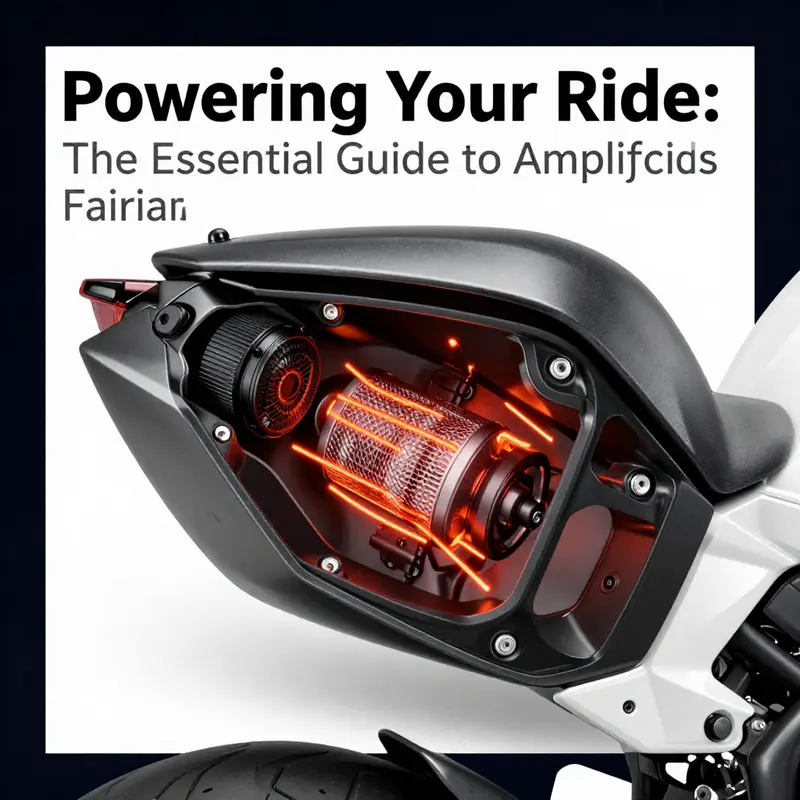
When riders decide to mount an audio amplifier inside a motorcycle fairing, they face a compact design challenge that tests heat management as much as audio fidelity.\n\nThe fairing is a sealed, variable-volume chamber that gathers heat from the engine, rider and sun. Inside such a space, even modest power dissipation can become a problem if heat has nowhere to escape. The outcome is not just a hotter box, but degraded sound, potential distortion, and, in the worst case, reduced reliability. Hence heat management sits at the center of fairing-mounted amplifiers.\n\nA foundational lever in this pursuit is efficiency. In motorcycle audio, engineers favor highly efficient designs because every watt converted to sound is a watt not left as waste heat. Class D amplifiers are a prime example: they can achieve far higher thermal efficiency than Class A or AB, translating into cooler operation for a given output. This matters for longevity of the compact electronics in the fairing, where a hot component can bottleneck the whole system. The goal is not the loudest possible output, but stable performance under riding conditions.\n\nThe physical layout of the amplifier within the fairing matters too. Heat behaves like a fluid in a small enclosure, seeking paths to cooler surroundings. The most effective installations position the amplifier so its heat path aligns with the vehicle’s airflow. Placing it near vented panels or along channels that catch the cooling breeze can dramatically reduce temperature buildup. Wires, relays and mounting hardware also contribute to heat pockets if not arranged with care. The challenge becomes a design problem that blends layout with thermal physics: design a heat exit path that doesn’t disturb signals or power, and keep the enclosure tight enough to keep water and dust out while allowing conduction and convection to work.\n\nMaterial choice and enclosure design add sophistication. Aluminum housings with extruded fins act as passive heat dissipators, providing large surface area in a compact form. The fairing can contribute to cooling if the amplifier is mounted against a metal shell that can conduct heat away, provided a thermally conductive interface and careful electrical isolation. In weather-exposed settings, gaskets and seals matter, but they should not trap heat inside. The boundary should let heat move outward while rain, dust and vibration stay blocked. In some cases, engineers add an internal heat sink bonded to the power stage to reduce temperature gradients and boost convection when the bike moves.\n\nWhen ambient airflow is limited, passive cooling may be insufficient. In such cases, a small, low-noise fan can help maintain a stable temperature under high-output demands. The caveat is nontrivial: fans bring potential failure points, extra vibration paths and weather-proofing concerns. Any active cooling must be paired with robust seals and moisture management, or fail-safes so a malfunction does not erase audio during critical moments. Active cooling is a last resort, used only when an efficient design still nears thermal limits for the expected duty cycle.\n\nA further element is thermal protection inside the amplifier. These safeguards detect rising internal temperatures and throttle output or shut down to prevent damage. This ensures consistent performance during long climbs, hot days or sun-drenched rides. Features like soft-start and clipping avoidance help reduce heat spikes from sudden power demands. These protections are reliability guarantees that keep a fairing setup from behaving unpredictably in the field.\n\nThe electrical design around the amplifier also matters. A tightly routed high-current path minimizes voltage drop and resistive heating that would otherwise load the power supply. A robust grounding scheme avoids loops that could inject noise into the audio path. A well-considered layout reduces the risk that heat changes will degrade the signal chain. In practice, riders and installers aim for compact, thermally mindful designs that maintain a clean electrical environment while delivering dependable amplification in a weather-protected footprint.\n\nBeyond engineering, practical considerations matter. Riders must account for climate: deserts, tropical regions and high-altitude routes impose different thermal loads. The aim is to preserve audible clarity even as the fairing interior becomes a wind tunnel on hot days. Achieving this balance means choosing a compact amplifier designed for motorized use, favoring devices with proven thermal efficiency and automotive-grade reliability, and mounting them so heat travels away quickly while vibration is damped. Sometimes it is better to trade a bit of top-end headroom for steady, distortion-free output that remains reliable for hours on the road.\n\nTo connect these ideas to real-world choices, riders often survey a model’s fairing options and assess how mounting fits within airflow paths. Catalogs and practical references help determine compatibility and clearance. This context helps ensure the amplifier’s thermal strategy aligns with the fairing’s geometry, venting and mounting surfaces, reducing the risk of new heat traps or interference points. Field testing under hot conditions confirms that the design keeps temperature rise within acceptable bounds and preserves sound quality under the expected duty cycle.\n\nUltimately, heat management inside a fairing-mounted amplifier aims to preserve the rider experience: clear, reliable audio without distortion or unexpected shutdowns. The best installations treat heat as a design constraint, not an afterthought, weaving efficiency, placement, cooling, and protections into a coherent system. In this light, a compact, thermally mindful amplifier becomes an interface between rider, motorcycle, and environment, rather than just a box inside a plastic shell.\n\nExternal references can deepen understanding of selecting amplifiers and the role of thermal protection and grounding in reliability. For a technical dive into selection criteria, see external resources such as motorcycle audio guides and manufacturer notes on automotive-grade thermal design.
Weather-Ready Amplifiers: Durability and Protection for Audio Systems in Motorcycle Fairings
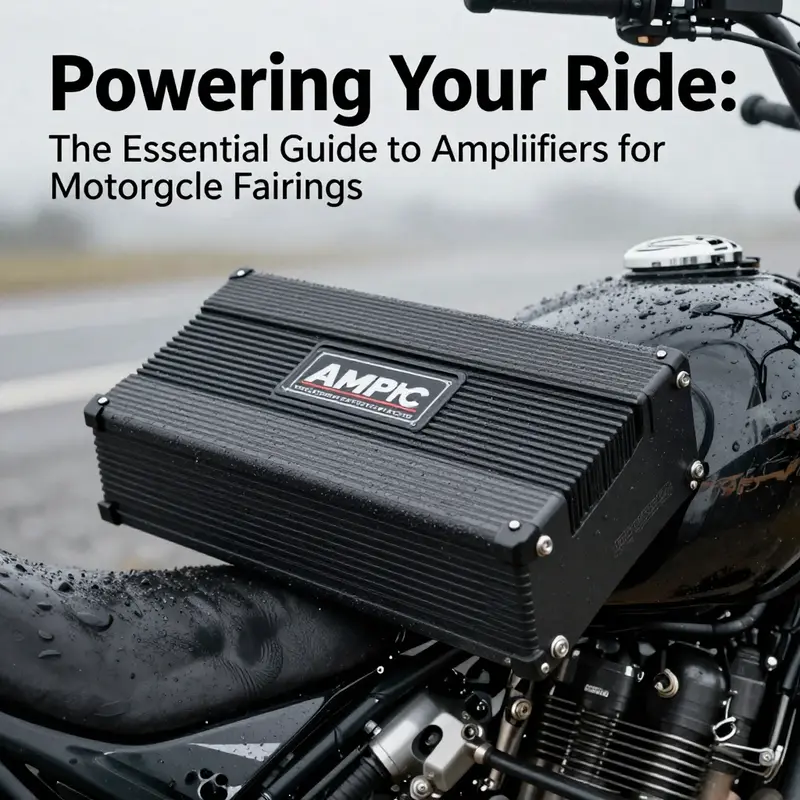
Inside the compact corridor behind a motorcycle’s fairing, a small amplifier becomes more than a gadget. It is the heartbeat of the audio system, tasked with turning every ride into a clear, immersive soundscape or crisp, reliable intercom. Yet it also faces a relentless gauntlet: wind-driven rain, road spray, dust, temperature swings, and relentless vibration. This is not simply about loudness; it is about resilience. The amplifier must endure as a component of the fairing itself, not as a fragile afterthought. Weather resistance and durability are not peripheral features here. They are the foundation of dependable performance, mile after mile, ride after ride. To understand why, imagine the fairing as a small, moving weather enclosure. Its job is to shield the rider from the elements while directing air to cool the bike’s engine and, ideally, to ventilate the electronics inside. The amplifier lives in that same space, sharing heat, humidity, and a steady onslaught of road conditions. The design challenge is to create a unit that can survive and operate consistently within those constraints without sacrificing sound quality or installation practicality.\n\nWater is the most obvious adversary. In practice, water resistance translates into protection against rain, road spray, and humidity that can creep into seams, connectors, and circuit boards. An amplifier with an IPX6 rating provides a robust barrier against water jets from any direction, a scenario that can occur when air pressures and rain angles combine during a storm or on a new-minted spray of puddles after a crossed stream. A sealed enclosure rated IPX5 or higher adds a crucial line of defense against moisture and dust, which are not merely nuisances but potential causes of corrosion, short circuits, and degraded signal paths. The crux is not just a rating but the integrity of the enclosure itself: gasketed covers, reinforced seals, and fasteners that resist loosening under vibration. In a fairing, where space is at a premium, those seals must be designed to work with compact form factors without creating thermal bottlenecks or accessibility problems for maintenance. The enthusiast who wants longevity should demand a package that makes sealing an integral aspect of the design rather than a retrofit after the fact.\n\nThermal protection is the other side of environmental resilience. Amplifiers generate heat, and when they are tucked into a fairing, there is less room for heat to disperse. Efficient, low-quiescent designs that waste less power as heat are essential. But even the most efficient amp needs a path to shed what it does generate. That is where the enclosure design matters. A well-conceived enclosure doubles as a heat sink, featuring material with good thermal conductivity and sufficient surface area to radiate heat away from sensitive components. In many cases, designers lean toward rugged aluminum or heat-dissipating plastics with venting that does not invite moisture. The result is a system that stays within safe operating temperatures across a wide temperature range, from cool night rides to sun-baked afternoons. It is not merely the external shell that matters; it is how the internal layout disperses heat. Wide, open channels for air, generous spacing between power components, and the avoidance of heat-trapping pockets all contribute to reliable long-term operation.\n\nVibration and impacts demand equal attention. Motorcycles vibrate continuously, and fairings themselves transmit engine impulses and road shocks. A durable amplifier must resist loosening, fatigue, and component wear. Reinforced mounting bosses, thick-walled housings, and stiffer internal construction help keep the unit from shifting during acceleration, braking, or hitting a pothole at speed. It is not just about surviving a single impact but about resisting micro-movements that accumulate over thousands of miles. A high-quality unit uses vibration-damping materials around mount points, strategic internal bracing to reduce resonance, and fasteners that remain secure under heat cycles and salt spray. The goal is quiet operation: no rattling, no creeping connectors, and no intermittent grounding that would otherwise introduce hum or crackle into the audio signal.\n\nMaterials play a decisive role in durability. Impact-resistant ABS, reinforced polycarbonate, or lightweight aluminum housings each bring different advantages. ABS is forgiving at impact and easy to seal, while aluminum offers superior heat dissipation. The best solutions often blend materials, using a rigid outer shell to resist deformation and a thermally conductive core to move heat away quickly. The enclosure should be rugged yet precise, with machined or properly formed mounting interfaces that align with standard fairing brackets and do not require drastic remodeling of the bike. The internal components must also be chosen with the environment in mind: corrosion-resistant contacts, robust solder joints, and weather-tolerant coatings that resist salt spray and grime. Even the smallest choice—gasket material, thread-locking compound, or the type of finish on the enclosure—has consequences for long-term reliability.\n\nMounting strategy deserves careful thought because it directly affects both protection and usability. A compact amplifier is often a necessity when dealing with tight fairing cavities or shelves behind the windscreen or within the side panels. Flexible mounting options—adjustable brackets, slotted holes, and vibration-absorbing mounts—permit positioning that minimizes exposure to water and debris while maximizing airflow for cooling. Cable exits should be sealed and oriented to reduce the chances of water tracking along the wires. The connection layout should minimize the risk of accidental disconnects from vibration while allowing service access. A neatly organized harness with proper strain relief protects against fatigue, chafing, and water ingress. In many installations, near-fairing mounting positions offer better protection and easier access to the power supply, while still preserving the aesthetic lines of the bike.\n\nElectrical integration is another axis of durability. The motorcycle’s electrical system is a dynamic, imperfect partner, with voltage fluctuations, startup surges, and sometimes erratic charging patterns. A durable amp often includes protective circuitry: thermal cutoffs that preempt overheating, under-voltage protection to avoid damage during a momentary battery dip, and short-circuit safeguards that prevent cascading failures. A well-protected system also benefits from a dedicated fused circuit, correct gauge wiring, and proper ground paths to minimize noise and ensure consistent performance. In harsh environments where water or dust may travel along the harness, sealed connectors with proper mating surfaces and gasketed housings help preserve signal integrity. The better the electrical discipline around the installation, the longer the amplifier and the entire audio system will perform as intended, regardless of weather.\n\nFrom the rider’s perspective, durability translates into reliability and peace of mind. A weather-ready amp should operate consistently in heavy rain, on dusty back roads, and under the heat of long summer days. It should not demand constant babysitting or frequent service. With a robust enclosure, thermal management that actually works, and a mounting system that resists vibration, the rider can focus on the ride, not on the electronics. The illusion of invisibility—an audio system that just works—depends on marrying protection with practicality. A unit that is easy to service, easy to inspect for seals, and easy to remove if necessary for upgrades or replacement is a big win for longevity. In practice, durable design pays dividends in the form of stable audio performance, consistent volume levels across temperature changes, and a quiet operating environment that does not introduce extraneous noise into the signal chain.\n\nThis discussion naturally dovetails with broader guidance on how to choose a motorcycle audio amplifier for fairing installations. The reference material emphasizes efficiency, protective features, and packaging strategies that align with the rider’s need for endurance rather than a quick, one-season setup. When planning, consider not only the amp’s standalone specs but how it plays with the fairing’s geometry, venting, and the rest of the electronics ecosystem. For riders curious about how specific fairing geometries influence mounting choices and protection strategies, the Yamaha fairings for YZF models page provides useful context for integrating a compact, weather-ready amplifier within a known form factor. You can explore that resource here: Yamaha fairings for YZF models.\n\nIn practice, the combination of weather-rated enclosures, thermal-conscious design, solid mechanical mounting, and careful electrical integration forms a durable backbone for any amplifier installed in a motorcycle fairing. The payoff is straightforward: sound that remains clear and at the right level, consistent performance across seasons, and the confidence that the system will endure the road without demanding constant intervention. The rider experiences not just a higher fidelity soundtrack or a more reliable intercom but a sense that the installed hardware shares the bike’s rugged ethos. It is a partnership between enclosure science, mount engineering, and thoughtful electrical design, stitched together by the right choice of materials and the discipline to install with weather and vibration in mind. The result is a weather-ready amplifier that truly respects the harsh and dynamic environment of the motorcycle fairing, treating protection not as an afterthought but as a core design parameter.\n\nFor those seeking a practical starting point, the detailed guide linked earlier covers efficiency, heat management, and enclosure strategy across a range of installations. It underscores how a durable amplifier is not just about water seals but about holistic system resilience. And while the discussion here remains model-agnostic, the overarching principles of weather resistance and reliability apply to any fairing-based audio project. External resource: https://www.bikeride.com/motorcycle-audio-amplifier-guide/
Shell Sound at Speed: Mastering Amplifier Mounting and Thermal Management Inside Motorcycle Fairings

When you wire an audio amplifier into a motorcycle fairing, you’re not just dropping a box behind the dash. You’re inviting a compact electronic brain to live in a space that is exposed to vibration, heat, and the breath of wind at highway speeds. The success of an in-fairing amp hinges on a careful balance of mechanical stability, heat control, and clean routing of power and signal lines. A thoughtful mounting approach becomes the backbone of long-term reliability and the quiet confidence of consistent sound, no matter how hard the ride. In practical terms, this means thinking of the amp as part of a living system rather than a standalone component. The mount must tame vibration, shield the unit from shocks, provide a clear path for heat to escape, and offer graceful access for maintenance, checks, or future upgrades. The end result should be a compact, weather-resistant installation that preserves the integrity of both the electronics and the fairing itself while delivering dependable performance in a harsh environment.
Vibration is the first adversary to address. Engines and road surfaces subject fairings to a broad spectrum of rhythmic and impulsive forces. The amplifier’s internal components—diodes, transistors, capacitors—are sensitive to those vibrations, which can hasten wear, loosen connections, or distort audio. A robust mounting strategy begins with isolation. Rubber grommets or vibration-dampening mounts made from neoprene or similar polymers absorb the majority of the tiny, relentless shakes that travel through the fairing shell. The idea is not to isolate the amplifier from all movement—some micro-movement is natural and expected—but to decouple the unit from resonant paths that amplify stress at certain frequencies. The goal is predictable, error-free operation even on rough pavement.
Along with isolation, securing the amplifier with non-conductive hardware minimizes the risk of electrical shorts or stray paths that could create ground loops or interference. Nylon or fiberglass spacers, insulated brackets, and non-metallic fasteners help preserve electrical integrity. A carefully chosen mounting plate can also serve as a heat spreader, distributing heat more evenly across the panel and preventing hot spots. It’s not unusual to see a small, rigid aluminum plate used as a base with rubber pads to cushion the amp from the plate itself, striking a balance between rigidity and absorption. This approach reduces the likelihood of micro-motions that could fatigue mounting screws or loosen connectors over time.
Cable management sits directly atop the list of practical concerns. Power and signal cables must be routed through sealed access points to minimize moisture ingress and to minimize strain on connectors. The routing should form a clean, direct path from the battery and main harness to the amplifier, with careful attention paid to bend radii and protection from heat. Strain relief is essential; every connector should be supported so a tug on a cable won’t translate into a pull on the amp’s internal pins. Shielded cables and twisted-pair signal lines help resist electrical noise that could otherwise manifest as hum or hiss in the audio. Proper color-coding and labeling ease troubleshooting later, reducing the temptation to disassemble the entire installation just to locate a loose wire.
Thermal management is the other half of the equation. Heat is the silent killer in a fairing-mounted amp. In open-air testing, the chassis may seem cool, but temperatures inside a fairing can rise rapidly when the bike is stopped in the sun or cruising at speed where air exchange is limited by the fairing geometry. The amplifier should be placed where there is adequate airflow. Proximity to vents or air intakes within the fairing helps convection carry heat away. Avoid direct alignment with exhaust pipes or other heat sources, which can dramatically raise the device’s temperature. If the natural airflow is insufficient, a small, purpose-built fan can be integrated without disturbing the overall aesthetic or adding too much noise. Any cooling solution should be chosen with the intent of minimizing additional power draw; a fan should be controlled by temperature sensors or smart switches to avoid waste when the amp is already cool.
Ventilation openings on the amplifier must remain unobstructed. Foam or sound-damping materials used in the fairing should not blanket the amp’s vents, as that would trap heat. If sound deadening materials are applied near the mounting site, their thickness and placement should be carefully planned so they do not form a heat blanket around the amp. A metal-backed mounting plate can act as a heat spreader, helping to radiate heat away from the amplifier while still fitting neatly into the fairing’s interior geometry. In designs where space is extremely tight, a heatsink integrated into the mounting bracket may be preferable to add a passive cooling surface without adding moving parts.
A holistic approach to placement also considers future upgrades and maintenance access. The best installations allow quick checks of voltage, ground continuity, and connector integrity without disassembling the entire fairing. A modular mounting approach—where the amplifier can be slid in and out along a guided track or secured with a few quick-access fasteners—can save hours during routine maintenance or when swapping to a different amp in later seasons. This mindset aligns with the broader principle that a fairing installation should respect the rider’s workflow: it should be dependable, approachable, and adaptable. For riders who lean toward custom fairing configurations, a well-planned layout can integrate with existing venting ducts, internal light fixtures, or communication hardware without forcing compromises elsewhere in the bike’s electrical system.
Grounding and electrical integrity sit at the heart of safe, reliable operation. The MIC guidelines emphasize proper grounding as a guardrail against noise, stray capacitances, and potential shocks to the rider or other electronic components. In practice, this means a clean, star-grounding approach where the amplifier’s ground path converges at a single point near the power source. This minimizes ground loops and reduces the risk of hum. The power feed should be robust and fused, with the line kept separate from the sensitive audio signal lines as they enter the amplifier. Careful separation reduces cross-talk and preserves audio clarity. The fairing environment can be a harsh aquarium for electronics, with temperature shifts and humidity changes; a robust seal around the access points further protects against condensation.
Maintenance habits must accompany any mounting strategy. Regular inspections of mounting hardware for signs of vibration-induced fatigue are worth the small investment of effort. Screws and brackets should be checked for looseness, corrosion, or cracking. Connectors should be inspected for signs of moisture ingress, and seals should be replaced as needed. The goal is to catch wear before it affects performance, rather than responding after a failure that leaves the rider stranded. A gently choreographed routine—visual checks during a wash, tactile checks during a ride-clean, and electrical checks after long trips in extreme weather—becomes part of the bike’s long-term reliability story. This continuous care mindset also helps prevent audible anomalies, such as intermittent crackling or faint distortion that can erode the listening experience without the rider noticing the exact moment the problem began.
All of these considerations—vibration isolation, secure yet non-conductive mounting, meticulous cable management, thoughtful thermal design, and disciplined electrical grounding—converge to deliver a stable, dependable audio experience. The mounting approach should harmonize with the fairing’s structural design, not fight it. A well-chosen, well-executed layout preserves the fairing’s integrity and avoids introducing new vibration paths or heat traps. It respects the rider’s intent: to listen clearly, communicate reliably, and enjoy music or spoken audio as an integral part of the riding experience, not a distraction or a maintenance headache. For riders who are curious about fairing compatibility and layout strategies, the Honda fairings category can provide a practical reference point for generic design considerations and spatial reasoning within a common form factor. Honda fairings can serve as a starting point for understanding how internal volumes and vent patterns influence mounting decisions, especially when balancing the needs of electrical components with the fairing’s own airflow requirements.
The journey from concept to a reliable in-fairing amplifier installation is thus a craft of balance. It requires an eye for mechanical detail, respect for electrical safety, and a patience for testing under real-world conditions. The reward is a clean, quiet power plant for your audio system that endures the bumps and blues of daily riding. When done well, the amplifier disappears as a problem source and reappears as a trusted companion—the sound of your ride, steady and clear, even when the road throws its hardest at you. This integrated mindset—the bride of sound and the bridegroom of reliability—defines a mature approach to amp mounting inside motorcycle fairings and remains a practical blueprint for both new builds and thoughtful retrofits.
External resource for deeper guidance on onboard electronics installation is provided by the Motorcycle Industry Council. Their guidelines emphasize vibration control, proper grounding, and thermal management to maintain system integrity over time. You can explore the installation guidelines here: https://www.motorcycle.org/resources/technical-guidelines/installation-guidelines-for-onboard-electronics/.
Riding the Signal: Mastering Amplified Audio Inside Motorcycle Fairings
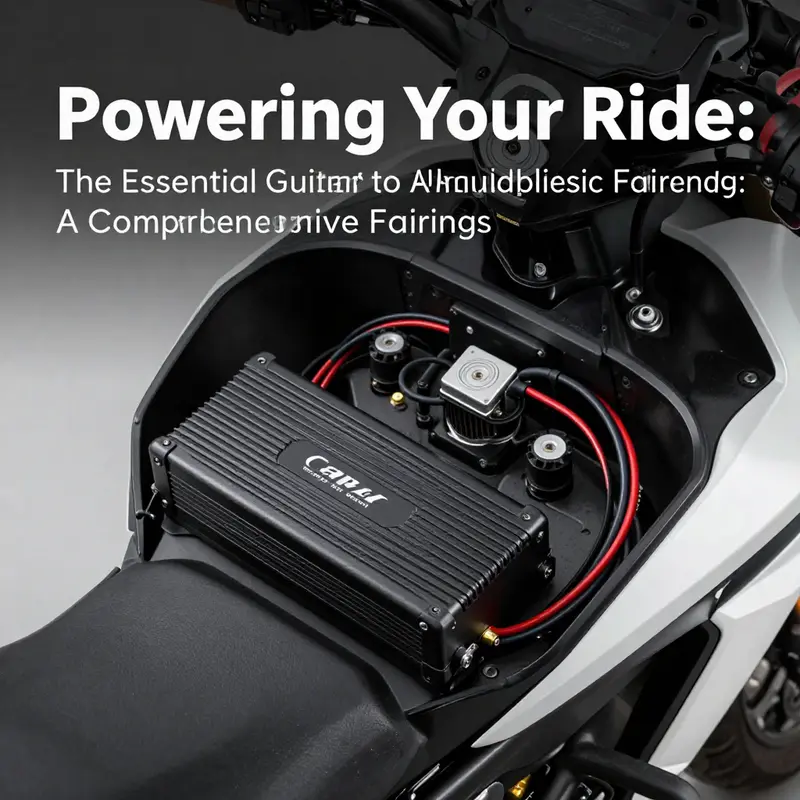
The idea of adding an amplifier inside a motorcycle fairing is often painted as a simple upgrade, a quick way to push clearer music, clearer voice comms, or crisper navigation cues to a rider who spends long hours in the saddle. But beneath the surface, the decision to power an audio system from a compact fairing cavity touches many practical realities: heat becomes a pressure point, space is a scarce resource, and the electrical system of a motorcycle demands respect as a shared power supply. This chapter explores how to design, select, and install an amplifier for fairing-mounted audio in a way that honors performance, durability, and the machine’s overall balance. It is about more than sound; it is about sound that stays reliable while the bike remains light, cool, and predictable on every twist of road or strip of highway. In that sense, the amplifier is not just a box that amplifies; it is a carefully integrated component whose success depends on how well it whispers, rather than shouts, at the rider’s ear while the wind does the rest of the work around it.
First, consider efficiency as the governing constraint. In a fairing, airflow is already working for or against the system, and heat can accumulate where there is limited ventilation. A highly efficient amplifier minimizes the heat it generates, which translates into fewer fans, smaller heat sinks, and more tolerance for continuous operation on long rides. Class D designs have become the standard for this environment because they deliver more power per watt and run cooler than their older counterparts. The goal is to keep the amplifier’s heat within the bounds of what the fairing can absorb without compromising surrounding components or the rider’s comfort. A compact, weather-resistant package is not a luxury but a necessity, aimed at resisting rain ingress, spray from the road, and the constant vibration of high-speed travel. It helps to look for units that are purpose-built for motorcycles or other two-wheeled platforms, with sealed enclosures, protective coatings, and robust mounting points that won’t loosen with miles or weather.
Power management is the second pillar. The motorcycle electrical system is a finite, shared resource: the battery, the alternator, the ignition, and a matrix of sensors and actuators all draw from the same pool. Any audio upgrade must be designed around this reality. That means selecting an amp that operates efficiently at the 12-volt nominal supply typical of most motorcycles and that can handle brief voltage dips without collapsing into distortion or protection mode. It also means planning for appropriate fusing, wiring gauges, and current draw calculations. A careful approach may include using a separate fused feed from the battery through a weatherproof relay, with a switch or a rider-controlled control unit to power the system on only when needed. This reduces the chance of parasitic drain when the bike sits idle and ensures that a sudden surge from other accessories won’t overwhelm the amplifier’s input stage.
The acoustic design inside a fairing is a puzzle of geometry and material science. Modern fairing-mounted speakers strive for low-profile shapes that slip cleanly into the flow without introducing drag or buffeting that could feed back into the rider’s seating position. The speaker enclosure, often a small sealed or vented chamber tucked into a cavity, works in concert with the amplifier and the head unit to deliver the desired sound stage. The shielding effect provided by the fairing’s structure—the windscreen, the side panels, and the inner shells—helps tame wind noise, creating a more even acoustic field. In practice, this means the amplifier should be paired with drivers and a crossover arrangement that minimize phase discrepancies and allow the rider to hear vocal clarity and instrumental balance at highway speeds. Proper mounting that dampens vibration and avoids resonant paths is crucial; otherwise, the very vibrations that threaten the fairing’s integrity can turn the audio system into a drum, muddying the signal rather than clarifying it.
Aesthetics must not be neglected. The fairing is part of the motorcycle’s identity, and the audio system should blend with its lines rather than break them. The amplifier’s housing and the routing of the wiring should respect the contours and the finish of the fairing. When done well, the installation appears as if the system belonged there from the outset—an engineered extension of the bike’s personality rather than a clumsy add-on. The mounting arrangement should be accessible for service without requiring disassembly of major fairing sections, especially since weatherproofing and strain relief are as much part of the performance as the loudness itself. A clean, concealed routing plan reduces the chance of snagging cables on fork hardware, control cables, or handlebar attachments, which is essential when the rider’s hands are navigating the terrain at speed.
The integration with the motorcycle’s electronics is where the art meets the engineering. Compatibility isn’t merely about voltage; it is about ensuring signal integrity across all connected devices. The amplifier should accept the head unit’s audio output in a way that preserves dynamic range and minimizes noise. If a separate digital signal processor or equalizer is part of the system, its ratings and interfaces must align with the amplifier’s inputs and outputs. Grounding is critical; a poor ground can introduce hum or buzz that becomes amplified by the loudspeaker and turns into a constant distraction. Wiring harnesses should be chosen to withstand vibration and weather exposure, with adequate shielding to protect against electromagnetic interference. The goal is a secure, clean loom that can be inspected without disturbing the fairing’s seals, and that can accommodate potential upgrades or component changes without requiring a full rewire.
In terms of system type, the choice between wired connections and wireless Bluetooth configurations hinges on reliability and latency. Wired systems generally deliver superior sound quality, better consistency in challenging weather, and fewer latency concerns—factors that matter on long rides where timing between audio cues and rider actions is part of the experience. Wireless options can offer convenience, especially for riders who want to swap devices quickly or pair with mobile tech without extending a heavy cockpit. However, Bluetooth and similar technologies may introduce latency or compression that alters perceived dynamics, particularly at higher music fidelity or during voice communications in a moving environment. A pragmatic approach often involves a primarily wired backbone, with optional wireless peripherals that connect when needed, keeping the core audio path robust while allowing flexibility for short-term use.
Installation challenges are as much about planning as they are about execution. Exposed wiring must be protected from abrasion, vibration, and the elements. This means choosing routing routes that minimize exposure to heat sources and that avoid moving parts. Cables should be secured with strain reliefs, grommets, and protective conduits, so they do not chafe or fatigue under fatigue-like cycling of vibration. When selecting components, riders should look for units that match the fairing’s design language and mounting space. Space constraints can force compromises, but with careful planning, a compact amplifier can be tucked into a recessed pocket or a hidden bay that remains accessible for service without dismantling the entire fairing. The mounting approach should consider heat dissipation, airflow, and potential contact with exhaust heat or engine heat sources that could shorten the life of sensitive electronics. Keeping the amplifier out of direct heat paths not only protects the electronics; it also preserves the rider’s comfort by reducing radiant heat exposure in a cockpit environment.
The broader ecosystem for fairing audio includes resources that provide installation kits, technical support, and guidance for model-specific fitment. Riders often find that tailoring a system to a particular bike model—considering fairing shape, internal volume, and existing electrical architecture—yields the best results. For model-specific reference, you can explore the collection dedicated to BMW fairings to see how the design language integrates with electronics in a way that respects both form and function. BMW fairings collection. This kind of cataloging helps practitioners anticipate mounting sizes, enclosure volumes, and potential interference with other fairing-mounted devices, such as auxiliary lighting or communication interfaces, without compromising the overall profile of the bike.
The journey to a successful fairing audio system is iterative. Start with a clear plan for power budgeting, space allocation, and heat management. Sketch the routing paths on cutaways of your fairing to confirm that the amplifier and its cables will not intrude on rider space or compromise the fairing’s airflow. Then, move to the assembly phase with attention to cable integrity, strain relief, and shielding. Finally, test the system across a spectrum of riding conditions—from idle to cruising to high-speed bursts—listening for warmth, distortion, or rattles that signal the need for positioning adjustments or dampening treatments. The goal is not to create a showroom soundstage inside the cockpit; it is to deliver consistent, intelligible audio that enhances, rather than distracts from, the riding experience. A well-integrated amplifier within a fairing speaks to a philosophy of compact, deliberate engineering—where every gram of weight, every centimeter of space, and every watt of power serves the rider’s needs with reliability and restraint.
For riders seeking additional practical guidance, industry resources emphasize the importance of robust installation kits and model-aware support. Engaging with these resources can help ensure compatibility with a wide range of fairing designs and electrical systems while preserving the aesthetic integrity of the motorcycle. External references that delve into broader audio-system design for vehicles can offer deeper technical perspectives on signal integrity, thermal management, and enclosure acoustics. External resource: https://www.motorcycleaudio.com
Final thoughts
Integrating amplifiers into motorcycle fairings enhances not only the audio experience but also the overall functionality of the motorcycle. By selecting the right amplifier, managing heat effectively, ensuring weather resistance, employing correct mounting techniques, and understanding the integration of audio systems, business owners can significantly improve their motorcycle offerings. Investing in quality amplifiers tailored for motorcycle environments solidifies a commitment to customer satisfaction and long-lasting performance.