
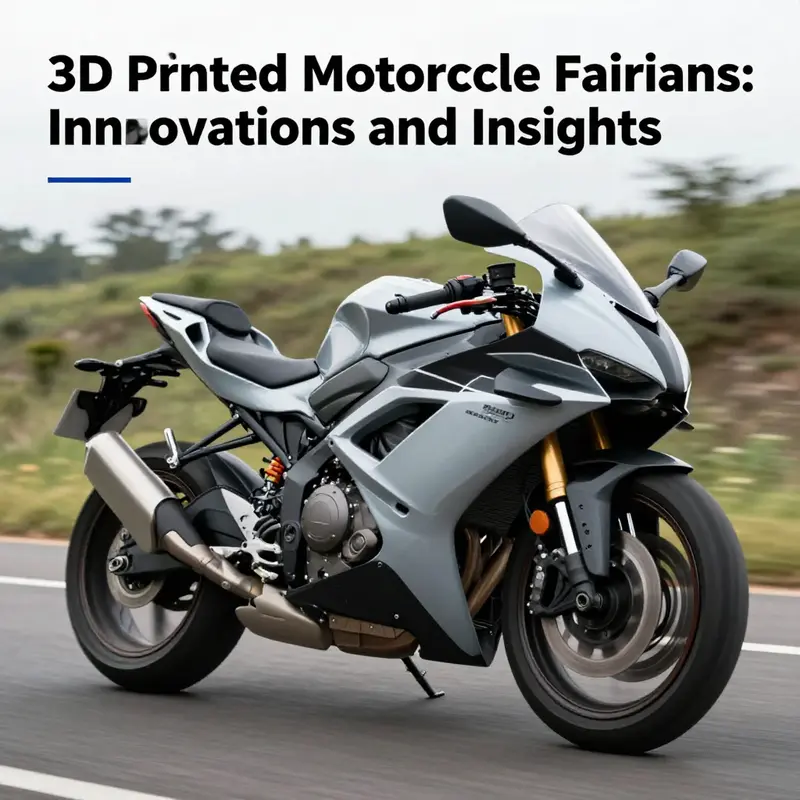
The motorcycle industry is continually evolving, pushing boundaries and exploring innovative technologies. One such development is 3D printing, which offers unique possibilities for manufacturing motorcycle fairings. As business owners in this field, understanding the intricacies of 3D printing fairings is essential. This article examines the feasibility of this technology, the materials used, the challenges faced, and its potential applications, providing a comprehensive guide for businesses looking to navigate this innovative landscape.
Feasibility in Practice: 3D-Printed Motorcycle Fairings in the Real World
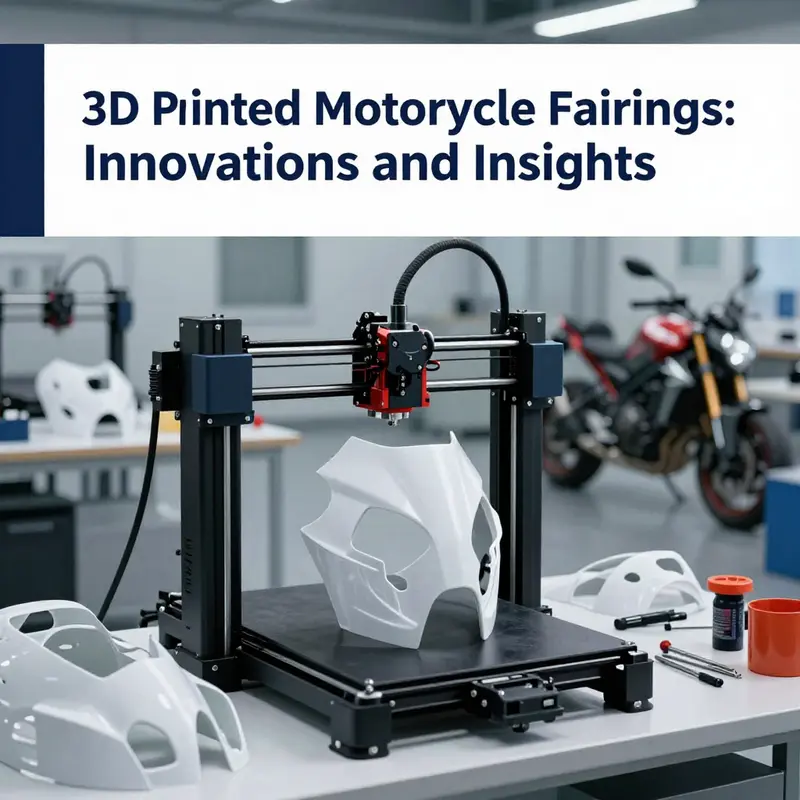
3D-printed motorcycle fairings are moving from curiosity to practical use. This chapter examines real-world feasibility, focusing on materials, processes, and integration with existing frames. It discusses rapid prototyping, FDM versus SLA, material properties, post-processing, durability under UV and heat, and safety considerations. A modular approach—printing a shell that mounts to a robust internal structure—helps combine additive benefits with proven load paths. Design for additive manufacturing (DfAM) emphasizes thicker walls where needed, avoidance of thin unsupported sections, and attention to surface finish for aerodynamics. In practice, it enables rapid iteration of shapes, custom branding, and lightweight configurations, especially in low-volume or boutique builds. Cost-wise, 3D printing can reduce tooling outlays and enable customization, but post-processing time and material choices influence the overall economics. While large-scale production still leans on conventional methods, the real value today lies in prototyping, personalization, and small batches where speed and flexibility are paramount.
Material Matters: How 3D-Printed Motorcycle Fairings Balance Strength, Weather, and Aerodynamics
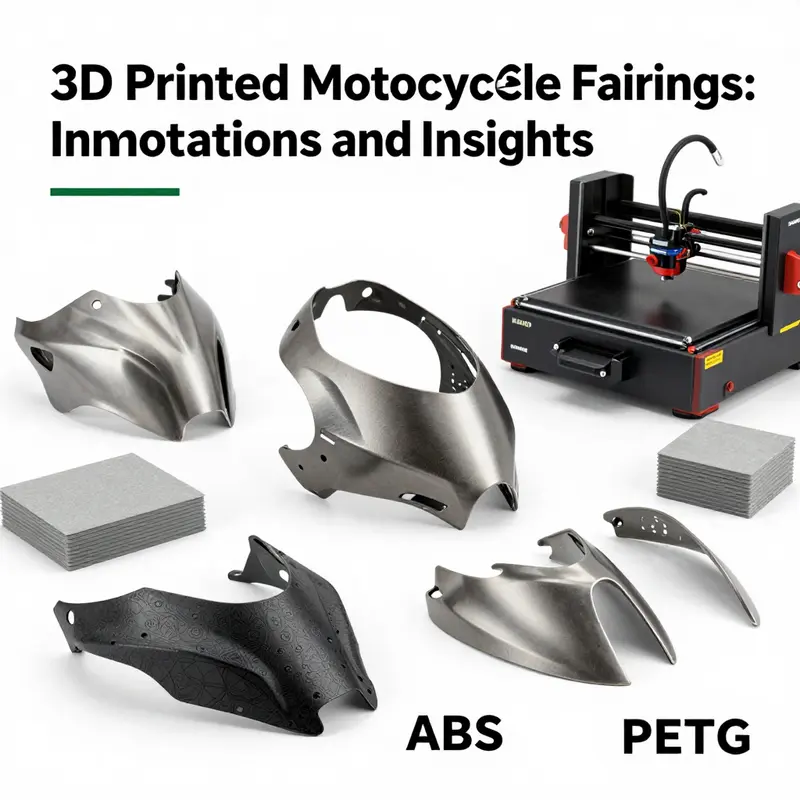
Choosing the right material is the first and most consequential decision when you set out to 3D print a motorcycle fairing. The material affects the look of the finished piece and, more importantly, how it performs on the road: heat, sun, rain, and the vibrations of high speed. Common materials discussed for 3D printed fairings are heat-tolerant thermoplastics such as ABS, ASA, and polycarbonate, with PETG offering a practical middle ground. Each material brings its own blend of strength, stiffness, toughness, and processability, and each carries caveats when translating a digital model into a real riding part. The core takeaway is simple: to make a 3D printed fairing more than a display piece, you must align the material properties with the operating environment and the expected life cycle of the part. This alignment starts with understanding what each material can and cannot do under real world riding conditions.
ABS has long been a workhorse in the 3D printed world. It prints reliably, sands well, and accepts paint and primer well for a thermoplastic. An ABS fairing may balance strength and toughness, which helps with minor impacts or debris. But ABS is not perfect. UV exposure can cause surface degradation or embrittlement, and without proper containment it can warp if printing is not tuned. Weather resistance is adequate for short to mid range outdoor use, but prolonged sun exposure can color or degrade the surface unless UV stable coatings or post processing are used. Choosing ABS means relying on a robust, easy to work with baseline material with careful printer calibration and post processing.
ASA is described as ABSs weather ready cousin. Its standout advantage is superior UV resistance and environmental stability. For outdoor rides that need to stay vibrant and structurally sound longer, ASA offers a more durable, color-stable surface. The trade offs are cost and tighter control of the printing environment. ASA can be finicky with bed adhesion and extrusion temperatures, and often benefits from a temperature controlled printer enclosure to minimize warping and ensure consistent layer bonding. For riders requiring long term outdoor exposure, ASA can be compelling.
Polycarbonate offers exceptional impact resistance and higher heat tolerance, aligning with high speed riding where wind shear and rapid temperature changes occur. Its toughness makes it attractive for more ambitious fairing projects that aim to survive daily wear and occasional crashes. The caveat is that PC prints require more sophisticated hardware and settings. Higher extrusion temperatures and careful temperature management are needed, and sometimes specialized hot ends or bonding approaches are required. The surface finish can be excellent, but the process tends to require more time and experimentation to achieve a smooth, aerodynamic skin that holds up to high speed air without micro-scratches under UV exposure.
PETG is a practical choice with good chemical resistance, clarity in transparent forms, and ease of printing. It tends to be tougher than PLA and more forgiving than ABS in some print scenarios, making it a convenient stepping stone for new fairing geometries or mid run prototyping. PETG is relatively moisture resistant and performs well in many environments, but it is not as UV stable as ASA. With coatings or post processing, PETG can be a serviceable fairing material, though extended direct sun may require more maintenance.
Beyond these primary materials, the literature and field reports emphasize a core truth: real-world performance hinges on printing discipline, surface finishing, and protection. A surface that looks smooth in CAD may reveal micro roughness at speed. Micro roughness adds drag and can increase noise and buffeting, so post processing is critical. Achieving an aerodynamic surface often means sanding, priming, painting, and clear coating, sometimes with UV protective layers. These steps influence efficiency, heat management, and rider comfort.
The practical realities of surface finish also shape build planning. 3D printed parts have layer lines that can generate turbulence at high speed if untreated. Sanding should progress through progressively finer grits to avoid embedded scratches. Priming seals the surface, which is important for moisture or solvent sensitive materials. A high quality paint system is essential to achieve a smooth wake and minimize drag. In production, post processing adds time and cost, so 3D printing is often best for prototyping, customization, or limited runs rather than mass production of fairings.
Durability under dynamic loads is another factor. A motorcycle fairing must withstand occasional impacts and repeated vibrations from gusts while cornering. The anisotropy of many 3D printed parts means properties vary with print orientation. A well designed fairing may use fiber or mesh reinforcement, such as a composite skin bonded to a 3D printed core, or a post process reinforcement to improve impact resistance. A full composite fairing can greatly improve stiffness and surface integrity but also adds complexity and cost. For many riders, a robust ABS or ASA print with a high quality paint finish and UV stable clear coat provides a practical, serviceable compromise with acceptable aerodynamic performance.
Ultimately, 3D printing offers design freedom, but weather, UV exposure, and durability remain constraints. The fairing must achieve accurate geometry and survive sun, rain, and cold with consistent performance. If UV stability is prioritized, ASA or PC based systems with protective coatings will usually outperform a straight ABS solution in the long run. If speed to production and ease of iteration are primary goals, ABS or PETG may be adequate to validate forms and test aerodynamics, with the caveat that outdoor exposure will require more maintenance and refinishing.
For readers planning a build, a practical approach is to start with a robust material foundation, invest in surface finishing, and apply protective coatings that resist UV and weathering. The goal is to produce a shell that is not just visually appealing but a durable, road-ready aerodynamic surface that preserves geometry and reduces drag over time.
null
null
Rethinking Wings on Two Wheels: The Practical Promise and Real-World Limits of 3D Printed Motorcycle Fairings
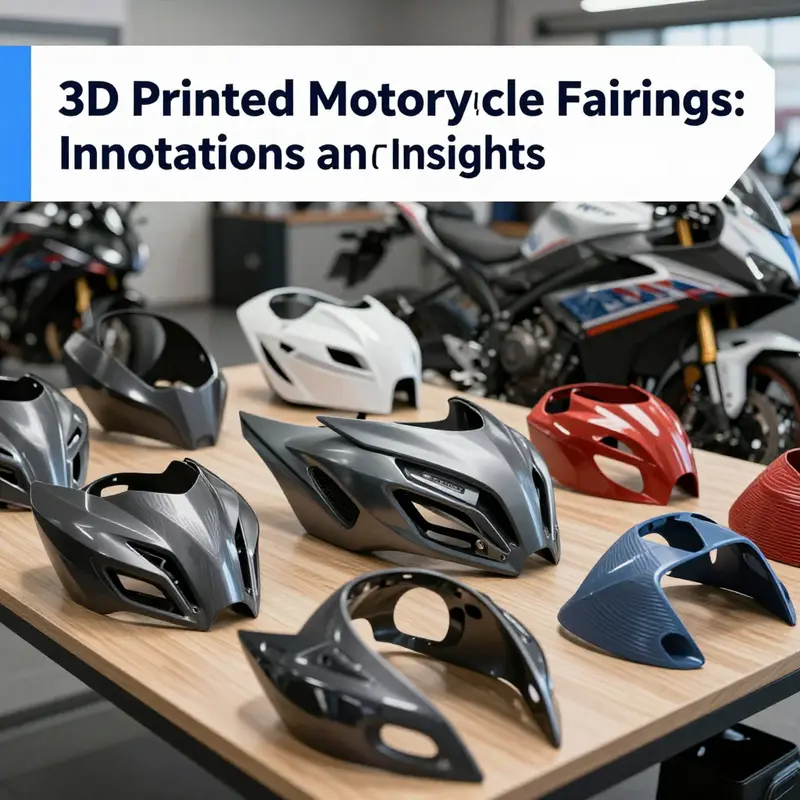
3D printing has quietly transformed how riders and engineers approach motorcycle fairings, turning what used to be a hybrid of artistry and engineering into a more iterative, data-driven process. Designers now test shapes, internal channels, and attachment points with unprecedented speed, enabling quick feedback loops that compress months of traditional development into days or weeks. The promise goes beyond flashy prototypes; it extends to real-world benefits like on-demand spares, bespoke aesthetics, and aerodynamic refinements that can be tailored to individual riding styles. The outcome is a design language that emphasizes lightness, complexity, and integration, where every curve not only looks right but also serves a purposeful function in airflow, heat management, and mounting architecture. Yet the road from concept to street is rarely a straight line, and understanding where 3D printing shines—and where it buckles under practical pressures—helps separate the experimental from the dependable. In this context, fairings printed with careful material choice and disciplined post-processing can offer functional advantages for prototyping, customization, or niche builds, while mass production continues to rely on established methods that deliver durability, cost efficiency, and repeatable surfaces at scale.
Feasibility sits at the crossroads of design intent, material behavior, and the realities of riding environments. For prototyping or small runs, 3D printing can produce fairings that resemble the final form closely enough to test aerodynamics, clearance, and mounting geometry. Metal-based approaches such as Direct Metal Laser Sintering (DMLS) or Electron Beam Melting (EBM) open the door to metal fairings, particularly appealing when heat resistance, stiffness, or impact resilience are critical. These methods can yield high strength-to-weight ratios and excellent corrosion resistance in aluminum alloys, titanium, or stainless steel, but their cost and production bottlenecks generally make them impractical for full-scale production. More commonly, polymer-based fairings—the kind you might actually see on many custom or prototype bikes—rely on Fused Deposition Modeling (FDM) or Stereolithography (SLA) with engineering thermoplastics like ABS or PETG, or with specialized resins. These materials balance workability, cost, and performance, yet they do not inherently match the UV resilience and long-term impact strength of reinforced plastics or composites like fiberglass or carbon fiber.
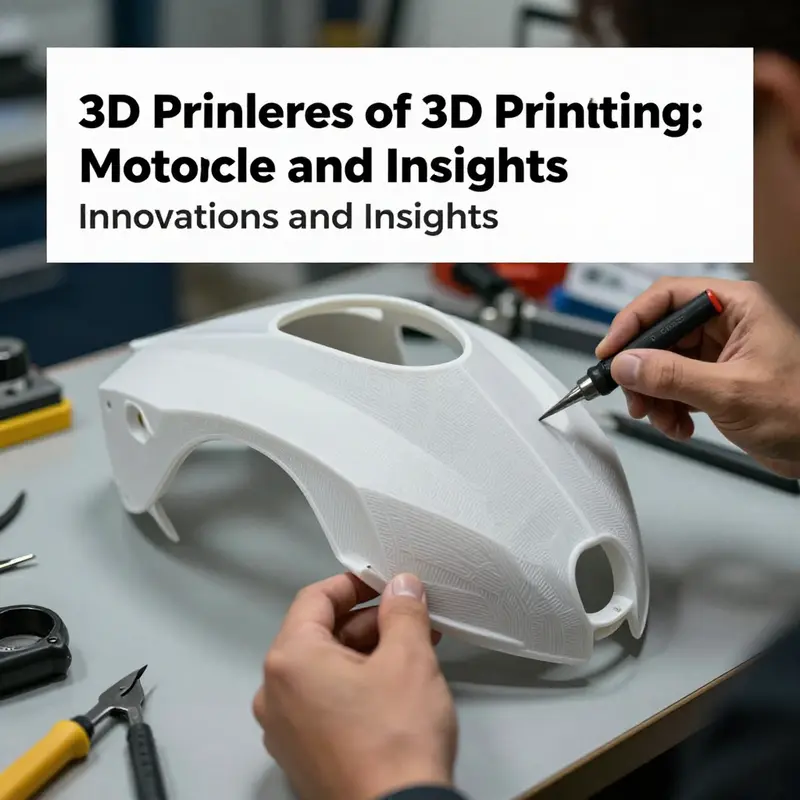
Post-processing emerges as a decisive factor in translating a 3D-printed part from a rough, testable form into a finished, ride-ready component. The raw surface produced by a layer-by-layer build typically requires smoothing, sanding, and priming before paint or sealants can be applied. Achieving an aerodynamically smooth surface is more than cosmetics; it reduces boundary-layer turbulence that can subtly affect stability at speed. For many riders, the surface finish also dictates how well the fairing resists micro-scratches, chalking from UV exposure, and the creeping effects of weather over time. In this sense, the practical reality is that 3D printing can produce a fairing that is functionally ready for testing and display, but the workflow to a final, durable, UV-stable exterior is a collaboration between materials science and meticulous manufacturing steps.
Durability under projection is another essential question. A fairing endures vibration, wind pressure, minor debris, and the occasional crash-load scenario that tests the integrity of joints and attachment points. The layered nature of 3D-printed parts can influence how stresses distribute through the panel, and without rigorous testing, a fairing might perform well in a bench test but underperform in real‑world ride conditions. Designers who venture into 3D-printed fairings often embed load-bearing features, consider fiber-reinforced composites in the final build, or design a hybrid approach where the outer shell is printed while critical mounting interfaces and stiffeners are added through conventional fabrication methods. The keystone of success remains clear: the design must anticipate the realities of thermal cycling, UV exposure, and the mechanical demands of highway speeds and street irregularities.
If the aim is rapid iteration or personalized styling rather than mass production, 3D printing delivers a unique edge. By leveraging lattice or honeycomb internal structures, engineers can reduce weight without sacrificing stiffness, a combination that improves handling characteristics by shaving mass from high‑drag surfaces. The internal geometry also opens possibilities for lightweight cooling channels, wire runs, or sensor housings that are difficult to realize with traditional sheet‑and‑laminate processes. A well-considered lattice pattern can contribute to energy dissipation and quieter operation by minimizing resonant pathways, while still maintaining the smooth external silhouette that governs aerodynamics. These capabilities are particularly valuable for custom builds and niche markets where one-off aesthetics meet specific performance goals.
From a production perspective, the rise of 3D printing also fosters on-demand parts ecosystems. Rather than stocking spare panels for a wide range of models and model years, fleets of riders could access fairings on request, with printing completing the cycle from order to part in a fraction of the time required for tooling and molding. This on‑demand approach aligns well with vintage or rare bikes where original manufacturer parts are scarce or cost-prohibitive. When integrated thoughtfully, 3D printing can also streamline assembly by incorporating built-in mounting points, channels for wiring or sensors, and integrated fasteners that reduce the number of separate components. In other words, additive manufacturing shifts some of the complexity from the shop floor to the design phase, where careful planning yields parts that slot together with fewer fit-and-finish surprises upon installation.
Design for additive manufacturing (DfAM) becomes more than a buzzword when one contemplates real-world use. Orientation, support strategies, and the distribution of material across walls and cavities all influence the final performance and surface quality. In the context of fairings, this translates to decisions about where to place thick sections for impact resistance, where to incorporate lightweight cores, and how to route air in a way that complements, rather than disrupts, the bike’s overall aerodynamics. With DfAM, a designer can place internal channels for cooling or venting in positions that are inaccessible to post-process shaping in traditional methods. They can also tune the surface texture and radiative properties to manage heat buildup under engine operation or sunlight exposure, balancing aesthetic preferences with practical outcomes. The hobbyist who designs a fairing for a weekend track day may prioritize speed and visibility of sensors or cameras, while a professional crew might demand repeatable mounting interfaces and predictable crash behavior.
Aesthetic expression remains a compelling driver for 3D-printed fairings. The freedom to craft complex curves, perforations, and sculpted vents without the tooling investments required by traditional processes makes customization feasible at a price point accessible to enthusiasts. Yet paint, clear coatings, and UV-stable finishes still matter, because the outdoor environment imposes a continuous test on colorfastness and gloss. The best outcomes often emerge from a hybrid approach: an outer surface finished with a high-quality paint system and a printed core that supports the shape and interior channels. This combination can yield a visually striking panel that also honors the engineering realities of weather exposure and structural loading. In practice, the most compelling 3D-printed fairings are those where form and function reinforce each other, where the look of the piece communicates airflow efficiency as clearly as the internal channels demonstrate a thoughtful approach to heat management and wiring integration.
For riders who want a tangible sense of the possibilities, a targeted example can illuminate the pathway from concept to street. A rider seeking a personal touch might explore a 3D-printed fairing designed to accommodate an unconventional instrument cluster or a compact camera system for ride recording. The internal architecture can be planned so that the camera housing threads directly into the fairing, removing the need for separate brackets and minimizing weight. A hardware-conscious builder could design mounting bosses into the printed part, ensuring a flush surface that reduces drag while simplifying assembly. These scenarios underscore a broader truth: 3D printing is not a one-size-fits-all solution, but a design tool that shines when the rider’s goals align with the material and processing options at hand. The reality is most successful implementations balance the speed and customization advantages with disciplined choices about materials, surface finishing, and integration with existing hardware.
In practical terms, the choice of material remains the most consequential decision in any 3D‑printed fairing project. Engineering thermoplastics used in FDM workflows—such as ABS or PETG—offer a good mix of toughness, impact resistance, and thermal stability for non‑extreme riding contexts. SLA resins can deliver smooth surfaces and fine features that are desirable in early prototyping stages or in showpieces where the aesthetic impact matters more than capillary performance. For applications demanding higher durability or integration of protective features, some teams experiment with reinforced composites or even metal shells for critical segments, acknowledging the significant trade-offs in cost, weight, and post-processing complexity. The overarching takeaway is clear: 3D printing expands the design space, but the final choice must reflect operating conditions, maintenance expectations, and the rider’s priorities.
As this approach matures, it’s natural to see closer alignment between additive manufacturing and the broader ecosystem of fairing development. The technology complements conventional methods by enabling rapid iteration loops and highly personalized builds, while traditional manufacturing remains indispensable for high-volume production and long-term durability. For the enthusiast or small shop, 3D printing offers a practical route to prototype a new silhouette, test an integrated sensor layout, or fabricate a spare part that would otherwise be hard to source. The ongoing challenge is to keep the ambition aligned with reality: to ensure that every printed panel not only looks right but also withstands the rigors of real riding. When this balance is achieved, the result is not merely a fairing that can be printed, but a fairing that can be ridden with confidence, refined through testing, and customized to a rider’s unique preference.
For readers curious to explore how these concepts translate into real-world catalogs and model-specific applications, see how certain brands curate a range of category-specific fairings that reflect shared engineering principles, yet remain open to customization through additive manufacturing. A deeper dive into the broader applications of 3D printing for high-performance parts—beyond the scope of general prototyping—can be found in the detailed research literature. This material provides a foundation for understanding how lattice structures, integrated channels, and rapid prototyping converge with established consumption patterns and service models, offering a framework for riders to evaluate when a 3D-printed fairing makes sense for their project. To bridge theory with practice, you can explore Honda’s dedicated fairings collection as a reference point for how modular, model-specific geometry can be adapted within an additive workflow. See the Honda fairings catalog for a sense of how existing geometries can inspire 3D-printed adaptations and replacements, while maintaining compatibility with mounting interfaces and wind-tunnel-informed shapes that optimize performance on the road.
In sum, 3D printing has become a meaningful tool in the motorcycle fairing toolkit, best deployed where customization, rapid iteration, and on-demand spares drive user value. It is not a universal replacement for established production methods, but a powerful complement that enables riders to push the boundaries of form, fit, and function. When used thoughtfully, with attention to materials, post-processing, and integration, additive manufacturing can deliver fairings that are not only visually compelling but also technically coherent with the realities of riding. The result is a more expressive and adaptable riding experience, where the fairing serves as a canvas for performance-driven design rather than a static shell. For those who treat 3D printing as a design enabler rather than a shortcut, the possibilities are limited only by imagination, engineering discipline, and the willingness to pair innovative fabrication with careful testing and reliable finishing practices.
External reference for deeper technical context: https://www.sciencedirect.com/science/article/pii/S1877965222001475
Final thoughts
3D printing motorcycle fairings presents unique opportunities for business owners in the motorcycle industry. While it is feasible and supported by advanced materials, several challenges must be addressed to ensure quality and performance. By leveraging this innovative technology for prototyping, customization, and limited production, businesses can differentiate themselves and tap into niche markets. Embracing the potential of 3D printing may well define the next generation of motorcycle manufacturing.