
In the motorcycle industry, the importance of aesthetics, performance, and cost-effectiveness cannot be understated. Among the various components that contribute to a bike’s performance and visual appeal are motorcycle fairings—structures designed to enhance aerodynamics and protect machinery. However, as riders are increasingly inclined towards budget-conscious options, old motorcycle fairings emerge as a pragmatic choice. They offer a unique blend of affordability and functionality, allowing motorcycle businesses to cater to discerning customers looking for economical repairs and upgrades. This article delves into how business owners can leverage the compatibility, material integrity, economic impact, restoration techniques, and current market trends of old motorcycle fairings to enhance their service offerings and drive sales. Each chapter elucidates the significant aspects that underline why investing in this segment can be beneficial for motorcycle businesses today.
Old Fairings, Exact Fits: Navigating Compatibility Across Motorcycle Models
Old motorcycle fairings are a familiar sight in used parts yards and repair shops. They promise practical savings and the chance to refresh a bike’s look without buying brand-new panels. Many riders are drawn to the idea of swapping to time-tested cosmetics or completing a build on a tight budget. Yet time has a way of bending more than paint. The compatibility problem between an aging fairing and a different model is rarely automatic. It rests on subtle, precise differences in frame geometry, mounting brackets, and even the curve of the instrument cluster. These aren’t random flaws; they are design choices embedded in every model year. When a panel leaves one bike and tries to find a home on another, it encounters a network of reference points that must align for a secure fit, clean appearance, and predictable aerodynamics. The reality is that old fairings often carry a design fingerprint unique to the bike they were born to protect, and that fingerprint grows more distinctive with every mile and every UV-baked year of exposure. In this light, compatibility isn’t a matter of mere bolt alignment; it is a question of whether the entire ecosystem around the panel—the mounting points, the windscreen interface, the headlight housing, and even the shape of the fuel tank—still belongs to the same family.
Design specificity matters not only because of aesthetics. The fairing is part of a larger air management system. Its lines influence how air splits around the bike, how much buffeting the rider experiences, and how quickly engine warmth is carried away from the rider’s legs. A slightly different curvature can translate into altered airflow patterns, which in turn affects stability at speed and noise levels inside the cockpit. Even when a used fairing seems to drop into place with minimal fighting, subtle mismatches can creep in over time. The mounting brackets might appear to line up, but they can require shims, added fasteners, or small tweaks to keep the panel from shifting under vibration. The safe yak of the road often comes to rest on whether the panel can be anchored securely without stress at the mounting points or at critical edges where the wind pushes hardest.
The practical reality becomes even clearer when we consider concrete examples that are frequently cited by mechanics and enthusiasts. A full fairing from a 2005 Yamaha R1, for instance, will not fit a 2010 Honda CBR600RR. Differences in bodywork design, headlight housing, and attachment brackets create a landscape in which the two pieces simply refuse to marry. Half-fairings or quarter fairings are not exempt; they may align with some points yet clash with others, especially near instrumentation panels or the contours of the fuel tank. These are not minor inconveniences. They are signposts telling the careful buyer where compromises begin and where safe, reliable fitment ends. The result is a broader truth: compatibility is inherently limited by the specific design language chosen by the manufacturer for each model year. The more distinct the frame geometry and the accessory layout, the smaller the pool of viable old panels becomes for that bike.
This reality underlines a critical note that often appears in aftermarket guidance. Aftermarket manufacturers stress the need to verify compatibility with your exact make, model, and year before purchasing a fairing. It is a simple instruction that many overlook in pursuit of a bargain or a particular cosmetic look. The effort to confirm fitment can save hours of fiddling or, worse, costly modifications. Experienced hands emphasize checking the mounting brackets, the fit of the top edge against the windscreen, and the alignment of the fender and radiator openings. They advise riders to measure key points and compare them with the reference diagrams that come with the part or with official service manuals. In practice, this means treating an old fairing as part of a system, not a standalone shell that can simply be swapped without regard to its neighbors. A reasonable approach is to seek a modern, purpose-built kit whenever the goal is a clean, reliable ride that mirrors the bike’s current configuration. Yet even when one finds a panel that appears to fit, there is no guarantee of long-term reliability without careful confirmation of those fitment details.
Beyond compatibility, the age of the material itself demands attention. Even if the fairing physically mounts on the bike, its structural integrity and aerodynamic performance may have degraded. ABS plastic, a common material in midrange fairings, can suffer from UV-induced brittleness and chalking after long exposure to sun and heat cycles. Polycarbonate panels offer greater impact resistance, yet they can craze or crack if fasteners are overtightened or if mounting points have experienced fatigue from vibration. Fiberglass and composite panels, while generally tougher, may delaminate or suffer microcracking in joints after years of thermal cycling and sun exposure. A compromised panel can fail under load, produce unexpected vibrations, or alter the intended airflow, which in some cases could affect handling stability at highway speeds. The practical implication is simple: a panel that looks usable from a distance can still be unsafe up close if its internal structure has weakened.
The prudent path for riders, therefore, is a twofold discipline: early, careful assessment and disciplined expectations. Begin with the exact specifications for each model and year involved. Consult fitment guides or service documentation that detail the precise mounting points, wall thickness at critical edges, and the position of the instrument cluster. Where possible, seek advice from experienced mechanics or from specialized online communities that routinely discuss fairing swaps. The questions to ask are concrete: Do the attachment points align with the frame brackets? Are the mounting slots present and undamaged? Is there any sign of warping at the top edge that could affect the windscreen seal? If any answer is uncertain, the risk of a misfit increases, and so does the temptation to modify. While modification can be a path to a workable install, it also introduces new failure modes, particularly if the fairing’s aerodynamics have to be sacrificed to accommodate a mismatched frame.
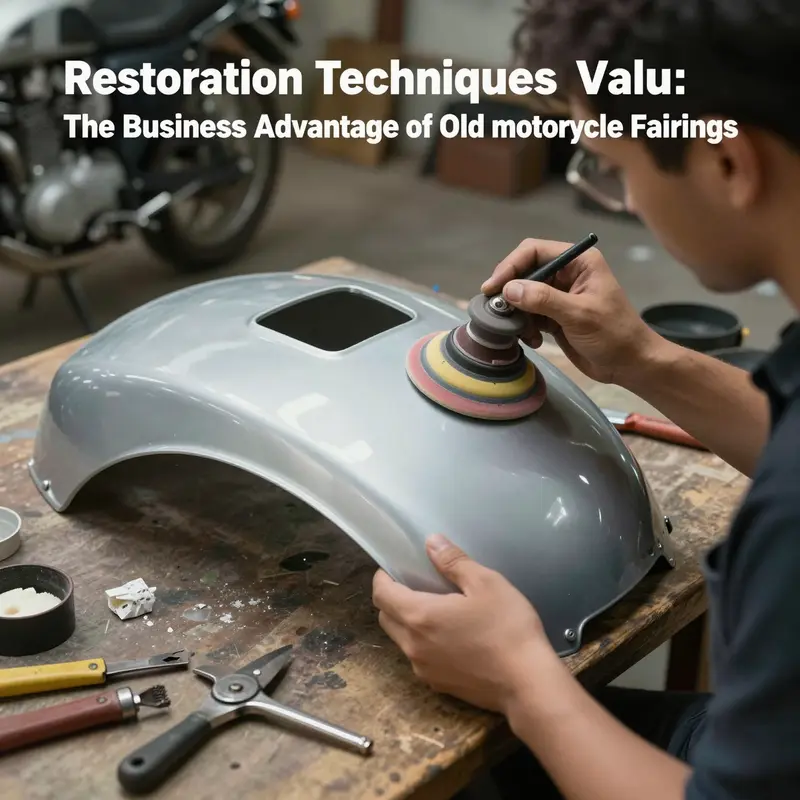
Another practical dimension concerns the buyer’s goals. Some riders chase a specific vintage look that a particular old panel can provide, and they accept a degree of compromise in ride dynamics. Others want a seamless, modern performance envelope and prefer to invest in a kit that is designed for the bike’s current architecture. For those chasing authenticity, refurbishing an old fairing—with careful sanding, priming, and repainting—can restore the exterior while leaving the mounting plan intact. Yet refurbishing does not repair structural wear or misalignment risk; it merely improves appearance and sheds UV damage that might otherwise hasten brittleness. In this space, honesty about what a used panel can deliver becomes a form of craftsmanship in its own right. The goal is a harmonious blend of appearance, safety, and reliability, not simply a glossy shell.
As riders map their options, a few guiding principles emerge clearly. First, compatibility is never guaranteed by age or cosmetic appeal. A fairing from one model year can be deliberately keyed to fit only that model’s geometry. Second, old does not automatically mean unsafe, but it does demand verification. A used panel can be a cost-effective aesthetic upgrade when properly vetted, but a misfit can impose serious handling and protection concerns. Third, the decision often hinges on the rider’s tolerance for modification and the project’s budget. In many cases, the safest route is to choose a new, model-specific fairing kit that aligns with the bike’s current configuration, especially for bikes that see spirited riding on road or track. This recommendation does not dismiss the allure of retro styling. It is a practical choice that maintains safety margins while preserving the essence of the original look through thoughtful, compliant integration.
To help readers navigate this landscape, a practical starting point is to explore brand-specific listings and fitment guidance. For instance, those exploring Honda fairings can browse dedicated listings that organize parts by model, year, and compatibility. These catalogues simplify the initial screening and reduce the risk of mismatches. Honda fairings offer a reliable reference point for understanding what is feasible in a given project, even when the final choice remains a used panel. While this route may not guarantee a perfect match, it helps riders gauge common alignment patterns and identify areas where modifications are likely or unlikely. It also highlights where genuine compatibility ends and requires adaptation, a distinction that can save time and money in the long run. Beyond brand pages, online forums and collaboration spaces let riders compare notes about specific model-year combinations, shared fitment challenges, and successful refurbishments that preserve both form and function.
Ultimately, the safest and most reliable route tends toward modern compatibility. The engineering intent behind current fairing designs is to optimize aerodynamics, protection, and mounting simplicity for the bike’s frame and equipment. When reality collides with a shell that predates it, the best outcome is to replace with a purpose-built kit tailored to the bike’s current configuration. This does not deny the charm of retro aesthetics; it simply recognizes that safety and performance should take precedence when the bike is on the road or the track. In many cases, a carefully refurbished old fairing may still grace a bike used for cruising, as a homage to the past, provided it is reinforced, properly sealed, and correctly mounted.
The discussion of compatibility is not merely a shopping concern; it is a reflection on how riders balance economy, safety, and visual identity. It is about recognizing that time is a designer and that old panels carry a story that can be fulfilled only when they fit decisively within a bike’s current geometry. For those who choose to pursue the old fairing route, the payoff can be meaningful: a bike that looks right, behaves safely, and remains affordable. For others, the modern path offers peace of mind and a reserve of performance designed to complement today’s engineering standards. The important takeaway is that diligence, rather than impulsive swaps, yields results that endure through miles and seasons on the road.
External resource: For further reading on fairing compatibility guidelines, see Cycle World’s comprehensive guide on how different fairings cater to varied bike configurations and the implications for safety and performance. https://www.cycleworld.com/motorcycles/technical-advice/motorcycle-fairing-compatibility-guide/
Guarding the Past: Material Truths and Restoration Paths for Old Motorcycle Fairings
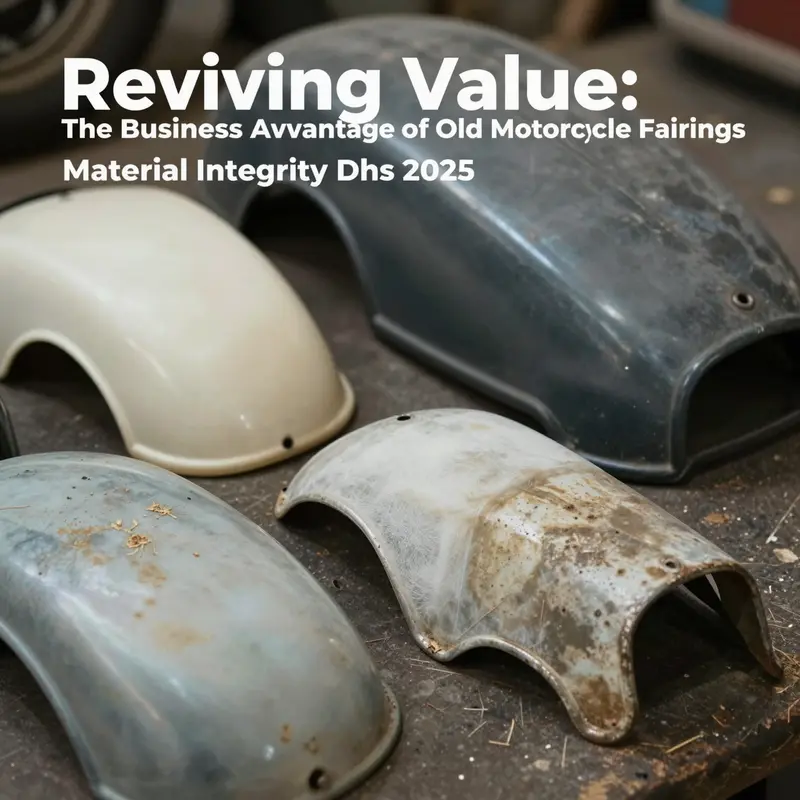
Old motorcycle fairings carry a quiet weight of history. They shield engines, sculpt airflow, and add personality to a bike that has weathered countless rides and perhaps a few scrapes along the way. When you open a box of aging shells, you are not just handling plastic, resin, or metal—you are handling a chapter in a machine’s life. The material that makes up an old fairing determines more than its appearance; it shapes how it will perform at highway speed, how it will respond to sun and rain, and how feasible it is to preserve or restore it for another decade of use. A careful owner learns to read these material signals as if they were handwriting on the shell, because what looks like wear on the surface often hides a more telling truth about strength, flexibility, and integrity beneath the color fade and micro-scratches.
Among the many materials used in fairings, fiberglass stands out as a throughline of vintage builds and custom projects. Fiberglass brings rigidity and a kind of durable character that racers once prized for track reliability. Yet age can bend that reputation. The resin matrix that holds the fibers together becomes brittle with time, especially if the shell has endured heat cycles, humidity, or repeated flexing. When fiberglass ages, you will notice this through small but telling cracks that radiate from joints or from impact zones that would have been inconsequential on a newer shell. These cracks may be superficial, but they can also indicate micro-delamination, where layers separate and air pockets form. The danger here is not merely cosmetic; delamination can alter the fairing’s aerodynamic profile and even its load-bearing capacity during mounting, which matters for how it shields the rider and engine at speed. Restoring fiberglass, then, is a craft of respect. It demands meticulous surface preparation, choosing compatible resins, and finishing that seals against moisture without adding excessive weight. If you plan to paint, the finishing stage must be treated as a restoration, not a patchwork, because UV exposure can take a toll later on if the finish is thin or poorly sealed.
The second common material group in old fairings is ABS plastic. ABS is popular because it provides a favorable blend of impact resistance and lightness, essential for factory engineering. But ABS ages in ways that are both visible and unseen. The sun is an relentless judge; UV exposure can yellow and warp the surface, and prolonged sunlight can soften the surface enough to encourage micro-cracking. In humid environments, ABS can absorb moisture and swell, which may distort fit and alignment, particularly at seams where the fairing is bolted to the subframe or bodywork. Even when the exterior looks dull or chalky, the real concern can be internal. A shell may appear sound while its structural integrity has waned enough to compromise protective function at speed or in rain. Restorers often find that successfully reviving ABS requires a combination of surface cleaning, careful re-sanding, and a finish that includes UV-inhibiting coatings. The aim is not merely to restore color, but to restore the barrier that keeps the material from becoming brittle and to preserve the ergonomic contour that supports wind deflection and rider protection.
Metal fairings—most often aluminum or occasionally steel in older, more rugged designs—tell a different story. Metal shells carry a tangible sense of durability, but they demand vigilance for corrosion and fatigue. Aluminum can resist rust, but it is not immune to pitting and oxidation, particularly in salty or fog-laden coastal environments. Steel can be even more susceptible to rust, hidden behind paint and under seals in joints. The danger lurks in the unseen crevices: the inner ribs, stringers, or mounting points that anchor the shell to the bike rely on intact metal, unstressed by rust and decay. Over time, hidden corrosion can migrate from the inside out, weakening mounting points and undermining the fairing’s ability to maintain its aero shape. When metal is involved, a restoration plan must include careful inspection of joints, internal cavities, and fasteners. For a rider seeking longevity, it means treating the shell as a structural component rather than a cosmetic cover and applying corrosion inhibitors or protective sealants where appropriate, followed by coatings that resist future oxidation.
A growing but increasingly common presence in the scene is 3D-printed fairings. Modern printing technologies open doors to customization and rapid prototyping, which is particularly appealing for riders chasing a precise fit on older frames or seeking a faithful revival of an omitted vintage look. The materials used in 3D printing—whether a robust nylon composite or a UV-sensitive polymer—present a different set of challenges. While some printed shells offer impressive rigidity, exposure to long, unfiltered sunlight can degrade certain polymers, leading to surface cracking or color fading that mirrors older ABS issues. Structural integrity under load must be evaluated with care, especially if the design relies on wall thickness to achieve strength rather than a traditional resin matrix. If you embrace 3D-printed components, you will likely need to consider protective coatings that harden the surface and improve chemical resistance, while still preserving the tactile feel and aerodynamic shape that define the fairing’s function.
Restoration, then, becomes a discipline of material fidelity. Experts recommend matching the original material type whenever possible to preserve both authenticity and performance. A fiberglass shell restored with a fiberglass-compatible resin and protective topcoat will behave more like the original under stress than a hastily applied patch that borrows strength from an incompatible material. The same logic applies to ABS and aluminum. Matching materials means not only similar mechanical properties but similar responses to UV, heat, and moisture. It also allows the rider to address the fairing in a way that harmonizes with the bike’s overall aesthetic and structural design, rather than creating an uneasy mismatch that could provoke cracking or misalignment over the long haul. In practice, restoration favors thorough cleaning, crack and delamination repair, precise sanding, and primer systems designed to bond to the original substrate. A finishing layer capable of resisting UV exposure and environmental pollutants becomes essential in preserving color, sheen, and aerodynamic smoothness.
To support these principles, riders often lean on a toolkit of evaluation steps that do not require laboratory facilities but do demand careful attention. A surface inspection—looking for micro-cracks around seams, delamination at repair sites, and any soft spots that yield under gentle pressure—provides a quick health check. A moisture-sensitive test can reveal hidden water ingress, especially in fiberglass, where trapped water can corrode resin over time. A sound test, by gently tapping the shell, sometimes reveals delamination or hollow sections that emit a dull thud rather than a crisp ring. When these signs appear, the path forward ranges from stabilized repairs to partial or complete replacement, depending on the shell’s location, function, and the rider’s goals. The decision is rarely purely cosmetic. If a fairing compromises air sealing or free movement of the engine cowl, or if mount points show signs of flex beyond acceptable limits, restoration gives way to replacement. Yet even replacement is not a final verdict if you can source a shell that preserves the character and balance of the original bike.
A practical note for ongoing care concerns the environment in which the fairing exists. The ideal storage space is cool, dry, and shielded from direct sun. When not mounted, the shell should be supported to avoid sagging, and it should be kept away from solvents and abrupt chemical cleaners that can attack the resin or plastic. Regular cleaning with mild cleaners and soft cloths, followed by a light wipe with a UV-protective finish, can slow the aging process significantly. The overall objective is to keep the fairing’s surface and structural layers intact so that it continues to perform as a shield against sun, rain, and road debris while preserving its shape and fit on the bike. This is where the restoration ethos aligns with practical riding: a fairing that holds its shape, protects vital components, and keeps the silhouette true will always be more than a cosmetic shell—it will be the unsung partner of the ride.
For riders who want to explore compatibility and aftermarket options that still respect the original’s material identity, a dedicated catalog can be a helpful compass. For example, on models from specific brands, the availability of fairings in a given category can streamline matching and fit. If you’re considering a Honda setup, meaningful options exist in catalogs that curate fairings by model and generation, helping to maintain the balance between authenticity and upgrade. You can explore a representative selection through Honda fairings resources: Honda fairings.
As with any restoration project, the informed choice rests on weighing cost, availability, and the bike’s intended use. A vintage track-day racer demands a different calculus than a boulevard cruiser focused on weekend rides. In both cases, the material truth of the old fairing—its current condition, resilience under UV, and readiness to defend the rider and the engine—will steer the plan. If you treat the shell not simply as a decorative shield but as a living piece of the motorcycle’s anatomy, you will approach repairs with a steadier hand, selecting the appropriate materials, coatings, and mounting methods that keep the fairing’s geometry and protective function intact. The best outcomes arise when restoration honors the original engineering choices, acknowledges the shell’s age, and applies contemporary techniques to prolong its life without erasing its history.
Further reading and deeper technical insights on material standards and restoration practices can provide a more granular roadmap for hands-on work. For a detailed exploration of material grades, properties, and uses in used fairings, see an established restoration guide authored by a respected practitioner in the field: https://www.motorcyclerestorationguide.com/used-fairings-materials-2026. This external resource offers practical guidance that complements the narrative above and helps riders translate material knowledge into actionable restoration steps, from surface prep to protective finishes. In the end, caring for old fairings is a quiet craft, one that respects the past while equipping a bike for new roads. By approaching each shell with curiosity about its material makeup and patience in repairing or stabilizing it, riders can keep the stories etched in the fiberglass, ABS, or metal alive for future rides and memories.
Old Fairings, New Paths: The Economic Pulse of Used Motorcycle Fairings
Old motorcycle fairings carry more than just a rider’s memory of weather-exposed highways and wind-driven commutes. They embody a pragmatic philosophy that sits at the heart of a growing aftermarket ecosystem: when parts that still stand up to the road can be reused, the bike economy profits in more ways than one. The narrative around used old fairings is not simply about saving a few dollars on a cosmetic piece. It is about bridging the gap between aging machines and affordable maintenance, about extending the life of a rider’s investment, and about nudging a complex supply chain toward sustainability. In practice, the decision to buy used hinges on a practical calculus. A fairing that has endured a few seasons of sun and rain may show scratches, color fading, or faint scuffs. Yet if the structural integrity holds—if the mounting points, inner ribs, and attachment seams remain true—such a piece can still perform the basic duties of a fairing: cutting wind, shielding vital components, and providing an outer shell that keeps dirt and moisture from reaching sensitive areas. This is the first layer of value. For riders balancing cost with reliability, the second layer is equally clear: the financial footprint. New OEM or aftermarket fairings for popular models can be remarkably expensive, especially when dealing with high-end designs or model-specific curves that demand precise fit. In many cases, a used fairing offers a practical alternative that preserves the look and aero function of the bike without the steep price tag. The economic logic is simple but powerful: a lower upfront cost lowers the barrier to repair, customization, and continued riding, particularly for owners of older bikes whose value is more emotional than monetary. The cost savings are not merely about the initial purchase. They ripple through the maintenance cycle. If a rider can source a compatible used piece in sound condition, they may reduce downtime, minimize the risk of mismatched aftermarket components, and avoid the long lead times sometimes associated with new parts. This is especially relevant in communities where time is money and a bike needs to be back on the road swiftly. Yet the decision to pursue used parts carries a spectrum of caveats. Compatibility remains the first and most important concern. The shape and mounting geometry of fairings vary across brands, models, and even production years. An ill-fitting piece can complicate installation, alter aerodynamics, and invite rattles or gaps that defeat the purpose of a fairing’s envelope. The materials themselves demand scrutiny. ABS plastics, polycarbonate, and fiberglass composites each age differently under ultraviolet light, temperature swings, and road debris. The so-called “chalk” or chalking phenomenon that affects older ABS can undermine strength and clarity. Over time UV exposure may make the material brittle and prone to cracking, a hazard not only to cosmetic appearance but to protective function in a crash scenario. The inspection ritual then becomes moral as well as practical. A potential buyer checks for obvious structural damage—deep cracks, warped mounting points, and brittle edges. One looks for evidence of previous repairs that might compromise the piece’s rigidity or alignment. Seams must be intact, not just glued but properly sealed to preserve aerodynamics and weather protection. Inside the shell, access panels or screw bosses should be unbroken and true; in some cases, the inner surface may show staining or delamination that signals moisture intrusion. Even when a fairing seems sound, refurbishing can dramatically alter the value proposition. Sanding, repainting, and polishing can restore the look and color match of a fairing, sometimes with minor cosmetic customization. A careful refinishing job can transform a weathered shell into something that blends with the bike’s identity while maintaining its protective role. These refinishing steps are not mere vanity projects. They affect the bike’s aesthetic coherence and its resale value, and they can help maintain the original aerodynamic profile, which translates into smoother handling and potentially lower fuel costs at highway speeds. In parallel with the practical considerations, there is a broader system-level story to tell. The availability of used fairings nurtures a circular economy within the motorcycle community. Instead of consigning a part to a landfill, a usable shell finds a second life, extending the bike’s service life and reducing the demand for new plastic or composite materials. This aligns with a mounting awareness across industries that longevity and reuse reduce energy consumption, waste, and emissions tied to production. The environmental dividend grows when the reuse rate travels beyond a single rider to tertiary markets: repair shops, refurbishers, and online marketplaces that curate a steady supply of used shells. The ripple effects feed a dynamic ecosystem. As demand for used fairings grows, online classifieds and specialty shops become hubs of activity, enabling quick matching of buyers and sellers, enabling small-scale entrepreneurship, and providing job opportunities in inspection, refurbishment, and logistics. Market data illuminate the scale of this shift. The motorcycle fairing market is valued at several billion dollars and is projected to expand at a double-digit CAGR into the early 2030s, with the used parts segment playing a pivotal role in widening access and affordability. This expansion is not merely a reflection of consumer preference; it is a signal of systematic change in how riders approach ownership, repair, and customization. The environmental dimension of reuse is not merely theoretical. Reusing a shell can reduce the need for new plastic production, cut energy consumption, and minimize waste associated with worn components that would otherwise end up discarded. When a rider chooses a used fairing, they are not just purchasing a cover for the bike; they are endorsing a practice that reduces the volume of raw materials extracted from the earth and the energy costs of fabrication and transport. This perspective resonates with broader shifts in automotive and two-wheeled industries toward sustainable practices, including remanufacturing standards and enhanced recycling technologies that keep composite materials in circulation for longer. The practical implications for the rider are nuanced but manageable. Compatibility is not a binary obstacle but a condition to be verified, and it often yields a reliable rule of thumb: if the fairing mounts align with the bike’s chassis geometry and the attachment points respond to standard fasteners, the shell has the chance to perform as intended. The material choice deserves emphasis, too. ABS, polycarbonate, and fiberglass differ in how they age, respond to heat, and interact with UV exposure. The chalking of ABS after years in sun can be mistaken for simple fading; in reality, it signals underlying weakness that should be considered before reassembly. A thoughtful approach to inspection, coupled with targeted refurbishment, can preserve airflow performance and maintain the intended protection against wind and debris. For riders contemplating staged upgrades or color customization, the reused shell opens doors to affordable styling choices without the premium price of new designs. A refurbished shell can act as a canvas for color-matched paint, decals, or even subtle reshaping that keeps the bike aesthetically current while honoring its heritage. In this light, the decision to pursue used fairings becomes a practical statement about resourcefulness and care for one’s ride. It is less about a cheap shortcut and more about a disciplined approach to maintenance that honors the bike’s history while ensuring it remains a reliable partner on the road. For readers seeking to explore category-specific options or to compare fitment across models, it is useful to consult dedicated listings that curate compatible shells. As a point of reference, the BMW fairings category offers a structured view of what is available and how it aligns with particular chassis designs. This resource, presented in a clean, model-focused layout, can help a buyer quickly gauge compatibility and identify shells that align with their bike’s generation and mounting scheme. BMW fairings
External research and market analysis reinforce the practical logic behind this reuse-driven approach. The broader trend toward sustainable maintenance in motorcycling is supported by industry analysis that highlights the growth of the fairing market and the rising role of remanufactured and reused components in expanding access and reducing environmental impact. For a broader view of market dynamics and environmental drivers in the motorcycle fairing sector, see external research such as Grand View Research’s in-depth industry analysis.
External resource: https://www.grandviewresearch.com/industry-analysis/motorcycle-fairing-market
null
null
Old Fairings, New Roads: Market Trends and Accessibility in Vintage Motorcycle Shells
The appeal of old motorcycle fairings rests on more than just their shape. They carry the memory of long rides, the echo of air rushing past a fairing that once framed speed, and the possibility of a practical revival. For riders who treasure classically styled machines, the question is not only how to keep an old bike on the road, but how to do so with dignity and value. In this sense, the evolving market for vintage fairings reads like a map of the broader culture around restoration and customization. A growing appreciation for retro design, paired with a vibrant community of builders and hobbyists, has turned these shells from overlooked relics into desirable components. This resurgence is not a revival of a niche hobby; it is a reflection of how a community treats its machines as evolving projects rather than finished artifacts. The old fairing becomes a platform for personal expression, a canvas where nostalgia and modern practicality intersect, and a test of the balancing act between authenticity and affordability.
Market dynamics underpin this shift. Original equipment manufacturer parts for older motorcycles are frequently scarce, produced in small runs long since discontinued. When a rider faces a missing quarter panel or a cracked nose cone, the search for OEM parts can quickly become a major hurdle in time and cost. The scarcity drives up price and slows procurement, making the prospect of a direct swap feel impractical for many owners who want to keep their machines on the road without a budget overhaul. In response, the aftermarket sector has expanded to fill that gap with a wide array of reproduction and modernized fairing options. These are not mere copies; they are tailored solutions that address the realities of aging plastics, evolving mounting standards, and the demand for reliable fitment. They come in a spectrum—some faithfully mirror original curves while others reinterpret the silhouette with updated aerodynamics or lighter materials—yet all share the common aim of restoring the visual impact and protective function of the fairing at a practical price.
The availability of aftermarket fairings is broadly positive, even as the raw materials used in older shells pose their own challenges. The market welcomes general compatibility assurance, with manufacturers and suppliers offering fitment guidance and model-year-specific options. This is more than a convenience; it is a response to the technical realities of aging fleets. For enthusiasts who are restoring a bygone model, the promise of a reproduction or aftermarket shell that aligns with the bike’s frame, mounting points, and windshield geometry reduces one of the biggest hurdles in a restoration project. It also broadens the scope of possibilities, enabling owners to curate a look that echoes a particular era while incorporating practical enhancements like better UV resistance or improved strength-to-weight ratios.
A broader view of the aftermarket landscape helps explain why vintage fairings have become more accessible. The overall motorcycle accessories market has shown sustained growth, a trend that signals robust demand, continual product development, and expanding global supply chains. While a single subsector, such as grips or exhaust components, may capture headlines, the same market forces spill over into bodywork accessories. The growth in related components supports investment in tooling, mold ecosystems, and CNC-driven fabrication that raise the precision and repeatability of fairing parts. These developments translate into more reliable reproductions that fit a wider range of models, years, and sub-models, while offering customization options in color, texture, and finish. The health of the aftermarket sector, in turn, spurs more competition among suppliers and more options for buyers, creating a virtuous cycle that benefits the vintage restorer and the casual modifier alike.
The supply side offers a compelling glimpse into how availability is sustained. In regions with a strong manufacturing backbone, such as parts hubs in Asia, the rapid production of fairings using CNC technology has become a fundamental capability. These facilities produce a broad spectrum of components—from bare shells to finished assemblies with mounting hardware—while maintaining tolerances that support straightforward installation on a range of models. This manufacturing efficiency helps keep costs in check and reduces the lead times that once discouraged restoration projects. It is not just about making parts; it is about ensuring that those parts respect the integrity of the original design while meeting the expectations of modern riders who demand durability and reliability.
For a rider eyeing a practical route back to the road, it helps to consider the available pathways to acquire fairings. Some owners turn to lightly used parts from accident-damaged or retired bikes; others pursue fresh reproductions that promise a cleaner finish and longer life in the sun. The decision often hinges on how much a person cares about exact fidelity versus functional restoration. The more exact the replica, the closer the ride will feel to the original, and yet the more careful the assessment must be about mounting points, bracketry, and the potential for subtle dimensional drift across years and production runs. In this context, the value of a careful inspection rises. A used fairing may look acceptable at first glance but could reveal cracks, stress marks, or a softened edge that compromises airflow and protection. A reproduction may offer guaranteed fit but could trade off some degree of historical accuracy for modern materials and finishes. The informed buyer learns to weigh these trade-offs with patience and a clear plan for installation, refinishing, or reinforcement if needed.
One practical route for discovery and decision-making is to explore cataloged options that align with a broader restoration strategy. The modern cataloging of fairings—often organized by generation and model line—helps owners align their seeks with a concrete set of choices. A convenient pathway is to explore category pages that group fairings by year and model, including newer releases designed to fit classic chassis without excessive modification. This approach supports a measured, budget-conscious path for those who want to maintain the bike’s identity while embracing practical improvements. For riders who want a taste of the contemporary catalog without getting lost in a sea of choices, there is value in focusing on a curated subset of options that emphasize compatibility, finish options, and ease of installation.
As the scene evolves, a sense of community reinforces the practical decisions riders make. Forums and discussion boards have long been a nexus for knowledge sharing—not only about where to find parts, but how to assess condition, how to perform refinishing, and which materials best cope with UV exposure and temperature swings. The conversations often circle back to the core task of balancing price, aesthetics, and reliability. This shared knowledge base reduces risk and accelerates the process of turning a vintage project into a dependable rider again. Within these communities, individuals often exchange tips on evaluating the integrity of a used shell, such as checking for evidence of misalignment, testing mounting points for cracks, and assessing the color stability of paints and clear coats after years of sun exposure. They also discuss refinishing techniques that can dramatically improve the look of a shell without altering its essential geometry. From sanding and priming to color matching and clear coating, the skills involved in bringing a battered piece back to life are as much a part of the restoration as the part itself.
For readers seeking a tangible starting point in this landscape, consider how a single purchase can anchor a broader project. A decision to invest in a 2023 new category fairing, for example, can yield a modern, ready-to-fit solution that preserves a vintage silhouette while improving durability and user experience. This approach allows a rider to capture the essence of a classic look with the assurances of contemporary manufacturing standards. It also underscores the broader point that old fairings are not relics to be hidden away, but adaptable components in a living, evolving machine. The cycle of finding, fitting, and finishing becomes part of the ride itself, a narrative thread that binds the years of a bike’s life into a coherent, rider-driven story. To explore this pathway, see the 2023new category for a curated set of options that balance fidelity and practicality.
As the market continues to evolve, the overarching takeaway is that old fairings are more accessible than ever, not by erasing their past but by reframing how they live on street and track today. The mix of scarce OEM inventory and a robust aftermarket ecosystem creates a dynamic where restoration and personal expression can coexist with sensible budgeting. A well-chosen reproduction can become the backbone of a rider’s plan to preserve a model’s character while embracing durability and ease of maintenance. The community-driven knowledge base, the growing sophistication of manufacturing, and the widening availability all converge to transform the old fairing from a problem to be solved into a project to be enjoyed. In this light, the old fairing is not merely a shell but a vehicle for continual reinvention, connecting the past with the road ahead.
External resource: For broader context on the health and trajectory of the motorcycle aftermarket that underpins these trends, see the following external analysis: https://www.marketsandmarkets.com/Market-Reports/motorcycle-grips-market-284798823.html
Final thoughts
In a climate where every dollar counts, appealing to budget-conscious motorcyclists can yield substantial benefits for businesses. Understanding the compatibility of old motorcycle fairings with various models, evaluating their material integrity, leveraging their economic impact, exploring restoration techniques, and staying attuned to market trends are vital steps in tapping into this niche. Business owners who embrace these strategies not only enhance their workshops’ offerings but also drive customer loyalty through affordability and quality service. As the demand for used motorcycle components continues to grow, aligning business practices to meet this demand enables sustained success and opens avenues for profitability.