
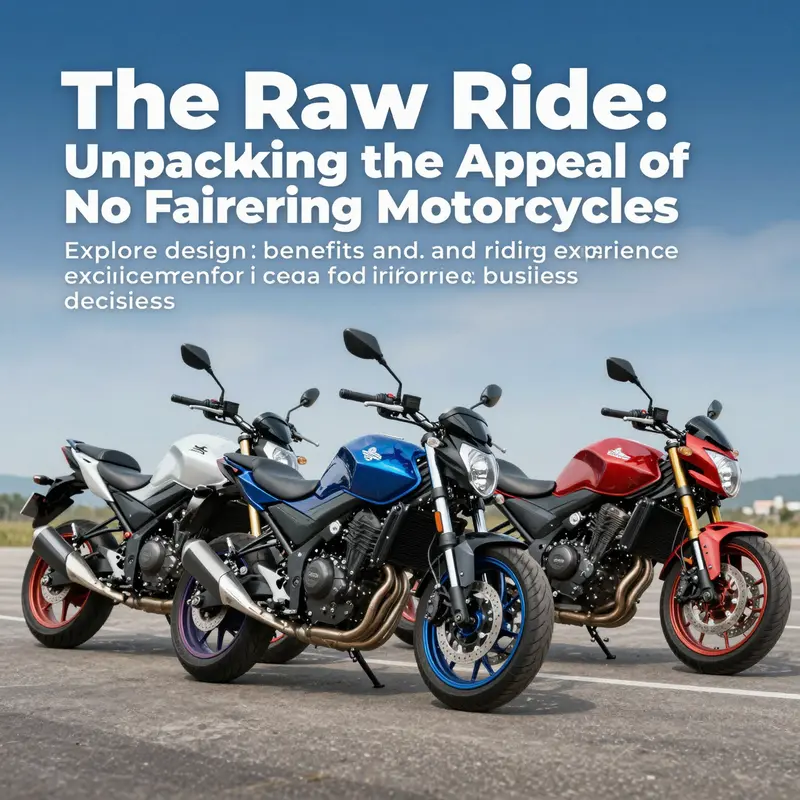
No fairing motorcycles, known for their stripped-down aesthetic and mechanical focus, present an intriguing option for riders who value simplicity and direct engagement with their machine. These bikes are designed without the aerodynamic bodywork typical of more streamlined motorcycles, which means fewer parts to maintain but also less wind protection for the rider. Understanding the design and functionality of these motorcycles is essential for business owners, especially those involved in the automotive or recreational vehicle sectors. This article delves into the unique aspects of no fairing motorcycles, highlighting their benefits in terms of cost-effectiveness and maintenance, followed by a discussion of the riding experience they offer, crucial for targeting the right market segment. Each chapter aims to provide a comprehensive overview for business owners to appreciate the relevance of these bikes in today’s motorcycle marketplace.
Riding Bare: Understanding the Design and Functionality of No-Fairing Motorcycles and What It Means to the Rider
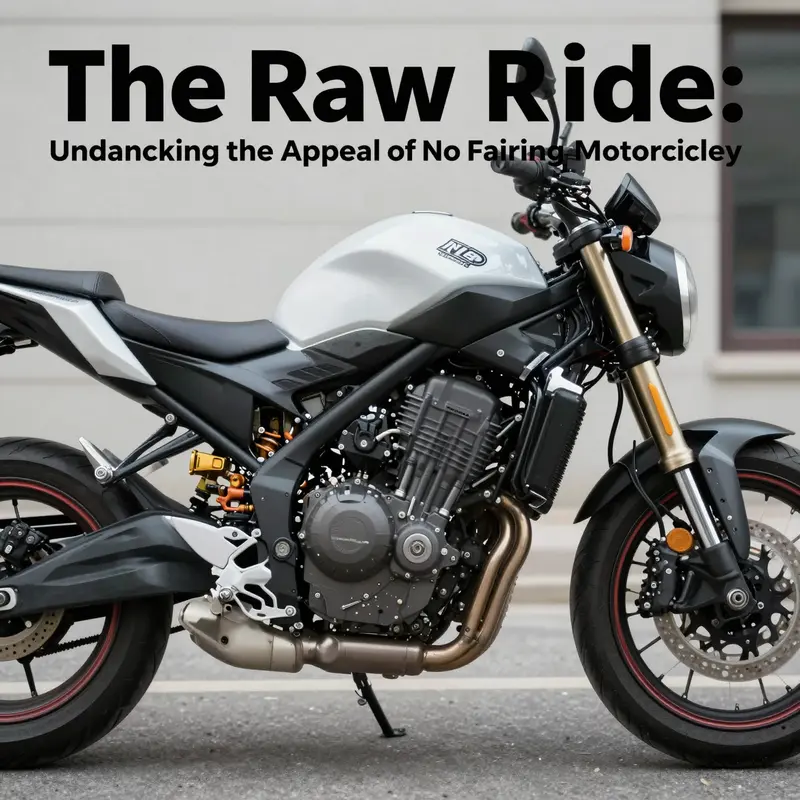
In the quiet glow of a showroom or the brisk glare of a dawn street, a naked motorcycle presents itself without the drama of full bodywork. Its frame, engine, and a careful braid of cables and spars are all on display, as if stripped to the bones of the machine. This is the naked bike, the no-fairing design that favors a direct, unmediated connection between rider and machine. The absence of sculpted plastic panels is more than an aesthetic choice; it signals a philosophy that prioritizes immediacy, simplicity, and practical accessibility. The naked design refuses to hide the machinery’s contours behind a wind-cutting shell. Instead, it invites the rider to inspect, listen, and feel the bike work as it moves. The result is a motorcycle that looks honest, sometimes austere, but always engaged with the rider and the road in a way that is unmistakably tactile and human.
What makes a no-fairing motorcycle distinct goes beyond its silhouette. It is a deliberate stance toward aerodynamics, weight, maintenance, and rider feedback. The fairing, in many bikes, exists to sculpt air and reduce drag, to buffer the rider from wind pressure, rain, and debris. Remove or reduce that protective shell, and you expose the engine’s circumference, the frame’s geometry, and the chain-driven rhythm of a machine that breathes through its moving parts. The naked bike thus becomes a platform for a more intimate riding experience. It rewards riders who value a compact, predictable mass, a predictable steering feel, and a sense that every shift, every intake of breath from the engine, is part of a shared dialogue between rider and motorcycle. The look is not merely rebellious; it is practical, economical in some contexts, and stylistically resolute in others. The naked bike makes no pretense about wind or weather: what you see is what you get, and what you get is a direct line to performance and responsibility.
To understand the design and functionality of no-fairing motorcycles is to acknowledge the trade-offs that come with exposing so much of the bike’s inner life. Aerodynamics suffers when you compare naked bikes to their fully faired siblings. Air rushing past the rider at highway speeds introduces a more muscular wind force, and that force translates into fatigue over long distances. Riders lean into this truth with strategies born of experience: choosing a more upright posture, dialing in body position to reduce exposed surface area, and selecting riding gear that manages wind pressure without sacrificing mobility. The wind, once an ally of speed, becomes a partner that must be managed for comfort and control. Yet this same exposure is what makes the naked bike feel alive in ways a fairing can sometimes suppress. The engine’s voice travels through the air as a constant companion, and the rider learns to read it as a form of feedback. The bike tells you when you’re in the right gear, when you’re near the limit of lean, and when road texture or weather will demand more attention. It is a schoolroom in which the rider learns the machine’s limits and capabilities by listening rather than by relying on a carefully buffered sensation.
Design-wise, the naked motorcycle is a study in minimalism that does not equate to fragility or fragility alone. The open framework reveals how a bike is engineered to shed weight without sacrificing strength. Fewer body panels mean fewer potential points of damage in a collision and fewer surfaces to clean during routine maintenance. Access to engine components becomes simpler; the rider or mechanic can reach most critical parts without disassembling a tangle of fairings. This is not to say no-fairing bikes are maintenance-free. They demand care, but the care is direct: bolts, hoses, clamps, and mounting points are usually easier to inspect and adjust when they lie in plain sight. In a practical sense, the no-fairing approach can translate to lower long-term costs for parts and repairs. It also streamlines the lifecycle of ownership because the space around the engine is clear and serviceable, free from the labyrinth of connectors and fasteners that often inhabit concealed components.
Where the design excels in clarity, it is also true that naked bikes invite a more personal, hands-on relationship with the motorcycle. The rider becomes not only a user but an active participant in the machine’s ongoing care and interpretation. That relationship can be deeply satisfying for riders who enjoy mechanical authenticity—the feel of metal, the rhythm of combustion, the texture of the road through the handlebars. The lack of fairings amplifies sensory cues: a crisp intake sound, the tactile feedback from the clutch lever, a shift into gears that feels almost musical as the engine responds with a snappy growl. There is a sense of being part of the motor that is less common on bikes with a more polished external skin. The experience is precisely why many riders seeking a minimal, durable, and affordable option gravitate toward no-fairing motorcycles. It aligns with a lifestyle that values functional elegance, straightforward maintenance, and a motorcycle that ages with the rider rather than becoming a more idiosyncratic, highly specialized device.
Of course, every design has its counterpoint, and the naked bike’s counterpoint is often a fully faired sport or tourer. Fairings act like wings, shaping airflow around the rider and engine to reduce drag and increase comfort at speed. They can also house cooling radiators, vents, and ducts in a way that optimizes engine temperature and supports long-distance efficiency. The naked design keeps the air moving where it can be seen and felt directly, which means wind pressure and weather become part of the daily riding conversation. Minimalist fairings, sometimes seen as a compromise between the two extremes, hint at a space where style and function converge without sacrificing the bike’s essential character. These modest add-ons near the headlamp or along the sides provide a touch of wind protection while preserving the naked bike’s identity. They remind us that riders sometimes crave a middle ground that respects both aesthetics and comfort, even when the core philosophy favors openness.
This topic inevitably leads to questions about whether no-fairing motorcycles truly fit into the broader spectrum of riding needs. For urban commuters, the answer can be emphatically affirmative. In cities where speed is measured in blocks rather than miles, the nimbleness and ease of maintenance offered by a naked bike often match the practical demands of daily travel. A light, straightforward chassis means quick steering responses, easy maneuvering through tight traffic, and a maintenance routine that fits into a busy schedule. The absence of heavy bodywork reduces the risk of expensive cosmetic damage in minor scrapes and dings that urban riding can generate. In such environments, the wind is a normal part of the ride and weather conditions are more predictable, making the no-fairing approach a sensible balance between cost, convenience, and the joy of riding.
Beyond city limits, however, the calculus shifts. Long highway stints and adverse weather reveal the wind’s persistent influence on comfort and endurance. The rider is exposed to more wind pressure, rain, and road debris, which can lead to fatigue more quickly and necessitate higher gear investments—riding jackets, gloves, and pants designed to buffer the rider from the elements. In cooler climates or during shoulder seasons, that exposure can become a practical limitation. Yet riders who crave a direct, visceral sense of speed and a heightened connection with road texture often view this as a fair trade. They choose routes and schedules that emphasize shorter trips, cafés, and scenic detours, turning the journey itself into a living experience of the bike’s character rather than a mere endpoint achievement. The broader point is not that naked bikes are universally better or worse; it is that they are different, and those differences align with specific riding lifestyles and values.
The mechanical and design philosophy of no-fairing motorcycles extends into the ecosystem of modern motorcycling technology. Even as the bikes reject full-body shells, they frequently carry advanced electronics that deliver safety and precision without hiding behind aerodynamic enclosures. ABS, traction control, ride modes, and sophisticated braking systems find their way into naked platforms, underscoring a contemporary truth: riders want control, confidence, and feedback. The naked bike offers all of these through a transparent package. This combination—open design plus modern electronics—creates a balanced platform for riders who want both honesty from their machine and a safety net when the road demands more. It is a reminder that the pursuit of simplicity does not preclude nuance or capability. In the modern marketplace, no-fairing motorcycles can be as technically sophisticated as their fully enveloped counterparts, even as they project an ethos of simplicity and purity.
For those curious about the broader spectrum of bodywork, the contrast is informative. When a rider asks whether to embrace a no-fairing motorcycle, they are really weighing wind protection, maintenance ease, weight, and the emotional appeal of mechanical visibility. The choice is not simply about speed or fuel economy; it is about what kind of riding relationship the rider wants to cultivate. Some riders crave the unmediated line from footpeg through engine to exhaust and back into the atmosphere, a line that feels almost primal in its directness. Others prefer the shield of a fairing, the sense that the machine is gliding through air as a single, sculpted entity, with aerodynamics optimizing everything from top speed to weather resistance. The discussion between these environments is not a contest of superiority but a conversation about context, purpose, and the rider’s own thresholds for comfort, noise, and visibility. That context-aware approach is what makes the no-fairing design enduring. It remains a steadfast option for those who prize authenticity, maintenance freedom, and the transparent thrill of a bike that offers as much opportunity for personal connection as it does for mechanical curiosity.
From a practical standpoint, the choice can also be understood through the lens of ownership economics. Fewer panels mean fewer panels to scratch, break, or lose, which can translate into lower repair costs after a mishap. Fewer components also mean fewer crevices to clean, which reduces maintenance time and sometimes the need for specialized products to treat stubborn corners. This can be particularly attractive to riders who prefer to service their own bikes or who want a simple maintenance routine that doesn’t require frequent visits to a shop for cosmetic fixes. And because the engine and its surrounding components are more exposed, the owner can quickly spot potential issues before they become problems. Leaks, loose hoses, or worn brackets are more readily visible against a clear, unadorned backdrop. All of these factors contribute to a different ownership experience—one that can be both financially sensible and personally satisfying for riders who value straightforwardness over refinement.
The conversation about no-fairing motorcycles would be incomplete without acknowledging the role of aesthetics. Some riders respond to the stark, unadorned lines of a naked bike as a statement of taste. The exposed engine and frame, the minimalist cockpit, the unabashed display of mechanical art, all contribute to a look that is often described as raw, aggressive, and honest. The absence of a fairing puts more emphasis on the bike’s silhouette and its mechanical personality. In this sense, naked bikes can be seen as a canvas upon which a rider can project identity. They attract enthusiasts who appreciate the contrast between modern engineering and stripped-back design, where the best features are not hidden but celebrated. Aesthetic appeal, in this case, serves a functional purpose too: it clarifies material choices, manufacturing priorities, and maintenance accessibility, reinforcing a cycle of simplicity that many riders find liberating.
As with any viable choice in motorcycle design, the no-fairing approach leaves room for adaptation. Some riders valorize a middle ground—a design that preserves the naked feel while incorporating minimalist protection for better year-round usability. Quarter fairings near the headlight or modest side panels can offer wind relief without sacrificing the bike’s essential identity. In practice, this means riders can tailor the balance between openness and shelter to their climate, daily routes, and personal tolerances for wind and weather. The result is a spectrum rather than a binary choice: somewhere along that spectrum lies a configuration that aligns with ambition, budget, and discipline. The rider who wants to feel the road while keeping maintenance practical can find a natural fit within the minimalist-flavored family of bikes without fully committing to a wind-shielded, aerodynamically optimized design. The journey toward a satisfying naked-bike experience is, in the end, a journey of tuning for comfort, capability, and personal meaning.
To bring this discussion toward concrete understanding, consider the broader context in which naked bikes sit within a market that still values performance, reliability, and technology. The no-fairing philosophy does not preclude modern safety and performance aids; rather, it coexists with them in ways that reinforce trust between rider and machine. The result is a motorcycle that can feel almost telepathic when the rider is in sync with the throttle, the clutch, and the grip. In urban corridors, this translates to brisk acceleration, easy lane filtering, and a sense of confidence that comes from knowing the bike responds promptly to rider input. On a winding road, the machine’s exposed geometry can deliver a sense of predictability when the rider anchors the rear end with disciplined weight transfer. The no-fairing design thus becomes a language through which riders negotiate speed, balance, and attention—the language of riding as a continuous conversation with the road, the engine, and one’s own limits.
For readers who want a real-world reference point that embodies a similar minimalist philosophy, one can turn to models that push the naked concept to its practical edges while integrating contemporary safety and tech features. In exploring such a model, you’ll notice how the exposed engine breathes freely, how the chassis responds with quick, precise feedback, and how the overall weight reduction influences handling and energy use. This is not a blind sprint toward minimalism; it is a thoughtful, performance-minded approach to motorcycle design that respects rider preference and environmental conditions. The naked-bike path remains appealing precisely because it honors the rider’s curiosity and the machine’s honesty. It asks little beyond willingness to engage with the road’s realities—a road that offers both challenge and reward when met with focus and autonomy.
For readers who want to explore how different brands approach this balance, a closer look at fairings and their functional variants can shed light on why some riders lean toward the bare, mechanical honesty of a no-fairing machine. The design choices—how much to enclose, where to place vents, how to channel airflow—mirror the rider’s needs and the bike’s mission. Those who enjoy the freedom of the naked feel often relish the idea that a few thoughtfully chosen components can alter a ride’s comfort, efficiency, and even its emotional effect. If you’re curious about the specifics of how fairings are designed to integrate with engine cooling, aerodynamics, and rider protection, you can explore detailed options such as Honda fairings for CBR, which illustrate how a manufacturer translates performance goals into a protective yet streamlined package. This link offers a window into the broader engineering decisions that underpin both naked bikes and their partially clad cousins: https://ultimatemotorx.net/product-category/honda-fairings/fairings-for-cbr/.
In the final reckoning, the no-fairing motorcycle is a proposition—one that asks you to measure your priorities against the realities of wind, weather, and road texture. It invites you to value tactile feedback and ease of maintenance without demanding you surrender performance or safety. It rewards riders who seek urban agility, who enjoy a direct dialogue with their machine, and who are comfortable with weather-dependent comfort. It challenges those who equate aerodynamics with inevitability to rethink what actually contributes to a great riding experience. The naked bike, stripped of most external armor, becomes not a compromise but a deliberate choice—the choice to ride with authenticity, to manage wind with skill, and to keep the journey as much a part of the sport as the destination itself.
External resources can illuminate the broader landscape of how bikes balance openness with safety and performance. For a current example of how a modern motorcycle brand manages technology and rider protection in a near-naked package, the Road Glide chapter on the official site offers a useful point of reference. While not a no-fairing machine in strict sense, it embodies the ethos of modern motorcycles that seek safety and tech integration without sacrificing identity or the rider’s sense of connection. Harley-Davidson Road Glide – Overview (2026 Model).
In closing, the no-fairing motorcycle resists easy classification as simply “less capable” or “less comfortable.” It is a different instrument, tuned for a different orchestra of conditions. For the rider who savors a clean mechanical line, who wants a bike that is affordable to maintain, and who relishes a visceral, in-the-seat experience, the naked design offers a compelling, durable form of motorcycling that remains relevant across decades of change. It is, at its core, a celebration of clarity: a clear view of the engine, a clear line to the road, and a clear invitation to ride with your hands, your heart, and your curiosity aligned with the machine.
Bare-Bones Efficiency: The True Cost-Effectiveness and Maintenance Simplicity of No-Fairing Motorcycles
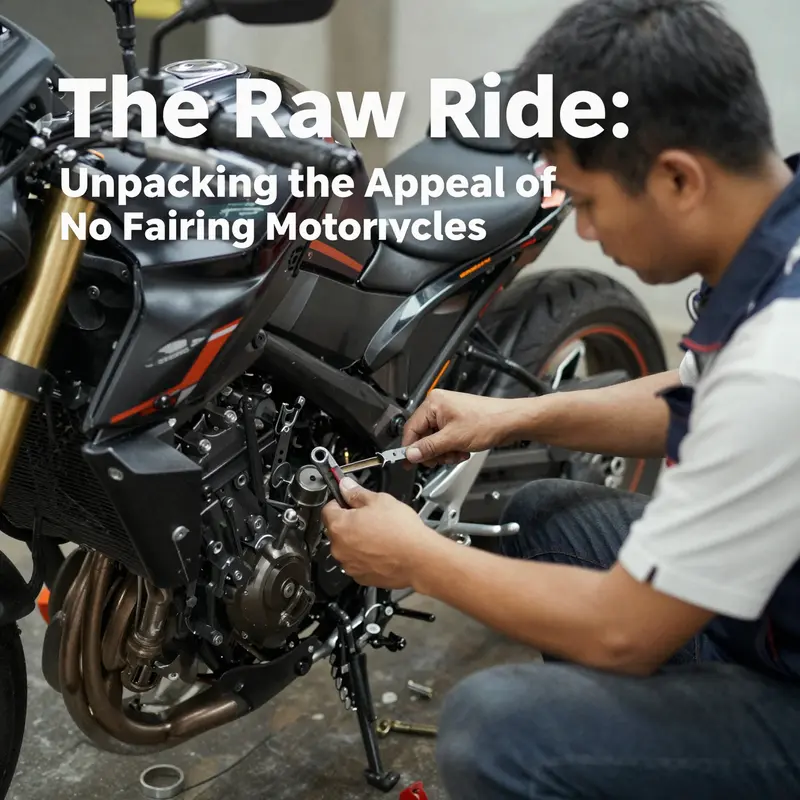
Riding without a fairing is not just a stylistic choice. It is a deliberate design stance that foregrounds the motorcycle’s core components. In a no-fairing build, the engine, frame, and suspension stand in plain sight, unwrapped by sculpted plastic. This exposure is not merely cosmetic. It makes the bike easier to inspect, diagnose, and adjust. For riders who prioritize tactile feedback over wind tunnel precision, the naked bike offers an honest conversation with the machine. The absence of aerodynamic cladding translates into a lighter, simpler chassis and a different balance between cost and performance. The result is a machine that behaves with a directness that beginners and seasoned riders both learn to appreciate. The rider feels the engine’s heartbeat, the chain’s tension, and the throttle’s immediate response without the muffling effect of fairing panels. In practical terms, the decision to go no-fairing often starts as a budget choice but evolves into a philosophy of maintenance and ownership that prizes straightforward access and predictable, tangible repairs.
Cost is the first and most visible benefit. A no-fairing motorcycle sidesteps a large portion of the material and labor required to mold, assemble, and finish fancy body panels. The initial sticker price can be noticeably lower, which matters a lot to riders who use motorcycles as daily transportation or who are saving for a first serious bike. When the fairings are gone, the manufacturing line is leaner, the supply chain is less complex, and that efficiency ripples down to the customer. Fewer moving parts mean fewer pieces that can warp, scratch, or require repaint after a minor crash. The savings are not just in the showroom; they compound through ownership, especially for riders who ride frequently, keep the bike longer, and take a DIY approach to upgrades and maintenance. The economic logic is simple: less skin means less to fix, less to replace, and less time spent in the shop. This is not just about price tags; it is about the overall cost of ownership, including insurance, depreciation, and the mental cost of ownership that comes from worrying about cosmetic damage on every ride.
Maintenance under a naked design is unusually forgiving and approachable. With no fairing hull to swing around or separate into panels, routine service tasks are often easier to perform. The airbox, carburetor or throttle bodies, the fuel lines, the electrical harnesses, and even the ignition components are more straightforward to reach. The bike’s midsection is not divided by a seam line; you don’t have to lift a panel to peek at a hose or a hose clamp. This accessibility translates to lower labor costs at a shop and faster turnarounds for home maintenance. A practical rider can check the oil, change the filter, and inspect the drive chain in a single sitting, without wrestling with bolts, grommets, and clips that live behind a panel. The simplified layout also invites modifications. A rider with a readily accessible engine can experiment with torque curves, air intake, and exhaust notes in a way that is much more challenging on a closing cockpit of bodywork. In this sense, the no-fairing design becomes a platform for learning and experimentation, a workshop on wheels that invites curiosity rather than intimidation.
From a parts perspective, the lack of sculpted outer shell reduces the cost of replacement after an accident or a mishap. Fairings can be remarkably fragile and costly, and even small cracks can require expensive repainting. In a no-fairing machine, cosmetic damage is still possible, but the scope of repair is narrower, and the piece to replace is usually a small component rather than a large shell. In daily riding and commuting, this translates into a lower total outlay when misfortune strikes. The resilience of the core chassis and the visibility of the mechanicals also influence resale value. A bike that shows its skeleton openly can be easier to evaluate for prospective buyers because no hidden repairs behind panels obscure the true condition. In many markets, this transparency is welcomed by buyers who want to assess wear, maintenance history, and potential repairs without guessing what lies behind a painted surface. The economics here are subtle but meaningful: honesty in build quality often pairs with honest maintenance records, and both correlate with lower uncertainty and better long-term value.
Weight is another angle where the no-fairing choice delivers tangible returns. Strip away the extra bodywork, and you often shed significant pounds. Even modest weight savings can improve handling, braking, and acceleration, which reduces wear on tires and chain and can cut fuel consumption modestly. For city riding, where stop-and-go traffic and tight cornering dominate, that extra light feel is audible in the bike’s agility. There is a direct link between reduced mass and the mundane costs of riding, such as tire changes and chain maintenance. Lighter bikes also tend to wear out components more slowly in heavy traffic, where the motor is run at lower RPMs and the cooling system is not stressed by a large, wind-swept fairing. The rider benefits in daily life with a bike that feels responsive, honest, and economical, even when budget constraints are a constant reality. Yet the flip side is worth noting: without wind protection, longer rides require a different strategy for comfort, gear, and weather planning, which is a separate but inseparable cost that must be weighed against the obvious savings.
Comfort on longer rides is where a no-fairing machine tests a rider’s priorities. A naked bike trades the windscreen and the wind-shadowed cockpit for a more direct wind buffet and exposure to weather. The experience is not uniformly harsh, but it is honest. In temperate climates or during city commutes, exposure can be manageable with proper gear and riding style. In other words, the maintenance advantages do not come with a free pass on weather or comfort. Instead, the rider makes a deliberate choice about riding intent. When the bike is used primarily for short hops, errand-running, or weekend rides in agreeable conditions, the no-fairing setup pays off in upfront costs and ongoing maintenance. For riders who push into longer highway stints or rough weather, the cost calculus extends to heated grips, windproof gear, and sometimes protective apparel that ensures comfort while the mechanical simplicity remains a meaningful advantage in repair and maintenance intervals. The discussion of weather and comfort is not a complaint but a framing: it helps a rider decide whether the no-fairing path aligns with their climate, schedule, and tolerance for wind and rain.
There’s a broader, practical dimension to consider. In dense urban environments, the bare design shines because it pairs well with the need for nimble maneuvering and uncomplicated servicing. Congested streets demand quick checks, bottle of oil, a simple chain lube, and a bike that does not demand hours of panel alignment before a repair. The absence of fairings reduces the surface of potential damage during minor drops, and it cuts the likelihood of scuffs on expensive panels that can escalate costs. For a commuter who counts every mile and every penny, this is a meaningful safeguard. Add to that the ease of cleaning. Fewer indentations mean less time spent scraping mud from corners, and the removal of panels eliminates one more place where grime can hide. The no-fairing philosophy, while minimalistic, translates into practical maintenance discipline: check-ins are easier, repairs are simpler to verify, and the entire ownership experience becomes more predictable. When a rider can glance at the engine bay and know almost instantly what is and isn’t right, confidence follows, and the relationship with the machine deepens rather than complicates.
To balance the internal economy with the external realities, it helps to position the no-fairing motorcycle as a deliberate tool rather than a lower-cost substitute. It is a platform that invites spend on the right things—suspension setup, quality tires, a reliable battery, and robust protective gear—while avoiding the recurring costs associated with fairing panels and their repaint cycles. Some riders report that the money saved upfront funds better components in the critical areas that determine ride quality and safety. Others see the no-fairing choice as a long-term habit: maintain the mechanicals meticulously, and the bike will deliver years of dependable service with modest and predictable costs. This perspective is reinforced by the way riders approach upgrades and customization. Without fairings to hide behind, every modification has to respect the bike’s naked logic: keep the engine and frame accessible, preserve the balance of weight, and ensure that any added hardware does not introduce new points of failure behind fragile panels. The result is a learning curve that is manageable, transparent, and deeply satisfying for those who enjoy tinkering or simply observing the machine at rest and in motion. For readers exploring how bodywork shapes value, a quick glance into the aftermarket landscape can be instructive. A few options in the aftermarket world revolve around simple, robust upgrades that do not complicate the engine bay, such as protective guards, exhaust bolts, or minimal fender pieces that respond to practical needs rather than aesthetic flamboyance. If you are curious about how different bodywork ecosystems evolve, you can browse the 2023 new products category here: 2023 new products.
Ultimately, the decision to ride a no-fairing motorcycle rests on a set of trade-offs that are specific to each rider. The cost story is compelling for those who value low purchase price, straightforward maintenance, and a direct mechanical connection. The maintenance story is equally compelling for those who want to spend less time in the shop, more time on the road, and more time learning how their bike works. The design story is a reminder that lightness and simplicity can be a meaningful form of efficiency in a world where complexity often hides essential reliability. The naked aesthetic is more than a look; it is a philosophy of ownership that aligns with a rider who wants their machine to be honest, accessible, and affordable over the long haul. And it is a story that continues to unfold as new riders join the community who see maintenance and cost as a core part of the riding experience rather than a chore to be endured. The no-fairing path is not the only way to ride, but for many it is a durable, practical way to connect with the road, with the machine, and with a set of values that emphasize resilience, learning, and economy.
Detailed research into naked versus faired configurations underscores the point that performance and comfort are not a single axis on a chart. They are a bundle of choices about wind protection, maintenance practices, and ownership costs. This chapter has sought to translate those abstractions into a practical lens for riders who aim to maximize value without sacrificing enjoyment. The investment in clarity—clarity of access, of inspection, of repair—becomes a long-term advantage that reveals itself with time, mileage, and experience. In the end, the no-fairing motorcycle invites a different relationship with the road: not a smoother ride in the wind, but a truer, more affordable, and more teachable ride that rewards curiosity, discipline, and consistency in maintenance.
External resource: Naked bikes vs faired motorcycles.
Bare-Boned Velocity: The Real-World Comfort and Practical Realities of No-Fairing Motorcycles
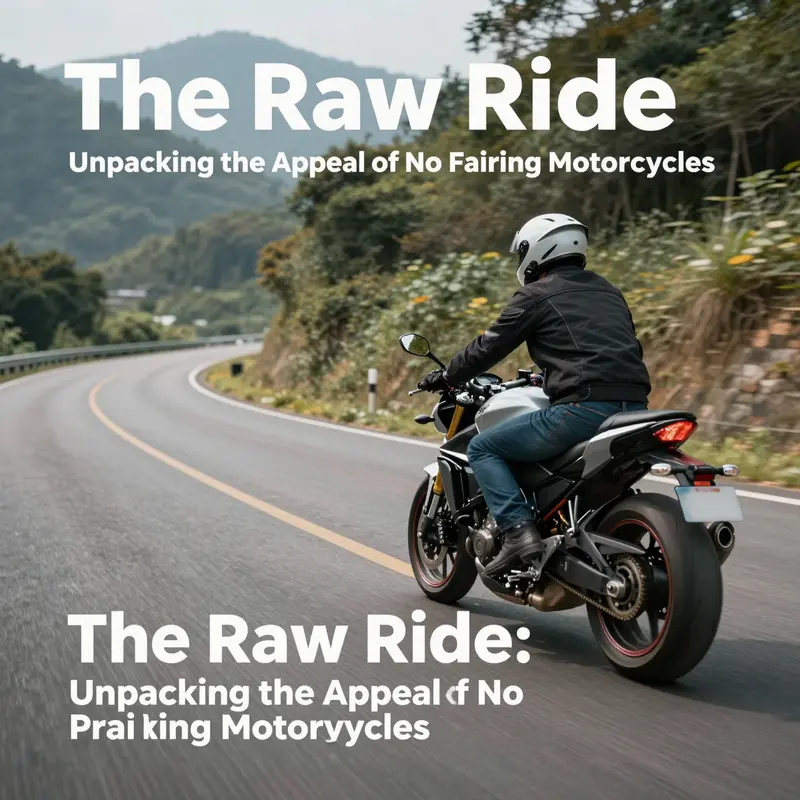
Riding a motorcycle without a fairing is more than a choice about aesthetics. It is a deliberate encounter with wind, weather, and the road in its most immediate form. Without the aerodynamic shield of plastic and resin, a naked bike exposes the rider to the elements in a way that is both raw and instructive. The sensation is not merely about wind rushing past; it is about how the body negotiates that pressure, how the torso and arms work in harmony with the bike’s geometry, and how the mind learns to pace energy, breath, and focus over miles. This is a chapter that asks not only what such a machine feels like on a sunny city street but what it teaches about comfort, practicality, and the limits of minimalist design when confronted with real-world riding. It is a narrative that threads together the physics of wind, the psychology of fatigue, and the pragmatic realities of daily use, all while keeping the rider connected to the chassis, the road texture, and the engine’s heartbeat in a way that a fairing can sometimes mask or soften.
The first and most obvious consequence of removing the fairing is wind exposure. At modest speeds the sensation can be manageable, almost negotiable with the right gear. At higher speeds, however, wind becomes a constant companion. It flows over the shoulders, rushes across the chest, and hits the helmet with a sustained pressure that can sap energy and disrupt breathing. The human body is not a perfect windbreak, and even the best helmets can only do so much to manage the onslaught. This pressure is not merely uncomfortable; it is fatiguing. It saps stamina over long rides, especially when the rider maintains a steady cadence or pushes toward highway speeds. The rider becomes acutely aware of how posture affects airflow. A more upright, relaxed position can help with balance and visibility, but it often increases the frontal area exposed to the wind, inviting more fatigue from the immediate exposure. Conversely, tensing the core to resist wind or tucking in can increase fatigue from muscle strain and alter the overall riding dynamics. The body learns to distribute effort differently, tightening muscles that would otherwise stay relaxed, and learning to breathe in a way that channels energy efficiently. Over time, this interplay becomes almost meditative, a focus on rhythm and control rather than a shift in speed alone.
Weather, of course, magnifies the complexity. A no-fairing bike simplifies maintenance in some ways — there are fewer surfaces to seal, fewer seams to absorb water — but it also means rain and spray have a direct line to the rider’s clothing and visor. Even light showers can soak gear quickly if the rider is not prepared with appropriate waterproofs or layering. Debris, dust, and road spray ride along the same wake as the rider, which can reduce visibility and require more frequent visor or goggle adjustments. The absence of a barrier means that the rider’s field of view can be more exposed to wind-driven particulates, especially on longer urban routes where the atmosphere is loaded with dust and moisture. In foggy or cold conditions, the windchill becomes something the rider learns to anticipate. A naked bike does not generate warmth the way a fully faired machine does; the rider acts as both the engine and the radiator, feeling the chill breathe through lighter jackets or gloves that are not designed for heavy aerodynamic disturbance. In such moments, the practical solution is thoughtful layering, protective gear designed for wind shear, and a willingness to pivot long-ride plans toward conditions that respect the rider’s comfort envelope.
This form of exposure also changes the rider’s experience of rain and spray. Water on the face shield or goggles becomes a tactile event rather than a mere nuisance. It isn’t just rain; it is a reminder that the ride is a collaboration with weather, not a shield from it. In city commuting, this can be managed with quick-drying textiles and reliable waterproof shells, plus careful helmet choices that optimize both airflow and water shedding. For longer journeys, the weather factor grows in significance. A no-fairing machine rewards riders who can quickly adapt clothing layers and leverage temperature changes. It rewards a practical approach: plan for weather as a modular system rather than an all-encompassing solution. The rider who travels with compact rain gear, windproof outer layers, and gloves that remain supple in chilly breezes can preserve control and composure even when the forecast shifts from sun to gusts.
Storage and practicality are the next major variables. A naked bike trades away the built-in storage capacity that fairings sometimes support through integrated compartments or strategically placed gull-wing panels. What remains is a clean, minimal silhouette with fewer mounting points for accessories. The result is that the practicalities of daily use — carrying a laptop bag, a change of clothes, or a small toolkit — become a matter of personal ingenuity rather than factory-defined convenience. The rider must rely on external bags, tailpacks, or backpack configurations, all of which alter weight distribution and sometimes the center of gravity. For many urban riders, the ability to maneuver through tight streets hinges not on storage but on how little mass is added to the bike’s frontal area. The no-fairing design excels here by keeping the bike’s mass and profile to a minimum, translating into nimbleness and quicker lane-filtering. Still, the absence of a fairing can complicate the mounting of accessories such as GPS units, cameras, or extra lighting. The rider must be ready to improvise, to respect the machine’s geometry, and to choose gear that can be attached without compromising safety.
The riding experience is also deeply tactile. With no aerodynamic shield, the rider receives a raw, unfiltered sense of the road. The texture of the pavement, the bite of the tires, and the subtlety of the chassis’ feedback travel straight to the rider’s senses. In many naked-bike philosophies, this is part of the appeal: a direct line from the road to the rider that permits a higher degree of control and feedback. The handlebars transmit small vibrations, the seat contour informs seat-to-torso contact, and the engine’s soundtrack becomes part of the conversation rather than background noise. This can be intoxicating on a winding back road where the rider is called to interpret every microchange in the surface, every microsecond of tire contact with the asphalt, and every nuance of the power delivery through the bore and stroke. It is a sensation of intimate connection, of a motorcycle that communicates in a language that is almost architectural in its honesty. Yet this same honesty can become fatiguing on longer trips, as the body bears the cumulative burden of exposure and attention. The rider learns to balance this intensity with measured breaks, hydration, and mindful pacing of the ride, recognizing that a longer journey on a no-fairing machine will demand a different routine than a sprint through a city block.
Another layer of practicality concerns heat and noise. Naked bikes often present a more intimate view of the engine bay. The rider may notice higher ambient heat around the legs and thighs, especially if the bike’s exhaust routes produce radiant warmth toward the rider’s seating area. This is not solely a comfort concern; it can influence the rider’s stamina and willingness to extend a ride into the late hours of the day or into warmer climates. Quiet days on a fairing-equipped bike can feel like a cocoon, where wind reduces, sound is dampened, and comfort is sustained for longer stretches. The naked design invites a different relationship with sound. The engine’s note, exhaust pulse, and mechanical rhythms become audible companions rather than muffled in the sheltered environment of a fairing. Some riders cherish this sonic clarity; others may seek additional acoustic insulation through layered clothing or strategic helmet choices to maintain focus and reduce fatigue.
From a handling perspective, the absence of a fairing reframes how the rider interacts with the bike at lean and in transitions. The street or track-day enthusiast who gravitates toward this setup often values the feel of immediate feedback from the front wheel and the understanding that the bike’s personality is not hiding behind a windscreen. This can enhance confidence when navigating tight corners, where the rider’s line is guided by the balance between wind-induced drag and the bike’s cornering geometry. The lack of aero push means riders may experience a different load transfer pattern through the chassis, requiring subtle adjustments in body position and throttle discipline. The result is a riding experience that is agile, responsive, and beers-to-ear host to a gravity-defying sense of immediacy. Yet in high-speed, sustained highway runs, the lack of fairing can magnify fatigue, reduce comfort, and amplify wind pressure, making long trips more strenuous than on machines with protective shells.
The decision to opt for a no-fairing motorcycle often reflects a personal philosophy about riding. It is a statement of a rider who values simplicity, mechanical engagement, and a lightweight, unadorned form. For many, this minimalist approach aligns with urban riding: the bike feels like a precise instrument in dense traffic, easy to flick, quick to accelerate, and simple to maintain. The upright riding posture common to many naked bikes enhances visibility, both in terms of being seen by others and seeing the road ahead. This contributes to a sense of security in city environments, where being perched higher helps with hazard perception and situational awareness. In contrast, the temptation to seek long-haul comfort with a fairing is not a failure of the naked concept but a recognition that the ride’s purpose matters. The no-fairing motorcycle has a character that is not easily softened by wind deflection or rain shielding. It asks riders to accept a more direct and less forgiving interface with the road, while offering a sharper, more unfiltered sense of speed, balance, and mechanical honesty.
For those who crave a balanced compromise, the literature suggests evaluating one’s typical routes and climates. If most rides are short, city-centric, or occur in mild weather, a no-fairing bike can be an ideal choice, delivering agility, ease of maintenance, and a timeless aesthetic that emphasizes the machine’s core design. If the plan centers on long highway journeys, heavy rain, or extended touring, riders may need to weigh the comfort costs against the savings in weight and the purity of the riding experience. It is not a question of better or worse; it is a question of fit. In this context, even riders who love the naked look may consider occasional accessories or design tweaks that can restore some wind deflection without transforming the bike into a full-dressed machine. A modest windscreen, small deflectors, or a strategically placed shield can alter the wind pattern enough to improve comfort on longer stretches without erasing the naked essence. The choice remains personal, tied to the rider’s tolerance for wind and weather, the severity of the intended journeys, and the emotional reward of feeling the road in its most honest state.
The practical takeaway is not a universal prescription but a framework for evaluating riding comfort and daily usefulness. A no-fairing motorcycle rewards deliberate choices: the rider who plans gear for wind and weather, who accepts a trade-off between wind protection and direct road feel, and who designs routines around the bike’s strengths and weaknesses. This framework includes clothing strategies that optimize temperature management, visibility practices that preserve safety in varied light, and a thoughtful approach to luggage and accessories that preserves the bike’s light, agile character. In the end, the riding experience on a no-fairing motorcycle is not about bravado; it’s about a rider exploiting the intersection of machine design, human endurance, and the road’s unpredictable tempo. The naked-bike ethos invites a deeper awareness of how wind, heat, and noise shape a journey, and it rewards riders who approach each ride with preparation, patience, and a willingness to adapt.
If you are evaluating whether a no-fairing motorcycle fits your life, consider a few grounded questions. Do you spend most of your miles in urban traffic where maneuverability and visibility trump wind protection? Is your climate generally mild, or do you regularly contend with wind-driven rain, dust, and leg wind chill? Are you excited by a direct, unfiltered connection to the road, or do you crave the shelter that a fairing can provide for longer trips? How important is ease of maintenance and minimal upkeep in your weekly routine? The answers will illuminate not only a purchase decision but a philosophy about riding itself. For some, the naked approach remains an endlessly appealing balance of weight, simplicity, and tactile feedback. For others, the practical comfort of a fairing becomes the deciding factor, translating into longer, more comfortable journeys and a broader riding season. Either way, the conversation about no-fairing motorcycles is a conversation about riding as a balanced art form, where physics meets endurance, aesthetics meet practicality, and the road remains the ultimate teacher.
For readers seeking a more technical perspective on how wind, heat, and aerodynamics interact with rider comfort, a range of insights are compiled in riding-experience literature that explores comfort-practical considerations in no-fairing motorcycles. This examination highlights how exposure to wind pressure increases fatigue at speed, how weather exposure influences visibility and clothing needs, and how rider posture interacts with the front-end geometry to affect handling and stability. It also points to the value of minimalist design in weight reduction and maintenance while acknowledging the trade-offs in weather protection and long-distance comfort. The balance between visceral engagement and pragmatic convenience is the core tension in the naked-bike experience, and it remains a central theme for riders who want to understand what they are signing up for when they choose a motorcycle without substantial aerodynamic bodywork. This is not a case against fairings but a case for informed choice, where riders honor their riding style, climate, and tolerance for wind while preserving the purity and immediacy that naked bikes promise.
From a practical standpoint, the discussion naturally leads to a comparison with partially or fully faired motorcycles. For riders who want a taste of wind protection without fully committing to a full fairing, partial deflectors and small screens can temper wind pressure without erasing the naked-bike identity. A fairing-dependent rider might find a staged approach appealing: begin with a naked bike for daily urban use, then experiment with light wind- deflection options when longer trips become more common. This staged approach acknowledges that comfort is not a single fixed parameter but a spectrum that shifts with miles, seasons, and personal health. The choice, in the end, is a negotiation between the thrill of direct connection to the road and the steady inquire of fatigue. The naked-bike experience remains a compelling invitation to prioritize simplicity, rider input, and the joy of controlling a vehicle that responds precisely to your weight shifts, throttle input, and vision. It is a ride that teaches restraint, focus, and the art of listening to the road, all while reminding us that comfort in motion is not solely about enclosure but about harmony between rider, machine, and environment.
For readers who want to explore the broader ecosystem of aftermarket options without committing to a full fairing, there is a spectrum of accessories designed to enhance practicality while preserving the naked aesthetic. These range from lightweight luggage solutions to minimal wind deflectors that offer a compromise between wind protection and the bike’s unadorned silhouette. The key is to remember that every addition shifts the bike’s balance, aero footprint, and weight distribution. The rider’s sense of connection with the machine will evolve as modifications are introduced, and the journey toward an ideal setup is as much about personal preference as it is about physics.
In closing this examination of comfort and practicality, the no-fairing motorcycle reveals itself as a study in contrasts. It is lighter and more agile, requiring less effort to maneuver through traffic and offering a direct, unmediated sense of speed and road texture. It is more exposed to wind, rain, and debris, demanding more deliberate planning, clothing strategy, and route selection. It offers a heightened sense of engine and chassis feedback that can be exhilarating for some riders and fatiguing for others. The decision to ride naked is, at its core, a choice about how you want to experience riding: as a sport of directness and immediacy, or as a balanced pursuit that prioritizes comfort through wind management and weather protection. The best riders learn to ride in a way that respects both the machine’s personality and their own limits, and in that learning lies the enduring appeal of the no-fairing motorcycle: a machine that strips away excess to reveal the road, the rider, and the bond between them.
For a more general discussion of riding experiences and the comfort-practical considerations of no-fairing motorcycles, you can explore broader resources on how wind, weather, and road texture influence rider fatigue and comfort levels over varied distances and conditions. Additional insights into the contrast between naked bikes and their weather-protected counterparts highlight how different riding goals shape the equipment choices and the day-to-day realities of ownership. External perspectives reinforce that the naked-bike experience is not a mere preference but a defined riding philosophy, with its own logic, constraints, and rewards. In every mile, the rider learns to adapt, to listen, and to lean into the ride with a sense of purpose that only a no-fairing machine can deliver.
External resource:https://www.motorcycle.com/features/riding-experience-no-fairing-motorcycles-comfort-practical-considerations/
Internal reference: The ongoing exploration of aftermarket options and aerodynamics can be supplemented by model-specific accessory ranges that respect the naked design while offering practical expandability. For riders curious about the breadth of aftersales options for fairings and fairing-compatible accessories, consider a broader catalog of brand-specific fairings, such as fairings for Yamaha YZF models. This link provides a lens into how designers and practitioners balance aesthetics, protection, and weight across modern sport and standard bikes, and it sets the stage for thoughtful comparisons with no-fairing configurations.
Final thoughts
In summary, no fairing motorcycles stand out for their minimalist design, practicality, and unique riding experience. As business owners assess their position in the motorcycle market, understanding the implications of these factors can provide informed choices. The reduced maintenance costs and straightforward mechanics appeal to budget-conscious riders, while the raw experience is attractive for those seeking authenticity. Emphasizing these aspects will be crucial for businesses engaging with potential customers seeking naked bikes.