

Motorcycle side fairings are not merely cosmetic additions; they are integral components that enhance a motorcycle’s aerodynamics and protect its vital parts. In the highly competitive motorcycle market, business owners must understand the multifaceted roles these fairings play in improving performance and rider experience. In this article, we delve into the aerodynamic benefits, protective functions, customization options, material choices, and market trends associated with motorcycle side fairings. Each chapter will provide valuable insights, equipping you with the knowledge to make informed decisions and explore lucrative opportunities in this dynamic industry.
null

null
Guardians in the Winds: The Protective and Aerodynamic Role of Motorcycle Side Fairings

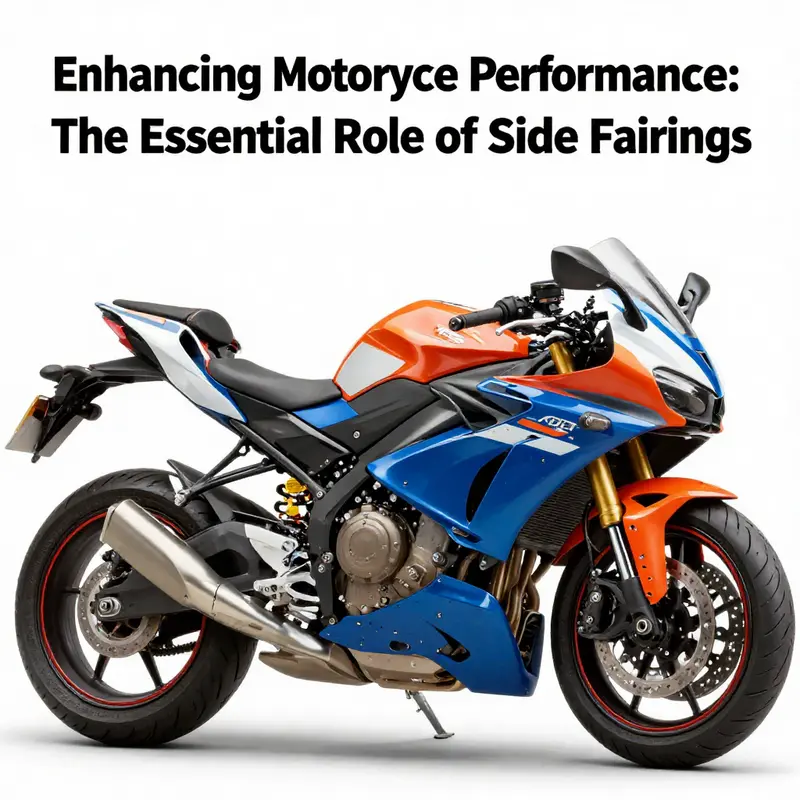
On most motorcycles, the side fairings sit like quiet sentinels along the body, catching the eye with their lines but often going unnoticed for their true purpose. Far from mere cosmetic shells, these panels are integral to how a machine behaves on the road. They shield crucial components from road grit, water spray, and the occasional impact, while shaping the flow of air as it moves past the engine and rider. In a machine where every gram matters and every gust of wind can sap energy, side fairings play a dual role: they guard the heart of the bike and sculpt its breath. Their influence starts at the very edge of the machine and travels across the rider’s line of sight, turning complexity into a coherent silhouette that speaks of both purpose and precision. The more you look, the more you realize that the fairings are not just skins but functional bodies that carry the bike’s resilience forward into every mile.
From a protective standpoint, side fairings serve as a first line of defense. They cover the engine, transmission, and wiring looms, steering droplets and debris away from sensitive surfaces. In a crash or slide, the panels can take the brunt of contact that would otherwise damage more delicate parts. They also curve around radiator openings and cooling fins in ways that channel heat away while keeping the engine bay sealed against water and mud. The choice of materials matters here: high‑strength engineering plastics deliver impact resistance without inflating mass; glass fiber compounds extend resilience in rough conditions; and carbon fiber, when used, offers a superb strength‑to‑weight ratio that translates into less rotating mass and sharper throttle response. The skin of the bike—the fairing skin—also reduces the likelihood of minor scrapes becoming structural concerns, absorbing some energy and directing it along less critical paths. Even in daily riding, these panels can prevent small encounters with gravel from becoming expensive repairs, preserving the alignment and integrity of the engine bay’s tight tolerances.
Yet the protective function dovetails with aerodynamic intent in a remarkably intimate way. A motorcycle lives or dies by how smoothly air can wrap around its form. Side fairings are sculpted to manage that air, guiding it into and past the rider’s torso and over the engine bay, reducing drag and suppressing turbulence that would otherwise buffet the rider at speed. The shapes influence how air reaches the cooling system, how the radiator and engine breathe, and how much wind noise travels through the cockpit. When the lines are well drawn, the bike feels planted, especially in gusty crosswinds, and the rider experiences less fatigue after long miles. The fairings act like a skin that both shields and channels, a boundary that maintains steady pressure distribution along the length of the chassis. Subtle curves and strategically placed vent slots divert updrafts away from the rider’s helmet while letting cooler air find its way to cooling fins. The outcome is a calmer, more efficient ride where every gust becomes a lesser nuisance rather than a fight. The result is not only a more comfortable experience but a more predictable handling envelope, which translates into more confident cornering and smoother throttle‑in responses.
Beyond the chassis and the rider, the interplay with other components—intake, exhaust, frame rails—depends on careful internal geometry. The upstream air first meets the lower edges of the side panels, where gaps and undercuts are engineered to prevent separation and to keep the flow attached to the surface. The result is less induced drag and more energy efficiency, a small but meaningful gain in fuel economy and range. In terms of rider comfort, the wind load on shoulders and arms is mitigated by the fairing envelope that intercepts flow before it hits the chest, and the lines contribute to a quieter cockpit by muffling direct shear from air hitting bare skin. It is the synthesis of form and function, a synergy achieved only when the designer respects the continuum of air movement as it travels around every curve of the bike. This is why even minor changes in the trailing edge or a vent’s orientation can shift the entire ride feel, enhancing or diminishing stability at speed.
Aesthetics matter, too, and here the craft of fairing design performs a balancing act. The visual language of a motorcycle—its silhouette, its stance, the way it breathes when it stands still—depends on how the fairings align with the tank, the seat, and the frame. The skin is not merely painted plastic; it is a statement of intention. Designers sculpt the panels to echo the bike’s lineage or to push a modern, aggressive look while preserving the underlying engineering. The same lines that give a bike its charisma can also contribute to performance by continuing the aerodynamic narrative into the tail and the belly of the machine. In this sense, side fairings are a physical interface: they connect the rider’s experience with the machine’s mechanical soul. The drawn-out sweep of a panel can suggest speed even in a standing rest, while subtle textures can cue the eye to a rider’s preferred attitude toward airflow and control.
For riders who crave customization without sacrificing function, the market offers a spectrum of choices. Carbon fiber kits present a compelling combination of lightness and stiffness, though at a premium. The appeal lies not only in weight reduction but also in the crisp, high‑contrast finish or a restrained matte look that can refresh an older frame. The manufacturing story behind carbon fiber is intricate: thin prepregs laid in precise layers, cured under heat and pressure in autoclaves to optimize strength, with premium resins locking the matrix in place. The result is panels that resist deformation, maintain a sharp edge through the life of the motor, and keep their surface free of micro‑cracking that could worsen under heat cycles. For many riders, carbon fiber is as much a design statement as a performance upgrade, signaling a commitment to lightness and precision. At the other end of the spectrum, reinforced engineering plastics offer robust protection with simpler care, and they stand up well to the daily beat of city streets and wet weather without demanding the same level of investment as carbon fiber.
High‑strength engineering plastics are another widely used route. They bring an accessible balance of impact resistance, flexibility, and cost. They can survive loose stones, road grit, and the occasional curb contact more gracefully than brittle materials, and they do not require the same manufacturing investments as carbon fiber. When calibrated correctly, these plastics resist UV exposure and heat from the engine bay, maintaining color and gloss for years. The thickest parts of the fairing reinforcements may be integrated with strategic ribs and inner panels to prevent flex, ensuring that the aero profile holds up under load. Finish options—from smooth glossy to grained textures—contribute to the bike’s personality while protecting the internal structure. The choice between materials often boils down to the rider’s priorities: budget, maintenance philosophy, and willingness to replace panels after a mishap.
Fitment is a central thread that runs through every choice. Some riders seek universal‑fit panels to retrofit older machines or multiple models; others insist on model‑specific kits that align perfectly with stock mounting points and heat shields. The difference is not trivial. A well‑fitting fairing reduces gaps that could collect water or mud and makes the panel less prone to vibration at highway speeds. Ill‑fitting pieces can introduce rattles, misaligned ventilation, or interference with the tank or exhaust. Therefore, thorough fitment information from reputable sources matters as much as the panel’s weight rating or its stiffness index. Even with precise fitment, professional installation is advisable if riders aim for a seamless look and a secure bond that can withstand road vibrations. The process often involves aligning mounting brackets to chassis anchor points, ensuring that the radiator openings align with the cooling flow, and applying heat shields to protect the underlying wiring and components from heat transfer and abrasion. A careful balance of torque and alignment yields a fairing that hugs the machine without bending the frame or pushing cables out of their channels.
Riders examining new designs will notice how the market shifts toward smarter integration. The latest cycles bring panels that better wrap around the engine covers, guiding air with fewer turns and minimizing separation regions. The categorical goal remains the same: shielding vital parts while reducing drag and improving the rider’s comfort, but the means vary with technology and material science. The 2023new category highlights how designers experiment with tighter radii, revised vent patterns, and varied surface finishes to satisfy riders who want both function and flair. For this exploration, I found the link to the evolving lineup a useful touchstone for those who wish to compare generations and see how durability, weight, and aesthetics trade off against price. See the 2023new collection for examples of updated shapes and materials. 2023new
Maintenance considerations are not afterthoughts. A fairing is a living component of the bike’s skin whose performance depends on clear mounting points and clean interfaces. Exposed fasteners should be tightened to the manufacturer’s torque specifications to prevent loosening under vibration. Seals around access panels must remain intact to keep dust and water out. Cracks in the skin usually indicate stress points that can propagate into the core structure; responsible riders monitor for flex, delamination, or discoloration and address those signs early. The ingress of water through small cracks, particularly in wet climates, can corrode neighboring fasteners and degrade clips that hold the panels to the frame. Regular cleaning with non‑abrasive products preserves pigments and resins, and it prevents the plasticizers from leaching under heat. When servicing or replacing parts, care should be taken to avoid bending or twisting the panels beyond their designed envelope, as that can twist the mating edges and cause misalignment. By viewing fairings as a dynamic part of the bike rather than a one‑time installation, riders keep the entire system healthier and more predictable over time.
Ultimately, the story of side fairings is one of balance. They have to be strong enough to protect the engine and sensitive utilities, light enough not to slow the machine down, and flexible enough to tolerate the knocks and vibrations of daily riding. They also shape the rider’s perception of the bike, dictating how the machine looks when standing still and how it feels when moving. The best designs harmonize all these demands, weaving protective function, aerodynamic efficiency, and stylistic clarity into one continuous form. This is not just about keeping debris at bay or saving a few watts of drag; it is about preserving the engineering integrity of the motorcycle while letting the rider experience a more efficient, more comfortable journey. The panels do work subtly, and often invisibly, to sustain the machine’s rhythmic motion down the road. External resource: https://en.wikipedia.org/wiki/Aerodynamics
null
null
Material Alchemy: How Side Fairings Balance Performance, Protection, and Aesthetics

The side fairings that cradle the engine bay and taper toward the rider are more than just surface level dress. They are a study in material science masquerading as design. Every choice of material, from the way a panel is formed to how it wears under sun and heat, nudges the motorcycle toward greater efficiency, calmer control, and a more composed presence on the road. When you strip away the decals and the race-inspired lines, the core decision behind a set of side panels is a balancing act among weight, stiffness, impact resistance, optical clarity, and the durability of color and finish. The materials used for these panels—whether traditional plastics, reinforced composites, or modern hybrids—set the naked physics of how the bike slices through air, how much effort a rider expends to stay upright at a long highway clip, and how much time a mechanic must invest in maintenance and repair after a misjudged stone or a brush with a curb. In this sense, material choice is not merely a spec sheet line; it is a design philosophy with tangible consequences for ride feel, reliability, and the character of the machine on the street or the track. The decision tree is straightforward in outline but complex in practice: which material yields the best compromise between safety and weight for the rider’s preferred terrain, how the chosen panel handles UV exposure and heat, and how easily it can be repaired or replaced if the bike is customized or pushed into more aggressive aero setups?
Among the common contenders, polycarbonate stands out as the baseline for riders who want genuine performance with practical safety. Its impact resistance is a standout feature, giving it an edge in the event of debris strikes or low-speed mishaps that would otherwise fragment a more brittle plastic. The same toughness translates into a longer service life for the panels, reducing the likelihood of unsightly cracks that can harbor moisture and worsen cosmetic wear. Crucially, polycarbonate keeps weight down relative to glass or some glass-reinforced options, a factor that directly affects handling, suspension load, and the rider’s sense of nimbleness when weaving through traffic or negotiating a twisty road after a long day. In the realm of visibility, polycarbonate also delivers high optical clarity, which helps maintain an accurate perception of the surroundings through the fairings. A clear view through the panels isn’t just about aesthetics; it reduces visual distortion that can distract a rider at high speeds, especially in changing light or when wind loads shift under aerodynamic pressure. The combination of lightness, strength, and clarity makes polycarbonate the recommended starting point for most aftermarket and OEM side fairings, particularly when the rider seeks a balance between performance and everyday durability.
Yet every rider’s needs are different, and other materials fill niches where polycarbonate alone cannot excel. Acrylic, or PMMA, is renowned for its exceptional clarity. It presents a near-perfect optical presentation, offering razor-sharp lines and a glass-like appearance that many enthusiasts associate with premium aesthetics. However, PMMA is inherently more brittle than polycarbonate. In practical terms, that brittleness translates to a higher risk of cracking on impact or under sudden load, which can compromise both protection and weather sealing. Acrylic also suffers more from UV exposure over time, tending to yellow and degrade its surface finish and optical quality after extended sun exposure. For a rider who prioritizes pristine visibility and a showroom-like surface, PMMA can be a compelling option, provided there is a match between the rider’s expectations for durability and the panel’s protective role.
PVC offers a different dose of practicality. It is a cost-effective option with respectable flexibility and resistance to minor impacts. For builders and enthusiasts watching the budget, PVC can deliver fairing panels that look good and resist everyday road wear without the price tag that comes with premium plastics. The trade-off, however, is less impressive optical quality and durability under heat. PVC tends to discolor and haze when subjected to prolonged UV and heat, which can dull the bike’s profile and require more frequent replacements or refinishing. For riders who want a clean, economical setup for a nonrace environment or who plan to swap panels regularly as part of a styling project, PVC can be a pragmatic choice, even if it carries certain compromises in appearance and long-term resilience.
Fiberglass, commonly referred to as glass fiber reinforced plastic (GFRP), bridges the gap between cost and strength. It offers impressive rigidity and structural integrity, making it a robust choice for OEM programs and certain aftermarket lines where durability matters more than the final weight. The downside is heavier mass compared with plastics, which translates into greater unsprung weight and potentially altered handling characteristics, especially on nimble street bikes or models with smaller frames. Repairability is another factor; fiberglass can be more challenging to repair neatly after damage, and its surface often requires painting and finishing that shows chips and wear over time. For riders who value durability and a solid, traditional feel, fiberglass remains a viable option when the goal is a panel that can withstand routine scrapes and the rough-and-tumble life of street riding.
ABS plastic stands out as a versatile, economical solution that many entry-level or mass-market fairings use. It is lightweight, relatively simple to manufacture, and well-suited to complex shaping through molding and glazing. ABS can accept glossy paints and finishes, which supports a wide range of aesthetic options, from bold colorwork to subtle, flat-matte treatments. Yet ABS is more susceptible to heat-induced warping and scratches than polycarbonate, and its surface can be softer under impact, leading to more visible wear in daily use. The material’s cost-to-performance ratio makes it attractive for riders who want a reasonable blend of form and function without a premium price tag, especially when the goal is to expand coverage with aftermarket sets for broad model coverage rather than chasing the last ounce of performance gain on a dedicated track bike.
Beyond these traditional choices, the market has increasingly embraced composites and advanced fiber-reinforced systems for side fairings. Carbon fiber, in particular, has emerged as a high-end alternative for riders who demand exceptional strength with minimal weight. The approach relies on layered fabrics bonded with resins and cured, often under heat and pressure in controlled environments, to achieve a stiffness-to-weight ratio that can dramatically improve the bike’s overall response. When applied to side panels, carbon fiber can reduce inertial load and trim wind resistance without sacrificing protection. The premium feel of a carbon fairing—its finish, its light weight, and the sense of precision it conveys—resonates with riders who view aerodynamics as an extension of performance rather than a cosmetic upgrade. Autoclave curing and the use of advanced resins in these constructions contribute to a glossy or matte finish that wears well and maintains its aesthetic integrity across miles and seasons. Because of the stringent manufacturing standards involved, carbon fiber panels tend to be more expensive and demand careful fitment to ensure a seamless integration with the bike’s lines and fasteners.
Material choices also intersect with the way a fairing is manufactured and finished. Injection molding, common for ABS and some PC formulations, allows for tight tolerances, repeatable color consistency, and efficient mass production. Thermoforming and extrusion workflows enable lighter, more complex shapes in polycarbonate and other plastics, while composites rely on layup processes and precise curing to achieve uniform stiffness. Each path has implications for fit, weight, and the ability to reproduce a panel across a family of bikes without compromising the perceived quality. The practical result is that a rider who is upgrading or replacing side fairings must consider not only the raw material properties but also how the chosen material aligns with the intended riding context. A track-focused rider may prioritize the weight savings and stiffness of carbon fiber, while a daily commuter could favor the durability and cost-effectiveness of polycarbonate or ABS, with the option to swap to PMMA for a show-measure aesthetic in particular lighting conditions.
Fitment is a critical, often overlooked, dimension of material choice. Model-specific panels can achieve closer tolerances and easier installation than universal-fit sets, which may require trimming, rebonding, or additional mounting hardware. The integration of a panel into the bike’s architecture influences not just the external silhouette but the internal protection offered to the engine, the routing of cables, and the maintenance access to cooling fins and sensors. When evaluating aftermarket sets, riders should seek clear fitment data and, where possible, test a panel’s alignment against the bike’s contours before committing to a purchase. A well-matched panel preserves the bike’s aerodynamics, keeps fasteners from loosening due to vibration, and supports a consistent visual flow from nose to tail. This is why some riders gravitate toward model-specific lines that promise a factory-like fit and finish, while others enjoy the flexibility and wide color options offered by universal options, even if those require a bit of customization to achieve an exact match. For those who want to explore compatible options without sacrificing legibility of the bike’s line, a quick route to see what’s available is to browse the broader catalog of fairings from the most relevant platforms, such as the collection dedicated to two-wheeled models from a manufacturer’s or a third-party supplier’s line, which often includes a dedicated section for a popular model family. You can explore the catalog of BMW fairings to get a sense of how different materials translate into distinct looks and alignments across a family of bikes, while still leaving room for personal customization and color choices.
From a maintenance perspective, the longevity of a side panel hinges on how well the material resists UV exposure, environmental exposure, and everyday abrasion. Polycarbonate with a scratch-resistant or UV-stabilized coating can retain its clarity and finish longer, reducing the need for frequent refinishing. Acrylic’s clarity shines, but maintenance must account for gradual color shift. PVC, while cost-efficient, may require more frequent cosmetic care to maintain its appearance under sun and road grime. Fiberglass demands attention to surface protection and repair techniques to prevent surface cracking and paint chipping, especially on rough road surfaces. ABS benefits from robust surface finishes but can fare less well under heat and impact compared with PC or carbon fiber composites, particularly when exposed to direct sun for extended periods. For riders who push their machines toward higher speeds or who encounter sustained wind loads, the choice may tilt toward panels that resist warping and maintain geometric integrity under load. In the end, the material selection must feel compatible with the rider’s priorities—weight, protection, aesthetics, and total cost of ownership—while harmonizing with the bike’s existing engineering and the rider’s expectations for performance and style.
The conversation about materials is also a conversation about the life cycle of a bike’s bodywork. Lighter, stronger panels can improve handling and fuel efficiency, especially on long rides where rider fatigue becomes a measurable factor. More robust panels can reduce maintenance downtime and protect expensive mechanical components from debris and water ingress. Aesthetics are not merely cosmetic; the finish of a panel contributes to how aerodynamics are perceived and how confidently a rider enters corners at speed. This is why the material choice for side fairings often reflects a rider’s broader philosophy about the bike: whether to chase the ultimate edge in performance hardware or to embrace a more balanced and versatile approach that prioritizes everyday reliability and appearance. The optimal path often lies in a blended approach—selecting polycarbonate for its protective, light, and transparent qualities in some areas, while choosing carbon fiber or reinforced composites for regions where stiffness and weight savings offer meaningful gains, all coordinated with a color and finish that endure.
For those who are building or upgrading, remember that selection is not just about a single attribute. It is about how weight, impact resistance, optical clarity, and durability cohere with the bike’s aerodynamics, riding style, and maintenance routine. A fairing that saves precious seconds on a track may be less attractive if it demands constant touch-ups after a weekend ride. Conversely, a panel that glosses perfectly under showroom lights but weighs down the chassis with excessive mass is not a win for performance. The most successful choices respect the rider’s context—from the daily commute to the weekend canyon run—and reflect a thoughtful synthesis of material science, manufacturing reality, and the rider’s own sense of the machine’s purpose. As with any major aesthetic or performance upgrade, the best path forward is to educate yourself about the material implications, compare the trade-offs in real-world riding scenarios, and choose options that match both the bike’s engineering and your own expectations for how a side fairing should perform and look over the miles ahead. For further reading on the broad technical landscape of these materials, see a general overview of polycarbonate at a trusted external resource.
External resource: https://en.wikipedia.org/wiki/Polycarbonate
The Market, Costs, and Craft of Motorcycle Side Fairings in 2026
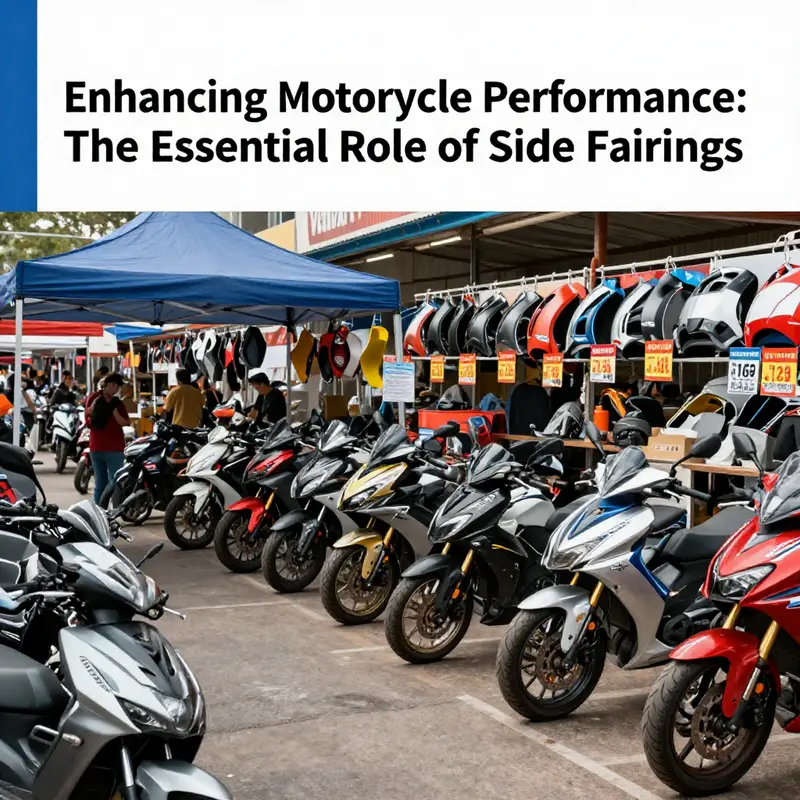
The market for motorcycle side fairings in 2026 sits at the intersection of advanced materials, customization culture, and evolving economics. Riders now view fairings not only as protection but as a performance and identity upgrade.\n\nCarbon fiber dominates the premium segment, offering a superior strength‑to‑weight ratio that translates into measurable handling and acceleration benefits. A fully dry‑woven carbon panel, cured with high‑performance resin systems, can shave several hundred grams off a bike while providing rigidity that traditional ABS plastics cannot match. Because of the material cost and labor‑intensive manufacturing, carbon fairings command a premium price, often comparable to high‑end engine components.\n\nIn contrast, ABS and injection‑molded plastics remain the workhorse of the market. These materials are inexpensive, impact‑resistant, and easy to produce in large volumes, making them ideal for OEM‑spec parts and entry‑level aftermarket kits. While they lack the weight savings of carbon, modern formulations can still offer respectable durability and a wide range of finish options.\n\nThe aftermarket ecosystem thrives on variety. Manufacturers release modular designs, interchangeable colorways, and hybrid constructions that combine a carbon core with a plastic outer skin. This approach lets riders tailor aesthetics without the full cost of a pure carbon solution. Fitment data has become granular; most listings now specify exact model years, frame codes, and even bolt‑pattern revisions, reducing the risk of mis‑fit that plagued early‑generation upgrades.\n\nSupply chains are globally distributed. Production hubs in Southeast Asia handle high‑volume plastic molding, while specialized composites workshops in Europe and North America focus on low‑volume carbon work. International shipping times and tariffs influence final pricing, but online marketplaces provide transparent price comparisons across regions.\n\nPricing in 2026 reflects these dynamics. A complete carbon‑fiber side‑fairing set for a mainstream sportbike typically ranges from $1,200 to $2,000, whereas a matched ABS plastic kit may sit between $300 and $600. Mid‑tier hybrid solutions occupy the $700‑$1,100 range, offering a balance of weight savings and visual flair. Brand reputation, warranty terms, and aftermarket support further sway buyer decisions.\n\nUltimately, the choice hinges on rider priorities. Performance‑focused racers gravitate toward carbon for its weight advantage and aggressive look. Daily commuters often favor plastic or OEM‑fit parts for their durability and cost‑effectiveness. The market’s breadth ensures that every rider can find a fairing solution that aligns with their budget, aesthetic taste, and performance goals.
Final thoughts
Understanding the roles and benefits of motorcycle side fairings is crucial for business owners aiming to enhance their offerings and attract customers. From improving aerodynamics and providing essential protection to offering various customization options, side fairings serve multiple functions that affect rider satisfaction and motorcycle performance. Additionally, awareness of material choices and market trends ensures that businesses can provide high-quality products that meet consumer demands. By integrating this knowledge into your business strategies, you can gain a competitive edge in the motorcycle industry.