

Motorcycle lower fairings, often overlooked yet critically important components, serve numerous roles in enhancing both performance and rider experience. For business owners in the motorcycle industry, understanding the multifaceted benefits of lower fairings can elevate customer satisfaction and improve sales. This article delves into the aerodynamics and performance impact, practicality and functionality, as well as compatibility and customization options of motorcycle lower fairings, framing their significance in the motorcycle market.
Underbody Flow and Real-World Gains: How Lower Fairings Shape Aerodynamics and Performance

Airflow, drag and downforce: the mechanics behind lower fairings
Lower fairings sit low on the motorcycle. They enclose and shape the area beneath the engine and frame. Their role is more than cosmetic. Properly designed lowers change how air behaves beneath the bike. That change alters drag, modifies pressure fields, and stabilizes the machine at speed.
When air flows under a motorcycle, it meets a complex scene. There are engine casings, exhaust pipes, swingarms, and uneven underpan areas. Naked exposed components disturb that flow. They create wakes and vortices that raise pressure drag. A lower fairing smooths that route. It acts like a diffuser. The fairing guides high-energy air away from turbulent pockets. As a result, the effective drag coefficient falls.
Drag force depends on three variables: air density, the square of speed, and the product of frontal area and drag coefficient. Reducing that product by streamlining underbody flow yields tangible savings at highway and higher speeds. Less drag means less power demand from the engine to maintain speed. Riders notice improved fuel economy and reduced throttle trim at cruising pace. For riders chasing lap times, reduced drag trims seconds per lap. For commuters, it trims fuel costs.
Beyond drag, lower fairings influence downforce and pressure balance. They can create a low-pressure region beneath the bike at speed. This pressure differential increases vertical load on wheels. It adds stability and improves high-speed straight-line behavior. That effect is subtle at moderate speeds. It becomes more pronounced on long straights or track sections where velocity is high and sustained. Increased downforce helps keep the chassis settled through gusts and braking instabilities. It can also affect suspension work, changing how the bike transfers weight in braking and acceleration.
Boundary layer control is part of the story. A smooth under-surface delays flow separation. Delayed separation reduces wake size. Smaller wakes equate to lower pressure drag. Designers use contours, vents, and gradual curvature to manage the boundary layer. Small features matter. A properly placed vent can relieve trapped air and reduce lift under heavy throttle. Conversely, a poorly designed opening can induce a new vortex and raise turbulence. The devil is in the detail.
Integration with other fairings amplifies the benefits. A lower fairing works best when its lines match the front and side profiles. Combined, they form a cohesive aerodynamic shell. The flow that starts at the windshield and passes along the tank should continue smoothly under the bike. Misalignment creates abrupt steps in geometry. Those steps reintroduce separation and turbulence. A continuous profile reduces the total drag more than the sum of separate components.
Thermal management also intersects with aerodynamics. Underbody flow helps convect heat away from the engine and exhaust headers. A well-channeled stream of air prevents hotspots and improves cooling efficiency. Designers must balance sealed surfaces with purposeful vents. Sealing too much traps heat. Excessive vents break the diffusive effect. The best designs create intake and exit paths. These keep engine temperatures stable while preserving streamlined flow.
Lower fairings add a layer of protection, which indirectly supports performance. They shield engine and exhaust components from road debris. They keep spray and grit away. This reduces wear and preserves surface finishes. Less damage means components maintain their designed aerodynamic shapes longer. Corrosion on exposed surfaces can roughen airflow paths over time. By protecting parts, lowers help long-term aerodynamic integrity.
Weight and center of gravity considerations are real. Adding sizable lower fairings adds mass low on the bike. That mass shift can be beneficial. A lower center of gravity improves low-speed handling and helps with cornering stability. However, heavy panels may upset quick direction changes. Material selection is therefore important. Lightweight composites preserve aerodynamic gains while minimizing mass penalty. A well-chosen material yields structural strength, low weight, and stable geometry under load.
Fitment and installation quality determine the realized benefit. Gaps, misaligned mounts, and sagging edges distort intended airflow. Proper mounting hardware and careful routing ensure panels sit flush. Small gaps at the junctions produce jets of turbulent air. Those jets negate much of the fairing’s purpose. For consistent results, verify fitment against the frame and chassis mounts. Ensure sufficient clearance for moving parts like the swingarm and exhaust.
Practical effects on handling, consumption and maintenance
The real-world effects of lower fairings appear in handling, fuel use, and upkeep. Handling changes are often subtle, but meaningful. The altered pressure distribution changes how the front and rear end share load. That can shift steering feel. Riders might feel a firmer front end at speed. They may also notice improved straight-line stability. When braking hard, the lower fairing’s influence on air pressure can reduce pitch oscillations. This steadiness helps maintain line and confidence during heavy deceleration.
Cornering dynamics depend on the interaction between downforce and chassis setup. Additional downforce can increase front grip, reducing understeer at high lean angles. But increased aerodynamic load can alter suspension sag. Small changes in preload or damping can restore balance. Riders and mechanics should consider re-tuning suspension after adding prominent underbody pieces. Ignoring this step may lead to a mismatch between aerodynamic forces and mechanical setup.
Fuel economy improvements are measurable at sustained speeds. On open roads and highways, riders will often see lower average fuel consumption with effective lower fairings. The gains scale with speed. At city speeds, the effect is minimal. On long rides at 60 miles per hour and above, riders feel the benefit. Less throttle input to maintain speed also reduces engine wear. Over many miles, this contributes to lower operating costs.
Maintenance benefits come via component protection and reduced contamination. Water and grit directed away from critical parts lower corrosion rates. Electrical connectors and sensors stay cleaner. Intake and exhaust components avoid pitting from road debris. Storage options integrated into some designs add utility without compromising flow. A sealed compartment placed in a low-pressure area can provide dry storage for small items like gloves or documents. Designers must ensure these compartments do not disturb airflow or add unnecessary weight.
There are trade-offs to consider. Some lower fairings can trap heat near the engine. That can raise operating temperatures under certain conditions. Improperly placed vents or blocked escape routes make the issue worse. Another trade-off is side impact behavior. In a crash, larger panels can snag on obstacles. Quick-release mounting systems reduce this risk. They allow panels to detach under extreme load rather than lever the bike into secondary impacts.
Crosswind sensitivity depends on fairing geometry. Smooth, continuous surfaces deflect gusts more predictably. Abrupt shapes catch wind and amplify yaw moments. Designers study yaw stability carefully. Slight curvature or fluting can mitigate crosswind-induced instability. For riders in open, windy areas, the lower fairing’s tuning affects comfort and safety.
For customization, primed or unpainted panels invite aesthetic and performance tuning. A custom-shaper can refine curvature, add ducts, or alter venting. Such modifications must respect aerodynamic fundamentals. Small shape changes can have large effects. Trial, measurement, and careful iteration avoid unintended performance loss.
Testing and validation are vital. Computational fluid dynamics (CFD) helps predict pressure fields and flow separation. Wind-tunnel testing validates CFD results. Both methods show how lugging a non-smooth underbody raises drag. They quantify lift, drag, and pitching moments across speed ranges. Riders and tuners can use these data to choose or modify lowers wisely. Simple track tests also reveal performance effects. Measure lap times, fuel use, and stability under controlled conditions to confirm gains.
Installation notes matter. Ensure clearance between the fairing and rotating parts. Verify heat shields near the exhaust to prevent melting. Make sure vents remain unobstructed by luggage or aftermarket fittings. Regularly inspect mounting points for loosening. Even a small bolt working free can let a panel flutter and create a new turbulence source.
Material and finish choices affect both aerodynamics and longevity. Smooth, high-gloss surfaces encourage laminar flow longer. Rough, weathered finishes trip the boundary layer prematurely. UV-resistant coatings preserve surface smoothness. Stiffer materials maintain designed contours under load. Flexing panels alter geometry under wind load and reduce benefit.
In rider terms, the payoff is stability, refined throttle response at cruising speed, and modest fuel savings. For sport applications, the advantage is reduced lap times and more predictable high-speed behavior. For touring, the payoff is comfort and protection against the elements. All use cases share a common need: correct design and quality installation.
A final practical point concerns legal and service considerations. Aftermarket additions must not obstruct service access to important components. Panels that complicate routine maintenance may raise shop labor time. Choose designs that allow easy removal for oil changes, filter swaps and inspections. That keeps the cost of ownership predictable.
For those seeking deeper technical details on how fairings affect drag and downforce, consult authoritative aerodynamic studies. They provide math, flow visualizations, and empirical data that explain the observed effects at speed. One such resource is a recent aerodynamic analysis of motorcycle fairings and their impact on drag and downforce, published in a peer-reviewed journal: https://www.sciencedirect.com/science/article/pii/S135983682400123X
For model-specific components and options, manufacturers and aftermarket vendors provide fitment guides. If you are exploring sport or touring lowers for a popular model, see this resource for targeted fairing fitment and options: Kawasaki fairings for Ninja.
Overall, lower fairings are more than trim. They are functional aerodynamic devices. When designed and fitted correctly, they reduce drag, improve stability, and protect vital systems. They require thoughtful integration with cooling, suspension setup, and maintenance routines. That integrated approach maximizes the real-world gains riders feel on highways and tracks alike.
How Lower Fairings Deliver Everyday Protection, Efficiency, and Practical Use
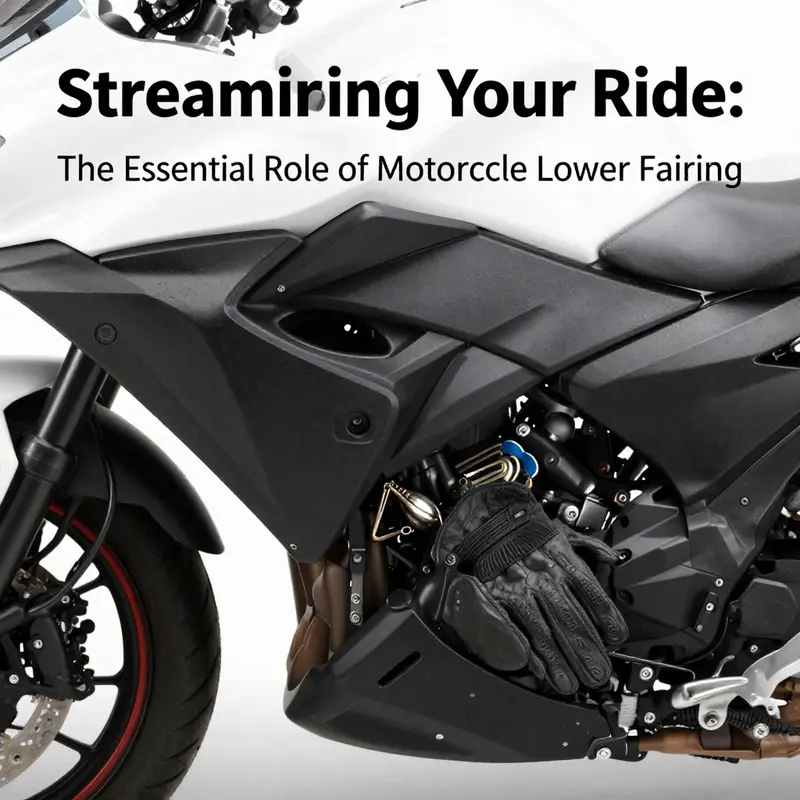
A motorcycle lower fairing does more than finish a bike’s look. It acts as a functional layer between the road and the machine. Mounted along the lower sides of the chassis, these panels defend vulnerable mechanical parts. They smooth airflow under and around the engine. They create useful mounting points and storage opportunities. They shape how the bike behaves at speed and how it endures everyday use. This chapter explores the practical value a well-designed lower fairing brings, and explains why many riders view it as a key part of the machine’s utility and performance.
Protection is the most immediate, visible benefit. The lower fairing sits where scrapes, stones, and road debris hit first. In a low-speed slide or a tip-over, it can absorb scuffs and impacts that might otherwise scar an engine cover, exhaust header, or oil filter. By shielding these items, the fairing reduces repair costs and downtime. It also keeps dirt and wet road spray away from connectors and wiring routed under the bike. That matter-of-fact protection preserves the mechanical reliability of everyday riders. For those who ride in varied conditions, the lower fairing helps maintain component longevity with little extra effort.
Beyond collision protection, lower fairings play a critical role in airflow management. The underside of a motorcycle is turbulent by design. Wheels, engine fins, and exhaust plumbing break the stream of incoming air and create unstable pockets of pressure. Carefully shaped fairing lowers tame these disturbances. They channel air smoothly past the belly of the bike, reducing drag and the erratic flow that can buffet a rider at higher speeds. The result is better high-speed stability and more predictable handling. That stability matters on long highway rides, and it lets riders maintain steady throttle inputs with less fatigue.
Fuel efficiency also benefits from improved aerodynamics. Even minor drag reductions translate into measurable savings on long trips. When airflow is more efficient around the lower profile, the engine meets less resistance. That makes throttle response feel cleaner and reduces the engine’s workload at cruising speeds. For riders focused on range and fuel economy, lower fairings are a quiet efficiency upgrade that delivers over many miles.
Thermal management is an often-overlooked functional advantage. The lower fairing helps guide cooling air away from hot components. In some designs, it draws cooler air into channels that pass by radiators or oil coolers. In other layouts, it deflects hot exhaust radiated heat from areas where it could affect riders’ legs or sensitive wiring. This selective channeling supports more consistent operating temperatures. On tightly packaged machines, where components sit close together, that controlled airflow can improve performance reliability during sustained high-load riding.
Lower fairings also expand practical carrying capacity through integrated mounts and small compartments. Designers frequently build mounting points for auxiliary lights or luggage racks directly into these panels. Some lower fairings include modest onboard storage for tools, rain gear, or documents. For touring or commuting riders, that usable space eliminates the need for bulky external racks. It contributes to a cleaner look while keeping essential items tucked out of the weather. This integrated approach reduces the need for aftermarket brackets and simplifies packing for a weekend ride.
The presence of lower fairings changes rider comfort, too. By guiding airflow away from the legs, they reduce wind blast at speed. For long-distance travel, that reduction in wind pressure lessens fatigue and improves concentration. The fairing’s structure also acts as a shield against spray and splashes, keeping lower clothing drier in light rain. Combined with upper fairings and screens, a well-matched lower fairing creates a more comfortable, controlled environment around the rider.
Aesthetic cohesion might seem secondary, but it directly affects perceived value and resale potential. Lower fairings complete the visual line of a motorcycle, creating continuity between the front and the tail. They can make a machine look more purposeful and finished. Because appearance influences buyer decisions, a bike that looks integrated and cared-for often holds value better. For custom builders, these panels offer a canvas for paint or texture choices. For riders who prefer a factory-fresh look, primed or paint-ready lower fairings make it simple to match OEM colors and finishes.
Materials and construction methods determine how a lower fairing performs and lasts. Manufacturers use thermoplastics, fiberglass, ABS, and composite laminates. Thermoplastics like ABS offer impact resistance and a forgiving flex under minor contact. Fiberglass provides stiffness and ease of repair at the cost of brittle failure modes. Composite layups bring weight savings and strength but raise price and repair complexity. The choice depends on intended use. Commuters often prefer durable, cost-effective plastics. Track-minded riders or builders might accept lighter composites for performance or aesthetics. Whichever material is chosen, proper attachment hardware and robust mounting points matter most for reliability.
Fitment plays an outsized role in the fairing’s real-world utility. Poorly fitted lower panels can rattle, trap moisture, or contact moving parts. A precise fit aligns with factory mounting points and wiring harness routes. It avoids stress concentrations that lead to cracks. When replacing or upgrading lower fairings, verifying model and year compatibility is essential. Small design differences between model years can change mounting geometry. Many suppliers sell fairings as left-and-right pairs to ensure correct fit and symmetry. Choosing matched panels avoids gaps and misalignment that hurt both appearance and aerodynamic performance.
Installation considerations are practical and straightforward, but they deserve attention. Proper torque on fasteners, the use of vibration-damping washers, and checking clearances with moving parts prevent future issues. When panels are primed or unpainted, finishing should wait until fitment is verified. Wiring for integrated lights or locks should follow sealed routing and strain relief best practices. For riders installing their own fairings, taking the time to document original fastener locations and clips prevents headaches during reassembly. Professional installation often pays for itself when it avoids misaligned panels that require rework.
Maintenance is simple but critical. Regular inspection reveals chips, cracks, and loosened fasteners early. Prompt repair of small cracks avoids larger failures later. Cleaning with mild detergents and avoiding high-pressure spray directed at seams helps preserve seals and painted finishes. When lower fairings include storage compartments, checking seals ensures stored items stay dry. In cold climates, paying attention to how accumulated road salt interacts with fasteners reduces corrosion risk. Routine checks every few thousand miles keep the panels doing their job quietly and reliably.
There are trade-offs to consider. Added panels increase mass, albeit modestly. In tight clearances, poorly designed fairings can make servicing the engine more time-consuming. In aggressive off-road or urban environments, the fairing may catch on obstacles or scrape in unexpected ways. Riders should weigh the advantages of protection and aerodynamics against any serviceability or clearance concerns. For many, the trade-off favors installing the fairing because it reduces risk to costly mechanical parts and improves ride comfort.
Integration with other systems is a subtle but important aspect. A lower fairing that works with an existing exhaust layout, radiator placement, and engine mounts streamlines the entire package. When accessory lights or luggage mounts are expected, the fairing’s structural integrity should handle the added loads. Designers increasingly factor in wiring channels and venting paths into the lower panels. This forward-thinking approach reduces the need for ad hoc brackets and preserves the bike’s original balance and center of gravity.
Real-world scenarios illustrate how lower fairings add value. A commuter negotiates wet, debris-prone roads and appreciates less grime on engine components. A touring rider accumulates hours at highway speeds and notices more stable handling and improved fuel economy. A custom builder uses primed lower panels to complete a visual theme without complex metalwork. In each case, the fairing’s combined benefits improve utility and enjoyment without dramatic changes to riding style.
If your motorcycle is among models known for touring capability, you may find model-specific lower fairings that match your needs. For an example in fitment and options, see the selection of fairings for FJR1300. Such supplier pages reveal the variety of shapes and finishes available to suit different riding goals.
When considering a purchase, check compatibility carefully. Confirm year, model, and any variant packages that affect underbody geometry. Review installation notes for required brackets, clips, or wiring adapters. If the panel is sold primed, plan for finishing after fitment checks. When the fairing includes vents, evaluate how those vents will interact with your bike’s cooling system. In many cases, referring to the manufacturer’s fitment guides or specification sheets clarifies these details.
Finally, view the lower fairing as a practical upgrade rather than a cosmetic afterthought. Its combination of protection, aerodynamic refinement, and accessory integration enhances the motorcycle’s day-to-day functionality. With careful selection, correct installation, and routine maintenance, a lower fairing repays its cost through reduced repair risk, greater comfort, and improved performance on long rides. For exact specifications and official fitment guidance, refer to manufacturer documentation: https://www.genuinepartscompany.com
Between Fit and Flair: Navigating Compatibility and Customization of Motorcycle Lower Fairings

The lower fairing of a motorcycle is more than a cosmetic accent or a standalone piece of plastic tucked under the engine. It is a deliberate component of the bike’s aerodynamic strategy, a shield for the vulnerable lower engine bay from road spray and debris, and, in many configurations, a practical pocket of storage or a conduit for additional features. When one begins the journey of selecting and shaping a set of lower fairings, the most critical starting point is compatibility. Fitment is the hinge on which everything else turns. If the panels do not align with the frame, engine, and mounting points of a specific model year, any added aesthetic or perceived performance benefit quickly dissolves into fitment issues, rubbing, or gaps that catch wind and reflections more than they tame them. In practice, this means that a rider must move beyond generic descriptions of “universal” or “slim” lowers and engage with model-year specifics, mounting hardware requirements, and the subtle variations that emerge as a manufacturer updates radiator shrouds, hoses, and engine covers across production runs.
Across manufacturers, the design language of lower fairings can shift noticeably with different generations. A single model line may feature several distinct radiator shroud geometries over its lifetime, and those changes often cascade into the lower panels’ attachment points, contours, and even the pathway of airflow around the engine block. In some cases, pre-assembly checklists will spell out compatible years in exact terms, while in others the information is bundled with mounting hardware or requires cross-reference with a dedicated parts diagram. For a rider seeking a clean, factory-like integration, the prudent path is to verify fitment through official part numbers and model-year designations rather than assuming universal compatibility. It is a reminder that aftermarket improvements must be chosen with the same exacting care you apply to choosing a level of wind protection or a preferred colorway.
The importance of model specificity cannot be overstated. When a kit is advertised as compatible with a broad range of production years, internal differences in the radiator shrouds, mounting brackets, and even the electrical routing can complicate installation. The radiator shroud, in particular, serves as a reference geometry for the lower fairing; small changes in its shape or angle can shift where a lower panel sits relative to the frame or how it clears the oil cooler, hoses, and associated fasteners. For riders who enjoy the investment in a complete aesthetic package, this is a crucial consideration—because the wrong lower may appear close in silhouette yet fail to align with the bodywork, leaving noticeable gaps or misaligned seams that undermine both look and function. The takeaway is simple and practical: always confirm part numbers, model-year alignment, and the included mounting hardware before purchasing.
Customization options expand the conversation from fit alone to a broader dialogue about personal taste, performance cues, and the bike’s overall silhouette. Materials for lower fairings span a spectrum from economical and durable ABS plastics to high-performance composites like carbon fiber. ABS is the workhorse of aftermarket lower fairings: it resists impact well, tolerates heat, and remains cost-effective for riders who want a clean, factory-like finish without a premium price tag. Carbon fiber, by contrast, speaks to a different ethos. Its lightness can contribute to a perception of nimbleness in the chassis’ handling dynamics, and its distinctive weave offers a visual punch that pairs well with sport and race-inspired builds. In practice, carbon fiber lowers are often offered in multiple finishes—fully gloss, a mixed matte carbon with glossy panels, or other hybrid treatments—that let the rider dial in a look that harmonizes with the rest of the bike’s plastics and painted surfaces. The choice of material is a decision that touches on both weight, durability, and the end-to-end aesthetic narrative of the machine.
But materials are only part of the customization spectrum. Many riders seek integration of airflow management features to tune how air travels around the lower portion of the bike. Vented designs present a practical option, channeling air through strategically placed openings to optimize boundary-layer behavior and reduce stagnation near the engine sump and exhaust areas. When venting is color-matched or designed to blend with the bike’s palette, the effect is both functional and visually cohesive, reinforcing the sense that every contour and aperture was purposefully designed rather than appended as a afterthought. For touring and sport-touring builds, the lower fairing’s role in shaping wind flow becomes even more meaningful. By smoothing the lower boundary layer, these panels help minimize wind turbulence that would otherwise reach the rider’s legs and knees at higher speeds, contributing to rider comfort without betraying a heavy, drag-inducing look.
Alongside airflow, the integration of additional features can significantly enhance daily usability and the bike’s personality. Some lower fairings are designed to incorporate accessory storage compartments that provide compact space for gloves, keys, or a wallet—an understated upgrade that aligns with the touring mindset. More adventurous configurations may offer vented designs coupled with color-matched finishes that reflect a deliberate attention to detail. Beyond storage and airflow, modern lower fairings can also be prepared to accommodate speaker pods or other rider-centric upgrades. While such integrations are not strictly wind-dynamics features, they speak to a broader theme in customization: shaping a rider experience that is as practical as it is visually satisfying. The balance between practical utility and clean, streamlined aesthetics is the hallmark of thoughtful lower-fairing design.
From a practical standpoint, aftermarket options exist to support riders who want both style and budget-conscious choices. The market includes color-matched offerings designed to slip into the bike’s existing color system, with attention paid to match not just the hue but the sheen and depth of the paint. When color and contour converge, the lower fairing reads as an extension of the bike’s overall design language rather than a separate add-on. The available finishes can range from solid primed forms intended for customization to fully baked finishes that align with stock color schemes. The overarching message is clear: customization should honor the bike’s original lines and geometry, ensuring that the lowers feel like an integrated piece rather than a mismatched panel that sits awkwardly against a sculpted frame.
A critical practical note accompanies all customization: compatibility remains the gatekeeper. Riders must approach selection with a clear-eyed view of model year, trim, and the feasibility of integrating with existing wiring, brackets, and mounts. The interdependence of fairing components means that even design-forward choices must respect the constraints dictated by the bike’s architecture. When a kit provides mounting hardware, gaskets, and seals that align with the specific model-year configuration, installation becomes a more predictable process, reducing the risk of misalignment, loose fittings, or inadvertent interference with moving parts. In some cases, this means selecting a kit that lists the precise compatible years and includes all necessary hardware in the package. When fitment documentation is thorough, the rider can proceed with confidence, knowing that the lower fairing was designed to integrate with the bike’s original engineering layout rather than fighting against it.
From this vantage point, there is a natural and important synergy between lower fairings and the broader fairing ecosystem on a motorcycle. While the lower panel itself does not provide rider wind protection the way a full fairing might, it completes a low- pressure, smooth-flowing environment around the engine and undercarriage. The goal is to minimize turbulence, reduce drag, and protect critical components from the elements, while maintaining or enhancing the bike’s visual coherence. When paired with a well-muned upper fairing strategy, the lower fairing contributes to a smarter distribution of pressure and an enhanced overall aerodynamic profile. The end result is not merely a cosmetic upgrade but a carefully considered component that helps manage airflow with a view toward efficiency, durability, and long–distance comfort.
For riders curious about specific pathways to explore, the Honda fairings category offers a useful lens into how a given brand manages fitment and customization. By examining the way a category organizes its product lines—how it labels compatibility, how it bundles mounting hardware, and how it presents color and finish options—builders can glean practical patterns applicable to other manufacturers. The approach is not about copying a particular design but about internalizing a disciplined method: read the fitment notes, compare mounting points, and map the panels’ curves to the engine’s contours. A well-curated catalog illustrates how variation in shroud shapes and bracket locations translates into lower-panel geometry, and it invites a rider to map their own bike’s architecture to a chosen aesthetic. If you want to explore how a category handles fit and customization in concrete terms, see the Honda fairings page. It demonstrates a structured approach to aligning part numbers, year-specific design cues, and accessory integration with the bike’s existing wiring and mounting points, ensuring that the final result feels like a natural extension of the machine rather than a separate accessory.
In choosing how to pursue compatibility and customization, the rider is also selecting a philosophy about maintenance and long-term serviceability. Lower fairings must withstand daily riding conditions, including road spray, heat cycling from the engine, and occasional impact from road debris. A durable finish and robust mounting system reduce the likelihood of cracking or loosening over time, making ongoing maintenance easier and less disruptive to riding schedules. The sense of confidence that comes from a panel that fits precisely and remains stable at speed influences the rider’s willingness to tailor more of the bike’s visual language and aerodynamic character. In other words, compatibility is not a gatekeeper that blocks customization; it is the framework that enables a more cohesive, reliable, and satisfying expression of a rider’s personal vision. As with any major aesthetic and functional update, the transformation is most successful when the chosen path respects the bike’s geometry, honors its engineering, and speaks to the rider’s intended use—whether that use involves long highway jaunts, spirited canyon carving, or the quiet pleasure of a show-ready weekend ride.
For those who are charting a course through the maze of options, the narrative is that customization should be a measured dialogue between form and function. Materials influence weight distribution and heat management; vented designs modulate airflow in precise ways that affect engine cooling and shell stiffness; integrated storage and audio or other accessories add daily practicality that aligns with the rider’s routine. The balance is delicate. Too aggressive a design—one that prioritizes aero gains at the expense of clean mounting lines or that introduces multiple seams and gaps—can undermine the very aerodynamic benefits that a thoughtful lower fairing seeks to deliver. On the other hand, a lean, well-integrated lower that mirrors the bike’s lines while offering optional features can elevate both appearance and performance without compromising reliability.
As this discussion circles back to the overall objective of the article—how the motorcycle lower fairing contributes to a bike’s aerodynamic efficiency, durability, and rider experience—one idea remains central: compatibility is not merely about whether a part can physically bolt on. It is about whether the part, in its exact fitment, supports a coherent aerodynamic strategy and a rider’s practical needs. Whether the rider is chasing a subtle, factory-like appearance, a high-tech, carbon-fiber edge, or a color-matched statement that accents the bike’s original palette, the most successful outcomes arise when the choice harmonizes with the bike’s architecture, reflects a clear plan for airflow management, and respects the realities of assembly and service. In that sense, compatibility and customization are not opposing forces but two sides of the same coin—two facets of a deliberate design process that yields a lower fairing system capable of standing up to the demands of modern riding while also delivering the personal signature that makes each motorcycle unique.
External resource for deeper aerodynamics context: https://en.wikipedia.org/wiki/Air_drag
Final thoughts
Understanding motorcycle lower fairings offers business owners the insight needed to meet the evolving demands of riders. By appreciating their aerodynamic benefits, practical features, and customization opportunities, businesses can better cater to their clientele, ultimately fostering growth and innovation in the motorcycle industry. Embracing lower fairing technology not only enhances the performance of motorcycles but also elevates the overall riding experience, paving the way for a successful future in this competitive market.