
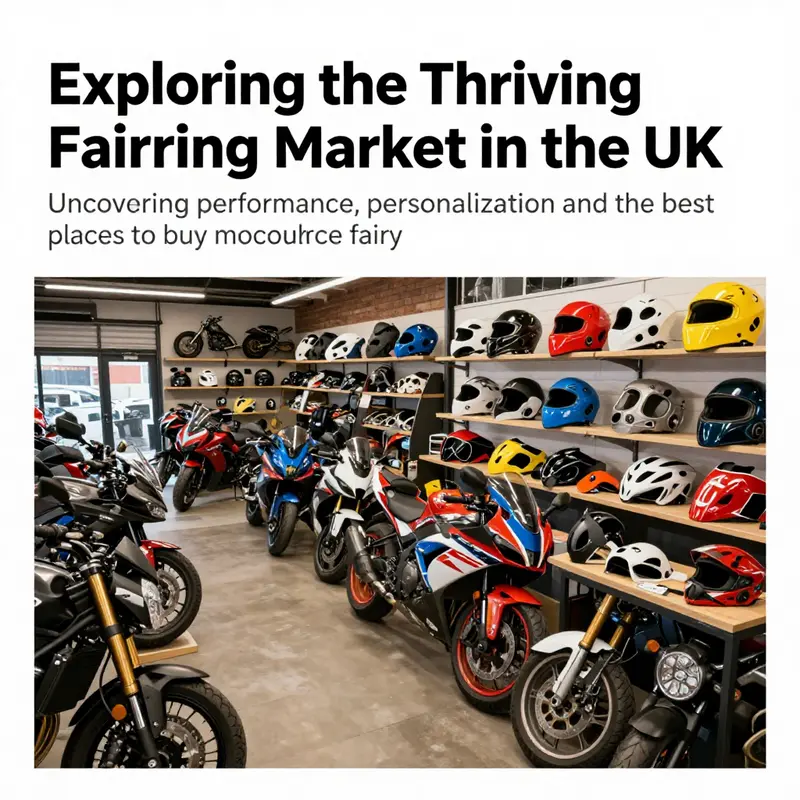
The UK motorcycle fairing market caters to the diverse needs of riders who seek not only performance enhancements but also distinctive styles and protective features for their motorcycles. With the blend of materials such as ABS plastic, carbon fiber, and polycarbonate, manufacturers are pushing the boundaries of engineering to deliver high-quality fairings that fulfill the demands of both casual and professional riders. This article delves into the myriad choices available and the importance of customization within this vibrant sector, followed by a look at the retail landscape that connects businesses to the products they need. Throughout each section, key insights will be provided into how business owners can best navigate this exciting marketplace.
null

null
Winged Personalization and Craft in UK Custom Fairings

In the United Kingdom, motorcycle fairings are more than protective shells; they are canvases for identity and engines of experimentation.\nRiders and builders treat fairings as living parts of the machine, capable of shaping aerodynamics, posture, and mood. In a culture that blends engineering rigor with artisanal craft, customization becomes a dialogue between rider and bike, where every line is weighed for function and expression.\nMaterial choices reveal a practical balance between strength and weight. Carbon fiber remains a favorite for stiffness and finish, while composites, fiberglass, ABS, and polycarbonate provide alternate paths for cost, complexity, and rapid prototyping. CNC machining enables exact fits to modern frames, while 3D printing supports rapid testing of ducts and internal channels for airflow.\nAerodynamics in this context is about stability and rider comfort as much as speed, with fairing lines tuned to suit touring, sport, or urban riding styles. Lighting integration has evolved from novelty to necessity, with discreet LEDs that enhance visibility without interrupting lines or creating drag. Venting, winglets, and precisely placed gaps can improve flow and reduce buffeting for riders who spend long hours in the saddle.\nThe journey from sketch to street is collaborative, involving riders, designers, and fabricators who iterate through mockups, fit checks, and wind tunnel or bench tests. In the UK scene, the role of community is strong: regional meets, shows, and online forums share ideas, document outcomes, and elevate standards of safety and performance.\nGovernance and safety underpin every project, from compliance with visibility regulations to careful wiring and secure mounting. Responsible shops emphasize fitment accuracy, post installation checks, and a habit of transparent communication with clients about what is technically feasible and how it affects ride quality. The result is a spectrum of personal expressions that respect the bike’s original lines while extending its character.\nFor enthusiasts seeking a practical lens, the UK approach favors modular thinking: choose a base shell, tailor aerodynamics to a rider’s posture, and test iteratively. The catalog of options—materials, finishes, and integration ideas—grows from collaboration and hands-on problem solving. In this culture, a fairing is not a one-off cosmetic upgrade but a long-term relationship between rider, bike, and workshop, continually evolving as riding needs shift and technology advances.
Riding the Digital Tailwind: How Online Retailers Redefine the UK Motorcycle Fairings Market

The UK motorcycle fairings market has shifted from showroom curiosity to online-first procurement. Digital catalogs, search filters, and real-time inventory data have become the new normal, guiding riders from initial interest to final installation with a seamless tempo. The online space acts as a nerve center where performance goals, aesthetic ambitions, and practical constraints intersect, delivering a buying experience that feels both expansive and highly precise.
Catalogs emphasize materials and finishes with the clarity engineers expect: ABS for dent resistance and cost efficiency, polycarbonate for impact tolerance and visibility, and carbon fiber for stiffness-to-weight advantages. Each material carries a performance profile, and online presentations enable side-by-side comparisons that would once have required multiple store visits. Detailed specifications, real-world weight data, UV resistance ratings, and finish options empower buyers to balance track-day dreams with street-use realities.
Fitment has become a first-class feature of online shopping. Model-specific checkers, version-aware filters, and consumer feedback illuminate compatibility in a way that reduces post-purchase uncertainty. Buyers can verify mounting point spacing, frame geometry alignment, and stay design compatibility before adding a kit to the cart. This reduces returns, speeds up procurement, and stabilizes costs for shops that rely on predictable lead times and reliable stock.
The online marketplace draws in a global supply chain with local confidence. Coastal manufacturing hubs deliver consistently engineered fairings, while bonded warehouses near major ports simplify logistics and enable Delivered Duty Paid terms. Transparent shipping costs and dependable lead times give riders and professional workshops the ability to plan a build calendar with greater certainty, a critical factor when timing is mission-critical for race-prep or showroom-grade projects.
Beyond catalog pages, the platform becomes a collaborative workspace. High-fidelity 3D visualization, colorway previews, and inter-model comparisons help riders experiment with airflow, venting, and lighting configurations before a single part is ordered. In many cases, design inspirations and installation guides sit alongside product listings, turning the catalog into a living blueprint for how a fairing should look and feel on a particular bike and rider posture.
Custom and bespoke pathways flourish within this ecosystem. Online coordination with studios that offer hand-laid finish work, refined aerodynamics, and integrated wind protection creates a continuum from digital concept to physical realization. Riders can request digital mockups, approve refinements, and then rely on a streamlined workflow where quick-change compatibility and bespoke styling coexist without compromising ride quality or warranty coverage.
What makes the online model transformative is the combination of data discipline and human-centric support. Detailed specifications, verified material properties, and finish options are not decorative; they are the signals that inform decisions under time pressure. Community-driven feedback, installation tutorials, and compatibility checkers reduce risk, while enterprise-style supplier transparency improves forecast accuracy and procurement resilience.
For readers seeking a concrete takeaway, the breadth of model-specific options across catalogs reflects disciplined catalog discipline. Clear specification sheets, model-accurate fitment data, and a design language that harmonizes performance with aesthetics guide buyers toward configurations that balance personal expression with mechanical reliability. The online space thus becomes a virtual workshop where riders sketch ideas, test fits, and assemble a final configuration aligned with riding habits, climate, and the dream of what their machine should feel like when the wind sharpens on a lonely country road.
In the end, online retailers enable a riding experience that is more expressive, technically precise, and reliably supported. They synchronize rider intent with workshop capability and manufacturer reliability, creating a supply chain that keeps pace with evolving performance standards and design trends. The UK fairings market, supported by robust online infrastructure, offers a model for how digital platforms can fuse technical rigor with creative ambition, expanding access while maintaining fitment integrity, long-term care, and predictable ownership economics.
Final thoughts
Understanding the motorcycle fairing market in the UK is crucial for business owners looking to capitalize on performance needs and increasing demand for customization. By recognizing the extensive variety of fairings available and harnessing the benefits of tailored solutions, businesses can position themselves to meet the specific desires of their clientele. Additionally, the dominance of online retailers in this market presents extensive opportunities for engagement and sales. Ultimately, staying informed about market trends and technological advancements will empower business owners to thrive in this ever-evolving landscape.