
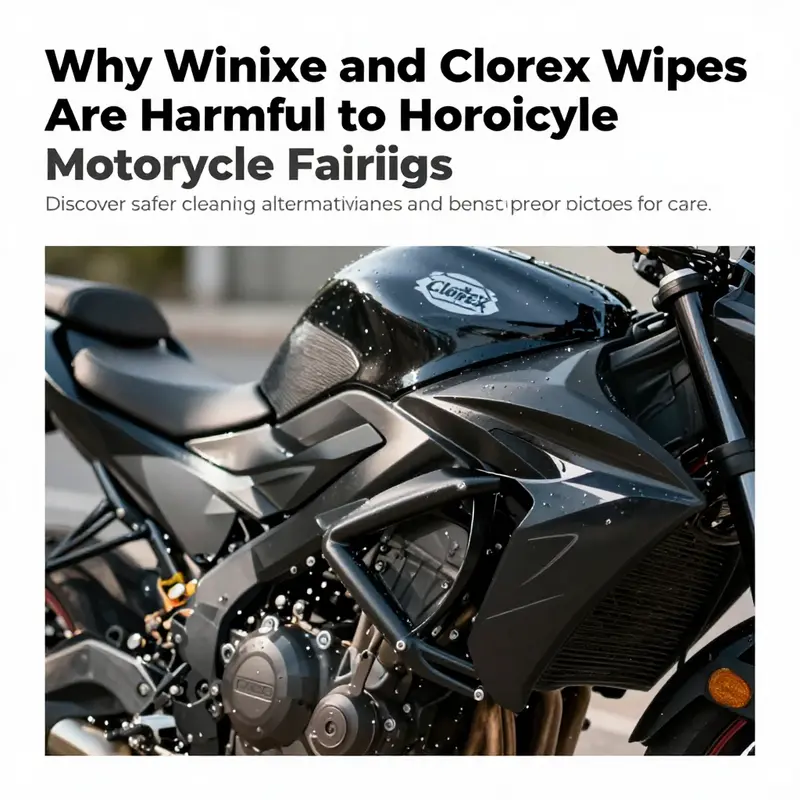
Maintaining the appearance and integrity of motorcycle fairings is crucial for keeping the vehicle in top form and preserving its value. Business owners and enthusiasts alike often reach for convenient cleaning solutions such as Windex and Clorox wipes. However, these widely used products can cause significant harm to the delicate surfaces of motorcycle fairings. This article delves into the adverse impacts of using these cleaning agents, the specific dangers they present, and best practices for maintaining fairings. Furthermore, we will explore effective, safer alternatives to ensure your motorcycle not only looks great but is also protected from potential damage.
Preserving the Shine: Why Household Glass Cleaners Do Not Belong on Motorcycle Fairings
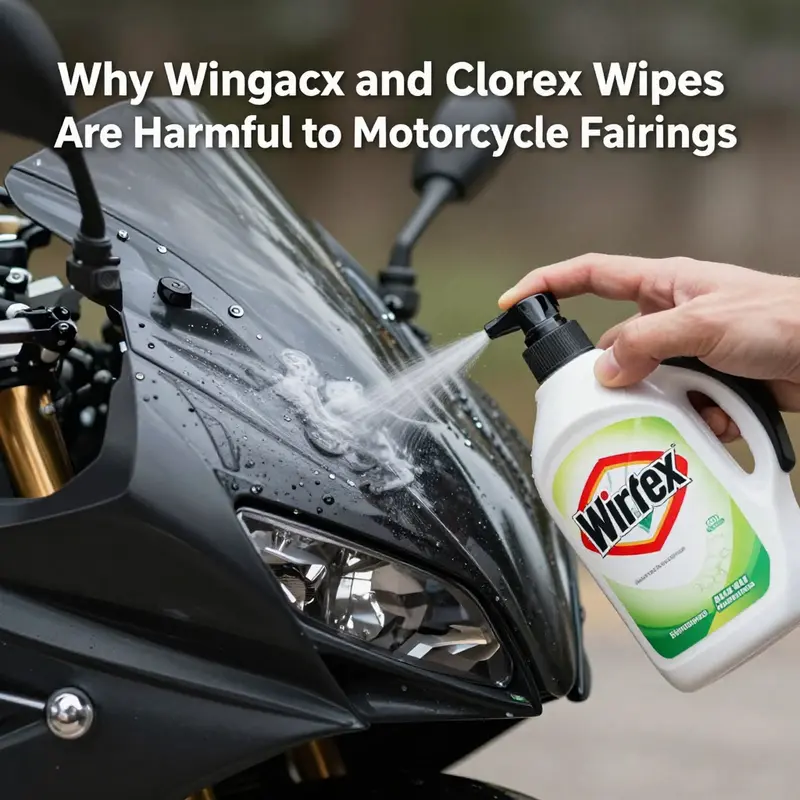
The temptation to reach for household glass cleaners is strong when a fairing looks dusty. But motorcycle fairings are a painted surface with clear coats and plastics that behave differently from home glass. Household cleaners often contain ammonia, bleach, or abrasive fibers that can dull, cloud, or scratch the finish over time. Ammonia based cleaners can disrupt coatings and soften plastics, leading to clouding and color loss, especially with UV exposure that accelerates fading. Chlorine and bleach based products can degrade wax or sealants and can embrittle or whiten plastics; they can leave residues in micro crevices that attract dirt. The safer approach is to use cleaners designed for automotive or motorcycle painted surfaces, pH balanced, mild, and easy to rinse, followed by drying and protection. Technique matters: rinse, use a two bucket wash with a soft microfiber mitt, apply cleaner with gentle overlapping strokes following the panel contours, avoid scrubbing, and dry with a clean microfiber. Regular care keeps gloss and color depth, while avoiding household chemistry that can dull the finish. External references avoid including brand names and URLs to keep it general and focused on the principle that paints and plastics deserve careful cleaners.
Guarding the Gloss: The Real Risk of Ammonia-Based Cleaners and Bleach Wipes on Motorcycle Fairings
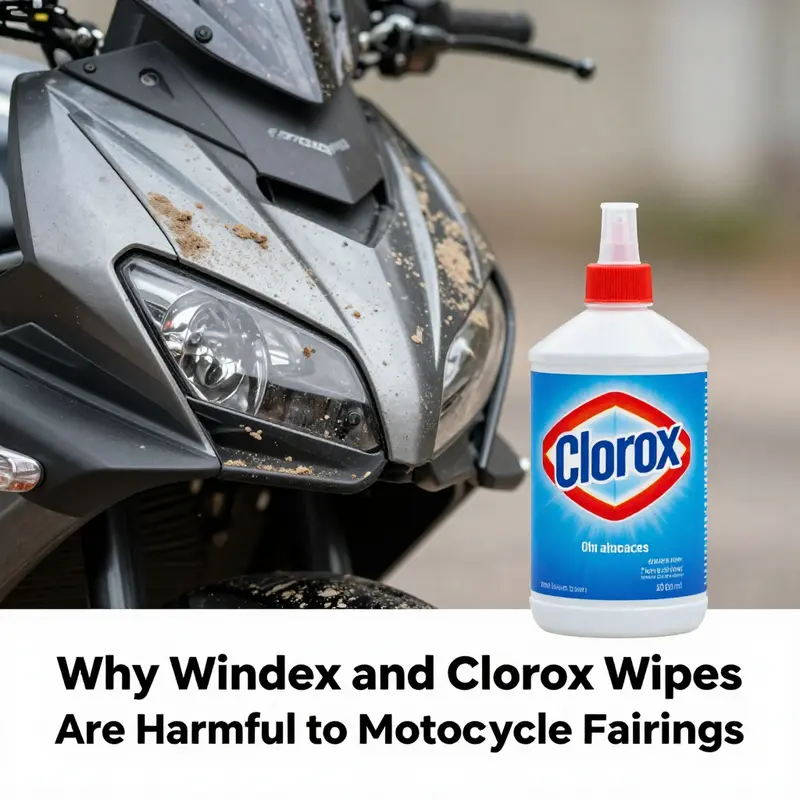
The fairing is more than a shield for the rider; it is a carefully engineered surface that balances aesthetics, aerodynamics, and durability. When you ride, you expect the fairing to stay glossy, resist scuffs, and hold its color under sun and rain, heat and vibration. Yet the simplest maintenance decision can undermine all of that. The temptation to grab a bottle of ammonia-based glass cleaner or a wipe saturated with bleach-based disinfectants is common. They seem convenient and effective for stubborn grime, but they come with hidden costs. For a surface as complex as a motorcycle fairing, which often comprises multi-layer paints, clear coats, plastics, and sometimes polycarbonate panels, these cleaners do not play well with the materials or the protective finishes. The short-term relief they offer can mask long-term damage that arrives as yellowing, dulling, crazing, or even micro-fractures in the coating system. The effect is not merely cosmetic; it can compromise the fairing’s integrity and resale value, especially when aftermarket or high-end, light-weight composites are involved.
The chemistry behind the risk is straightforward and instructive. Ammonia-based cleaners, widely used for their ability to cut through grime, are strongly alkaline. They disrupt surface oils and can penetrate polymer layers, softening the seal between coats or weakening the resin matrix that binds pigments to the surface. On a motorcycle fairing, that means the clear coat—the transparent layer that provides depth and protection—can lose its luster, become prone to micro-scratches, and develop a chalky or hazy appearance. The plastic components, which can include high-strength polycarbonate or other engineering plastics, are not immune. Ammonia can cause those plastics to craze, yellow, or lose their clarity over time. When a fairing’s surface becomes compromised, even small scratches can become magnified, making maintenance more challenging and requiring more aggressive interventions to restore appearance.
Bleach-containing wipes introduce a different, but equally troubling, set of risks. The active chlorine compounds in these products are aggressive oxidizers. They readily react with pigments, clear coats, and protective additives designed to block UV damage and maintain gloss. On a painted surface, chlorine-based products can cause color fading or yellowing, and on plastic elements, they can take a surface that was once pliant and render it brittle. The combination of chlorine chemistry and the mechanical action of a wiping motion creates a perfect storm for microabrasions and bite-sized surface damage. Even if the wipe itself appears soft, the embedded particulates and the chemical aggressiveness can leave behind faint lines or pits that catch dirt and become focal points for further wear. For riders who have opted for custom or colored fairings, the color integrity is particularly at risk; micro-level changes are far easier to notice on a bespoke finish than on a solid color panel.
Beyond chemistry, there is a practical friction factor that often goes overlooked. Wipe textures, especially when used with light, circular motions or when pulled across the surface with insufficient lubrication, can create micro-scratches. These are not the obvious gashes you fear; they are fine lines that dull the surface’s reflectivity. On a fairing, where the finish is a critical component of the bike’s appearance and even its perceived value, those micro-scratches accumulate with time. Dirt tends to collect in these tiny channels, turning a quick wipe into a longer, more laborious restoration project later. For many riders, the path back from a scratch-laden panel is costly and time-consuming, not to mention the risk of introducing new damage with aggressive polishing that may embrittle the clear coat or weaken plastic laminates.
A practical maintenance mindset begins with recognizing the limited role of aggressive cleaners in routine care. The goal is to remove road grime, insect residue, and dust while preserving the finish’s integrity and longevity. The most reliable approach is to use products specifically designed for motorcycles or automotive finishes. These cleaners are formulated to be pH-balanced and to preserve waxes, sealants, or ceramic coatings that ride along the surface as sentencing guards against UV exposure and moisture. When you invest in a fairing, especially one with aftermarket or high-end finishes, you are also investing in a protective strategy. This means acknowledging that what you apply to the surface matters as much as how you apply it.
To translate this into practice, consider a cleaning routine rooted in gentle, surface-friendly chemistry. A dedicated motorcycle wash, designed to be pH-balanced and biodegradable, delivers the cleansing power needed without compromising the clear coat or plastic layers. These washes are designed to work with microfiber cloths or mitts, which lift dirt rather than grind it into the finish. A soft microfiber towel, when used with a two-bucket method—one for soapy wash, one for rinsing—minimizes the chance of re-depositing abrasive particles onto the surface. This approach reduces the risk of introducing micro-scratches while delivering a thorough cleaning of contour lines, vents, and fastener pockets that accumulate grime. In contrast, a wipe-based cleaning method—especially with wipes that have been pre-saturated with harsh chemistry—lacks the rinsing action that helps flush away particulates. The result is a higher likelihood of residual grit becoming a sandpaper-like irritant as you rub the surface.
An effective care ritual also includes post-wash protection. After a careful rinse and dry, applying a plastic/trim protectant helps restore some of the surface’s original clarity and shields plastics from UV-induced degradation. When choosing protectants, riders should look for products that do not leave a greasy residue or a white film on darker colors. A light, even coat helps maintain the fairing’s gloss without altering color depth. And while it might be tempting to wax the finish aggressively, it is essential to ensure compatibility with the underlying coatings. Some wax systems form a hard shell that can bridge over micro-scratches, while others create a smoother layer that enhances gloss while preserving breathability for the paint system underneath. The safer path is to follow the guidance of the finish manufacturer or a certified detailer who understands the interaction between waxes, sealants, and the specific paint and plastic materials used on your fairing.
These considerations matter not only for the surface you see in the mirror but for the fairing’s long-term performance. A pristine finish helps preserve resale value, a factor that players in the aftermarket fairing market keenly understand. When you invest in a distinctive set of panels—whether a common colorway or a high-contrast, performance-oriented finish—the surface chemistry becomes part of the product’s value proposition. Every time you choose an ineffective cleaner or a harsh wipe, you risk diminishing gloss, accelerating color fade, or creating micro-damage that compromises aerodynamic smoothness. Aerodynamics hinge on clean, smooth surfaces; any roughness introduced by careless cleaning can degrade laminar flow and, in extreme cases, alter drag characteristics. While the effect on performance is subtle, it remains real—especially for high-speed riding where every incremental improvement counts.
For riders who want a practical reference point in their maintenance library, there is value in looking at community guidance and trusted sources that reiterate these cautions. In a broader maintenance discussion, the principle is repeated: avoid ammonia-based cleaners like those designed for glass and avoid chlorine-containing wipes. Instead, embrace pH-balanced, biodegradable washes tailored for motorcycles and the plastic and paint systems common to fairings. These products work in harmony with soft microfiber tools, reducing the risk of friction-induced damage and preserving the protective wax or sealant layers that shield the surface from the elements. The consequence of adherence is not merely cosmetic; it is a straightforward equation: gentle care yields durability, and durability sustains value and enjoyment for as long as the bike remains in the fleet.
For those who already own or plan to acquire aftermarket panels, the care strategy remains the same, but the stakes can feel higher. Custom or high-end fairings often feature deeper luster and more complex color shifts that a generic wash can dull. The investment in quality finish deserves a complementary maintenance approach. A practical tip is to treat the surface as you would a premium helmet or premium visor: avoid anything that promises rapid, forceful cleaning without a proper rinse. If you must dispatch a stubborn spot, use a small amount of the motorcycle-specific wash on a microfiber corner rather than applying full-strength products directly to the panel. The goal is to keep the existing protective layers intact while returning the finish to its former clarity.
In the spirit of supporting readers who are actively curating their gear, one practical touch point can guide product selection across the board. For owners exploring compatible or compatible-looking fairings for their model, reference to dedicated parts and accessories can help align care choices with material composition. For example, explore the options in the BMW S1000RR fairings category to gauge what finishes and plastics are common for a modern performance bike. This can help you tailor your cleaning and protection approach to the specific structure of your panels. When you see a page labeled Fairings for BMW S1000RR, you’re looking at a family of panels designed to meet a precise balance of aesthetics and rigidity; the care routine should honor that balance rather than override it with generic cleaners that chase convenience but cost performance. Fairings for BMW S1000RR serves as a practical mental anchor for riders who want to align maintenance choices with the way their fairings are engineered. This kind of context matters because even subtle surface changes can influence cleaning results and, ultimately, the rider’s satisfaction with the bike’s appearance.
As the discussion of best practices unfolds, it is natural to anticipate questions about where this leaves the everyday rider. The answer is straightforward: choose gentler, purpose-built cleaners; use microfiber tools; work in shade and when the engine is cool; and protect the surface after cleaning. The goal is to sustain clarity, minimize micro-scratches, and maintain the finish and gloss that contribute to the bike’s overall value and presence on the road. The ride is more enjoyable when the exterior stays true to its original luster, and the careful routine ensures that the finish can withstand years of exposure to sun, rain, road debris, and the occasional accidental spill without succumbing to premature wear. The fairing, after all, is the first impression of the bike’s care and maturity. When maintained with restraint and respect for the material science beneath the paint, it continues to reflect the rider’s attention to detail rather than reveal hasty, careless choices.
External reference for broader context and practical tips on cleaning sensitive coatings can be found in this helmet cleaning guide, which echoes the same cautions about ammonia and aggressive cleaners while expanding the scope to related surfaces. Read more at https://www.carinterior.com/motorcycle-helmet-cleaning-guide.
Beyond Windex and Bleach: A Sensible Path to Motorcycle Fairing Care
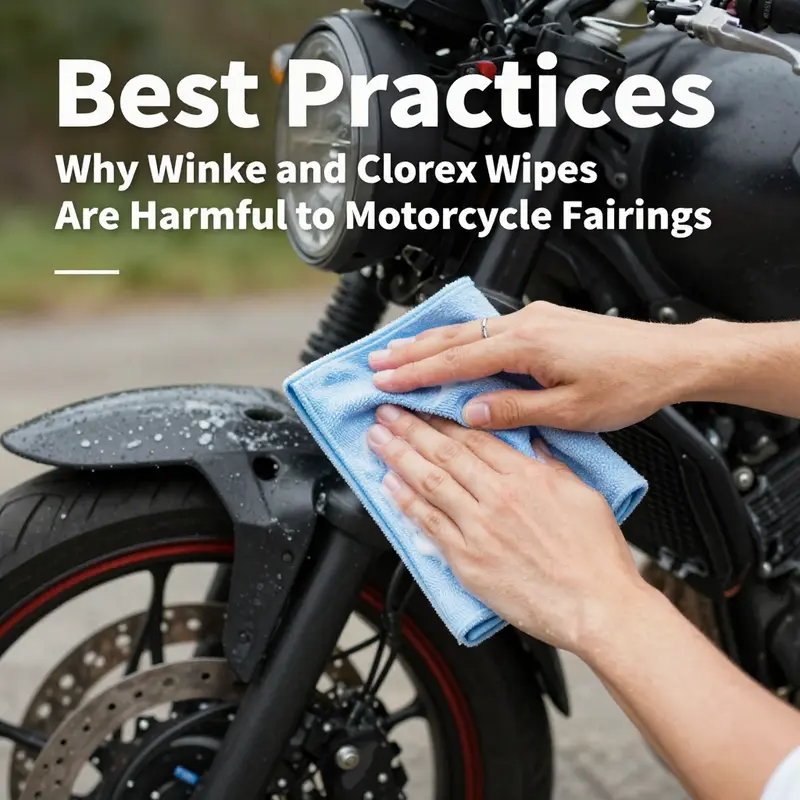
The fairing is more than a stylish shield for your bike; it is a critical part of the overall silhouette, aerodynamics, and weather resistance that defines how your machine feels on the road. Cleanliness matters not just for looks but for longevity. Too often, riders reach for familiar household cleaners or wipe products that seem convenient, only to discover later that the glossy surface has lost some of its luster, clarity, or even structural integrity. The underlying message from careful maintenance practice is simple: choose chemistry that respects the material reality of modern fairings, and balance that with technique that minimizes friction and impact. In this light, the conventional habit of reaching for ammonia-based glass cleaners or chlorine-containing wipes should be treated as a cautionary tale rather than a default. These products can threaten the bond between paint, clear coats, and the plastic and polycarbonate surfaces that form the fairing shells. Ammonia tends to be harsh on paints and clear coats, potentially dulling the finish or creating micro-metching that wicks in dirt and accelerates wear. Chlorine-containing wipes, on the other hand, can compromise plastics and protective coatings, leading to yellowing, brittleness, or accelerated aging when used repeatedly. The problem is not always immediate or dramatic; it often shows up as a gradual, perpetual fading of gloss, a clouded finish in creases, or subtle hazing that undermines the bike’s overall radiance. The result is not just cosmetic dissatisfaction but a creeping erosion of value that can be expensive to repair over time. It is worth noting that even if these products do not appear to damage a surface on first use, the cumulative effect is real and measurable. The fairing’s coatings are designed to resist the elements, but they are not designed to tolerate chemical aggression that is misapplied, diluted poorly, or allowed to linger. The goal is to clean effectively while preserving the integrity of paint, plastics, and protective layers. This calls for a disciplined approach that starts with the right products, proceeds with careful technique, and ends with protective measures that guard against sun, moisture, and physical hazards. In practice, that means embracing cleaners that are formulated for automotive or motorcycle use, those that strike a gentle balance between cleaning power and surface safety. A pH-balanced wash, formulated to be biodegradable and non-abrasive, is ideal. Such products are designed to lift dirt without stripping waxes, without attacking plastics, and without creating micro-scratches that later catch dust and grime. The first rule of engagement with the fairing is simple: never wash a hot surface. Thermal shock can warp plastics and soften paints, particularly around edges, seams, and mounting points. Let the bike cool to ambient temperature, ideally in a shaded area or a garage, before any water touches the surface. This small step sets the stage for everything else that follows. With the surface cool, you can proceed to rinse away loose dirt with a gentle stream of clean water. The goal is to remove large debris before any soap touches the surface; otherwise, you risk grinding grit into the clear coat in the next step. After the initial rinse, apply the cleaner using a soft microfiber cloth or a gentle brush, moving in a single direction. This approach helps prevent the circular swirl marks that often accompany careless scrubbing. When working around crevices, seams, and edges, take extra time to get into corners where road grime tends to accumulate. A soft brush can dislodge grime that a cloth alone might miss, but it should be used with minimal pressure to reduce the risk of micro-scratches. Rinse thoroughly again to remove any cleaner residue before you begin the drying phase. Drying is not optional; it is essential. A clean, soft microfiber towel is best for absorbing moisture and leaving a streak-free surface. Drying promptly reduces water spots and helps maintain an even, glassy finish that reflects light rather than leaving dull patches. The choice of tools matters as much as the chemistry. In addition to the right cleaner and the right cloth, ensure your towels are dedicated to vehicle use and laundered separately from household fabrics. This helps avoid cross-contamination with household detergents that might leave residues. Following cleaning, consider protective steps that extend the life of the finish. UV exposure is a relentless adversary of plastics and painted surfaces. The sun’s rays can cause fading, chalking, and micro-cracking over time, especially on plastics that have a subtle, transparent, or translucent appearance. Parking strategies can dramatically extend the life of the fairing: seek shade when possible, use a breathable cover, and invest in a high-quality motorcycle cover if you park outdoors for extended periods. A cover acts as a first line of defense against the sun, rain, and airborne contaminants, reducing the rate at which the fairing loses its sheen. Once the surface is clean and dry, the next step is to establish a protective layer. A high-quality, non-abrasive wax or sealant designed for motorcycles provides a barrier against environmental contaminants and minor abrasions. The wax or sealant helps to restore depth to the paint and enhances water beading, which in turn makes future cleaning easier by reducing adhesion of dirt and grime. The coating schedule varies with riding conditions and climate, but a typical cadence is to reapply every few months or as directed by the product’s instructions. Beyond cleaning and waxing, ongoing maintenance involves attentive inspection. Regularly examine fairings for visible scratches, cracks, or chips. Small chips and scratches, if left unattended, can become conduits for moisture and contaminants, accelerating wear and potential material deformation. For minor chips and micro-scratches, color-matched touch-up paint or specialized plastic repair kits can be employed. The objective is not to achieve a flawless museum finish but to prevent moisture intrusion and to preserve the integrity of the surface layer. For more serious damage, professional repair is advisable, as improper filling or buffing can worsen the surface texture and compromise clarity. The care routine should also address the physical environment where the bike resides. Urban riding, tight parking spaces, and frequent close-quarter maneuvering increase the risk of scuffs. Protective accessories, such as crash bars or reinforced side panels, can mitigate damage during low-speed contact with walls, curbs, or other vehicles. When you factor in these practical measures, maintenance becomes a continuous conversation with the bike’s appearance and its structural resilience rather than a one-off task. The narrative of responsible fairing care thus evolves into a practical rhythm: clean with the right product, dry with care, protect with a sealant, and guard against the elements with thoughtful storage. In daily practice, this rhythm translates into habits that keep the fairing looking sharp for years. A monthly wash that emphasizes dirt removal without aggressive scrubbing, followed by a wax or sealant application every few months, can yield visible benefits. If you ride in harsh weather or dusty environments, more frequent cleaning may be warranted. If you park outside, consider a more robust protective covering and a UV shield product to maintain color and clarity. The final element in this narrative is the choice to explore upgrading or supporting components with compatibility in mind. When you think about future modifications or improvements, you may look at replacement fairings that are designed to complement existing color schemes and finishes. For readers exploring such possibilities, a relevant entry point is the BMW fairings category, which showcases a range of compatible sets that can be paired with the bike’s overall aesthetic and performance goals. BMW fairings stands as a representative example of how aftermarket options can align with a maintenance-focused philosophy, offering surfaces that are prepared to respond well to the same care regimen discussed here. The practical takeaway remains consistent: preservation thrives when you respect the materials, apply the right products, and maintain a disciplined cleaning routine. The fairing’s appearance—whether it glows with a deep, reflective shine or reveals a modern, satin-like finish—depends on the care you commit to, not on shortcut methods or household conveniences that fail to honor the material realities. In the end, the goal is not to chase a flawless finish overnight but to cultivate a durable, resilient surface that ages gracefully alongside the machine. The quiet confidence that comes from knowing you are protecting paint, plastics, and protective coatings can transform maintenance from a chore into a personal standard. For readers seeking a concise reference that aligns with this approach, a detailed care guide is available through a reputable motorcycle care resource, which outlines practical steps, cautions about aggressive chemicals, and a tested sequence for washing, drying, and protecting fairings. External reference: https://www.revzilla.com/blog/motorcycle-fairing-care-guide
Beyond Glass Cleaners and Bleach: Safe Substitutes for Motorcycle Fairing Care

The glossy surface of a motorcycle fairing carries more than just a reflection of light. It carries the story of maintenance decisions, the pride of ownership, and the subtle science of materials that must endure sun, rain, and the occasional nervous wipe from a curious rider. When someone looks for a quick fix, a household glass cleaner or a bleach-based wipe might seem like a convenient shortcut. Yet the chapter of care that follows those impulses is frequently written in the language of material science rather than convenience. Ammonia-laden glass cleaners, and chlorine-heavy cleaners, can silently erode the very finish riders are trying to protect. They may seem harmless in the moment, but the chemistry of how these cleaners interact with clear coats, paints, plastics, and the polycarbonate elements of windshields can reveal itself over time as dulling, yellowing, micro-scratches, or even small fissures that compromise the surface integrity and resale value. The careful rider learns to translate the impulse for a fast clean into a routine that respects the material stack of the fairing. The goal is not merely to remove grime, but to preserve clarity, gloss, color fidelity, and the flexibility of plastic and resin components that flex with every turn of the handlebars and every breath of wind at highway speed. The right approach blends a few simple, chemistry-aware practices with tools that are gentle on surfaces yet effective at removing the stubborn film of road grime, insect residue, and the occasional splatter of fuel or lubricants that cling to the fairing’s curves and edges.
The first principle is to acknowledge what not to use. Household cleaners formulated for glass, even if they promise streak-free shine, often contain ammonia. This chemical is excellent at dissolving grime on glass but is not selective; on painted surfaces, plastics, and the polycarbonate that often forms windshields, ammonia can cause the clear coat to lose its luster, the paint to appear hazy, and plastics to become more brittle over time. In the same vein, bleach-centered products, while effective at disinfection, are aggressively caustic to many motorcycle materials. They can dull the finish, dry out rubber gaskets, and degrade protective coatings that keep UV rays at bay. The friction of a wipe may also contribute micro-scratches if the fabric carries abrasive particles. The simple act of wiping, if done with a rag that has seen rough use or a pad that has collected grit, can leave tiny marks that accumulate with miles of riding and repeated cleaning. The cumulative effect is not always immediately visible, which is why a forward-looking rider treats the issue as a long-term maintenance decision rather than a momentary convenience.
What replaces these shortcuts is a philosophy of care built on surface-appropriate products and procedures. The recommended path is to select cleaners that are designed for automotive or motorcycle finishes, with formulations that are ammonia-free and chlorine-free. These products are developed to be pH-balanced and gentle on paint, wax layers, and surfaces like ABS plastics used in fairings. They are also designed to work well with the microfiber cloths that most riders already appreciate for their softness and high absorbency. The practical effect is a cleaning routine that delivers effective dirt removal without introducing risks to the finish or to the underlying materials. The routine begins with the most forgiving approach: a mild, neutral pH wash solution. A small amount of soap designed for automotive or motorcycle washing, diluted in water, is enough to lift the majority of road grime from the fairing. The wash should be applied with a soft microfiber mitt or a comparable wash pad, allowing the water and soap to do the heavy lifting. The microfiber cloths and mitts are preferred because they minimize micro-scratching while picking up and holding onto dirt particles until they are rinsed away. Rinsing should be thorough but gentle; a light spray from a hose with a nozzle that creates a gentle spray pattern reduces the risk of forcing dirt into seams or under seals.
For the glass surfaces—windshields and mirrors—the alternative to ammonia-based cleaners is an ammonia-free glass cleaner or a simple water-and-microfiber approach. A dedicated ammonia-free cleaner formulated for automotive glass is preferable, but if one is not available, a practical, non-foaming option is to use clean water and a fresh microfiber cloth. The idea is to avoid cleaners that may leave a residue or haze that can reduce visibility, particularly on windshields where clarity matters as much as aesthetics. The microfiber cloth remains the unsung hero in this part of the process; its softness, low friction, and high absorbency enable a wipe that dries quickly with minimal streaking. In a pinch, a light wipe with slightly damp microfiber followed by a dry pass yields better results than a harsher scrub with a conventional towel. The goal is a clear, even surface under daylight or night-time illumination, with no ghosting or rainbow halos around edges—signs that a cleaner or cloth has left behind residue or micro-scratches.
The care philosophy extends beyond the fairing’s outer surface to the plastics and rubbers that frame the bodywork. Plastics used in fairings, especially polycarbonate and other transparent or translucent plastics, demand protection from UV rays, which can cause yellowing and loss of clarity over time. After cleaning, applying a protective treatment designed for plastics can restore some of the original luster and, more importantly, create a barrier that helps resist future grime adhesion and UV damage. A protective plastic conditioner or UV shield designed for automotive plastics can be integrated into the routine, ensuring the film of protection remains non-greasy and non-slippery. It’s a small but meaningful step toward preserving the fairing’s color integrity and tactile feel, especially where a rider’s hands frequently contact the surface.
One of the key benefits of this approach is its compatibility with the broader ecosystem of motorcycle maintenance. The fairing does not exist in isolation; its care interacts with the chain of maintenance tasks that keep the bike reliable and ride-ready. Cleaning the fairing with gentle, surface-friendly products reduces the risk of residue in nooks and crannies around mounting hardware, lights, and screws. It also minimizes the chance that aggressive cleaners will dissolve protective coatings, wax layers, or sealants that may already be in place from a prior maintenance cycle. When wax or a paint sealant is maintained, the shine on the fairing is not only cosmetic but a sign that the protective layer is working as intended. The regular practice of careful washing and light reapplication of protective products helps maintain gloss depth and color saturation, which in turn preserves the visual appeal and resale value of the motorcycle.
Incorporating these safer substitutes also invites a more mindful approach to how cleaning tools are chosen and stored. Microfiber cloths, for instance, should be kept clean and dry, separated from towels or pads that have been used with harsher cleaners. A small set of color-coded cloths for different areas of the bike can help prevent cross-contamination between wash water, glass surfaces, and plastic components. Committing to a consistent sequence—dusting, washing, rinsing, drying, then protecting—helps riders build a rhythm that minimizes the chance of rubbing dirt into the finish or leaving water spots that can dull the surface. The ritual of care becomes less about the perceived power of a consumer shortcut and more about the disciplined, repeatable process that keeps the bike looking its best over years of riding.
Within this framework, riders may discover a deeper appreciation for the materials that form their fairings. The paint with its clear coat, the underlying substrate, the plastics that give form and aerodynamics, and the rubber seals that keep moisture out—all respond differently to cleaning agents. Understanding these responses helps riders tailor their routines to the specifics of their bike. It also informs decisions about when a more thorough, professional detailing might be warranted. There is a time and place for a deeper-cleaning approach that involves controlled solvent use and specialized tools, but that is a distinct, less frequent maintenance activity. For daily or weekly cleaning, the emphasis remains on pH-balanced, ammonia-free, chlorine-free solutions, gentle microfiber tools, and a follow-up of protective treatments that respect the surface chemistry of modern fairings.
For readers who want a hands-on reference to compatible fairing care strategies for specific bike families, a practical step is to explore model-specific care resources. A rider who owns a popular sport-touring model, for instance, may find model-specific fairing categories that address not only fitment and appearance but also maintenance considerations. A simple, targeted search for the relevant category can yield care recommendations tailored to the plastics used in those designs, helping to align cleaning practices with the material choices of the factory. If you’re considering a model from a family with many aftermarket fairing options, you’ll benefit from cross-referencing both the structural material and the finish type, ensuring that the chosen cleaners and protectants will be compatible with the aftermarket parts you may have installed. Internal resources focused on specific fairing variants can provide guidance that does not generalize beyond the materials involved, thus preventing incompatible combinations of cleaners and surfaces.
The journey toward better fairing care is ultimately about balance. It is a balance between removing dirt and preserving material integrity, between speed and thoroughness, and between the immediate gratification of a spotless surface and the longer-term payoff of a finish that remains vibrant and resilient. The steps described here are intentionally simple, enabling riders to implement them in a busy schedule without sacrificing the outcome. The materials involved are chosen because they are broadly compatible with common fairing materials and with the kind of finishes applied by manufacturers across many models. By embracing these safer substitutes and routines, riders can protect the investment that their fairings represent, maintain the visual appeal that drew them to the bike in the first place, and extend the life of the protective layers that keep their ride looking fresh on every street and highway.
For those who want to see a model-aligned approach and to connect with categories that reflect care considerations for various fairing families, consider exploring a dedicated fairings category that targets specific models. This approach helps ensure that the maintenance advice you follow aligns with both the fit and the finish of your particular bike. As you build your routine, remember that the most effective care hinges on selecting products that respect the material spectrum of the fairing—from paint and clear coat to plastics and UV-protected surfaces—and on applying them with soft tools that minimize friction and micro-scratching. The result is a fairing that not only looks striking today but remains resilient as miles accumulate and the bike ages gracefully in the sun and weather.
Internal link reference for model-specific care resources: Honda fairings.
External resource for extended guidance on safe motorcycle cleaning practices: https://www.motorex.com
Final thoughts
In conclusion, while Windex and Clorox wipes may seem convenient for cleaning motorcycle fairings, they pose serious risks that can lead to irreversible damage. Business owners must prioritize suitable cleaning methods that protect the integrity of their motorcycles. Embracing best practices in motorcycle care by utilizing specialized cleaning products, along with a gentle approach, not only maintains aesthetics but also extends the life of the vehicle. Ultimately, safe cleaning alternatives ensure that motorcycles remain in excellent condition, preserving their value and beauty for years to come.