

Understanding the suppliers of motorcycle fairings is crucial for business owners looking to enhance their production and competitiveness. As the demand for motorcycles continues to rise globally, especially in emerging markets, the need for quality parts and effective supply chains is paramount. This article explores the core manufacturing clusters of motorcycle fairings in China, particularly focusing on Guangdong and Zhejiang, while providing insights into how to match procurement with specific motorcycle models. Additionally, we will outline efficient procurement strategies and evaluation points that can be critical in the supplier selection process. Together, these chapters will empower business owners to strategically navigate the ever-evolving landscape of motorcycle fairing suppliers.
How Guangdong and Zhejiang Power the Global Fairing Supply Chain
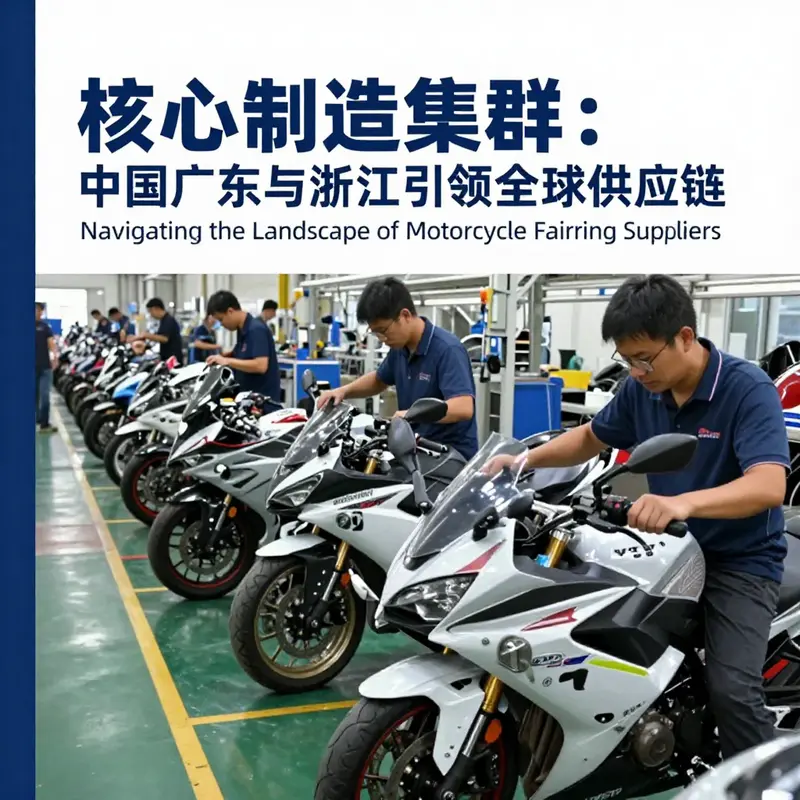
Guangdong and Zhejiang together shape the global supply of motorcycle fairings. Their clusters provide scale, specialization, and speed. For buyers and sourcing teams, understanding how each province operates clarifies where to look for advanced composite fairings, precision injection-molded parts, and rapid aftermarket runs. This chapter explains how the two provinces differ and how those differences affect procurement, quality, lead time, and innovation for fairing suppliers.
Guangdong has become synonymous with large-scale, tech-driven manufacturing. In many industrial corridors there is a concentration of capital, automation, and advanced materials know-how. The region’s ecosystem supports high-volume panel production and sophisticated surface finishing. For fairing suppliers this means access to mature tooling houses, automated injection molding lines, and integrated coating and paint shops that can deliver consistent finishes at scale. When a buyer needs a multi-thousand-piece production run with tight cosmetic tolerances, Guangdong’s cluster model often offers the most predictable path.
The advantages in Guangdong begin with the supply base. Toolmakers, mold steel suppliers, and CNC prototyping centers operate near one another. This proximity reduces iteration time for mold corrections and shortens the feedback loop between prototype and production. Composite layup shops focusing on fiberglass and carbon-reinforced polymers sit alongside polymer compounders capable of fine-tuning resin recipes. Quality inspection labs and accredited testing houses serve multiple customers, enabling standardized validation for impact resistance, UV stability, and finish adhesion.
Beyond factories, Guangdong’s cluster extends into logistics and export services. Major ports and efficient freight forwarders lower ocean freight variability. Buyers benefit from mature customs brokerage capabilities and bonded warehousing options. When international buyers require consolidated shipments across multiple suppliers, Guangdong hubs can coordinate such activities with fewer intermediaries. This lowers risk for complex logistics and often reduces total landed cost for fairing assemblies.
On the technology front, Guangdong firms increasingly embed digital controls and automated lines. Computer-aided process control cuts production variability. Inline vision systems and automated measurement reduce human error during final inspection. For buyers focused on consistent fit-and-finish across multiple batches, these capabilities matter. They translate to fewer rejections on arrival and lower costs associated with warranty handling.
Zhejiang offers a contrasting, but complementary, value proposition. The province excels at specialization through a dense network of small and medium enterprises. These firms are highly focused, nimble, and organized around specific processes. A single town may house dozens of shops dedicated to trimming, bracket fabrication, small-batch molding, or precision painting. For aftermarket brands or low-volume custom runs, Zhejiang’s ecosystem provides unmatched agility.
The so-called “ant army” model in Zhejiang means suppliers are often deeply expert in narrow segments. This fosters rapid problem-solving and iterative co-development. When a buyer needs a modified mounting bracket, a bespoke venting solution, or a specialty paint pattern, Zhejiang shops can prototype and deliver fast. Their specialization also supports competitive pricing on niche assemblies because each firm optimizes a tight scope of work.
Zhejiang’s strengths also include digital integration at the shop-floor level. Many firms use lightweight digital tools for order management, production scheduling, and supplier coordination. These systems accelerate response times and allow a buyer to manage a chain of specialized suppliers with lower overhead. The result is a flexible model, where custom projects scale horizontally across multiple nimble players rather than vertically inside a single conglomerate.
For motorcycle fairing sourcing, the combination of these two models creates practical options. Large OEM contracts and high-volume aftermarket lines are often best sourced from Guangdong. Complex, high-tolerance composite fairings that require integrated processes from mold to painted finish benefit from Guangdong’s vertical integration. Conversely, unique styling runs, rapid product cycles, and frequent design changes fit Zhejiang’s factory network.
Material supply patterns differ as well. Guangdong suppliers are more likely to work with advanced polymer blends and high-performance coatings. They have quicker access to specialty resins, masterbatches, and surface treatment chemistries. This access supports the production of fairings that meet stricter regulatory or performance demands. Zhejiang suppliers, while also capable on materials, excel at optimizing standard materials through process know-how. They match material availability to cost-sensitive design choices, and they manage supply substitutions with speed.
Quality control practices reflect the cluster distinctions. Guangdong factories often centralize testing and maintain in-house laboratories. They run standardized qualification protocols and can meet multiple international certification requirements in a single location. Zhejiang firms typically rely on specialized local test houses or partner labs. Their testing path can be faster for limited-scope validations, but larger multistandard certification often requires coordination between several firms.
The tooling lifecycle is another important consideration. Guangdong’s mold shops invest in heavy tooling equipment and larger toolrooms. They can produce long-life steel molds suitable for millions of cycles. For buyers planning long production runs, this upfront mold investment yields lower per-piece cost. Zhejiang mold shops favor quicker turnaround and lower-cost tooling options. They often use aluminum or modified steel molds optimal for frequent design changes and short production lifecycles.
Buyers should match tooling strategy to product lifecycle. If a fairing design will remain stable for years, an investment in Guangdong-level tooling makes sense. If designs iterate rapidly, Zhejiang’s quick, lower-cost tooling supports agile development without locking buyers into expensive long-term molds.
Supplier selection must factor in lead time expectations. Guangdong’s scale drives predictable, albeit sometimes longer, lead times for first-article approvals due to complex scheduling. However, when production is ongoing, batch replenishments are steady. Zhejiang’s dispersed supply base can often turn samples faster. But buyers must manage coordination across multiple vendors to synchronize final assembly.
From a cost perspective, neither province is categorically cheaper. Guangdong’s efficiencies lower unit cost at volume. Zhejiang’s specialization lowers overhead for small runs. Buyers should compare total landed cost, not just unit price. Consider tooling amortization, inspection fees, packaging, and freight. Also include the cost of potential rework or warranty claims driven by inconsistent finish or fit.
Intellectual property (IP) protection and confidentiality practices vary. Guangdong hosts many large, formalized manufacturers with established compliance and contract management procedures. Buyers can often negotiate stronger IP protection and long-term confidentiality agreements. Zhejiang’s smaller firms may lack the same legal frameworks, but they often rely on reputations and local networks to maintain customer trust. When confidentiality is critical, buyers should implement clear contractual safeguards and consider working with an intermediary or a local quality agent.
Sustainability and compliance are rising priorities. Guangdong clusters, due to their larger scale, are investing in cleaner processes, waste management, and energy efficiency. Environmental compliance is easier to verify in larger facilities with formal reporting. Zhejiang firms are catching up, but sustainability audits can vary widely. Buyers with strict environmental standards should request evidence and plan audits accordingly.
Collaboration models also differ. Guangdong suppliers often support end-to-end projects, including co-engineering, design for manufacturability, and long-term logistics. Zhejiang partners excel in short-cycle collaborative projects where rapid prototyping and iterative feedback are essential. For fairing designers, this means choosing partners based on the stage of product development. Early-stage concept work benefits from Zhejiang’s responsiveness. Final product validation and mass production are better aligned with Guangdong’s integrated facilities.
Risk management must align with supplier capability. For critical exterior components, dual-sourcing across both provinces is a practical approach. Using Guangdong for primary volume and Zhejiang as a flexible backup diversifies risk. Dual-sourcing reduces the impact of localized disruptions and keeps development pace steady during tooling transitions.
Communication and cultural dynamics matter. Guangdong buyers often encounter formal procurement teams with standardized RFQ formats. Zhejiang interactions often feel more direct and transactional. Both styles have benefits. Clear specifications, drawings, and acceptance criteria reduce ambiguity regardless of region. Buyers should set expectations for sample iterations, finishing standards, and packaging to avoid misalignment.
Digital sourcing tools and local representation can simplify engagement. Using digital platforms for drawing exchange, sample approvals, and milestone tracking helps reduce friction. A local procurement agent can coordinate multi-supplier assemblies across Zhejiang towns or manage complex vendor networks in Guangdong industrial parks. This role becomes essential when buyers require synchronized deliveries from different suppliers.
Finally, innovation trends within the clusters influence fairing technology. Guangdong’s investment in automation, digital inspection, and material science accelerates the adoption of new composite blends and higher-precision molding. Zhejiang’s dense network fuels design experimentation and rapid aftermarket trends. Buyers who monitor both provinces gain early access to incremental innovations and boutique techniques.
For practical sourcing, consider these steps: align supplier choice to volume needs; verify tooling strategy against expected lifecycle; request detailed material and process specifications; confirm testing and certification pathways; evaluate logistics and local export capabilities; and consider a staged partnership approach that begins with Zhejiang rapid prototyping, then scales tooling and production in Guangdong.
A single internal resource can illustrate the aftermarket landscape for reference products and fitment options. For a snapshot of current aftermarket collections and typical fitment categories, see the 2023 new fairings catalog. It provides an example of how product families are organized and how suppliers present fitment data.
The two provinces form complementary poles within the broader national ecosystem. Guangdong supplies scale, technology, and integrated logistics. Zhejiang supplies agility, specialization, and cost-effective iterations. Together, they create a resilient supply architecture for motorcycle fairings and related exterior components. Savvy buyers use both clusters to optimize cost, lead time, and product quality. They match the choice of partner to the product’s maturity and the volume profile.
For a deeper look at how these provinces anchor global supply chains, consult recent industry analysis on the broader manufacturing leadership of these regions: https://thediplomat.com/2026/02/chinas-manufacturing-powerhouse-guangdong-and-zhejiang-lead-global-supply-chains/
车型对齐的采购艺术:摩托车整流罩供应链的精准匹配之路

在当今高度细分的摩托车市场中,整流罩(Fairing)的设计、制造与采购正走向前所未有的精细化阶段。各品牌、各车型对外观、气动性能、安装点、材料耐久性等需求差异极大,单一、统一的采购模式已经难以满足“质量、成本、时间”三位一体的竞争要求。因此,围绕“按车型精准匹配”的采购理念,成为提升效率、降低总成本、确保适配性的核心方法。这一思路不仅在传统汽配供应链中被广泛实践,也逐步扩展到新能源车型、乃至其他出行工具的跨行业应用。对于专注摩托车整流罩的供应商而言,精准匹配的核心在于以车型为单位构建从设计到交付的全链路管理,将“一个车型一个SKU”的局面尽可能地缩减到“一个车型一组高匹配度的组件组合”。在全球化采购与中国制造集群的背景下,车型驱动的采购策略不仅可显著降低库存压力,还能提高供应商的响应速度、缩短新品上线周期,最终实现“买得到且买得准”的效果。其背后,是对市场需求的深度洞察、对制造能力的精准评估,以及对数据驱动工具的高效应用。把握这一点,需要在三个维度上同步推进:一是源头的技術与适配能力,二是流通环节的可控性与透明度,三是信息系统对车型特征的深度理解与智能匹配能力。以下便是将这一理念落地的连续性思考与实践要点,帮助企业在摩托车整流罩供应链中实现真正的按车型精准匹配。
Strategic Sourcing for Motorcycle Fairing Suppliers: Aligning Cost, Quality, and Agility Across Global Clusters
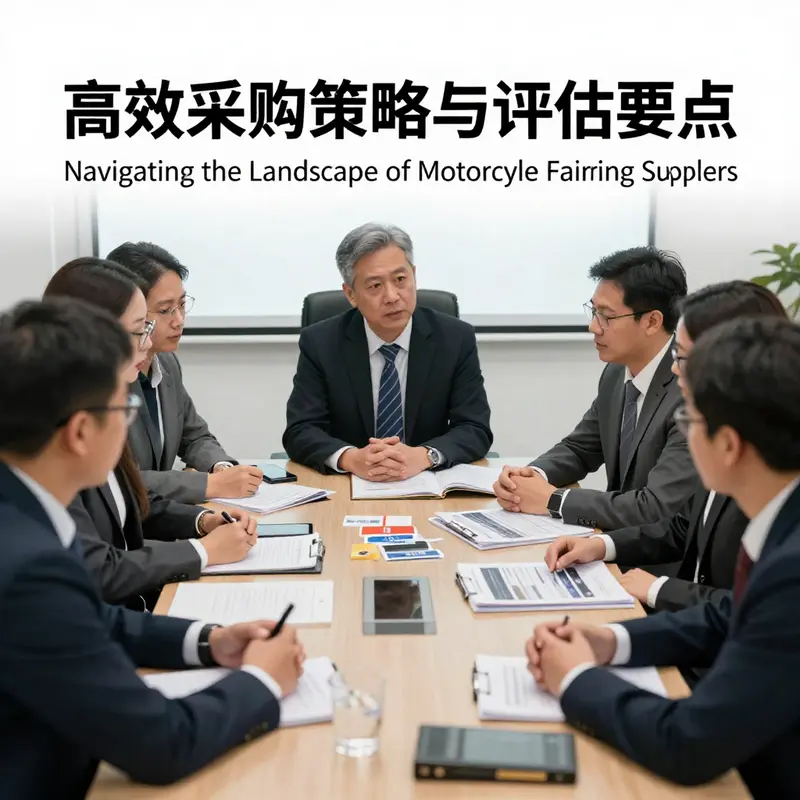
When a company looks at motorcycle fairing suppliers, the goal extends beyond securing a low price. It is about building a sourcing system that aligns cost, performance, and the pace of change with the broader business strategy. Fairings are a high-stakes component. They influence aerodynamics, rider protection, and the perceived value of a motorcycle. They also embody a complex mix of materials, precision manufacturing, and surface treatments that require tight specification control. In today’s market, where manufacturing clusters in China and other competitive regions continuously mature, procurement for fairings has to be a structured, long-horizon capability. It must be more than a buying function. It must operate as a central pillar of product development, supply resilience, and sustainable value creation. The path to this form of procurement begins with clear objectives and a disciplined set of practices that knit together engineers, finance leaders, and supply partners in a seamless, data-driven workflow.
Effective sourcing for fairings starts with a clear, objective-driven strategy. Procurement cannot live in a silo of cost alone. Instead, it must translate corporate goals into measurable procurement outcomes. This means describing, in financial language, the impact of sourcing decisions on total cost of ownership and on capital efficiency. It requires framing trade-offs—such as faster cycle times versus higher quality controls, or local responsiveness versus global scale—in terms that executives understand. When procurement speaks the language of investment, the function earns the trust and support needed to drive cross-functional initiatives. It also creates a framework for prioritizing supplier development work, which is essential in a field where design intent and manufacturing feasibility often interact in subtle ways during early product stages.
A holistic view of cost is the second cornerstone. The sensible path forward rejects the fallacy of “the lowest price.” Instead, teams adopt total cost of ownership (TCO) thinking. Direct costs include the unit price, packaging, and freight. Indirect costs cover supplier management efforts, inventory carrying costs, quality assurance activities, and the potential losses from defects or recalls. In practice, this means evaluating options with tools such as make-versus-buy analyses, insourcing versus outsourcing considerations, and short-term versus long-term leasing models for specialized tooling. The aim is to identify the most economical path across the full lifecycle of the fairings—from design freeze to field maintenance. Importantly, TCO analysis should not be a one-off exercise. It must be revisited as product specifications shift, as material prices drift, and as reliability data trickles in from production lines and service markets.
The third pillar concerns the management of suppliers as strategic partners. In mature sourcing models for complex components, suppliers are not merely vendors; they are capable collaborators who contribute to engineering choices, process improvements, and sustainability outcomes. A robust supplier governance framework evaluates multiple dimensions: manufacturing capacity and capability, technology maturity, financial stability, delivery reliability, and compliance with environmental and safety standards. For high-value, high-risk items—where small variances in process can translate into significant performance or quality gaps—a more deeply embedded relationship is warranted. This might take the form of long-term collaboration, joint development projects, or advanced procurement arrangements that lock in capacity and ensure co-investment in improvements. For lower-value, commodity-like fairing parts, a different approach applies—centered on leverage through centralized purchasing and clear framework agreements that simplify administration while preserving supply resilience.
Digital enablement and process optimization are not optional add-ons; they are essential to achieving procurement excellence. An end-to-end digital platform can automate routine tasks, standardize data across the supply base, and provide real-time visibility into supplier performance. In the most effective organizations, procurement activities from demand analysis to contract fulfillment are executed through an integrated system that drives efficiency and reduces cycle times. The business case for such digitalization is compelling: cycles can be shortened by significant margins, and waste in both material and time is reduced. In some documented implementations, the procurement cycle shrinks by roughly a third, while the rate of resource waste declines by a fifth. The lessons extend beyond mere automation. Digital platforms enable better collaboration with design teams, encourage standardized specification management, and support pre-qualification screening for suppliers to reduce the risk of nonconforming parts making their way into production.
Flexibility in the face of market volatility is the fourth element. Raw material prices, especially those underlying composite resins, metals, and coating materials, can swing with currency movements, supply disruptions, or regulatory shifts. Effective procurement plans incorporate flexibility through multiple sourcing, smart inventory policies, and scenario planning. This may include early or staggered procurement to hedge price risks, as well as decoupled supply arrangements that protect production lines from upstream shocks. Flexibility is not simply about having a backup supplier; it is about designing a sourcing architecture that can absorb volatility without compromising quality or delivery.
The practical interpretation of these strategies shows up in the lifecycle of a typical fairing program. It begins with demand shaping—accurate projections of model variants, trim levels, and seasonal demand—as a shared responsibility among design, manufacturing, and procurement. Next comes specification management. Engineers define the materials, tolerances, coatings, and surface finishes. Procurement translates these into supplier qualifications, bill of materials, and RFx criteria. The sourcing team then develops a supplier mix that balances critical capabilities with capacity certainty. For high-value items, a small, tightly managed supplier base becomes the backbone of product integrity. For mass-produced subassemblies or exterior panels, a broader, more scalable supplier pool accelerates throughput and mitigates risk. The final steps cover contract negotiation, performance monitoring, and continuous improvement engagements that keep the supply chain aligned with evolving product requirements and cost targets.
The importance of a structured approach becomes even clearer when considering cross-functional alignment. Stakeholders in design, production, and finance must participate in the procurement strategy from the outset. Early cost and feasibility input from procurement helps prevent late-stage design changes that escalate costs or delay launches. Conversely, procurement benefits from early exposure to design intent, enabling smarter supplier qualification and more accurate cost forecasting. Strategic alignment also extends to sustainability and compliance. Modern procurement requires suppliers who can demonstrate responsible sourcing, environmental stewardship, and transparent governance. In a market where regulators and customers increasingly demand accountability, integrating sustainability into supplier evaluation is not a luxury but a competitive necessity. The governance structure should include clear escalation paths for supplier risk, defined metrics for environmental performance, and ongoing assurance that traceability and record-keeping meet audit requirements.
The evidence supporting these practices is not purely theoretical. Across many mature supply networks, organizations report tangible gains when they treat procurement as a strategic function. Cost reduction is realized not only through price concessions but also through smarter planning, better supplier collaboration, and more precise specification management. Quality improvements follow from more rigorous supplier qualification and from deeper partnerships that drive process stabilization. Delivery reliability improves as the supplier network is engineered for redundancy and trigger-based risk management. The combined effect is a more predictable, resilient supply chain that can weather shifts in demand or disruptions in raw materials without derailing product launches. These outcomes are especially meaningful in the fairing domain, where late-stage design changes, supplier quality issues, or misaligned material specifications can quickly translate into costly rework and schedule slip.
An important nuance in this framework is the way it treats suppliers themselves. A mature procurement system differentiates between strategic partners and transactional suppliers. For the most critical fairing components, the relationship often evolves into a long-term alliance. This arrangement includes shared development goals, access to advanced manufacturing capabilities, and joint improvement initiatives. The objective is not to lock in suppliers indefinitely but to secure dependable capability while preserving room to re-balance the portfolio as product needs evolve. For more commoditized elements, the approach centers on efficiency, consistency, and cost discipline achieved through volume leverage, standardized specifications, and robust frame agreements. In both cases, the emphasis remains on collaboration, not coercion; on performance, not promises.
A practical way to illustrate the integration of these principles is to imagine a cross-functional team tasked with a new fairing program. The team would start with a demand plan anchored in market forecasts and product timing. They would then map out the entire lifecycle of the fairing components, from raw material sourcing through machining, molding, painting, and assembly. Each stage would have defined controls, including inspection criteria, cure checks, surface finish tolerances, and fitment tests. Procurement would translate these controls into rigorous supplier qualification standards, with clear criteria for on-time delivery, defect rates, and post-delivery support. The team would identify a preferred supplier ecosystem that balances risk and reward: a core set of partners for high-value subassemblies, complemented by a flexible tier for standardized panels. They would implement a digital workflow to track orders, manage change notices, and surface performance dashboards. They would embed risk management practices, including abnormal price review mechanisms and supplier contingency plans. And they would embed sustainability filters into supplier selection, ensuring that environmental impact, social responsibility, and ethical governance are part of the conversation from the earliest purchase order onwards.
In practice, a well-structured procurement approach often involves carefully designed tools and metrics. A make-versus-buy framework helps determine the optimal mix of internal capabilities and external supply. A lifecycle cost model, which includes maintenance and replacement costs over the product’s life, guides decision-making for coatings, protective films, and surface treatments. A supplier evaluation framework, applied periodically, quantifies reliability, quality, capacity, and sustainability performance. A digital procurement platform, integrated with product design systems, ensures specification consistency, easy change control, and traceability of every decision from initial quote to final delivery. These tools, used in concert, create a virtuous cycle: better data leads to better decisions, which in turn produces safer, more efficient procurement and more robust production performance.
From a geographic and clustering perspective, the procurement strategy for fairings benefits from recognizing the realities of global manufacturing. China’s major manufacturing clusters, along with others in Asia, Europe, and the Americas, offer a spectrum of capabilities. The strategy should map supplier locations to production requirements, lead times, and risk exposure. It should exploit regional hubs for rapid prototyping and iterative testing while leveraging global networks for scale and supplier diversity. The goal is not to retreat into narrow sourcing but to craft a deliberately varied supplier base that preserves option value while maintaining tight discipline on quality and cost. In this context, collaboration models matter as much as price. Cooperative development programs, joint process improvements, and mutual investments in automation can transform suppliers into extensions of the company’s own manufacturing capability.
To bind these ideas into action, consider a minimal yet effective blueprint for implementation. Begin with a demand and specification alignment session that includes design, manufacturing, and procurement. Move quickly to establish a supplier profiling framework that differentiates core partners from near-sourcing options. Initiate a pilot with a digital procurement platform to standardize data capture, automate routine tasks, and deliver early wins in cycle time. Parallel the pilot with a disciplined cost-down program that emphasizes TCO rather than price alone. Build in a risk dashboard that flags supplier capacity constraints, material price shifts, and geopolitical or regulatory changes that could affect supply. Finally, implement a sustainability scorecard that weights environmental and social criteria alongside quality and delivery metrics. By following this sequence, a company can create a procurement engine that not only buys parts but also informs design decisions, stabilizes production, and reinforces corporate values across the supplier network.
The practical consequences for a motorcycle fairing supplier ecosystem are meaningful. When procurement is structured as a strategic partner, the result is a supply chain that better resists volatility. It yields a more predictable lead-time profile, with fewer unexpected changes to component specifications that could derail assembly lines. It also reinforces a culture of continuous improvement, in which suppliers are incentivized to invest in process capability, quality systems, and sustainable practices. The aggregate effect is a chain of relationships and processes that adds resilience to the entire product lifecycle, from initial concept to end-of-life service, while keeping cost, quality, and speed in a balanced equation.
As industry players reflect on these ideas, it is worth noting that the specifics of implementation will vary by business model, product scope, and market segment. A premium-brand program may justify deeper supplier commitments, more extensive joint development, and greater integration between design and procurement. A high-volume, mass-market platform might prioritize digital standardization, wide supplier networks, and robust risk diversification. Regardless of scale, the guiding principle remains constant: procurement should be a proactive, value-creating function that continually translates strategic intent into tangible results. This is how a fairing supplier ecosystem evolves from a collection of transactional suppliers into a dynamic network that accelerates innovation, improves quality, reduces total cost, and increases resilience against a shifting global landscape.
For readers seeking a practical reference point in the broader ecosystem, consider exploring a catalog that aggregates fairing varieties and configurations in a centralized, up-to-date format. This reference supports early costing and design alignment, helping teams anticipate how evolving models influence material choices, finishes, and assembly processes. When integrated with the strategic framework outlined above, such a catalog becomes a powerful tool for cross-functional teams aiming to optimize procurement decisions across the lifecycle of a motorcycle’s exterior. The link provides a concrete, though generic, source for scouting options while maintaining a critical focus on how those options map to cost, lead times, and quality expectations.
In summary, a high-performing procurement approach for motorcycle fairing suppliers transcends price negotiation. It is a disciplined, data-driven system that aligns with corporate strategy, embraces total cost of ownership, treats suppliers as strategic partners, leverages digital platforms, stays flexible in the face of market changes, and embeds sustainability into every supplier decision. The result is a supply chain that not only delivers the shapes, finishes, and tolerances required by today’s fairing designs but also supports faster product introductions, more consistent quality, and a clearer path to long-term competitive advantage. The journey is iterative, collaborative, and ongoing, but the payoff is a leaner, more responsive, and more responsible sourcing engine that mirrors the discipline and pace of modern motorcycle design and production.
Final thoughts
In conclusion, navigating the landscape of motorcycle fairing suppliers requires a strategic approach that encompasses understanding manufacturing clusters, precise model matching for procurement, and effective evaluation of suppliers. By leveraging the insights from Guangdong and Zhejiang, business owners can enhance their sourcing strategies and align them with industry demands. This comprehensive understanding not only fosters competitive advantage but also paves the way for sustained growth in the motorcycle market. Constantly refining procurement practices ensures businesses remain agile and responsive to evolving market conditions.