
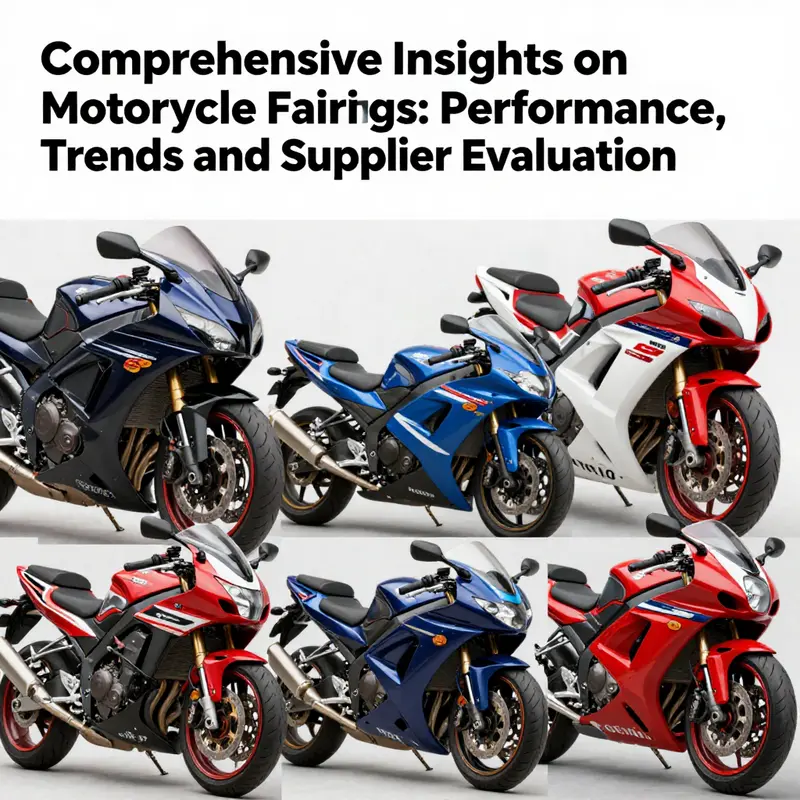
Motorcycle fairings have become an essential element for performance and aesthetics in modern biking. With the growing popularity of models like the 2003 GSXR 1000, understanding their construction, market trends, and supplier reliability is critical for business owners in the motorcycle industry. This article delves into the review of motorcycle fairings, focusing on material quality, user experiences, diverse applications, market dynamics, and a guide to choosing high-performance variants. As we navigate through each chapter, industry stakeholders will gain insights into optimizing product offerings and enhancing customer satisfaction.
回顾性评估:2003年款极致空气动力学整流罩的性能、用户反馈与对现代改装的启示
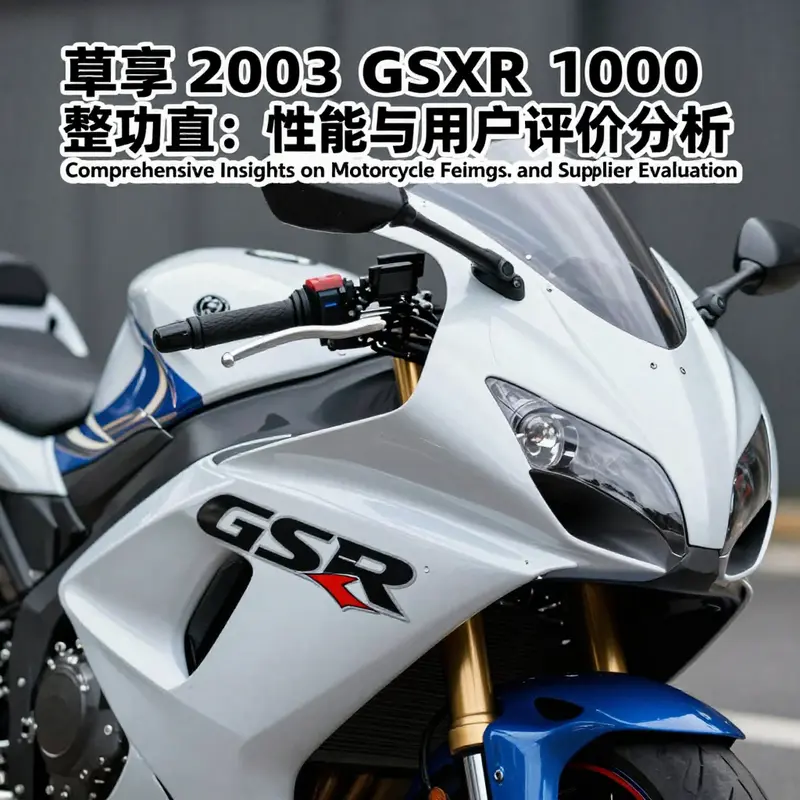
在 motorcycle fairing reviews 的研究语境中,2003年款的极致空气动力学整流罩往往被视作一个转折点。它不仅以流线型轮廓和轻量化结构提升了车身的整体气动性能,更成为车迷与改装爱好者追求个性化与性能提升的共同起点。这一代整流罩的设计理念以尽可能削减风阻、提升高速稳定性为核心,强调在高转速下的风压管理与骑手舒适性之间取得平衡。对于那一代车型而言,整流罩的作用远不止美观的外衣,它是整车空气动力学系统中的一个关键节点,直接影响巡航速度下的油耗走向、发动机热管理的边际收益,以及前轮及方向盘在高速中的响应性。\n\n从材料工艺看,这一时期的整流罩常见为 ABS 塑料或玻璃纤维增强塑料(FRP)等复合材料,强调重量控制、抗冲击性与成本效益的平衡。ABS 版本以其耐用性和易于喷涂的特性成为普及度最高的选择,而碳纤维复合材料则在高端改装市场扮演着“重量减负、极速稳定性提升”的象征角色,尽管价格高企,但在极致风洞追求者中仍有稳定的需求。这样的材料组合意味着普通日常骑手在性价比与耐用性之间往往会选择中等强度的 ABS 整流罩;而追逐极致性能的骑手会权衡碳纤维方案带来的重量减轻与维护成本。总体而言,这些材料选择共同塑造了改装市场的价格梯度与使用场景:从耐用、可维护的日常化改装,到追求极致轻量化的高端定制方案。\n\n关于安装与匹配,2003年款整流罩的原厂件往往以出厂时就已对接的紧固点与轮廓尺寸著称,安装过程中的接缝均匀、喷涂层的喷涂工艺细腻,这些因素在二手市场和改装圈中被反复提及。第三方改装件在早期常因工艺差异带来接缝不齐、颜色不一致或尺寸偏差的问题,甚至在某些车型年款的细微差异下出现安装困难。这也是为什么直到今天,诞生于同一代车型的改装件往往会被组合在“原味保留与外观升级并重”的两端之间,形成一个看似简单却牵涉到精度和美感的平衡悖论。值得注意的是,在这个阶段,表面处理和颜色一致性成为决定用户再次购买与否的关键因素之一。一个表面光滑、喷涂均匀且色彩深度与原车相近的整流罩,往往被视为“接近 OEM 水准”的改装选择,因此,购买时的检测重点也围绕这三维维度展开:材料标注、表面缺陷与配色的一致性。\n\n在用户反馈层面,2003年款的整流罩获得了较高的认可度。许多骑手表示,在高速巡航时,新的外壳能明显降低风噪与风压的直接冲击,使头颈部与肩部的疲劳感下降,同时对前方气流的稳定性带来积极影响。这种体验不仅提升了长途骑行的舒适性,也强化了该车型在赛车风格社区中的地位。标榜经典造型的外观也成为不少车迷的心理认同点,改装后的轮廓仍然具备强烈的运动气息,视觉冲击力足以让人一眼认出这类车型的特征。然而,市场的现实也揭示了兼容性方面的挑战。尽管有相当数量的第三方套件试图在保持原车美学的同时强化空气动力学效率,部分方案在不同年份、不同版本的座舱与整流罩之间仍存在微小的几何差异。这些差异可能影响到安装的顺畅与整车的气流分布,因此购买前对比尺寸、扣件位置和相容性仍然是必要的步骤。\n\n展望现代改装市场,这一代整流罩的设计逻辑对今天的选择仍有显著的借鉴意义。它提醒我们,材料的选择不只是成本问题,而是与整车风洞表现、长期耐用性以及维护便利性共同作用的综合决策。 ABS 版本凭借其更高的耐用性、加工易性和较低的维护成本,往往成为日常使用者的首选;而碳纤维方案则在追求极致轻量化和高速稳定性方面提供了可行的高端路径。对比当下市场,制造业在全球范围内获得了更为成熟的产线与工艺支持,南方地区的制造集群在注塑模具、表面处理和涂装工艺方面具备较强的供应能力。这些能力共同促成了更高的安装精度和表面质量,从而提升了用户对整流罩改装的整体信心与满意度。\n\n对于那些想要更细致地理解同代车型整流罩如何影响整车表现的读者,拓展的研究点包括风洞数据、路试感受以及不同材料的长期疲劳表现。如今的修复与改装市场仍然强调合身性与美学表达之间的平衡,尤其是在颜色匹配、涂层耐磨性以及缝线与边缘的处理等方面。为了帮助读者在购买时快速对比,同代车型的整流罩在外观形状、前缘设计和侧翼导流口的处理上仍然具有可比性。若需要更多同类款式的浏览,可参阅 GSXR整流罩分类页面以获取相近车型的可选项与细节对比。这一内部资源的导航,使得车主在不牺牲风格的前提下,更容易找到与自我驾驶风格相匹配的改装路径。\n\n在广阔的全球市场中,现代整流罩的材料选择、制造工艺和供应链能力继续发展。来自全球各地的制造商在材料测试、仿真设计和表面处理方面不断提升水平,使得原厂或改装件在质量、一致性与可维护性方面的差异逐渐缩小。这也意味着,二者之间的选择越来越偏向于个人的驾驶目标与预算,而非单纯的性能论断。\n\n外部资源的参考也在这里显现:对那些寻求进一步了解特定改装件背景的读者,可以查看与该领域相关的专业资料与市场资源。外部参考链接包括对该年代改装件的零部件供给与评价的实际示例,帮助读者把理论与实际使用的体验联系起来。外部资源:Pro-Tek Motorcycle Body and Frame Parts for Suzuki GSXR1000 2003-2004 K3(https://www.ebay.com/itm/Pro-Tek-Motorcycle-Body-and-Frame-Parts-for-Suzuki-GSXR1000-2003-2004-K3/393768512345)。同时,若希望深入了解同代车型的多样化整流罩选项,可参考内部分类页面:GSXR整流罩分类页面。 GSXR整流罩分类页面。
Rigor Over Aesthetics: Vetting Motorcycle Fairing Suppliers in 2026

The fairing on a sportbike is more than a glossy shell. It is the first line of aerodynamic efficiency, rider protection, and structural integrity at speed. In modern markets, riders who chase performance and personal style demand components that combine precise fit, resilient materials, and dependable service. The supplier you choose is not a cosmetic decision but a strategic one that can define how well a bike performs on a race track or a winding back road. The most revealing truth in 2026’s procurement conversations is that high-performance fairings require a multi-dimensional evaluation framework. This framework looks not only at the surface finish or price tag, but at the supplier’s core technical capabilities, their capacity to deliver on complex timelines, the robustness of their quality system, the realism of their cost structure, and their financial footing for long-term collaboration. When these elements are bound together, you move away from debates about one-off aesthetics toward a durable, value-driven partnership that sustains performance over years of riding, upgrading, and racing.
Core technology and materials sit at the heart of any meaningful evaluation. The most relevant distinctions in motorcycle fairings lie in material psychology: lightweight yet stiff carbon fiber composites versus impact-tough high-strength plastics such as ABS and PC/ABS blends. An informed supplier does not hide the trade-offs behind a gleaming finish. They clearly label the material composition, explain heat and UV resistance, and present test data that demonstrate how the part behaves under impact, vibration, and long-term exposure to sunlight. For riders who push high-speed stability, the added stiffness of carbon fiber can translate into crisper handling and reduced deflection at high wind loads, yet this comes at a premium and with different repair implications when compared to robust ABS variants. The practical takeaway is that the right supplier should articulate a materials strategy that aligns with the bike’s use case: daily rider practicality, weekend track days, or a high-mileage touring profile. In that regard, the ability to provide transparent material certification, along with traceability for batch-level quality checks, offers a level of assurance that goes beyond glossy photos and favorable online reviews.
Equally critical is production capability and delivery reliability. A fairing is a high-value, time-sensitive component. Delays in supply can stall an entire upgrade project or force a rider to compromise on the intended build. The best suppliers show scalable production with automated processes that ensure consistency from part to part. They also present clear lead times, and, when pressed, a realistic plan for urgent orders, backed by data on capacity utilization and buffer strategies. Geography matters here too: proximity to tooling, access to robust mold-making ecosystems, and the ability to manage supply during peak seasons all contribute to on-time delivery. In practice, this means asking for evidence of production readiness, such as the existence of a mature tooling lifecycle, documented change-control procedures, and a track record of meeting tight schedules for similar composite or thermoformed parts. A supplier who can demonstrate both a disciplined manufacturing cadence and the flexibility to adapt to evolving rider needs earns extra credibility as a partner, not merely a vendor.
Quality systems and certifications anchor trust across the supply chain. In high-performance contexts, a well-documented quality management framework is non-negotiable. The baseline expectation is an internationally recognized quality system certification, complemented by evidence of supplier qualification programs and traceability that can quickly identify where a component or batch originated. The most robust suppliers also participate in customer-specific qualification programs, which may require additional testing, documentation, and performance benchmarks tied to your intended application. The result is a risk profile that is far more controlled, with faster issue resolution and clearer accountability when anomalies arise. This is especially important for riders who pursue consistent performance across diverse conditions, because it reduces the likelihood that a seemingly minor defect amplifies into a reliability concern.
Cost and price realism complete the triad. Fairings are not merely decorative; they contribute materially to aero performance, weight distribution, and the overall feel of the bike at speed. While some riders chase the lowest sticker price, the more durable approach is to evaluate total cost of ownership. This includes material cost, process complexity, and the relative effort required for fitment and potential repairs. A high-quality fairing may command a premium, but it should also deliver predictable performance, longer service life, and better compatibility with the bike’s existing systems and color-matching processes. The evaluation should quantify trade-offs clearly: what performance gains or durability advantages do you get for each incremental cost? The aim is to avoid the trap of underestimating the value of a well-integrated, properly finished component that minimizes additional modification work and returns a higher, more consistent level of rider satisfaction.
A balanced procurement perspective also calls for financial health and partnership potential. A supplier’s stability matters because long-term collaboration often involves ongoing development, iterative improvements, and the sometimes slow cadence of product maturation. A financially stable partner can sustain research and tooling updates that keep your fairings compatible with evolving frame designs, new paints, or revised mounting schemes. The practical signal here is not only a creditor’s stamp but a track record of reinvestment in tooling, process upgrades, and talent. In motorcycle applications, this translates to fewer mid-project disruptions and more reliable continuity across future generations of fairings that you might adopt as your riding needs evolve.
For readers who want a tangible reference point within the broader ecosystem, a category page that aggregates related fairing options can provide a useful anchor as you compare fit and finish across supplier proposals. External readers may also find broader procurement discussions that connect high-tech supply-chain rigor with conventional aftermarket parts to be enlightening, especially when contemplating large-scale or ongoing customization programs. External reading can offer deeper insights into how disciplined sourcing practices translate into reliable delivery, consistent quality, and better lifecycle value for riders who demand more than mere aesthetics from their upgrades.
External resource for broader procurement context: https://xueqiu.com/stock/analysis/2984772351
一件整流罩的多重身份:摩托车整流罩技术如何跨界进入航空、海洋与工业领域
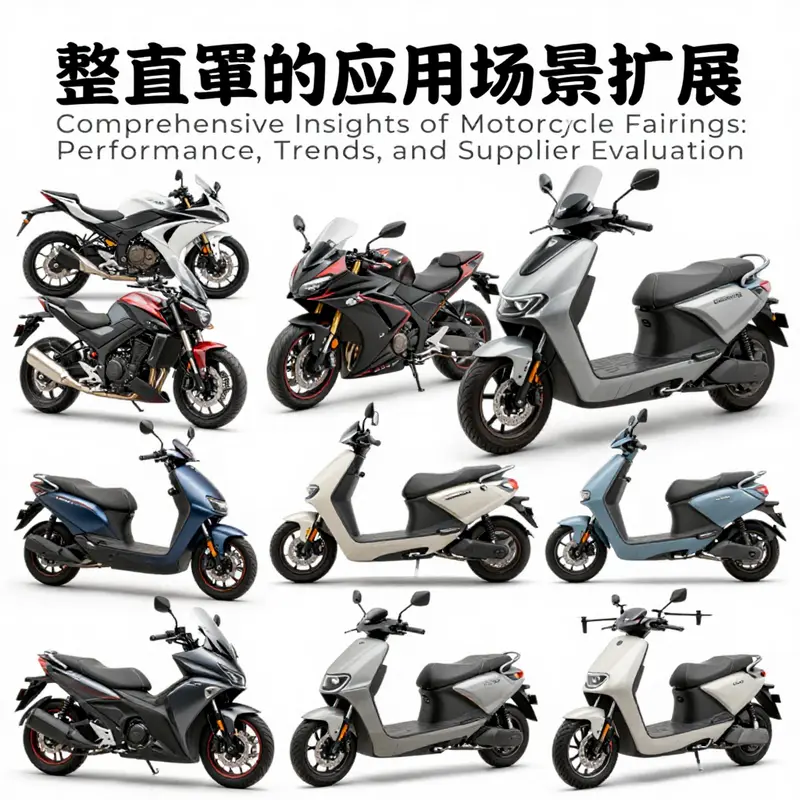
整流罩不再只是摩托车的外壳。 它代表一种工程思想:用形状控制气流、用材料承担载荷、用结构保护内部系统。随着材料科学与制造工艺成熟,摩托车整流罩的技术特征开始被其他领域借用。本文从功能延展与设计适配角度,讲述整流罩如何在航空、水下、无人机和工业设备中发挥新价值。
整流罩的基本价值在于三个方面:空气动力学优化、保护与隔离、以及结构轻量化。摩托车整流罩通过流线造型减少湍流和阻力,同时为电子元件、供油系统和管线提供防护。这些特性在其他场景同样重要。以小型多旋翼无人机为例,外罩通过调整来流方向提升升力效率,同时承担散热和防尘任务。类似理念也出现在工业电机的外罩设计中,通过模块化的整流通道改善冷却,显著降低温升。
材料与工艺是跨界应用的关键。摩托车领域广泛使用的高强度ABS和玻璃纤维增强塑料,因其抗冲击与成本优势,常被作为民用设备的首选材料。复合材料和碳纤维则满足对刚度和重量的更高要求。海洋与航空等严苛环境要求更严格的材料性能,例如耐腐蚀、耐压和防火等级。为此,设计师会将原本用于摩托车的成型工艺,升级为真空注射、热压成型或自动铺层工艺,以达到更高的结构一致性与疲劳寿命。制造环节也从单纯的注塑,扩展到模具精度控制和复合材料的工艺参数监测。
在民用航空领域,整流罩的角色更为复杂。飞机发动机进气部件和外罩不仅要导流,还需具备防异物侵入与除冰功能。整流罩的外形会设计成将杂质引导出气流之外。航空场景对可靠性与检修性的需求极高,这要求整流罩在设计时兼顾可拆卸性与快速更换件的标准化。虽然摩托车整流罩与航空外罩在尺寸与负载上不同,但前者的模块化快装思路和表面工艺控制经验,正被小型航电设备的外罩采用,尤其是在轻型发动机与辅助动力装置的防护罩设计上。
水下工程则提出了另一类挑战。潜航器或深海监测设备的外罩,需要在承受水压同时抵抗腐蚀。碳纤维复合材料经常被采用,以其优秀的强重比满足耐压需求。这里的设计核心是密封与疲劳抗性。摩托车整流罩在接口密合和表面处理方面的经验,直接启发了水下壳体的密封槽和涂层设计。通过采用多层复合结构,并结合压力舱内的力学分配方案,工程师能够在保证轻量的同时实现长期耐用。
无人机与移动电动设备领域,对整流罩的要求偏向轻量化和散热性。电动驱动与电子控制单元带来的热管理问题,使得整流罩不仅是装饰件,也要参与导流以提升散热效率。模块化气道设计可以提升冷却效率约四成。与此同时,整流罩需要屏蔽灰尘与水汽,保障电气系统可靠运行。摩托车整流罩中常见的可更换饰件与可调风道设计,为无人移动设备提供了成熟的实现路径。
在工业自动化领域,整流罩的功能扩展到了噪音控制与电磁干扰屏蔽。精心设计的外罩形状能改变声波传播路径,从而降低运行噪音。对于高频电机,外罩结合导电层还能减少电磁噪声,改善工作环境。这种“带功能的外罩”理念起源于摩托车领域在风切噪与电磁兼容方面的实践,但在工业场景中被赋予了更严格的测试和规范要求。
跨行业应用并非简单复制。不同领域对安全认证和耐久性有不同要求。航空有专门的气动和阻燃标准,海洋工程需要耐压与防腐测试,工业设备强调防护等级和电磁兼容。将摩托车整流罩技术移植到这些领域,需要复核材料性能、重新计算疲劳寿命并通过行业认证测试。此外,维修性和可替换性也必须重新设计。摩托车行业普遍使用的快速卡扣与标准化螺孔,在其他领域可能需要更高等级的紧固件和检测接口。
供应链与制造能力是推动跨界的另一要素。成熟的模具制造、注塑与复合材料加工能力,使得某些地区成为整流罩跨界创新的源泉。具备快速响应试产与定制化能力的制造商,能够与不同工程团队协作,加速样件验证。这种合作在实际项目中常常以联合开发的形式出现,由系统方提供性能要求,制造方负责材料与工艺实现。
未来的发展将更强调智能化与功能集成。整流罩可能内置传感器,为气流分布、温度和结构健康提供实时数据。通过将传感网络与封装技术结合,外罩不仅保护组件,也成为系统的监测层。这种“主动整流罩”可以根据运行状态动态调节通风孔或变形片,实现更高效的热管理与噪音控制。
将摩托车整流罩的设计智慧应用到其他工业场景,带来的是方法论的迁移而非简单复制。设计团队需要结合材料、制造与认证三方面的要求,重新定义外罩的边界与功能。同时,模块化生产和数字化验证将降低试错成本,缩短从原型到量产的周期。对于关注性能与成本的人来说,这意味着成熟技术能在更多场景创造价值。
欲了解面向特定车型的整流罩分类与款式,可以参考相关摩托整流罩分类页以获取设计灵感和零件接口信息。
外部参考:
SpaceX 关于运载火箭整流罩的技术说明
null
null
Shaping Speed: The Technical Craft and Care Behind High-Performance Motorcycle Fairings
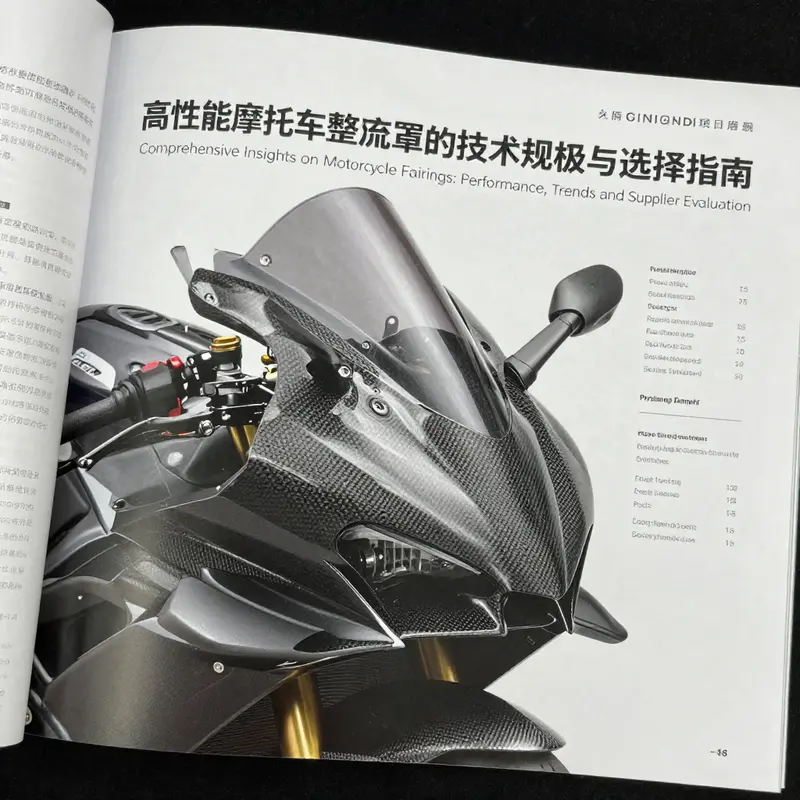
The fairing that crowns a sport-focused motorcycle is more than a glossy exterior. It is a precisely engineered interface where aerodynamics, materials science, rider ergonomics, and manufacturing discipline converge to influence how a machine behaves at speed, how efficiently it breathes, and how it feels in the hands of a rider chasing both performance and presence. In this chapter, we explore the technical fundamentals that separate ordinary shells from high-performance fairings, while weaving a narrative about how choices in design, fabrication, and integration translate into real-world riding dynamics. The thread that runs through this examination is simple: every contour, every material decision, and every mounting tolerance is chosen with purpose, not appearance alone.
Airflow management sits at the core of performance. A well-crafted fairing is a tool for guiding air smoothly over and around the machine, curbing pressure drag, and reducing flow separation that can create turbulent wake behind the rider. The primary design objective is to minimize the drag coefficient (Cd) while preserving the airflow patterns that support stability at high speeds. Subtle refinements—such as a finely tuned nose profile, carefully shaped side panels, and a trailing edge that encourages orderly wake recovery—can yield meaningful gains in straight-line stability and in cornering behavior when the machine is leaned into a turn. In practice, modern fairing development blends traditional wind-tunnel insight with cutting-edge computational tools. Computational fluid dynamics (CFD) simulations test hundreds of permutations before a single physical prototype is produced. The result is a shape that resists unwanted turbulence and channels air toward radiators, brakes, and riders’ shoulders with fewer adverse effects on handling. When done well, these design choices can contribute to a modest yet measurable improvement in ride quality and even fuel efficiency under sustained high-speed riding.
Material selection and fabrication processes underpin the aerodynamic and structural performance of the fairing. The conversation often starts with high-strength engineering plastics—ABS, PC/ABS blends, or their cousins in the thermoplastic family—selected for their light weight, impact resistance, and molding versatility. These materials permit large, integrated shells with smooth surface finishes and consistent color across complex geometries. For riders who seek the ultimate in weight reduction and rigidity, carbon-fiber composites enter the conversation. Carbon fiber delivers an impressive strength-to-weight ratio and stiffness, which can translate into crisper feedback at the clip-on and better high-speed stability. Yet, carbon fiber carries a premium that must be weighed against miles per dollar and the practical realities of repairability and cost of ownership. The broader category also includes fiberglass-reinforced plastics (FRP) and other reinforced polymers that strike a balance between performance and affordability. From a manufacturing perspective, the shift toward large-format molding enables one-piece, seamless shells that minimize junctions and gaps where air might leak and create unwanted buffeting. The move to such large-scale forming, along with precision tooling and robust quality controls, helps ensure that each shell not only looks right but also fits the chassis with predictable accuracy.
Ergonomics and riding experience form an integral, inseparable part of performance. A fairing is not merely a shield for the rider and engine; it is an ergonomic system designed to shape posture, line of sight, and cockpit access. When the geometry is optimized, a rider can adopt a more aggressive forward-leaning stance without compromising control reach, while the windscreen height, cockpit width, and air intake zones work together to minimize rider fatigue on long sessions and to manage engine heat during extended bursts of effort. A well-balanced fairing supports a lean angle that preserves visibility and allows precise control inputs, which in turn magnifies the rider’s sense of connection to the machine. The aesthetic benefits—clean lines, a race-inspired silhouette, and bold graphics—should never overshadow the fundamental aim: to enhance performance while remaining practical for real-world use. In the best designs, form follows function so thoroughly that the eye recognizes speed even when the motorcycle is stationary.
With performance-minded design established, the process of choosing a fairing becomes a disciplined, multi-factor decision. First comes clarity of purpose. Are we chasing track-worthy aerodynamics for sprint racing, or seeking a long-distance balance of weather protection, airflow management, and ease of maintenance? The budget naturally follows from this intent, since carbon-fiber variants and bespoke finish work can dramatically alter total cost compared with standard ABS or FRP options. Compatibility is the next critical checkpoint. The fairing must align precisely with the motorcycle’s frame geometry, mounting points, and instrument placement. Even small mismatches in fit can introduce rattles, gaps, or misaligned accessory panels that degrade both aesthetics and performance. A fairing designed for a particular generation of bike may not fit another generation without adapters or substantial modification, so precise model-year matching matters as a practical matter.
Quality and provenance are indispensable considerations. Reputable manufacturers typically publish material disclosures and share relevant test data, whether through in-house testing, third-party certifications, or standard industry benchmarks. For buyers who value traceability, documentation such as material certificates, inspection reports, and surface finish specs provide reassurance that the part behaves as promised under varied environmental conditions. Certification to an established quality management standard signals a commitment to consistency across production lots. In parallel, buyers should look for transparent information about surface treatment, such as UV resistance, color stability, and clear-coat durability. The surface finish is not merely cosmetic; it guards against micro-cracking and corrosion in aggressive riding environments, which translates into longer-term reliability and better resale value.
Beyond the motorcycle, fairing technology has begun to inform other domains. The same aerodynamic principles, materials, and manufacturing approaches are finding applications in lightweight urban mobility devices such as electric scooters, in protective enclosures for drones, and in the streamlined bodies of small race cars. The cross-pollination is a reminder that the core ideas of air management, material performance, and integration fidelity have broad utility. For riders and builders, this expands the design vocabulary and invites fresh approaches to how a fairing can serve not only as a cosmetic shell but as a component that meaningfully contributes to efficiency, safety, and control.
How should a thoughtful buyer navigate the marketplace? Start with intent: is the objective performance-driven, or a mixed goal of style and practicality? Then consider fit—ensuring precise compatibility with the bike’s chassis, subframes, fairing mounting hardware, and electrical accessories. Material type and construction method should be clearly stated, with a preference for options that balance weight, rigidity, impact resistance, and repairability. A trustworthy supplier will provide a materials matrix and, ideally, independent test data or certification attestations. Customer feedback matters, too, but it should be weighed alongside objective indicators such as consistency of fit, finish quality, and the supplier’s responsiveness. A solid supplier will offer reasonable warranty terms and a measured approach to returns if fit or finish falls outside agreed tolerances.
From a broader procurement perspective, a strategic buyer will track delivery reliability, post-sales support, and the capacity to provide customization that aligns with a rider’s vision. Many modern providers in this space operate on a global scale, yet the best-fit options emerge from those who combine robust manufacturing capability with a clear commitment to service. The narrative here is not simply about choosing the cheapest part but about selecting a shell that can partner with the rider’s intentions—one that proves its value through precision fit, durable finishes, and a track-ready performance edge that endures beyond the first wash or the first corner.
To connect this discussion to concrete resources in the marketplace, readers can explore a curated category that highlights newer designs and configurations as they become available. For an overview of recent additions in the catalog, see the dedicated page labeled 2023new. This resource provides a snapshot of updated shapes and finishes that reflect evolving expectations for aerodynamics and styling. 2023new While the catalog is not a substitute for hands-on fitting, it serves as a useful reference point for understanding how the design language of fairings is shifting and where to look for innovations that align with one’s performance ambitions.
In sum, high-performance fairings fuse aerodynamic science with material intelligence and careful interface design. Their value lies not only in how they look, but in how they behave under pressure: how quickly air is guided away from the rider, how the body remains protected and comfortable, and how the chassis remains responsive at the edge of grip. The most compelling fairings are those that fade from the eye as a performance system emerges—a coherent blend of form, force, and function that connects rider intent with mechanical execution. As you evaluate options, prioritize fit, durability, and the credibility of materials data; let the design’s aerodynamic truth guide your choice rather than surface appeal alone. External insights and updated procurement guidance reinforce this approach, helping buyers navigate supplier reliability and the evolving standards that govern high-performance components.
External resource: https://www.motorcycleparts-sourcing.com/guide/2026/motorcycle-fairing-supplier-evaluation
Final thoughts
Motorcycle fairings remain a pivotal aspect of performance motorcycles, such as the 2003 GSXR 1000. With enhanced designs and materials coming from reputable suppliers, it is essential for business owners to stay updated on market trends and customer feedback. By implementing rigorous supplier evaluations and understanding the diverse applications of fairings, businesses can significantly improve their offerings and meet consumer expectations. Embracing these insights can ultimately lead to greater customer satisfaction and a competitive edge in the ever-evolving motorcycle industry.