
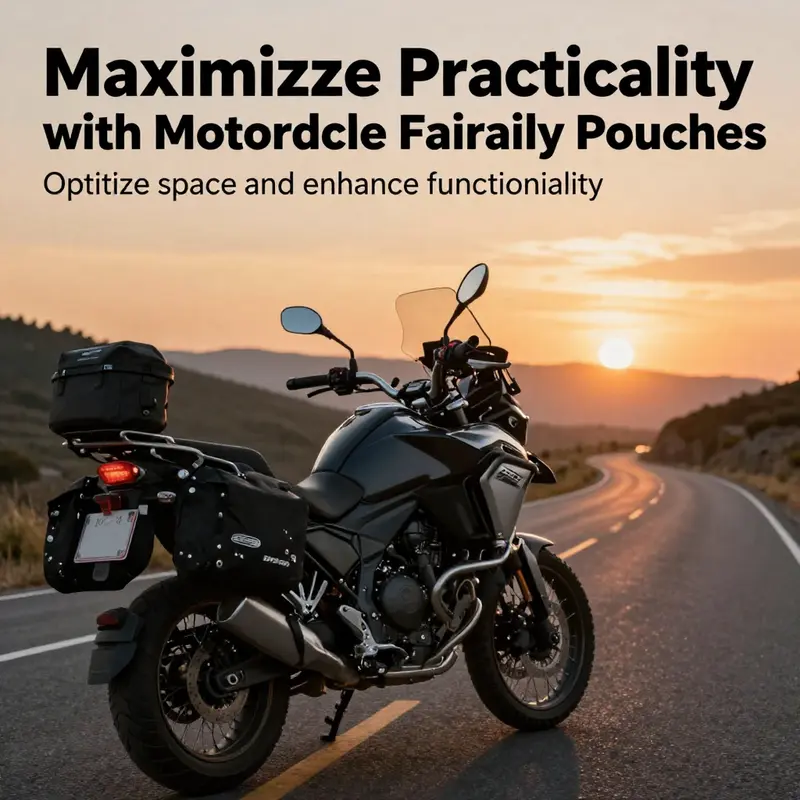
Motorcycle fairing pouches have emerged as essential accessories for riders seeking to enhance their on-the-road experience. These compact storage solutions integrate seamlessly within the fairing or windshield area of motorcycles, providing quick access to essential items such as phones, keys, or wallets without disrupting the ride. This article explores the intricacies of motorcycle fairing pouches by delving into their design and integration specifically for Harley-Davidson models, the durability of materials used, the aerodynamic benefits, current market trends, and engineering insights that underline their practical applications. Each chapter aims to provide a comprehensive view that helps business owners recognize the value and demand of these products in the motorcycle accessory market.
Streamlined Storage in Motion: The Art and Engineering of Fairing Pouches on Modern Motorcycles
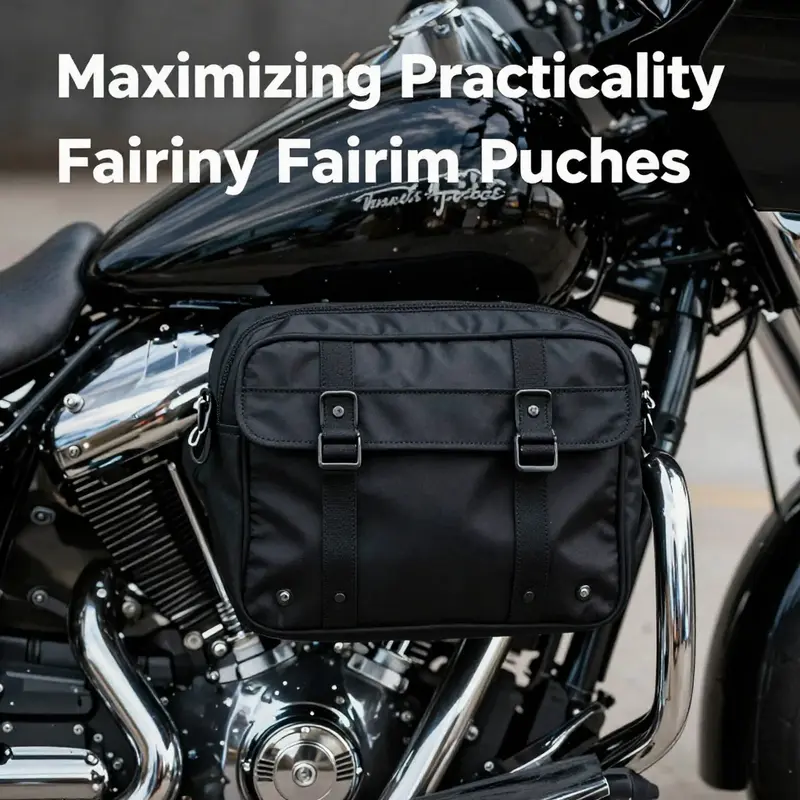
Storage on a motorcycle has always occupied a delicate balance between accessibility and aerodynamics. Fairing pouches, designed to tuck into the fascia of the bike, aim to solve two problems at once: give riders a quick place to stash essentials and preserve the machine’s sleek lines. The best implementations treat the pocket not as an afterthought but as a coordinated feature that respects the fairing’s geometry, the rider’s reach, and the bike’s airflow. This is not merely about adding a container; it is about translating a daily necessity into a seamless extension of the vehicle’s architecture. When a pouch follows the curves of a wind deflector or a windscreen, it reads less like equipment and more like a natural contour of the machine, one that invites touch and use without demanding extra attention from the rider.
On motorcycles with wind deflectors and wraparound windshields, these pouches emerge as purpose-built components that align with the bike’s lines rather than against them. They use low-profile volumes and reinforced mounting points that hug the existing hardware, so the overall silhouette remains clean at speed. A three-compartment layout often grows out of this approach, with sections sized for different items: a compact pocket for a phone or sunglasses, a mid-sized pocket for keys and a small multitool, and a shallow outer slot for tickets or a slim map. The aim is to minimize protrusion that would catch the wind or snag a glove mid-reach. The result is storage that disappears into the reading of the bike’s form, while still offering immediate access when a rider needs it most.
A contoured pouch designed for bikes with pronounced bodywork preserves the machine’s silhouette while delivering practical storage. The curvature and mounting points mirror the fairing’s surface, so the pouch becomes a continuation rather than a break in the design. When placed near the windshield and deflectors, the pouch’s profile reduces any potential drag and helps maintain the machine’s characteristic lines. The rider benefits from a more centralized storage zone that is easy to spot and operate without diverting attention from the road. The philosophy here is not to force a compromise between form and function but to blend them, so the pouch feels inevitable rather than added on later.
An especially telling feature in many integrated designs is how a pocket aligns with airflow controls on the fairing itself. A left-hand pocket positioned to offer convenient access to a center vent—or a vent-control mechanism—allows the rider to tweak airflow without lifting hands from the bars. This is rider-centric engineering in action: a small change in placement yields a tangible improvement in comfort, reducing turbulence around the hands and arms when conditions shift or weather changes suddenly. The concept is simple, yet its effect can be significant over hours of riding, turning ventilation adjustments into a nearly choreographic act rather than a disruptive detour.
Beyond access and airflow, weather resistance and durability are central. The materials chosen must tolerate wind, spray, and sun, resist abrasion, and hold their shape after hours of vibration. Common choices include heavy-duty textiles with water-repellent coatings, reinforced seams, and padded interiors to cushion screens or small devices. Zippers are frequently designed to shed water or guarded with flaps to keep moisture out, while closures favor reliability under the jolts and gusts of real-world riding. Reflective trim or piping provides visibility at night without announcing the pouch as a conspicuous accessory, reinforcing safety while preserving the bike’s aesthetic continuity. The objective is to deliver a dependable, weather-ready home for essentials that can endure the conditions riders routinely encounter on longer trips and daily commutes alike.
The mounting system itself deserves attention. A pouch that integrates with a fairing must respect the vibration and twist of a motorcycle’s structure. Flexible webbing, low-profile mounts, and secure fasteners that align with existing lugs allow quick installation and removal for cleaning or swapping between bikes. This isn’t about a universal clamp; it is about a mount that shares in the fairing’s load paths and remains stable under acceleration, braking, and cornering forces. The result is a storage zone that feels as much a part of the bike as the windscreen or deflectors—a practical feature that can be reached with a natural hand motion, without straining posture or grip.
Designers also consider fit across a spectrum of fairing geometries. Touring models with broad, expansive surfaces, mid-sized sport-tourers, and vintage-inspired fairings all demand slightly different curvature and anchoring approaches. A well-made fairing pouch uses an adaptable mounting system and keeps weight low to avoid affecting steering feel. The goal is cohesion: the pouch reads as a natural extension of the fairing, not as a counterpoint that competes with the bike’s lines or a bulky afterthought that distracts from the ride. In this sense, the pouch becomes a soft hinge in the machine’s overall ergonomics, enabling everyday use without demanding extra attention from the rider.
From an engineering perspective, the process blends aesthetics with empirical testing. Designers study how the pouch affects the airflow around the screen, the deflectors, and the rider’s line of sight. Prototypes evolve through wind-tunnel evaluations and computational simulations to achieve a profile that minimizes drag while preserving perceived volume and accessibility. Structural integration becomes a study in load paths: the mounting points must bear daily vibrations, harness the bike’s bodywork rather than clamping to a surface, and still allow easy removal for cleaning or transfer between rides. When the concept succeeds, the pouch feels inevitable, a natural participant in the bike’s choreography of speed and stability rather than a plastic add-on that fights the wind.
Aesthetics are not optional. Designers strive for finishes and silhouettes that respect the bike’s character. Some riders prefer a color-matched companion to the fairing’s paint, while others lean toward a dark, unobtrusive tone that dissolves into the surface under bright sun. Hardware—zippers, snaps, or magnets—must stay discreet and reliable, so the rider’s attention remains on the road. The objective is harmony: the pouch supports daily routines and long journeys while contributing to the bike’s story of precision and purpose. For readers exploring the broader universe of fairings and compatible storage, the Yamaha fairings category offers a useful reference point for how standardized panels can host small, purposeful storage solutions within a family of designs. Yamaha fairings.
Looking at this design philosophy through the lens of a manufacturer that emphasizes integrated accessories helps illuminate why fairing pouches have migrated from mere convenience items to integral parts of modern motorcycles. The approach centers on minimal intrusion, constant accessibility, and compatibility with wind management. It is not enough for a pouch to be snug and dry; it must align with the bike’s contour, preserve the rider’s sense of space, and remain dependable through rain, heat, and road spray. When done well, the pouch becomes almost invisible to the naked eye during high-speed riding, yet its value becomes evident at a stoplight or during a late-day break when a phone, card, or spare cable is needed without rummaging through a bag or trunk. This convergence of form and function shows how accessories are increasingly designed as systems within the vehicle, rather than isolated add-ons.
Finally, the connection to the rider’s experience matters most. A well-integrated fairing pouch improves the ergonomics of everyday journeys and supports longer rides by removing the friction of device retrieval and weather protection. The rider can glance at a device or sunglasses in a single, natural motion, adjust airflow here, or secure a change of gloves there, all without losing momentum or safety. In this light, fairing pouches are not simply pockets; they are micro-instruments embedded in the bike’s performance ecosystem, shaping how riders interact with their machines on the road. Their value lies in the quiet intelligence of design—how a small, properly placed storage zone respects both the craft of the fairing and the rhythms of riding, turning a potential afterthought into a trusted, everyday companion on the journey.
As the chapter closes on design and integration, the next examination will consider how different materials respond to weather exposure, how hardware choices influence fitment, and how riders balance capacity with the fairing’s purity of line. For readers seeking a broader context, the linked reference demonstrates how the storage concept has been realized across manufacturers, offering insights into practical implementation without compromising the bike’s essential silhouette.
null
null
Hidden Storage, Honest Design: Balancing Accessibility and Aerodynamics in Motorcycle Fairing Pouches
Riding a motorcycle is a dialogue between rider and machine, a compact exchange of control, balance, and awareness. The fairing is the primary stage for that dialogue, shaping wind, controlling noise, and protecting the rider from weather while preserving the machine’s silhouette. Within this carefully engineered shell, fairing pouches emerge as small, purposeful companions. They are not engines of speed or airflow enhancers; they are storage solutions designed to stay unobtrusive, accessible, and durable. When a rider slides a gloved hand into a pocket that is perfectly aligned with curves and contours, the experience feels almost effortless. The appeal of these pouches lies in their ability to deliver convenience without demanding attention or forcing a compromise in the bike’s lines. The chapter that follows explores how these accessories are conceived, built, and used, revealing how form and function meet in a narrow, practical space that many riders come to rely on for everyday journeys as well as longer tours. The result is a coherent blend of simple practicality and thoughtful restraint, a reminder that sometimes the most useful features are those that disappear into the overall design rather than shouting for attention.
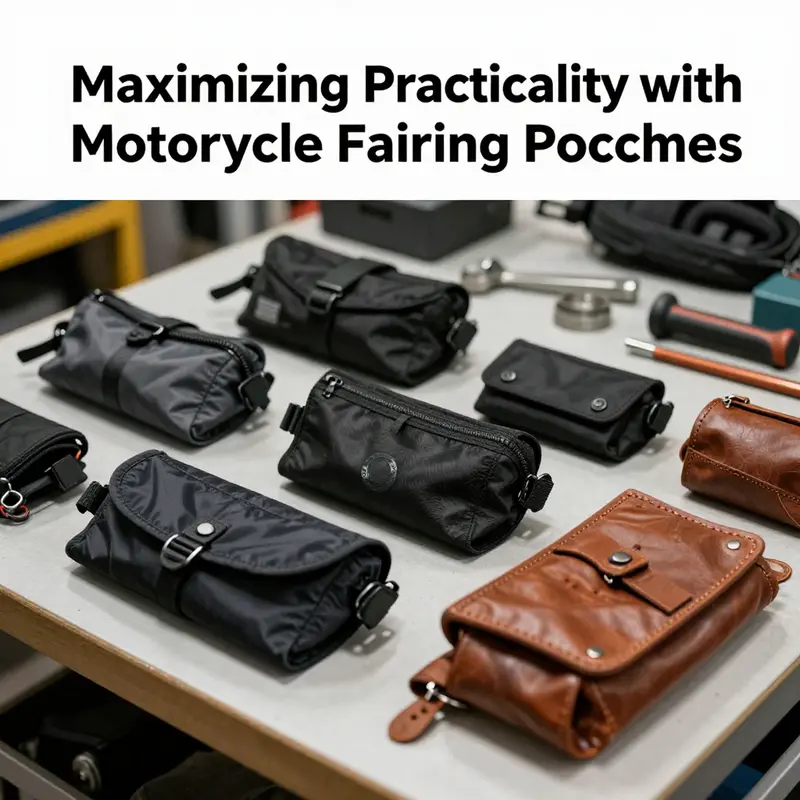
Designing for the fairing frame is a delicate exercise. Every millimeter of added volume risks changing how air flows around the bike, how it deflects wind, and how the rider experiences turbulence or buffeting. Therefore, pouches must be slim, flush with the fairing’s curvature, and composed of lightweight yet durable materials. The goal is to maintain the smooth surface that the fairing already provides, so the pouch profile tapers toward the edges where air tends to move most predictably. Materials are chosen to resist sun, rain, and abrasion while preserving tactile quality under gloves. Common choices include tough nylon blends and water-repellent fabrics, sometimes with a soft interior liner that cushions contents and reduces rattling. A good pouch divides its interior into compartments sized for small essentials—one pocket for a phone, a shallow sleeve for sunglasses, a slim slot for keys, and perhaps a compact wallet or card holder. Closures must be glove-friendly: magnetic snaps or smooth zippers that glide with minimal effort and without catching fabric or glove seams. The aim is to secure contents during motion and vibrations while still allowing one-handed access when the rider is stopped at a light. Reflective elements are welcome, but they are subtle—enough to improve visibility without turning the pouch into a billboard that disrupts the bike’s clean aesthetic.
Beyond the pull of aesthetics lies a more pragmatic truth: the pouch should disappear into the bike’s architecture. Mounting systems—elastic backs, minimalist fasteners, or discreet adhesive strips—need to hold the pouch firmly without adding perceptible drag or buzz at highway speeds. In optimal setups, the pouch aligns with existing seams or gaps in the fairing, following its lines so that it reads as a natural extension of the bodywork rather than an aftermarket add-on. This is the kind of integration that matters on long rides, where small shifts in weight or unnoticed movement can become fatigue over many hours. For readers who want to place these ideas in a broader context, the idea of a “fairings category” helps situate pouches among a family of accessories that respect the bike’s geometry while offering practical storage. fairings category.
The rider’s experience remains at the center of every design choice. Accessibility is the most obvious criterion, but it must be balanced with safety and comfort. A pouch that sits too high can intrude on knee movement during cornering or leg positioning at standstill, while one that is tucked too low might require the rider to lean forward, disrupting posture and contact with the handlebars. The most successful pouches achieve a sweet spot: a compact footprint that is easy to locate by feel, and a placement that keeps items within reach without demanding a change in body position. The interior layout matters as well. Thoughtful dividers keep a phone from sliding into a corner or bouncing against the zipper, while a padded pocket protects delicate items from jostling. For sunglasses, a shallow, soft-lined pocket is ideal to prevent scratches; for keys or cards, a secure, zippered sleeve can guard against loss. In practice, the best pouches feel almost invisible in use—the rider glances down, checks a notification, and returns to the road with a sense of continuity rather than distraction.
The question of aerodynamics is often overblown when pouches are discussed, but it is a relevant frame of reference. The fairing is already a complex aerodynamic surface, designed to guide air around the rider and the engine while minimizing drag and buffeting. A pouch, by necessity, introduces a perturbation. The prudent path is to design for minimal disruption: low-profile shapes, smooth exterior seams, and a placement that minimizes protrusion during high-speed runs or aggressive cornering. The internal arrangement should favor stability over capacity, with a focus on retaining items securely so that no additional weight or movement sits on the fairing surface. That approach acknowledges a fundamental truth in aerodynamics: small, well-located features that respect the primary flow have a negligible effect on performance, whereas ill-placed pockets can create micro-turbulence that is felt most by riders who travel long miles. In this sense, pouches become examples of restraint rather than overt engineering statements.
This practical restraint dovetails with considerations of weather resistance and maintenance. Riders encounter a spectrum of conditions, from sudden showers to long exposures to sun and heat. A pouch that seals well, resists water intrusion, and cleans easily is more valuable over the life of a motorcycle than one that looks good for a week and then degrades under sun and rain. A weather-sealed zipper, a rain guard over the pocket opening, and a quick-dry interior liner help keep electronics and small personal items in good shape. Durable stitching and reinforced edges reduce wear at stress points, and the pouch’s overall construction should stand up to repeated removal and reattachment, a common occurrence for riders who switch between daily commuting and longer trips. The choice between OEM-like pouches that mirror the fairing’s original lines and aftermarket variants that emphasize modularity and quick-release features comes down to rider priorities. A rider who values factory-like cohesion may favor tight color matching and integrated mounting, while another who adapts gear for different bikes or rides may prefer removable, configurable options that transport easily between use cases. Either way, the outcome remains consistent: organize, protect, and access without compromising the ride.
In the broader context of motorcycle fairings, pouches are one component in a sophisticated system that includes wind protection, engine cooling, and ergonomic balance. They reinforce the idea that a well-designed accessory does not subtract from performance but instead enhances the riding experience by reducing friction in daily tasks. When a rider reaches for a pouch, the action should feel like a natural extension of the hand’s motion rather than a deliberate detour from the road. The understated design, the quiet functionality, and the respectful integration with the fairing’s curvature all contribute to a sense of cohesion that many riders come to value as part of their bike’s character. This balance—clear utility without fuss, accessible storage without visual drift—defines the practical charm of fairing pouches.
For readers seeking a deeper, broader understanding of the airflow principles that frame these design decisions, consider exploring foundational material on aerodynamics and wind flow around vehicles. External resource: https://en.wikipedia.org/wiki/Aerodynamics
Edge and Evolution: Market Trends Shaping the Next Generation of Motorcycle Fairing Pouches
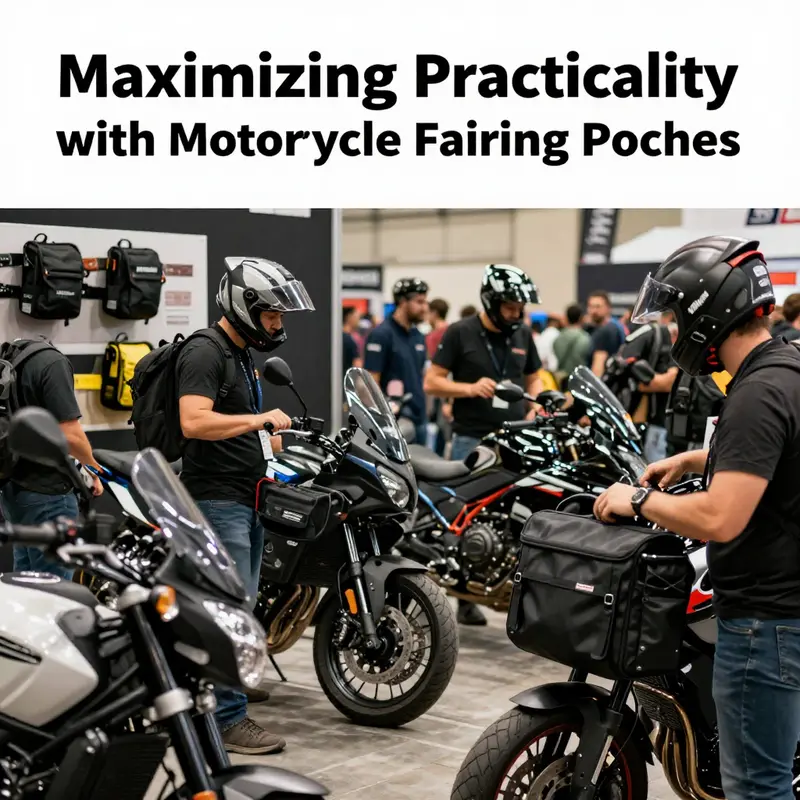
Across the spectrum of motorcycle travel gear, fairing pouches have emerged as a compact, practical solution that blends accessibility with design restraint. The current market narrative is not simply about adding small pockets to a bike; it is about weaving storage into the fabric of a machine that riders rely on for performance, safety, and the sense of freedom that comes with a well-organized cockpit. As long-distance, off-road, and mixed-terrain touring gains momentum, riders increasingly expect storage that is reliable, lightweight, and unobtrusive. This demand pushes manufacturers toward pouches that can be integrated into the fairing’s curves without introducing drag or visual clutter. The result is a storage system that serves as a seamless extension of the bike’s silhouette, rather than a bulky add-on. In that sense, the pouch becomes a miniature element of the bike’s aero-pliable ecosystem, designed to disappear when not in use and to perform when needed. The market’s growth is, therefore, a reflection of a broader shift in riders’ expectations: gear that respects the machine as a unified whole while still delivering practical, user-friendly benefits on the road or trail.
The essence of consumer preference today rests on three interlocking pillars: functionality, durability, and aesthetic integration. Riders want pouches that can carry a phone, a wallet, a set of keys, or sunglasses without adding significant weight or altering the bike’s balance. They want quick, tool-free installation and removal, so a pouch can be swapped between bikes or cleared out during a longer trip without forcing a bike mechanic’s attention. Durability remains non-negotiable. Materials must stand up to sun, rain, mud, and the jolt of rough terrain, yet keep weight at a minimum. A common preference is for high-density polyethylene and reinforced composites, chosen for toughness and weather resistance without becoming a burden. These materials also lend themselves to weatherproof seals, rugged zippers, and robust attachment systems that stay put under vibration and wind pressure. Equally important is the drive toward aesthetic harmony. Consumers increasingly favor pouches that blend with the bike’s color scheme and design language. Whether the bike wears a matte finish, a glossy panel, or a custom paint job, riders want a pouch that looks like a built-in feature rather than a detachable afterthought. This preference pushes designers toward OEM-like finishes, color matching, and subtle texturing that echoes the fairing’s surfaces. In this context, the pouch is not merely practical hardware; it is a lighting-fast stylistic extension that contributes to the bike’s overall presentation.
A second wave of market evolution centers on integrated design and smart functionality. Market leaders are introducing pouches that pair storage with modular mounting points for devices, lighting elements, and even energy harvesting options. The idea is to transform a simple pocket into a component of the rider’s information and power ecosystem. Built-in mounting points for GPS units, waterproof compartments for electronics, and softly illuminated edges for night visibility are becoming part of the standard expectation. The trend toward modularity is equally potent. Riders now seek systems that can be reconfigured to suit a weekend escape or a cross-country odyssey. A smaller, lighter pouch might be used for a quick sprint to a trailhead, while a larger, multi-compartment arrangement can be deployed for longer expeditions. The modular approach minimizes the need for multiple bags and reduces clutter on the fairing while preserving easy access to essentials when the ride demands quick decisions.
Geographic markets play a crucial role in shaping these trends. North American and European riders have long emphasized reliability and engineering refinement, which translates into storage solutions that emphasize precision fit, secure closures, and clean integration with the bike’s lines. In Asia-Pacific, rising disposable incomes and a growing culture of motorcycle tourism are contributing to a more adventurous appetite for integrated storage. Consumers in these markets look for options that balance ruggedness with style, valuing both the durability needed for varied terrains and the aesthetic finesse that complements modern bike color palettes. The rapid expansion of e-commerce has amplified the reach of smaller brands and niche manufacturers, enabling them to compete with established players through direct-to-consumer models, flexible return policies, and accessible customization. The result is a more vibrant competitive landscape where design, material science, and user experience are the primary differentiators.
From the perspective of engineering and design, the push toward intelligent, integrated pouches has several practical implications. Designers must consider how a pouch interacts with the bike’s aerodynamics, heat management, and overall weight distribution. A pouch that protrudes too far can disrupt airflow and contribute to buffeting, while one that sits too close to heat sources could degrade contents and materials. The most durable solutions use materials that resist impact without adding substantial mass. High-density polymers and reinforced composites offer a strong balance of stiffness and resilience, preserving form through rough trails and motorway wind loads. The goal is to achieve a protective shell that can absorb minor impacts, shed water, and resist abrasion, all while remaining pleasantly unobtrusive to the rider’s line of sight and control inputs.
Another design discipline is ease of installation. Modern fairing pouches increasingly rely on standardized mounting patterns and quick-release systems that allow riders to swap pouches between bikes or remove them altogether when they want to enjoy a stage more focused on performance ridership than luggage. This approach aligns with the modular trend, supporting a single platform that can be adapted with different configurations to fit various fairings and rider needs. For riders who are color-conscious, the option to order OEM-style finishes or custom-painted skins helps maintain the bike’s cohesive look, even as practical storage is added. The interplay between form and function is no longer a matter of pinching space; it is about negotiating a shared space between the bike’s silhouette and the rider’s need for readiness. Anecdotally, conversations among riders and retailers reveal a growing willingness to pay a premium for systems that deliver both performance and polish, a signal to manufacturers that craft and engineering excellence can drive perceived value as much as capacity.
The language of material choice also reflects this balance. HDPE and reinforced composites emerge because they deliver impact resistance without unnecessary heft. They improve weatherproofing and create stable, durable shells that resist deformation under pressure. In addition, these materials enable precise molding that respects the fairing’s contours, allowing for tight radii and smooth transitions where the pouch meets the bike. The practical upshot is a storage system that maintains a clean, professional appearance and a feel of intentional integration rather than improvised addition. Riders may notice reflective stitching and secure, weather-sealed closures that protect valuables during rain or dust. In turn, retailers and manufacturers increasingly emphasize these details in product pages and on-bike displays, recognizing that perceived quality often translates into real-world confidence during a ride.
As the market matures, brand and retailer strategies will continue to converge around a few core ideas. First, compatibility and interoperability will be central. Systems that can be easily swapped across multiple models and brands, or that share common mounting points, reduce friction for riders who own more than one bike or who upgrade their fairings over time. Second, customization will become a more explicit selling point. Color-matched skins, texture options, and modular interiors allow riders to tailor a pouch to their personal aesthetic and needs without sacrificing performance. Third, the value proposition will hinge on user experience. Fast, tool-free installation, intuitive access to stored items, and resilient performance under weathering and vibration will define the most successful products. Finally, the digital echo of these physical products—eg, compatibility with on-bike mounting sensors, GPS integration, and power options—will increasingly inform both design and marketing. The market is moving toward a holistic ecosystem where storage is a connected, reinforcing element of the rider’s journey, rather than a standalone accessory.
For readers exploring how a pouch can harmonize with contemporary fairing lines and performance goals, the Yamaha fairings category offers a useful reference point for design language and fitment philosophy. Yamaha fairings illustrate how a well-integrated accessory can respect the bike’s geometry while providing practical storage. This kind of alignment between form and function is exactly the direction the market is pursuing: a future where storage is modular, durable, and visually coherent with the motorcycle’s identity. As the segment evolves, riders can expect more options that combine lightweight construction, weather protection, and subtle, high-visibility features that enhance safety without compromising the ride experience. The latent potential of solar charging, built-in lighting, and smart mounting points points to a future where pouches are not merely passive receptacles but active contributors to a bike’s operational ecosystem. The practical outcome is a more versatile riding experience, where the right pouch can be tuned to suit a weekend escape, a cross-country journey, or a city commute without demanding a second bag or sacrificing performance. In this sense, market trends are not merely about new shapes or fabrics; they are about elevating the rider’s sense of preparedness, control, and confidence on every mile.
External resource: https://en.wikipedia.org/wiki/Polyethylene
Between Windshield and Wallet: Engineering Realities of Motorcycle Fairing Pouches

Across the spectrum of motorcycle accessories, fairing pouches occupy a quiet but telling niche. They must coexist with the bike’s curvature, the rider’s hands, and the wind stream at highway speed. The best pouches feel almost invisible until needed; their craft reveals itself through a careful balance of function and form. In design projects, these pouches become a study in constraints: limited surface area, demanding tolerances, and the constant pressure to preserve performance while expanding practical storage. When a rider reaches for a phone, wallet, or sunglasses without slowing down, the design has already earned its keep.
Design and functional integration sit at the heart of every successful fairing pouch. The most effective solutions are not merely add ons but components that breathe with the bike’s geometry. They tuck into the fairing inner contours, using the available volume to create organized compartments that feel natural to the hand. A well considered layout channels items toward easy retrieval, reducing the cognitive load on a rider who is already managing balance, grip, and sightlines. This is especially critical on bikes with complex fairing shapes, where a protruding pocket can disrupt airflow or create a momentary gust induced tug. Rather than fighting those forces, engineers and designers learn to work with them, shaping the pouch to guide airflow and minimize drag. The result is a storage solution that seems almost as if it were part of the bike’s original skin, rather than an afterthought glued on later.
From a materials perspective, longevity and reliability under varying weather conditions are paramount. High density textiles with weatherproof coatings form the core of most designs, chosen for abrasion resistance, flexibility, and ease of cleaning. Yet materials are only part of the story; how those materials are joined and secured matters matters as well. Durable zippers with seals, reinforced mounting points, and vibration resistant fasteners help prevent rattling at speed and keep contents intact through washboard roads and sudden accelerations. Decorative elements may exist, but in a mature design they often double as structural reinforcement or mounting anchors. A pouch that relies purely on cosmetics risks loosening, letting moisture in, or failing under vibration. A robust solution treats aesthetics as a byproduct of engineering discipline rather than a separate layer slapped on for show.
The engineering analysis that underpins these pouches is deeply practical. Finite element analysis (FEA) helps engineers predict how the pouch and its mounting hardware will respond to road induced vibrations, impact, and thermal cycling. Computational fluid dynamics (CFD) simulations assess whether the added surface area alters the local airflow around the fairing and whether any flow separation could affect stability at high speeds. The recurring insight is simple: storage should not degrade performance. Consequently, load paths are carefully designed so that weight contributes to balance rather than creating a destabilizing moment. Placements near the fairing’s center of mass, for instance, reduce changes in steering feel and maintain predictable handling. In the real world, these considerations translate into smoother ride quality and more confident maneuvering when visibility is limited or when the rider is wearing gloves and relying on tactile feedback from the controls.
Load distribution is more than a matter of weight; it is a matter of accessibility under dynamic conditions. A pocket positioned slightly higher or lower can affect how quickly a rider can access essential items without compromising grip or sight. Engineers therefore pursue a modular, predictable pattern of compartments that reads intuitively to the hand. This is particularly important for small items such as keys, cards, or sunglasses that must be retrieved with a quick, confident motion. The design also considers weather exposure. The most successful pouches seal against rain and splashes while offering fast opening access when needed. Zippered panels with weather flaps, waterproof coatings, and tight seams are common features that combine with structured interiors to keep contents dry and organized.
Modularity and customization emerge as another core theme in modern fairing-pouch design. Consumers increasingly expect products to adapt to shifting gear, different trips, and evolving riding preferences. A modular approach enables riders to add or remove compartments, swap out panels, or retrofit new mounting points without replacing the entire pouch. The ecosystem grows more capable as designers anticipate future integrations such as wireless charging pads or small electronics that communicate with the bike’s onboard systems. Even if those features remain speculative today, the architectural groundwork is laid in the way the pouch anchors to the fairing, distributes load, and maintains a clean silhouette. In practice, modular designs also support retrofitting on a range of fairing shapes and sizes, making the solution accessible to riders who rotate bikes or upgrade models without sacrificing continuity of storage.
Aesthetics are not an afterthought but a natural language of integration. The fairing is a sculpture formed by lines, angles, and reflections, and a well made pouch respects that language. It uses materials and finishes that echo the bike’s surface, while the hardware mounts, screws, edging reads as a purposeful extension of the design vocabulary. In some instances, subtle decorative motifs become integrated with structural elements, offering a sense of identity without overpowering the overall bike profile. The goal is to make the pouch feel like it belongs to the machine, not a separate accessory that simply happened to be strapped on. When riders describe a pouch as invisible on the ride, it is a sign that form and function have reached a rare balance where utility enhances the appearance rather than competing with it.
For riders exploring the broader ecosystem of fairing options, there is value in looking beyond one brand or one model. The fairing family across platforms reveals shared constraints and common opportunities. A traditional touring framework, for example, may favor flatter access panels and weather sealed compartments, while more sculpted sport-touring shapes push for tighter tolerances and sleeker closures. The dialogue between these configurations informs a design philosophy that prizes predictable ergonomics, repeatable mounting, and ease of maintenance. Within this philosophy, the pouch becomes a case study in how small details hinge geometry, seam allowances, and lid orientation can influence the daily experience of riding.
From a practical standpoint, riders seek reliability and convenience without compromising safety. Access to essential items should not require detours or dismounts; instead, a rider should reach into a pocket, locate the item, and recover it with minimal distraction. This requirement translates into tactile cues, such as differentiated zipper pulls, interior lining textures, and interior pockets sized to specific items. The aim is to reduce the cognitive load of storage during motion, especially at highway speeds or in unfamiliar environments. The integration with the fairing’s geometry also helps minimize wind buffeting by steering the airflow around the pouch rather than creating a blunt surface that diverts energy outward. When implemented with care, the pouch becomes a seamless extension of the bike’s narrative—quiet, efficient, and protective.
As design thinking moves forward, the horizon for fairing pouches includes embedded electronics and smart materials that respond to environmental conditions. Lightweight, flexible sensors could monitor moisture, temperature, or even the weight of the contents, triggering alerts if a load becomes unbalanced. Wireless charging or slim charging pads might offer power for small devices without adding bulky connectors or cords that snag on gloves. These ideas remain aspirational in many cases, but laying the groundwork now ensures that future iterations won’t require a complete rebuild of the fairing system. The chapter on engineering practice makes plain that today’s robust, well-integrated pouches are the foundation for tomorrow’s intelligent storage solutions.
For readers who want to explore concrete examples within a familiar framework, consider how a mature fairing system accommodates a weather resistant, multi pocket pouch that mounts with a small set of high tolerance fasteners. The design embraces a balance of secure closure, rapid access, and structural integrity—an equilibrium that preserves the motorcycle’s ergonomics and performance while expanding practical storage. This convergence of user centered design, material science, and engineering analysis is what elevates a simple pouch into a considered component of riding experience. It is not just about what the pouch holds, but how it holds together with the bike, the rider, and the road.
For readers seeking a concrete reference within the broader ecosystem of fairing accessories, see the Yamaha fairings category for a sense of how different platforms approach fairing integration and storage compatibility. The link offers a doorway into how manufacturers and retailers present compatible options across model families, and it can serve as a starting point for assessing fitment, mounting strategies, and compatibility with other accessories. https://ultimatemotorx.net/product-category/yamaha-fairings/.
Final thoughts
Motorcycle fairing pouches represent a convergence of functionality, design, and durability, making them indispensable for modern riders. By understanding their importance within the Harley-Davidson framework, focusing on material durability, and considering aerodynamic benefits, business owners can capitalize on market trends and consumer preferences. Moreover, engineering insights underline their role in motorcycle design projects, showcasing the necessity for robust storage solutions. As the motorcycle community continues to evolve, integrating practical accessories such as fairing pouches not only elevates the riding experience but also offers significant market opportunities.