

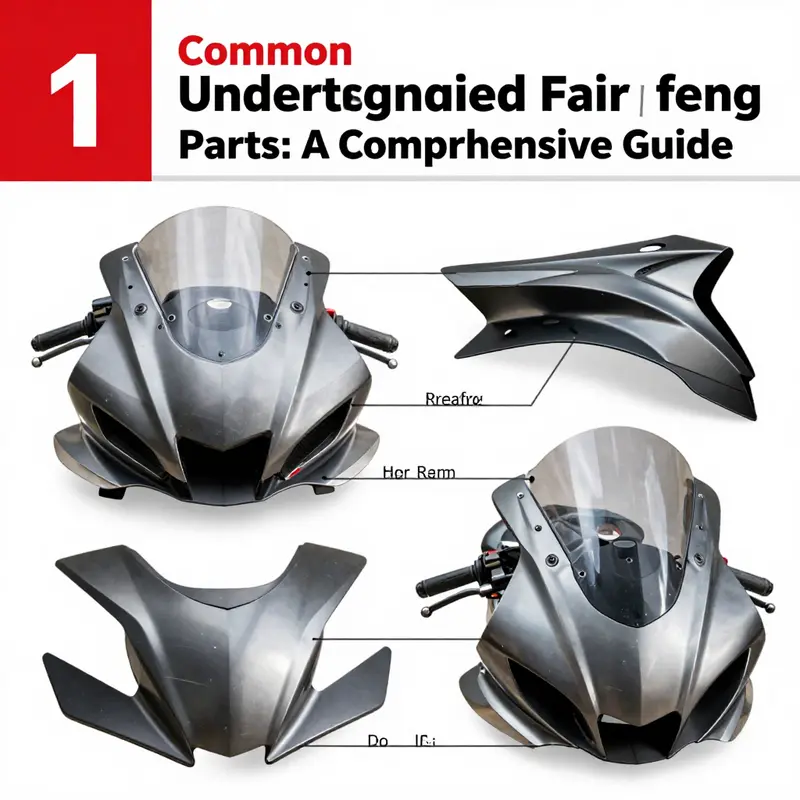
Motorcycle fairing parts play an essential role in enhancing the performance and aesthetics of motorcycles. As a business owner in the motorcycle industry, understanding these parts is crucial for informed decision-making. Fairings are not merely aesthetic enhancers; they serve vital functions such as reducing aerodynamic drag and protecting the rider from the elements. This article provides a detailed exploration of common motorcycle fairing parts and their functions, delves into the materials used in fairing construction, and offers insights on sourcing and customizing these critical components for your business needs. Each chapter builds on the last, culminating in a comprehensive understanding of motorcycle fairing parts names and their significance to the industry.
null
null
Material DNA of the Fairing: How Composition Shapes Names, Performance, and Aesthetics

The language of motorcycle fairings is a language of names that describe panels as much as they describe their function. The fairing parts names—front fairing, rear fairing, side panels, fender, headlight housing, wind deflector, and the rest—serve as a map of a motorcycle’s outer skin. Yet behind every named panel lies a material story that determines how it behaves on the road, how it accepts paint and graphics, how it resists heat from the engine, and how it ages in sunlight. In this chapter we explore the material composition in motorcycle fairing parts names, not as a catalog of what each panel is called, but as a narrative about what those names imply when the thing behind the words is a polymer or a composite rather than a simple sheet of plastic. When a rider or a mechanic speaks of a front fairing, the name evokes a position and purpose, but the actual choice of material makes a difference in stiffness, impact resistance, and how the surface can be finished. ABS, fiberglass, carbon fiber, polycarbonate, and the varied families of composites each bring a distinct character to the same set of panel names. The front fairing, which frames the headlight cluster and sometimes wraps the fuel tank area, is typically the first point of contact with air, and its material choice is driven by the balance between weight, cost, and the need to maintain a smooth, sculpted surface. ABS, or similar thermoplastics, is popular for mass production because it can be injection-molded into tight, aerodynamically friendly shapes. It holds paint well, accepts decals and graphics, and can be repaired with standard plastic repair techniques. It is also relatively forgiving in the cladding of complex curves that define the helmet-shaped neckline of the motorcycle’s front end. Yet ABS has its limits. It softens at higher temperatures and degrades under long-term UV exposure unless stabilized. That UV resistance is a function of additives or coatings, and it often leads to the phrase UV-stabilized ABS in catalogs and repair manuals. The front fairing becomes a canvas for color and branding, and the material choice must support the gloss level that graphics demand. The headlight housing, usually part of the front fairing assembly, illustrates the intertwining of function and materials. The housing is often a rigid structure that must cradle a light and align with an aerodynamic intake. In many designs, this piece shares its material family with the rest of the front fairing, creating a common tuning of rigidity and surface finish. Here the material identity becomes a practical matter: how the housing is molded, how the surface can be finished, how transparent elements such as lenses integrate with a seamless shade. The rear fairing or tail section, which extends toward the tail light and sometimes includes the seat area, might use similar plastics for the skin as the front, or employ different blends in a two-layer approach that optimizes stiffness and impact energy absorption when the bike tips or slides. The side fairings, the left and right panels that hug the body, are more than protection; they are the main visual language of the machine. Material selection for side panels often leans toward a structure that resists warping over long spans, resists scuffing from leg contact, and maintains surface integrity under thermal cycling. FRP, which stands for fiberglass reinforced plastic, has long been favored for side panels because it can be formed in thinner sections, arranged around complex contours, and cured with resin systems that create a strong, albeit sometimes brittle, skin. The advantage lies in weight savings and stiffness, while the challenge lies in finishing a textured surface and achieving a flawless paint layer. Carbon fiber reinforced polymer, CFRP, is the upper echelon in terms of weight-to-strength performance. The same geometry that defines the lines of a sportbike fairing is molded in carbon fabric layers over a resin matrix. CFRP brings exceptional stiffness and a crisp surface but costs more and demands careful damage assessment after a crash, since delamination can hide inside a panel. The weight advantage is meaningful for performance-focused riding, but a rider should appreciate that the cost and repair implications are different from those of conventional ABS skins. The fender or mudguard, which protects the wheels from spray and debris, is another point where material choice matters. In front and rear fenders, polycarbonate blends or ABS blends can provide the needed impact resistance and flexibility to absorb road impacts without cracking. The fender often forms a part of the overall aerodynamics package, and its finish must resist road grime and UV exposure while maintaining a smooth surface for airflow to follow. The windshield or wind deflector, which sits atop the front fairing, is frequently crafted from polycarbonate because of its clarity, impact resistance, and ability to be formed into curved shapes without fogging. A windshield must stay clear under sunlight and temperature cycles, while still being tough enough to resist minor impacts from road debris. In some designs, the windshield is a separate component but still interacts with the same front section of the fairing. The fuel tank cover or tank panel sits within or atop the fairing geometry and often becomes a painted, graphics-ready surface. The material for this piece must be compatible with the pigment system and the clear coats that define the bike’s final aesthetic. It must also handle potential stress at junctions, where mounting hardware and sealants create transitions with the frame. Cowl or air intake cowl panels are more likely found on sport-oriented designs. The cowl is designed to channel air to the engine or cooling system. The material of the cowl must bracket with the airflow demands of the engine, so it often takes advantage of the stiffness of FRP composites or the rigidity of thermoplastic skins that can be formed to precise edges. The cowl is a good example of how the same morphological concept—an opening and ducting into the engine bay—depends not just on geometry but on the way the material responds to heat and vibration. The Ducts and air channels within the fairing are often hidden inside the skin but require careful material and manufacturing choices because they carry heat away from the engine and help shape the boundary layer that reduces drag. Internal channels can be molded into the skin as a thermoplastic, or they can be formed in composite layups that route air in a controlled fashion. The color strip, trim pieces and graphics, and the fascia’s embellishments are often made from flexible plastics or rigid panels that must carry printed decals and vinyl wraps without cracking. These trim pieces are sometimes made with different materials than the main shell, allowing designers to create contrasting finishes, textures, or colors without sacrificing the structural integrity of the main fairing. When designers talk about hinges, latches, or access points, the considerations expand beyond the outer aesthetics. Hinges must withstand repeated opening and closing and stay reliable under vibration. In many cases, these components are metal or reinforced plastics integrated with the fairing, while the surrounding skin remains a separate panel. The mirror mounts or fairing-mounted mirrors are another case where the material choice influences optics and safety. Mounting brackets must resist vibration while preserving alignment of the mirrors, and the surrounding panel must not crack under mounting hardware or clamp loads. A strong yet light fairing often depends on the synergy of a skin that resists impact but does not craze under heat and sunlight. The graphics and decals applied to the fairing depend on the compatibility of the material with printing and vinyl application. The texture of the surface, whether glossy or matte, and the adhesion of paints or wraps are all functions of the base polymer or composite. In practice, the names of the parts and the underlying materials share a dance: the physical geometry defines how air flows and how the rider experiences wind, while the polymer matrix or carbon weave defines how the body of the fairing holds together under crash energy, sun exposure, and the everyday flex of riding. As you inspect catalogs or inventories that describe fairing parts by name, you will notice that material choices are not always called out with each entry, but their influence is woven into the engineering reasoning behind the design. Modern fairings often employ multi-material strategies, where a core of one material provides stiffness or impact resistance and a skin of another material provides surface finish and paint adhesion. A typical multi-material approach might involve a fiberglass core topped with a layer of ABS or a carbon fiber surface skin, balancing weight, cost, and process compatibility. This approach helps designers tune stiffness, reduce weight, and simplify repair while maintaining the familiar shape and name of each panel. It also demonstrates why the same front fairing name might be realized with different material families across motorcycle tiers. The manufacturing culture around fairing parts favors standardization in naming, even as the actual production runs explore material innovations. A lot of this is visible in the way panels are listed in aftersales catalogs and in OEM styling guides. When a repair technician sees a front fairing that needs repainting or a replacement panel that must align with the headlight housing, the material becomes a practical constraint. The repair process often begins with a recognition that ABS can be patched with standard adhesives, that fiberglass surfaces require careful sanding and fairing compound, and that CFRP skins call for specialist epoxy systems and curing. The repair and replacement equation is easier for simpler materials like ABS, where a single piece can be swapped with minimal risk of mismatch. For carbon fiber panels, the repair may involve patching, resins, and careful finishing to avoid bypassing the original aerodynamic shape. It is in these practical details that the material choices reveal themselves in the names and descriptions of the panels. The broader implications of material composition go beyond performance and repair. UV exposure is a persistent factor because plastics degrade under sunlight. UV stabilizers, antioxidants, and protective coatings can extend the life of the fairing skin, preserving the color and gloss of the front, side, and rear panels. The environmental conditions—the heat from the engine bay, the cold and humidity at higher elevations, and the wind pressure on the side panels at speed—shape how each material ages. In high-temperature regions, the front fairing will require materials with higher heat resistance or improved heat sinks to prevent softening. In coastal climates, UV and salt exposure require coatings and composites that resist chalking and corrosion at the interface with metal fasteners. The method of joining panels—screws, clips, and latches—must be compatible with the chosen material. ABS can be joined with standard hardware and adhesives; carbon fiber panels often involve different bonding and mechanical fastening strategies to avoid galvanic corrosion and to distribute loads evenly. The repair and replacement equation is easier for simpler materials like ABS, where a single piece can be swapped with minimal risk of mismatch. For carbon fiber panels, the repair may involve patching, resins, and careful finishing to avoid bypassing the original aerodynamic shape. It is in these practical details that the material choices reveal themselves in the names and descriptions of the panels. The future of fairing materials points toward a blend of performance and sustainability. Researchers and designers are examining bio-based plastics and recycled composites to reduce the environmental footprint of production and end-of-life disposal. Advances in additive manufacturing are enabling rapid prototyping and even lightweight surface skins, which could expand the toolkit for shaping air channels and drag-reducing ducts without sacrificing fidelity to the established names of the panels. In the meantime, the industry continues to optimize existing material suites for better surface finish, easier maintenance, and longer life. When a rider considers upgrading or replacing fairing parts, the material dimension becomes a practical way to judge compatibility with a particular riding style, climate, and maintenance routine. A front fairing built for casual commuting may emphasize durability and repairability, favoring ABS with robust UV stabilization. A sport-focused model might lean toward CFRP for weight savings and stiff air channels, balanced with a pragmatic approach to cost and repair. A touring bike’s fairing might blend polymers with structural foams and inner layers to deliver quiet wind at highway speeds while also absorbing vibrations from the frame. Even the simplest side panel or trim piece can be the product of intentional material selection. The inner layers that make up a composite skin may carry a visible exterior that matches the paint and graphics while concealing a more complex sandwich of materials designed to meet stiffness and impact requirements. In the end, naming a fairing part and naming its material are two halves of the same conversation. The panel name conveys location, function, and intent; the material conveys resilience, stiffness, and behavior under environmental stress. For designers and riders, understanding both sides of this conversation helps explain why the same term front fairing can show up in a catalog with different material plate options, or why a side panel might exist in several different structural families within the same range of vehicles. If you want to explore how these naming conventions map to real-world catalogs, the following internal reference can help you see how a standard catalog splits the same panels into different material families: product-category/bmw-fairings. External resources provide broader context on materials and suppliers in the market: External resource: Alibaba Motorcycle Fairings Supplier Guide.
null

null
Final thoughts
Understanding motorcycle fairing parts names and their functions is essential for business owners seeking to improve their product offerings. Familiarity with material composition also aids in making informed choices about durability and performance. Moreover, knowing where to source these parts, especially from reputable manufacturers, facilitates tailored solutions for a diverse range of motorcycle models. As you navigate this vital aspect of the motorcycle industry, leverage this knowledge to enhance your inventory and meet customer demands effectively.