

Motorcycle fairings are essential components in motorcycle design, influencing not just aesthetics but also performance, aerodynamics, and comfort. For business owners in the motorcycle industry, understanding the different types of fairing names—such as full fairings, half fairings, and various decorative covers—can significantly enhance product offerings and cater to diverse customer preferences. This article encompasses a thorough exploration of various fairing types, their functionalities, and how they align with modern motorcycle trends. Each chapter focuses on a specific fairing name category, enabling business owners to appreciate the market intricacies and make informed decisions.
Full Fairings Demystified: Names, Roles, and Real Riding Realities

When riders talk about the difference between a naked motorcycle and a sport tourer, the term full fairing often rises to the surface. It is more than a cosmetic feature; it is a carefully engineered cladding that shapes airflow, shields the rider, and visually communicates a machine’s intentions. In practice, full fairings refer to a comprehensive body panel system that envelops a large portion of the bike’s front end, extending across the head area, around the sides of the fuel tank, and sometimes down toward the upper portion of the fairing under the seat. The name itself is a practical shorthand in catalogs and workshops, signaling a design that aims to unify the front silhouette into a single aerodynamic entity rather than a collection of detachable panels. The language of fairings—full, half, lower, headlight, decorative—remains surprisingly transparent when you consider a motorcycle’s performance envelope. In many catalogs, you will encounter terms like “full fairing” alongside brand-specific categories, such as the BMW fairings page, which illustrates how manufacturers label and package these extensive panels to meet distinct riding needs. The naming is not mere marketing; it maps to how air will interact with the bike at speed, how the rider’s body is shielded from the wind and weather, and how the entire machine presents itself to the world.
A full fairing is fundamentally an aerodynamic instrument. Its broad, sculpted surfaces are designed to reduce drag and guide the slipstream around the rider and engine. The goal is to minimize the turbulence that forms at high speed, a turbulence that would otherwise rob the engine of efficiency and push the rider into a fatigue-dealing wind buffet. The effect is twofold: higher top speeds with less effort and steadier, more predictable handling at those elevated speeds. This aerodynamic efficiency translates into tangible riding benefits. On long distances or sustained highway stretches, the wind is deflected more smoothly, which reduces the rider’s fatigue and preserves concentration. It also enhances stability; a clean, well-integrated profile helps a motorcycle cut through air with fewer gust-induced wobbles, a boon when riding in crosswinds or gusty weather. The continuity of the fairing’s surface also matters visually. A well-executed full fairing gives the machine a cohesive, almost sculptural line. It whispers a message of intent—speed, precision, discipline—before the rider even twists the throttle.
But the advantages of a full fairing extend beyond outright speed and weather protection. Rider comfort is central to the rationale behind these panels. Wind pressure, noise, and weather exposure drop notably when the front, sides, and sometimes parts of the lower belly of the machine are enclosed. For sport-touring and long-distance machines, the reduction in wind fatigue is one of the most appreciated benefits. The rider can maintain a more stable posture and enjoy a more controlled airflow around the torso and arms. In adverse weather, the full fairing serves as a buffer, helping the rider stay warmer and drier for longer periods. The design also enables a cleaner integration of headlights, instruments, windscreens, and aerodynamic ducts. The headlight fairing, in particular, is a focused subproblem: how to incorporate lighting efficiency with a fairing’s shape, while keeping the lines smooth and the field of vision unobstructed. The balance between function and aesthetics here is delicate but essential. The end result is a motorcycle that not only moves efficiently through air but also presents a unified, confident appearance that aligns with its riding character.
This cohesion is more than a matter of style. The integration of the fairing with the bike’s frame, radiator, and engine covers can influence maintenance access, cooling efficiency, and even weight distribution. A full fairing is typically heavier than its smaller counterparts because it covers more surface area and requires more attachment points. The added mass can affect low-speed maneuverability and the bike’s willingness to flick from side to side in slow, tight corners. In return, those same panels offer greater inertia for stability at speed and better wind protection for the rider. This trade-off explains why certain riders who prize nimble handling lean toward semi-fairings or even naked configurations, while others who prize comfort and high-speed stability opt for the full enclosure. The choice, then, becomes a negotiation among aerodynamics, weight, and intended use.
The materials and construction of full fairings vary with budget, performance goals, and aesthetic ambitions. Traditional plastics with stiffening ribs are common because they strike a balance between lightness, cost, and ease of repair. In higher-end or performance-focused machines, composites such as fiberglass, carbon fiber, or advanced polymers may be used to shave weight and tailor stiffness. The layering and thickness of panels are designed with the rider’s wind-related experience in mind: the outer surfaces should deflect air predictably, while internal channels and ducts channel cooling air toward the radiator and engine bays without creating turbulence that would undermine stability.
The world of fairing naming also encompasses a spectrum of related components that interact with the full enclosure. The headlight fairing, for example, is not merely a housing for lamps; it acts as a combined aerodynamics and lighting strategy. The shape and placement of the headlight fairing can influence light projection while shaping the air around the bike’s nose. Then there are decorative covers, which may not directly contribute to aerodynamics but still affect the motorcycle’s perceived character. Even these elements—side panels, seat covers, and panel inserts—have a role in the whole package. They can add to the visual appeal, reinforce color schemes, and provide lightweight protection to more sensitive underlying components. The term “decorative cover” thus captures a lesser, yet real, facet of the broader fairing strategy: the outside is as important as the inside, and the outside can influence the inside through heat management and maintenance access.
Understanding why manufacturers label and catalog full fairings the way they do helps illuminate how riders approach a purchase. For those who prioritize wind protection and long-range comfort, a full fairing is often the starting point in defining a motorcycle’s character. For others, the emphasis on handling and weight savings might lead toward a semi-fairing or even a naked configuration, where the rider’s connection to the machine is more tactile and immediate. The classification is not merely about coverage; it reflects a philosophy of how the bike will be ridden, what weather and road conditions will be faced, and how the rider will interact with the machine over hundreds or thousands of miles.
From a design perspective, the fairing’s geometry is the primary canvas. Curves and edges are tuned to minimize drag and maximize stability. The windscreen, often integrated into the top of the fairing, is sized to balance wind deflection with rider visibility and comfort. The junctions between panels are engineered for strength and aerodynamics, with careful attention to seam lines, radii, and transitions that prevent buffeting. A clean, continuous surface tends to produce the best results in terms of both speed and comfort, but architectural elegance—how the line flows from the nose to the tail—also matters. The visual language of a full fairing can signal everything from aggression to sophistication, and this language can influence a buyer’s perception of performance even before the engine is started.
For readers who want to ground these ideas in practical context, the CarInterior guide on motorcycle fairing design offers detailed explanations of materials, mounting strategies, and performance trade-offs. It provides a broader framework for evaluating full fairings beyond mere aesthetics, including how different configurations impact ride quality and maintenance. Readers who want to see real-world cataloging practices can explore the BMW fairings category, which demonstrates how a major brand translates these concepts into product offerings and serviceable components. This alignment between theory and cataloging helps explain why fairings are more than aftermarket add-ons; they are core to the motorcycle’s identity and performance profile.
To broaden your sense of how full fairings fit into the larger ecosystem of motorcycle styling and engineering, consider how other fairing types interact with or stand alongside them. A half or semi-fairing covers only the head and a portion of the fuel tank, trading some aerodynamic advantage for reduced weight and greater nimbleness. Lower fairings, positioned at the bottom, work to streamline airflow near the front wheel and under the engine, often reinforcing stability without overshadowing the upper fairing’s visual impact. Headlight fairings can exist as modular elements that adapt the front end to different lighting configurations, while decorative covers remind us that appearance remains a valid and valued dimension of motorcycle design. Naked bikes, by contrast, intentionally do without these enclosing shells, exposing the machine’s mechanical beauty and prompting a different kind of rider interaction with wind, heat, and sound. In every case, the naming—full, semi, lower, headlight, decorative—offers a compact map of a complex design philosophy that blends physics, ergonomics, and art.
For those navigating a purchase or a parts upgrade, the naming system helps inform decisions about compatibility, serviceability, and performance alignment. A full fairing is not simply a shell; it is a system that needs to harmonize with the bike’s frame, radiator routing, and engine exposure. The choice of materials, the method of attachment, and even the color and finish all contribute to a cohesive, optimized riding experience. The result is a motorcycle that can slice through air with confidence, shielding rider and machine from the elements while delivering a unified, sport-inspired signature. The journey from concept to catalog entry to road-ready machine is a fine thread, and the language used to describe fairings helps riders and technicians navigate it with clarity and purpose.
External resource: https://www.carinterior.com/motorcycle-fairing-guide/
Selective Shield: The Narrative Power of Half Fairings in Modern Motorcycles
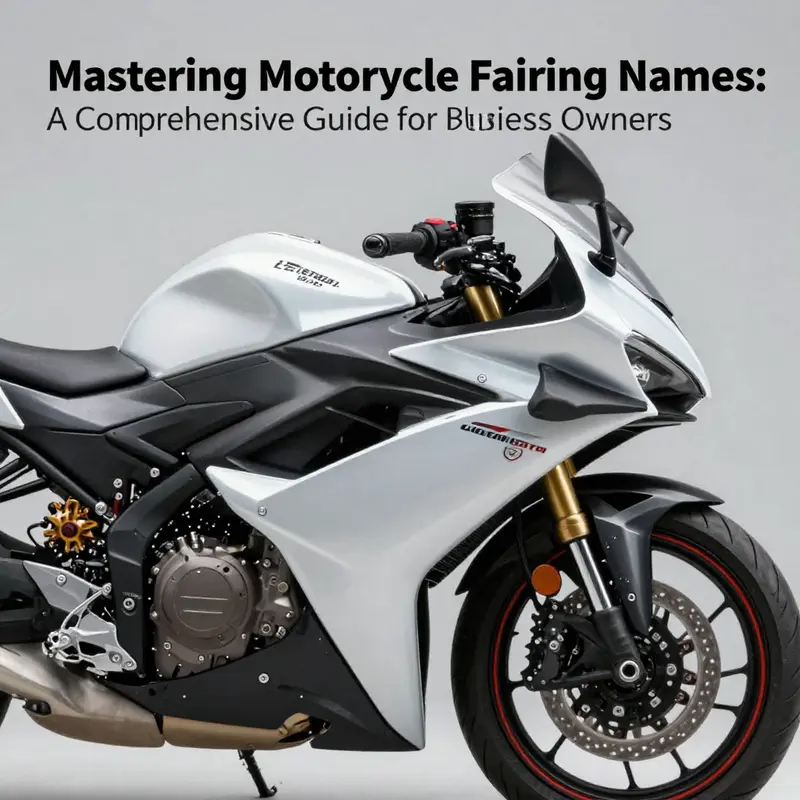
The language of motorcycle fairings is more than a catalogue of plastic pieces. It is a concise code that communicates intent, performance envelope, and the rider experience. Among the various terms, half fairings occupy a delicate middle ground. They are not merely smaller siblings of full fairings; they are purposeful design statements that blend aerodynamics, accessibility, and personality. Understanding how half fairing names function in practice helps riders and builders alike interpret a catalog, evaluate a kit, and imagine what a bike can become when the shield over its front end is tuned to a specific purpose. The half fairing, by its very naming, signals a philosophy: protect the rider from wind and air resistance without surrendering the naked, mechanical vibe that many riders find essential to the bike’s character. In this sense, the naming convention becomes a buying cue as well as an engineering shorthand, guiding decisions in a market that prizes both form and function in equal measure.\n\nA half fairing is defined by its geometry and scope. It covers the front portion of the machine—from the headlight area or its immediate neighborhood down to the forks—creating a streamlined interface between the rider and the oncoming air. The aerodynamic effect is practical and measurable: a smoother profile around the upper chest and shoulders reduces wind pressure and drag, allowing the rider to maintain a more comfortable posture at higher speeds and over longer distances. The result is a subtle but meaningful lift in high-speed stability, where even a few extra percent of drag reduction translates into less rider fatigue and better control. The experience is not just about speed; it is about feel—the sensation of air becoming a controlled ally rather than an unpredictable adversary. Those who ride in varied weather conditions appreciate that a half fairing can still offer a degree of weather protection, especially against rain spray and wind-driven dust, while keeping the engine and its moving parts clearly visible. This visibility is not purely aesthetic. It allows maintenance access, inspection, and a sense of mechanical honesty, a trait cherished by riders who want to see the heartbeat of their machine rather than chase it behind a fully enclosed shell.\n\nThe practical advantages of a half fairing extend into the realm of projectability and customization. Compared with full fairings, half fairings tend to be lighter and less intrusive during installation, making them appealing for riders who crave a straightforward upgrade without major frame braces or extensive wiring work. In many modern platforms, a minimalist front-section kit can be slotted in with modest hardware and simple alignment, offering a lean, aggressive look that emphasizes the bike’s stance and ride height rather than a full sculpted body. This ease of modification is particularly attractive to riders who enjoy customizing their bikes in stages—starting with a front-end aesthetic and aerodynamics package, then adding other elements to shape handling and protection over time. The lightness of these kits can also translate into easier repairs after a mishap, when the front of the bike bears the brunt of impact and the fairing’s modular design allows for targeted replacement rather than a full frontal rebuild. In this context, half fairings become a practical compromise between performance and price, a factor that resonates with riders who balance sport ambition with everyday usability.\n\nFrom a design and manufacturing viewpoint, the naming of half fairings functions as a shared vocabulary across disciplines. Industrial labeling, parts catalogs, and aftermarket ecosystems rely on precise terms to distinguish between the extent of coverage, mounting interfaces, and the intended riding discipline. When a catalog lists a half fairing, it signals a defined footprint and a predictable mounting pattern, which in turn informs compatibility with certain frames, headlights, and upper fairing components. This clarity matters in a world where compatibility is as crucial as appearance. For operators and technicians, the ability to reference a specific fairing section speeds up sourcing, fitting, and maintenance. For riders, the term offers confidence that the piece they are considering will align with the bike’s overall geometry and airflow behavior, avoiding the mismatch that can come with overly aggressive or too-slim alternatives.\n\nThe naming system also mirrors a broader cultural language that exists in the sport-bike and naked-bike communities. In markets where a bike’s personality is as important as its performance data, the half fairing has come to symbolize a deliberate design choice: a hybrid identity that respects the machine’s mechanical soul while embracing a sharper, race-inspired silhouette. A popular front-end kit framed as a half fairing projects a sense of motion even when the bike is stationary. It hints at the rider’s preference for handling over mere top speed and communicates an intention to balance wind protection with the thrill of exposure—the kind of balance that informs a rider’s sense of speed and engagement. Such naming invites a conversation about what the bike is allowed to reveal and what it must still shield.\n\nWithin the spectrum of front-end design, the half fairing stands in a synergetic relationship with other modules on the bike. It interacts with the upper fairing or the absence thereof, with the headlight cluster, and with the lower fairing’s airflow management. When considered as part of a modular ecosystem, the half fairing plays a supporting role in achieving a coherent aerodynamics story. The front-end package can be tuned to guide air in a controlled manner around the forks and toward the radiator, while still leaving space for engine details and suspension access. This integrated approach matters in performance-oriented builds where every gram and every millimeter of airflow can influence stability at lean angles, corner speed, and rider confidence. In practice, this means selecting a half fairing with a contour that aligns with the bike’s natural airflow stream, rather than fighting against the existing geometry. It also means anticipating how future upgrades—like a larger headlight module or a subtle reshaping of the side panels—will influence the overall drag coefficient and the perceived wind pressure on the rider’s torso.\n\nFor riders who want to see a concrete example without stepping into a full fairing project, consider the way minimalist front-section kits frame the bike’s face while preserving the engine’s visual identity. Such choices speak to a desire for performance and practicality in equal measure. The inclusion of a dedicated front piece can help manage air as it first meets the rider, smoothing the boundary layer and minimizing turbulence that might otherwise intrude behind the windscreen. Yet the aesthetic remains the dominant narrative for many enthusiasts seeking a bike that looks fast, even when it is parked. Here, the naming of the fairing is not just about function; it is about conveying a philosophy of how the bike should speak to onlookers: with a blend of precision engineering and expressive form.\n\nThe cataloging of half fairings sometimes intersects with brand-specific ecosystems, and a thoughtful rider will explore those connections through a careful reading of parts passages and catalogs. A dedicated category that groups fairings by brand or platform can be a powerful resource, especially when a rider is planning a larger transformation. Within that landscape, the term half fairing becomes a touchstone for decisions about look, compatibility, and the ease with which a project can proceed. For readers who want to dive deeper into a brand-aligned catalog, a convenient reference is the dedicated collection of fairings that organizes pieces by model families, providing a streamlined pathway from concept to installation. In this context, the practical value of naming extends beyond taste; it becomes a workflow tool that helps riders move from idea to ride with less friction. To explore this palette more concretely, see the category of Honda fairings, which illustrates how a major manufacturer and aftermarket ecosystem frame fairing pieces within a defined structure.\n\nAs with any design choice, the decision to adopt a half fairing should be guided by riding style, climate, and budget. The trade-offs are clear: more wind exposure and less weather protection than a full fairing, but greater accessibility, lower weight, and often lower repair costs. For multi-purpose riders who string together urban commuting, weekend back-road sessions, and occasional touring, half fairings offer a versatile middle ground that can be refined to meet changing needs. They invite experimentation—trying different contours, adjusting mounting points, or coupling the front section with a protective screen that complements the rider’s posture. In the end, the naming and the piece work together to form a coherent narrative about what the bike is and what it promises to its rider. It is the quiet assurance that the front end is doing a precise amount of work, neither more nor less, and that the rider can trust the machine to deliver both response and resonance in equal measure.\n\nExternal resource:\n- External resource: Full vs. Half Fairing Guide: https://www.bikeride.com/full-vs-half-fairing-guide/
Lower Fairings, Higher Precision: How Names Signal Performance Roles and Shape Riding Feel

Lower fairings are often the quiet workhorses of motorcycle aerodynamics. They sit beneath the bike’s main sculpture, where air streams braid together in unseen ways. The names assigned to these components—wind-deflecting lowers, side-skirt lowers, front undertrays or front-belly deflectors—are more than marketing labels. They are compact glossaries of function, telling riders and technicians where the piece lives, what airflow it governs, and how it contributes to the bigger picture of performance. In this sense, nomenclature is a map rather than a label, guiding decisions about aerodynamics, cooling, ride comfort, and even the character of a machine at speed. When we read a catalog entry for a lower fairing, we are decoding a short engineering memo written in the language of shape and position. The same term can imply different tuning across brands, but the core logic remains the same: the lower fairing is a deliberate tool for steering the air curtain that hugs the bike, the rider, and the engine.
The aerodynamic logic behind these names is rooted in simple yet powerful principles. Air meets the bike at a point where the fairing begins its work, and the lower fairing’s job is to shepherd that air in a controlled, predictable path. A “wind-deflecting lower” or “wind shield lower” signals a piece whose primary role is to shepherd the high-velocity airstream that races past the fork and into the rider’s line of sight. A more aggressively styled “front undertray” or “front belly panel” hints at a deeper engagement with the flow beneath the chassis, where cavities and vents can shape how air escapes from under the engine and how boundary layers remain attached to critical surfaces. Names thus become shorthand for the expected outcomes: reduced drag at highway speeds, quieter cabin acoustics, steadier handling, and in some cases, improved engine cooling.
Cooling is a particularly salient aspect, and it is often mirrored in the way lower fairings are named. When a term suggests channels, ducts, or vents integrated into the lower geometry, it invites riders to anticipate enhanced airflow to the radiator or oil-cooling paths. A fairing described as a “cooling duct” or “air intake channel” promises more than wind protection; it promises a design tuned to carry air to hot zones without starving the rider of comfort. The reference to cooling in the naming convention reflects a design priority: the engine and electronics demand a survivable thermal environment even as the bike slices through air at speed. Conversely, a more minimalist lower that emphasizes wind deflection with fewer internal passages signals a focus on weight savings and handling responsiveness. In either case, the name carries a performance signal, even before a rider sits on the machine.
Rider comfort and soundscape also enter the naming conversation, albeit more subtly. A lower fairing can influence wind noise and gust interaction with the torso and helmet. Some designs integrate acoustic considerations into their lineage, with terms like “aero-deflecting panel” or “noise-reducing fairing leg” appearing in catalogs where the rider’s experience is a metric as important as raw speed. An elevated level of sophistication often follows. A modern lower might accommodate an internal channel that doubles as a conduit for a speaker module or a small audio component. The possibility of such integration becomes a naming cue—an indication that the fairing has been designed not just for air but for the broader ride experience. Even if the speaker module is not a feature on all models, the naming tradition signals a potential for multi-function design, a trend that aligns with the broader move toward integrated, modular cockpit experiences.
Material selection and structural behavior intertwine with naming as well. A lower fairing’s name can imply more than shape; it can imply how the piece attaches, how it resists vibration, and how it tolerates up-close contact with debris. A heavy, rigid “lower cowl” may carry an implication of durability and the need for a solid mount, while a lighter “lower belly panel” might advertise a composite construction aimed at minimizing weight. The semantic nuance matters for technicians who must replace or retrofit parts after a mishap or routine service. The naming system, in effect, communicates a bundle of expectations: fitment geometry, mounting hardware compatibility, and the likelihood of sharing a common fastener suite with adjacent upper fairings. This practical thread is essential in the context of a diverse ecosystem where countless models and model years demand fit that is both secure and reversible for routine maintenance.
For the shopper, names are a heuristic—an efficient way to filter the spectrum of design directions without getting lost in a sea of specific part numbers. A commuter rider values a light, easy-to-install lower that reduces fatigue on long rides, while a track-focused enthusiast looks for windage-stable, tested configurations that minimize buffeting even at peak speeds. The vocabulary thus serves as a translator between intention and outcome. The choice between a “low-profile” or “extended” lower is a choice about how aggressively the air is managed, where the rider sits within that airframe, and how much the air leaves the undercarriage without re-attachment to the engine bay. Each label carries with it an implicit forecast about handling balance, stability in crosswinds, and the feel of the bike when a gust passes.
Manufacturers across the spectrum handle naming with a blend of standardization and regional dialect. Many brands align their lower fairing designations with mounting position or intended performance outcome, while others lean into a stylistic taxonomy that hints at a design lineage. The result is a catalog language that can be learned, translated, and navigated with experience. It is not simply about aesthetics; it is about how a fairing’s identity communicates its physics. The better a rider understands this language, the more confidently one can select a component that harmonizes with the bike’s existing personality or with a specific riding goal. To appreciate this harmonization, one can examine how a mid- to high-end lineup from a major category shows a spectrum of lower forms—from a minimal splash guard that tames the most immediate wind pressure to a fully contoured undertray that guides air beneath the engine and along the belly of the chassis. The shift in names—from simple deflector to a more elaborate aero-louvered intake system—captures the progression from basic wind protection to a more deliberate aerodynamic architecture.
In practice, the naming system helps ensure compatibility and performance alignment across aftermarket offerings. Riders who want to preserve or enhance a bike’s handling characteristics must read beyond the surface look. The lower fairing’s name points toward a design intent: a line that defines the airframe’s response to high-speed air pressure, a path that routes heat away from critical components, and a mounting philosophy that preserves or improves rigidity. It is a subtle but crucial aspect of the customization landscape. For those who wish to explore catalog variations, a good starting point is to scan catalog sections dedicated to brand-specific fairings, where the lexicon often clarifies whether a component is intended for cooling efficiency, aerodynamic smoothing, or a combination of both. For a sense of how brands curate and categorize, see the BMW fairings catalog, which demonstrates how a single category can host multiple design languages while maintaining a coherent naming logic. BMW fairings catalog.
As riders and builders push toward ever more refined chassis aerodynamics, the language around lower fairings will continue to evolve. The most successful naming schemes will remain faithful to the core physics they express while offering practical cues for installation, service, and performance outcomes. They will balance the simplicity needed for quick decision-making with the depth necessary for technical accuracy. In that sense, the chapter of lower fairing names is not just a glossary; it is a compact manual that helps translate air into action—how the bike cuts through wind, how heat exits, how noise settles, and how handling stays confident under pressure. For readers seeking a deeper, broader perspective on what to look for and who should choose certain configurations, a well-regarded external reference consolidates practical guidance on lower fairings and their role in rider comfort and performance. External resource: https://www.bikeride.com/harley-lower-fairing-guide/
Naming the Beam: Headlight Fairings as Design Signatures and Illumination Modules
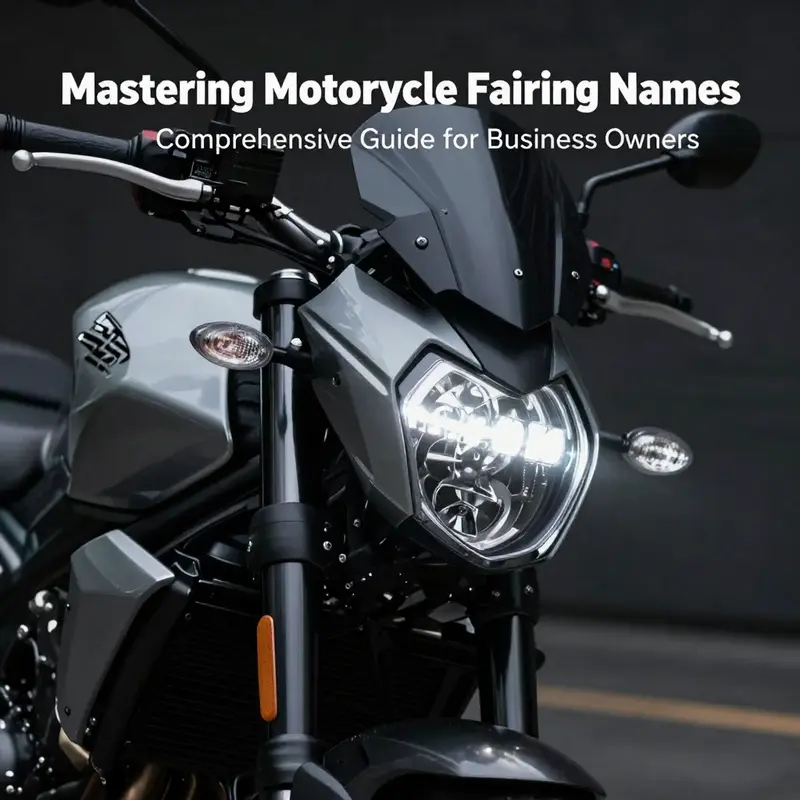
Headlight fairings are more than just protection for a lamp; they act as naming devices that translate form into function, and as visual signatures that tell a rider what the machine aspires to be. They shape perception at a glance and set expectations about aerodynamics, light, and personality. The language around these pieces is a vocabulary of intention, where every term carries a weight of compatibility and design philosophy.
Types of headlight fairings fall into three broad voices, each with its own cadence for how a bike feels when you ride it. The round universal fit speaks to a timeless, modular approach: a classic silhouette that can be coaxed to suit many front ends without demanding a bespoke mounting concept. The smooth universal design emphasizes sleekness and integration, suggesting a continuous line that feels like the fairing grew with the bike rather than being added on. Model-specific versions read like tailored suits, promising precise alignment with mounting points, radii, and beam angles that match a chassis’s exact geometry. The naming here is not cosmetic; it signals intent about adaptability, weight, and the visual flow from headlamp to tail.
Fitment, perhaps the most practical aspect of naming, matters as soon as you pick a fairing for a given bike. Universal sizes promise broad compatibility, while model-specific pieces confirm exact fit and polish. When a spec notes a size such as a mid sized cowl, the name becomes a technical reference that can be checked against a compatibility chart. Model-specific names carry the assurance that installation will be straightforward, with mounting points and seals designed to minimize gaps and misalignment. The result is a naming system that helps a rider predict fit before the first bolt is turned.
Materials and optics further shape the vocabulary. ABS remains common for durability and cost, while polycarbonate offers transparency and lightness for a clearer light beam. Fiberglass suits high-end builds where a custom touch matters. Mentions of materials in a name can hint at age of the shell, rigidity, and repair approach, influencing how a fairing ages under sun and rain. On the lighting side, the naming often mirrors the philosophy: some designs prioritize heat management and LED integration, others preserve classic optics while modernizing the shell. The story told by a fairing’s name is one of how the bike will see, be seen, and endure the road.
Finally, installation realities shape naming in everyday use. A well named fairing reduces alignment headaches, preserves electronics, and supports straightforward maintenance. The shift from halogen to LED has made electrical compatibility a central consideration, with some fairings requiring relays or CANBUS adapters and others offering plug-and-play paths. When a rider reads a model specific name, they also read about mounting points, sealing needs, and finish maintenance. In this sense, a headlight fairing name is a practical map for daily riding as much as a signifier of style. The language around headlight fairings thus serves both design and function, helping riders communicate preferences for speed, control, and presence without ambiguity.
Naming the Look: How Decorative Cover Names Shape Motorcycle Fairing Customization

Decorative cover names do more than identify a panel or a piece of sheet metal. In the realm of motorcycle fairings, they function as a bilingual blend of aesthetics and identity, translating a rider’s taste into visible language that others can read at a glance. The fairing is already a technical system—an aerodynamic skin that smooths the bike’s silhouette and channels air around the rider. Layered onto that system, decorative names become a cultural script, a way to articulate personality, taste, and allegiance without saying a word aloud. When a rider watches light travel across a fairing and reads the name etched, wrapped, or painted on its surface, they understand something about the bike’s origin, its intention, and the rider who commands it. In this light, naming the look is not cosmetic ornament alone; it is an act of design communication that solidifies the bike’s overall narrative as surely as its color or texture does.
Among the most common touchpoints for decorative naming are fender covers, vinyl wraps, decals, and stickers. Fender leather covers, for instance, carry more than protection from grit and weather. They offer a tactile signal of craft and lifestyle. When a cover bears a distinctive name or a motif chosen to reflect a riding culture—be it bold, minimal, vintage, or aggressive—that name helps the observer infer the bike’s story. The choice of material, stitch pattern, and hue all reinforce that story. The same logic applies to vinyl wraps and decals, where the graphic language is designed to read clearly even when the bike is moving at speed. The graphic elements become a form of branding on two wheels, a portable badge that travels with the machine and becomes part of its aura.
Within this visual vocabulary, the actual lettering and typography are not incidental. They carry cultural resonance. A tattoo-inspired script may evoke a cafe racer lineage, a sharp, geometric type can imply modern precision, and a rugged, hand-painted look may signal a rugged, go-anywhere ethos. Designers and riders alike understand that typography functions as a cue. It sets expectations about performance, heritage, and the rider’s ethos. The letters, shapes, and spacing are chosen with care to align with the fairing’s curvature, the headlight nacelle, and the lower panels. The result is a cohesive aesthetic where every line of text feels intentional, not accidental. In this sense, naming the look is as much about harmonizing with the bike’s geometry as it is about declaring a taste profile.
The process of integrating decorative names into fairing design often begins with a conversation about identity. A client might seek a cohesive theme that unites the upper fairing, the side panels, and the rear storage area into a single visual language. The designer translates this concept into an expressive vocabulary—fonts, motifs, and colorways—that can be applied across multiple surfaces. It is not unusual for shop teams to present several naming options, each paired with a corresponding graphic treatment. The owner then weighs how well each option speaks to their riding philosophy and daily use, whether the bike will be parked at a café or pushed toward the track. This collaborative, iterative process helps ensure that the language of the name remains legible from a distance and legible up close, just as decals must be readable at 60 miles per hour and upon closer inspection in a shop mirror.
One practical thread in this conversation is the way decorative names relate to the fairing’s functional zones. An upper fairing, a lower fairing, a headlight fairing, and even decorative covers on the fuel-tank area all participate in a shared design language. The names chosen for these elements often reflect a narrative arc—how the bike moves, how it breathes, how a rider interacts with wind and gravity. For example, a design that emphasizes airflow and protection might favor names that conjure wind, current, or shield imagery. A theme centered on heritage and lineage could lean toward names that imply lineage, tradition, or a storied past. The result is a name-capable lexicon that reinforces, rather than competes with, the bike’s aerodynamic and geometric poetry. In practice, a catalog entry for decorative options—such as a dedicated fairings category—can illustrate how branding threads through every option, including color, texture, and even the subtle gloss level chosen for a panel. When observing a well-curated display, one can feel the narrative continuity from the headlight fairing to the lower belly of the bike.
Riding culture and stylistic subtexts also shape how decorative cover names are perceived and adopted. A modern sport aesthetic may favor sleek, technical typography that suggests speed and precision. A vintage cafe racer vibe might embrace hand-drawn, artisanal letterforms that evoke a bygone era of custom builds and DIY ethos. A rugged adventure look could use bold, blocky lettering with rugged textures to communicate durability and versatility. Owners often explore tattoos-inspired fonts or retro script as part of a larger plan to create a cohesive theme across mirrors, fuel-tiller accents, and even the stitching on leather covers. The name thus becomes a stylistic compass, guiding decisions from the choice of vinyl finish to the way a panel catch reflects sunlight. It is a reminder that in customization, the name is not merely a label. It is a driver of visual rhythm and a bridge between form and function.
From a business perspective, decorative naming sequences for accessories contribute to how customers perceive and engage with a product line. Names act as shorteners of complex design language, translating technical features into an emotional promise. A well-crafted name can imply durability, performance, or exclusivity, making a potential buyer feel that the accessory aligns with their self-image even before they see the full set of graphics. This narrative function enhances how customers relate to a catalog, turning a mere component into a character in the rider’s ongoing story. In practice, shops may develop naming conventions that reflect a broader design philosophy—heritage badges, race-inspired cues, or urban-modern iconography—that can be echoed across fender covers, tank protectors, and side panels. In this sense, the name acts as a thread that ties different decorative elements into a single, readable identity.
For readers who want to see concrete examples of how decorative naming interacts with model-specific branding, catalog presentations, and the broader language of fairings, a closer look at the BMW fairings category offers a useful reference point. It demonstrates how a brand’s heritage and a rider’s personalization habits converge in a shared visual vocabulary, even as the underlying fairing shapes and mounting positions remain technically defined. The link provides a practical sense of how a dealer or workshop translates a rider’s decorative preferences into a cohesive set of fairing components, each carrying its own name while contributing to a unified aesthetic sentence across the bike’s silhouette. BMW fairings catalog illustrates how naming and graphics live in the same design ecosystem, reinforcing the concept that every panel can carry meaning beyond its function.
The cultural economy of customization also extends to the broader ecosystem of fender accessories, wraps, and decorative details. As owners seek to personalize their machines, they often blend functional improvements with storytelling. A leather fender cover, for instance, remains a practical piece but becomes a canvas for expressive names and motifs. Vinyl wraps, decals, and stickers then provide scalable ways to extend that expression across the entire fairing system. In tandem, these elements create a consistent mood—whether it’s a nod to vintage craftsmanship, a nod to high-tech precision, or a commitment to rugged versatility. The naming choices, then, are not isolated decisions but part of a larger design choreography that respects wind dynamics, rider ergonomics, and the bike’s overall silhouette.
In sum, decorative cover names do more than decorate. They codify a rider’s vision into tangible form, a language that others can interpret as quickly as they interpret the bike’s lines at a glance. They fuse art with engineering, narrative with geometry, and personal taste with communal aesthetics. The result is a richer, more legible culture of customization where a fairing is not only a shield against the wind but a canvas, a statement, and a story—one name at a time. For readers who want to explore the mechanics of how decorative elements are structured and implemented in industry practice, a practical overview of fender covers offers further insight into the material and process choices behind these expressive details. External resource: https://www.example.com/fender-leather-covers-explained
Final thoughts
The significance of understanding motorcycle fairing names extends beyond mere categorization; it represents an opportunity for business owners to align with customer preferences and enhance product offerings. Each type of fairing not only serves specific functional purposes but also influences the buying decisions of customers. By comprehensively understanding these components—full fairings, half fairings, lower fairings, headlight fairings, and decorative covers—entrepreneurs can strategically position their businesses in the motorcycle market, catering to the diverse needs and desires of riders. This knowledge equips business owners with the tools to refine their offerings and foster greater customer satisfaction, leading to improved business outcomes.