
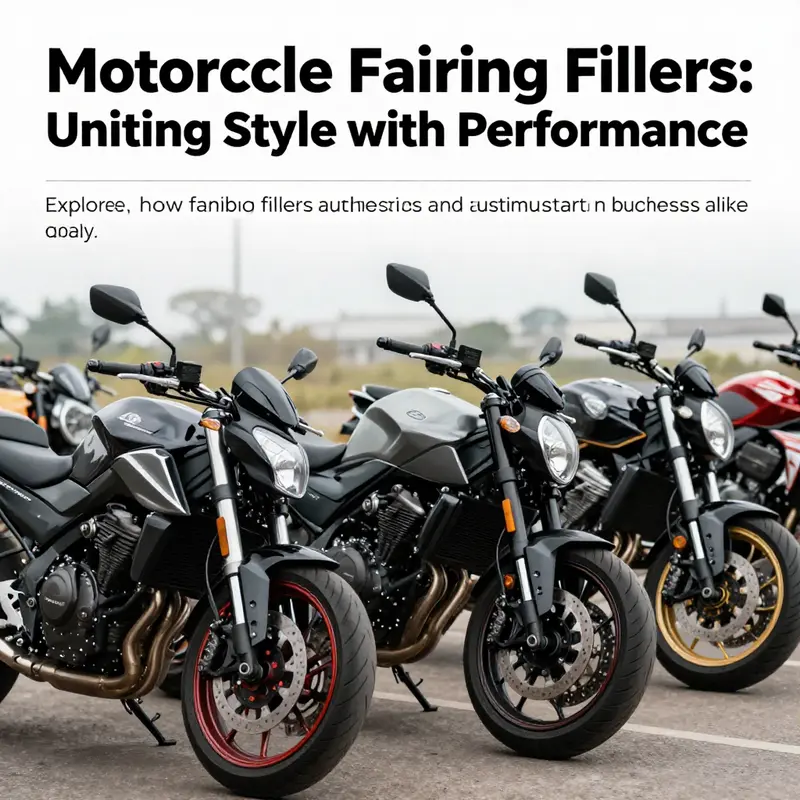
Motorcycle fairing fillers play a critical role in the world of motorcycle accessories, offering benefits that go beyond mere visual appeal. Covering gaps and enhancing the frame’s overall look, these fillers also contribute to improved aerodynamics and weather protection. With increasing consumer demand for both style and practicality, understanding the intricacies of fairing fillers is key for business owners looking to meet the needs of their clientele. This article will delve into various aspects of motorcycle fairing fillers, including their aesthetic and functional importance, the materials used in their construction, the safety standards they must meet, and current market trends that impact availability.
Seamless Armor: How Motorcycle Fairing Fillers Merge Style and Streamlined Performance
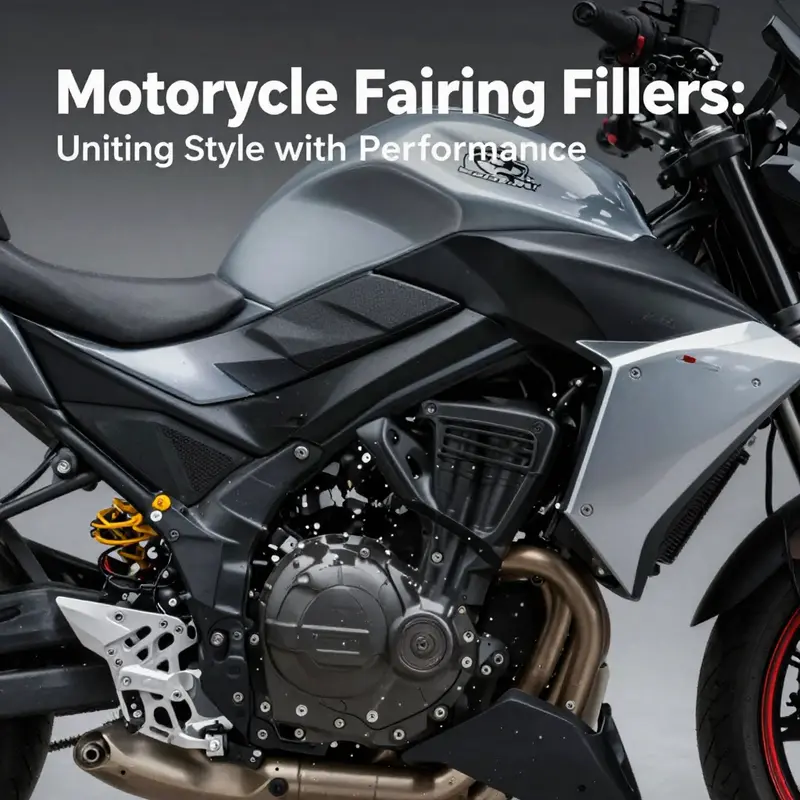
Fillings and gaps are not mere gaps on a motorcycle; they are an opportunity to refine a machine’s silhouette while quietly improving its performance. When a rider looks at a sport-touring silhouette or a rugged adventure-touring profile, the eye notices lines that flow without interruption, panels that appear to be sculpted from a single block rather than assembled from separate pieces. Fairing filler panels are the unsung heroes of that illusion. They fill the voids where bodywork would otherwise stop short, bridging the space between major elements like the side fairings, fuel tank cover, and the inner framework. In doing so, they create a continuous surface that not only looks more cohesive but also behaves more predictably at speed and in wind. This dual role—the aesthetic uplift paired with functional gains—defines the practical value of fairing fillers in the broader ecosystem of motorcycle customization and maintenance. The choice of filler is not simply about covering a gap; it is about selecting a component that respects the bike’s original design language while enhancing its performance envelope. A well-chosen filler can preserve, and even strengthen, the visual and mechanical integrity of the machine, making the rider feel more connected to the silhouette that the bike has always promised to deliver. The aesthetic effect is immediate: a cleaner, more intentional line, a sense of factory precision where the panels meet and where fluctuations in shade and contour converge to create a singular form. Yet the impact runs deeper than appearances. When the gaps are properly filled, air can follow a smoother path along the fairing, reducing micro-turbulence that would otherwise generate drag, noise, or flutter at higher speeds. This is not about turning a bike into a wind tunnel partner but about removing needless resistance that distracts the rider and complicates stability during long rides or fast highway stretches. The importance of fit cannot be overstated. A filler panel that quotes the OEM geometry precisely ensures that the resulting seam is tight and uniform, aligning with the bike’s existing lines rather than forcing a compromise. The right fit preserves hinges, fasteners, and mounting points, ensuring that subsequent maintenance or panel removal remains straightforward. For riders who crave a factory-like finish, fillers that honor the original manufacturing tolerances offer a durable, paint-ready foundation. They can be pre-painted to match the ride’s color scheme or prepared for a more durable finish in a topcoat that resists chips from road debris and UV exposure. Materials selected for these fillers—ranging from reinforced plastics to high-impact polymers—play a major role in whether the panel behaves as a long-term aesthetic companion or a brittle afterthought. ABS-based solutions are common for their balance of light weight, form stability, and impact resistance, while polycarbonate variants offer superior clarity and resilience in the face of heat and impact. The environmental realities of riding, including sun exposure, temperature fluctuations, and road spray, demand materials that maintain rigidity without cracking under stress. The best fillers are those that age gracefully, showing minimal yellowing, cracking, or warping after seasonal heat cycles and mileage. The decision to use a filler is also a decision about installation philosophy. Some riders prefer a simple, trim-level lid that caps a narrow seam and preserves a minimal, almost invisible presence. Others opt for a full-fledged filler panel that integrates with the side fairings to yield a more complete, factory-like sheath around the bike’s midsection. In either case, the goal is to create a seamless transition from tank to fairing, a surface that invites the eye to follow the contour rather than stop at a mechanical junction. A truly well-executed filler does more than fill a space; it contributes to the ecosystem of protection around critical components. By creating a tighter seal between panels, these fillers help guard internal electronics, wiring harnesses, and routing channels from moisture, dust, and splashed water. That protection translates into fewer maintenance headaches and longer life for the components tucked within the fairing cavity. The practical benefits extend to the rider. A smoother fairing profile reduces wind buffet at mid-to-high speeds, which can translate into modest reductions in rider fatigue and a more relaxed posture on longer journeys. It also lowers the opportunity for stray airflow to tug at loose cables or hoses, minimizing chafing risk. To the eye, the payoff is a more confident stance: a bike that looks stable even when planted on the centerline during a gusty ride. The manufacturing and sourcing of fairing fillers reflect another core truth about modern bikes: the market recognizes both model-specific demands and universal design language. Some riders seek a precise fit that resembles OEM components—a close replica of what the bike would receive from the factory when new. Others are drawn to wholesale filler kits that offer a spectrum of materials, finishes, and profiles tailored to a range of popular models. This latter approach is attractive for riders who enjoy customizing the bike’s persona while keeping a handle on cost and turn-around time. When considering these options, it’s essential to think about compatibility and long-term durability. A filler’s dimensions must align with the mounting points and the contour of adjacent panels. Misalignment can introduce gaps that trap moisture, create flashing turbulence, or invite paint cracking around seams. Even the most advanced filler panel loses its value if installation requires alterations to the surrounding plastics or structural elements. The integration with the bike’s existing design language matters as well. A filler should echo the curvature and thickness of nearby panels, their radii and edge detailing, so that the transition from fairing to filler is visually imperceptible. Aesthetics aside, the finish matters. Paint color and gloss level must harmonize with the surrounding panels and under bright daylight as well as in the muted tones of dawn or dusk. The paint process should consider potential heat exposure near engine bays and braking components, ensuring that the filler’s surface remains archivally stable and scratch-resistant through years of road time. For riders who value a coherent, mug-free surface, filler panels that mimic OEM lines offer a sense of unity that single-purpose trims cannot deliver. This approach does not require abandoning aftermarket creativity; it simply emphasizes a disciplined alignment with the bike’s characteristic silhouette. In practice, that means a careful balance of precision cutting, precise mounting, and iterative fitting before any paint or finish is applied. The process often begins with a template or digital model that translates into a cut that preserves the panel’s natural stiffness and allows for a seamless seam with the adjacent fairing. A proper fit reduces the temptation to apply excessive adhesive or to force panels into place, both of which can create warps or visible gaps over time. When a rider contemplates the aesthetic and aerodynamic potential of fairing fillers, there are practical questions that anchor the decision-making: How closely should the filler follow the OEM geometry? What level of wind protection and debris shielding is desired for the specific riding context? How durable must the surface be, given the typical road conditions and climate? And how does the filler impact maintenance access to underlying components? Answering these questions often points toward a nuanced solution that blends the best of both worlds: a filler that is close enough to OEM lines to feel right on day one, yet flexible enough to accommodate personal touches—color, texture, and even subtle embossing that mirrors the bike’s branding cues. For riders who crave customization without sacrificing performance, there is a compelling path that merges tailored fit with scalable finishing options. Wholesale or model-specific filler sets can offer a more precise baseline than a universal approach, preserving alignment and reducing the risk of misfit. The selection of filler materials, the methods of attachment, and the anticipated lifespan under tough riding conditions all influence the final choice. Beyond the mechanics, there is a quiet philosophy about how the bike presents itself to the world. The rider’s stance, the way the lines breathe under the sun, and the way the wind seems to wrap around the machine all speak to a philosophy of craft. In this sense, fairing fillers are not merely functional components; they are deliberate design decisions that communicate the rider’s intent—efficiency, precision, and a respect for the machine’s built-in aesthetics. For riders who prefer a factory-like finish complemented by a touch of personal flair, the idea of a filler panel becomes a bridging of two worlds: the disciplined accuracy of OEM design and the expressive freedom of aftermarket customization. To explore a real-world sense of how this balance can be achieved, consider the broader ecosystem of fairing options and the categories that accommodate many popular bikes. For a practical sense of model-specific choices and the range of styling options, you can explore the BMW fairings category, which highlights how different panels can be coordinated with the bike’s existing language. This category provides a useful reference point for riders who want to preserve brand aesthetics while filling gaps in their bodywork. https://ultimatemotorx.net/product-category/bmw-fairings/ In addition to the macro considerations of fit, finish, and function, the role of fillers in protecting sensitive systems within the fairing area deserves attention. The front and mid-body regions often trap a remarkable amount of airflow and moisture, especially when a bike is ridden in wet or dusty conditions. A well-fitted filler panel helps to seal the seams, reducing the ingress of moisture and grit that can compromise connectors, sensors, or the integrity of integrated cooling pathways. This protective aspect often translates into a quieter cockpit at highway speeds, where wind noise is a reminder of how exposed components can influence ride comfort. Yet the relationship between filler and protection is not simply protective in a passive sense. By shaping the airflow, a filler panel contributes to an environment where the bodywork itself helps manage heat dissipation and reduces the potential for heat-induced panel deformation near exhaust zones. A correctly contoured filler can assist in mitigating the thermal expansion and contraction that otherwise stress seams and paint finishes over time. In the realm of customization, the appeal of filler panels also lies in the potential to harmonize with other visual upgrades. A rider might pair a carefully chosen filler with upgraded windshields, cowl extensions, or even color-matched accents that emphasize the bike’s core geometry. The synergy between these choices reinforces the notion that each component, while functional in its own right, participates in a broader narrative of form meeting function. The path toward a satisfying final result involves thoughtful planning, measured execution, and a willingness to revisit fit as the project evolves. It is not uncommon for riders to return to the workshop after a first round of mounting to tweak gaps, refine alignment, or adjust edge radii so that the transition from panel to panel feels purposeful rather than incidental. This iterative approach is part of the craft, reflecting a sensitivity to how the bike communicates through its lines, shadow, and light. As with any aftermarket modification, the long-term value of a filler panel rests on its resilience and its ability to age gracefully. The most durable solutions withstand road spray and UV exposure without fading or cracking. They maintain their structural integrity after repeated heat cycles and exposure to vibrations that occur on rough roads. And they hold up to the inevitable maintenance routine of riders who wipe down panels, inspect clips and fasteners, and polish surfaces to keep the lines bright. The story of motorcycle fairing fillers, then, is a story of balance: the balance between aesthetic clarity and aerodynamic benefit, between model-specific fit and universal compatibility, between factory-looking finishes and personal expression. For riders who care about a cohesive exterior that respects the bike’s original design while allowing for customization, fillers offer a practical yet expressive avenue. They remind us that every line on a motorcycle carries a purpose, and when those lines meet without gaps, the machine feels as if it has been sculpted anew with intention and care. For further reading that broadens the perspective on how to choose and combine custom fairings, a detailed guide on custom fairings provides broader context about fit, finish, and performance trade-offs. External resource: Custom Motorcycle Fairing Guide: How to Choose Right.
Seam, Strength, and Seal: Understanding Materials and Durability in Motorcycle Fairing Fillers
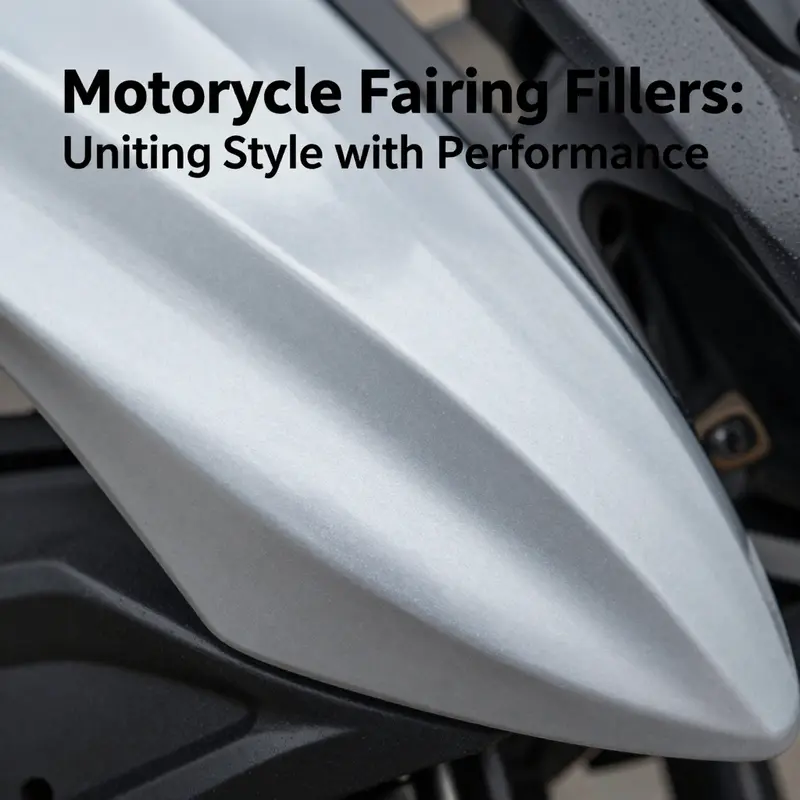
The visual promise of a motorcycle lies in its lines—the way the panels meet, how a dent disappears, and how a gap seems to vanish under a single sweep of the eye. The truth behind that clean, uninterrupted surface is a material conversation between plastic, composite, and the filler that binds them. In the world of motorcycle fairing fillers, durability is not an afterthought; it is a design parameter as critical as the geometry of the fairing itself. Fillers are not merely cosmetic patches. When chosen wisely and applied with attention to surface preparation, chemistry, and finishing, they become a buffer against the stresses of wind, vibration, and exposure to the elements. They also preserve the integrity of the aerodynamics that riders so carefully chase, because even small discrepancies in surface contour can disrupt flow and create unnecessary drag or turbulence. In this sense, the chapter on fillers is really a chapter about the physics of surfaces—how material choices align with the realities of riding, weather, and time.
At the core, fairing fillers contend with three intertwined demands. First, they must bond reliably to the substrate, which is typically a plastic such as ABS or sometimes composite materials. Second, they must be workable enough to be shaped and sanded to a seamless finish without cracking or delaminating under temperature swings. Third, they must play nicely with primer and paint so that the final finish is not just visually smooth but durable against UV exposure, moisture, and impact. The balance among adhesion, flexibility, and hardness defines the performance envelope of any filler system. Different repair scenarios tilt this balance toward one kind of formulation or another, and the savvy technician learns to select not just a filler but a compatible system of primers and topcoats that work in concert.
Among the most common filler families are epoxy-based formulations, polyester-based options, acrylics, and self-leveling blends designed for large panels. Epoxy-based fillers are the workhorse of structural repairs. They offer exceptional adhesion to plastics and composites, high impact resistance, and stable performance under heat and cold. They cure hard and resist shrinking, which gives a solid base for priming and painting. The downside is that epoxies can be stiffer, which may be less forgiving on flexible substrates if the underlying panel flexes with temperature changes. When applied to areas of stress or where a dent has created a depth requiring structural reinforcement, epoxy fillers are often the preferred choice because they create a robust foundation that protects against crack propagation as the panel flexes with wind and engine heat.
Polyester fillers, often recognized for their affordability and ease of use, occupy a different niche. They bond well to plastic and fiberglass surfaces, and they set quickly, which makes them attractive for quicker turnarounds and non-structural repairs. However, polyester fillers generally exhibit less tolerance to UV exposure and temperature fluctuations than epoxy systems. Over time, if a polyester filler is not properly sealed with an appropriate primer and topcoat, small imperfections can reappear as the material expands and contracts with the environment. This isn’t a fatal flaw, but it does mean that for cosmetic repairs where the repaired area is large or subject to sun exposure, a well-sealed system—often using a high-quality primer with good UV resistance—will outperform a quick polyester patch.
Acrylic fillers have risen in prominence as a middle ground. They combine reasonable adhesion to ABS with improved flexibility relative to older polyester formulas. Acrylics tend to exhibit lower shrinkage and are easier to sand and polish, which makes them well suited to cosmetic repairs on modern plastics. They may not match epoxy in sheer ultimate strength, but they offer a forgiving workability that helps technicians achieve a flawless surface with fewer passes. In the context of fairing fillers, acrylics often serve as a bridge—providing a stable, smooth surface that accepts a color-matched paint system with fewer cycles of sanding and priming.
Self-leveling fillers round out the toolbox for large, flat panels. Their texture is designed to spread evenly with minimal manual manipulation, creating a uniform plane with reduced sanding time. They are convenient in professional shops where consistency and speed are valuable, but their durability still rides on the quality of the base material and the finishing steps. For seamless results, the self-leveling category is best paired with a compatible primer and a topcoat that accommodates any slight movement of the underlying panel. In all cases, the durability story is inseparable from the steps that come before the filler is applied and after it is cured.
The substrate matters as much as the filler itself. ABS plastics, widely used for modern fairings, respond best to fillers that exhibit strong bond strength with plastics and that maintain some resilience under temperature cycles. When a filler’s chemistry is poorly matched to ABS, you may see bond breakage at the edges, microcracking in the repair, or paint lifting later on. Conversely, a properly matched system—epoxy or acrylic with a compatible primer—will maintain adhesion and resist spall, even when the panel experiences wind-driven heat in the sun. The surface preparation phase is where many repairs succeed or falter. Cleaning, degreasing, and abrading the surface to provide a micro-rough profile create the tooth that allows the filler to latch on and stay put. This step is not optional; it is the foundation for a durable result that can weather long seasons of riding.
In this context, the choice of filler cannot be separated from the finishing processes. Primers are not mere fillers’ cover; they are active partners in durability. A primer selected to match the substrate and the filler’s chemistry seals the repaired area, and it also contributes a degree of flexibility that helps the finish tolerate micro-movements. A compatible topcoat then provides a protective shield against UV exposure, moisture intrusion, and the chemical environment of road grime and fuel vapors. When all the pieces—substrate, filler, primer, and paint—are chosen with an eye toward a shared mechanical and chemical behavior, the repair becomes more than a patch. It becomes a lasting restoration that preserves the bike’s lines, the rider’s confidence in the aerodynamics, and the bike’s ability to resist the weather.
As practitioners learn to read the physical history of a damaged panel, they also learn to anticipate the durability challenges that can arise in the field. Temperature swings from cool nights to hot afternoons bend and flex plastic. UV exposure degrades polymers and can dull clear coats over time. Moisture, whether from damp climates or rain-splashed rides, can find its way into micro-scratches if the repair’s sealing lines are not tight. The best practices emphasize not only the immediate tradecraft of filling and sanding but a longer horizon approach: choosing a filler system whose performance characteristics align with the bike’s expected operating environment and with the owner’s maintenance habits.
To translate these principles into practice, technicians often start by diagnosing the type of repair needed. If the aim is to restore a dent with a clean contour that does not involve a large area, an epoxy-based filler applied in a controlled layer can deliver a solid base that resists re-denting and develops a durable bond with the ABS surface. If the damage is cosmetic, especially on an area that faces sunlight and road debris, a polyester or acrylic filler followed by a well-moneymaking primer system may be sufficient, delivering a finish that shines with color depth while staying flexible enough to tolerate minor panel movement without cracking. For very large flat sections, a self-leveling filler can minimize visible transition lines, provided the primer and topcoat are matched to the filler’s behavior so that the final layer remains cohesive and resilient.
The interplay between filler chemistry and finishing technology is further amplified by the need for quality controls in preparation and painting. A primer that adheres consistently to the filler’s surface will reduce the risk of peeling and micro-delamination. A topcoat with appropriate flexibility will resist craze lines that can emerge from repeated bending and exposure. Color matching is more than aesthetics; it is an environmental safety measure that ensures the repair does not stand out in sunlight, which could otherwise lead to accelerated degradation in the repaired area. This is particularly meaningful for riders who pursue a “seamless” look across the entire fairing and who want their panels to be indistinguishable after years of exposure.
Riders who want to explore how repair choices align with their bike’s design language and aftermarket customization options can investigate the broader ecosystem of fairings and panels. For riders who want a precise fit that respects the bike’s original lines, many owners explore dedicated fairing sections such as those found under the BMW fairings category. This kind of reference helps frame the discussion around compatibility and fit, reminding us that the best filler work integrates with the overall shape and contours rather than simply filling a hole.
Beyond the shop bench, durability also depends on ongoing care. Protective waxes or sealants, when used on the painted surface, can add a subtle layer of UV protection and moisture resistance that helps the finish endure. Routine cleaning with non-aggressive products prevents the build-up of grime in seams where fillers have joined with the substrate, which, if neglected, can encourage micro-scratching and cause dust to abrade the surface during subsequent polishing. In the long arc of ownership, regular inspection of repaired panels for signs of edge lift, micro-cracking, or changing gloss helps catch issues early, before they evolve into more serious repairs. The goal is not perfection in perpetuity but a practical strategy for maintaining a smooth, continuous surface that looks good and performs well under real-world conditions.
One practical takeaway is to treat filler work as a system, not a single material. The integrity of a repair is as strong as its weakest link—adhesion, curing, priming, and finishing all contribute. The technician’s toolbox should reflect this reality: a well-chosen epoxy for structural patches, a compatible acrylic or polyester for cosmetic work, a self-leveling option for large surfaces, and a primer that binds to both the filler and the substrate, followed by a paint system that accommodates slight panel movement. The sequence matters: proper surface preparation, careful mixing, correct curing time, and meticulous sanding before the primer go a long way toward a durable result. Skipping steps or rushing through the process introduces risks—bond failure at the edge, micro-delamination under the sun, or a finish that pills away after a few months.
In the broader picture, the science of fillers intersects with the engineering of the fairing itself. Fairings are designed to manage airflow, shed water, and withstand heat from the engine and sun. A filler that contemporizes the finish must respect those design goals, not obscure them with a patchy surface that fractures under wind load. The materials community offers a spectrum of options, each with its own profile of adhesion, flexibility, cure behavior, and finish quality. The best approach is to articulate the repair intent clearly: is this a cosmetic restoration that should disappear into the panel, or a structural fix that will keep its integrity through miles of highway and city streets? The answer will guide the choice of filler, primer, and topcoat and inform the technician’s method—from surface preparation through curing to final polish.
In closing, the durability of motorcycle fairing fillers is a story of material compatibility, meticulous technique, and forward-looking finishing. The path from dent to dream finish is not random but engineered. It asks the practitioner to read the panel’s history, to understand how different fillers respond to the world outside the workshop, and to select a system that honors the bike’s lines while standing up to time. When done with care, a repaired fairing does more than hide a past impact; it preserves the craft of the bike’s silhouette and the rider’s confidence in its long ride ahead. For those who want to deepen their technical grounding, an extensive reference on body repair materials and standards offers a detailed map of adhesion, curing, and performance, providing a framework to compare different filler families and their compatibility with common substrates and coatings. In practice, durability is achieved by aligning repair choices with the bike’s operating conditions, ensuring that the finish remains smooth, the edges stay bonded, and the surface continues to resist the elements mile after mile.
External resource for technical specifications: industry-standard body repair data.
Filled Edges, Freed Air: The Subtle, Essential Role of Motorcycle Fairing Fillers
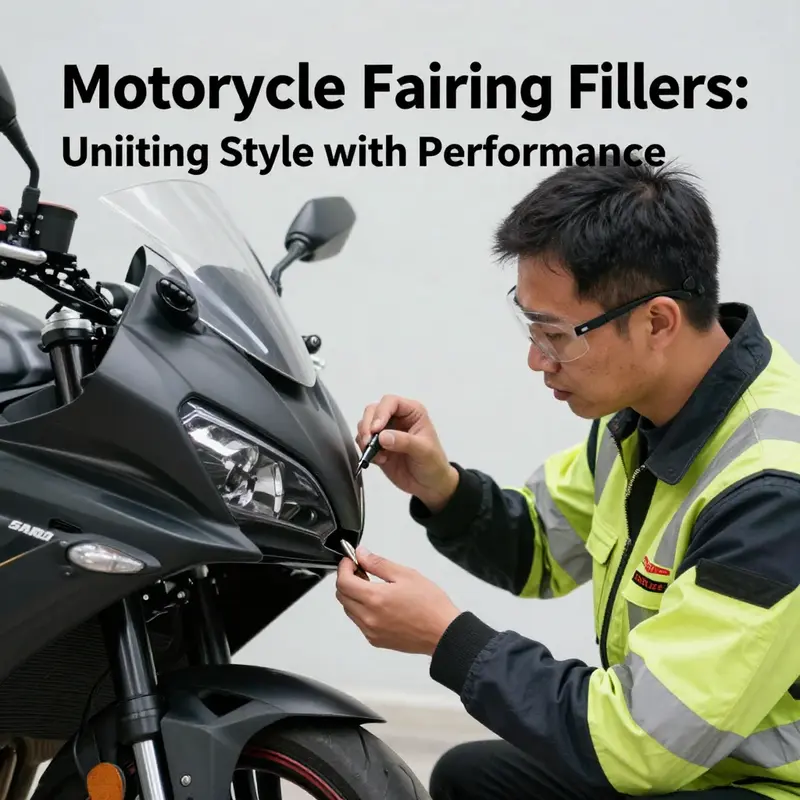
Fairing fillers often hide in plain sight, tucked between panels where the bodywork of a motorcycle should look seamless yet occasionally reveals the gaps left by prior repairs, model variations, or aftermarket adjustments. The truth is that these small inserts do more than polish the visual line of a machine; they influence how air flows over the chassis, how weather and debris are kept at bay, and how a rider experiences the ride itself. A well-chosen filler piece creates a smooth junction, reducing turbulence at the joints where two different panels meet. In doing so, it contributes to a calmer wind profile, a more stable riding posture at highway speeds, and a quieter cockpit as wind noises are diverted away from the rider’s ears. The payoff is a ride that feels more composed, not merely better looking, which is why fillers occupy a quiet but important niche in modern motorcycle design.
Designers approach fairing fillers as a bridge between form and function. A filler must respect the bike’s original design language while providing a practical solution to real-world conditions. The goal is not to obscure shape but to preserve and enhance it. A filler should align with the existing curves, gaps, and mounting points, so the line of the fairing remains continuous and the assembly feels purposeful rather than patched. A precision fit matters because even the smallest misalignment can propagate across adjacent panels, creating paint chipping, misfit gaps, or rattling at speed. The best fillers are conceived in tandem with the panels they accompany, taking into account how temperature swings, road vibration, and exposure to sun will gradually test the joint over time. For riders, this translates into a feeling of craftsmanship whenever they glance along the bike’s flank or lean into a corner and notice that the fairing reads as one cohesive body, not a collage of discrete parts.
Two broad families shape the market: model-specific fillers crafted to mirror a bike’s exact lines, and more generic, universal fillers designed to bridge a range of frame geometries. The model-specific pieces excel in fit and color match, delivering a near factory appearance because their contours, attachment points, and edge radii are engineered to match a particular chassis. The universal options emphasize adaptability and practical coverage when a perfect match isn’t feasible or when a rider is assembling a bike in a custom configuration. In either case, performance hinges on material choice and how that material behaves under real-world conditions. ABS plastic and high-impact polycarbonate are common contenders because they offer a balance of stiffness, impact resistance, and resistance to weathering. ABS tends to be forgiving to paint and easy to machine, while polycarbonate provides enhanced impact resistance and rigidity that can help resist damage in the event of a minor brush with debris or a low-speed fall. The choice between these materials is rarely about one being universally better; it’s about matching the filler’s anticipated life in a rider’s environment and the stresses it will endure on the specific machine.
A practical rider or shop considers not only fit but finish. A filler that is too brittle can crack under vibration; one that is too soft may deform or creep at the seams. The best options strike a balance, combining dimensional stability with enough flexibility to accommodate normal chassis movement without creating new stress concentrations at the joint. The technique of mounting and sealing the filler matters as much as the material itself. Many fillers rely on a combination of mechanical fasteners, clips, and an edge-to-edge adhesive bond. If the adhesive is too aggressive or the surface is not properly prepared, paint can peel around the edge, or the filler can begin to loosen, creating gaps that invite moisture and grime. Preconditioning surfaces—clean, dry, and free of wax or oil—becomes part of the long-term care routine to maintain the filler’s integrity and the fairing’s overall appearance.
From a safety perspective, fillers must respect a fundamental constraint: they should not present sharp edges, protruding corners, or abrupt transitions that could injure a rider or assist in a hazardous way during a fall or slide. While the filler itself sits under the eye of the eye-catching fairing, it remains part of the external surface that a rider could contact during a mishap. This concern aligns with broader regulatory considerations about external projections on motorcycles. Standards that address how components extend beyond a safe envelope emphasize minimizing edge sharpness and abrupt protrusions to reduce injury risk. In practice, this means that fillers must be smoothly integrated, with rounded edges and mating surfaces finished to a high standard. The emphasis on avoiding sharp, snag-prone details is not ornamental; it is a safety discipline that ensures the entire bodywork system contributes to rider protection, not just aesthetics.
Beyond safety, fillers interact with aerodynamics. The fairing is the frontline for directing airflow around the rider and engine bay, and a well-fitting filler can reduce small-scale flow separations at panel joints. When air follows a clean, continuous surface, the bike experiences less drag, steadier lift characteristics at high speed, and more predictable handling through gusty crosswinds. Although a filler is not a full fairing, its presence or absence can subtly shift the flow field. Even a slight mismatch between panels can create micro-eddies that increase drag or wind noise, especially at highway velocities. The practical takeaway is not to over-engineer a filler beyond the needs of a given model, but to ensure it contributes to the whole’s coherence—the visual and aerodynamic unity that defines a well-dressed motorcycle.
Planting the topic back into everyday practice, riders and technicians are often confronted with the question of fitment. How can a filler be assessed before it is installed? The first test is compatibility: does the piece align with mounting points, edges, and panel gaps as intended by the bike’s design? Next comes durability: will the filler withstand UV exposure, temperature cycling, and moisture without degrading the paint or the surface beneath? Regular inspection is part of ongoing maintenance. A quick check during cleaning or routine service can reveal edge lifting, micro-cracks in the surface, or discoloration from sun exposure. Addressing these early preserves paint integrity and guardrails the filler’s life against more expensive panel replacements later.
From a consumer standpoint, fillers offer both practical benefits and aesthetic opportunity. They protect the edges of panels from road grit that can splinter from a bare edge, shield vulnerable seams from rain intrusion, and provide a canvas for paint and finish to create a seamless look. This harmony matters when a bike is not just a tool for miles but a statement of design fidelity. When riders think about upgrades, the filler is a sensible starting point to improve both the machine’s line and its resilience against the rigors of daily riding and long trips. A well-chosen piece maintains alignment, supports paint longevity, and preserves the satin or gloss level that defines the bike’s external language.
Options for integration extend beyond the filler itself. Some riders pair fillers with lightweight, purpose-built headlight fairings or other panel extensions to achieve a coherent front or midsection silhouette. The idea is to create a cohesive ensemble where every part contributes to the rider’s experience: smoother radar and wind behavior, improved debris protection, and a sense of continuity that makes the bike look and feel complete. For readers exploring a broader catalog of compatible components, a relevant gateway is the collection of model-specific fairings that organizes pieces by chassis family. This resource helps ensure that the selected filler not only matches in color and contour but also respects the mounting architecture that a given bike expects. Such a catalog, while not a substitute for hands-on fitment, serves as a valuable planning aid for builders who want a disciplined, integrated approach to bodywork.
Ultimately, the contemporary rider seeks a fairing filler that performs as reliably as it looks. The material choice, the fit, and the installation technique all contribute to a product that stays with the motorcycle for years and miles. While fillers may appear as a modest detail in the grand scheme of a bike’s engineering, they are in fact a practical articulation of how form supports function. The better the fit and the more thoughtful the integration, the more likely the rider will enjoy a smoother ride, a cleaner aesthetic, and a longer-lasting finish free from the creeping effects of vibration, water ingress, and UV fade. For those who value craft as much as velocity, the filler becomes a quiet partner, ensuring the bike’s bodywork stays true to its lines and ready for the next road, the next storm, the next twist.
For a catalog of compatible components and a sense of how fillers integrate with broader fairing schemes, consider exploring the BMW fairings collection. This category demonstrates how manufacturer-aligned pieces align with the bike’s original geometry and design language, underscoring the importance of precise fitment and surface continuity across the bodywork. BMW fairings offer a practical glimpse into how fillers can complement the overall aesthetic while maintaining a disciplined approach to assembly and finish. While the exact fit may vary, the underlying principle remains: a well-executed filler strengthens not just the look but the performance envelope of the machine.
As riders and technicians navigate the options, it becomes clear that the right filler aligns with safety standards, respects the engineering intent of the fairing system, and contributes to the vehicle’s resilience in harsh riding environments. The choices are not only about covering a gap; they are about engineering a subtle continuity that helps the entire bike harmonize with wind, weather, and road. In this light, fairing fillers emerge as a pragmatic craft—small components with outsized influence on aerodynamics, protection, and the feel of riding itself. The careful balance of fit, material properties, and installation discipline defines how well a filler serves its purpose and how quietly it supports the broader aim of safe, efficient, and enjoyable motorcycling.
External resource for safety and standards can illuminate the regulatory backdrop against which these components are designed. For a regulatory perspective on external projections, see the detailed reference: GB 20074-2006 External Projections (external resource): https://www.jdsports.com.cn/zh-cn/product/motorcycle-and-moped-external-projections-gb-20074-2006-38945112.html
Filling the Gaps: Availability, Trends, and Practical Realities of Motorcycle Fairing Fillers
Fairing fillers occupy a quiet but essential niche in the world of motorcycle bodywork. They are the small, practical panels that close gaps, smooth out lines, and seal junctions where the frame and exterior panels meet. For riders who care about both aesthetics and function, these fillers deliver a clean, cohesive silhouette that enhances the bike’s visual language and reduces the risk of weather and debris intrusion. Yet despite their usefulness, fairing fillers linger on the periphery of mainstream market reports. The broader research landscape often highlights helmets, bags, racks, windshields, and off‑road protection, while the specific component known as a fairing filler rarely makes the executive summaries. The consequence is a data gap that can make it feel as if fillers exist in a vacuum, when in fact they sit at the intersection of aesthetics, aerodynamics, and practical maintenance for riders who demand a seamless look with predictable performance. In this light, the chapter that follows treats fillers not as a one‑off accessory but as a practical capability that speaks to how riders curate their motorcycles over time. It is a chapter about availability in a market that is large, dynamic, and often difficult to quantify in narrow reports, and about the design choices that determine whether a filler will feel integral or merely cosmetic once installed.
The absence of explicit market trends for fairing fillers in the cited research does not imply indifference from riders or retailers. On the contrary, the filler concept aligns with a broader impulse in the motorcycle community: the desire to personalize, optimize, and protect. When riders retrofit or replace missing panels after a mishap, or when they simply want to restore the visual continuity of a bike that has undergone customization, fillers become a logical step in the transformation. In the protective gear and accessory sector, forecasts commonly address size, weight, durability, and price points for items like helmets, tail boxes, rear racks, windshields, and protective suits. These categories reflect what manufacturers and retailers measure and what riders buy. Fillers, by contrast, inhabit a space where a single item can be as specific as a model‑matched panel or as universal as a generic side‑panel skin designed to bridge gaps across several bodywork types. That cross‑model versatility is part of what makes fillers appealing to a broad audience, yet it also complicates the market picture because data aggregators tend to group fillers with larger, more volumetric categories rather than track them as an independent segment.
From a materials perspective, the practical realities behind availability begin with the core choices used to manufacture fillers. ABS plastic and high‑impact polycarbonate are the dominant options because they offer a balance of rigidity, impact resistance, and temperature tolerance that aligns with the stresses of everyday riding. ABS can resist cracking under minor impacts and holds paint well, while polycarbonate adds toughness and a tolerance for UV exposure, which matters when fillers are exposed to sunlight through long rides or parked in open environments. Some fillers may incorporate fiberglass reinforcement or be formulated with UV stabilizers to extend longevity. The choice of material influences not only durability but also installation and maintenance. A filler that warps or yellows under heat, or that peels when exposed to rain and cleaning solvents, will find few buyers regardless of fitment accuracy. Riders who prioritize longevity gravitate toward materials and finishes that can be cleaned with standard motorcycle care products, resist color fading, and maintain their shape and alignment over years of regular use.
Fitment is the second major axis that shapes availability. Model‑specific fillers address precise gaps with a factory‑like fit, preserving the lines and geometry of the original design. In contrast, universal fillers aim for broad compatibility, trading a perfect match for convenience and lower cost. The feasibility of a universal approach hinges on the tolerances in the bike’s bodywork and the degree to which the gaps present opportunities for a generic solution. In practice, model‑specific panels are often preferred by riders who value appearance and aerodynamics, especially on bikes with complex contours around the side panels and fairing junctions. But universal options remain attractive for riders with older or unique builds, or for those who perform frequent changes to their bodywork as part of ongoing customization. The installation reality mirrors this dichotomy. Model‑specific fillers typically require careful alignment, precise mounting points, and often adhesive or mechanical fasteners that are designed to preserve panel integrity. Universal fillers benefit from adjustable fasteners, flexible mounting strategies, and a more DIY‑friendly approach. Either path demands attention to sealing and finishing so that gaps do not invite moisture ingress or wind noise, and so that paint and texture remain uniform across the newly integrated surface.
Availability channels for fillers reflect the same balance between specificity and versatility. Riders can source fillers through online marketplaces, dedicated aftermarket retailers, and local workshops that specialize in panel fabrication or bodywork repair. The presence of fillers in these channels is a reflection of a broader aftermarket ecosystem that values repairability and customization as a core selling proposition. The distribution of fillers across channels also explains price dispersion. Model‑specific panels often command premium prices due to their exacting fit and the additional design work involved in matching texture, curvature, and paint. Universal fillers tend to be more cost‑effective but may require additional finishing steps, such as sanding, priming, or repainting, to achieve a seamless look. The practical upshot is that availability is robust enough to support both conservative, fit‑first riders and adventurous enthusiasts who enjoy the DIY challenge of tailoring their bodywork. The challenge for consumers and retailers alike is ensuring that the product listings clearly communicate fitment scope, required tools, and post‑purchase finishing needs so that the purchase translates into a lasting, aesthetic result rather than a mismatch that leads to frustration.
In the absence of a formal market trend for motorcycle fairing fillers, it is useful to look at adjacent data points within the protective accessories sphere to infer what might drive demand over time. The broader protective gear and accessory segment has experienced steady activity in production forecasts, pricing cycles, and technology advancements. These movements often spill over into filler availability by shaping consumer expectations around compatibility with emerging materials, finishes, and bonding methods. For instance, improvements in paint adhesion and color stability across plastics influence how easily a filler can be integrated with existing bodywork and repainted to maintain a cohesive appearance. Advances in lightweight composites and reinforced plastics also expand the potential material palette for fillers, enabling panels that are not only durable but also responsive to aerodynamic considerations. While this inference remains indirect, it provides a plausible trajectory for filler availability: as manufacturing accuracy improves and as riders demand more plausible color and texture matches, fillers that deliver near‑OEM performance at reasonable costs are more likely to proliferate across both model‑specific and universal segments.
Another dynamic worth noting is the role of customization culture in sustaining demand for fillers. In markets with vibrant aftermarket ecosystems, riders frequently engage in modular upgrades that emphasize both function and personality. Fillers are a natural partner to other cosmetic and protective upgrades, such as side panel inserts, accent panels, and small aero‑features that refine airflow around the bike’s midsection. Even where the data do not isolate fillers as a category, the momentum in related areas—such as fairings, windshields, and crash‑protection accessories—suggests a continuity of interest in well‑fitting, visually cohesive solutions. The practical implication for manufacturers and retailers is not only to stock model‑specific options where feasible but also to guarantee robust information about compatibility and finishing requirements. Riders who appreciate a seamless transition between original design and aftermarket adaptation will gravitate toward products that minimize the need for improvisation and post‑purchase modifications.
Viewed through the lens of user experience, the availability of fairing fillers is as much about information clarity as it is about inventory. Prospective buyers want to understand fitment, surface finish, color compatibility, and maintenance implications before committing. Clear product descriptions that outline the scope of fit, the recommended installation method, and the expected maintenance cycle can reduce returns and dissatisfaction. This is especially important given that the aesthetic payoff—an uninterrupted, unified surface—depends on precise alignment and paint compatibility. The best fillers deliver not just a plug‑and‑play solution but a reliable platform for a durable finish that can be cleaned, repaired, and repainted as needed. In practice, a well‑designed filler will be accompanied by practical guidance, including alignment tips, surface preparation steps, and long‑term care considerations that address UV exposure and weathering.
For readers seeking a sense of where these options sit within the broader ecosystem, the following internal reference helps connect the filler concept to the modern catalog of fairings and related panels. Explore the BMW fairings category to see how a major brand organizes its bodywork components, which often informs the way filler panels are positioned in the aftermarket space. The existence of categorized listings underscores the market’s recognition that panels, caps, and fillers function as part of an integrated system rather than as isolated accessories. This integration matters because it signals how riders expect a seamless transition from the original bodywork through the filler to the painted surface and finally to the protective coatings that keep the finish looking fresh under riding conditions.
Despite the lack of granular market data specific to fillers, the narrative that emerges is coherent and persuasive for riders and retailers alike. Fillers are not simply patches; they are components that enable a cohesive design language, protect vulnerable seams, and contribute to the bike’s aerodynamic and weather‑resistant performance. They sit at a junction where design fidelity, material science, and practical installation converge. The market will likely continue to reward solutions that balance precise fit with paint‑friendly finishing, offer clear installation guidance, and present predictable long‑term performance under sun, rain, heat, and road grime. As manufacturing processes become more refined and as the customization impulse remains strong, the availability of high‑quality, properly finished fillers is likely to grow, even if the formal market metrics for the category stay elusive in standard industry reports. In short, the filler story is a narrative of practical enhancement: a small, purposeful element that can preserve and elevate a bike’s character when executed with care and a clear sense of fitment expectations.
External resource: https://www.amazon.com/dp/B0BQZ6YXJL
Final thoughts
Motorcycle fairing fillers represent a critical intersection of style and practicality within the motorcycle accessories market. By enhancing aesthetic appeal and functionality, these fillers cater to the evolving preferences of consumers. As businesses seek to stay competitive, understanding the materials, safety standards, and market trends surrounding fairing fillers will empower them to provide high-quality products that meet user demands. Ultimately, investing in quality fairing fillers not only enhances the motorcycle’s design but elevates the riding experience, making it a smart choice for both enthusiasts and business owners.