
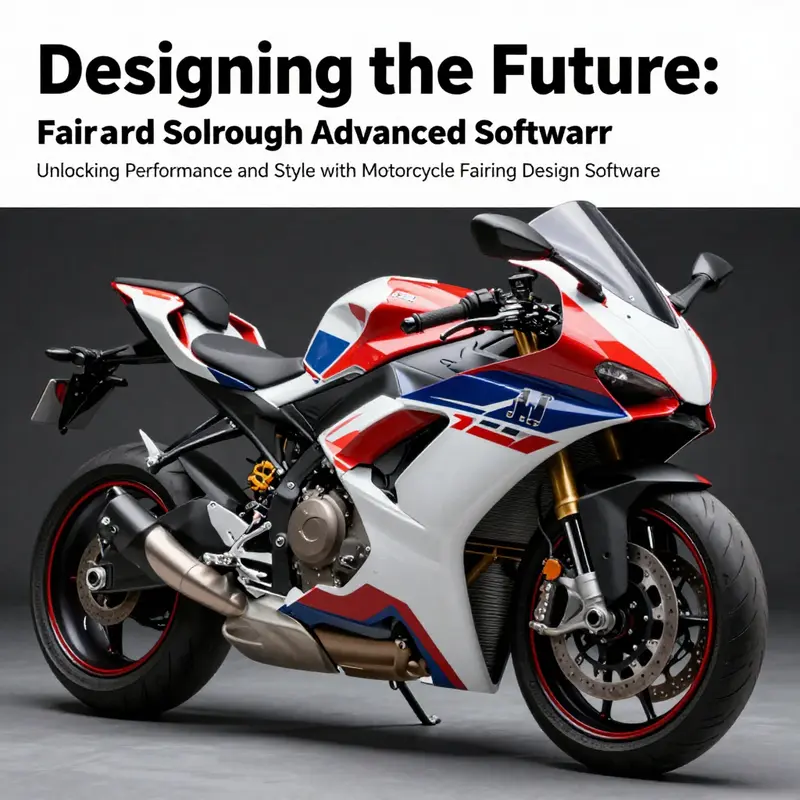
The motorcycle industry is evolving rapidly, with engineering and design increasingly powered by advanced fairing design software. These tools play a pivotal role in creating motorcycle fairings that significantly enhance aerodynamics and reduce drag, resulting in improved performance and riding experiences. Business owners in the motorcycle sector need to understand the intricacies and potential of these software solutions to generate effective designs that balance performance, aesthetic appeal, and manufacturing constraints. This article delves into the role of CAD software, the impact of aerodynamic simulations, the importance of material selection, the cost-effectiveness of design solutions, and future trends shaping the motorcycle fairing market. Through these insights, business owners can better appreciate the contributions of innovative design software in advancing motorcycle technology.
Beyond Form and Flow: How CAD-Driven Workflows Redefine Motorcycle Fairing Design
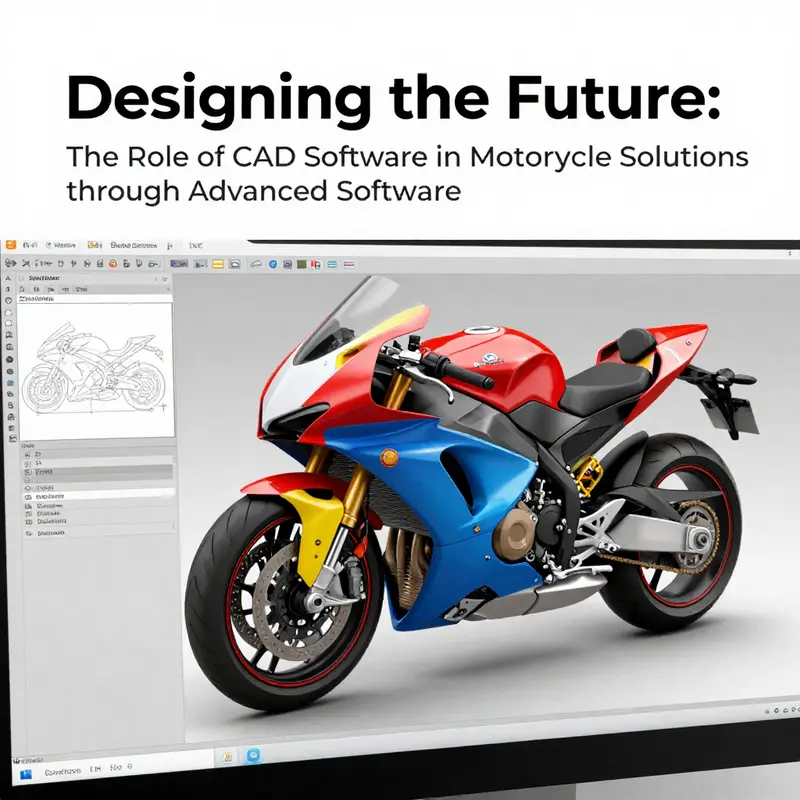
Every motorcycle fairing sits at the crossroads between speed, safety, and style. It is more than a protective shell; it is an engineered interface that shapes the rider’s experience, the bike’s behavior in the wind, and the efficiency of every subsystem tucked beneath the bodywork. When viewed through the lens of modern design practice, this interface emerges from a CAD-driven workflow that blends precision geometry, aerodynamic reasoning, and manufacturing pragmatism into a single, iterative narrative. The chapter that follows weaves these strands into a cohesive account of how digital tools translate ambition into form, while honoring the practical constraints of real-world production and the evolving preferences of riders. In this space, the fairing becomes a living part of the vehicle’s performance envelope, one that is defined not just by its external silhouette but by the internal logic of its structure, connections, and interfaces with the rest of the machine.
A core strength of contemporary fairing design is rapid prototyping in a virtual environment. Engineers begin with broad sketches that translate into digital surfaces, where the shape is neither merely aesthetic nor purely aerodynamic but a blend of both. In a CAD context, surface modeling enables designers to sculpt clean, aerodynamic transitions between the nose, the side panels, and the tail, while maintaining rigorous control over curvature continuity. This is not incidental; it is essential for achieving laminar-to-turbulent transition behavior that can be tuned through the design space. The shape is then subjected to parametric variation, so a single underlying model can morph to accommodate different body sizes, rider positions, or model variants with minimal rebuilds. This parametric flexibility is not vanity math; it directly informs performance margins by enabling the quick exploration of drag coefficients, downforce distribution, and cross-sectional area changes along the fairing’s span.
Within this design loop, a new scale of fidelity emerges when optimization is brought into the CAD environment. Topological optimization techniques—used to reduce mass while preserving stiffness and safety margins—have found a natural home in the same software ecosystems that handle surface work and structural analysis. Designers can guide the optimization toward traverse-friendly internal channels, lightweight but strong mount points, and slender but robust ribs that support the panels without creating interference with cooling channels or rider protection. The end result is a fairing with a spider-like internal skeleton that anchors the external skin while distributing loads efficiently under dynamic riding conditions. It is here that the line between external aesthetics and internal engineering blurs; the structural frame is no longer an afterthought but a co-design element that shapes the entire geometry. The convergence of topology, material behavior, and geometry in a single CAD workflow shortens the path from concept to a validated part, reducing iteration cycles and the risk of late-stage design surprises.
Aerodynamics sits at the heart of the fairing’s purpose, and CAD programs increasingly integrate or connect to fluid-dynamics analysis to close the loop between form and flow. Engineers can import or embed CFD insights directly into the design environment, evaluating how delicate market-driven refinements in curvature, edge sharpness, or panel integration influence wake behavior and pressure distribution across the rider’s torso and the bike’s radiator and intake apertures. This capability changes the discipline from a static exercise of guessing where the air will go to an evidence-based negotiation with the air itself. When a design tweak—say, a more pronounced chine or a refined shoulder contour—produces measurable improvements in lift, drag, or crosswind stability, the change is captured, stored, and replayed with a few keystrokes. The result is a more predictable development arc, where aerodynamic performance can be validated before a single euro is spent on tooling or manufacturing.
Yet CAD’s value is not only in simulating airflow. It also enables precise analysis of structural integrity and assembly tolerances, critical in racing environments where vibration, impact, and heat can push components beyond their comfortable thresholds. The same platform that shapes surfaces can also run finite element analyses to verify that the mounting points, attachment interfaces, and fastener patterns hold up under dynamic loading. This integrated approach ensures the fairing’s skin remains intact and aligned with the frame, even as a chassis experiences cornering loads, braking forces, and the acoustic beating of abraded air. In practice, this means better fit and finish in manufacturing, fewer rework cycles, and tighter control over the bill of materials. The digital twin becomes a living blueprint that travels from the designer’s desk to the shop floor with a continuity that reduces the risk of misinterpretation or translation error.
A pivotal but often underappreciated aspect of this workflow is the way CAD enables collaboration across disciplines. Designers, aerospace-style analysts, and manufacturing engineers can all work on a single, shared model, with part libraries, tolerances, and change histories synchronized through the same digital infrastructure. This collaboration reduces the tension that frequently arises between design intent and manufacturing feasibility. It also accelerates decisions. A misfit between a panel seam and a mounting bracket is flagged early, with alternatives generated and assessed without waiting for costly physical prototypes. In practice, such alignment matters when the fairing must slip into a wind tunnel, then later into a mold or a radio-controlled test rig for preliminary fit checks. The digital workflow thus becomes a bridge between creative aspiration and practical execution, ensuring that a beautiful shape does not become a production obstacle.
Among the most interesting implications of this approach is the way it reframes internal components and their effect on external aerodynamics. The research corpus demonstrates that CAD is used not only to sculpt the visible shell but also to design internal mechanisms that influence performance. Consider internal cam profiles and the need for synchronized motion within the fairing’s attachment system or cooling pathways that must remain unobstructed by external geometry. Designers use parametric tools to model these pathways so that every channel serves a functional purpose, from air intake routing to cable management, without compromising surface integrity. The concept of a lightweight yet robust internal frame—sometimes described as a spider frame—emerges as a practical solution to support the skin while preserving aerodynamics and crash performance. Such internal structures gain from topological optimization and smart material distribution, all while remaining accessible for maintenance and repair. The integration of these internal considerations within the CAD environment ensures that the final product does not merely look fast; it behaves predictably and safely under the stresses of high-speed operation.
What, then, guides the choice of CAD tooling in this context? The design teams seek platforms capable of high-fidelity surfacing, reliable stress analysis, and compelling real-time rendering for stakeholder reviews. They value systems that support seamless transitions from conceptual sketching to final manufacturing data, and they prize workflows that enable rapid scenario testing. The emphasis is on tools that support surface continuity, control over tangency and curvature, and robust export pipelines to fabrication technologies. While brand names may appear in casual conversation, the essential capability is a cohesive environment where geometry, physics, and process are not siloed but interwoven. In practice, this means adopting a design culture that treats the software as an instrument, not a set of discrete tasks. The result is not merely a fairing that satisfies a spec on paper but a holistic design that aligns aerodynamic efficiency, structural safety, aesthetic appeal, and manufacturability in a single, iterative journey.
For readers curious about how digital design translates into real-world parts and how current markets interpret digital prototypes, a look at how catalog-style bodies are curated in the motorcycle aftermarket can be enlightening. The ecosystem of available fairings, even as a reflection of digital design capabilities, illustrates how digital-to-physical handoffs occur and how design intent is preserved when the model becomes a production part. See the Honda fairings product category for an accessible sense of how digital models are translated into tangible, compatible components that fit a range of models and sub-variants. This link presents a practical anchor for understanding how CAD-driven design informs the selection and adaptation of fairings in the real world: Honda fairings.
In summary, the modern motorcycle fairing emerges as the product of a tightly integrated CAD-driven workflow that unites form, function, and fabrication. It is a process that treats geometry as a living thing, capable of evolving under the pressures of drag reduction, rider comfort, and manufacturing efficiency. It is a process that turns abstract aerodynamic goals and structural constraints into an optimized external shape, supported by an internal skeleton that guarantees safety without sacrificing speed. It is a collaborative enterprise where multi-disciplinary teams share a single, dynamic model, enabling faster iterations and more reliable outcomes. And it is a design discipline that recognizes the fairing not as a finished ornament but as a performance-critical subsystem whose digital blueprint travels from concept to concrete with fidelity, clarity, and purpose.
External resource: Recreating motorcycle fairing in less than three days
Virtual Winds, Real Lines: How CFD-Driven Tools Shape Modern Motorcycle Fairings
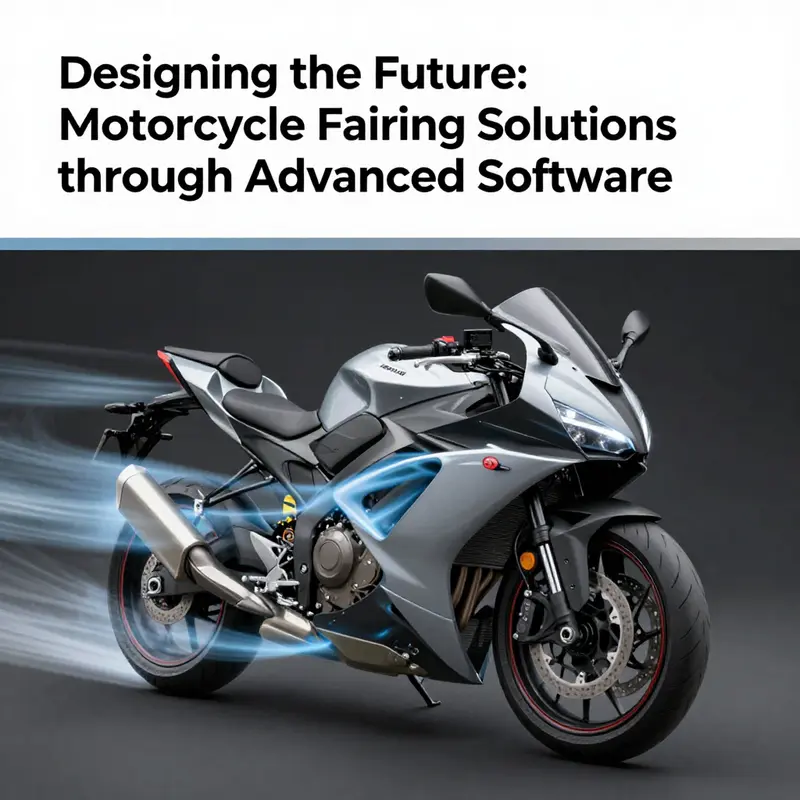
A motorcycle’s first impression often arrives before the rider settles into the saddle: the shape of its fairing, the way it seems to cut through air, and the sense of stability it promises at speed. In contemporary engineering, these impressions are no longer the product of guesswork or wind-tunnel drudgery alone. They emerge from a tightly integrated set of software tools that simulate air flow, test shape changes, and line up performance with aesthetics in a single digital thread. Aerodynamic simulations have become a central compass for modern fairing design, guiding decisions about drag reduction, lift management, and the way a rider experiences buffeting and turbulence. The result is not merely faster shapes but smarter design processes that can iterate quickly without the time and expense of repeated physical testing. The core of this transformation rests on computational fluid dynamics, or CFD, and the way engineers weave CFD into a broader design workflow that spans geometry creation, meshing, solver settings, and interpretation of results in the context of real-world constraints.
In practice, the design loop begins with a three-dimensional assumption of the bike in a riding position. The geometry is prepared to reflect rider posture, windscreen angle, seat height, and the angular relationships among the fairing panels, mirrors, and belly contours. The aim is to capture how air will interact with every surface as the vehicle accelerates, turns, and encounters crosswinds. A central challenge is balancing detail with practicality: the mesh must be fine enough to resolve boundary layer behavior and turbulent eddies near surfaces, yet coarse enough to keep simulation times reasonable for multiple iterations. Engineers invest effort in defining boundary conditions that mimic real conditions—like free-stream velocity at highway speeds and appropriate turbulence intensities—so that the results reflect plausible, repeatable outcomes. The modeling philosophy treats the fairing not as a single rigid form but as an assembly of surfaces that interact with the rider’s presence, the engine’s heat, and the aerodynamics of the entire chassis.
The heart of aerodynamic insight lies in the portrayal of flow features: boundary layers hugging the surfaces, separation points that can shed vortices, and pressure distributions that influence drag and lift. Turbulence models are chosen to mimic these effects without overburdening the solver with intractable calculations. Smooth, well-connected meshes prevent spurious results and ensure that the computed pressure fields translate into meaningful forces on each panel. In this way, a simple curvature change on a lower fairing edge can be evaluated for its influence on fore-aft stability and rider comfort at different speeds. A designer can test a sweep-back angle on the windscreen, adjust a side-curve to redirect a wake away from the rider’s helmet, or introduce a concavity that stabilizes the boundary layer over the shoulder area. Each modification becomes a data point that informs a better compromise between aerodynamic efficiency and the visual language of the machine.
Beyond raw drag figures, modern CFD workflows emphasize the quality of flow for rider experience. Engineers examine local pressure distributions to understand how the fairing shapes might shield the rider from high-speed gusts or create buffeting that degrades control at the edge of stability. They quantify moments about the roll axis to anticipate how crosswinds induce twisting forces on the chassis and handlebars. In this regard, the fairing is not only a shield from air but a tuned partner with the rider—an interface that can either amplify or dampen perceived wind noise and fatigue. The insight gained from simulations feeds into a broader design philosophy that recognizes performance as a spectrum. A fairing might yield the lowest possible drag, yet if it amplifies buffeting at practical speeds, the rider’s physiological comfort and confidence suffer. Therefore, the digital model becomes a testbed for balancing speed, control, and the rider’s sensory experience.
The software ecosystem that underpins these capabilities ranges from sophisticated, commercially developed toolsets to more accessible platforms built to democratize CFD. The emphasis is on tools that can handle complex geometries, manage multi-physics interactions, and enable rapid iteration. In many teams, CFD is complemented by detailed solid-modeling and visualization workflows that link shape generation to rendering and downstream manufacturing considerations. This integration is crucial because a design’s aerodynamic virtue must survive the transition to real-world fabrication. The way a fairing is manufactured—often through composite layups or engineered plastics—imposes constraints on curvature radii, surface smoothness, and edge sharpness. The design software therefore carries not only aerodynamic simulation capabilities but also constraints-based engineering checks. Designers can flag potential manufacturing issues early, such as radii that are too tight for certain layups or surfaces that would be difficult to trim and finish during production. This coupling of performance and producibility accelerates the path from concept to consumer without sacrificing quality or safety.
In addition to the core CFD work, the aesthetic dimension of fairing design remains essential. Aesthetics do not simply decorate performance; they frame it. The same digital environment that computes a favorable drag coefficient can be used to explore light play on curved surfaces, reflections, and transitions that communicate the machine’s personality. Designers often work with high-fidelity renderings that translate CFD-derived coloration and texture ideas into visual concepts. While such tasks may appear separate from the physics work, they are part of a unified effort to deliver a product that owners will feel compelled to ride and admire. For enthusiasts who customize their machines, the design software becomes a bridge between aerodynamics and personal expression. Tutorials and hobbyist workflows, while less formal than engineering-grade processes, still benefit from clear, iterative feedback loops. In the end, a fairing is a tangible object that must satisfy both the physics of air and the psychology of belonging to a riding community.
The practical realities of development timelines and manufacturing economics also shape how CFD-driven design unfolds. Virtual testing reduces the need for costly tunnel sessions and wind-model experiments, enabling teams to explore a larger design space before committing to prototypes. It also allows for more informed decisions about materials and assembly methods. Synthetic testing of surface textures, for example, can reveal how micro-roughness affects boundary layer behavior and local drag, guiding choices about coatings or surface finishes. The digital workflow thus becomes a more robust version of a traditional engineering funnel: ideation, analysis, refinement, and validation — all conducted within the same virtual environment. This approach not only speeds up development cycles but also fosters greater confidence in performance outcomes when the full-scale bike finally enters testing.
A broader perspective recognizes that fairing design lives at the intersection of performance engineering and consumer experience. The design team must anticipate riders’ varied needs, from sport-focused enthusiasts chasing peak speeds to riders who value stability and low fatigue over long distances. In CFD terms, this means evaluating multiple operating regimes and even yaw conditions to ensure the fairing behaves predictably in a range of real-world scenarios. The result is a lineage of shapes that each tell a story about speed, control, and rider comfort, rather than a single, optimized silhouette. When the digital model captures these stories well, revisions become conversations about trade-offs rather than defeats of pure optimization. The experience of riding a well-tuned fairing—its quietness at high speed, its steadiness in gusty crosswinds, and the rider’s sense of being enveloped yet unrestricted—becomes a measurable outcome of careful software-enabled design.
For readers who are curious about expanding their own design horizons, the most relevant path lies in exploring how CFD and general design tools can be used to prototype and visualize fairing concepts before committing to physical parts. The practical takeaway is that a disciplined digital workflow can empower a broader range of designers and engineers to contribute meaningfully to motorcycle aerodynamics, even when the team has limited access to tunnel-time or expensive test rigs. These tools democratize exploration, allowing more ideas to be tested quickly and more weight given to results that matter to riders. As the conversation between airflow science and aesthetic form grows richer, the fairing becomes not just a piece of protection but a collaborative canvas where science and style converge. Enthusiasts who want to explore visual upgrades should consider the available aftermarket categories and select designs that align with both their riding goals and the bike’s established aerodynamic language. For enthusiasts seeking visual and functional enhancements, the Honda fairings product category offers a range of options that illustrate how shape and graphic language can harmonize with performance-oriented goals. Honda fairings.
In closing, the frontier of motorcycle fairing design is less about choosing a single tool and more about weaving together a coherent digital ecosystem. CFD serves as the investigative engine, yet it thrives when integrated with robust geometry creation, visualization, and manufacturability checks. The proper alignment of these elements yields fairings that not only feel faster on the move but also read as coherent, well-made products when viewed in studio light or on the road. For scholars and practitioners alike, the literature on aerodynamic simulations remains a compass for experimentation, guiding the next generation of shapes from abstract curves to real-world machines. For a deeper dive into the methodologies that underpin CFD-driven aerodynamics across engineering disciplines, see the external resource linked at the end of this chapter.
Further reading: Aerodynamic Simulations Using Computational Fluid Dynamics. https://doi.org/10.26552/pas.z.2021.1.18
Material Alchemy in the Digital Atelier: How Software Shapes the Choice and Craft of Motorcycle Fairings
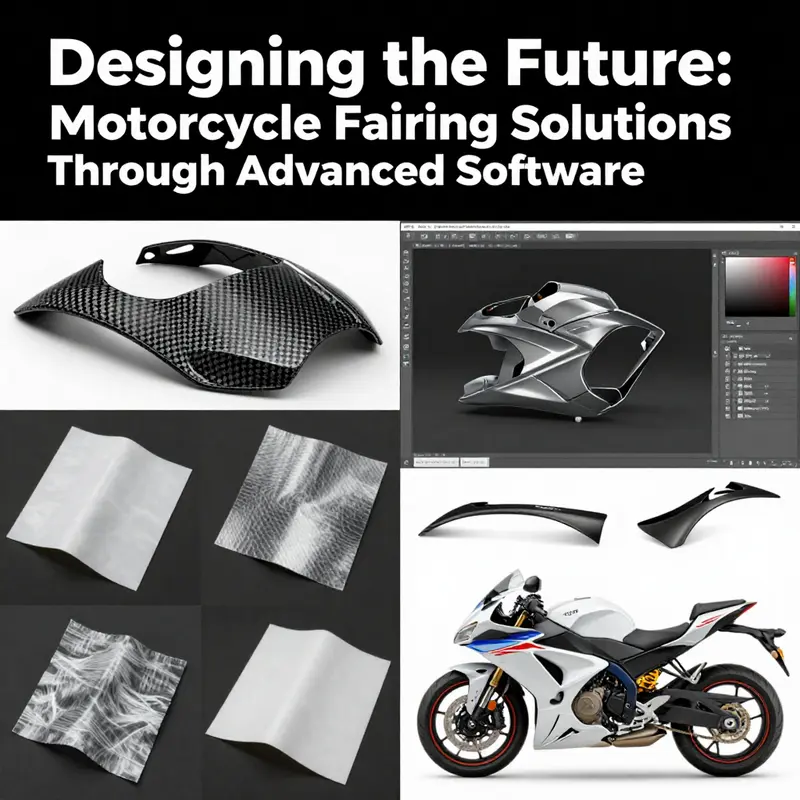
Where a motorcycle fairing begins is more than the surface that meets the wind; it is a system in which material choice, manufacturing realities, and aerodynamic goals are encoded inside design software. The modern workflow uses digital tools not only to sketch curves but to predict how a skin will behave, how it will be manufactured, and how it will perform in the wind. The result is a material alchemy in which ABS, fiberglass, and carbon fiber are not static inputs but dynamic parts of an iterative, data driven conversation about speed, cost, and durability. In CAD and CAE environments, parametric models carry material cards, simulations touch geometry, and every decision about thickness, weave, or joint strategy travels through a virtual space before a prototype is made. To understand how software shapes the final fairing, one must consider the three most common material families in contemporary motorcycles and how modern platforms treat them as multidimensional design variables rather than fixed objects.
ABS plastic represents the pragmatic core of fairing design. Its ease of manufacture, impact resistance, and low cost make it a staple for entry level, mass produced, and some mid range models. In design software, ABS is modeled with well characterized properties treated as isotropic for most practical purposes. Engineers assign density, stiffness, and thermal response and run simulations to see how the part behaves under road debris, sun exposure, and engine bay heat. The software’s material libraries enable rapid exploration of wall thickness, ribbing, and panel geometry that maintains manufacturability while meeting aero and user empathy targets. Because ABS parts are commonly produced by injection molding, the virtual model can be constrained by typical mold features, ejection angles, and draft requirements, all within the same platform. This integration of process aware modeling helps prevent late stage redesigns that would otherwise erase margins. In practice, engineers use ABS to validate baseline aerodynamic performance quickly, then dial in details that improve stability and tactile quality without breaking the bank. The aim is to establish a robust starting point that can be adjusted with another material family when performance demands escalate. The digital thread thus begins with ABS as a foundation, but it never ends there, because the same model is opened to more ambitious configurations later in the design cycle.
Fiberglass presents a compelling middle ground between cost and performance, and modern software treats it with the reach of composite analysis. Fiberglass reinforced panels offer improved strength to weight ratios and better fatigue resistance in certain regimes compared with pure plastics. The design software translates this into the capability to define a ply-based layup, specifying the orientation of fibers, the stacking sequence, and the resin system, all within a single virtual part. Engineers exploit this capability to tailor stiffness along critical load paths such as around mounting points, radii, and transition zones, while preserving manufacturability in moderate-volume production. The simulations can extend beyond static stiffness to include modal analysis, identifying how the fairing deforms or resonates at highway speeds or on rough pavement. Wind tunnel data or CFD results then feed back into the model, guiding whether the chosen layup minimizes drag and wind noise while maintaining structural integrity. The composites approach also opens the door to more nuanced aesthetics and surface quality, because fiberglass allows for clearer finishes in some shapes when combined with suitable surface preparation. Yet the cost and complexity rise with the depth of the layup, so software becomes essential in balancing performance gains against manufacturing realities and supply chain considerations. The result is a design that is lighter and stiffer than ABS alone, but with a cost profile that remains attractive for mid to high end models.
Carbon fiber, the material emblematic of high performance, pushes the software-enabled design process toward the limits of weight reduction and stiffness. Carbon fiber’s anisotropic behavior—stiff in the fiber directions, more compliant transverse to them—demands a sophisticated modeling approach. In most design suites, engineers define a ply-by-ply layup, with precise fiber orientations, curing considerations, and interlaminar strengths. The software can then couple this with FEA to predict how the fairing resists flutter at high speed, deflects under gusts, and how thermal gradients develop along the surface. These analyses are not only about peak strength; they are about long-term reliability under repeated bending, vibration, and environmental exposure. Carbon fiber cost is not ignored in the software either; cost-aware optimization is built in. Designers can set target weight reductions or stiffness thresholds and let the solver propose region-by-region material strategies, sometimes suggesting lighter carbon zones in non-critical areas and reinforcing areas where bolts or joints demand more resilience. In practice, carbon fiber often appears in upper echelons of performance motorcycles or bespoke builds, where the marginal gains justify manufacturing complexity. The design software becomes a skilled broker, balancing aspiration against feasibility and budget, while providing engineers with a transparent record of how each material choice contributes to overall aerodynamics, structural safety, and ride comfort.
Beyond these three materials, software-enabled design embraces manufacturing realities. ABS may be straightforward, fiberglass more efficient for certain shapes, and carbon fiber reserved for terminal sections or high-stress regions. The software multi-material simulation capabilities allow engineers to explore how different material patches join, how adhesives perform, and where thermal expansion mismatches could breed distortion. This level of integration is crucial for maintaining aerodynamic fidelity; a slight warp in a critical transition can alter Cd and upset the delicate balance between downforce and drag. In practice, the designer iterates not only on structural and aerodynamic goals but also on how components mate with the frame, headlights, and mounting brackets. The fairing must be considered as a family of parts that share constraints and interfaces, so software enforces compatibility while permitting each panel to be optimized for its chosen material.
All of this underscores a central idea: material choice is not a final stamp of approval. It is a core design variable, a lever that software helps pull with precision. The best outcomes emerge when engineers treat material properties, manufacturing constraints, and aerodynamic objectives as a single, continuous thread in the design narrative. The result is a fairing that respects the rider’s expectations for performance, the manufacturer’s needs for cost and scalability, and the real world conditions that govern every mile on the road. The digital atelier where ABS, fiberglass, and carbon fiber are modeled, tested, and iterated becomes the place where speed is defined not only by motor power but by the intelligent choreography of form, material, and process. And as an expanding toolbox unlocks gradient materials, multi-material concepts, and integrated digital twins, the design space grows in step with the rider’s imagination. For those who want to see practical embodiments of these material decisions, a catalog of production lines and bespoke builds offers a tangible sense of how material choices translate into real world outcomes.
Designing for Value: The Cost-Effectiveness of Modern Motorcycle Fairing Design Software
A modern motorcycle fairing is more than a cosmetic shell. It is an integrated system where aerodynamics, rider protection, weight, manufacturability, and visual identity meet in a carefully engineered envelope. When design teams adopt software-driven workflows, the costs of bringing that envelope to life shrink in ways that ripple through every stage of development. The cost-effectiveness of motorcycle fairing design software emerges most clearly when one moves beyond the glossy renderings and into the day-to-day realities of engineering practice. In this context, software tools do not merely speed up routine tasks; they reshape what counts as an acceptable risk, what a feasible iteration looks like, and how quickly a team can translate a concept into a physical, shop-floor reality. The shift from physical prototyping to digital exploration is not a single maneuver but a philosophy of design that treats the entire development cycle as a living, testable model rather than a sequence of static drafts.
The heart of this shift lies in digital workflows that connect parametric CAD environments with advanced simulation tools. In the most effective setups, design teams run through rapid, interconnected threads of analysis that span geometry creation, aerodynamic assessment, and structural integrity. The result is a structured exploration of the design space where every plausible geometry is evaluated for drag, downforce, stability, and weight. Computational Fluid Dynamics (CFD) and Finite Element Analysis (FEA) play central roles here, not as separate silos but as synchronized viewpoints on the same evolving model. Early-stage CFD, in particular, acts as a gatekeeper for aerodynamic intent, revealing how subtle curvature changes ripple through pressure distributions and boundary-layer behavior. Early feedback from these simulations helps engineers identify geometries that promise real performance gains before any physical model is built.
This kind of early evaluation is precisely what makes digital workflows cost-effective. It reduces reliance on expensive physical prototyping and iterative testing that historically strained budgets. In practice, designers move from abstract concepts to validated shapes within weeks rather than months. The ability to quantify performance early enables informed trade-offs between aero efficiency and rider comfort, between fairing stiffness and manufacturing tolerance, and between the visual language of the bike and its functional demands. The result is a streamlined path to products that meet performance targets without overspending on an endless cycle of wind tunnel sessions, clay models, and re-fabrications. In this sense, software is not just a convenience; it is a strategic instrument for avoiding costly dead ends.
A particularly powerful aspect of modern software practice is the adoption of parametric multi-software workflows. Rather than locking design into a single toolchain, teams link CAD, CFD, and FEA in a feedback-enabled loop. They might start with a parametric fairing shell in a Windows-based CAD package, then export to a CFD environment where velocity fields and pressure maps illuminate how the shape behaves in real air. After that, the same geometry is returned to the CAD domain where structural analysis under loading conditions informs thickness, ribbing, and joints. The whole circle can repeat rapidly, allowing exploration of increasingly nuanced variations—from skin panels that shave grams to internal stiffeners that resist transient loads during aggressive riding. This cross-pollination across tools is where cost benefits accumulate: fewer translation errors, fewer duplicated efforts, and fewer late-stage redesigns because critical metrics were missed earlier in the process.
It is worth noting that the cost benefits are not limited to aerodynamic gains alone. Lightweight, high-strength structures obtained through topology optimization can dramatically reduce raw material use and waste. In a racing motorcycle fairing spider, for example, topology optimization can identify regions where material can be removed without compromising stiffness or energy absorption characteristics. The payoff here is twofold: the part becomes lighter, improving acceleration and handling, and the production bill of materials shrinks due to less waste and simpler manufacturing paths. The efficiency gains cascade into shorter cycles for tooling, mold making, and assembly. When a design is validated virtually, fewer prototypes are needed on the shop floor, and the time-to-market shrinks accordingly.
Another dimension of value comes from simulation-driven risk management, particularly around passive safety and rider protection. Modern fairings integrate features such as energy-absorbing cavities, optimized crumple zones, and robust attachment points. Virtual testing of these elements—how a fairing deforms on impact, how fasteners behave under vibration, how a shielded rider’s shoulders and elbows ride within prescribed clearances—helps ensure compliance and reliability before any physical test is attempted. This level of preemptive validation reduces the likelihood of costly late-stage redesigns triggered by safety or regulatory concerns. When combined with rapid prototyping and digital validation, the end-to-end process becomes significantly more predictable in both performance and cost.
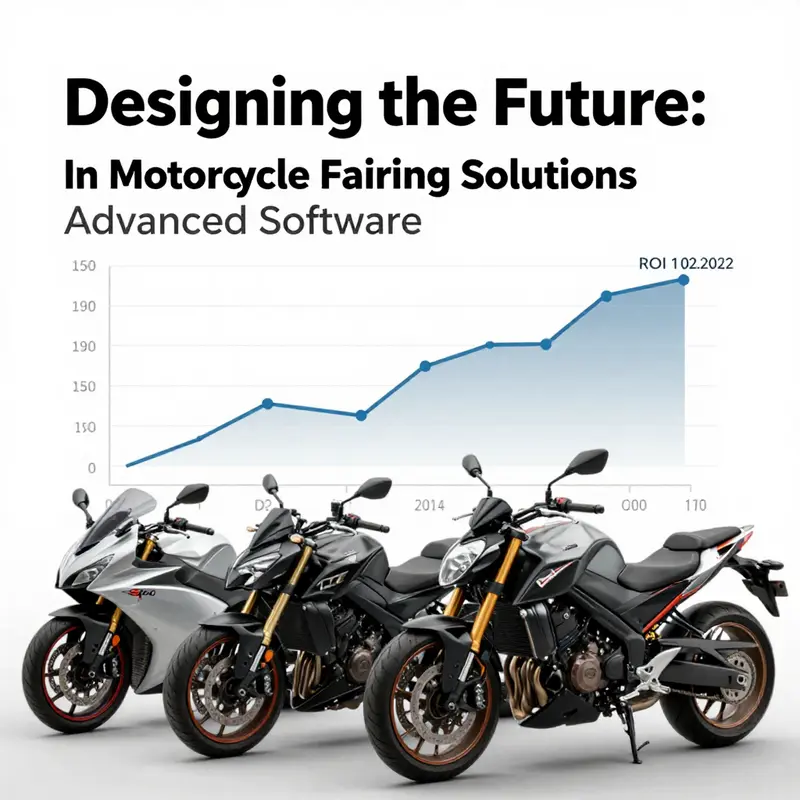
The narrative around cost is therefore twofold. First, there is a clear, direct reduction in the cost of materials and physical testing when designers can prune nonviable concepts before building them. Second, there is a broader, less tangible but equally important improvement in value: the speed with which teams can converge on optimal geometries that satisfy aerodynamic, structural, and aesthetic requirements. In many cases, the hybrid workflow reduces development time by days or weeks, which translates into substantial calendar savings for OEMs and aftermarket developers alike. A traditional path that heavily relied on full-scale clay modeling and repeated wind-tunnel validation can easily stretch toward the five- or six-figure range for each design iteration. By contrast, the integration of parametric modeling, CFD, FEA, and topology optimization tends to compress these cycles and cuts the risk of costly missteps.
In the broader ecosystem, the cumulative effect of these digital practices is measurable. A shared digital twin of the fairing design, evolving through iterations across software platforms, becomes a powerful asset for cross-functional teams. Engineers, designers, and manufacturing specialists can observe how a single change to a rib thickness or a panel curvature propagates through aerodynamic performance, weight distribution, and ease of fabrication. This transparency reduces miscommunication and accelerates consensus, which is a practical form of cost containment. It also supports manufacturing planning, where tolerance analyses and process capability studies are used to guarantee that the final product can be produced at scale with consistent performance. Even subtle improvements in tolerance handling or fixture design can prevent expensive manufacturing surprises down the line.
The practical reality of choosing a software stack also shapes value. While high-end suites offer broad capability, the most cost-effective solutions are those that integrate smoothly into the existing engineering culture and workflows. A robust design environment is not about chasing every possible feature; it is about selecting a workflow that aligns with the team’s goals, the organization’s maturity, and the cadence of development. In this light, the value proposition of motorcycle fairing design software is not simply in the sophistication of the simulation modules, but in the ease with which those modules can be combined into a coherent process that reliably produces high-performance, manufacturable, aesthetically compelling fairings.
To illustrate how current practice translates into tangible options for cost control, consider the broader market in which these tools operate. The cost advantage of digital workflows is reinforced when teams can point to concrete baselines. For instance, traditional full-scale clay modeling cycles, a staple of early-stage fairing development, typically range from $50,000 to $150,000 USD per cycle, depending on the complexity of the geometry and the number of iterations. That figure does not account for the wind-tunnel hours, instrumentation, or the time cost of repeatedly retooling for each version. By contrast, a digitally driven approach multiplies the number of design possibilities that can be explored within a fixed budget, enabling a purposeful pruning of options before any physical model is created. The resulting savings accumulate across the entire product development timeline, from initial concept through validation to production.
This broader economic argument sits on a pragmatic foundation: digital workflows encourage early exploration of both aerodynamic and structural envelopes. They also support leaner, more iterative cycles that align with modern manufacturing realities. When teams can verify that a fairing geometry yields acceptable drag reductions, appropriate downforce, and adequate stiffness while also satisfying assembly and serviceability constraints, the likelihood of a costly late-stage rewrite diminishes. The integration of simulation-driven design with rapid prototyping—both virtual and, when necessary, physical—creates a virtuous loop that accelerates innovation while curbing expense. In short, cost-effectiveness here is not a one-time discount; it is a disciplined design philosophy that treats cost as an ongoing performance metric.
For readers who want to see how contemporary fairing lines translate into practice, the landscape includes a growing catalog of design explorations and product configurations. A representative touchpoint is the 2023 new fairings collection, which demonstrates how designers leverage modular, parametric components to respond to evolving requirements and consumer preferences. This catalog-like approach embodies the shift from bespoke, one-off panels to adaptable, design-agnostic modules that can be recombined to achieve new aesthetics and performance targets without reinventing the wheel. It is a practical reminder that cost-effectiveness grows not only from simulations and topology optimization, but from architectural choices in software and data management that enable reuse, traceability, and scalable production. 2023 new fairings collection.
In the end, the most compelling argument for software-driven fairing design is not that it reduces the cost of any single task, but that it reframes what is possible within a given budget. By enabling early-stage exploration, robust digital validation, and a tighter alignment between aerodynamic goals and manufacturability, modern tools deliver a higher return on investment across the entire product lifecycle. The convergence of CFD, FEA, topology optimization, and parametric CAD means teams can pursue ambitious aerodynamic concepts with confidence, knowing that the digital model forewarns about performance, safety, and production challenges before a single mold is cut. This integrated approach accelerates innovation while containing cost, a combination that is essential for both original equipment manufacturers and aftermarket designers seeking to stay competitive in a crowded market.
For those who want a deeper technical treatment of how these digital workflows shape performance evaluation and optimization in motorcycle fairing development, refer to the broader research literature that documents design space exploration and multi-software strategies in racing prototypes. An external resource that offers a rigorous perspective on parametric workflows and their impact on performance is available online: https://www.mdpi.com/2076-3478/14/2/259.
Riding the Horizon: The Next-Generation Motorcycle Fairing Design Software and Its Impact on Aerodynamics, Customization, and Electrification
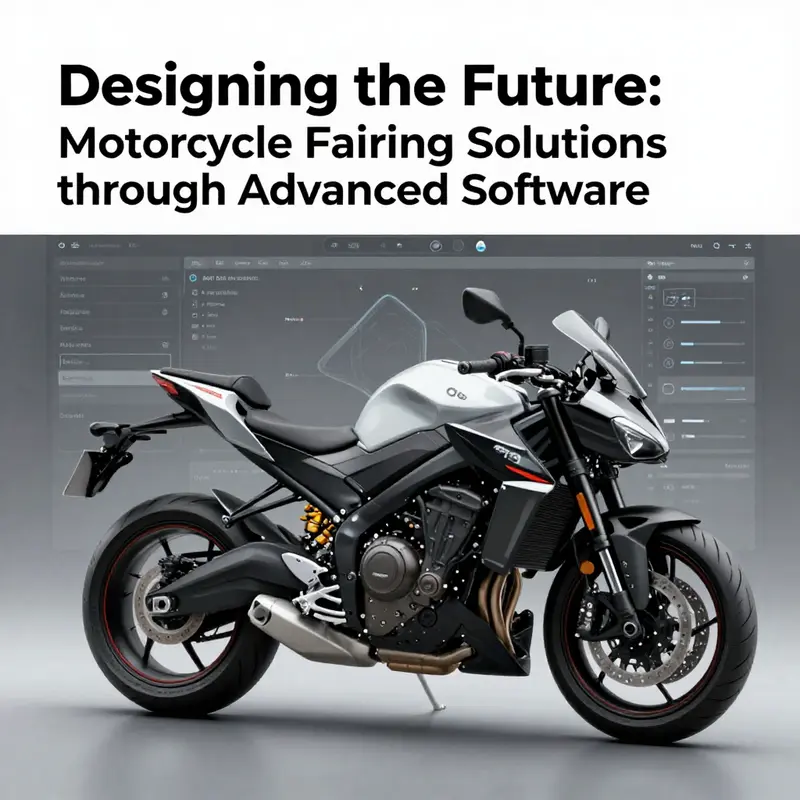
Software for motorcycle fairing design is evolving from isolated tools into an integrated ecosystem. Designers now blend CFD, CAD, and CAE in a single workflow. The goal is to predict real-world performance early and iterate quickly. This shift makes the aerodynamic envelope and the visual identity of a bike converge in digital form. It enables engineers to test shapes, materials, and assembly constraints without costly early prototypes.
Electric motorcycles intensify the need for efficient fairings. Every watt saved on drag translates to longer range and cooler battery packs. Modern design suites support parametric fairing geometry that can be tuned for varied battery layouts. A notable study from 2025 demonstrated three fairing concepts developed through the IDes process. Digital simulations then quantified airflow, pressure, and cooling effects, accelerating the design cycle and reducing risk before any physical mold is created.
Customization is no longer an afterthought. Riders demand personal colorways and graphics, but they also expect consistent performance. Digital graphic design tools integrated into the workflow let riders visualize and even tailor textures on virtual shells. Previews can be mapped onto 3D models, ensuring color accuracy and finish quality before painting. This capability elevates engagement and helps brands manage variability without sacrificing performance.
Digital prototyping is shifting development timelines. Designers push more ideas into simulations, then validate the strongest candidates with light prototypes. Generative design, AI-assisted optimization, and cloud-based collaboration shrink cycle times. The result is a digital twin of the fairing that evolves with the bike’s powertrain, rider position, and riding style. Manufacturing constraints, including moldability and material choice, are considered early, reducing late-stage changes.
Market forecasts reflect this momentum. The global motorcycle fairing market is expected to grow at a CAGR around 7 percent. Growth is driven by innovation in aesthetics and performance, plus the demand for customization and electrification. As software becomes more capable, manufacturers can bring new silhouettes to market faster and with fewer expensive reshapes. Aftermarket players benefit from faster response times and better alignment with consumer trends.
Interoperability and data integrity become strategic assets. A digital thread links concept, simulation results, and production tooling. Standardized data formats and open APIs improve collaboration across design teams, suppliers, and manufacturers. Designers can reuse aerodynamic studies across models and brands, while engineers track performance targets across a family of motorcycles. This coherence reduces risk and improves the predictability of outcomes from virtual testing to physical assembly.
A practical illustration of catalog breadth can be found in the BMW fairings catalog.
Advances in simulation fidelity are reshaping testing strategies. Turbulence models are tuned for low-Reynolds numbers typical of motorcycle scales. Designers employ adaptive meshes that focus detail where the flow separates from a fairing edge. The result is higher confidence in predicted drag and lift coefficients. With higher fidelity, teams can push more aggressive geometries and test edge cases like gusty crosswinds. AI-driven optimization highlights small morphological changes, such as chin spoilers or vent placements, that yield meaningful drag reductions without compromising rider comfort or aesthetics.
Electric propulsion also reframes thermal and aerothermal concerns. Batteries demand cooling channels that coexist with aerodynamic smoothness. Modern tools enable co-design of shell geometry and internal ducts, balancing heat rejection with drag. This synergy improves pack longevity and ride safety under aggressive performance. Designers simulate transient cooling loads during charging and high-power bursts, ensuring the fairing does not trap heat or create hot spots. The outcome is a bodywork that supports efficiency and reliability across varied climates and riding styles.
Customization evolves from color-and-graphics to integrated sensory experiences. Designers map textures, gloss, and micro-geometry to energy, light, and weather responses. Real-time configurators allow riders to see how a finish reacts to sun at different angles and how that visual effect interacts with perceived drag. These tools tie marketing narratives to engineering realities, ensuring that the claim of a personalized fairing remains credible under testing. Production plans incorporate these choices through configurable molds and modular assembly concepts that reduce time-to-market.
Digital prototyping accelerates production readiness. Once a concept satisfies virtual tests, tooling, jigs, and molds are sequenced in parallel. Additive manufacturing unlocks complex internal channels and lightweight shells that were prohibitive before. Data from simulations guides process planning, ensuring tolerances and gaps stay within targets. In distributed supply chains, a digital thread preserves geometry, material properties, and surface finishes across factories. The result is fewer late-stage changes, tighter cost control, and a smoother transition from design room to showroom floor.
Interoperability and governance also shape the next decade. Standardized data schemas, API-friendly interfaces, and traceable design histories enable teams to work across disciplines and geographies. Companies that invest in these digital rails reduce handoffs, misalignments, and rework. When design intent is captured as metadata alongside geometry and simulations, engineers can revisit decisions quickly. Sustainability criteria, such as material life cycles and recycling potential, are evaluated in parallel with performance, ensuring fairings meet evolving environmental expectations without sacrificing speed to market.
Business value is increasingly tied to the speed and fidelity of design software. Real-time dashboards align design budgets with aerodynamic targets and manufacturing constraints. Teams compare performance across families of models, enabling strategic decisions about platform alignment and commonality. In this climate, the ability to generate, test, and refine concepts rapidly is not a luxury but a baseline competency. Leaders will win by orchestrating interdisciplinary talent within a unified digital ecosystem that can adapt to changing consumer tastes and regulatory landscapes.
To anchor these ideas in practice, a 2025 study showed three fairing concepts matured through an IDes workflow. Digital simulations guided airflow improvements and reduced late-stage risk. The work demonstrated a connected digital thread, where decisions were traceable and repeatable. It underscored how design, analysis, and manufacturing planning can evolve together, rather than in serial steps. That integrated approach is becoming the norm as teams seek to compress development cycles without compromising safety or performance.
Looking ahead, the boundary between aerodynamics and brand storytelling will blur further. Software will empower riders to influence both performance targets and aesthetics in a single workflow. Immersive collaboration spaces will let designers, engineers, and customers co-create in real time, exploring trade-offs with shared digital artifacts. As this happens, the strongest software ecosystems will balance rigor with flexibility, supporting personalization at scale while maintaining manufacturability and compliance across markets.
Industry developments today hint at a more integrated future for fairing software. The ability to capture rider feedback, convert it into actionable design constraints, and re-simulate rapidly will separate early adopters from the laggards. In the end, a fairing is more than wind resistance; it is a dynamic interface between machine, environment, and rider identity. The software that choreographs this interface will determine how boldly brands push the envelope in both form and function.
External resources and ongoing investigations reinforce the picture of an ever-expanding toolset. For a deeper look into CFD-driven fairing optimization on electric platforms, see this detailed study: https://www.linkedin.com/pulse/optimized-fairing-development-electric-motorcycle-using-cfd-george-wilson/.
Final thoughts
In conclusion, motorcycle fairing design software is at the forefront of enhancing performance, aesthetics, and efficiency within the motorcycle industry. By leveraging advanced CAD tools, conducting aerodynamic simulations, and selecting optimal materials, business owners can drive innovative designs that cater to both manufacturer specifications and rider expectations. The emerging trends highlight a shift towards integrating artificial intelligence and data-driven insights, allowing for further optimization in design processes. Understanding these elements is crucial for staying competitive in a rapidly evolving market, ultimately leading to better products and satisfied customers.