

Understanding motorcycle fairing antennas is crucial for business owners in the motorcycle industry. These antennas not only add to the motorcycle’s visual appeal but also enhance functionality, catering to the increasing demand for stylish yet practical components. Each type of fairing antenna—stubby, flexible, ribbon, and specialized options for Harley-Davidson—offers unique advantages and drawbacks. Through a detailed exploration of each category, business owners can better cater to their customers’ varying needs while ensuring top performance and aesthetic quality. This guide aims to equip business owners with the necessary insights to make informed decisions regarding the right antenna solutions for their clientele.
Quiet Power on the Move: Stubby Fairing Antennas and the Clean-Line Revolution in Motorcycle Radio
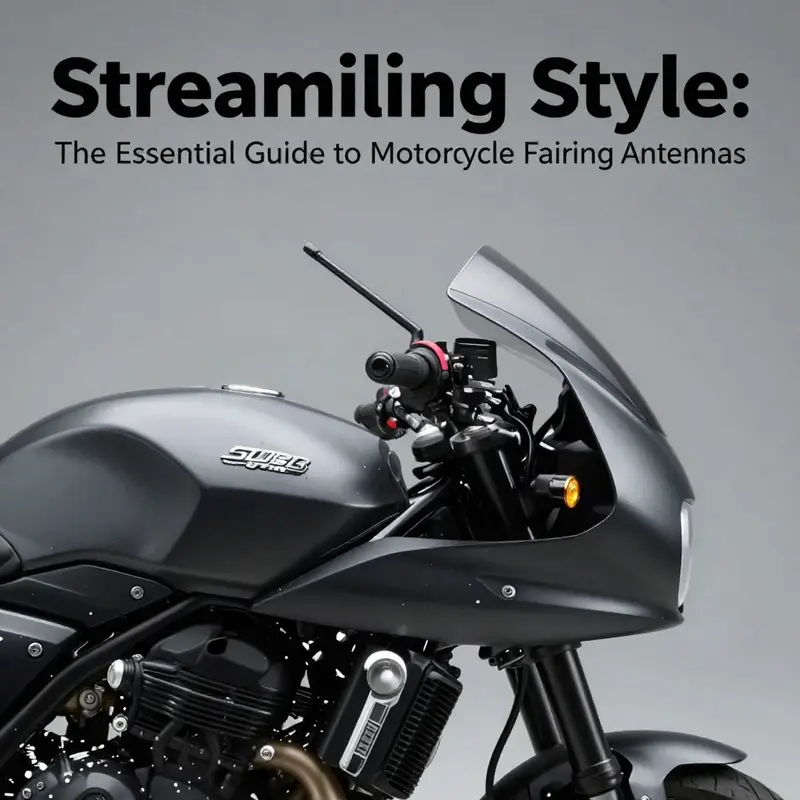
The motorcycle fairing has always been more than a shield from wind. It is a canvas on which riders craft a statement about speed, efficiency, and the art of riding lightweight and clean. In recent years, the quest for a seamless silhouette has driven a quiet revolution in how antennas are designed and installed. Among the innovations, stubby fairing antennas have emerged as the minimalist choice for riders who want reliable FM reception without sacrificing the bike’s line or aero performance. The appeal is not merely about hiding a component; it is about designing a system that respects the bike’s architecture while still delivering dependable entertainment and information while riding. The result is an approach to motorcycle radio that honors both practical needs and aesthetic discipline, a balance of function and form that feels almost invisible yet remains distinctly present when you need it. This is the story of how stubby antennas became more than a trend; they represent a philosophy of integration, where the device and the bodywork share the same language and, in the process, redefine what an antenna can do when placed in the embrace of a fairing rather than perched on the windscreen or the handlebars.
The appeal begins with aerodynamics. A motorcycle’s fairing is not merely decorative. It is a carefully engineered shield that reduces drag, controls airflow, and trims wind noise at highway speeds. Any protrusion that disrupts that flow becomes a liability. Stubby antennas address this problem by shrinking the visual profile and, more importantly, trimming the wind’s bite. When an antenna sits close to the fairing, the air particles meet a surface that is already shaped for smooth passage. The result is a calm ride at higher speeds and a modest but noticeable decrease in wind-induced vibration. Riders who spend long hours on the road often describe this as a tangible sense of literacy in the bike’s behavior: a machine that feels more composed, more intentional, when the antenna is tucked close to the bodywork. The difference is not dramatic day to day, but over a long ride, the small reductions in wind noise and buffeting accumulate into a more relaxed, less fatiguing experience. In that sense, stubby antennas become a small but meaningful upgrade in the rider’s comfort toolkit, a detail that quietly supports endurance on touring routes, urban commutes, and weekend loops alike.
The minimalist aesthetic is not an accident. It is an intentional choice that aligns with broader shifts in motorcycle design, where riders seek fewer visible tech bits and more unfettered lines. The fairing is a sculpture as much as a functional shell, and every element that intrudes on its surface must justify itself. Stubby antennas embody this ethos by offering a compact footprint that can be tucked into seams, covered by edges, or mounted flush against the fairing’s curvature. Because the antenna’s shell is short, it can be positioned along conforming planes where it follows the fairing’s geometry rather than fighting it. The result is a look that appears as if the bike was designed with the antenna inside from the start. For riders who prize a clean, uncluttered profile—especially those who customize bikes with color-matched panels or high-gloss paints—the value of restraint becomes part of the functional narrative. The bike stops announcing its technology and starts telling a story about quiet capability, speed, and confidence in design.
Yet the minimalist virtue is not only about aesthetics. It extends to practicalities of installation and maintenance. Stubby antennas are typically designed to be discreet along the fairing or frame, a feature that reduces vulnerability to contact during parking, road debris, and the daily ritual of bagging and unbagging a motorcycle. In dense urban environments, where bikes are concentrated and parking spots are tight, a compact antenna is less likely to snag on covers or fittings. The design thus supports a rider’s routine, not just the ride itself. The flexible, low-profile mount sometimes used for these antennas also helps absorb vibrations and minor impacts without transferring stress to the antenna’s internal elements. The result is a more durable unit that can withstand the typical bumps of city life, where the bike’s footprint is as much a statement of culture as it is a piece of transportation hardware. In this way, the stubby approach mirrors a broader philosophy: you do not always need to replace or rebuild the working parts of a system to improve its performance; sometimes you reposition and resculpt them so they fit more gracefully into the existing architecture.
The signal performance of stubby antennas is a nuanced topic. The core limitation is well understood: they tend to require stronger local FM signals to deliver robust reception. In cities with dense broadcasting networks and clear line-of-sight to multiple transmitters, a stubby antenna can perform exceptionally well, delivering reliable reception that rivals longer designs when the rider is mindful of placement. In rural or remote areas, or in valley basins where signals are weak and reflections are less predictable, the shorter radiator has its challenges. The operator then experiences more reliance on the local signal strength and less forgiveness for weak towers or obstructed views. This is not an indictment of the design; rather, it reflects a trade-off that the rider accepts when choosing a streamlined profile. For many, the compromise is worth it because the radio’s practical utility remains, even when the signal is less robust than a full-length system in distant locations. The rider’s experience becomes a dialogue with the environment, a reminder that technology interacts with geography as much as with circuitry.
Another dimension to consider is durability and longevity. The compact construction of stubby antennas makes them less susceptible to bending or breaking from storage and covers, which is especially relevant for riders who park in tight spaces or store their bikes in shared garages. The materials and mounting strategies used for these antennas are chosen to withstand vibrations and weathering, a critical consideration for all-weather riders. Over time, the design evolves to address flexing and micro-movements that arise from engine and road vibrations. The concern that a stubby might develop a “set” from repeated bending is valid in some cases, but modern materials and mounting techniques have reduced that risk substantially. With the right fitting, the antenna remains springy enough to recover after minor flexing, and the overall system remains tuned to a stable reception profile. Riders often report that the best outcomes come from positions that keep the antenna away from direct exhaust and heat sources, with cabling routed along protected channels where movement is minimized. The consequence is a longer service life with fewer surprises during routine maintenance.
Compatibility is an essential thread in the story of stubby antennas. Motorcycle models vary widely in fairing shapes, mounting points, and fairing materials. The same conceptual product must accommodate plastic, fiberglass, and composite shells, as well as differential curvature along the fairing’s perimeter. The installation philosophy emphasizes non-destructive integration: clean routing channels, recessed grommets, and mounting pads that preserve the fairing’s integrity and finish. For riders who value customization, there are universal solutions that can be trimmed and adjusted to fit a range of models, from sport-tours to urban commuters. The modularity of the approach is part of its appeal. Instead of being locked into a single, rigid installation, riders can adapt the method to their bike’s unique geometry. In turn, the fairing becomes a platform for thoughtful engineering, where each rider’s decisions about placement contribute to the overall outcome: better aerodynamics, cleaner lines, and dependable radio reception that does not compete with the bike’s silhouette.
The concept of minimalism in motorcycle antennas intersects with broader discussions about how technology integrates with design. A related idea is the ghost antenna, a term that describes variants engineered to disappear visually while maintaining signal integrity. The ghost approach moves beyond simple concealment and toward an engineering discipline that treats the antenna as a functional feature rather than a decorative add-on. The pursuit of invisibility in design does not come at the expense of performance. Instead, it challenges engineers to refine materials, geometry, and placement so that the rider perceives the system as a natural extension of the fairing itself. This is the heart of the minimalist philosophy in modern motorcycling: let the rider feel the machine, not the device, and let the hardware serve the ride rather than steal the attention.
For readers exploring how stubby antennas fit within a broader ecosystem of fairing electronics, a practical consideration is exploration and education. The rider’s journey often begins with inquiry about fitment, materials, and how a discreet antenna can harmonize with a bike’s color, finish, and style. The learning curve includes understanding that signal quality is a function of both the antenna and its surroundings. It is not solely about the transmitter and receiver; it is also about how the rider’s bodywork and environment shape the signal’s path. In practice, riders who take the time to study installation diagrams, test placements, and cable management habits often discover the best results come from patient, iterative experimentation rather than hurried, one-size-fits-all prescriptions. The reward is a setup that feels tailored to the bike and the rider—a system that contributes to a coherent visual identity and a stable, satisfying radio experience.
The narrative of stubby antennas also aligns with the social and cultural dimensions of motorcycling. Riders who value clean lines often express pride in a bike that communicates sophistication through restraint. The absence of a prominent antenna is a visual whisper that the machine is designed for speed and purpose, not for ostentation. In this sense, the minimalist approach travels beyond technical performance. It touches on how a rider sees the bike, how the rider wants to be seen, and how the machine participates in the rhythm of everyday life—from the early morning commute to a weekend escape. The equipment becomes a language of its own, a vocabulary that speaks about efficiency, discipline, and a willingness to trade a bit of extra signal strength for the harmony of form and function.
As with any design decision, there are trade-offs and choices. The key for riders is to understand their own riding contexts and listening to how the bike and antenna respond under different conditions. In the city, where signals are plentiful and the visual impact of hardware is under scrutiny, a stubby antenna often delivers a more effortless, integrated feel. On a long, winding road that climbs into remote zones, the rider may notice that a slightly longer element would offer more resilience against weaker signals, though at the cost of some visual impact and a touch more wind interaction. The decision becomes a balancing act between texture, tone, and tonality—the texture of rods and wires, the tone of the fairing’s finish, and the overall tonality of the bike’s presentation. This is where expertise and experience matter. Riders who have spent time riding with different configurations know what to expect, how to adjust their expectations, and how to tune other aspects of the audio system to compensate if necessary. After all, the fairing is a living part of the bike’s intelligence, and the antenna is one of its quiet, unassuming organs, performing its duty while allowing the rider to remain immersed in the ride.
For readers who want a clearer sense of how stubby antennas fit into the broader ecosystem of fairing accessories, the following resource offers a compact vantage point into the broader family of fairing adaptions. For a curated look at compatible fairing options, see the BMW fairings collection. BMW fairings. This link provides a sense of how the overall design language of a bike’s outer shell is shaped by careful considerations of every add-on, not just the primary features. The same reach for careful integration applies to the radio antenna, which, in its modest size, becomes a bridge between form and function.
In closing this thread, the stubby fairing antenna stands as a quiet symbol of refinement. It embodies a modular philosophy that respects the bike as a single sculpture, where every detail matters and nothing should shout for attention. It is about riding where the machine feels almost invisible—yet, at moments when music, weather, or traffic require attention, the radio remains a reliable, unobtrusive companion. The minimalist choice is not simply about hiding a component; it is about choosing a way of riding that prizes balance, legibility, and confidence in the machine’s integrated design. The result is a motorcycle experience that remains focused on motion and perception, where the fairing and the antenna operate in concert to deliver both aesthetic clarity and practical clarity on the road ahead. External resources of this topic, including related reference material, can offer broader context. External reference: https://www.amazon.com/CravenSpeed-Stubby-Antenna-Compatible-Harley-Davidson/dp/B07V5QZLJG
Flexible Antennas on the Fairing: Enduring, Aerodynamic Reception for Modern Motorcycles

The fairing is more than a shield for a motorcycle; it is the sculpture that defines a bike’s silhouette, its interaction with wind, and, increasingly, the role of embedded technology. In this landscape, antennas that disappear into the bodywork do more than preserve aesthetics. They shape the ride by preserving clean lines, reducing drag, and supplying a stable connection to the outside world. flexible antennas embody a practical synthesis of durability and performance, turning the fairing into a sanctuary for signal reception even when the road throws surprises. These antennas are not mere add-ons; they are engineered extensions of the bike’s aerodynamic language, designed to survive the patrol of weather, vibration, and impact while maintaining the visual integrity riders expect from a well-built motorcycle.
The core appeal of flexible antennas lies in their resilience. Built with a flexible spring base or a bendable core material, they are designed to yield when encounters are less than ideal—think of a stray stone, a low-hanging branch, or the occasional bump against a parking curb. When the threat passes, they return to their original alignment with minimal residual deformation. This capability is more than a convenience. It translates into reliability for touring riders who face varied road surfaces and for city commuters who negotiate tight parking and frequent stops. The mechanical advantage is simple but meaningful: if an antenna can bend without breaking, it remains functional longer and requires fewer maintenance interventions, which in turn supports a maintenance-friendly, on-the-road experience. In practice, the spring-based or flexible-core designs distribute and absorb shocks differently than rigid options, offering a more forgiving response under impact and vibration.
Aesthetics and aerodynamics are not sacrificed for durability. In fact, flexible antennas are prized for their low-profile silhouettes that align with the fairing’s contour. When mounted along the edge of a fairing, under a frame rail, or along a spine that follows the bike’s lines, these antennas minimize wind noise and reduce drag-induced buffeting. The more seamless the integration, the less surface discontinuity there is to disturb the laminar flow around the bike’s body. This is particularly important on sport-touring machines and commuters where riders spend long hours in the saddle and every decibel of wind noise matters. The flexible form factor also accommodates the curved, composite surfaces that characterize modern fairings, allowing the antenna to sit flush against the bodywork without protruding into tendons of airflow. In practice, the result is a smoother ride with fewer vibrations audible through the chassis and more stable reception—an often overlooked but crucial dimension of in-bike electronics.
From a design standpoint, the material science behind flexible antennas borrows from aerospace-inspired thinking. The materials chosen must stand up to UV exposure, rain, temperature swings, and the constant flexing that riding imposes. Weatherproof coatings, UV resistance, and robust bonding to the fairing surface ensure that even after months of exposure to sun and rain, the antenna retains its mechanical fidelity and electrical performance. The balance here is delicate: a core that is too soft might not return to position reliably after large flexes; a core that is too stiff may not yield enough under minor impacts to protect the connector or the mounting point. The end result is a small, durable drafting of engineering into everyday riding—an invisible but integral part of the bike’s sensorial engineering package.
Electrical performance, while not as flashy as a new exhaust note or a sharper steering feel, is the practical heart of any antenna system. Flexible antennas approach performance with a recognition that signal strength is not solely a function of length or height; it is a function of how the antenna interacts with its surrounding geometry. When mounted along the fairing, the antenna’s orientation, proximity to metal surfaces, and proximity to plastic or fiberglass can all modulate coupling to the RF environment. A well-engineered flexible antenna leverages its form to preserve a stable impedance and a predictable radiation pattern. In strong local FM environments, a flexible design can deliver robust reception without requiring tall, conspicuous elements that would mar the bike’s look. Conversely, in weak-signal regions, the same design must be able to rely on a higher-quality electrical matching and a stable, repeatable response to keep audio intelligible rather than garbled. The engineering challenge is to deliver an antenna that performs consistently across a broad spectrum of riding scenarios while remaining inconspicuous—an elegant contradiction that the best flexible designs resolve with thoughtful geometry and resilient materials.
The practical installation story of flexible fairing antennas often reinforces the perception that aesthetics and ease of service go hand in hand. A common approach uses screw-on or adhesive mounting systems that require little to no modification to the motorcycle. For many riders, the ability to install or upgrade an antenna without cutting, drilling, or altering the fabric of the fairing is as compelling as the prospect of better reception. This plug-and-play ethos aligns with the broader philosophy of modern fairing upgrades: enhance integration without requiring a factory-like intervention that might void warranties or destabilize the bike’s warranty calculus. Because fairings are typically crafted from fiberglass, plastics, or composite materials, the choice of mounting method matters. A robust adhesive, paired with a mechanical fastener that distributes load, ensures that the antenna remains in the correct plan relative to the fairing’s surface. The goal is an almost invisible installation that yields a clean, uninterrupted surface and avoids the visual clutter that can come with more conspicuous hardware.
The horizon of compatibility for flexible fairing antennas stretches across a spectrum of riding styles. Touring riders who seek long-range reliability on imperfect backroads find comfort in the resilience of flexible designs; city commuters who want to preserve a sleek look while maintaining essential radio reception also benefit. The visual discipline of a clean, uncluttered fairing is increasingly seen as a feature, not a compromise, when the antenna sits within the bodywork and disappears from sight while performing its function. This is where the integration narrative becomes particularly compelling: the fairing is not simply a shell but a canvas on which a rider balances form and function. In that sense, flexible antennas become an expressive extension of the bike’s design language—their presence felt more in the absence of their outline than in their visible silhouette.
In the broader context of fairing upgrades, some riders explore the parallel design logic found in cable and ribbon fairings. While those technologies target airflow management and drag reduction for cables and lines, the underlying principle—managing how flexible structures interact with air—translates elegantly to antenna design. The same philosophy that reduces strumming, drag, and wind noise in fairing channels informs a flexible antenna’s geometry and placement. The aim is to minimize surface disruption, preserve a smooth exterior, and maintain a steady signal path. It’s not about sacrificing performance for looks; rather, it’s about delivering reliable reception through an interface that respects both the bike’s aerodynamics and the rider’s sense of style.
Riders should also recognize the longer-term maintenance implications of flexible antennas. Modern iterations emphasize longevity and weather resilience, but constant flexing can, over time, lead to material fatigue or a subtle set if the device is pressed into a fixed position for extended periods. The response to this risk is twofold: use materials with proven fatigue resistance and design the mounting so flexing does not become a forced bend. Regular inspection of the mounting point, connector integrity, and the visible portion of the antenna can catch early signs of wear before performance or appearance is affected. With thoughtful material choices and mounting geometry, a flexible antenna remains a dependable feature on the bike for years of riding, weather, and traveling across varying terrains.
For riders exploring fairing upgrades, the availability of compatible options that fit a range of bikes and fairing shapes makes the flexible approach particularly appealing. The emphasis on compatibility—easy installation, minimal modification, and durable performance—echoes a broader trend toward plug-and-play enhancements that respect a bike’s original styling while expanding its practical capabilities. In this sense, flexible fairing antennas are more than a signal accessory; they are a design decision that preserves the visual integrity of the bike while delivering dependable reception in diverse environments.
For readers seeking a concrete point of reference within the broader ecosystem of fairing customization, one can explore the Honda fairings category to gain a sense of how integrated accessories cohere with modern fairing design. This resource offers a window into the kinds of fairing continua that riders commonly consider when upgrading their bikes, including the way integrated components harmonize with the overall silhouette and ergonomics of the machine. Honda fairings. The lesson within that catalog touches a core truth of the chapter: the most successful enhancements are those that preserve or enhance the bike’s visual language while delivering practical benefits on the road.
As the road ahead remains dynamic, flexible antennas offer a durable, aesthetically faithful path for fairing-mounted reception. They deliver resilience against the bumps and flex of real-world riding, maintain a discreet presence on the bike, and support reliable signal performance when local FM fields are strong enough to be leveraged. They also remind riders that functionality and form are not mutually exclusive, but complementary forces that, when balanced, yield a more satisfying riding experience. The fairing, after all, is a partner in riding—one that can shelter the rider and the signal with equal effectiveness when configured with care and attention to material behavior, mounting geometry, and environmental exposure.
External resource: For a practical peek at how external product listings frame flexible antennas and related accessories, see the external listing linked here: https://www.amazon.com/dp/B0BZQXKJYF. This resource provides a sense of the kind of durability and weatherproofing claims that guiding designers emphasize, even as riders rely on real-world feedback from installations across many model years and riding conditions.
Ribbon Antennas: Seamless Integration into Motorcycle Fairing Antennas
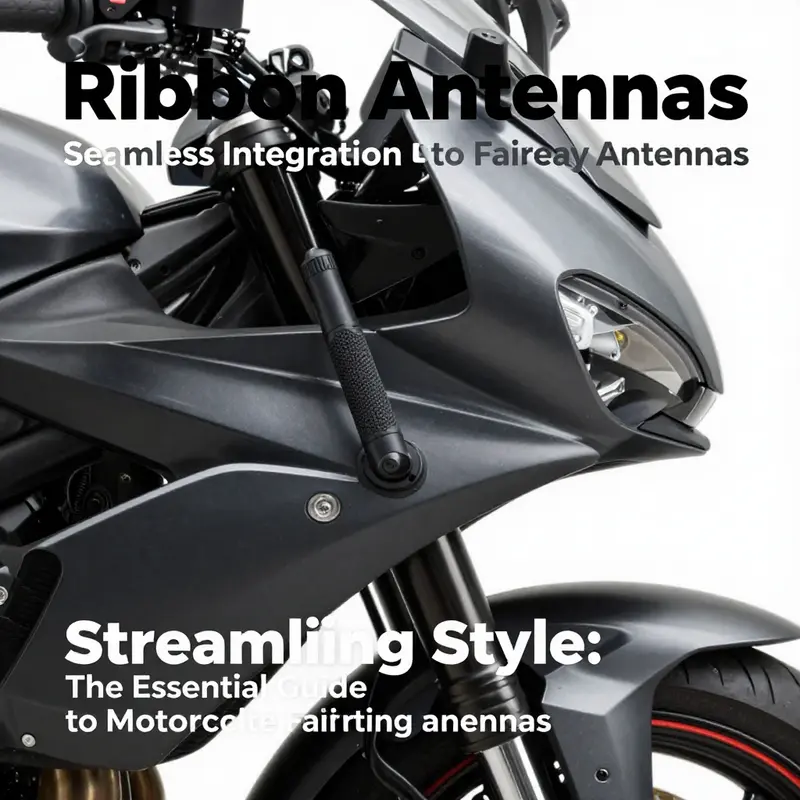
Riding into the wind, the motorcycle’s silhouette becomes a statement as much about aerodynamics as it is about expression. In this space, antennas no longer sit as afterthoughts that disrupt the line of a bike. Ribbon antennas—the thin, flat stripes that nestle within the fairing’s skin—represent a deliberate shift toward invisible tech, where function and form blend as cleanly as the bike’s paint. This chapter explores how a seemingly simple change in antenna geometry can reshape not just reception quality but also the way a rider experiences a machine. Ribbon antennas are not merely a gadget tucked away; they are a design philosophy that treats the fairing as a canvas for technology, a place where the radio tuning and the wind stream are harmonized to create a more cohesive riding experience.
The essence of a ribbon antenna lies in its geometry. Instead of a protruding rod that must punch through the air, a ribbon is a slender band that can lie flat within the fairing’s internal cavities or be recessed along the frame or under the edge of a panel. The materials and construction are chosen to maintain the structural integrity of the fairing while ensuring that the conductor route remains shielded from vibration and moisture. The result is a look that is almost ghostly: a surface that appears untouched by the device it hides, yet still responsible for the radio signal that keeps a rider connected to the outside world. In practical terms, this means a smoother fairing surface, less wind noise, and a cleaner aesthetic that suits bikes built for speed and long-distance comfort alike.
From a performance standpoint, ribbon antennas are a study in balance. Their flat profile contributes to reduced form drag, a key factor for sport-touring machines that must slice through air at high speeds without the drag penalties that come with traditional whip antennas. The low-profile geometry also minimizes protrusions that would otherwise be exposed to road grime, gravel spray, and the occasional door seal on a crowded parking lot. Inside the fairing, the ribbon sits near the reflective surfaces and mounting points that can influence reception. The design challenge is to place the conductive path so that it benefits from the fairing’s natural shielding while avoiding interference from power lines, ignition noise, and nearby electronics. Modern iterations often pair the ribbon with careful shielding and ferrite beads to suppress any stray RF energy, ensuring the signal remains clean even when the rider’s environment is less than ideal.
The aerodynamic advantages of a seamless integration go beyond the absence of a visible antenna. The ribbon’s discreet profile helps preserve the bike’s overall airflow characteristics. Wind can feel like a consultancy with a rider, offering subtle feedback in the form of buffeting or flutter if a component disrupts the contour. With a well-integrated ribbon, that feedback is minimized. Riders report a quieter ride at highway speeds, with the fairing acting as a more continuous surface rather than a battleground of competing plastics and metal. In tours across winding roads and long straights alike, the absence of wind-induced rattles around an external antenna translates into a calmer cockpit, which can reduce fatigue over hours of listening to the radio or navigation cues.
Durability is another compelling argument for ribbon antennas. When the element is housed within the fairing, it is shielded from direct impacts, weather exposure, and the constant vibrations that come from engine pulses and road irregularities. The integration also simplifies maintenance: there is less to wipe down, less to worry about when the bike is covered in a garage, and fewer chances for the element to snag on branches or bike covers. That said, durability is not a guarantee of indestructibility. The internal routing of the conductor must be designed to withstand flexing and temperature cycles, while seals and gaskets around the fairing’s edges must be robust enough to prevent moisture ingress that could corrode connectors. The best installations create a buffer of protection around the ribbon, with careful channeling of cables and a resilient seal around the fairing opening. In this respect, ribbon antennas behave like other modern embedded components: they rely on the skill of the installation to meet the rider’s expectations for both aesthetics and function.
The signal performance of embedded ribbons is quietly nuanced. In regions with strong FM signals, ribbons deliver reliable reception with minimal fuss. The flat geometry does not inherently amplify or degrade the signal on its own; rather, it depends on the surrounding hardware and the strength of the broadcasting signal. Where urban canyons and rolling terrain challenge reception, the lack of a visible whip can sometimes correlate with a need for careful placement and, in some cases, an amplification solution integrated within the fairing’s electronics. This is not a universal requirement, but it is a reality riders should understand: the quiet elegance of an embedded antenna can mask the fact that, in certain locales, the signal path benefits from a little extra help. Designers and installers often optimize the coax routing, grounding strategy, and RF shielding to preserve as much signal integrity as possible without sacrificing the fairing’s pristine look.
The broader ecosystem of fairing design also shapes how ribbon antennas are perceived and implemented. Fairings come in a wide array of shapes—from aggressively sculpted sport bikes to more generous touring shells. The challenge for embedded ribbons is to accommodate this diversity without becoming a patchwork of compromises. A ribbon that works beautifully on a glassy, cliff-faced curve might require a different internal channeling in a bike whose fairing hugs the wheel and the engine more tightly. The result is a design conversation about how a single technology can be adaptable without losing its essence: a slim, almost invisible conductor that respects the bike’s lines while performing a practical task. Across brands and model lines, designers seek solutions that allow the antenna to sit flush with the surface, blend with the paint, or follow the fairing’s natural contour so that the rider experiences neither a peak in acoustics nor a shadow on the aesthetic.
On the topic of aesthetics, ribbon antennas carry a kind of quiet luxury. They reinforce the notion that a modern motorcycle can be as technologically capable as it is visually coherent. In high-end models, where the finishing details are paramount, the integration becomes a selling point in its own right. The rider no longer has to choose between form and function; the ribbon provides a signal pathway that respects the bike’s artistry. The minimalism of the design also invites customization: fairing materials, paint finishes, and microtextures can be chosen to emphasize the line where the ribbon lies, turning the antenna into a subtle signature rather than a distraction. It is this synergy of design discipline and practical performance that makes ribbon antennas a compelling option for riders who prize both elegance and E.F.I.* radio clarity on the road.
If you are shaping a future build or restoring a classic with modern electronics in mind, the choice of fairing geometry matters just as much as the antenna’s electrical specifications. It is no longer enough to select a component for its technical spec alone; you must consider how it will exist inside the bike’s skin. In this sense, the fairing and the antenna form a single system. A fairing that is well engineered for embedded components will welcome a ribbon with the same openness it affords to a fuel-injection line or a braided wiring loom. Conversely, a poorly executed inner layout can undermine even the most elegant ribbon, turning a whisper-quiet design into a source of interference and maintenance headaches.
The idea of integration has implications for aftermarket and custom builds alike. For riders who crave a factory-finished look, embedded ribbons offer a route to preserve the go-fast aesthetics without inviting a bulging exterior. For custom projects, the ribbon’s flat form makes it easier to tuck into unconventional fairing amendments, whether that means reshaping a panel to hide the antenna or restoring a vintage shell with a modern RF heart. In either scenario, the decision to go with a ribbon is, at its core, a statement about the rider’s values: they want a bike that looks unbroken and performs without visible compromises. This is especially true for riders who value the tactile experience of a clean cockpit and the satisfaction of a fairing that speaks to both speed and steadiness on the road.
The practical takeaway for riders and builders is straightforward. When considering ribbon antennas, evaluate the overall fairing strategy as a single system rather than a standalone accessory. Check the fit against the bike’s geometry, confirm the internal routing paths, and ensure that the seal around the fairing’s edge will stand up to weather and vibration. In cities and towns, the advantage is immediate: a clean, unobtrusive profile doesn’t catch on bike covers or storage solutions, and you can park with confidence knowing that the invisible antenna is protected beneath a protective shell. On longer rides, the combination of reduced wind noise, protected internals, and steady FM reception translates into a more relaxed, more connected journey. For riders who have already embraced a minimalist approach to their bikes, ribbon antennas feel like a natural extension of that philosophy.
Within the broader family of fairing antennas, ribbon technology stands out as a mature option that respects the bike’s design language while delivering tangible benefits. It is not a cure-all; the strength of the local FM signal and the integrity of the installation still determine ultimate performance. Yet the appeal is undeniable: a seamless, elegant integration that reduces drag, hides electronics, and keeps the rider in a state of focus rather than distraction. For those exploring the intersections of style and function, ribbon antennas offer a compelling narrative about how technology should live on a motorcycle. They remind us that the best innovations often arrive not as a loud artifact but as a quiet enhancement that fades into the lines you already love to ride.
For riders curious about how embedded antennas can adapt to different fairing architectures, a helpful point of reference is the BMW fairings category, which showcases a range of fairing geometries and how internal components can be integrated without compromising the silhouette. This example illustrates that the same design ethos behind ribbon antennas—subtlety, cohesion, and performance—can be translated across a spectrum of styles and brands. When planning an upgrade or a build, consider how the fairing’s curvature, panel gaps, and mounting cavities will interact with a ribbon’s flat profile. The right combination makes the integration appear almost inevitable—like the bike’s body has always housed the radio, rather than a separate add-on that had to be squeezed in. In this sense, ribbon antennas embody a design principle that will likely guide future fairing innovations as riders demand cleaner aesthetics and more reliable reception in equal measure.
If you want to dive deeper into the practical aspects of installation and the kind of materials that support robust, weatherproof integration, the broader ecosystem of motorcycle antennas provides a wealth of detailed, technical guidance. For a more comprehensive look at how the market is evolving and what aftermarket and OEM solutions are aiming to deliver, you can explore a detailed overview available from a global supplier platform. The external resource provides a broader technical landscape that complements the chapter’s focus on seamless integration and the careful engineering behind embedded fairing antennas. https://www.alibaba.com/product-detail/Upgrade-Your-Ride-with-Motorcycle-Antennas_1600458732292.html?spm=a2700.1.leaddetails.1
Stealth Signals: Integrating Antennas into Harley‑Davidson Fairings for Style, Signal Integrity, and Sound

The marriage of form and function has never been more evident than in the way modern motorcycles accommodate antennas. Across a spectrum of riders, from city commuters to long-haul explorers, the desire for clean lines, reduced wind noise, and dependable radio reception prompts a strategic rethink of how antennas are mounted. In Harley-Davidson’s lineup, this rethink takes the shape of specialized fairing integrations that hide the antenna inside the bodywork itself. The result is a bicycle that looks as if the antenna never existed, yet remains capable of delivering reliable AM/FM reception and, in some configurations, a richer audio experience. These design choices are more than cosmetic; they reflect a broader engineering philosophy where aerodynamics, aesthetics, and electronics coexist without compromise. The hidden approach proves that an antenna can perform as well as its protruding counterparts while contributing to a silhouette that feels engineered around the rider’s line of sight and the bike’s muscular stance.
To appreciate the appeal, it helps to imagine the fairing as a carefully contoured habitat for signals. When the antenna is embedded within the fairing, it becomes part of the visual language of the machine. A rider sees a line that continues uninterrupted from the fairing’s edge to the tank, rather than a mast interrupting the wind. That continuity isn’t simply about style. It reduces the potential for snagging or damage during parking and storage, especially where tight spaces and tight corners demand nimble maneuvering. It also minimizes the risk of accidental contact with external antennas during multi‑hour rides, when the last thing a rider wants is a compromised signal or a vibration-induced buzz entering the audio system. The result is a more serene, unified ride that emphasizes rider immersion—sound, signal, and sight—all in one cohesive package.
In the Harley-Davidson ecosystem, one prominent direction is the complete concealment of the AM/FM/WB antenna inside the fairing. The effect is a clean, uncluttered look that aligns with the brand’s premium aesthetic while preserving the integrity of radio reception. This approach demonstrates that concealment and performance are not mutually exclusive. The challenge, of course, is to engineer an internal path for the signal that remains robust under a wide range of speeds, altitudes, and weather conditions. The fairing itself, typically fashioned from a combination of fiberglass or lightweight plastics, acts as a tuned environment rather than a simple shell. Its internal cavities and surrounding materials influence signal propagation, so the antenna must be designed to coax reliable reception without becoming a victim of the very architecture that hides it. In practice, the hidden antenna mirrors the original equipment in reception quality, which means riders do not have to sacrifice signal clarity for the sake of aesthetics.
Beyond the antenna, Harley-Davidson’s fairing system often interfaces with a broader audio strategy that complements the stealth appearance. The objective is to deliver a richer audio experience without forcing the rider to choose between loudness and clarity. An integrated approach—one that embraces compact amplification and discreet speaker placement—can be realized in tandem with a hidden antenna system. In this scenario, an inner fairing audio kit becomes the catalyst for a more engaging road experience. The kit typically comprises a compact amplifier, a set of speakers, and the housing that replaces standard inner fairing components. The modular design is notable for its plug‑and‑play simplicity: two wiring connections can suffice to energize the system, which is a meaningful concession for riders who value straightforward installation over complex rework. In practice, the 250‑watt power envelope, delivered as two channels, is enough to carve through wind noise at highway speeds while maintaining musical fidelity that remains intelligible even when the helmet is on and the ambient sound is loud.
From a rider’s perspective, the combination of a hidden AM/FM/WB antenna and a high‑powered inner fairing audio kit represents more than a premium upgrade; it embodies a philosophy of integrative design. The audio system is not an afterthought but a partner to the antenna system, both sharing the same architectural space and benefiting from the same design discipline. Engineers plan for how signal paths and audio paths coexist—how the radio’s RF front end and the amplifier’s power supply interact with the fairing’s structure, how vibration is dampened, and how heat is dispersed in a compact, enclosed environment. The result is not simply better aesthetics or louder music; it is a more coherent, purposeful machine where technology recedes into the background of the rider’s experience, allowing the machine’s character to take center stage.
For riders who prioritize a clean cockpit over external gadgets, the hidden antenna offers a tangible payoff in creature comfort. The absence of visible hardware reduces wind drag and wind noise in the rider’s field of view. It also minimizes potential wind‑induced vibrations that can threaten the fidelity of FM reception at speed. Ribbon‑like or flat, nearly invisible forms can be embedded with precision along the fairing’s contours, and the internal routing can be designed to minimize the chances of signal loss caused by local interference from chrome fixtures or metallic components beneath the finish. The aerodynamic advantages might seem subtle, yet they align with a larger trend toward streamlined efficiency in modern motorcycles, where even small improvements compound over long distances and high speeds.
The very idea of miniaturized, concealed hardware is not unique to Harley-Davidson, but the brand’s implementation highlights a commitment to preserving the visual integrity of its bikes. In some cases, a hidden antenna will sit behind a clear layer or beneath a painted panel, effectively disappearing into the artwork of the fairing. The rider experiences a seamless exterior, while the electrical system maintains robust function. The challenge of designing such systems is nontrivial: the materials used in the fairing, the thickness of the panels, and the proximity of other electronic components can all influence performance. Yet advancements in materials science and RF engineering have matured to the point where discreet integration is not a compromise but a deliberate design choice with predictable results. The rider gains a visually cohesive motorcycle where the line between aesthetic form and practical function blurs in a favorable way.
For those who are curious about the broader ecosystem of fairings and their role in modern motorcycles, the conversation often turns to how internal fairing elements can be enhanced through complementary components. An internal audio solution, for example, can be paired with the hidden antenna to deliver a more immersive experience while maintaining the machine’s clean appearance. The integration mindset—the idea that the right components can be embedded within the fairing to support both practicality and mood—reflects a broader engineering principle: systems should be designed holistically, with attention to how each part influences every other part. When applied to Harley‑Davidson’s touring and premium models, this principle manifests as a coherent strategy to deliver not only excellent signal reception but also a refined, step‑up audio environment that respects the rider’s sense of space and movement on the road.
To illustrate the practical implications, consider the daily realities of riders who park in tight urban spaces where a protruding antenna is vulnerable to bending or snags. A fairing‑embedded antenna offers tangible protection and reduces the risk of damage when the bike is covered or shuffled into a crowded parking bay. In contrast, riders who frequently traverse rural or weak‑signal zones will appreciate the design’s emphasis on maintaining stable reception under non‑ideal conditions. The hidden approach does more than shield the antenna from impact; it also preserves the fairing’s structural integrity and contributes to a more consistent RF environment by reducing extraneous metallic interference near the signal path. The net effect is a smoother, more dependable experience where the rider’s attention remains on the road rather than on the technology perched on the outside of the bike.
Meanwhile, the interior audio solution serves as a natural counterpoint to the hidden antenna concept. The two components—concealed signal reception and an enhanced, compact audio system—work in concert to deliver a cocoon of sound that travels with the rider rather than radiating outward from a single external mast. The 250‑watt power figure, delivered through two channels, can be tuned via an integrated app to suit rider preferences, enabling adjustments such as balance, bass emphasis, and overall loudness that remains intelligible in the wind and at speed. Bluetooth connectivity adds another layer of convenience, aligning with modern expectations of wireless media streaming and hands‑free control. The ability to fine‑tune the system through a dedicated app, including automatic volume control and a seven‑band equalizer, makes the audio experience as personal as the color and trim of the fairing itself. In this sense, the integration is not merely about adding features but about cultivating a rider environment where technology supports a sense of immersion and enjoyment rather than distracting from the act of riding.
Those who study or design motorcycle hardware often return to an essential question: how does the integration influence the rider’s perception of the machine? In Harley‑Davidson’s fairing ecosystem, the answer is clear. Antennas hidden within the fairing reduce visual distraction and maintain the machine’s iconic silhouette, while the audio upgrade elevates the sensory experience without making noise a constant competitor to the engine. This combination—stealthy signal reception plus a refined audio pipeline—embodies a philosophy of high value, where aesthetics and function are not competing priorities but converging streams that reinforce one another. For enthusiasts who value both style and performance, the approach represents a thoughtful compromise that respects the integrity of the fairing’s line and the rider’s subjective experience of sound and reception. It is a reminder that great motorcycles are not just about raw power or flashy finishes; they are about the careful choreography of every published dimension, every installed component, and every signal bouncing through the bodywork on a windy ride.
For readers who want to situate Harley‑Davidson’s approach within a wider landscape of fairing design, it helps to consider how other brands handle similar challenges. The broader idea of embedding antennas and electronics into fairings is part of a universal trend toward minimalist external hardware and more robust internal systems. If you’re exploring fairing options for different brands or models, a practical starting point is to examine category pages that showcase how various manufacturers and retailers approach fairing aesthetics and integration. For example, you can explore the Honda fairings category to see how designers across brands express similar priorities—clean lines, protected electronics, and a balanced blend of form and function. See the Honda fairings category for examples of how integrated design manifests across brand lines.
External resources are essential for grounding these concepts in real‑world applications. For riders who want to dive deeper into Harley’s approach to concealment and integration, there is a detailed discussion of the hidden AM/FM/WB antenna in the brand’s accessory literature and compatible installation guides. The approach emphasizes not only signal integrity but also long‑term durability and compatibility with the bike’s overall electrical architecture. By examining these resources, riders and builders can gain a clearer sense of how a hidden antenna design translates into perceived value on the road—the serenity of clean lines, the confidence of dependable reception, and the pleasure of listening to music or talk while the bike’s smooth rhythm carries you forward.
Internal link reference: Honda fairings category
External resource: https://www.harley-davidson.com/en_us/accessories/antennas/hide-the-am-fm-wb-antenna-inside-the-fairing-for-a-clean-uncluttered-look.html
Final thoughts
In summary, motorcycle fairing antennas represent a significant intersection of style and functionality that is highly relevant for business owners in the motorcycle industry. Each type—stubby, flexible, ribbon, and specialized Harley-Davidson antennas—cater to different customer preferences and riding conditions. By understanding the unique characteristics and applications of these antennas, businesses can better meet the needs of their clientele while enhancing the overall riding experience. As riders seek improved aesthetics, durability, and performance, aligning product offerings with these needs will ensure sustained customer satisfaction and business growth.