
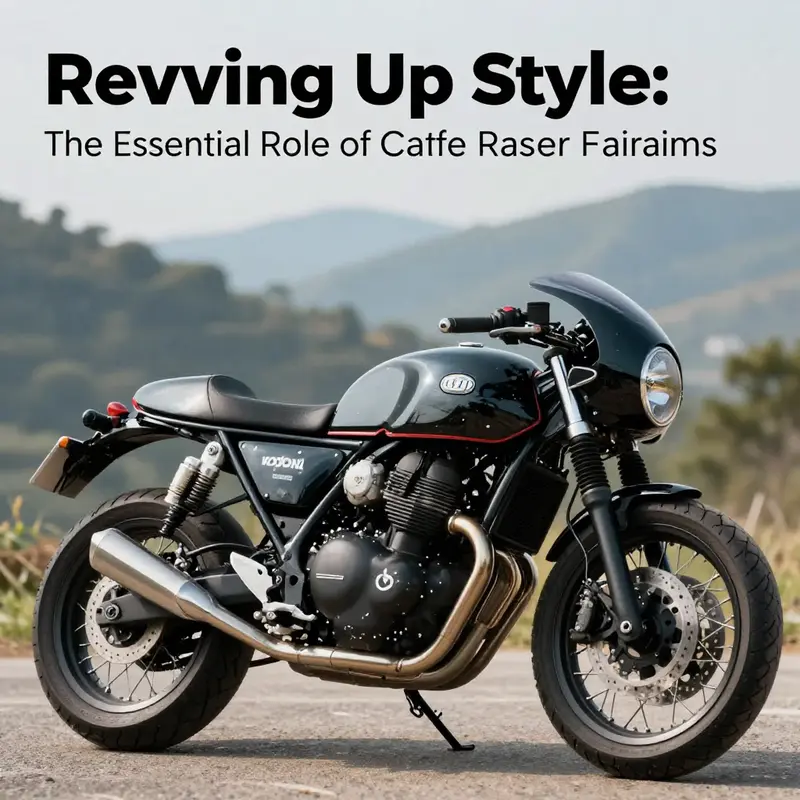
Motorcycle cafe racer fairings have emerged as a defining characteristic of the cafe racer aesthetic, blending vintage design with modern performance enhancements. Their minimalist structure not only enhances the visual appeal of motorcycles but also serves critical aerodynamic functions. This article delves into the intricate balance between aesthetics and functionality in motorcycle fairings, examining their construction materials, integration with custom builds, aftermarket options for upgrades, and tracing their historical evolution. Each chapter reveals key insights that inform business owners about how these stylish components can elevate motorcycle design while improving rider experience.
Shaping Speed: The Silhouette, Substance, and Speed of Cafe Racer Fairings
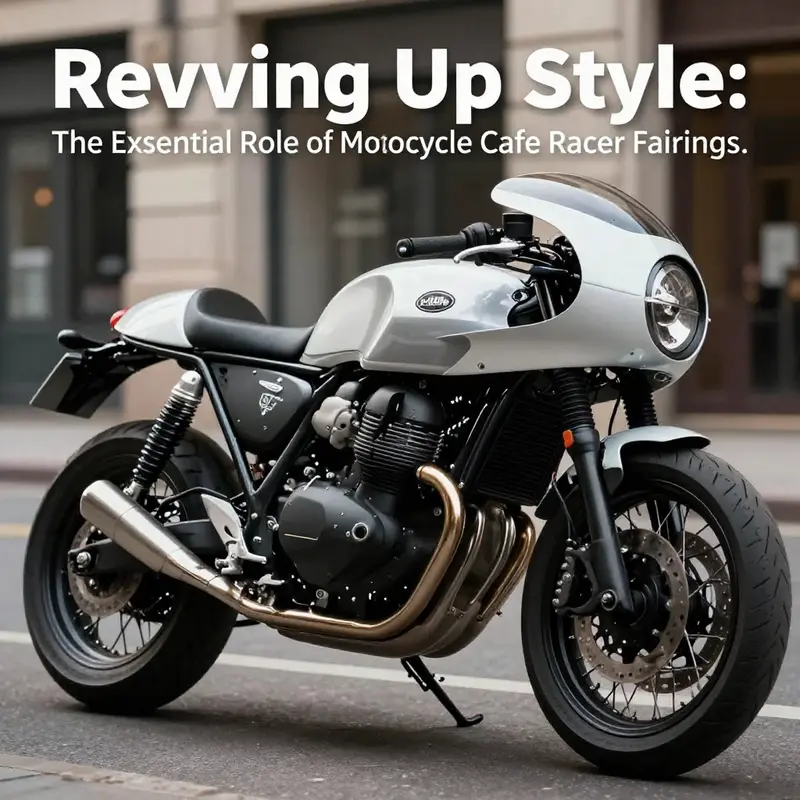
The cafe racer fairing sits at a quiet crossroads where heritage meets engineering, where a bike’s silhouette becomes a statement and its air pathways become a performance note. To understand its role is to trace a lineage from the late 1950s and 60s, when riders on British streets began chasing a new ideal: speed without sacrificing control or character. The fairing emerged as a thoughtful compromise, a small, purposeful shell that skims the air just enough to tame gusts and buffeting while preserving the bike’s lean, unencumbered personality. In that sense, the cafe racer fairing is not merely a windscreen or a cosmetic feature. It is a compact engineering solution that carries culture on its curves.
Aesthetically, cafe racer fairings are a study in restraint. They avoid the bulk and flourish of full touring shells, favoring streamlined forms that wrap around the front of the bike with surgical precision. The look is clean, almost skeletal, with lines that emphasize length and velocity rather than volume. The absence of chrome in much contemporary practice reinforces a raw, no-frills character that many builders find compelling. The minimalism is deliberate: every inch of fairing surface serves a purpose, from shaping the rider’s line of sight to guiding the wind past the shoulders and chest in a way that communicates speed even when the machine is standing still.
Within that aesthetic framework, the fairing also frames the headlight and instrument cluster in a way that blends function with style. Small windshields or lightweight screens are often integrated to manage microbursts of air without turning the bike into a wind tunnel. The goal is not to shelter the rider from all wind, but to reduce buffeting and to provide a more stable ride at the critical speeds cafe racers historically chased on back roads and city streets alike. This balance between exposure and protection mirrors the broader cafe racer ethos: maintain a poised, athletic posture while enjoying a high-speed, hands-on riding experience. The resulting visual is a profile that looks ready to sprint, even when parked, and that aura is part of the appeal.
Functionally, fairings contribute several essential roles. They shape airflow in ways that can improve high-speed stability by reducing drag and smoothing the vehicle’s front-end wake. The aerodynamics are not about perfection at hyper-speed; they are about predictable behavior at the urban and highway ranges where cafe racers typically operate. Reducing drag helps with fuel efficiency and engine cooling in some builds, but more importantly it lowers fatigue-inducing wind forces on the rider. The shielded rider benefits from a calmer cockpit at sustained speeds, and that comfort translates into a longer, more engaging riding experience. The fairing also protects sensitive components from debris, weather, and minor impacts during fast-paced urban runs. While not as comprehensive as touring fairings, a cafe racer shellprovides a modest, practical layer of defense without erasing the bike’s nimble, agile feel.
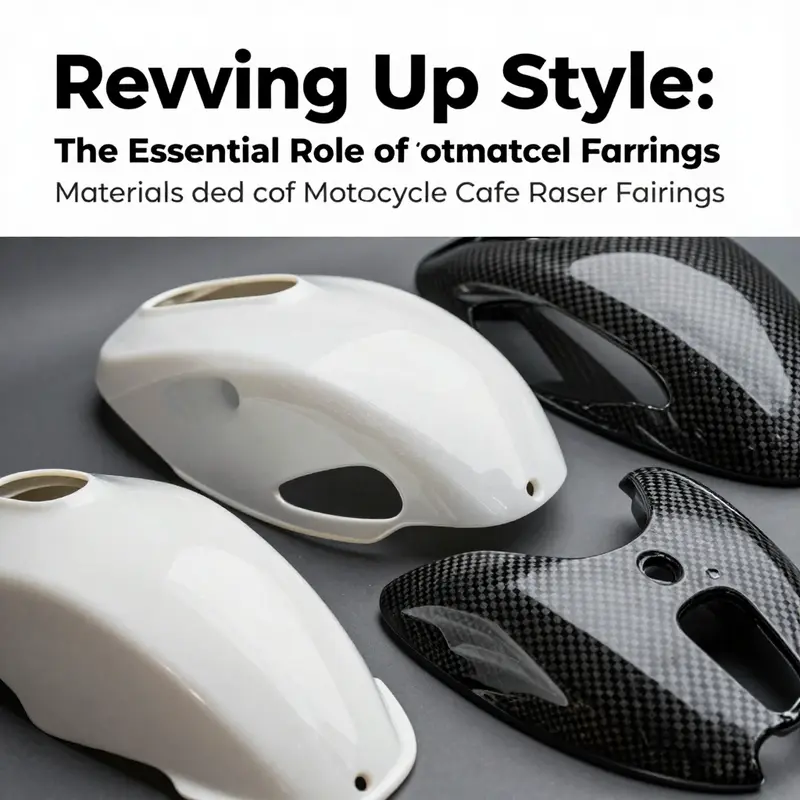
Material choices for these fairings reflect a careful balance among weight, rigidity, cost, and processability. ABS resin is common for entry- and mid-level builds because it is forgiving in shaping and easy to repair after using tools and fitting. Fiberglass offers a stiffer, lighter option with more customization opportunities for unique contours, while carbon fiber delivers top-tier strength-to-weight benefits for high-end builds, albeit at a higher cost. Each material behaves differently under heat and sun, and the choice often comes down to the rider’s priorities: durability and repairability, or top-shelf weight savings and rigidity. The manufacturing approach matters, too. Fairings can be hand-laid in fiberglass or carbon, or produced in injection-molded ABS for repeatable shapes. The result is not just a shell but a carefully tuned surface that harmonizes with the bike’s fuel tank, fuel cap, seat profile, and the rider’s chosen clip-on or traditional handlebar setup.
A distinctive challenge—and opportunity—of cafe racer fairing design is integration. The fairing must align with the headlight, the instrument cluster, and the fuel tank in a manner that feels like one continuous line rather than a separate add-on. This requires precise mounting points and sometimes a modular approach so the fairing can be swapped without extensive rework. The handlebars often sit close to the windscreen, so designers pay special attention to the angle and height to maintain visibility and control. The tank’s curvature and the seat’s shape influence the fairing’s lower edges, ensuring a clean flow that emphasizes the bike’s long, planted stance. In practice, this means the fairing becomes an extension of the bike’s core geometry rather than a detachable shell. When done right, it looks and feels like the fairing belongs to the original frame rather than being bolted on later.
Modern cafe racer builds increasingly treat fairings as a canvas for personal expression as much as for performance. While heritage shapes guide the overall philosophy, builders experiment with lightweight sections, split sections, or minimal nose cones to achieve a personalized silhouette. The integration with the headlight cluster—whether a single, compact unit or a pair of small lamps—remains a signature touch. The lines of the fairing often echo the curve of the fuel tank, and the result is a cohesive silhouette that reads as a single design language rather than a patchwork of parts. This unity is what makes cafe racer aesthetics so compelling: the rider looks at the bike and sees a careful negotiation between motor, rider, and air.
In practice, the choice of fairing also reflects a rider’s priorities between authenticity and modern performance. Some purists prize faithful, period-inspired shapes that hew closely to 60s racing heritage. Others lean into contemporary materials and testing methods, preferring smoother finishes, sharper edges, or more integrated wind protection that doesn’t compromise the bike’s light feel. The conversation between form and function is ongoing, and the fairing acts as the primary theater for that dialogue. A well-executed fairing can help a naked bike feel like a true cafe racer by shaping the front end’s presence while preserving the bike’s agility. It is the front-end argument made visible: a statement that speed is as much about how the bike meets the air as about how it breathes under the rider’s hands.
From an engineering perspective, the fairing’s role extends to protecting the rider and the bike’s core systems. In slips or tumbles, the lower edges of a well-designed fairing can absorb or deflect energy, reducing the risk of damage to the radiator, wiring harnesses, and instrument electronics. The fairing also contributes to a smoother intake path by directing air toward the engine with less turbulent separation. This can have subtle but meaningful effects on performance, particularly in builds that push a naked bike toward cafe racer geometry without adopting a full-body shell. While the ideal cafe racer is not about maximum shelter, it is about creating a controllable, predictable aerodynamic environment—the rider knows how the bike will behave at the edge of its acceleration and cornering limits thanks to the fairing’s shaping and mounting integrity.
Designers and builders frequently reference a broader culture of cafe racer inspiration when shaping fairings. The aesthetic conversation often centers on language—long, clean lines that imply speed; a reduced chrome vocabulary; and a preference for glass or acrylic wind screens that blend with the bike’s lines rather than competing with them. In this culture, the fairing becomes part of a ritual—ritual of customization, ritual of tuning, ritual of finding a personal balance between old-school feel and modern function. The result is a bike that reads like a living collaboration between rider and machine, where the fairing is both a partner and a passport to a particular riding mood.
For builders and riders who want practical direction on parts and compatibility, it helps to look at real-world examples and catalogs that map fairing shapes to model families. A dedicated catalog can reveal how specific curves align with different tank profiles, how mounting points accommodate varied clip-on setups, and how the nose’s curvature interacts with the headlight housing. One example pathway into this world is a collection that highlights model-specific fairings and fitments, offering a sense of how a particular line aligns with certain bikes. If you’re curious about a model-oriented approach, you can explore a Ducati-focused selection that illustrates how a 1199-era fairing integrates with frame geometry and rider ergonomics, providing a practical reference for shaping a cafe racer look while preserving ride feel. https://ultimatemotorx.net/product-category/ducati-fairings/fairings-for-ducati-1199/
As a closing reflection, the cafe racer fairing embodies the fusion of heritage and modern engineering. It is at once a century-spanning design language and a precise, contemporary component. It speaks to riders who value tactile feedback, immediate sense of speed, and a bike that feels alive in the wind. The fairing is a storyteller’s instrument; it conveys a narrative of lean lines and focused purpose. It translates a rider’s intent into a physical form that can be both admired on a showroom floor and trusted on a twisty back road. The result is a motorcycle aesthetic and experience that remains distinctly mechanical and intensely human. For those who want to deepen their understanding of how fairings connect to engineering principles, there are resources that detail the underlying science of airflows and structural considerations—materials, mounting strategies, and integration with cooling and electrical systems—so builders can make informed decisions as they craft their own cafe racer legacies.
External resource: https://www.ducati.com/technical-resources/abs-fairing-engineering
null
null
Wings of Speed: Integrating Café Racer Fairings into Custom Motorcycle Builds
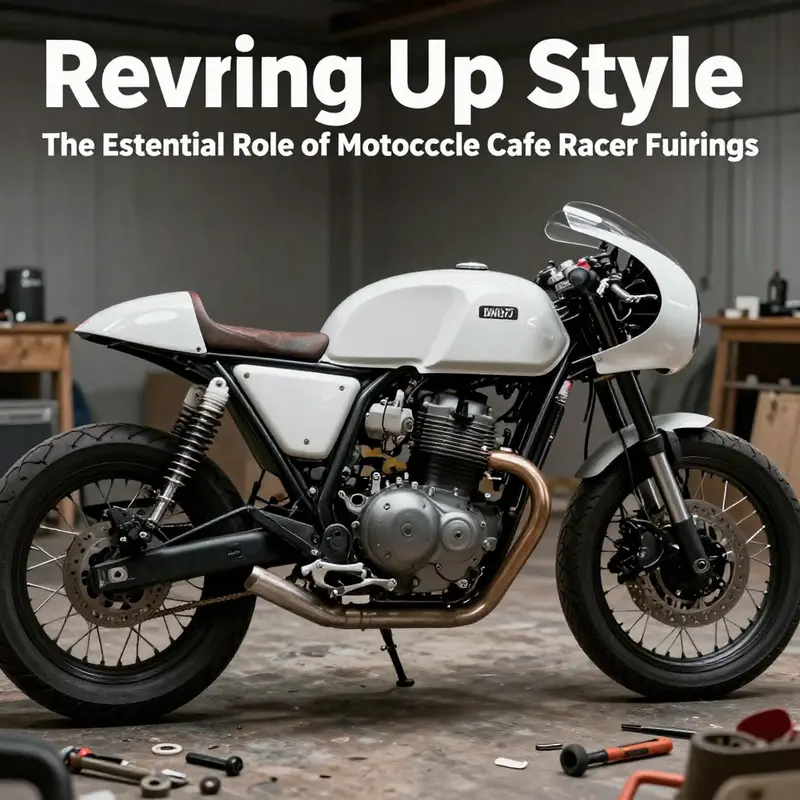
A cafe racer fairing is more than a shell aimed at reducing wind drag. In the hands of a thoughtful builder, it becomes the backbone of a bike’s visual and tactile identity, a unifying gesture that ties the rider’s posture to the machine’s mechanical heartbeat. The integration of a fairing into a custom build is less about selecting a pretty piece and more about designing a cascade of lines that flows from the nose to the tail. It is a careful negotiation between speed and reverence for the bike’s lineage, a balance between minimalism and functionality that yields a silhouette both lean and legible. To the untrained eye, a fairing might appear as a simple front cover, yet on a well-executed project it is a central design element, shaping how the bike breathes at speed and how the rider experiences the ride. It frames the headlight, joins the fuel tank, and finishes with a tail that reads as a single, continuous stroke of intent rather than a collection of separate pieces. Read as a whole, the fairing embodies the dream of a city-run machine that can still carve through wind and weather with precision and style.
The essence of integrating a cafe racer fairing lies in proportion. A well-proportioned fairing does more than protect the rider from wind; it harmonizes the bike’s geometry with the rider’s stance. In a classic setup built around a lightweight chassis and a forward-leaning riding position, the fairing should sit in and around the frame with a low, disciplined profile. The nose becomes a focal point that directs attention to the lines established by the fuel tank and the seat unit, dragging the rider’s eye along a continuous arc that ends at the tail. The challenge is to avoid a bulky front end that interrupts the slim, skeletal look that defines cafe racer aesthetics. Instead, the fairing should feel like an extension of the bike’s skeleton—an evolution of the street‑fighting, performance-minded posture that gave café racers their early fame. As a result, builders often seek a modest windscreen and a top line that tucks close to the tank, producing a silhouette that is both aggressive and elegant.
The integration also demands mindful material choices. Traditional cafe racer builds favored lightweight, affordable materials because every gram mattered on the road. Modern builds, by contrast, often blend weight savings with durability and resilience. ABS plastic offers good impact resistance and shape stability, fiberglass provides versatility for complex curves, and carbon fiber delivers high stiffness at a premium weight. The ideal combination depends on the bike’s intended use, the climate, and the builder’s tolerance for maintenance and cost. A fairing that looks pristine in a showroom will disappoint if it rattles at speed or fogs the windscreen under rainy riding. Carving the fairing from these materials is only part of the craft; aligning it with the bike’s mechanical interfaces, including the handlebars, clutch and brake levers, and the instrument cluster, completes the integration. A smoothly integrated cluster housing and a flush, integrated headlight section are as critical as the outer skin, because they prevent gaps that can disrupt airflow and ruin the visual cohesion that defines cafe racer language.
Aerodynamics, ergonomics, and aesthetics must all align. Aerodynamically, the goal is to reduce turbulence around the rider without creating a perceptible push on the bike’s front end. The fairing should guide air smoothly toward the sides and over the rider while preserving the rider’s sense of control. Ergonomically, the fairing’s shape must respect the rider’s posture, ensuring that the forward-leaning position is neither cramped nor overstressed. A narrow, well-formed windscreen can offer wind relief without forcing a taller, heavier riding position. The seat and tail are not afterthoughts; they are essential to the per‑ceived coherence of the build. A high-mounted seat or a tucked tail line can echo the fairing’s lines, producing a visual continuity that makes the entire bike read as a single instrument rather than a collage of parts.
In the modern lexicon of cafe racer builds, one can observe a spectrum of interpretation. On one end, the classic minimalist approach embraces a small, clean nose that frames a single lamp and leaves the rest of the frame to tell its own story. On the other, contemporary interpretations fuse retro styling with forward-looking engineering. A modern integration may include a pronounced headlight shroud or a high-arching seat shell that doubles as a functional fairing piece—housing lighting or improving wind protection while preserving a light, agile feel. These design choices are not merely cosmetic; they influence visibility, stability, and rider confidence at speed. They also reflect a philosophy that values form and function as one; the look of the bike cannot be separated from how the bike behaves on the road.
A well-integrated fairing can also be a canvas for expression. In high-end custom builds, designers push beyond the conventional fairing to create shapes that sculpt the bike’s silhouette into a dramatic, cohesive sculpture. CNC-cut seat bases, hand-stitched leather, and precisely machined panel joints may accompany the fairing, signaling that every detail is part of a deliberate statement. Even when the primary goal remains aerodynamics and rider comfort, the eye is drawn to lines and intersections that suggest speed and precision. In such builds, the fairing ceases to be a mere protective shell and becomes a signature element that communicates the builder’s aesthetic—whether that is a ruthless, racing lineage or a more nuanced, artful interpretation of retro-modern fusion. The fairing thus becomes a translator of intent, turning the rider’s desire for a certain mood into physical form that can be touched and ridden.
Designers continually refine the way the fairing blends with the bike’s other major features. The fuel tank, for example, should flow into the fairing with a seamless crest that avoids abrupt transitions. The fairing’s edges can echo the tank’s curvature, reinforcing the sense that the bike is one living, breathing machine rather than a collection of components. The headlamp, instruments, and switchgear must work in concert with the fairing’s geometry so that visibility and clarity aren’t compromised by decorative flourishes. In practice, this means small, deliberate decisions about line length, curvature, and the placement of cutouts for air, cables, and mounting hardware. When these choices are made with care, the resulting bike reads as a single design language rather than a patchwork of modifications.
A modern cafe racer fairing also has to account for the realities of riding in diverse conditions. It should offer enough wind protection to reduce rider fatigue without creating a sense of enclosure that narrows the rider’s perception of the road. The balance is delicate: too much windscreen can blunt the bike’s aggressive stance, while too little can invite wind buffeting that disrupts steering feel. Builders often test different angles and heights, seeking a proportion that preserves the bike’s agility at low speeds yet remains comfortable at highway speeds. Small screens or subtle spoilers can tune airflow without stealing the bike’s personality. This testing mindset is part of the craft, reminding us that the fairing is not a static appendage but a living part of the bike’s dynamic character.
As the cafe racer scene evolves, the integration of fairings into custom builds becomes an act of curation as much as fabrication. The fairing must feel inevitable, as if it has always been part of the bike, not something bolted on as an afterthought. The rider who sits behind a well-integrated fairing experiences a unity: the line of the bike, the wind’s bite, and the rider’s own momentum all converge into a coherent sensation of speed. It is this sense of inevitability—the illusion that the bike and its fairing were always meant to be together—that makes a build feel finished. The process appreciates the value of restraint, understanding that fewer lines and tighter joints often deliver greater impact. A fairing that respects the bike’s core geometry, complements the rider’s posture, and communicates a clear design intention is a successful integration in the true sense.
To explore fresh possibilities without becoming overwhelmed by choice, builders can consult broader catalogs that surface modern, lightweight options while keeping the essential cafe racer ethos intact. The catalog of 2023 new fairing ideas, for instance, presents opportunities to mix shapes and textures that work with retro lines yet benefit from contemporary manufacturing tech. This approach invites experimentation while staying grounded in the tradition of efficiency and speed. For those who want a practical route into this exploration, the 2023new category can be a starting point that yields a variety of shapes, integrations, and mounting approaches. It is here that designers and builders can discover how subtle differences in curvature, edge treatment, and mounting points translate into a bike’s overall personality. The aim remains clear: a unified, elegant, and confident machine that invites the rider to lean forward and engage with the road.
Ultimately, the successful integration of a cafe racer fairing—or its functional equivalent—depends on how well aesthetics, ergonomics, and performance are balanced. Whether the final piece is a minimalist sheet of metal that traces a single line or a composite form with a complex internal structure, the fairing should enhance the bike’s character, reflect the builder’s vision, and support the rider’s experience. The lines should tell a story of speed without shouting. The silhouette should feel inevitable, not manufactured. When a fairing achieves this synthesis, it becomes more than the sum of its parts. It speaks to the rider’s sense of identity and to the bike’s promise of agile, wind-assisted movement through a city’s streets or a winding canyon road. And in a culture that cherishes customization, the fairing’s role as a central design instrument is secure: it is the first handshake between machine and rider, the first clue to what the bike will become under a curator’s hands.
For builders seeking concrete, hands-on direction while maintaining an expansive, imaginative reach, a practical step is to study how existing builds solve the same fundamental challenge. The fairing must integrate with the frame and the bike’s core lines while accommodating the rider’s needs. The simplest route is to maintain clean junctions and avoid unnecessary bulk. The most daring is to reimagine how the nose and windscreen interact with the tank’s slope and the seat’s profile. Either approach requires a disciplined eye for balance and a willingness to iterate. In the end, the best cafe racer fairings do not merely dress the bike; they reveal its soul. They invite a rider to feel the machine before hearing it, to sense its intent before experiencing its speed, and to appreciate the craft that makes a custom build feel complete rather than merely customized.
To connect these ideas to practical resources, consider the catalog that surfaces modern, lightweight options which align with retro styling while offering contemporary performance. The 2023new category provides a starting point for builders seeking fresh shapes and mounting approaches that won’t compromise the bike’s minimalist philosophy. As a reminder of the broader context, a recent review of modern, integrated fairing concepts highlights how designers balance form and function in ways that complement the cafe racer ethos rather than clash with it. This ongoing dialogue between heritage and innovation keeps the cafe racer tradition alive while inviting new riders to experience the beauty of a bike that feels built, tuned, and breathed into by hand. See the 2023new category for possibilities and cues that can inform your project while preserving the essential character of cafe racer design.
Internal reference: For a comprehensive look at available options within a non-brand-specific catalog, explore the 2023new section here: 2023new.
External resource: For a detailed examination of modern integrated fairing design and its impact on rider experience, consult a recent industry review at https://www.motorcycle.com/features/django-caferacer-review-2026.
Shaping Speed and Style: The Aftermarket Fairing Frontier for the Cafe Racer Motif
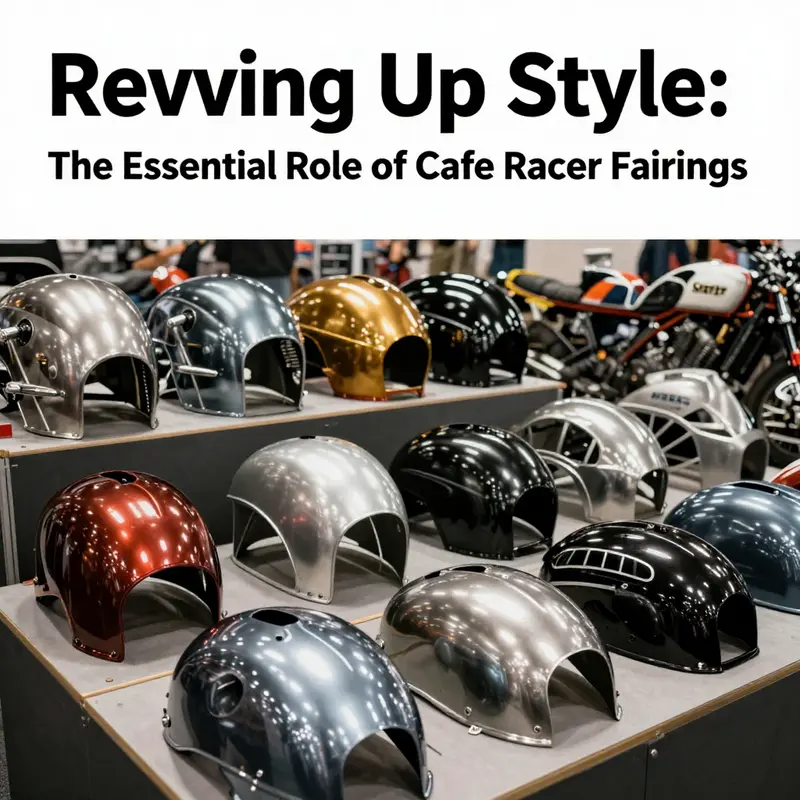
Fairings have always stood at a crossroads in the cafe racer world. They are not merely shells to cover machinery; they are statements of intent. The cafe racer ethos blends streamlined velocity with a deliberate, minimalist silhouette that harks back to mid-century speed culture while embracing contemporary materials and engineering. When riders step into the aftermarket realm of cafe racer fairings, they embark on a process that is as much about personal expression as it is about measurable gains in aerodynamics, weight, and handling. The choice of full fairings, half fairings, or lower skirts shapes not only the rider’s experience but also the bike’s relationship with wind, momentum, and the surrounding environment. The aftermarket landscape offers a spectrum of options, shaped by fit, function, and the shared aim of achieving a race-inspired stance without sacrificing daily practicality. The result is a cohesive blend of form and function that, when done thoughtfully, elevates both the aesthetic draw and the ride quality of a naked bike transformed into a cafe racer hybrid.
A practical starting point in this journey is the distinction between full fairings and their lighter cousins. Full fairings envelop more of the bike’s front and sides, delivering enhanced wind protection and a more aggressive, cohesive line. They are the visual signature of a modern cafe racer and the technical option most riders associate with reduced rider fatigue on longer stretches of highway or fast, sweeping roads. On the darker side, their bulk can compromise maneuverability in tight urban lanes, and installation often involves more substantial mounting considerations. By contrast, half fairings offer basic wind deflection and a hint of styling without fully encasing the machine. They honor the classic café racer look—thin, witty, and focused on balance—yet they may leave the rider exposed to more wind pressure at highway speeds. The modern reality sits somewhere between these poles, with a growing preference for mid-weight or modular fairing pieces that can be tuned to the rider’s chosen speed regime and riding posture. The decision is rarely about absolute performance alone; it’s about how the bike feels when the rider leans into a corner, how stable the front end feels at speed, and how the surface texture and lines reflect the rider’s taste for vintage or contemporary cues.
Materials are central to this balancing act. ABS and fiberglass have long served as accessible choices for aftermarket fairings, offering predictable fitment, reasonable stiffness, and forgiving impact resistance. Carbon fiber, with its high strength-to-weight ratio, introduces a premium tier that can dramatically reduce mass while preserving rigidity. The cost delta between these materials is not merely a line on a spec sheet; it translates to real-world differences in throttle response, suspension dynamics, and vibration transmission through the rider’s wrists and hips. The choice of material intersects with the intended use. A rider who spends weekends on track days or longer highway journeys might prioritize aerodynamic refinement and stiffness as a means to maintain consistent high-speed stability. A rider who uses the bike for coffee runs and weekend jaunts may prioritize weight savings, ease of installation, and a look that can be refreshed without breaking the bank.
Beyond the shell itself, fitment lies at the heart of the aftermarket experience. Fairings are engineered to align with the bike’s original geometry, the handlebar cluster, the fuel tank’s shoulder lines, and the seat unit’s profile. For many builds, this means choosing fairings that are tailored to a specific model or platform, turning a naked chassis into a cohesive café racer silhouette with clean, continuous lines. When a fairing is designed for a particular model, the mounting points, radiator inlets, and side panel cutouts are optimized to minimize gaps and seams. In contrast, universal kits demand careful measurement and, often, customized brackets or adapters to preserve structural integrity and aesthetic coherence. The careful alignment of the nose to the headlight, the sweep of the shoulder lines into the tank, and the transition from fairing to tail section all contribute to an impression of precision. The integration is not cosmetic alone; it influences airflow around the forks, the under-eye region of the fairing, and even the bike’s overall center of gravity.
Riders who pursue the aftermarket path frequently encounter a practical truth: compatibility is as critical as appearance. The best-looking fairing that won’t mount or align correctly yields little benefit and can undermine riding confidence. This is where thoughtful sourcing matters. A robust approach begins with a clear map of the bike’s baseline geometry and a realistic assessment of how you intend to ride. If the goal is aggressive upright riding, a fairing with well-placed bracing and a low, but not intrusive, wind shield can dramatically reduce fatigue without constraining head movement. For a more sport-oriented stance, riders may favor a deeper air intake and a more pronounced curvature along the nose to optimize airflow around the fork and exhaust. The objective is to harmonize the fairing’s wind management with the bike’s frame, steering geometry, and the rider’s posture. In practice, this means comparing fairing lines, thickness, and mounting options across a few trusted sources and testing fitment with mockups or temporary brackets before committing to a permanent install.
The aesthetic dimension of aftermarket fairings cannot be divorced from the machine’s narrative. A cafe racer is as much a rolling sculpture as it is a transport mechanism. The choice of contour—whether it embraces a sharp, angular stance or a softer, vintage-inspired profile—speaks to the rider’s sense of speed and restraint. The surface finish adds another layer: a deep, glossy clear coat can intensify color depth and line touch, while a satin or matte finish may evoke a more stripped-down, utilitarian vibe. The paint and finish interact with lighting on the road, highlighting edges that catch the eye during a lean or when light captures the curve of a side panel. There is also the collaborative potential of color and material choices. A carbon-fiber panel set, for example, pairs naturally with metallic or dark hues to produce a modern racy look, while a high-gloss ABS panel can be tuned with traditional two-tone schemes that nod to the café racer history. The rider’s customization often extends to decals, pinstriping, and subtle texture contrasts that emphasize the fairness of line and the continuity from fork crown to tail. The result is not a mere cover but a unified design statement whose value is measured in both visual impact and the way it guides the rider’s gaze through the bike’s silhouette.
From a rider’s practical standpoint, the installation journey matters nearly as much as the finished look. Full fairings can require frame modifications or the relocation of mounting points, and some builds benefit from professional expertise to ensure alignment and structural safety. The installation process also invites a rethinking of other performance-oriented upgrades. Upgrading fork internals and cartridge kits can complement fairing changes by delivering crisper damping and reduced nose dive during braking, which in turn helps maintain line stability when the fairing is catching wind or when the rider is loading the front wheel into a corner. These mechanical tweaks do not merely support the aesthetic transformation; they re-balance the bike’s dynamics to preserve or enhance handling characteristics that matter on the street and the track. The integration of improved damping with a new fairing can deliver a more predictable, confidence-inspiring ride at speed, where wind pressure and body position interact with the bike’s geometry to shape the overall sensation of control.
It is not enough to select an option that looks the part. A well-chosen aftermarket fairing should reflect a thoughtful synthesis of weight, rigidity, and maintenance practicality. Lighter materials contribute to a lighter front end, which can improve acceleration response and steering feel. Yet, lighter does not always equal better, especially if stiffness is compromised or if the fairing’s mounting system introduces unwanted vibrations or flex. Maintenance considerations also come into play. Exposed fasteners, shielded corners, and the proximity of the fairing to moving components like the radiator and exhaust require periodic inspection and a careful eye for potential debris exposure. A fairing designed with recessed fasteners and robust gaskets is more likely to endure daily ride cycles, street stones, and weather while preserving the aesthetic integrity of the bike. In this regard, the rider’s choice becomes a long-term relationship with the machine, one that can evolve with changes in riding habits, weather exposure, and the need for occasional touchups in the paint or veneer of the surface.
The conversation around aftermarket fairings also circles back to practical budgeting and project pacing. A café racer conversion is seldom a single, abrupt upgrade. It unfolds as a sequence of decisions—beginning with the broad shape, moving through material selection, and culminating in fitment refinements and alignment. The goal is to avoid a scenario where a striking piece arrives with misaligned edges or incompatible mounting hardware, a situation that would force a compromise between the build’s appearance and its reliability on the road. For many riders, the path forward includes a staged approach: start with a visually impactful but lighter upgrade, then test the ride for comfort and aerodynamics, and later, if desired, layer in further refinements such as additional vents or a more aggressive wind screen. The evolving nature of a cafe racer build is part of its charm, a dialogue between rider and machine that unfolds with every ride, every lean angle, and every new lighting condition that reveals a line or shadow the fairing emphasizes.
Finally, sourcing the right components is a blend of research and taste. The modern market offers a spectrum of options—from streamlined options that hug the bike’s original geometry to more expressive pieces that challenge traditional proportions. The rider should consider intended use, climate, and riding posture when evaluating a fairing’s curvature, wind protection level, and compatibility with accessories like a headlight mask, instrument housings, and fairing-mounted turn signals. A well-executed aftermarket fairing not only reshapes the bike’s silhouette but also forms a functional bridge between vintage-inspired mood and contemporary engineering. The result is a machine that speaks to history while leaning into the present, a cafe racer that treats wind as a collaborator rather than an adversary.
For those seeking specific sourcing aligned with the bike’s existing architecture, check the Honda fairings category for model-compatible options, which can streamline fitment and reduce customization time. Honda fairings
As riders continue to explore the aftermarket arena, they should remember that the best fairing choice is not a one-size-fits-all decision. It is a careful negotiation among weight, rigidity, fit, and mood. It is about choosing lines that speak to the bike’s personality and about selecting materials that honor the rider’s temperament on the road. And it is about recognizing that the cafe racer aesthetic—while rooted in history—remains a living practice, one that invites ongoing experimentation, measurement, and refinement. With the right balance of design intent and mechanical sensibility, aftermarket fairings can transform a naked bike into a purpose-built expression of speed and style, a tangible embodiment of a rider’s personal philosophy about motion, form, and the road ahead.
External resource: https://www.c-racer.com
Between Wind and Vision: The Living History and Modern Makeover of Cafe Racer Fairings
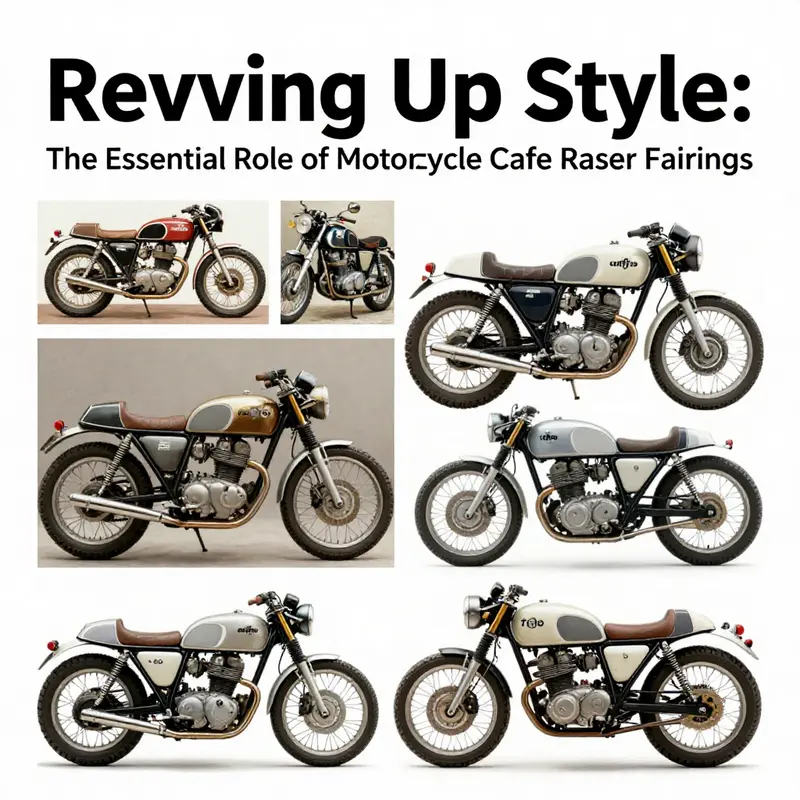
The fairing—small, stubborn, and essential—has always stood at the crossroads of speed and style in the cafe racer tradition. It is the thing that fans notice first and the thing that riders feel last when the road opens up. In its earliest whispers, the cafe racer fairing was not a showpiece but a working instrument. Born from the need to slice through air and to maintain balance at speed on crowded city streets, these shells started life as spare parts or hand-formed additions. Riders who met at modest cafes along the blacktop learned quickly that a simple, bullet-shaped cover over the headlight could reduce wind resistance enough to coax a few extra miles per hour from a motor tuned for the streets rather than the strip. The ethos was plain and rebellious: ride hard, keep the wind out of your chest, and let the bike’s silhouette tell the story of speed without ceremony.
This is how a culture grows, and in the fog of early morning rides past London’s riverbanks and through the clamor of Ace Cafe gatherings, the initial experiments coalesced into a recognizable design language. The look was lean, the lines were continuous, and chrome was a language in itself—polished, bright, and perhaps a touch ceremonial in its sparseness. The first fairings were not crafted to resemble works of sculpture; they were crafted to trim the frontal area, to narrow the rider’s profile, and to integrate with the handlebars, the fuel tank, and the seat in a way that suggested speed as a shared experience between machine and rider. It was a minimalist pact: fewer moving parts, less drag, more control. The rider became a living fixture in the aerodynamic arc, the machine responding to a posture that was part rider, part sculpture, and entirely focused on velocity.
As the decades moved forward, what began as a practical upgrade acquired a new sense of purpose. By the mid- to late-1960s, certain front-end geometries began to feel iconic enough to justify factory attention. The front fairing, once a hand-built improvement, started to assume a standard shape within the broader motorcycle world. The so-called “condor” and “swallow” profiles emerged as shorthand for a philosophy: keep the rider tucked and visible, but ensure the bike’s lines told a single, cohesive story. These shapes were not merely about a wind-swept appearance; they were about shaping the rider’s relationship to the bike, setting a tight, aggressive pose, and coaxing a sense of artful aerodynamics into a public road machine. The fairing became an instrument of identity, a badge that signaled a rider’s intent to push beyond ordinary limits while keeping the spirit of the street—an homage to the record racers who haunted the early London scene.
In this transition from improvised parts to factory-approved forms, the fairing culture found a way to preserve its rebellious roots while embracing modern engineering. The frame of the narrative had shifted from a wrench-and-wire tradition to a more controlled, repeatable process. Chrome remained a recurring feature, but the emphasis broadened. Designers began to exploit the advantages of new materials and manufacturing techniques, moving from simple metal shells to more sophisticated, one-piece composites. The result was a evolution in perception as much as in construction: the fairing could be light, sleek, and durable, while still looking precisely like a cafe racer’s first love—compact, purposeful, and unmistakably fast.
Today’s cafe racer fairings live in a space that respects those early ambitions but does not doubt the advantages of contemporary materials and technology. Lightweight options such as ABS, fiberglass, and carbon fiber balance strength with weight savings, enabling more ambitious shapes without sacrificing daily reliability. These modern shells are designed to fit specific models—especially naked bikes or carefully prepared custom builds—and they’re engineered to merge with the handlebars, the fuel tank, and the seat to create a seamless, streamlined profile. The romance of the 60s still echoes in the silhouette: a low frontal area, a clean line running from the nose past the rider’s shoulder, and a silhouette that invites the eye to ride with the bike. Yet the envelope has grown more sophisticated: tighter tolerances, more precise mounting interfaces, and an integration of electronics that the original riders could scarcely imagine. The rider remains central to the aerodynamic equation, but the way that rider interacts with the machine has become more data-driven, with wind-tunnel-informed shapes that still honor the cafe racer’s legacy of focus and intention.
The cultural grammar also evolved in tandem with the engineering. The cafe racer fairing’s appeal rests on a tension between function and form. It is both a practical wind shield and a canvas upon which a rider or a builder can express a personal philosophy of speed. This dual nature helps explain why aftermarket options have flourished. Builders can take a base platform—often a naked bike—and craft a cafè-racer identity that is not merely about looking retro but about feeling retro while performing with modern restraint. In this sense, the fairing serves as a bridge between two eras: the minimalist, performance-first ethos of the 1950s and 60s, and the contemporary demand for reliability, maintainability, and electronics compatibility. The result is not a single look but a family of expressions. Where one bike might wear a compact, contoured shell that hugs the tank, another might adopt a longer, lower nose that emphasizes a direct line from the rider’s line of sight to the road ahead. The choice becomes a statement about what kind of ride a person wants to have—without stepping outside the boundaries of what the cafe racer aesthetic is supposed to convey.
To those who study or collect these machines, the fairing’s history maps a broader arc of design language. The 1960s’ chrome-laden, single-piece shells gave way to more modern material palettes, with matte paints, clear-coated fibers, and sometimes a more integrated instrument cluster that rides with the rider rather than above it. But the core idea never really left: reduce unnecessary drag, create a front that presents a clear and confident face to the wind, and shape the rider’s posture so that speed feels natural rather than forced. Modern iterations stay faithful to this intention while expanding what a fairing can do. It is no longer only about how fast you go; it is also about how you ride, how you balance comfort with aggression, and how a single, purposeful shell can anchor a whole build. In this sense, cafe racer fairings are a vocabulary of motion, and every choice—material, curvature, mounting method—adds a sentence to a story written by countless riders across generations.
For readers who want a concrete sense of how these shapes have traveled from rough beginnings to refined forms, a visual and technical exploration offers a compelling companion. One can trace the lineage from the earliest hand-formed elements to today’s precision-engineered shells by looking at dedicated design histories that connect the dots across decades of motorcycling. If you’re curious about how modern fairing geometry translates into real-world performance on a naked platform or a purpose-built cafe racer, consider exploring a catalog of design families that illustrate these transitions. This is also where practical choices matter: the mounting approach, the fitment with the fuel tank and seat, and how the fairing’s edge interacts with the rider’s knees and hips during aggressive cornering. The fewer gaps there are between rider and wind, the more the cockpit feels telepathic, a direct line to the road ahead.
In the end, the cafe racer fairing remains one of the most eloquent tests of motorcycle design: a small piece of plastic or composite that can produce a feeling of speed before the engine ever roars. It is a reminder that motorcycle culture is as much about how a machine looks as how it behaves. The fairing is not merely a shield; it is a narrative device, a way to tell a rider’s story while shaping the bike into a sculpture that moves. The most enduring examples embody this balance—minimalism that does not surrender personality, and function that does not erase poetry. As builders continue to refine and reinterpret classic silhouettes, the fairing remains a living link to that vibrant era of record racing, a symbol of the ongoing collaboration between rider, machine, and wind.
Internal link for further hands-on exploration of specific fairing families can be found in the Triumph fairings collection, which highlights how factory and aftermarket bodies converge to sustain the cafe racer aesthetic while delivering modern performance: Triumph fairings.
External resource for a detailed visual and technical exploration of this evolution can be found at Bike EXIF: https://www.bikeexif.com/2023/04/evolution-of-the-cafe-racer-fairing/.
Final thoughts
Motorcycle cafe racer fairings encapsulate a compelling intersection of style and function, deeply rooted in motorcycle culture. As the craftsmanship behind these components continues to evolve, business owners must recognize the potential these designs have to enhance both aesthetic appeal and performance. By understanding the materials, construction techniques, and customization options available, they can better cater to enthusiasts looking to invest in their dream machines. The integration of fairings into custom builds not only honors the legacy of cafe racers but propels their evolution into the future, ensuring these remarkable motorcycles remain as relevant and stylish as ever.