
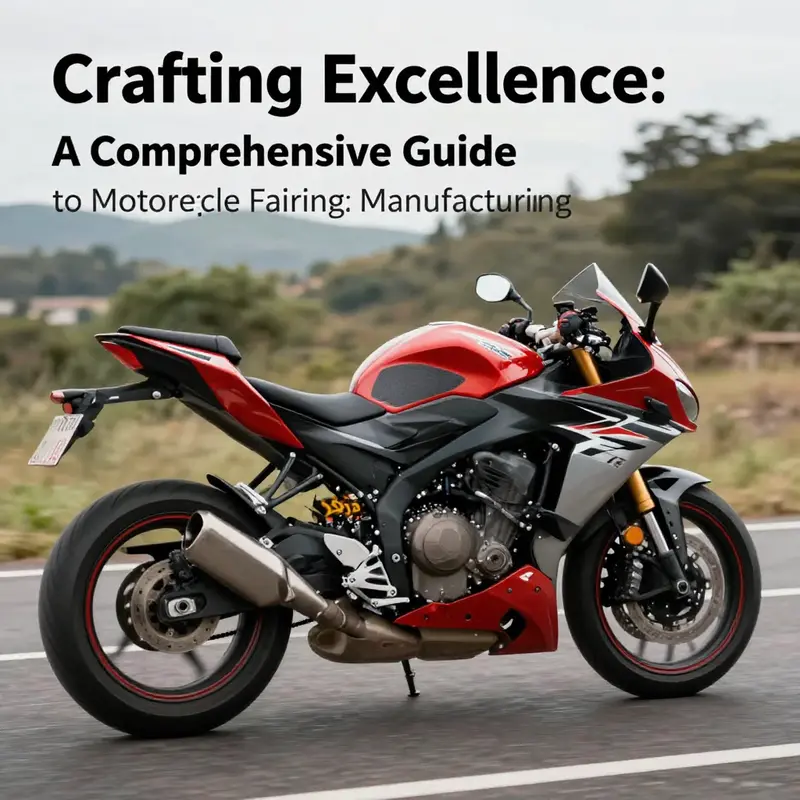
Motorcycle fairings are crucial components that not only enhance the aesthetic appeal of bikes but also improve aerodynamics and safety. Understanding the intricate manufacturing process, various materials, and the advantages of customization can significantly benefit business owners in the motorcycle parts industry. This guide will outline the manufacturing process of motorcycle fairings, explore relevant material selections, highlight the importance of customization, and examine current market trends, enabling entrepreneurs to make informed decisions in their product offerings.
From Sketch to Sealed Shell: The Hidden Craft Behind Motorcycle Fairings
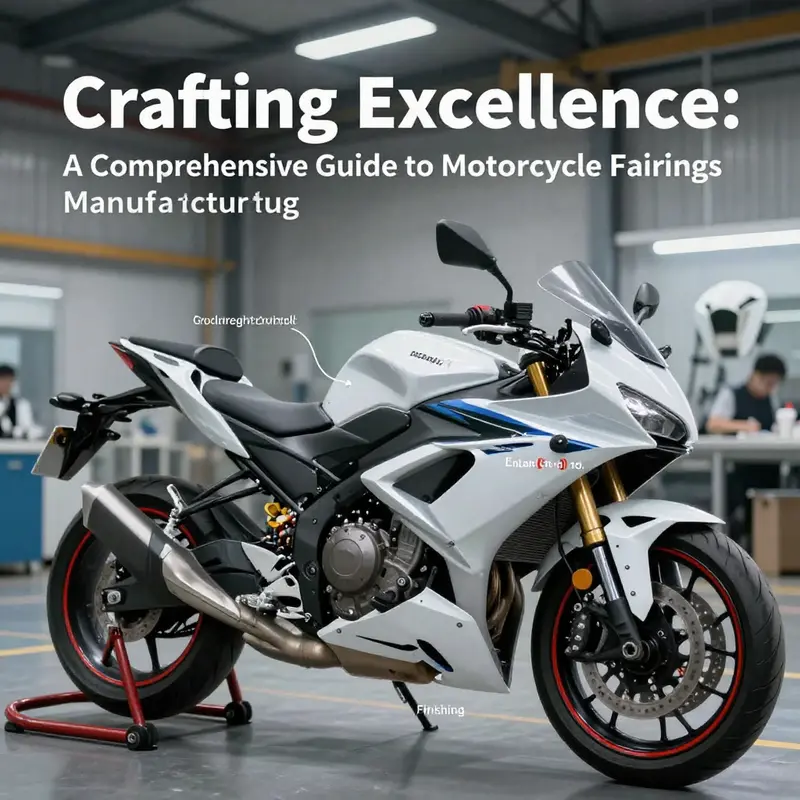
The manufacturing journey of motorcycle fairings is more than a sequence of steps; it is a story of how designers, engineers, and craftspeople transform an idea into a protective, aerodynamically tuned skin that hugs the curves of a rider’s machine. These panels are not mere cosmetic shells. They are functional systems that influence airflow, engine cooling, rider comfort, and even the perceived performance of the bike. Understanding how they come to life reveals a discipline that blends art, science, and meticulous process control. In this chapter, we follow the arc from initial concept through to the finished exterior, keeping a steady eye on how each stage reinforces reliability, fit, and finish while accommodating a market that demands customization without sacrificing strength.
The earliest phase is design and digital modeling, where ideas are captured as concepts and translated into a roadmap for manufacturing. Industrial designers sketch scenarios that balance aesthetics with the realities of airflow around a moving machine. These sketches, while visually striking, are not merely drawings; they set targets for ergonomics, rider protection, and interface with other bike components. The process then moves into a more tangible realm: the creation of clay models at a life-size scale. Oil clay is used to explore how the panels sit against the rider and the chassis, how they interact with the handlebars at full steering lock, and how the surface will respond to lighting at different angles. The clay model allows evaluators to assess the tactile feel of edges, the visual cadence of panel lines, and the comfort of airflow channels that will influence cooling efficiency.
Clarity of form and precision in fit are further refined by capturing the physical model with 3D scanning. The resulting data provide a bridge between the tactile world of the clay and the exacting world of digital design. In CAD programs, engineers translate the scanned geometry into precise blueprints, ready for toolmaking and molding. This transition—from clay to computer—establishes the digital twin that will guide the entire production chain. The digital model becomes a repository of tolerances, surface finishes, and joint geometries that every subsequent step must respect. It also enables rapid iteration; changes can be evaluated in a virtual environment before any mold is cut, reducing costly rework and shortening time to market. The ability to simulate airflow and structural behavior through the digital twin is particularly valuable, given that fairings must not only look good but also perform consistently under a range of riding conditions.
Material selection is the next critical decision point. Fairings are typically fabricated from high-impact thermoplastics such as ABS or polycarbonate, chosen for their combination of toughness, lightness, and the ability to hold intricate curves. The choice is not merely about stiffness or weight; it also determines how the part responds to heat from the engine and sun exposure over time. UV resistance, color stability, and weathering performance guide decisions about additives and surface treatments. The material must tolerate repeated cycles of heating and cooling during molding and endure the daily stresses of vibration, wind pressure, and potential impacts. The properties of the resin, including its flow characteristics and shrinkage behavior, influence the design of the mold itself, as well as the cooling strategy that will prevent warping and surface defects.
With material selection set, the mold development phase begins in earnest. A mold for a motorcycle fairing is a precisely engineered tool that defines the final geometry, surface finish, and dimensional fidelity of every part. Computer-aided design data drive CNC machining of the core and cavity, often using multi-cavity configurations to achieve the required production throughput. The mold must incorporate proper draft angles to allow easy part ejection, cooling channels to manage heat during the injection cycle, and ejection mechanisms that prevent marring of delicate surface features. Surface textures are planned at this stage as well, with options ranging from glossy to matte, or even textured to reduce glare or to hide minor imperfections after painting. The level of precision demanded by automotive-grade fairings means tolerances are tight and process parameters carefully balanced.
The production phase centers on injection molding, the workhorse method for mass-producing fairings. In this stage, molten plastic is injected under high pressure into the mold cavity. Temperature control is critical; the resin must reach the correct viscosity, neither so hot that it degrades nor so cool that it lacks flow to fill every corner of the mold. Pressure must be carefully managed to ensure complete filling without creating flash or air pockets. Cooling time is a decisive factor in cycle efficiency—short enough to maintain throughput, long enough to prevent deformation as the part solidifies. Any deviation can lead to warping, sink marks, or sink-throughs on sharp radii—defects that demand costly corrective action and rework. Robotic spray systems increasingly handle primer and paint applications in modern facilities, delivering uniform coatings that preserve the fidelity of the mold’s surface texture and the color stability across temperature cycles. The integration of automation here underlines a broader trend: repeatable finishes are as important as exact geometry when a fairing must look pristine on tour days, track days, or showroom floors.
Post-processing follows molding and precedes assembly. It is the cleanup and refinement stage that ensures the part transitions cleanly from manufacturing to installation. Trimming excess material, removing flash, and sanding are routine. A primer coat is applied to promote paint adhesion and to seal the surface against moisture ingress that could compromise paint durability or surface integrity. In well-optimized lines, an autonomous or semi-autonomous system handles these steps, coordinating with the painting process to maintain consistent color match and gloss across dozens or hundreds of parts per hour. The goal is not merely cosmetics; the primer acts as a bed for the final paint film, helping to lock in color and protect the resin from environmental exposure. The finish itself—whether a high-gloss mirror, a soft satin, or a specialized metallic look—must endure sun, rain, and the abrasion of road grit, all without peeling or fading in a few thousand miles of riding.
Assembly and quality inspection bring the fairing to a living interface with a motorcycle’s geometry. Panels are joined with fasteners that remain hidden from view to maintain a seamless aesthetic. The mounting strategy is as important as the panel shape; it must accommodate tolerances in the chassis and subframes while resisting vibration, weather ingress at seams, and potential impact energy. Modern practice often incorporates sealing features such as carefully designed joint geometries and bonding techniques to improve water resistance and to maintain a tight, continuous line along the surface. The concept of a well-sealed joint is not purely cosmetic; it is about sustaining structural integrity across the panel’s service life. In this light, fairing design reflects a systems thinking approach: the part, when integrated with the chassis, must contribute to aerodynamics, cooling, and durability without introducing new risk points for fatigue or moisture intrusion.
Rigorous testing accompanies assembly. Fairings must withstand the effects of rain, UV exposure, and thermal cycling. They are tested for impact resistance to withstand non-collision accidents and for structural durability under the vibrations and loads generated by riding. Weather sealing is validated to prevent water intrusion that could compromise electronics or fastener integrity. In advanced programs, joint sealing approaches may include proprietary groove patterns or adhesive bonding strategies that improve sealing at the joints without sacrificing the visual integrity of the panel lines. The test results feed back into the design loop, guiding refinements to geometry, wall thickness, and material formulation. This closed loop—design, prototype testing, manufacturing adjustments, and re-testing—ensures that the final product not only looks right but performs reliably in the real world, mile after mile.
Beyond the technical core, there is a practical ecosystem that supports fairing production and customization. The market for fairings spans universal accessories to model-specific, OEM-accurate pieces. Consumers seek not only aesthetics but the assurance that a panel will fit their bike precisely and endure weather and road conditions. This has driven a parallel evolution in supplier capabilities, where manufacturers and assemblers offer flexible options, from standard sets that adapt to a range of models to bespoke, fully enclosed covers or visual upgrades for particular niches. The capability to combine ready-to-molt parts with tailor-made skins has expanded the market for aftermarket fairings and continues to drive investments in digital design, rapid prototyping, and agile manufacturing practices. In practice, buyers increasingly expect access to detailed specifications, performance data, and fitment guidance, often supported by comprehensive catalogs and online platforms designed to streamline inquiry, quotation, and procurement. A strong supplier network can translate a rider’s vision into a tangible panel set with dependable geometry, surface quality, and long-term durability.
In walking through the lifecycle of the fairing, the central thread is the alignment of design intent with manufacturing reality. The designer imagines a shape defined by aerodynamics, rider comfort, and brand language; the engineer translates that vision into a mold and a process window; the machinist and technician realize the tool and the part, then the assembler makes the panel disappear into the bike’s silhouette with visible seams that are intentionally minimal. Each stage requires precise communication and robust documentation, because a small deviation in one step can cascade into misalignment, improper sealing, or inconsistent paint finish. The best manufacturing environments treat the whole journey as a synchronized orchestra, where the CAD model informs the mold, the mold informs the process parameters, the process data feed back into design optimizations, and the end result—an aesthetically compelling yet rugged shell—fits the bike with exacting consistency.
This perspective is corroborated by industry practice, where the emphasis on digital tooling, smart automation, and rigorous quality control has become the norm rather than the exception. The modern fairing is born from a continuum of digital design, material science, and process engineering that yields a product capable of withstanding the rigors of both competition and daily riding. The best examples of this discipline reveal a consistent thread: the part’s geometry, its surface finish, and its interaction with the motorcycle’s systems are all tested and optimized together, not in isolation. This integrated approach reduces development risk, shortens lead times, and improves the predictability of performance across different conditions.
For readers who want to explore the breadth of practical outcomes across different platforms and models, a look at different manufacturers’ catalogs can illustrate how the same engineering principles translate into diverse design languages and fitment philosophies. In particular, catalog pages that organize fairings by model family demonstrate how modular panel systems can adapt to generations of hardware while preserving the core aerodynamics and protection that riders expect. The key takeaway is that the essence of fairing manufacturing lies in the disciplined orchestration of design intent, material behavior, tooling accuracy, and finishing precision, all executed within a framework that values repeatability and long-term durability. This is the cradle of reliability for riders who seek aggressive styling without compromising weather sealing, rider comfort, or the longevity of the machine’s sensitive components.
Within this broader context, it is useful to connect the technical narrative to the practical realities of sourcing and procurement. The modern buyer can access a spectrum of options, from universal attachment accessories that provide a quick visual upgrade to bespoke, model-specific solutions that mirror OEM lines in fit and finish. The ability to adapt a concept to a real product hinges on clear communication about model compatibility, desired aesthetics, and the environmental exposure the panel will face. As a buyer navigates these choices, the path from concept to completion becomes clearer when they reference the core methods described here: design and digital modeling, material selection and mold development, injection molding, post-processing, assembly, and rigorous testing. A practical reminder for enthusiasts and professionals alike is that even though mass production dominates, there remains space for customization and iteration within a disciplined manufacturing framework. For a sample view of how a specific category of fairings is organized and presented in a marketplace, see the BMW fairings page: BMW fairings.
In closing, the manufacturing story of motorcycle fairings is a testament to how modern production blends artistry with engineering, precision with flexibility, and speed with quality. The result is more than an outer shell; it is a carefully engineered interface between rider, machine, and environment. When viewed through the lens of design-to-delivery, the fairing emerges as a centerpiece of the bike’s identity and capability, a small but mighty example of how thoughtful manufacturing elevates performance and experience on two wheels. For those who want to dig deeper into the technical underpinnings and broader industry practices, a detailed technical overview is available in Design Engineering Magazine, which offers expansive insights into current practices and advancements in motorcycle body panel production: https://www.designengineeringmag.com/manufacturing-process-of-motorcycle-fairings.
Material Choices that Shape the Skin of a Bike: A Cohesive Look at Selecting Fairing Materials
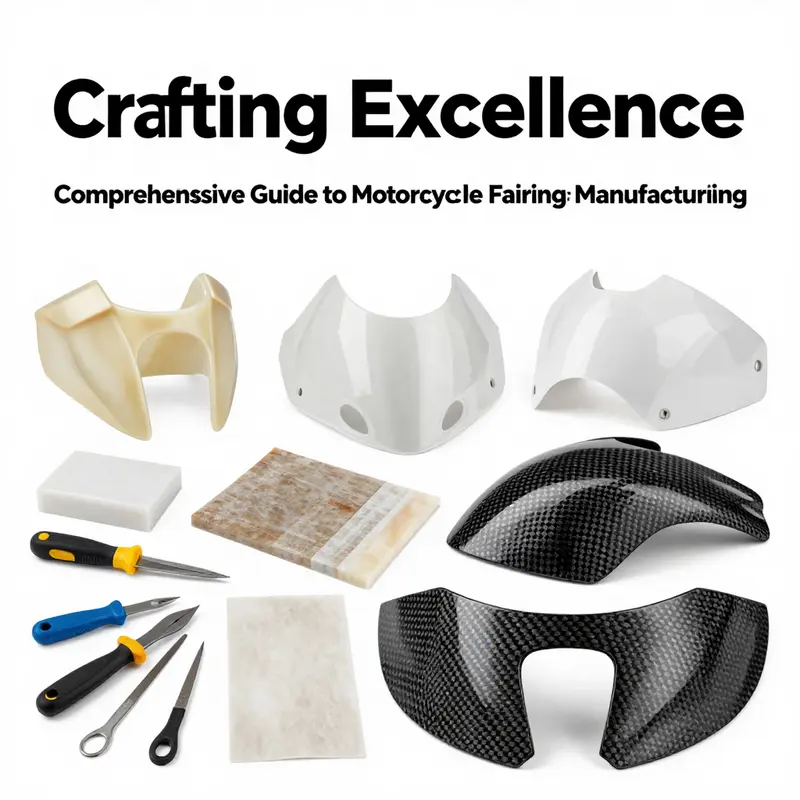
Choosing the material for motorcycle fairings is more than a matter of choosing a color and a finish. It is a decisive design choice that influences aerodynamics, protection, weight, rigidity, and the long-term feel of the bike in both performance and daily use. The overarching goal is to create a seamless outer shell that can bear the stresses of high-speed airflow, stray debris, and occasional rider mishandling, while still offering attractive aesthetics and practical manufacturing economics. Material selection sits at the intersection of engineering, art, and craft. It informs tool paths, mold design, repair workflows, and even the way coatings will behave under sunlight and heat. In practice, most manufacturers and builders work within three broad families: thermoplastic plastics, composites, and specialized blends that mix properties across layers. Each family brings a distinct blend of strength, weight, cost, and ease of fabrication. The fairing, in this sense, becomes a curated stack of choices rather than a single material story. The choices you make here reverberate through every subsequent step, from tooling and molding to painting, installation, and field durability, so the decision cannot be separated from the end use and the production context.
Thermoplastics, especially those based on ABS, have become the workhorse of mass-produced fairings. ABS offers a favorable mix of impact resistance, stiffness, and formability. It responds well to high-volume injection molding, enabling precise, complex shapes with relatively fast cycle times. For riders who value a glossy or a satin modern look, ABS lends itself to excellent surface finishes, delivering clear, sharp lines and smooth contoured surfaces. The production costs are predictable, and the material can be molded into near-net shapes, reducing post-processing. Yet ABS is not without weaknesses. In very cold environments, it can become brittle if not properly stabilized. UV exposure over time can lead to surface degradation and color fade if the protective coatings are insufficient or poorly applied. Ordinary abrasion will dull a finish and may lead to minor scratches that are challenging to repair on a large, curved surface. To counter these drawbacks, manufacturers often combine ABS with UV stabilizers, apply protective topcoats, or select ABS formulations designed for outdoor exposure. In some cases, a multi-layer approach is used, where a pigmented ABS skin is paired with a clear, UV-resistant layer that shields the underlying resin from sun and oxygen. The result is a fairing that maintains its shape, color, and gloss over many miles of sun, wind, and rain. From a practical standpoint, ABS remains the baseline option for many street and sport bikes because it balances cost with manufacturability and repairability, especially in service environments where quick touch-ups or panel replacements are common. The ability to reproduce exact shapes in large volumes, coupled with straightforward paint and decaling processes, is a major advantage for OEMs and aftermarket sellers alike.
Polycarbonate, often used in conjunction with ABS or as a standalone layer in more protective sections, raises the bar for impact resistance. Polycarbonate is famously tough—often described as hundreds of times tougher than glass—making it a preferred choice for critical zones that endure direct impacts or stones kicked up from the road. It also offers superior resistance to UV-induced degradation and maintains clarity for light-transmitting sections such as headlamp covers or aero channels when required. The trade-off is cost and machinability. Polycarbonate is more expensive than ABS, and it is more prone to scratching, which means that in many designs it is either protected under a hard-coated surface or used in layered constructions where the polycarbonate forms a protective inner or outer skin behind a more wear-resistant layer. Scratching can be mitigated with scratch-resistant coatings and careful finishing strategies, but it remains a consideration for riders who ride aggressively on rough terrain or in dusty conditions. In practice, polycarbonate is often deployed in synergy with ABS, giving engineers a balanced combination: the exterior surface wears well, while critical structural zones gain enhanced toughness and resilience. The approach strengthens safety during impact, an important factor for riders who push their machines toward the limits, even if those limits are only reached in occasional track days or spirited road rides.
Fiberglass, a traditional choice for custom and aftermarket fairings, occupies a different place in the hierarchy. It is a robust option for bespoke shapes and larger, more aggressive styling that requires a rigid, well-damped structure. Fiberglass shirts the fat edge of design flexibility: it accommodates large, complex geometries with relatively forgiving tooling requirements compared to carbon fiber. The trade-off is weight and manufacturing precision. Fiberglass panels tend to be heavier than their thermoplastic or carbon fiber counterparts, and they demand skilled lay-up work, careful resin infusion, and experienced finishing to achieve a smooth surface suitable for paint and clear coats. Environmental resistance is solid, but repair and patching can be more involved than with plastics. The result is a good fit for custom builds and limited-run models where an individual aesthetic and structural rigidity carry weight over mass production efficiency. The responsible use of fiberglass often means leveraging a layered approach—engineered skins bonded to internal ribs or foam cores—to optimize stiffness without unduly increasing weight. The surface finish becomes a critical factor here as well; the initial lay-up and subsequent sanding, priming, and painting determine the ultimate smoothness and the depth of the final color.
Carbon fiber sits at the apex of performance-oriented or high-end custom builds. Its appeal is not simply cosmetic; it stems from a superior strength-to-weight ratio, remarkable stiffness, and an unmistakable visual language. Carbon fiber fairings can dramatically reduce overall motorcycle weight and improve rigidity, qualities that translate into sharper handling, quicker response, and improved fuel efficiency on track-focused machines. Yet carbon fiber is costly, and its advantages are most fully realized when used in targeted ways—critical load-bearing zones, inner skins, and surfaces where stiffness and minimal flex contribute to aerodynamics and feel. Carbon fiber is also fragile under point loads and can be challenging to manufacture and repair. The production process often involves prepregs or vacuum-assisted resin transfer methods, with careful control of resin content and curing temperatures to avoid microcracking and warping. Repairs demand specialized knowledge, precise patching, and often the replacement of damaged sections rather than simple adhesive bonding. These realities constrain carbon fiber to higher-end models or to custom outfits where performance justifies the investment. One practical strategy is to adopt a hybrid architecture: carbon fiber where stiffness and weight savings matter most, combined with an ABS or polycarbonate outer shell in non-critical zones. A well-designed hybrid can deliver the best of both worlds—appearance and lightness, while maintaining manufacturability and cost control across broader production runs.
The conversation about material selection cannot ignore manufacturing realities. The method chosen to form and join the skin has a direct bearing on performance and durability. Thermoplastics are molded with precision tooling that supports consistent wall thickness and optical finish. Multi-cavity molds enable high-volume production and rapid cycle times, essentials for mass-market motorcycle lines. Thermoplastic panels yield reliable results that are relatively straightforward to repair—pushing a ding out of an ABS surface or buffing a shallow scratch off a coated panel is familiar to repair shops and service centers. In contrast, composites demand more nuanced processing. Fiberglass panels often emerge from hand lay-up or spray-up processes, with resin content and fiber distribution requiring exact control to achieve predictable stiffness and surface finish. Carbon fiber adds another layer of complexity, commonly employing prepregs or vacuum infusion to manage resin wet-out and delamination risk. The manufacturing workflow—lay-up, bagging, curing, trimming, sanding, priming, and painting—becomes a choreographing of materials and processes. The choice of method affects not only the final weight and stiffness but also the tolerance to temperature changes, humidity, and solvent exposure during assembly and repair. A fairing that is designed for easy repair will rely on materials and join strategies that can be addressed quickly in a service shop. The same design would be ill-suited for a one-piece carbon skin if it requires specialized equipment and long cure times.
From a design perspective, layered constructions are increasingly common. A fairing can combine a protective inner skin with a tough outer face to balance impact resistance, surface finish, and color stability. A practical way to achieve this is through a sandwich-like approach, where a lightweight core or inner structural layer provides rigidity, and the outer layers supply the aesthetics and aerodynamics that define the bike’s look. In such configurations, the outer shell is usually a thermoplastic or composite skin selected for surface quality and resistance to environmental exposure. The inner structure can be fiberglass or a carbon/epoxy core designed to resist deformation under aerodynamic loads and rider-induced vibrations. This strategy allows designers to tune stiffness and damping across the panel, reducing flutter at high speeds and improving the tactile feel when the rider interacts with the bike. It also opens pathways to cost-efficient customization. If a particular model requires change for a new season, the outer cosmetic shell can be swapped or re-coated while preserving the internal framework, enabling faster updates without a full retooling. The market often reflects this thinking by organizing products into characteristic families or categories that emphasize the intended use and the expected wear on the fairings. For readers who are exploring options for a specific marque or model, consider how the category pages organize parts and how a given skin might be integrated with existing mounting points and internal supports. For example, a retailer might group products by marque to streamline compatibility checks and ordering. If you are browsing such categories, a good starting point is the BMW fairings section, which illustrates how a brand-focused catalog approaches fitment details and finish options for modern riders. BMW fairings.
Aesthetic finish is another crucial dimension of material choice. ABS, when finished with a glossy or satin coat, can achieve a high-end appearance with durability that remains economical for mass production. A polycarbonate exterior may deliver deeper brilliance and a slightly clearer transmission of color, while a gel coat on fiberglass gives an artisanal, tactile depth that can be tuned through sanding and polishing. Carbon fiber surfaces demand the right kind of clear coat and UV protection to prevent yellowing and micro-cracking, and they reward meticulous prep work that highlights the weave without revealing the base resin. Surface protection extends beyond paint and varnish. Protective films and clear coats can guard against chips, UV fade, and chemical exposure, extending the life of the fairing in real-world riding conditions. The choice of coating is as critical as the base material because it determines how the finish holds up to sunlight, rain, petrol vapors, and abrasion. In some designs, a matte finish achieves a rugged, aggressive look while also reducing glare in bright sun. In others, a polarizing metallic or candy colors require more layers of clear and pigment to achieve a vibrant, consistent hue along the entire panel. The finished appearance is the result of a carefully choreographed sequence of material selection, molding, paint preparation, surface treatment, and protective topcoats.
The environmental and performance aspects of fairing materials extend into sustainability and lifecycle considerations. Thermoplastics like ABS often allow for easier repair and replacement of individual components, reducing waste and simplifying recycling at the end of life. Composites, particularly carbon fiber, pose more complex recycling challenges but can offer extended service life through reduced weight and improved impact resistance in critical zones. The choice of material also interacts with thermal management strategies. A fairing will experience heat near the engine and exhaust areas, and the coefficient of thermal expansion for each layer matters. Mismatches between skin and core can lead to delamination or warping if temperatures swing dramatically or if solvents and paints interact with incompatible resins. In well-designed assemblies, these risks are mitigated by selecting materials with similar thermal properties and by engineering the lay-up or molding process to accommodate expansion and contraction without compromising the joint lines or surface integrity.
The cost dimension cannot be overlooked. ABS is widely accessible and supports high-volume production with predictable tooling investments. Carbon fiber, while offering meaningful performance advantages, commands a premium not only in raw material costs but also in labor, curing times, and specialized equipment. Fiberglass often sits between these two extremes: more labor-intensive than simple plastics but far less expensive than carbon fiber, with the added benefit of easy repair in many cases. A thoughtful material strategy often blends these realities: high-performance motorcycles may use carbon fiber in targeted panels to reduce weight, while surrounding skins remain ABS or a polycarbonate blend to deliver a cost-efficient, mass-market option. For builders and restaurateurs who aim to keep a project within a specific budget, the material choice will guide the entire workflow—from mold design and lay-up schedules to painting and final assembly. It is in this context that the decision to apply a particular material becomes a strategic design move that can define the project’s scope and its viability.
As the industry evolves, new composite systems and surface technologies continue to push the envelope. For most manufacturers, the practical path remains rooted in the familiar triad: thermoplastic skins for breadth and economy, reinforced by layered protection and UV-ready finishes; composites for high-end, bespoke, or performance-focused builds; and hybrid constructions that leverage the best of both worlds. The intent is to deliver fairings that not only look right but behave right under the real-world conditions of riding—where aerodynamics, protection, and weight converge at speed. For practitioners who are weighing options for a given project, a structured evaluation of the operating environment, expected wear, repairability, and total cost of ownership will usually point toward a rational material strategy. In the end, the skin of a motorcycle is a palimpsest of the rider’s expectations and the machine’s demands, a material story written in resin, fiber, and plastic that must endure the road as long as the bike itself does.
For those who want to explore curated options aligned with specific marques or model lines, it can be helpful to examine catalog categorizations that mirror the fit and finish demanded by different riders. While the underlying materials may vary by project, the guiding principles remain the same: choose a material that offers the right balance of stiffness, impact resistance, weight, and cost; design for manufacturability and repairability; and ensure the surface finish will endure the rigors of riding, weather, and maintenance. The best decisions arise from a holistic assessment that couples engineering with aesthetics, production realities with serviceability, and the rider’s expectations with the bike’s character. In this light, material selection is not a single moment of choice but a continuous dialogue between form and function, a negotiation that shapes every curve, kink, and edge of the fairing.
External reference for further reading: https://www.cycleworld.com/motorcycles/technical-articles/motorcycle-fairings-materials-guide/
Sculpted Shelters: The Practical and Personal Power of Custom Motorcycle Fairings
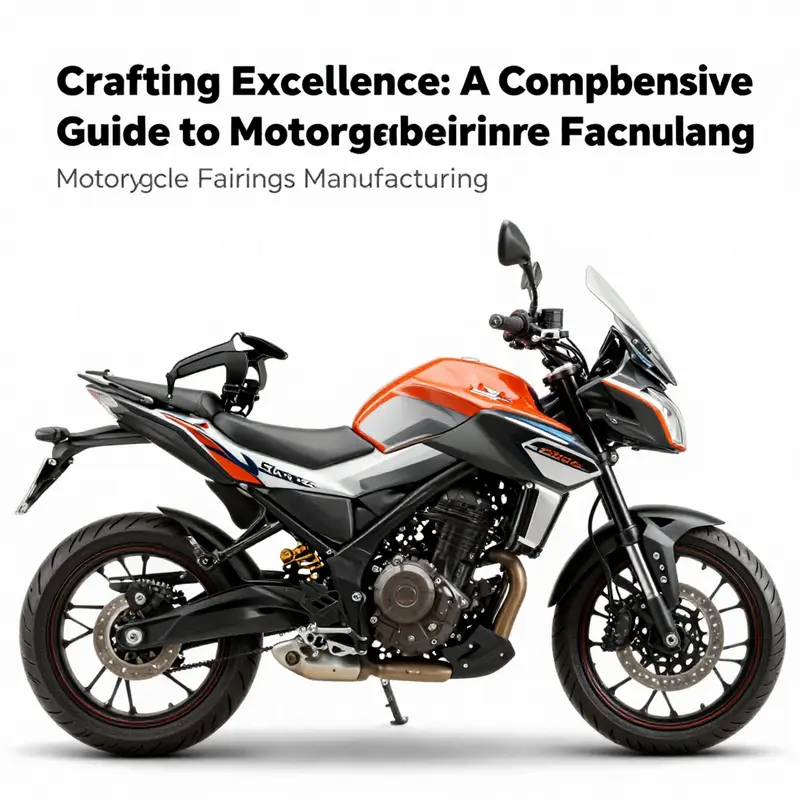
Customizing motorcycle fairings opens a conversation between engineering, ergonomics, and identity that goes beyond mere appearance. It is a practice rooted in the rider’s daily experience of the road, a response to weather, wind, and the fatigue that accumulates after hours in the saddle. When a rider chooses to modify or replace the fairing, they are not merely swapping panels; they are refining how the machine speaks to the rider and to the environment. The advantages of customization, as a holistic approach, emerge in several interconnected threads: comfort and protection, aerodynamics and performance, personal expression, safety, and the potential to integrate additional capabilities. Each thread carries practical implications for how far a bike can go, how smoothly it can go there, and how the rider feels about the journey itself. A thoughtful custom fairing becomes a tailored interface between the machine and the landscape, delivering benefits that are felt in the body, the mind, and the pocketbook over time. The discussion that follows treats customization as a design philosophy, not a styling impulse, and emphasizes outcomes that matter to real-world riding while acknowledging trade-offs that riders should weigh before committing to a specific path of modification.
From the moment a rider leans into a fairing’s curve and feels the air shift around the cockpit, the comfort advantages become tangible. Factory configurations are oriented toward broad utility, but long-distance riders, commuters, and adventure travelers quickly notice how wind pressure can fatigue the torso, shoulders, and wrists. A well-chosen or finely tuned fairing reduces wind exposure and directs the flow of air in a way that minimizes buffeting. This translates into steadier posture, less muscle strain, and a more relaxed grip when the tempo of a ride climbs toward highway speeds or stretches into cross-border miles. When the body works less against the wind, the rider can maintain focus on navigation, line choice, and road texture, which in turn enhances safety because cognitive bandwidth remains available for perception, decision-making, and reaction.
Protection extends beyond comfort. Fairings act as a shield against the smallest debris and the largest weather concerns. They form a protective envelope around the rider, deflecting dust, rain, and pebbles that might otherwise find their way to the face, chest, or hands. In the realm of customization, riders often seek fairings that balance coverage with visibility and access. A modular approach—adding wind deflectors, shield extensions, or partial enclosures—offers tactical control over protection levels in response to changing climates or routes. The ability to tailor protection is particularly meaningful for riders who combine daily commuting with unpredictable weekend detours, where the same setup must perform reliably in sun, wind, and rain. The net effect is a riding environment in which weather becomes a factor to plan around, not a barrier that forces a change of pace or route.
Aerodynamics and performance form a core rationale for customization, especially in a market where efficiency and speed are valued alongside aesthetics. A purposefully shaped fairing reduces drag and smooths airflow over the motorcycle’s bodywork, contributing to lower fuel consumption on internal-combustion powertrains and, for electric models, extended range. Even incremental gains in drag reduction can translate into measurable improvements at steady highway velocities, where energy losses from turbulence accumulate over long distances. More refined airflow can also stabilize handling at high speeds, reducing wind-induced steering corrections and fatigue-induced variability. The aerodynamic advantage of a custom fairing grows when it is designed to complement the bike’s overall silhouette rather than simply covering the stock lines. The result can be a cohesive integration of form and function that preserves the machine’s identity while improving performance without resorting to compromise-level modifications.
Aesthetic customization is not a superficial layer but a logical extension of the rider’s relationship with the bike. The fairing is a primary canvas for expression because it is one of the most visible components and one of the most impactful on perceived personality. Riders often seek materials, finishes, and textures that align with their preferences, whether they favor the gloss of a smooth resin surface, the tactile appeal of carbon-like composites, or the raw texture of metal panels. Color balance and graphic treatment contribute to how others read the machine on the street, at shows, or in photos. The ability to simulate the look of a premium or iconic machine, or to craft a distinctive, one-off aesthetic, empowers owners to own a narrative around their ride. This personalization is not merely cosmetic; it deepens owner attachment, which, in turn, can influence the way a rider manages maintenance, seeks performance improvements, and engages with the community of riders who share similar visual and stylistic sensibilities. The fairing thus becomes a living, evolving expression of the rider’s identity.
Safety is an intrinsic thread in the logic of customizing fairings, and it intersects with both body protection and the integration of cockpit utilities. High-quality configurations can be designed to shield not only the rider but also critical components such as mirrors, instrument clusters, and lighting. When a fairing includes built-in mounting points for accessories like GPS displays or auxiliary illumination, the result is a cleaner, more organized cockpit that reduces clutter and potential snag points. The integrated approach can also improve the machine’s overall durability by reducing the risk of loose components or misaligned fasteners that might arise from ad-hoc additions. At the same time, riders must remain mindful of aerodynamic balance and handling characteristics as they modify the profile of the front end. A poorly designed or excessively large enclosure can increase wind resistance, disrupt the laminar flow, or alter the bike’s steering feel. In practice, a thoughtful customization strategy gauges the trade-offs between added protection and the potential for altered handling, seeking solutions that preserve the intended character of the bike while adding predictable behavior at speed.
Beyond direct impact on rider experience, custom fairings frequently enable practical integration with a broader range of accessories and features. A modern fairing is not merely a shell but a mounting system that can accommodate additional devices—mirrors, lights, navigation units, or even modest weather-protection add-ons such as wind deflectors and retractable screens. A well-planned fairing package anticipates these needs, offering clean attachment interfaces and secure routing paths for cables and hoses. In this sense, the fairing becomes a holistic platform that supports improvements across the cockpit and the rider’s ecosystem, enabling a more efficient and organized setup that keeps components out of harm’s way and reduces wind noise and turbulence around control surfaces. For riders who rely on a compact, weather-resistant shelter during overland trips or who want to keep a cockpit uncluttered for long stretches, this kind of integration can translate into meaningful gains in reliability and comfort during extended journeys.
Yet customization is not without its considerations. The advantages described arise from careful design, precise fabrication, and an attentive fit to the specific model and rider’s usage pattern. A fairing that is out of proportion to the bike or poorly sealed against the elements can actually hinder comfort by trapping heat, creating pressure points, or increasing reflectivity that distracts the rider. Material choice matters as well; composites and reinforced plastics bring strength-to-weight benefits, but they require proper finishing and protective coatings to resist road salt, gravel, and UV exposure. The cost of high-quality customization can be significant, and the time required for fitment and testing should be factored into the decision. For riders with a tight budget, a staged approach—starting with a removable wind deflector or a partial enclosure and expanding to a full fairing later—can deliver early benefits while preserving the option to upgrade when the need grows.
In practice, the path to effective customization often begins with a clear assessment of riding priorities. A rider who spends long hours in varying weather may prioritize wind protection and differential airflow around the cockpit, seeking a design that minimizes fatigue without creating a harsh, heavy front end that would sap acceleration or handling responsiveness. A sport-oriented rider, by contrast, may focus on sharp lines that reduce drag and preserve the machine’s intended silhouette while still offering an option to mount essential accessories. An adventurous rider might favor modular components that can be swapped or reconfigured to adapt to different terrains or touring plans. The beauty of customization lies in its adaptability: the same underlying principle—reduce drag where it matters, shield the rider where it counts, and maintain a coherent aesthetic—can be realized through countless configurations, each tuned to a rider’s specific needs and the road’s demands. This adaptability is what makes custom fairings not just a one-time modification but a long-term framework for evolving the riding experience.
For those who want to explore the breadth of options while maintaining a controlled design philosophy, there are cataloged offerings across platforms that emphasize modularity, compatibility, and quality. A practical approach is to view fairings as a spectrum—from simple, adjustable shields that can be quickly installed and removed to more sophisticated, fully enclosed shells designed for endurance events or extreme weather. Even within the simplest categories, designers consider aerodynamics, mounting geometry, access to controls and instrumentation, and serviceability. The market recognizes these needs, and as a result, riders can find solutions that balance the ease of use with the durability required for regular road use or long-distance expeditions. In essence, customizing a fairing becomes a disciplined practice of matching engineering principles to personal goals, with the rider as the central designer of the bike’s outward form and inward function.
To illustrate how a catalog-driven approach can support decision-making without overwhelming the buyer, consider the way options are organized in a typical market. There are universal, adjustable, clamp-on configurations that offer air deflection and sun shading for a broad range of scooters and motorcycles. There are specialized panels that are shaped for common model families, designed to align with the bike’s headlight geometry, instrument cluster, and mirror positions. And there are fully custom or semi-custom shells that are produced through collaborative work with suppliers who can translate measurements, weight targets, and finish requirements into a coherent fairing set. This spectrum allows riders to start with a baseline that addresses immediate comfort and protection and gradually step into more elaborate aerodynamic refinements or aesthetic overhauls as confidence and budget permit. The possibility of starting with a modular system and moving toward a fully integrated solution mirrors a practical project progression: you gain immediate relief from wind fatigue, test fit and ergonomics, then incrementally improve seal, airflow, and appearance with measured, repeatable steps.
In choosing to customize, riders often discover that the journey itself becomes part of the reward. The process prompts a deeper understanding of how wind interacts with a bike’s geometry, how different materials respond to weathering and road wear, and how the rider’s posture and seating position influence the perceived balance of the machine. The knowledge gained is portable across bikes and routes, enabling riders to approach future projects with greater clarity and confidence. The act of tailoring fairings, rather than simply selecting a pre-fabricated option, fosters a mindful approach to riding that values comfort, efficiency, and personal meaning in equal measure. As riders become more comfortable with the concept of customization, they frequently find that even incremental changes can yield outsized improvements in ride quality and satisfaction. They learn to weigh the benefits against the constraints—cost, weight, and potential changes to handling—while appreciating that the fairing is a critical, living element of the motorcycle’s overall design.
For readers who want to explore the kinds of options described here, a brief gateway to a broad set of fairing concepts is available in one of the industry catalogs. This reference provides a concise overview of modular and fixed configurations, with attention to how each approach interacts with rider ergonomics, atmospheric conditions, and the mechanical interface of the bike. By visiting the catalog, readers can surface design strategies such as how to create clean lines that reduce drag without compromising visibility or access, how to frame wind protection with minimal vortices, and how to plan a staged upgrade route that balances immediate comfort with long-term performance goals. The catalog serves as a practical starting point for a thoughtful, measured customization journey, one that respects the bike’s existing architecture while acknowledging the rider’s evolving needs. A direct link into this kind of resource can be found here: https://www.example.com/fairings-guide/.
Ultimately, the advantages of customizing motorcycle fairings are most evident in the blend of comfort, performance, identity, safety, and integration they enable. Riders who pursue customization do so not to chase trends but to craft a riding experience that aligns with how they travel, where they travel, and what they value most in a journey. With careful planning, informed choice, and a willingness to iterate, a fairing can become a true partner in the ride—an object that shields, streamlines, and personalizes in equal measure while remaining faithful to the bike’s fundamental character. As technology and manufacturing processes continue to evolve, the potential for lightweight, durable, and elegantly designed enclosures expands, offering more options for riders to realize these benefits with reliability and artistic satisfaction.
Riding the Edge: Market Trends Shaping Motorcycle Fairings
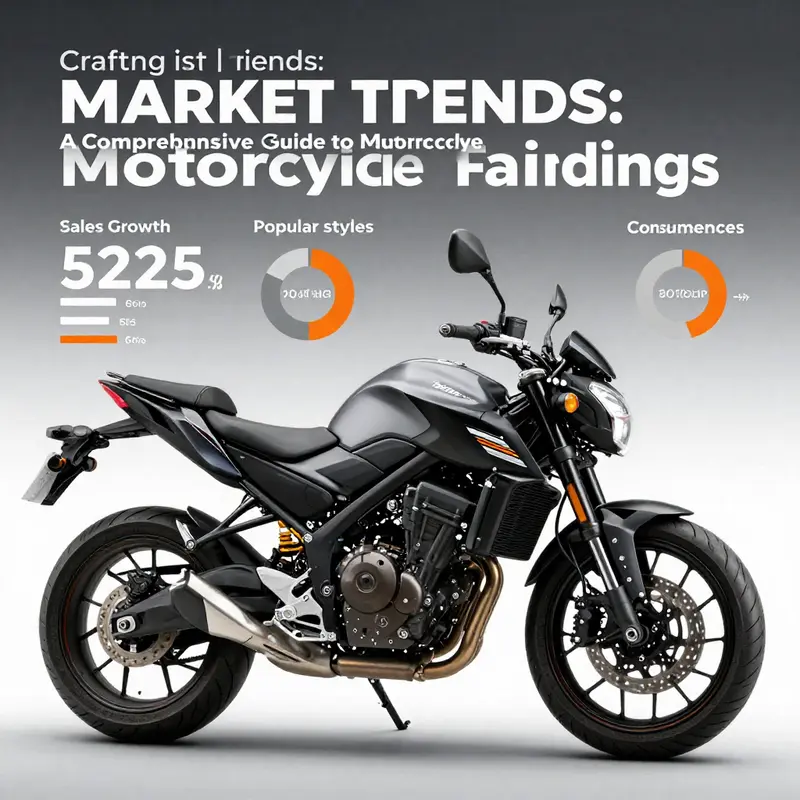
Fairings are not just cosmetic shells; they are aerodynamic, structural, and stylistic components that reflect evolving rider expectations and industry capabilities. This chapter surveys the major market forces shaping how motorcycle fairings are designed, manufactured, and sold: material choices, production technologies, customization, durability, and supply-chain resilience. Weight reduction without compromising stiffness or impact resistance remains a central driver. Carbon fiber offers high strength-to-weight ratios but brings costs and processing complexity, while advanced thermoplastics enable high-volume production with good surface finishes. Modular, configurable fairing systems are rising in prominence, enabling model diversification and aftermarket customization without sacrificing factory efficiency. The aftersales ecosystem is expanding, with cosmetic kits and performance-oriented assemblies that emphasize venting, aerodynamics, and plug-and-play integration. Durability and value-for-money drive advances in finishes, UV resistance, and repairability, alongside robust quality controls and scalable manufacturing. The supply chain narrative emphasizes transparency, collaboration, and data-driven supplier management to sustain predictable lead times in a global market. Digital twins, wind-tunnel simulations, and automated layup/finishing lines accelerate development while reducing waste. Sustainability considerations are increasingly embedded in material selection and end-of-life planning, balancing recyclability with performance. Finally, riders are becoming more educated buyers who demand verifiable performance data, clear warranties, and serviceable designs that maintain value over multiple seasons. The market remains dynamic, with OEMs and specialist manufacturers co-creating solutions that blend form, function, and personal expression while delivering reliable, repeatable quality at scale. For further reading on carbon fiber and composites, see: https://en.wikipedia.org/wiki/Carbon_fiber
Final thoughts
The manufacturing of motorcycle fairings represents a niche yet significant sector within the motorcycle parts industry. By mastering the manufacturing process, selecting appropriate materials, embracing customization, and staying informed about market trends, business owners can drive growth and meet evolving customer demands. As the market develops, leveraging these insights will not only enhance product offerings but also establish a strong reputation in a competitive landscape.