

Motorcycle enthusiasts know that the sound experience can be just as vital as the ride itself. The right audio setup enhances the thrill, turning every journey into an adventure. For business owners in the motorcycle industry, understanding and offering the loudest motorcycle fairing speakers can provide a competitive edge. This article delves into top models like Harley-Davidson’s Stage III, examines key features that make these speakers stand out, discusses installation compatibility, conducts a comparative analysis, and highlights current market trends. Each chapter contributes to a holistic view of how loud motorcycle fairing speakers can elevate the riding experience and drive business success.
Wind, Decibels, and the Open Road: A Deep Dive into the Loudest Motorcycle Fairing Speakers

The roar of the highway is not just an engine soundtrack; it is a moving orchestra that riders tune against with every mile. In pursuit of clarity and presence at highway speeds, the loudest motorcycle fairing speakers have evolved from mere weatherproof add-ons into purpose-built audio systems. The open road is a demanding acoustical environment: wind whooshes around the fairing, tires hiss in the tire walls, and the engine itself competes with the faintest musical detail. Against that backdrop, the most capable lower fairing setups aim to project sound outward with enough power to cut through wind turbulence while preserving tonal balance. They do not simply add volume; they shape a coherent listening field. A well-designed system accomplishes that balance by combining a rugged driver, a precisely engineered tweeter, and careful control of enclosure resonance, all built to survive rain, grit, and the vibrations of long-distance travel. In this landscape, the choice of driver size—commonly a 6.5-inch lower fairing speaker paired with a compact high-frequency element—plays a central role in achieving both reach and clarity. The 6.5-inch format strikes a practical middle ground: large enough to deliver impactful midrange and bass presence, yet compact enough to fit into the modest cavity of a typical fairing, where space is precious and air clearance matters for heat dissipation. A high-flux neodymium magnet is often at the heart of these designs, delivering strong magnetic forces with relatively low weight. This is important because vibration and wind can taint audio performance if the system adds excessive mass to an already dynamic machinery. The magnet choice also influences sensitivity and efficiency; with a strong magnet, the speaker can move more air per input watt, producing higher perceived loudness without necessarily demanding a heavier amplifier. A 20-millimeter tweeter complements the woofer by pulling in the higher registers and helping the sound retain airiness at loud listening levels. The tweeter’s relatively small footprint makes it easier to shield from direct wind gusts and rain while delivering crisp intelligibility for vocals and cymbals. The overall objective is not only loudness but a coherent soundstage that remains intelligible as speed rises and wind noise grows. Riding at 70, 90, or 120 miles per hour, a rider does not hear the music as a flat wall of sound but as a sonic tapestry with defined vocal presence and a believable sense of space. The best setups deliver enough instantaneous headroom to stay clean when the volume is pressed, yet avoid harshness, sibilance, or muddy bass that can blur the mix in gusty air. This balance often reveals itself only after careful testing and real-world listening sessions, where perceived loudness is as much about dynamic range and tonal balance as it is about peak SPL numbers. The design philosophy behind these loudest fairing systems emphasizes durability. Wind, spray, and vibration are constants on the road, so the enclosures must be waterproof and resistant to the rigors of vibration. Rubber gaskets, sealed back chambers, and corrosion-resistant fasteners are standard. The housing materials are typically rugged yet lightweight, chosen to endure long service without fatigue or resonant ringing that would smear the sound. A good fairing speaker package also has weatherproofing baked into the electrical connections, so each session in a downpour or a morning frost remains functional. Beyond the hardware, the signal chain is geared toward efficiency and reliability. A robust amplifier or integrated module drives the 6.5-inch pair with enough headroom to avoid clipping at high volumes. In many systems, the amplifier is matched to the woofer’s impedance to maximize sensitivity and minimize heat buildup, which can degrade performance after extended high-speed sessions. The ability to maintain a strong, clean output when the wind is howling is a testament to both the driver and the electronics working in unison. When riders evaluate the loudest options, they weigh the driver’s efficiency, the enclosure’s tuning, and the system’s real-world effectiveness. A high-sensitivity configuration can produce louder perceived output at the same wattage, which is particularly valuable when wind noise crowds the midrange. Yet high sensitivity is not a panacea; it must be paired with a protective enclosure and a tweeter that can handle the high-frequency energy without becoming shrill as SPL increases. This is where the coherence of the entire assembly becomes critical. A well-integrated system delivers a consistent spectral balance from the bass fundamentals through the upper treble, preserving instrumental textures and vocal intelligibility. It is not enough to achieve raw SPL; the listening experience must feel natural and musical, even as the throttle climbs. For riders who demand a heightened auditory presence on the open road, the selection process often includes evaluating how the system behaves at cruising speeds, how quickly the sound reaches the ears above wind, and how well the voice and instruments remain separable in the mix. Installation considerations matter as well. The fairing’s interior geometry, mounting points, and weather seals influence both performance and longevity. Some packages feature a dedicated, weatherproof amplifier with integrated volume control, simplifying cockpit integration and ensuring the rider can tune the balance without wrestling with separate components in rain or shine. Others offer a standalone woofer and tweeter pair that can be wired into a vehicle’s existing audio platform, providing flexibility for riders who want to tailor the system to their preferred listening style. In practice, riders often report that the loudest setups excel at delivering bass energy and midrange presence, but their ultimate value comes from how clearly voices and percussion translate at highway velocity. A system that excels in bass without overwhelming mids and highs is ideal for live-recorded tracks with dynamic range. Conversely, a system that overemphasizes treble can cause listener fatigue on long rides, particularly when the wind intensity shifts with changing weather conditions. The best soundtracks, whether wind-blown rock anthems or orchestral scores, reveal a balanced rhythm that keeps the rider immersed without forcing the ears into discomfort. Compatibility remains a practical concern. The fairing’s shape and plasticity influence how aggressively a speaker’s enclosure can extend behind the panel. Mounting depth, grill protection, and waterproofing all impact the final sound. Riders who upgrade should consider not only the components’ raw specs but also how the system integrates with their bike’s electrical system, including the alternator’s capacity and the charger’s ripple under load, because audio demands translate directly into electrical demand. The end result should feel like an extension of the bike’s personality: confident, robust, and capable of carrying music through the wind with a sense of presence that turns a ride into a moving concert. For readers exploring a wide array of fairing options, a practical starting point is to examine the various fairing categories and consider how the speakers will pair with the bike’s overall acoustics. If you are curious about compatibility with specific fairings, there is a resource you can consult that focuses on popular Honda fairing configurations, which provides a useful reference for mounting considerations and fitment. Honda fairings. While the exact loudness figures will vary by model, the key takeaway is that the loudest outcomes are achieved when the driver, the enclosure, and the amplifier are treated as a single, tuned system rather than as disparate parts. The experience is less about chasing a single decibel peak than about sustaining a coherent, powerful sound through the wind tunnel of highway speed. For riders who want to explore historical and current industry perspectives, an external reference from the broader market can offer additional context on how premium, weatherproof, high-SPL installs are evolving. External resource: https://www.harley-davidson.com/ The road remains the true test bed for any loudest fairing speaker system; the sound must travel with the rider rather than merely fill the space between wind and throttle. In this light, the pursuit of loudness becomes a dialogue with the wind, a conversation about how music can travel with a rider rather than be constrained by the machine’s own noise. The result is a listening experience that feels as much like a companion on the journey as it is a soundtrack. The best of these systems do not demand sacrifices in reliability or weather resistance to achieve volume; they deliver both. They empower riders to hear crisp details in cymbals, to sense the texture of a bass line, and to appreciate vocal warmth at speed. And as technology advances, the frontier continues to recede—new driver materials, smarter crossovers, and more efficient amplification promise even louder, clearer, and more durable listening experiences without compromising the integrity of the bike’s design or the rider’s safety. The open road awaits, and with it, the sound that can keep pace with the wind, offering a soundtrack worthy of the journey. External resource: https://www.harley-davidson.com/
How the Loudest Fairing Speakers Deliver Power, Clarity, and Weatherproof Reliability

How the Loudest Fairing Speakers Deliver Power, Clarity, and Weatherproof Reliability
When you evaluate the loudest fairing speakers, you are assessing a precise combination of raw output, consistent clarity at speed, and long-term durability. These speakers live in one of the most hostile audio environments: exposed to wind, vibration, water, and engine noise while mounted in a compact enclosure. The best designs balance high power handling and sensitivity with hardened materials and intelligent engineering. The result is audio that remains audible and musical, even when pace and conditions conspire to drown out lesser systems.
Power handling and sensitivity form the backbone of loud performance. Power handling is the speaker’s ability to accept amplifier power without damage. Higher-rated units often accept hundreds of watts of continuous power. Sensitivity measures how loudly a speaker plays from a given amplifier drive. A high-sensitivity speaker pushes more decibels from less amplifier power. Together, these numbers determine how easily a system can produce ear-catching volume. In practice, high RMS power handling paired with sensitivity approaching the upper 80s or 90s dB means the speaker will reproduce aggressive dynamics with less distortion. Riders who demand the loudest setups often pair robust sensitivity with amplifiers that preserve headroom and transient control, keeping the sound controlled rather than simply louder.
Maintaining fidelity at highway speeds requires specific voice-coil and motor-structure choices. Strong motor assemblies with powerful magnets deliver solid cone control. A tight, well-vented voice coil resists thermal overload and maintains linear response during sustained loud passages. Cone materials and surround chemistry affect stiffness and break-up behavior. A rigid cone with a tuned surround prevents midrange smear and keeps bass punch defined. At speed, wind and engine noise create a masking effect. A speaker that preserves midrange presence and tweeter detail cuts through that mask. Tweeters with focused dispersion and durable domes retain crispness at high volume. When designers account for motorcycle acoustics, they often tune the crossover to emphasize midrange clarity over extreme low-bass, which can be lost to ambient noise and enclosure limitations.
Durability is as vital as output for speakers mounted in fairings. Motorcycle speakers face moisture, thermal swings, and constant vibration. Waterproofing measures go well beyond simple coatings. Sealed magnet assemblies, treated cones, and neoprene or rubber surrounds resist degradation from salt, rain, and UV exposure. Manufacturers use injection-molded cones to avoid delamination and maintain shape under stress. High-flux magnet materials reduce size and weight while increasing magnetic strength. When combined with corrosion-resistant hardware, these choices ensure performance does not fade after a season of riding. Vibration testing simulates long-term highway use. Components that survive such tests reliably retain their voice and mechanical alignment, preventing rattles and loss of output.
Enclosure design and mounting matter for perceived loudness. A speaker installed in a sealed or semi-sealed lower fairing benefits from the enclosure’s acoustic loading. Properly designed mounting interfaces reduce unwanted resonance. Rugged mounting baskets and isolating gaskets minimize energy transfer to the fairing skin. Some systems integrate the speaker into larger fairing assemblies with tuned ports or cavities. That tuning enhances bass response without needing extreme cone excursion. Attention to baffle design and sealing is what separates a loud, clear speaker from one that sounds muddy at the same measured SPL.
Beyond mechanical engineering, practical rider-focused features have appeared in top-tier fairing speakers. Some solutions fold utility into the audio housing, offering storage or accessory mounting without compromising acoustics. Thoughtful routing for wiring and connectors simplifies installation and reduces the risk of exposure to the elements. Weather-sealed terminals, quick-disconnects, and reinforced harnesses keep the system serviceable. These conveniences reduce installation time and improve reliability, letting riders spend more time on the road and less time troubleshooting electrical or mechanical failures.
Sound tuning tailored for motorcycles emphasizes presence and intelligibility. Riders want music with clear vocals and articulate mids that cut through cabin noise. Excessive low-frequency emphasis can obscure midrange and demand more amplifier power than is practical for a fairing system. Therefore, top designs often favor a balanced midrange and a tweeter that clarifies harmonic detail. When a system includes active processing, it can apply equalization to mitigate wind noise and engine harmonics. Time alignment and phase considerations further improve imaging, so the sound appears natural despite small mounting offsets. Even without complex processing, carefully chosen crossover points and slopes help each driver operate in its optimal range, improving both loudness and perceived clarity.
Thermal management is another often-overlooked factor in loud speakers. Sustained high-volume usage generates heat in the voice coil and surrounding assembly. Open, vented designs and thermally conductive materials help dissipate this heat. A cooler voice coil resists power compression and retains linearity. That thermal resilience enables riders to push the system for longer stretches without a notable loss in performance.
Installation compatibility ensures that high-performance speakers can be integrated into a wide range of fairings. Universal mounting kits and adapter plates allow riders to upgrade without major modifications. In some cases, models are designed to drop into specific fairing cavities, simplifying the retrofit. Proper fitment avoids air leaks and secures the speaker against road forces. Riders should consider baffle depth and mounting flange size when planning an upgrade. Thoughtful packaging by manufacturers minimizes the need for cutting or extensive rework.
Lastly, consider how value presents itself in this segment. Loudness alone does not define value. A speaker that can reach high SPLs but then distorts, fails in wet conditions, or requires constant adjustment will cost more in the long run. The ideal combination is robust power handling, high sensitivity, durable construction, and rider-minded features that simplify installation and maintenance. These elements create a system that delivers sustained, musical output under real-world conditions.
If you are evaluating options for a touring bike that uses lower fairing speakers, look for systems that list water resistance and vibration testing. Choose speakers with a strong motor, treated cone materials, and high sensitivity ratings. Confirm the mounting geometry fits your fairing or that appropriate adapters exist. Finally, match the speakers to an amplifier that preserves headroom and controls transients.
For a closer look at specifications and tested implementations of fairing-mounted systems designed for maximum audibility and reliability, see the official manufacturer details here: https://www.harley-davidson.com/europe/en/vehicle-accessories/audio-systems.html
You can also explore compatible fairing options and fitment guides for various motorcycles in the FJR1300 fairings catalog to plan a seamless installation: https://ultimatemotorx.net/product-category/yamaha-fairings/fairings-for-fjr1300/
Mounting Thunder: Installation, Compatibility, and the Quiet Art of Hearing Your Ride Above the Wind
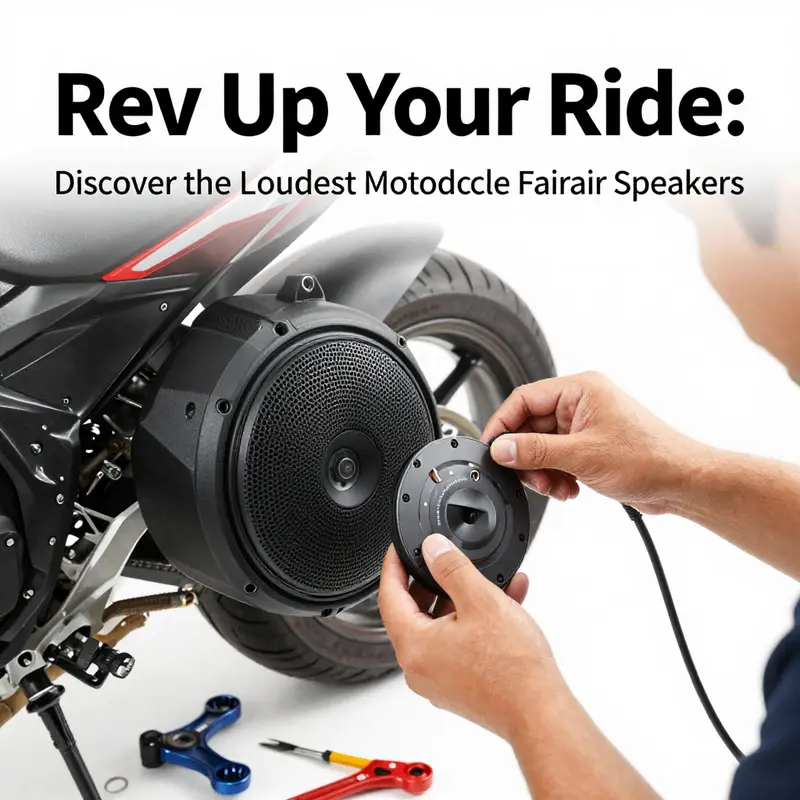
Riders chasing the loudest, clearest fairing audio know that power alone does not guarantee sonic supremacy. Sound must be paired with thoughtful placement, robust mounting, and a system architecture that can cut through wind, engine rumble, and the changing acoustics of open-road environments. The loudest fairing speakers in practical use rest on a delicate balance: they deliver high SPLs without becoming a drone that rattles the chassis or distorts at peak volume. What makes these setups work is not only the driver’s size or the magnet’s strength, but how the components—driver, enclosure, crossover, wiring, and amplification—behave together when the bike is rolling at highway speed. Typical high-output fairing drivers use a 6.5-inch, weatherproof woofer paired with a midrange and a 20-millimeter tweeter. They employ a high-flux neodymium magnet to maintain efficiency under wind shear and to resist heat buildup in the fairing’s sealed environment. When these elements are matched properly, the result is clean highs, articulate mids, and a bass that remains confident as the speedometer climbs. In practice, the emphasis is not merely on louder sound but on intelligible sound when the motorcycle is enveloped by wind and road noise. A well-tuned system preserves clarity across the vocal range while maintaining dynamic response for bass notes and cymbals alike, allowing voices in music and dialogue in audio tracks to cut through the noise without aggression or fatigue on long rides.
Compatibility remains the first hurdle. Many riders seek direct compatibility with original equipment speaker housings because that pathway minimizes modification and preserves the bike’s aesthetic and integrity. In real-world terms, that often means direct replacement within OEM housings designed for touring and cruiser models. The aim is to preserve the factory silhouette while upgrading to weather-sealed drivers, reinforced enclosures, and crossover networks that can handle higher power levels. A direct-replacement approach is advantageous because it reduces the risk of misfit, misalignment, or compromised sealing. It also simplifies wiring, since the harnesses and mounting points typically align with stock configurations. Still, even when a system is engineered for plug-and-play installation, riders should expect model-specific differences. Some bikes have unique fairing shapes, different internal bracing, or varied gasket profiles that influence how a speaker sits, how the grille aligns, and how much clearance exists behind the trim. For this reason, a careful fit check in a controlled environment—without the bike running—helps verify that the cone excursion has a full, unobstructed arc and that the tweeter does not collide with any internal hardware during peak excursion.
From a performance standpoint, the power handling and enclosure geometry are central. Per-unit power ratings that approach or exceed 150 watts enable high-volume output with relatively low distortion, assuming the amplification path is designed to deliver clean current and consistent voltage. The advantage of multiple speakers is clear: when mounted strategically around the fairing, they create a coherent wavefront that improves in-ride intelligibility. Configurations that support multiple units—potentially up to eight in a broader system with two well-matched amplifiers—offer substantial SPL gains while enabling a more even dispersion pattern. The critical caveat is not just watts per channel but the matching of impedance, crossovers, and the amplifier’s ability to deliver instantaneous current. When the electronics are mismatched, the result can be clipping, heat buildup, or uneven response across the midrange and highs. Hence, a balanced approach—paired drivers, properly tuned crossovers, and an amplifier chosen to service the entire array—yields the cleanest, most true-to-life sound at highway speeds.
The landscape of aftermarket options includes a spectrum of two-way and three-way configurations. A common, robust choice is a two-way system with a dedicated woofer and a separate tweeter mounted on a grill or within a dedicated housing. This arrangement typically provides sharper high-frequency response while preserving the lower-end punch necessary to compete with wind noise. A key feature of modern high-output designs is tunability through software or firmware updates that help align the system with the motorcycle’s acoustics and rider preferences. These updates can adjust crossover points, equalization curves, and phase alignment, enabling a smoother integration with the bike’s native ambient noise. The practical upshot is that riders can tailor the overall sound signature to their riding style and environment without sacrificing protection against the elements or the fairing’s structural integrity. When shopping, it is wise to prioritize weather resistance, sealed enclosures, and mounting hardware that resists vibration and corrosion, especially in damp or dusty climates. The goal is a stable, sealed sound stage that doesn’t rattle loose at high speed or degrade after a few miles of road grime.
For riders who pursue a plug-and-play path, the choice often centers on visual and mechanical compatibility with the existing fairing geometry. Direct-fit designs require no cosmetic modifications to the factory housings, which helps preserve the bike’s lines and reduces installation complexity. Yet even in direct-fit scenarios, attention to mounting hardware, gasket integrity, and cable routing remains essential. Proper cable management reduces the risk of interference from engine and drivetrain vibrations and prevents chafing as the fairing oscillates with road texture. A well-executed installation also involves securing wiring away from heat sources and moving components, using protective sleeves and grommets where the wiring passes through the fairing. In addition, rider-level placement—placing drivers where sound passes most efficiently toward the rider’s ears—improves perceived loudness and clarity without increasing peak SPL to potentially uncomfortable levels for the listener or the bike’s electrical system.
As a practical matter, the installation sequence is less a rigid recipe and more a disciplined workflow. Begin with a clear assessment of fit, checking clearances around the bezel, the inner bracing, and any internal components the woofer or midrange might contact. Move to mounting, using weather-sealed fasteners and isolators to minimize vibration transfer. Route the harness along protected channels, avoiding sharp edges and sharp bends that could fatigue wires over time. After securing the units, connect the crossovers and the power path to the amplifiers, making sure to observe the correct polarity and grounding strategy. A robust ground point is essential for stable performance, and a dedicated amplifier ground close to the speaker array helps maintain consistent channel balance as RPMs rise and the alternator kicks in. With the hardware in place, perform a careful, progressive audition: start at low levels, monitor for distortion, check for overheating after a sustained test ride, and then gradually raise the volume while listening for any rattles or buzzes that would indicate mounting stress or enclosure leakage.
For riders who want a broader exploration of compatible fairings, the Honda fairings catalog is a solid starting point to understand how different shapes influence acoustic outcomes and mounting approaches. See more here: Honda fairings.
In the end, the installation and compatibility of loudest fairing speakers hinge on a holistic view of how power, enclosure, and mounting interact with the bike’s dynamics. It is not enough to push the loudest unit into the bike and expect perfect results. The rider’s experience – the sense of hearing the music or soundtrack as a seamless companion to the ride, not an intrusive force – comes from thoughtful placement, careful wiring, and a tuned system that respects both the machine and the environment it inhabits. As you plan a build, keep in mind that the best outcomes come from deliberate, model-aware decisions, high-quality weatherproof components, and a clear strategy for achieving clean, intelligible sound at highway speeds. The result is an audio experience that feels integrated with the wind, not overwhelmed by it, and that remains reliable through rain, heat, and the long miles that define a rider’s journey.
External reference: https://www.harley-davidson.co.uk/motorcycles/accessories/audio/stage-ii-fairing-lower-speakers.html
Raising the Volume: A Deep Dive into the Loudest Motorcycle Fairing Speakers
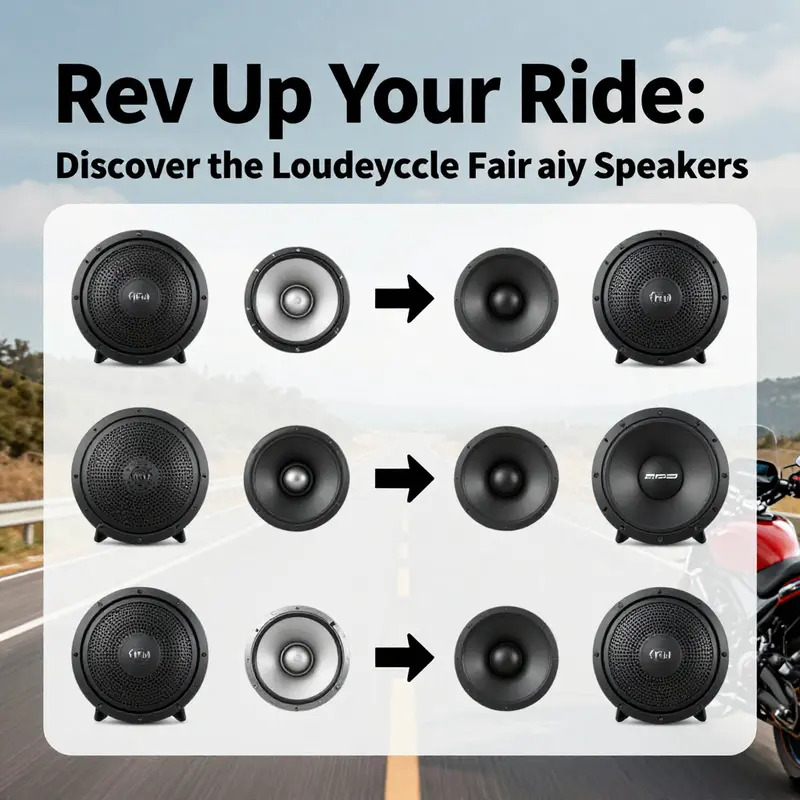
Riding into the wind, the challenge for fairing speakers is not just to be loud but to be clear and reliable under constant wind, vibration, and weather. The loudest fairing configurations balance power handling, sensitivity, and enclosure design. Common characteristics include a robust 6.5-inch woofer, a dedicated tweeter (around 20 mm), sealed weather-resistant enclosures, and high-flux magnets for sustained output under vibration and moisture.
Power handling determines how much energy a speaker can accept before distortion, while sensitivity (acoustic efficiency) governs how effectively electrical power becomes audible sound at the rider’s ear. At highway speeds, wind and engine noise raise the ambient noise floor, so systems designed for high perceived loudness typically combine higher sensitivity with adequate power headroom and precise tuning to preserve mids and highs.
Durability is as important as raw SPL. Vibration testing, corrosion-resistant connectors, rugged grilles, and watertight seals ensure a system remains reliable over long rides and varied climates. Manufacturers that prioritize touring use injection-molded cones, sealed chassis, and impedance-matched electronics to minimize battery drain and amplifier heat while resisting rattles that degrade clarity at high volume.
Two engineering archetypes dominate the loud-end landscape. One emphasizes raw output: high-power 6.5-inch systems with sensitivity tuned for pressurization and minimal distortion. The other emphasizes integrated touring packages: systems built to fit fairings, with strong weatherproofing, matched tweeters and midranges, and mounts engineered to reduce vibration. The former excels at sheer SPL; the latter often provides more consistent, usable sound across conditions and easier installation.
Practical trade-offs matter. Extremely loud systems can require careful tuning to avoid excessive bass vibration or harsh highs at speed. Integrated packages trade a bit of peak SPL for dependability, coherent frequency response, and long-term resistance to the elements. Rider priorities—absolute loudness versus consistent, ride-ready performance—should guide the choice.
Fairing geometry and rider position shape perceived loudness and imaging. Properly aligned 6.5-inch drivers with matched tweeters and midrange placement create a convincing stage and maintain intelligibility for navigation prompts and voice. For many riders, a well-tuned, rugged 6.5-inch configuration provides the best balance of volume, clarity, and reliability across touring conditions.
For further exploration of how fairing compatibility affects installation and integration, consult resources that show how different fairing designs influence speaker placement and mounting. Example references include manufacturer fairing categories and detailed spec pages for high-output models, which can assist when matching speaker systems to specific bikes and riding needs.
Where Loud Meets Durable: Market Shifts in High-Volume Fairing Speakers

The market for the loudest motorcycle fairing speakers has shifted from niche novelty to a focused field of engineering. Riders now expect systems that not only play loud, but hold up against wind, vibration, water, and sun. This expectation is reshaping design priorities across the industry, from connectivity to materials science. In practical terms, the conversation is no longer just about peak decibel numbers. It centers on how a speaker performs on a moving bike, how reliably it resists the elements, and how well it integrates with a bike’s look and electrical system.
One clear movement is toward seamless wireless connectivity. Bluetooth has matured into an assumed feature rather than a luxury. Riders want to queue playlists, accept navigation prompts, and pair phones without fiddling with cables. This makes the speaker an extension of a rider’s digital life, not merely a sound source. Manufacturers have responded by building receivers and modules that prioritize stable links under motion. That stability is essential: a drop in connection at speed ruins the experience and raises safety concerns. As a result, the loudest fairing speakers on the market now often ship with advanced wireless stacks that reduce latency, minimize packet loss, and support modern codec efficiency. The net effect is louder, cleaner audio with fewer interruptions.
Durability is an equally strong driver. Fairing-mounted speakers operate in one of the harshest consumer environments. Constant vibration, wide temperature swings, road spray, and direct sunlight are standard. This reality has pushed engineering teams to adopt protective strategies traditionally found in marine and outdoor audio products. Waterproofing standards, dust seals, and UV-resistant finishes are now common. Enclosures and cones use treated composites and specialized coatings to prevent delamination and fatigue. Magnet assemblies are often sealed or made from materials less prone to corrosion. Rugged mounting systems reduce rattle and preserve cabinet integrity. The best-performing systems balance loudness with these defensive measures so high output does not come at the cost of premature failure.
Technical performance has also become more measurable and meaningful. Consumers and engineers focus on a handful of real-world metrics. RMS power handling indicates how much continuous power a speaker can accept without distortion. Sensitivity ratings show how efficiently a speaker converts amplifier power to perceived loudness. Frequency response and distortion figures reveal how balanced and clean the sound remains at highway speeds. Innovations in driver design, such as optimized voice coils and reinforced surrounds, boost both sensitivity and longevity. Paired with high-output amplification, these refinements yield sound that cuts through wind noise without harshness. Importantly, the market favors systems engineered to resist compression at high volume. That ensures clarity and prevents the muddying that can make music unintelligible over engine and road noise.
Aesthetic integration has become a sales driver as much as technical specs. Riders want speakers that complement their bike’s lines and style. Buyers increasingly value grille designs, accent trims, and color options that match factory finishes. This design attention encourages aftermarket and OEM designers to work closer with styling teams. Concealed mounting hardware, low-profile grilles, and trim rings that echo a bike’s aesthetic are now common. The result is an expectation that a high-output speaker also look like it belongs on the bike, not like an add-on gadget.
Another market pressure comes from the appetite for complete, high-performance audio ecosystems. Loud fairing speakers rarely operate alone; they are paired with amplifiers, subwoofers, and signal processors. This ecosystem approach lets riders scale systems for louder, fuller sound while controlling distortion. Manufacturers are offering matched amplifier-speaker packages and tuning presets. These combinations optimize crossover points and equalization for the unique acoustic environment of a motorcycle fairing. When a system is designed as a whole, riders experience powerful, coherent sound that retains intelligibility at speed.
Materials science and manufacturing techniques are contributing quietly but significantly. Advances in cone materials, rubber compounds, and neodymium magnets have increased efficiency without adding mass. Lightweight, high-flux magnets allow powerful magnetic fields in compact packages. Composite cones resist moisture and maintain stiffness under load, improving transient response. Modern adhesives and potting compounds reduce voice-coil wobble and increase thermal tolerance. Together, these improvements mean loud systems can be physically smaller and better suited to the limited space inside a fairing.
User expectations around installation and maintenance are evolving too. Bolt-on simplicity and plug-and-play wiring harnesses have become important selling points. Riders prefer systems that integrate cleanly with a bike’s electrical system and avoid complex modifications. This demand is fostering modular designs and manufacturer collaboration with vehicle brands. Vendors provide harnesses, brackets, and documented instructions to reduce installation time and minimize electrical issues. The result is a smoother owner experience and a lower barrier to upgrading to a high-power system.
Regulatory and safety considerations are beginning to shape product direction. As audio output grows, manufacturers contend with concerns about noise pollution and rider awareness. Some markets have local regulations limiting vehicle sound emissions. Others emphasize rider safety, noting that sound should not distract from environmental cues or traffic sounds. New product lines therefore balance maximum meaningful loudness with frequency response choices that preserve situational awareness. Rather than chasing headline SPL numbers alone, designers now consider how their systems affect rider perception and external safety.
Price and market segmentation are clear forces. There is a tiered market, with entry-level loud systems aimed at casual riders and premium assemblies for audiophiles and touring enthusiasts. Entry-level products focus on value, basic protection, and adequate volume. Premium systems emphasize high RMS handling, matched amplifiers, and refined materials. The midrange blends these traits for riders who want near-professional performance without top-tier pricing. This segmentation allows manufacturers to target specific rider needs, from weekend cruisers to long-distance tourers.
Finally, aftermarket and customization culture continues to influence product strategy. Riders who modify fairings or swap bodywork look for speakers that fit alternative housings. This has encouraged a market for adaptable mounting solutions and speaker sizes that match common fairing cavities. Online communities and retailers provide installation guides and parts compatibility charts. These resources help riders choose systems that pair with popular fairing lines and models, making upgrades less daunting.
For readers looking to explore compatible fairing parts that help fit high-output systems, this resource on fairings for a popular touring model offers practical examples of matching bodywork and audio upgrades: https://ultimatemotorx.net/product-category/yamaha-fairings/fairings-for-fjr1300/.
The market continues to refine what “loudest” means in practical terms: a combination of measurable output, intelligibility under speed, ruggedness, and visual harmony with the bike. Innovations in connectivity, materials, and integrated systems are pushing the bar higher. Riders seeking extreme volume now demand systems that last, connect, and look right. As manufacturers respond, expect next-generation fairing speakers to deliver louder sound with greater resilience and smarter integration than ever before.
For specific technical reference and further reading about leading fairing speaker kits and their engineering claims, see the manufacturer resource provided in the research materials: https://www.harley-davidson.com/us/en/shop/systme-audio-h-d-par-fosgate-kit-de-4-haut-parleurs-stage-iii/p/50700149.
Final thoughts
In the pursuit of the ultimate motorcycle riding experience, the choice of fairing speakers plays a pivotal role. With models like the Harley-Davidson Audio Powered by Rockford Fosgate – Stage III leading the charge, understanding features, installation compatibility, and current market trends is essential for business owners. These insights not only facilitate informed purchasing decisions but also enhance customer satisfaction and loyalty. As riders seek louder and clearer audio solutions, there lies an opportunity for businesses to capitalize on this growing demand by offering top-tier products that elevate the motorcycle experience.