
Motorcycle fairings are crucial for both aesthetics and functionality in the biking world. Understanding their pricing can significantly impact business owners, especially those in sales or motorcycle repair. This guide dives into the various factors that influence fairing prices, exploring fit and type, material and design, brand significance, market trends, and future projections. By grasping these elements, business owners can make informed decisions when sourcing fairings for their customers and enhance their product offerings.
The Price Playbook: How Fit, Type, and Material Shape Motorcycle Fairing Costs
Prices for motorcycle fairings rarely reflect a single, simple equation. They are the product of a web of choices about fit, form, material, and origin, with each decision nudging the final number in a different direction. To understand what the sticker on a set of fairings might mean for a rider or a shop, it helps to trace the logic from the first line item to the last line of a bill. The journey begins with fit and proceeds through type, material, and sourcing, all of which together determine whether a set will be a bargain or a benchmark in performance and aesthetics. In this sense, fairings are more than cosmetic armor; they are components that influence aerodynamics, weight, protection, and even heat management, and the price is a proxy for the level of refinement those attributes carry.
Much of the pricing landscape hinges on fit. OEM, or original equipment manufacturer, fairings are the gold standard for exact fit and consistent quality control. They are designed to match a specific model with precise tolerances, ensuring that every mounting point aligns, every gap is correct, and the visual lines stay true to the bike’s design language. That fidelity comes at a premium. In dollar terms, OEM replacements typically run roughly from $300 to $800 per section, reflecting the costs of engineering, quality assurance, and the assurance that the panels will behave as the manufacturer intended. For riders who value a factory-perfect fit, the higher end of that range often translates into fewer fitment headaches, less modification, and a more seamless final appearance when the bike is reassembled. On the other hand, the aftermarket space broadens the spectrum considerably, making it possible to balance cost against fit for a wider array of needs.
Within aftermarket offerings, ABS plastic remains the baseline material for many riders who want reasonable protection and durability without a steep price. Basic ABS sets, designed for touring or sport-touring motorcycles, typically fall in the $100 to $200 range for a full set. That price point can be appealing for riders who are chasing a fresh look or a repair while keeping an eye on a realistic budget. ABS is forgiving in production—easy to mold, resilient in daily use, and capable of withstanding sun, rain, and road grime. However, as fashionable and performance-oriented as ABS might be, it is not without its compromises. It tends to be heavier than some advanced composites, and its surface finish may not hold UV exposure as long as higher-end coatings can, which can influence long-term appearance and resale value.
On the opposite end of the spectrum sits the premium tier—the carbon fiber fairings that attract riders chasing the lightest possible weight and a distinctly high-end look. Carbon fiber options can begin around $180 per piece for selected, high-performance pieces and can climb quickly as the fairing set is expanded to a full complement. When you step into complete carbon fiber sets, the price can run into the thousands, reflecting the expensive manufacturing process, the material’s strength-to-weight advantages, and the enhanced stiffness that racers and dedicated track riders demand. The carbon option is a classic example of how material choice translates into performance benefits and a commensurate premium in price. It is not merely about aesthetics; it is about the conscious decision to trade cost for weight reduction, aerodynamic performance, and the potential improvement in agility and fuel economy.
The type of fairing you choose matters just as much as the material. Full fairings provide the most comprehensive enclosure, offering the greatest potential for aerodynamic efficiency and protection from road debris and weather. They typically carry higher prices than half fairings, which cover only the upper portion of the bike, or section fairings, which are individual pieces that can be replaced as needed. The practical effect of this difference is simple: the more of the bike that is fully encapsulated, the greater the potential aerodynamic advantage and the greater the cost. For someone chasing a race-inspired silhouette or optimal wind protection, a full fairing package is appealing, but it comes with a price tag that reflects both scope and complexity. For those prioritizing accessibility or ease of repair, half or section fairings offer a more modest entry point, with costs that align with their narrower coverage and fewer mounting challenges.
Origin also plays a decisive role. The market has long benefited from a robust supply chain centered in major manufacturing hubs where injection molding, UV-resistant coatings, and automated painting lines converge. Regions that host these capabilities contribute to price discipline through efficiency, scale, and the ability to offer competitive shipping terms. In today’s global logistics environment, proximity to key ports and the availability of Delivered Duty Paid (DDP) options can shave substantial costs off the total landed price for international buyers. Sourcing a fairing in a region known for advanced polymer processing and consistent coatings means not only a quicker turnaround but also more predictable long-term performance, since production lines are calibrated to deliver uniform surface finishes and dimensional stability across large volumes.
This alignment of manufacture, logistics, and product design is often the quiet architect behind the price ladder. B2B buyers in particular lean on Chinese manufacturers for bulk orders or custom designs, seeking to strike a balance between cost and capability. The economics of mass production allow a supplier to amortize tooling, color-matching, and coating processes across thousands of panels, which lowers per-unit costs for more standardized products. Yet the same supply chain can accommodate customization, where model-specific or design-specific fairings are produced to match a particular motorcycle’s geometry. That dual capability—both broad affordability and targeted customization—helps explain why the market exhibits such a wide price spectrum. It is not simply a matter of “the more you pay, the better the fairing”; it is a calculation of fit confidence, material performance, and the practical implications of manufacturing scale.
Those scale dynamics also shape delivery expectations. For international buyers, faster delivery and reduced complication often come with premium service, such as shipments that use well-trodden routes through major ports like Nansha or Shekou and terms that simplify customs and duties. The modern marketplace thus presents a layered choice: you can opt for lower upfront material cost with longer lead times or more expensive options that come with faster fulfillment and a more predictable post-purchase experience. The regional sourcing of components, coatings, and finish work translates into the total cost of ownership. UV-resistant coating, impact-resilient finishes, and precise color matching can all add to the price, but they also reduce the need for early replacement or refinishing, which has its own long-term value for riders who ride hard and rack up miles on track days or daily commutes.
In practice, the cost landscape for fairings is best understood as a continuum rather than a handful of fixed categories. A universal-fit fairing set, sold as a complete front-and-rear package, may appear cheap at a glance, especially when the listing cites a bare minimum. Yet universal-fit items often carry the caveat of slower fitment precision and occasionally reduced alignment with real-world geometry on specific models. A model-specific set—whether sourced from an OEM supplier or an aftermarket provider—claims a tighter fit with better alignment and a cleaner integration with plastic panels, frames, and fuel-tiller structures. The price gap between universal and model-specific sets is not solely a matter of aesthetics; it is about the trade-off between the certainty of fit and the size of the investment.
The decision calculus is further complicated when one adds the possibility of specialty finishes and integrated features. A standard color coat can be a straightforward cost rider, but if a rider wants carbon-fiber-look finishes, UV-protective clear coats, or integrated lighting and venting, the price climbs accordingly. The “premium” label on carbon fiber is not only about weight; it is also about the cost of resin infusion or prepregs, meticulous layup, curing processes, and post-curing finishing. Each of these steps adds labor, time, and materials, all of which accumulate into a higher final price. Even within the carbon category, there are gradations—two-piece fairings with lightweight carbon composites versus more complex shapes with multiple panels and higher tolerances. In the end, the most important takeaway is that the sticker cannot be read in isolation; it is a reflection of choices across fit, type, material, and manufacturing discipline.
For readers who want to visualize these options without wading through a catalog, a quick tour of category pages can be instructive. A general sense of how releases and pricing evolve through a given year helps illuminate why a set that looks similar on the surface may diverge in price. If you’re curious about how recent releases are positioned—both in terms of design and cost—consider exploring the 2023new category, which highlights how fresh entries are priced and presented in the market. This internal reference provides a snapshot of how manufacturers and retailers balance novelty with value in a competitive cycle. 2023new category
In sum, the price of motorcycle fairings is not a single decision but a sequence of choices about fit, form, and function. OEM fit commands a premium for precise geometry and quality control. Aftermarket options offer affordability without sacrificing essential protection, while carbon fiber represents the peak of lightness and stiffness with a corresponding price premium. The type of fairing—full, half, or section—dictates the scope of coverage and the complexity of installation, which in turn influences labor costs for fitment and finishing. Material selection—ABS versus carbon fiber—cuts across performance, weight, and durability, shaping long-term ownership costs as much as the immediate sticker. Regional sourcing and logistics complete the picture, turning manufacturing efficiency into delivery speed and total landed cost. For riders and retailers alike, pricing becomes a meaningful shorthand for value: a careful balance of fit confidence, performance expectations, and the long arc of maintenance and appearance.
External resources offer deeper insight into the practical considerations of choosing fairings. For a broader, standards-based look at what to look for when evaluating motorcycle fairings, consider this detailed guide: https://www.carinterior.com/motorcycle-fairings-guide/
The Price of Identity: How Materials and Design Shape Motorcycle Fairings and What It Means for Riders
When riders weigh the choice of fairings, they often confront a question that seems simple at first but expands into a tapestry of decisions: how much are motorcycle fairings, and why do prices swing so widely from one kit to the next? The short answer is that price follows function, and function follows material, fit, and the extent of protection, aerodynamics, and aesthetics the rider wants. A fairing is more than a shell. It is a performance component that interacts with airflow at speed, carries finish and color, and can alter the bike’s weight, handling, and even cooling behavior. In markets that span basic universal-fit sets to intricately tailored, model-specific kits, the price spectrum reflects not just the number of panels but the engineering behind them. A universal-fit, full-set fairing can begin at remarkably low prices, particularly when sourced from large marketplaces that cater to hobbyists and DIY enthusiasts. In some listings, complete universal-fit sets are advertised at modest starting points, illustrating how mass-produced, low-cost plastics can be assembled into a cohesive, if generic, exterior. On the other end of the spectrum, a fairing designed specifically for a particular riding archetype or model can command a substantially higher price. When a set is created to match exact geometry, included mounting points, and precise gaps around the engine and cockpit, the value increases because the installation requires fewer modifications, less labor, and a cleaner integration with the bike’s original lines. It is in this tension between universal accessibility and model-specific precision that riders begin to assess the true cost of fairings.
The numbers from recent market data illuminate the basic invoice curve. Universal fit fairings, often sold as complete front-and-rear sets, can start at surprisingly modest figures in some marketplaces—tradesmen and hobbyists alike sometimes price these lower to attract casual buyers seeking quick cosmetic refreshes or temporary protection. Such low entry points reflect not only the raw material cost but the economies of scale achieved when dozens of identical panels are cast, trimmed, and sold in bulk. Custom-fit fairings, however, tell a different story. When the panels are engineered to mate with a specific motorcycle geometry, the price rises, reflecting the added design work, tighter tolerances, and the guarantee of a closer fit. A typical model-specific kit can be priced higher than universal sets, because the supplier has invested in precise CAD-driven molding, tests for fit at multiple frame angles, and sometimes compatibility with particular mounting hardware. These factors reduce fitting frustration for the buyer but elevate the upfront cost.
Beyond fitment, the material selection itself is a driving force behind price. ABS plastic is the workhorse of the industry. It strikes a practical balance: it resists impact, handles heat reasonably well, and remains affordable for mass production. ABS-based fairings are common on standard production bikes and are favored where durability and repairability matter most for daily riders. The material’s popularity is rewarded by lower production costs, which often translates to more accessible pricing for universal sets and convenient replacement panels. Yet even within ABS, prices reflect the complexity of the design. A simple two-piece front and side panel arrangement will be cheaper than a multi-part fairing with integrated vents and intricate sculpting. The same ABS base can be finished with a variety of textures and coatings that alter perception and durability, from matte to high-gloss finishes, with corresponding price adjustments.
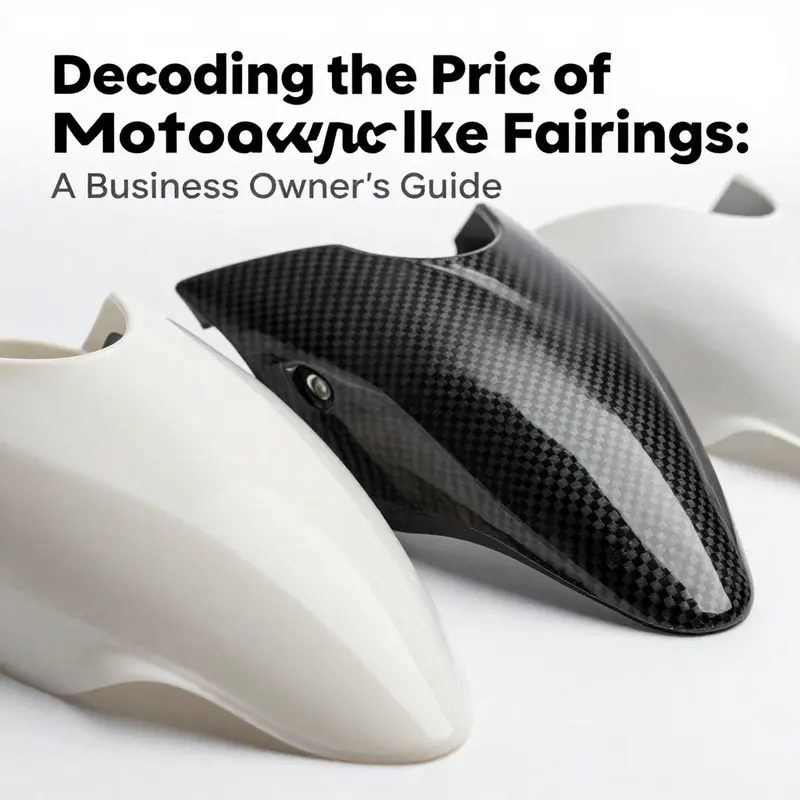
Carbon fiber, by contrast, sits at the other end of the spectrum. It offers an unmistakable aesthetic and an enviable strength-to-weight ratio, which translates into improved performance in high-speed contexts, where every gram matters and marginal aerodynamic gains accumulate at race-inspired speeds. Carbon-fiber fairings typically carry a premium not only for the material itself but for the labor-intensive process of infusion or layup, trimming, and curing. Prices often reflect these factors, and the market frequently packages carbon fiber as an upgrade option rather than the baseline. Even when offered as a kit, carbon-finish panels are often priced higher per piece or per set than their ABS counterparts. The premium is accepted by riders who seek a noticeable reduction in weight, a distinctive surface with a premium sheen, and a perception of high-end engineering.
Aluminum finds a more selective role. Although not as ubiquitous as ABS or carbon, aluminum fairings appear in specialized components where rigidity and heat dispersion are advantageous. For example, a front-light fairing or a structural accent may employ aluminum to achieve a certain aesthetic or stiffness. The material brings a different set of trade-offs: greater rigidity, potential weight advantages in certain configurations, and a distinctive metallic look. In practice, aluminum fairings tend to be associated with accessory components or specific design cues rather than full, all-encompassing bodywork kits. When aluminum enters the pricing mix, buyers are often evaluating a niche or performance-focused use rather than a common, mass-produced replacement.
The design variations themselves contribute to cost dynamics in meaningful ways. Full fairings deliver maximum wind protection and aerodynamic efficiency, a critical factor for sport-oriented or touring machines where rider fatigue and engine cooling become central concerns. The benefit here is clear—less drag, more stability, and potentially improved fuel efficiency at higher speeds. Yet the comprehensive coverage of full fairings demands more panels, more precise alignment, and more surface finishing, all of which add to the price. Three-quarter or half fairings, by contrast, present a pragmatic compromise. They provide substantial shielding for the upper body and cockpit while leaving some engine and lower-body access exposed. For riders prioritizing weight reduction and flexibility—whether for street riding, light touring, or customization projects—this design offers a cost-performance balance that frequently lands in a mid-range price tier. Belly pan fairings, tucked beneath the engine, illustrate how the market segments styling and function differently. Their primary role is to guard underbody surfaces from road grit and to influence airflow around the crankcase or lower engine area. They are not intended as complete rider protection or all-encompassing aerodynamics, but they still play a part in the bike’s visual language and performance profile.
The combination of fit, material, and design has a cascading effect on the total cost of ownership. A kit that promises a flawless model-specific fit minimizes the need for additional labor, paint, or aftermarket adjustment—factors that riders often overlook at the purchasing stage but that accumulate in the total expense equation. When a kit is designed for a universal fit, the buyer should anticipate potential adaptation work, including cutting, re-sculpting, or repainting to achieve a seamless appearance and consistent color across panels. Those hidden costs—sandpaper, filler, primer, paint, and potential labor hours for installation—can push the final outlay well beyond the sticker price of the panels themselves. In markets where delivery is bundled with shipping, base price may appear to be deceptively low. Shipping can be included, but it is essential to check whether it covers the full kit, the hardware, and any required protective packaging to avoid scratches or misalignment in transit.
To think through a practical budgeting mindset, consider the rider’s goals and the bike’s long-term plans. If the intent is to restore a visually clean look or to replace a single damaged panel, a universal-fit replacement or a partial kit may be sufficient. If the aim is to optimize aerodynamics for high-speed riding, or to achieve a cohesive, showroom-worthy finish on a show bike, a model-specific kit in carbon fiber or a high-grade ABS with premium finishes becomes more justifiable. The cost calculus is not only about the price tag but also about the time and effort saved or required. A well-fitting, precisely engineered kit can reduce downtime, minimize the need for color matching and rework, and provide a more durable surface less prone to warping or cracking under stress. In contrast, a cheaper universal set may require ongoing maintenance, touch-up coatings, or even multiple replacements after a hard impact or a rough winter ride.
Aesthetics matter, and the customization landscape mirrors this. Options range from simple, solid-color replacements to fully customized panels with decals, finishes, and textures designed to evoke a certain personality or brand ethos. Some buyers are drawn to the visual language of a matte finish or a carbon texture, while others seek bold, high-gloss colorways or unique graphic treatments. Each finish interacts with light and shadow in ways that influence perceived value, and the finish itself can affect long-term durability, ease of cleaning, and resistance to UV exposure. The breadth of customization is a key driver of cost for many riders who want not just a rider-ready fairing but a statement piece that reads as a coherent part of the bike’s identity. The supply ecosystem supports this appetite with a broad range of options—from simple replacement panels in standard colors to complete body kits featuring coordinated accents and decals—so buyers can tailor the exposure of their bike’s lines to the exact look they want.
The decision path is rarely linear, and the market reflects that reality. Buyers who are guided by budget alone may gravitate toward universal, ABS-based kits at the lower end of the price spectrum. Those who prioritize fit quality, long-term durability, and a specific performance or aesthetic goal may accept the higher cost of a model-specific kit with premium materials or integrated features such as venting, LED integration, or precision molded contours. In all cases, it is worth verifying the level of finish and the warranty offered by the seller. Some listings emphasize a complete, factory-like fit with a gloss finish that resists small scratches, while others provide more basic coatings with options for aftermarket refinishing. The trade-off is clear: simpler, cheaper panels versus a finished, ready-to-mount package that minimizes additional post-purchase work.
For readers exploring these choices, a practical path is to map their priorities onto the two axes that most strongly influence price: material and fit. Material determines weight, rigidity, finish quality, and, to a large degree, the price premium. ABS offers value and resilience, carbon fiber signals performance and luxury, and aluminum introduces a different form of rigidity with distinct aesthetic appeal. Fit reflects the buyer’s willingness to invest labor-time or to rely on the supplier’s engineering for a snug, nearly seamless presentation. The most affordable option typically centers on universal ABS kits with straightforward finishes. The midrange often presents a careful balance: a well-designed, model-specific kit in ABS with improved finishing and hardware. The high end introduces carbon-fiber elements, dedicated finishing, precise tolerances, and sometimes integrated features that people pay extra for in pursuit of a high-performance, high-visual-impact result.
In sum, the price of motorcycle fairings is not a fixed number but a gradient that maps directly to how much a rider values fit, weight, protection, and appearance. The marketplace offers a spectrum—from low-cost universal sets that enable quick cosmetic refreshes to bespoke, model-specific solutions that deliver precision, reduced installation friction, and a distinctive aesthetic. When evaluating options, riders should weigh the total cost of ownership, including labor, painting, and potential future replacements, against the long-term benefits of a kit that harmonizes with the bike’s lines and performance goals. A fairing is, after all, a statement about how a rider interacts with the road: the wind it cuts, the look it conveys, and the way it shields the rider and engine from the elements. The best choice is the one that aligns with the rider’s intent, the bike’s design language, and the budget available, while recognizing that the purpose of a fairing is as much about identity as it is about price.
For readers seeking context on model-specific options and a deeper sense of fitment decisions, the Honda fairings category offers a practical reference point on how a catalog approaches model alignment, panel geometry, and finish options. the Honda fairings category. For a broader aerodynamic and design overview that situates fairings within motorcycle history and performance, an external resource provides helpful background: Fairing – Wikipedia.
Why Brand Shapes the Price Tag: How Reputation, Materials, and Design Drive Motorcycle Fairing Costs
Brand is the single most visible factor that separates a budget fairing from a premium one, and its influence stretches beyond a logo. When riders ask how much motorcycle fairings cost, they are often asking, implicitly, how much they value precision, longevity, and fitment. Brand captures all of those promises in a single shorthand: a name that reflects material choices, engineering effort, quality control, warranty support, and the often-unseen costs of design and testing. Understanding how brand affects price helps buyers decide what to prioritize and where savings might be worth the trade-offs.
Established manufacturers set prices by balancing proven materials and refined processes. High-end brands frequently use thicker, automotive-grade ABS or composite blends engineered to resist impact and UV degradation. Some premium lines step further and offer carbon fiber or kevlar-reinforced panels. These materials cost more at the raw level, and they demand specialized molding, curing, and finishing. The price you pay for a branded fairing set reflects not just the component, but the chain of processes that produce a consistent part: CAD-driven tooling, precision molds, post-mold trimming, and quality inspections that catch warpage, sink marks, or poor fitment. Those hidden costs become visible in the retail price, but they also translate directly to a part that aligns with factory mounting points and maintains its shape under real-world stress.
Design and engineering are core reasons brands can command higher prices. A well-established company invests in testing that smaller suppliers rarely can afford. They design for airflow, ensure clearance for forks and exhaust routing, and account for the vibrational characteristics of a specific model. Those efforts reduce the likelihood of rattles, cracks, or accelerated paint failure. When a brand claims a fairing is a direct replacement for a particular motorcycle, that claim commonly rests on hours of reverse-engineering and iterative mold adjustments. The extra work appears as a premium on the invoice, but it also means faster installation and fewer on-road surprises. For riders who value fitment and finish, paying more for a reputable brand often saves time and frustration.
Perceived reliability and after-sale support also factor heavily into price. Recognizable brands carry reputation and warranties that budget alternatives cannot match. A brand-name fairing may come with a limited warranty, access to replacement parts, and customer service channels for troubleshooting. Those elements reduce risk. If a part arrives cracked or warped, or if holes don’t line up, a buyer can expect support rather than an awkward return or a refunded shipping cost. This reliability premium becomes especially important for riders who depend on their bikes daily or who have invested in custom paint; paying more can be a hedge against the cost of rework.
Contrast this with lesser-known manufacturers and generic sets. Budget producers often reduce costs by using lower-grade plastics, simplified molds, and less rigorous inspection. They may sell universal-fit designs that require trimming, drilling, or creative mounting brackets to make them work. For riders with fabrication skills, this can be an acceptable compromise. A cheaper set might be ideal for a track bike, a project machine, or a rider who plans to repaint or customize. But those savings are not free. Poor fitment can lead to stress points that crack over time. Cheap resins can yellow under sunlight. Simplified designs might not channel air away from sensitive components. The lower upfront price must be weighed against possible extra labor, the cost of modifications, and a shorter service life.
Brand also affects aesthetic value and resale. A cohesive, well-painted fairing from a trusted maker can elevate the visual appeal of a motorcycle and preserve resale value. Collectors and buyers often prefer parts from reputable sources because they signal proper maintenance and care. Conversely, visible aftermarket panels from anonymous sellers can raise questions about the bike’s history. For riders who plan to keep or sell their motorcycle, the brand on replacement bodywork is part of the vehicle’s story—and buyers will often pay more for the assurance that the panels are well-fitted and durable.
Another way brand drives price is through limited runs and licensed designs. Licensed reproductions or brand collaborations may involve royalties or stricter quality standards, which add cost. Limited-edition colorways or model-year-specific kits require unique molds that may be produced in smaller quantities. Lower production volumes increase per-unit costs, and brands typically pass that on to customers. For enthusiasts chasing authenticity—an exact color match for a particular year, for example—those costs are acceptable. The premium buys specificity: a kit that visually and mechanically matches the original design.
Distribution and aftercare networks are part of the brand equation, too. Well-known brands invest in dealer networks, retail listings, and logistics, which increase overhead but make parts more accessible. That visibility often translates into higher prices compared to direct-from-factory or grey-market imports. Yet, the trade-off is convenience. A branded kit is easier to track down, to return if necessary, and to match with other replacement components. For many riders, the time saved and the certainty of getting the right piece are worth the added cost.
It is also important to recognize how branding creates psychological value. A recognizable name evokes trust. Riders associate well-known brands with years of successful performance and customer testimonials. This intangible value influences willingness to pay. Economically, customers are buying reduced uncertainty. They are not only purchasing plastic panels; they are buying assurance that the fairing will look right, fit right, and last. For many, that reassurance is worth a noticeable markup.
That said, brand is not the only determinant of cost, and higher price does not automatically guarantee the best outcome for every rider. Savvy buyers weigh brand reputation against specific needs. A hobbyist who plans to repaint a cheap universal kit might find no practical benefit in an OEM-priced set. Similarly, a weekend track rider who accepts cosmetic wear may prioritize weight over finish and bypass brand premiums in favor of lightweight, unpainted composites from niche suppliers. The key is matching the brand promise to the rider’s priorities: longevity, aesthetics, fit, or sheer affordability.
Accessibility of parts for particular models shapes brand dynamics, too. Some motorcycle models have plentiful aftermarket support, which creates competition and moderates prices. Others—rare or specialty models—have limited suppliers, allowing brands that do offer kits to charge more. In markets where OEM parts are scarce, branded aftermarket kits can command a premium because they fill a gap no other supplier will. For riders of such models, paying extra for a reputable brand can be the difference between getting a reliable repair solution and accepting a poorly fitting universal alternative.
When budgeting for fairings, consider the entire cost of ownership rather than the sticker price alone. Factor in installation time, potential modification costs, the likelihood of repainting, and the resale implications. If a branded kit reduces installation time and guarantees fit, that saved labor can offset part of the price premium. If a generic kit costs less but requires significant trimming and reinforcement, the initial savings may shrink quickly. Thinking in terms of total cost—material plus labor plus future repairs—helps make a clearer decision about whether brand premiums are justified.
For riders seeking model-specific options, look for suppliers who publish fitment data and include mounting hardware. Those details indicate stronger engineering support and often justify a higher price. If you prefer a model-specific source, check dedicated categories for the motorcycle you own; a focused supplier often balances quality and cost more competitively than broad-market brands. For example, riders of popular sportbikes will find model-specific catalogues that align fitment and styling with performance expectations, which can be more reassuring than a one-size-fits-many approach. One useful resource for model-specific parts is this listing of fairings for CBR models, which shows how a focused catalog can make selection easier: https://ultimatemotorx.net/product-category/honda-fairings/fairings-for-cbr/.
Brand influences price through an intertwined set of factors: superior materials, engineering, testing, support, and the intangible reassurance of reputation. The right choice depends on what you value most. If fit, finish, and low risk matter, paying a brand premium often pays back in convenience and longevity. If cost and customization are your priorities, budget alternatives remain viable. Understanding where those trade-offs lie helps you decide what to buy and how much to spend on motorcycle fairings.
For an accessible overview of what to look for and how pricing typically breaks down by material and fitment, refer to this external guide: https://www.motorcycle.com/motorcycle-fairings-what-to-look-for-and-how-much-they-cost
The Price of Protection: Market Forces Shaping Motorcycle Fairings
The price of motorcycle fairings is rarely a simple reflection of raw material costs. It is a mirror held up to a broader market that blends engineering ambition, material science, production methods, and logistics with rider expectations for fit, performance, and style. When a reader asks, “how much are motorcycle fairings?” the answer splits into two parallel narratives: what you can pay for universal, off-the-shelf protection and what you should expect to invest for a custom-fit shell tailored to a particular bike model. The numbers emerging from current market data—such as universal-fit sets starting at modest prices and model-specific configurations climbing into higher hundreds of yuan—signal more than a price list. They reveal a landscape where design intent, material choice, and the realities of global supply chains push prices in different directions, even as overall demand grows across sport, adventure, and premium street categories.
Universal-fit fairings, sold as complete front-and-rear packages, arrive at the low end of the spectrum. They are the most economical entry points for riders seeking basic protection, color mission, and a clean aesthetic without the precision of a model-specific fit. In practical terms, these sets can begin around ¥19.90, a price that corresponds to simpler resin systems, more forgiving tolerances, and manufacturing processes optimized for high-volume output. The appeal is not just the sticker price; it is the speed with which a rider can bolt on a new look or replace cracked panels after a mishap and ride on. Yet the downside is an imperfect fit for many bikes in the street and the track, which means more time spent on alignment, trimming, and potentially compromises in aerodynamics or panel gaps.
For riders seeking a more exacting outcome, custom-fit fairings designed for a specific motorcycle model command higher prices. A typical model-specific set may run into several hundred yuan, reflecting the tighter tolerances, a higher standard of fit, and often more elaborate finishing. A representative figure in this category shows up around ¥458.00 for a complete model-tailored kit, a price point that signals the jump from basic protection to a component that promises better aerodynamics, a closer wrap to the bike’s lines, and compatibility with the bike’s mounting points and intended rider ergonomics. The jump from universal to model-specific is not merely about precise contouring; it also encompasses the time and tooling required to ensure the fairing’s windscreen, vents, and mounting brackets align with the bike’s original geometry.
The conversation about price then must account for what lies beyond the shell itself. Materials are the most conspicuous lever in the pricing story. Advances in carbon fiber and other high-strength polymers have redefined the balance between durability, stiffness, and weight. Carbon fiber, with its superior strength-to-weight ratio, can substantially improve performance by reducing weight and improving stability at speed. But those gains come with a premium. The same lightness and rigidity that improve performance also push the cost up, because carbon fiber involves more expensive raw materials, capital-intensive layup processes, and longer production timelines. In contrast, fiberglass composites or high-grade ABS plastics offer solid protection with lower costs, but they may sacrifice marginal gains in aerodynamics or impact resistance. For a rider prioritizing performance and feel on a race track, the premium materials justify their price, while casual riders focusing on appearance and basic protection might prefer the more economical routes.
Design sophistication is another price driver that often gets overlooked in simple price comparisons. A fairing is more than a shell; it is an aerodynamic surface engineered to manipulate airflow, reduce drag, and shield the rider from the elements. Intricately sculpted panels, integrated channels for air management, and precise cutouts for headlights, turn signals, and ventilation all require advanced design work and tighter manufacturing tolerances. A set with complex geometry, multi-piece joins, and intricate paint schemes will push the price upward, even if the base resin chemistry is not premium. The added design complexity also expands the vendor’s opportunity to offer features beyond protection, such as integrated lighting housings or aerodynamic spoilers. These enhancements carry not only material costs but also engineering and testing expenses, which compound as the design evolves.
From a manufacturing perspective, the shift in production methods and the realities of the global supply chain also leave a clear imprint on sticker price. Modern fairings can be produced using a spectrum of processes—from traditional hand-laid composites and vacuum-assisted resin infusion to high-volume injection molding for certain plastics. Each method has distinct throughput, scrap rates, and tooling costs, and those factors ripple through to the unit price. In a world where supply chains experience volatility—from fluctuations in resin prices to disruptions in shipping and labor costs—the cost of fairings can swing even for identical designs produced in different factories or regions. Buyers often see a spread in pricing that reflects not just material choices but the reliability of the supply chain, the speed of production, and the consistency of finish across lots.
The numbers tell a larger story about market demand. The global Motorcycle Fairing Market, according to recent market analysis, was valued around USD 6.84 billion in 2025 and is projected to grow at a healthy CAGR of about 12.82% from 2026 to 2033. This growth is not merely about more riders wanting cosmetic upgrades; it reflects sustained interest in performance upgrades, the rise of sport- and adventure-focused machines, and ongoing material and process innovations that make higher-performance fairings more widely available. As the market expands, competition intensifies, and manufacturers dial in economies of scale, there is a tendency for more predictable pricing bands to emerge. Yet the price ladder itself remains influenced by the core levers—material choice, degree of model specificity, and the level of integrated features that a rider expects.
For those navigating the decision landscape, these dynamics translate into practical budgeting realities. If you are drawn to budget-friendly aesthetics and basic protection, a universal-fit kit is a reasonable starting point, and you can expect to pay at the lower end of the price spectrum. If your aim is a clean, race-inspired silhouette with a snug fit and predictable fitment across a specific model year, you should plan for a higher expenditure, with the possibility of additional costs if you want premium materials or a paint finish that matches the bike’s factory appearance. The cost of finishing, paint matching, and hardware should not be overlooked; these elements can close the gap between a visually striking but imperfectly aligned shell and a seamless, factory-like appearance on the road or track.
To illustrate how a buyer might approach the decision, a practical frame of reference could be helpful. Consider a rider who is exploring two pathways: a universal-fit set intended to freshen up the bike’s look and protect the frame after minor damage, and a model-specific kit designed to restore the bike’s original silhouette with precise alignment. The universal option provides a quick upgrade at a modest price, with the caveat of fit compromises, while the model-specific option promises an almost seamless integration with the bike’s geometry—however, it comes at a higher upfront cost. The total value, in this scenario, rests not only on the sticker price but on the rider’s tolerance for fitment time, the importance of aerodynamic efficiency, and the willingness to invest in a finish that matches the bike’s identity.
The question of where to shop is also part of the price equation. Online marketplaces and dedicated aftermarket portals offer a wide spectrum of options, from bare-bones panels to complete kits with color-matched finishes and mounting hardware. The advantage of this breadth is the ability to compare across materials, finishes, and fitment claims. Yet buyers should approach with a clear sense of compatibility. The same model-year pairing of a fairing with a bike can demand different mounting hardware or revised bracket designs, depending on the bike’s revision and the year-specific changes to its subframe or radiator layout. In practice, buyers benefit from checking fit guides and ensuring the panel lines, headlight openings, and vent placements align with their bike before committing to a purchase.
For readers curious about model-specific options without naming particular models in the text, one convenient way to explore is to browse a dedicated category such as Honda fairings. This provides a concrete example of how an established category organizes options by model compatibility, finish options, and the range of price points within a single brand ecosystem. The category structure helps illustrate how pricing can diverge once a rider moves from generic styling to model-tailored engineering, and it also demonstrates how a buyer can navigate choices without overwhelming complexity. While the exact figures vary by product and year, the underlying principle remains consistent: model-specific fitment typically carries a premium that reflects guaranteed alignment, streamlined installation, and a cohesive visual integration with the bike’s frame and fairing architecture.
Beyond the brand-specific pages, it is worth noting that the broader market forecast situates fairing pricing within a growing ecosystem of materials science, manufacturing capability, and consumer expectations. As new composites emerge and as manufacturing methods become more efficient, mid-range options may offer a more favorable blend of performance and cost. Buyers who prioritize weight savings for performance riding may lean toward premium materials, accepting the higher cost as part of a broader performance upgrade. Others may opt for durable, cost-effective plastics with reinforced edges for everyday protection, prioritizing longevity and value over ultimate weight savings. The market’s current trajectory suggests both categories will continue to coexist, each serving a different rider profile and use case.
For readers who want to study the market in a more formal sense, a comprehensive forecast exists that aggregates material trends, application across motorcycle segments, and regional dynamics. The external resource provides insights into how demand, material innovation, and global logistics coalesce to shape fairing prices over the coming years. It’s a useful corroboration for what a buyer may experience in day-to-day shopping—how the interplay of design ambition and supply constraints translates into the numbers on the price tag. External research can help contextualize the practical price ranges discussed here and illuminate the longer-term outlook for riders and builders alike, anchoring price expectations to a broader economic narrative that governs the aftermarket and OEM-equivalent ecosystems.
In sum, the question of how much motorcycle fairings cost is best understood as a spectrum rather than a single figure. The floor is set by universal-fit sets that offer quick protection at the lowest cost, while the ceiling is shaped by customized, model-specific kits that promise precise fit and optimized aerodynamics at a premium. The most meaningful guidance lies in recognizing the levers at play: the material system chosen, the design complexity and finish, the production and supply chain realities, and the intended use—street cruising, track days, or high-speed touring. As the market grows and technology advances, prices will continue to reflect not only the cost of the shell itself but the value of performance, fit, and the rider’s confidence that a fairing will perform as intended when the road and the weather demand resilience. For riders this means that a well-informed estimate combines not just the sticker price but the broader cost of installation, finish, and ongoing maintenance that keeps the bike protected and visually cohesive over time. External market analyses and product category explorations will remain valuable companions as the price landscape evolves with the next wave of materials and manufacturing breakthroughs.
Pricing the Bodywork: Navigating the Costs of Motorcycle Fairings in a Dynamic Market
The armor of a motorcycle – the fairings that wrap around the engine and frame – does more than shape a bike’s silhouette. They influence aerodynamics, cooling, and protection, and they carry a story about value as well. In a market where a single set can span a wide range of prices, understanding what drives those numbers helps riders, collectors, and builders decide when to splurge and when to settle. What begins as a simple question – how much are motorcycle fairings? – unfolds into a layered calculation that includes fitment, material, finish, and intended use. The price spectrum today reflects not only the cost of raw materials but also the complexity of design, the scope of the kit, and the expectations of riders who demand performance with style. It also mirrors the realities of global commerce, from mold making and shipping to currency fluctuations and import duties. The result is a market that can be forgiving at the entry level and exacting at the high end, with a few caveats that deserve close attention before a purchase is made.
At the most affordable end of the spectrum, universal-fit fairings are often sold as complete sets that cover front and rear sections. These are designed to fit a broad range of models rather than a single bike, which keeps production costs down and allows for lower sticker prices. In some cases, market listings show basic universal sets starting as low as a few tens of yuan. This kind of pricing is tempting for riders who want a quick aesthetic refresh or a temporary solution while awaiting a more precise replacement. The practical appeal lies in the speed of acquisition and the simplicity of the package – no model year, no exact chassis reference, just a mold-based assembly that can be adapted to different frames. Yet the trade-off sits in fit and finish. A universal kit may fit loosely in places, require extra trimming, or need additional hardware to secure panels, all of which can push the total cost beyond the sticker price when you factor in labor and time.
By contrast, model-specific or custom-fit fairings command higher price points, and the delta between universal and dedicated kits becomes the most meaningful part of the budgeting exercise. When a fairing is designed to hug a particular frame and reference a specific year or generation, the cost of engineering and tooling goes up. A set tailored to a bike’s exact geometry reduces the risk of misalignment, improves mounting ease, and can provide a better finish that aligns with the original contours. The numbers in the current market illustrate this well. A typical model-specific kit may sit higher in the hundreds of yuan, sometimes reaching several times the universal-set baseline. In a straightforward example, a specialized kit built for a sport-oriented model can land around four hundred yuan or more, depending on the material and finish.
Material choice is perhaps the strongest driver of the price spectrum. ABS plastic, fiberglass, and polymer composites each carry different production costs and performance implications. ABS is common for mass-market, universal-fit fairings because it balances cost, rigidity, and impact resistance. Fiberglass offers a sturdier alternative for some builders, often at a moderate premium over ABS, and it can be easier to work with for enthusiasts who intend to paint or customize. Carbon fiber, on the other hand, sits at the high end of the market. It delivers superior stiffness-to-weight advantages and a premium aesthetic, but it commands a noticeably higher price and longer lead times. When a kit includes carbon fiber panels or carbon accents, the sticker price can climb well beyond the base rates, and some configurations may incorporate hybrid constructions that blend carbon with other materials to balance weight savings with cost control. The choice of material thus frames the buyer’s expectations about durability, weight, and the overall project budget.
Finish and detailing are the next layer of price influence. A basic, unpainted set can be relatively affordable, but most riders want color-matched panels that integrate cleanly with the bike’s existing scheme. Paintwork adds cost in several ways: the base color, clear coats, multi-coat finishes, and sometimes hand-sanding or panel alignment requirements emerge as part of a premium service. If integrated lighting, vents, or other features are requested, the cost climbs again. Integrated lighting, for example, requires not just the activation hardware but sometimes an additional harness, module controls, and weatherproof connectors. The result is a fairing that looks complete and works as a unified system, but the price becomes a reflection of both aesthetic ambition and functional integration.
Shipping and logistics are another reality that tends to shape the final number you see on a listing. The data landscape in recent market observations shows universal sets typically include standard shipping in the price, but regional variations in freight costs, customs handling, and delivery speed can alter the total landed cost significantly. When kits are sourced from overseas suppliers, exchange rates and import duties can swing the final cost by a meaningful margin. A product listed at a low base price may not end up as the cheapest option after you account for shipping, taxes, and the time required to receive the package. This is especially true for model-specific kits, where the precise fit is essential; the weight and quantity of panels, along with the hardware required for installation, can influence shipping class and, therefore, transit cost.
Beyond the raw price, it is worth contemplating what you’re buying. A universal-fit set can be an appealing project for a weekend workshop, offering an inexpensive way to refresh a bike’s look or to test a color palette before committing to a full repaint on a more expensive, model-specific kit. But a universal set may require more work to achieve a seamless appearance. A model-specific option typically promises a tighter fit, fewer gaps, and a more OEM-like finish with less post-purchase modification. This difference matters not only for aesthetics but also for the integrity of the bike’s aerodynamics and protection. When the panels align with the bike’s contours, airflow management and cooling paths remain predictable, which can be particularly important for riders who push their machines into aggressive riding configurations or track environments. A higher upfront price for a dedicated kit can translate to a lower total cost of ownership if it reduces installation time, repainting needs, and the risk of misfit headaches down the line.
An important nuance emerges when considering the broader shopping experience. It’s common to encounter listings that feature complete front-and-rear sets with a bundled appearance and a single price. The simplicity of this package helps buyers estimate the project cost quickly, but it also invites scrutiny. The presence of hardware and mounting brackets, or the lack thereof, can materially affect the final expense. Some sellers include necessary brackets and mounting hardware as part of the kit; others expect buyers to source their own accessories separately. Paint compatibility is another practical concern. Some riders prefer factory-matched finishes, while others lean into contrasting color blocks to emphasize a custom aesthetic. The price difference here is not merely a few coins; it reflects labor intensity, the complexity of the color formula, and the efficiency with which technicians can apply and cure the coating. When you add the possibility of repainting or color matching, you’ll often see a corresponding rise in the total cost that might surprise someone who assumed the listed price was all there was to pay.
For readers navigating these choices, a pragmatic approach is essential. Start with your bike’s model and year, then decide how close you want your fairings to mimic the original panels. If you prize precision and finish, a model-specific kit is usually worth the premium. If you want to explore a new look quickly or simply replace damaged panels without a long wait, a universal set may be a reasonable starting point. In either case, verify what the kit includes before you add it to your cart: confirm whether hardware is provided, whether the panels are pre-painted or require painting, and whether installation instructions or professional installation services are available. The decision often comes down to a balance between initial outlay and the time, effort, and risk you’re prepared to invest to achieve the final appearance and performance you want.
For readers who want to see a practical example of how model variation affects options, consider exploring dedicated model categories that showcase a bike’s bodywork in a fan-ready format. The online catalog structure often curves toward specific model lines and generations, with dedicated sections for model-specific fairings alongside broader universal-fit options. A model-specific kit’s value proposition grows when it aligns with your intended use—street riding, track days, or show builds—where a precise fit can reduce installation frustration and deliver a more professional look. In this context, the language of price becomes less about a single figure and more about a spectrum that reflects fitment precision, material choice, finish quality, and the level of visual integration you seek. When you’re weighing options, it’s helpful to browse related catalog pages to compare how a given model’s kit is presented versus broader universal options. If you’re curious about model-specific assortments for a certain brand, you can explore a dedicated collection that aggregates fairings by model family and generation, offering a clear view of what a targeted kit looks like compared to generic alternatives: https://ultimatemotorx.net/product-category/honda-fairings/.
As a final note, the pricing landscape for motorcycle fairings remains contingent on factors that can shift quickly. Material innovations, changes in manufacturing processes, and evolving consumer expectations continually reshape what buyers pay. While the current data show a wide spread – from inexpensive universal sets to higher-priced, model-specific assemblies – the broader lesson is consistent: the cost of fairings is a function of fit, finish, and function as much as of the raw material used. The most satisfying purchases tend to be those where the price aligns with the intended use, the level of finish you require, and the ease with which you can achieve the final appearance on your ride. It’s not merely about the number on the tag but what that number buys in terms of fit, protection, and the visual storytelling of your machine. For those who want a broader perspective on the topic, an introductory external context can be found here: https://en.wikipedia.org/wiki/Fairing_(motorcycle).
Final thoughts
Motorcycle fairings play a pivotal role in enhancing a bike’s performance and aesthetic appeal, and understanding their pricing can empower business owners to make strategic inventory decisions. By considering factors such as fit, material, brand influence, and market trends, businesses can navigate the complexities of motorcycle fairing costs effectively. As the industry evolves, anticipating future trends will enable businesses to stay competitive and meet customer demands with precision.