

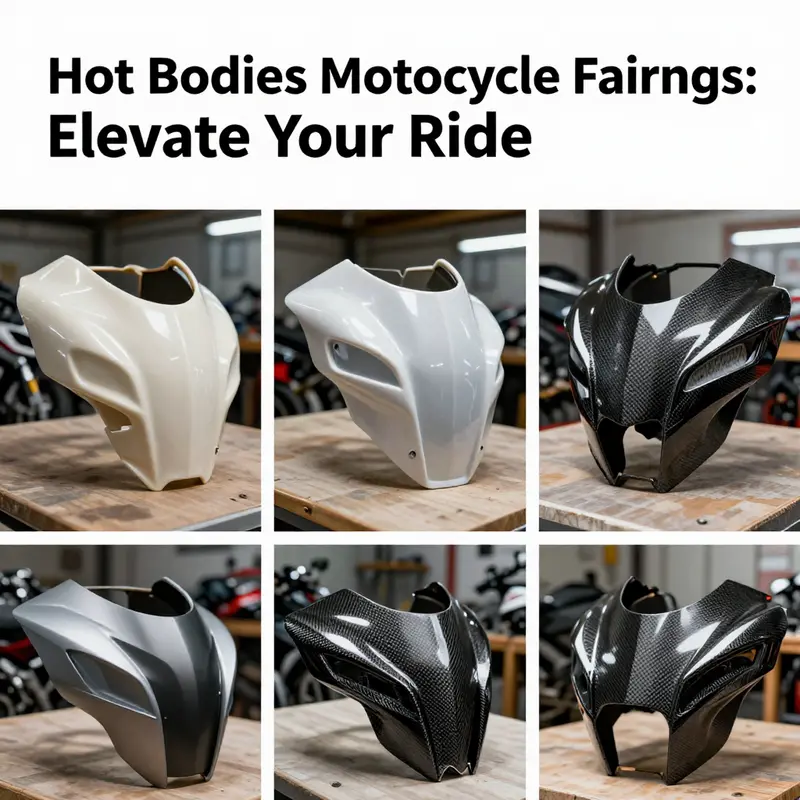
Motorcycle fairings play a crucial role in both the aesthetics and functionality of motorcycles, especially for performance-oriented riders. Among the variety of brands available, ‘Hot Bodies Motorcycle Fairings’ stands out due to its innovative designs and high-quality materials. Understanding the current industry trends, the best purchasing channels, and potential brand associations can empower business owners to make informed decisions. This article delves into three key areas: the evolving market landscape for motorcycle fairings, optimal sourcing strategies, and the brand relationships that can enhance product offerings in this competitive sector.
null
null
Sourcing High-Performance Motorcycle Fairings: Channels, Markets, and the Quest for Precision Fit
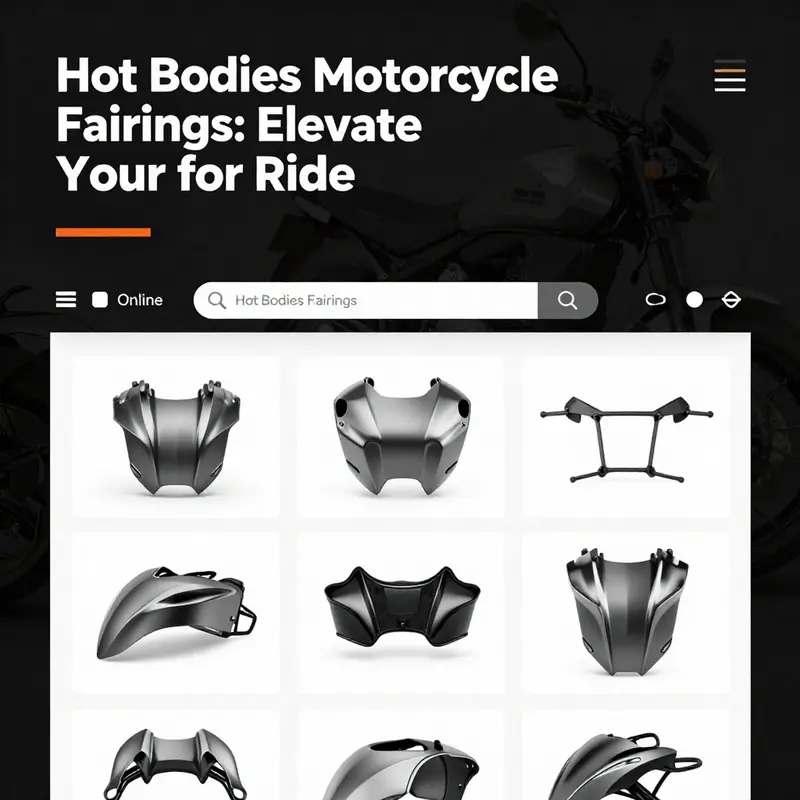
The fairing is more than a cosmetic shell. It is a carefully engineered response to the demands of modern riding—low drag, controlled airflow, rider protection, and the ability to house essential components while preserving access for maintenance. When a rider or a shop undertakes the task of upgrading or replacing a fairing, the search becomes a study in balancing performance, aesthetics, and practicality. Across the global market, the decision about where to source these parts unfolds as a layered consideration: the material and manufacturing method, the volume and speed of delivery, and the guarantee that what is received will align with the intended model without extensive fitting work. In the end, the correct procurement path is not about chasing the cheapest option, but about aligning the supply chain with specific performance goals, production timelines, and the rider’s or shop’s tolerance for risk in customization.
A big part of that equation is understanding where high-quality, performance-oriented fairings come from. The motorcycle fairing ecosystem sits at the intersection of mass production and bespoke modification. In the broader manufacturing world, China has long established itself as a center for composite parts in the two-wheeled sector. Within this landscape, certain regional clusters specialize in advanced manufacturing techniques that enable both lightweight construction and robust durability. Zhejiang, Guangdong, and Fujian provinces are notable examples where a mature ecosystem supports the development of high-performance fairings. The technical choices—fiberglass and carbon fiber composites, resin systems, multilayer finishes, and tooling accuracy—translate directly into how a fairing performs on track versus how it looks on a showroom floor. A region known for its precision mold making, coupled with access to a broad supplier base, can shorten development cycles for custom or semi-custom designs and help teams achieve the exact aerodynamic profile they seek.
For buyers who want to move quickly from concept to contour, the procurement path often starts with a careful supplier search on global marketplaces and specialized distributors. In practice, this means reaching out to manufacturers and aftermarket specialists who can offer everything from standard shapes ready for bolt-on installation to fully customized shells designed from scratch. In this space, the decision to proceed with standard catalog designs versus bespoke molds hinges on how close the rider’s target model and riding discipline are to the catalog’s baseline. A standard design may fit many models with minimal modification, delivering cost savings and faster fulfillment. By contrast, a custom project can optimize both the external aerodynamics and internal routing, but it requires a longer development window, higher upfront cost, and a willingness to iterate on molds and finishes. The ability to articulate these needs clearly to a supplier is crucial, and that clarity often determines whether the project remains within budget or expands into a larger development effort.
From the perspective of a rider seeking a seamless, race-ready look, the search for fairings often crosses into the realm of finished, ready-to-install pieces that promise a precise compatibility guarantee. The term “fit” carries weight here. A fit guarantee implies that the shell is designed to align with mounting points, radiator openings, and edge clearances, reducing the need for aggressive trimming or improvisation during installation. For shops and riders who operate under tight schedules, a guaranteed fit is not merely a convenience; it is a form of risk management. It minimizes the chance of misalignment that can lead to paint damage, frame interference, or improper aerodynamics. The practical value of fit guarantees becomes most apparent on track days, where even minor discrepancies can translate into minutes lost or, worse, safety concerns.
Beyond the promise of fit, the material makeup of the fairing plays a decisive role in procurement decisions. Fiberglass remains a workhorse in the aftermarket, offering a favorable balance of cost, stiffness, and impact resistance. It is widely compatible with a variety of paint processes and repairs, and it tolerates modest misalignment without catastrophic failure. Carbon fiber, by contrast, is the choice of performance-focused builds. Its high stiffness-to-weight ratio translates into a sleeker profile and the potential for meaningful aerodynamic gains, especially when paired with precisely engineered inlets, vents, and winglets. However, carbon fiber demands greater investment in tooling, quality control, and finishing, and it can be more unforgiving if there is a mismatch between the mold and the model’s geometry. In many projects, a hybrid approach—carbon accents with fiberglass main panels—offers a practical path to significant aero improvements while containing overall cost.
The question then becomes not only what material is used, but how the production process supports the rider’s timeline and performance targets. In the manufacturing world, many high-performance fairings are produced through composite layup processes that require precise molds, careful resin infusion, and a controlled curing environment. The results depend on the fidelity of the mold and the consistency of the laminate schedule. When done well, the finished product exhibits excellent surface quality, accurate contouring, and robust edge integrity—every aspect that contributes to a favorable fit and a smooth paint finish. The investment in tooling for these parts is nontrivial, which is why many buyers pursue suppliers with established capabilities in both prototyping and scale production. The end-to-end capabilities—from CAD design to post-cure finishing—are what enable a fairing to meet the exacting standards demanded by competition and by discriminating enthusiasts.
As a buyer navigates the market, a second axis of decision emerges: where to source the parts. In today’s connected economy, there are multiple channels through which a rider can obtain fairings. For those pursuing custom or semi-custom projects, direct engagement with manufacturers through B2B platforms is common. These channels connect clients with makers who can translate a set of specifications into a production-ready mold and a confirmed bill of materials. The advantage is the potential for tailored geometry, specific fiber orientations, and the ability to build around particular model variants. The trade-off is the longer lead time and higher minimum order quantities that often accompany tooling and set up for custom runs. For teams and individuals whose priority is speed, established distributors and online marketplaces that curate catalog items can deliver faster fulfillment and predictable pricing. In this scenario, the buyer benefits from a breadth of pre-designed shapes, tested fit for multiple models, and the convenience of a straightforward install that minimizes alteration work.
With both options on the table, the buyer’s decision often hinges on a few practical questions: How closely does the available design match the target model? What is the total lead time from order to paintable surface? How much customization is acceptable within the budget? And crucially, how robust is the post-sale support and warranty? The more prepared a buyer is to specify the exact model, the desired weight, and the finish quality, the higher the chance of obtaining a shell that meets expectations without meaningful compromises. In practice, this is where the role of a well-curated supplier network becomes essential. A source with a proven track record in automotive or motorcycle composites can offer more than just a part; it can provide guidance on surface preparation, paint compatibility, and even internal routing challenges that affect performance.
In this context, one practical approach is to examine the available range for popular model families. A well-chosen catalog example can reveal how closely a given design aligns with a range of specifications, including mounting points, radiator clearance, and fender integration. For enthusiasts who ride multiple models or who maintain a fleet for events and show days, the flexibility of a modular or adaptable design becomes a meaningful advantage. The ability to swap panels or adjust fairing components without triggering major repainting or reengineering work is not only a functional benefit but also a strategic one for those who value both efficiency and aesthetic coherence.
While the market offers abundant pathways, the buyer should also be mindful of the broader ecosystem that surrounds fairing procurement. Maintenance and repair realities should inform the choice of materials and finishes. A fiberglass-based shell may be easier to repair with conventional methods and paint systems, but it can be heavier than carbon fiber and may exhibit greater impact-induced delamination under repeated track-day stress. Carbon fiber, while lighter, demands careful inspection for microcracking and delamination, and the repair path can be more specialized. Paint durability is another consideration; UV resistance, clear coat compatibility, and color matching all influence the total cost of ownership and the time spent in the pit lane rather than the garage. These factors collectively shape the decision about whether to buy a ready-to-install shell from an established catalog or to invest in a custom mold that optimizes fit for a given model’s geometry and the rider’s aesthetic goals.
The decision-making process is often iterative. A rider begins with a broad search, narrows to a handful of suppliers who demonstrate the required capability, and then requests samples or pilot builds to gauge fit, finish, and weight. The conversation may extend to the prep work required for installation: mounting hardware compatibility, the presence of predrilled holes, the potential need for venting or ducting changes, and the fit with existing wind-tunnel data or ride-height adjustments. That last point—alignment with aerodynamic goals—cannot be overstated. A fairing that looks good in a photo but causes attic-like turbulence behind the rider’s helmet or disrupts the bike’s balance at cornering speeds is a poor investment. The best sourcing decisions emerge when performance data and practical installation considerations converge in a single, coherent plan. The rider who integrates these insights into a sourcing brief is more likely to secure a shell that delivers measurable gains on track days and a visually satisfying result on weekends.
A note on market diversity is also important. For many riders, especially those who value a blend of track performance and street practicality, it is useful to consider how different regions and suppliers approach finishing, weather resistance, and compatibility with aftermarket details such as vents, mirrors, and windshields. While a catalog design may advertise a drop-in fit, variations in model year, trim, and even regional production batches can affect the real-world fit. This is where the concept of a market ecosystem becomes meaningful: it is the aggregate of designers, toolmakers, paint shops, and installers who collectively determine the user experience. Engaging with suppliers who can illustrate a portfolio of successful installations, plus provide references for compatible models, helps buyers manage risk and set realistic expectations. In practice, it is common to request model-specific fitment charts and to confirm whether additional hardware or frame modifications will be necessary for a seamless result.
As buyers navigate this landscape, the balance between speed and customization becomes a guiding principle. For some, the fastest path to a finished look is to select a standard design that matches a close model fit and then perform minor, cosmetic refinements. For others, the quest for peak performance and unique aesthetics justifies the longer timeline of a bespoke mold, where the manufacturer can tailor the contour of the panels, the integration of air channels, and the edge quality to exacting standards. In either case, the purchasing channel should be evaluated not only on price and availability but also on the quality of communication, technical documentation, and after-sales support. The most reliable suppliers provide clear CAD drawings, material certifications when applicable, and detailed aftercare guidance that helps ensure the shell remains in optimal condition through long seasons of riding and racing.
In closing, the channel choices for acquiring high-performance fairings are not a binary decision but a spectrum. The spectrum runs from ready-to-install catalog shells to full bespoke productions, with numerous degrees of customization in between. The deciding factors—model compatibility, desired weight, finish quality, and the acceptable lead time—shape the path that riders take. The best procurement strategy aligns with the rider’s discipline, be it competitive racing, track-day sessions, or street riding with an eye for race-inspired styling. Alongside this, institutions and individuals should cultivate relationships with suppliers who can translate design intent into a physical product with predictable performance and reliable support. For those who want to explore the breadth of options in a way that remains faithful to their model and their performance goals, a glance at model-specific catalogues, combined with clear technical briefs, can illuminate the path forward and help avoid costly missteps. The result is a fairing that not only looks the part but also contributes to a rider’s best possible lap times and, more broadly, a more confident, controlled riding experience. For riders curious about model-specific options and to see how these designs align with particular model families, a curated collection such as the Honda fairings category offers a concrete sense of range and compatibility, serving as a practical reference point within the broader procurement landscape: Honda fairings.
For those seeking additional global sourcing insights, a wide range of suppliers can be found through major online marketplaces and industrial platforms, where you can compare materials, finishes, and lead times across multiple factories and molds. These resources provide access to a broader set of design options, enabling buyers to request samples and verify material compliance before committing to larger orders. Importantly, the decision to pursue a particular channel should consider not only immediate needs but also long-term maintenance and availability. A well-chosen supplier network will stand behind its product with transparent documentation, consistent quality, and responsive technical support, turning a single fairing purchase into a durable partnership that grows with the rider’s evolving goals.
External resource: https://www.alibaba.com/showroom/motorcycle-fairing.html
Racing Skin and the Web of Associations: How High-Performance Motorcycle Fairings Are Shaped by a Global Network
A motorcycle’s fairing is more than a shell of fiberglass, carbon, or plastic. It is a compact, highly engineered system where aerodynamics, rider protection, cooling, weight, and aesthetics intersect. When we talk about the associations that orbit high-performance bodywork, we are tracing a web of relationships that stretches from the lab bench to the race track, through factory floors, and out into the garage where enthusiasts customize their machines for track days and street performance. The term associations here is not a single affiliation but a constellation: material scientists, aerodynamicists, CAD designers, mold makers, surface finish specialists, compliance teams, supply chain managers, fabricators, shipping partners, racers, and track-day cohorts. Each link alters the next, and every season reshapes the network as new ideas prove themselves under stress, glare, and wind pressure. In this sense, fairings are a visible artifact of a broader culture that prizes lightweight efficiency, rugged aesthetics, and the disciplined pursuit of speed under controlled conditions. The material choices and the manufacturing processes are not merely technical details; they are signals that communicate intent, capability, and the rider’s ethos to a community that reads performance as a language written in shape, weave, and curvature.
The product focus within this ecosystem tends to gravitate toward racing-oriented bodywork that can be fitted to a range of sport-oriented motorcycles. The drive behind these components is often a need for better aerodynamic performance, more efficient cooling, and improved rider protection at speeds where even small gains translate into measurable seconds on a lap. At the highest levels of track competition, even marginal refinements in the fairing design can shift the balance of downforce, drag, and stability. The look of the panels—how they wrap around the frame, where air channels emerge, how smoothly the edges flow into the tail—also matters. The cycling of wind across the rider’s body influences fatigue, steering feel, and the bike’s ability to track true under load. For riders and teams, the association with a given fairing design is almost like a contract: it promises that, at the next corner, the bike will behave in a predictable, manageable way and that the rider will be able to push closer to the edge of the envelope with confidence.
In examining the market for performance fairings, it is clear that a substantial portion of the industry’s energy arrives from a set of manufacturing hubs that have evolved around composite fabrication, thermoforming, and precision finishing. The trend toward lighter weight and greater stiffness has driven a shift from older glass-fiber systems toward carbon-fiber and advanced thermoplastics, sometimes in hybrids that leverage the best properties of each material. This transition is not merely a matter of chasing a smaller number on a scale; it is a response to the track’s realities: less parasitic weight means less gyroscopic inertia, which translates into quicker response times and more precise control at the steering axis. More importantly, the chosen materials must withstand the rigors of high-speed exposure to sun, rain, and debris without degrading in a way that could compromise fitment or rider safety. The emphasis on weather resistance is a practical necessity: UV exposure and environmental conditions can embrittle resins or degrade clear coats, affecting both the appearance and the long-term durability of the panels. Therefore, the associations here often include not just designers and machinists but also materials researchers who test formulations for long-term resilience in open-air conditions.
As a global phenomenon, the supply chain for fairings is deeply influenced by the geography of manufacturing clusters. Asia hosts a broad ecosystem of tooling, molding, and composite layup, with a concentration of capabilities in regions known for precision work in fiberglass, carbon fiber prepregs, and advanced resins. The scale of production in these areas allows for rapid prototyping, small-batch runs, and, crucially, the ability to service both standard designs and custom orders. The advantage of such clusters is not speed alone; it is the ability to iterate quickly, refine tolerances, and pursue design revisions in response to rider feedback from the track. This feedback loop—rider input, engineering response, prototype testing, and final production—helps explain how a seemingly simple panel can evolve into a sophisticated system of air management that complements the bike’s chassis geometry. Even within the same family of panels, design language shifts as wind tunnel data and on-bike testing reveal where the flow separates, where wake effects might reattach, and how a given contour influences pressure distribution over the rider’s torso. The practical upshot is a robust market for parts that promise fitment accuracy, robust finish, and consistent performance across model years and racing disciplines.
A critical, though sometimes overlooked, association in this world is the way fairings are sourced and specified. Buyers—whether race teams, riding schools, or serious enthusiasts—often navigate a spectrum between factory-styled, fully integrated bodywork and modular, aftermarket configurations that allow a broader range of customization. The modular route exposes a rider to a different set of design questions: how to choose panels that align with the bike’s core geometry, where to position air inlets to optimize cooling, and how to ensure mounting points align with stock frame fixtures. In many cases, the most reliable pathways to a precise fit come from suppliers who offer both standard designs and bespoke production options. These providers can translate a rider’s performance goals into a concrete spec sheet that includes material thickness, resin systems, surface finishes, and the sequence of assembly steps. The result is that the association network becomes a bridge between aspiration and implementation. A rider’s goal—whether to shave a few seconds off a lap or simply to achieve a cleaner aesthetic that communicates seriousness about performance—finds a conduit through which ideas move from concept to concrete, usable product on the bike.
For those who want to explore the world of model-specific styling and fitment without venturing into the realm of bespoke construction, a useful way to understand the landscape is to look at category pages that curate fairings by platform or by the type of rider they serve. These catalogs demonstrate how design language translates into form, how the hardware that holds the panels in place is standardized, and how surface finishes are chosen to resist wear. In this sense, the catalog becomes more than a product listing; it is a map of the associations that shape what is deemed appropriate for a given platform and riding context. It is here that the idea of “fitment fidelity” takes hold—the assurance that a panel will align with mounting points, shielding, and the bike’s streamlined silhouette without requiring extensive modifications. The reliability of fit is as much a statement about the network that produced the components as it is about the panel itself. When a manufacturer or distributor positions a panel as providing “true fit” for a specific model or generation, the claim encapsulates an implicit trust in the involved processes—from mold accuracy and material stability to packaging integrity during shipment and the ease of installation after delivery.
The associations also extend into the realm of aesthetics. A fairing’s appearance is not incidental; it communicates a narrative about the rider, the team, and the culture of performance. The sharp lines, the protruding chin, the sweep of the side panels, and the way the fairing integrates with the cockpit all convey a message about aerodynamics and control. Designers are not merely chasing a wing-like sculpture; they are creating a coherent visual language that signals precision, speed, and a disciplined approach to machine setup. This language resonates with track enthusiasts who understand that the visual cues—the way air flows around the rider and the bike—mirror the actual aerodynamic behavior on a wind tunnel or at the end of a straight. The association between look and performance thus becomes an ordinary part of the conversation about what makes a race bike ready for the next iteration of competition or for a serious track day.
From a procurement perspective, the net effect of these associations is to create an ecosystem where fit, performance, and reliability become a baseline expectation rather than a luxury. For prospective buyers and clubs alike, this translates into a preference for suppliers who can demonstrate consistent tolerances, robust surface protection during shipping and installation, and support for after-sales questions about fitment across accessory lines. The practical implication is that a rider seeking to upgrade their bike with race-grade bodywork will typically look for a supplier who can provide a clear spec sheet, detailed mounting guidance, and, ideally, sample fitment data from on-bike testing. With such data in hand, a rider can calibrate expectations about how a particular panel will influence handling, how much weight may be saved, and whether the cooling strategy will remain adequate under the heat of a track session. These are not abstract considerations; they are the operational realities that define whether a modification will enhance performance or become a decorative but impractical update.
For enthusiasts who want to connect more directly with the design and customization side of the fairing ecosystem, there is a practical path: exploring dedicated sections that group components by their intended platform. The idea behind these sections is to help riders imagine how a panel will sit on their bike, what the transition from fairing to tail will look like, and how to preserve, or even improve, cockpit access for maintenance and adjustment. Within this context, a careful study of fitment guides and gallery images helps a rider translate a concept into a usable upgrade. It also clarifies the difference between a panel that looks the part and one that truly integrates with the bike’s aerodynamics and ergonomics. The associations thus become not only about the parts themselves but about the people who test, document, and champion their use in real-world riding scenarios. A rider who follows this ecosystem gains more than a new look; they gain a more integrated approach to performance that recognizes the fairing as a dynamic component, not a static shell.
As the ecosystem continues to mature, a subtle shift is evident in how riders seek these parts. A rising emphasis on modularity and reusability speaks to the broader values of responsible performance: parts that can be replaced, upgraded, or swapped with minimal downtime, while still maintaining alignment with the bike’s overall geometry. This modular mindset fosters an ongoing dialogue between designers and riders about what constitutes value in a fairing system. It invites riders to participate in the evolution of the product, to share feedback about fit, and to contribute ideas for refinements that come from prolonged track use. In return, manufacturers gain a clearer signal about which design features yield the most meaningful benefits in terms of handling, cooling, and rider confidence. The web of associations—material science, manufacturing precision, aerodynamic insight, rider feedback, and market demand—thus becomes a living system that continually redefines what a fairing can and should be.
For readers who want a tangible touchpoint with this ecosystem without wading through dozens of brand names, consider how a catalog entry can encapsulate a philosophy. A page that presents a model-agnostic fitment approach, a tested aerodynamic concept, and a field-tested finish can serve as a microcosm of the broader network. It demonstrates how the design language, the chosen materials, and the mounting strategy come together to produce a coherent, reliable product that riders can trust. In this sense, the associations are not just abstract relationships; they are practical commitments that riders rely on when they decide to invest in track-ready bodywork. The broader article will continue to explore how certain regions, suppliers, and testing practices shape the quality and availability of this critical performance component. And as the discussion unfolds, the reader gains an appreciation for the complexity behind what appears to be a simple panel—the fairing—that carries the hopes, the speed, and the identity of the rider on every ride.
For those who want to dive deeper into the specific world of model-oriented styling and fitment, a representative resource highlights how a catalog can organize panels by platform to illustrate the synergy between form and function. This kind of resource demonstrates how a given set of panels can harmonize with a bike’s lines, maintain the rider’s protective envelope, and preserve access to essential maintenance points. The result is a practical demonstration of how the associations discussed here translate into real-world products that racers and serious enthusiasts rely on. The fairing ecosystem thus remains a dynamic tapestry in which technological advances, material trials, and rider expectations continually weave together into the performance-oriented culture that defines modern sportbike bodywork. As new generations of riders enter the paddock and new teams test fresh ideas on the track, the network of associations will adapt, preserving the core promise: that high-performance fairings help riders reach their potential by enhancing speed, balance, and control while communicating a clear, disciplined aesthetic statement about what it means to race with intention.
Within this evolving landscape, it is helpful to remember that the associations surrounding fairings are not static. They shift with regulations, new aerodynamic insights, and the evolving tastes of riders who want their machines to look as if they were engineered for a purpose—because they are. The next chapters will continue to unpack these strands, turning the broad concept of performance bodywork into more specific threads: the influence of materials, the subtleties of joinery and surface finishing, and the practicalities of building a track-ready machine from a collection of panels and mounting hardware. Yet the thread that ties all of these elements together remains constant: fairings are not independent parts. They are the nexus where design intent, engineering reality, and rider ambition meet on the wind. To understand them is to glimpse how a sport’s culture, a region’s manufacturing capabilities, and a rider’s discipline converge in a single, high-performance shell. For readers who want to inspect a representative catalog that shows how a platform is translated into a complete, fit-for-purpose set of panels, explore the Honda fairings category (link provided above) to observe how the same design language can be adapted across generations while preserving essential aerodynamics and rider ergonomics.
External resource for global sourcing context: https://www.alibaba.com/showroom/motorcycle-fairing.html
Final thoughts
In the competitive motorcycle accessories market, understanding the intricacies of fairings—specifically those from ‘Hot Bodies’—is vital for business owners. By staying abreast of industry trends, leveraging digital purchasing platforms, and exploring brand partnerships, enterprises can enhance their product offerings and meet customer demands effectively. This proactive approach not only ensures relevance in the market but also positions businesses to take advantage of the rapidly evolving motorcycle industry.