
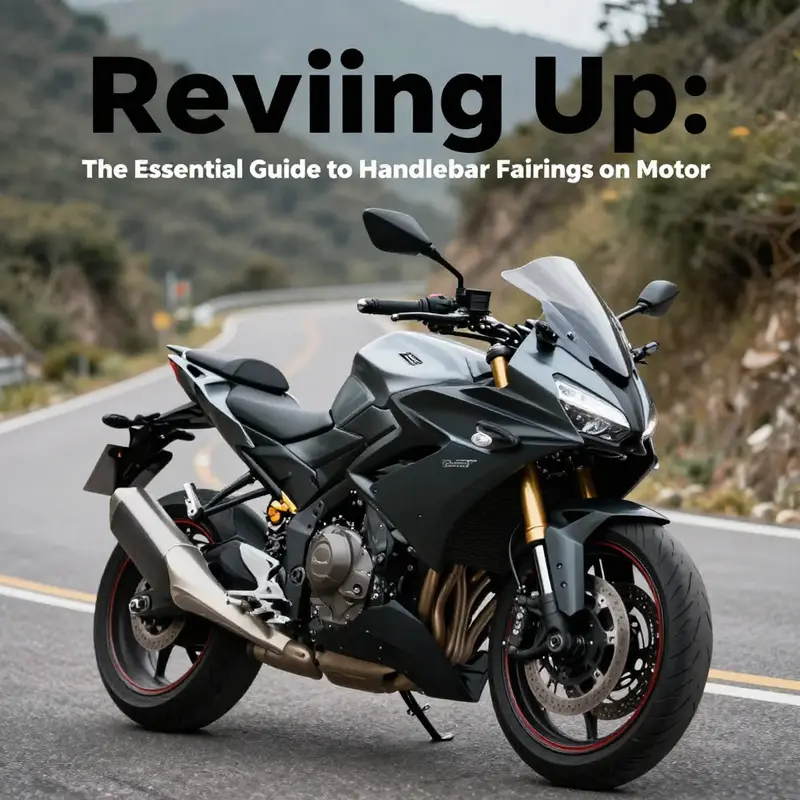
Motorcycle design blends engineering and artistry, with components working together to enhance performance and rider experience. Among these parts, fairings serve a crucial role in optimizing aerodynamics, while handlebars directly affect control and comfort. Though the term “handlebar fairings” may generate confusion, understanding the distinctions among fairings, handlebars, and protective accessories is essential for business owners in the motorcycle industry. In this guide, we delve into the intricacies of motorcycle fairings and handlebars, examine their impact on motorcycle performance, and explore the importance of handlebar accessories like protectors and guards.
Rethinking Handlebar Enclosures: Aerodynamics, Comfort, and the Subtle Art of Half Fairings
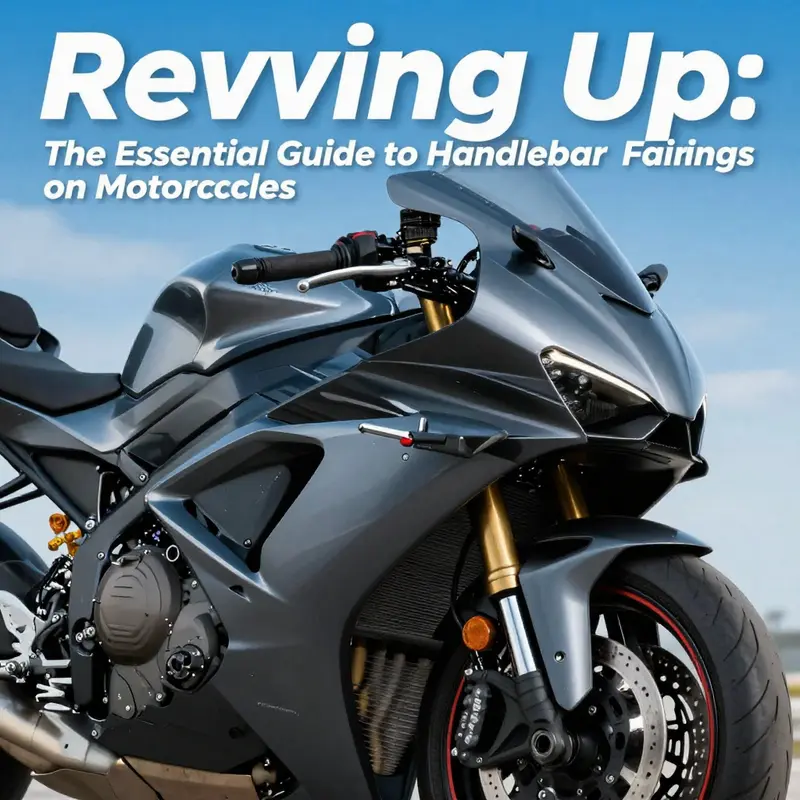
The phrase handlebar fairing is a useful talking point for riders who notice the way wind and weather interact with their arms and hands, but it is not a standard designation in motorcycle engineering. In the world of design nomenclature, what riders sometimes call the handlebars’ fairing is more accurately described as a half fairing or as clip-on fairings that extend from the front of the bike, near the rider’s reach. This chapter does not merely debate terminology; it explores how these enclosures, whether they hug the orbits of the handlebars or sit just ahead of the rider, influence aerodynamics, ergonomics, protection, and even the identity of a machine. The surrounding chassis and the rider’s posture together form a system where even modest additions or alterations to the front end can shift the behavior of wind, heat, and stability at speed. The discussion here is not about a single part but about a family of solutions that sit at the boundary between naked control and the shielded efficiency of full fairings. In this sense, the handlebar-adjacent enclosures are a study in balance, a careful negotiation between speed and comfort, aggression and practicality, minimal weight and maximum protection.
To begin, it helps to revisit what a fairing is at its core. Fairings are aerodynamic panels that manage airflow, reduce drag, and shelter the rider and important components from the elements. They are not mere cosmetic cladding; they are functional, engineering-driven surfaces that alter the bike’s interaction with the air. The spectrum runs from full fairings, which envelope most of the bike and push wind resistance down to a minimum, to semi-fairings that cover only the front portion, including headlights and instruments, to those narrow, close-to-the-fork appendages that riders call clip-ons or half fairings. The boundary between fairing and handlebar is not a hard line but a continuum shaped by what the rider wants to achieve. When a half fairing is mounted near or around the handlebars, it is not simply a shield for the forearms; it can influence the flow that reaches the rider’s torso and chest, the stability of the front end in crosswinds, and even the way heat from the engine or exhaust is dispersed. The effect is subtle yet measurable, especially at highway speeds where wind gusts become a continuous factor and the rider’s posture becomes a central part of the aerodynamics.
The aerodynamic purpose of these front-end enclosures is to manipulate flow in a way that reduces buffeting and redirects air away from the rider’s torso and arms. Buffeting—the turbulent wind that makes the rider’s helmet, torso, and gloves feel like a trapped or fluttering audience—can be more pronounced when the rider sits upright or leans forward into a wind stream. A properly designed half fairing can shave off a portion of that turbulence by smoothing the air’s passage along the front of the bike and deflecting it away from the arms. The effect is not binary; it is most often a matter of degree. Even small improvements in airflow can translate into noticeable gains in rider comfort on long rides, which in turn improves fatigue management and focus. It is not merely about keeping cool; it is about minimizing wind-induced strain that can affect control inputs—the very inputs that keep a motorcycle on its intended line through a corner or a sweep.
A closely related consideration is how any enclosure interacts with the rider’s posture and the bike’s steering geometry. Clip-on fairings, for instance, are often paired with clip-on handlebars that sit close to the front fork, producing a more aggressive riding position. In this arrangement, the rider’s torso presents a larger frontal area to the wind, and the fairing’s design becomes a critical aid in shaping that incoming air. Yet the same setup introduces constraints: the rider’s reach to the controls, the ability to tuck behind the shield at speed, and the balance between wind protection and weight. If the rider sits too low or too far forward, the fairing may do its job too aggressively, diverting air toward the chest or throat rather than shielding it. Conversely, a modestly sized half fairing can cradle the upper chest and shoulders while allowing a comfortable reach to the bars, preserving a sense of control and feedback from the front wheel. The geometry of the front end, including the distance between the rider and the fairing, the angle of attack of the fairing’s surface, and the curvature of its edges, matters almost as much as the material it is made from.
Beyond wind and ergonomics, the functional role of any fairing near the handlebars includes protecting essential components and reducing exposure to road debris, temperature extremes, and minor impacts. A well-designed enclosure around the headlight, instrumentation, and upper engine casings provides a sacrificial barrier that can absorb and disperse some energy in a tip-over or low-speed crash. This protective role extends to protecting wiring harnesses and delicate sensors that might otherwise suffer from abrasion or moisture exposure. The design touches on a broader safety philosophy: the fairing acts as a first line of defense that helps to shield the bike’s brain—the electronic and sensor systems—from environmental threats, thereby contributing to safer, more reliable operation in less-than-ideal conditions. In a world where riders demand maximum uptime, this protective function has real, practical consequences for maintenance costs and downtime.
If we widen the lens to the material choices available for front-end enclosures, the discussion becomes a balance between stiffness, weight, impact resistance, and the ease of manufacturing. ABS plastic remains a common workhorse in many aftermarket and OEM applications because it provides a robust combination of toughness, moldability, and cost efficiency. More performance-oriented builds may lean toward fiberglass or carbon fiber composites to shave weight and increase rigidity, albeit at a higher price and more demanding manufacturing processes. The choice of material interacts with the fairing’s intended use. A sport-oriented setup that values fast, precise handling and high-speed stability may justify a lighter, stiffer construction that preserves the rider’s feel and the bike’s lines. On touring-oriented machines, durability and ease of repair may take precedence, favoring more forgiving materials and simpler mounting methods that tolerate rough roads and occasional mishaps with less risk of catastrophic cracks. Whatever the material strategy, fitment is everything. A half fairing must align with the cockpit’s geometry to avoid contact with the rider’s arms or the hands themselves, and it must accommodate or at least not interfere with switches, clocks, and digital readouts that now populate many modern handlebars.
The interaction between a handlebar-adjacent enclosure and the bike’s hardware is another critical facet. The mounting method—whether it clamps to the fork tubes, attaches to the frame, or threads into the upper triple clamp region—has consequences for vibration transmission, front-end stiffness, and steering feel. Rigid clamp-on approaches can damp vibrations but may transmit more road feedback to the rider, while more flexible mounting schemes can isolate some of that feedback at the potential cost of a less precise feel. This is not a one-size-fits-all equation; it depends on the rider’s preferences, the bike’s suspension tuning, and the conditions under which the rider intends to ride. In crowded urban environments, a slightly more forgiving mounting arrangement that reduces the sensation of vibration can translate into more comfortable daily commuting. On the track or canyon roads, a stiffer, more integrated approach might deliver the sharper steering response and the sense of instant communication between rider and front wheel that serious sport riders crave. The challenge for designers and riders alike is to balance these competing demands within the limits of weight, cost, and compatibility with the rest of the bike’s front-end ecosystem.
The hands and wrists themselves deserve attention in this broader discussion. If the enclosure is designed with hand comfort in mind, it might incorporate a gentle chin or lip that channels air away from the wrists or forearms, or a curvature that reduces the likelihood of ice-cold gusts penetrating the sleeves on chilly mornings. In addition, the surrounding air can influence how gloves, jackets, and even gloves connect with the wind. The rider’s perception of weather, feel, and comfort is influenced by how cleanly the air flows around the hands and forearms. A well-executed half fairing can minimize fatigue by reducing the drag that the rider must overcome at speed, making it easier to maintain a stable grip and consistent control inputs across long distances. While this is not a life-or-death performance, the cumulative effect over hours of riding is meaningful. The rider who experiences less wind fatigue can maintain better posture, read instrument clusters more easily, and react more quickly to a changing environment.
Another dimension worth exploring is the aesthetic and branding aspect of handlebar-adjacent enclosures. The front end of a motorcycle is a canvas for identity. The lines, color, and surface flow of a half fairing contribute to how the bike communicates its character—whether it suggests a streamlined, high-speed intent or a more rugged, utilitarian purpose. The fairing’s shape and edges can emphasize the motorcycle’s height, width, and stance, and the way light glances off the surface can accentuate or soften its aggression. This visual language matters not merely for the owner’s pride but for the perception of performance. In sport or sport-touring configurations, the enclosure often becomes a branded silhouette that hints at aero efficiency even when the bike is stationary. The design choices also influence aftermarket compatibility. A modular half fairing must be adaptable to a range of handlebar diameters, fork tubes, and instrument layouts while still delivering a cohesive look. In practice, this means that the industry winds toward standardized connection points, standardized step-in heights, and standardized mounting patterns, to make it possible for riders to upgrade or customize without becoming entangled in a maze of incompatible components.
The conversation about handlebar-adjacent enclosures is also a conversation about practicality and maintenance. Enclosures near the bars can complicate access to electrical connectors, wiring harnesses, and the bike’s electronics, particularly if the fairing is aftermarket or designed to be serviceable in a modular fashion. A thoughtful design minimizes maintenance headaches by providing simple removal and reinstallation processes, easy battery and fuse access, and clear service notes about torque specifications to avoid overtightening or misalignment. The environmental exposure continues to be a factor: front-end enclosures endure sun exposure, temperature fluctuations, and moisture. UV resistance is not a mere afterthought; it is a performance consideration because degraded plastic can lose shape, crack, or become opaque, thereby diminishing both aerodynamic effectiveness and visibility of important indicators behind the shield. Practitioners in this space thus prioritize durable finishes, predictable aging, and straightforward repair paths, ensuring that the fairing remains a reliable partner rather than a fragile adornment.
In sum, the concept of a handlebar-adjacent enclosure sits at an intersection of aerodynamics, rider comfort, protection, and style. It is not a monolithic feature but a family of options, each with its own trade-offs. The rider who chooses a clip-on or half fairing is choosing a specific balance point on the spectrum between naked control and fully shielded efficiency. The bike benefits from a well-integrated approach to airflow management, one that respects the rider’s dimensions, posture, and intended riding terrain. A correctly executed design reduces wind fatigue, directs flow to prevent buffet, and protects essential front-end components without compromising the ability to access vital controls or perform routine maintenance. The best outcomes come from a conversation—between rider, designer, and machine—about what matters most on a given ride: whether it is ultimate top speed and track efficiency, or long-haul comfort and weather resilience.
To connect these ideas to practical choices, consider the riding environment and the desired balance between aerodynamics and ergonomics. In a sport-oriented setup, riders may accept a lower, more forward-leaning posture that benefits from a compact half fairing, provided the enclosure preserves control authority and instrument visibility. For daily commuting or long-distance touring, a more generous shield with carefully contoured edges can reduce wind load on the shoulders and arms while maintaining a usable cockpit and accessible controls. The decision becomes a matter of weighing the importance of wind protection against the weight penalty and the potential interference with hands and wrists during precision maneuvers. The literature on fairings emphasizes their multi-faceted role, extending beyond mere looks toward measurable improvements in drag, fuel economy, and throttle response. A rider who understands this can approach upgrades with a clear sense of purpose rather than chasing a fashion trend or a vague sense of “more protection equals better.” The reality is more nuanced: the right half fairing improves comfort without robbing the bike of its agile personality, and the wrong choice can introduce unwanted turbulence, weight, and maintenance challenges that erode the very benefits sought.
For readers seeking a visual sense of how these ideas fit into the broader ecosystem of motorcycle customization, a closer look at the available fairing categories and their alignment with different bike configurations can be instructive. The Honda fairings category, for instance, offers a range of front-end enclosures that illustrate how a compact, rider-focused shield can integrate with standard handlebars while preserving readability of the instrumentation and access to control switches. This kind of reference can help a rider imagine how a similar approach might translate to their own machine, even if their bike is from a different lineup or era. [Honda fairings] provides a useful reference point for understanding how manufacturers and aftermarket suppliers approach the delicate balance between aerodynamics, protection, and aesthetics. The goal is not to digitize a one-size-fits-all formula but to encourage a thoughtful, personalized approach to front-end design that respects the rider’s goals and the bike’s core personality.
As part of this larger discussion, it is also important to ground the inquiry in a broader understanding of why fairings matter in motorcycle engineering. Fairings influence more than just drag numbers; they shape the overall ride, comfort, and safety in dynamic conditions. Their impact on airflow can affect engine cooling pathways and radiator efficiency, as the front-end design interacts with heat dissipation, especially at sustained highway speeds or in hot climates. The way a half fairing channels air can also affect the front end’s response to crosswinds, an important consideration in regions with frequent gusts. This demonstrates again that the role of the handlebar-adjacent enclosure is not isolated to the rider’s comfort alone but to the bike’s overall equilibrium under real-world riding scenarios. The practical implication is straightforward: riders should evaluate their typical riding environment, posture preferences, and maintenance expectations when considering a change in the front-end enclosure. When in doubt, test fits, mock-ups, and careful measurements can reveal how a particular design will behave at different speeds and wind conditions, offering a more reliable basis for decision than aesthetics alone.
In closing, the misnomer of a handlebar fairing invites clarification, but it also opens a productive line of inquiry into how lightweight enclosures near the rider’s hands can meaningfully affect aerodynamics, comfort, and protection. The discussion is not about replacing full fairings or abandoning naked configurations but about recognizing a family of solutions that fills a particular niche: the front-end balance between wind management and rider accessibility. The best approach is to think of these enclosures as modular tools in a rider’s toolbox—usable in combination with other front-end components to tailor a bike’s personality to the rider’s needs, the road’s demands, and the daily realities of riding. Whether harnessed for aggressive performance or for extended comfort, the right half fairing can be a quiet contributor to a more controlled, more confident ride. And because the front end is where a bike first meets the air, getting this balance right matters more than any single tweak. It is a subtle, rational art that rewards patience, measurement, and a willingness to experiment with geometry, materials, and mounting options rather than chasing a single solution that promises universal gains. For riders and builders alike, the journey toward an optimal front-end enclosure is an ongoing dialogue between the machine, the road, and the rider’s own hands on the bars. External reference for further reading on the broader implications of fairings can be found here: https://www.motorcycle.com/tech/what-are-motorcycle-fairings-and-why-do-they-matter/
Handlebar Geometry and Fairing Synergy: How Bar Styles Shape Performance
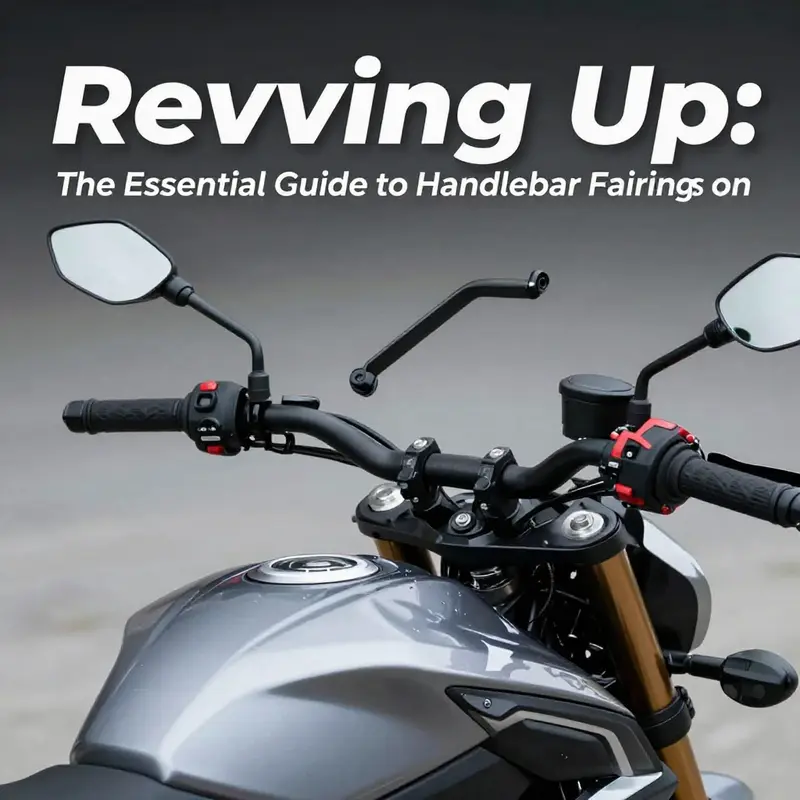
The phrase handlebar and fairing as a single cockpit often appears in discussions about motorcycle performance. Bars and fairings are not separate pieces but partners that influence aerodynamics, ergonomics, and fatigue. The rider’s posture sets the stage for wind interaction, while the fairing shapes the air that meets the torso and helmet. When bars sit high and wide, riders tend to sit upright; when they lean forward with clip-ons, the wind wraps differently around the chest and shoulders. The fairing must respond to these silhouettes to maintain smooth flow and minimize buffeting.
The geometry itself—the height, width, and pullback of the bars—translates into steering feel and stability in close concert with the fairing design. Clip-ons paired with a compact half fairing can reduce frontal area and direct airflow around the rider with minimal separation. Conversely, straight or drag-style bars may require a larger or more aggressively shaped fairing to shield the face and torso. In both cases, the goal is a matched system where bar position and fairing contour cooperate to produce predictable handling and efficient aerodynamics.
Risers and taller bar placements, common on touring bikes, raise the rider and broaden the chest, which invites a windscreen and fairing that sweep higher to maintain comfortable airflow. The result is a cockpit that reduces fatigue on long rides while preserving the rider’s sensation of control. Whether the aim is nimble handling or steady wind protection, the best outcomes come from testing configurations that balance posture, steering response, and a coherent air path. For readers curious about practical choices, a grounded approach—start with posture, define riding mission, and iteratively test bar and fairing pairings—helps translate theory into street-ready setups.
The broader takeaway is simple: handlebars and fairings belong to a single performance system. When the rider’s reach, lean, and breathing are treated as primary performance factors, the fairing becomes an active partner in shaping wind rather than a passive shield. The right combination can deliver sharper steering feel, reduced fatigue, and smoother air handling across a range of speeds and road conditions. For those who want to explore further, resources from manufacturers and riding guides offer practical maps of how different bar styles align with fairing geometries and cockpit ergonomics.
Guarding the Grip: How Protectors and Guards Redefine Safety, Comfort, and Aerodynamics in Motorcycle Handling
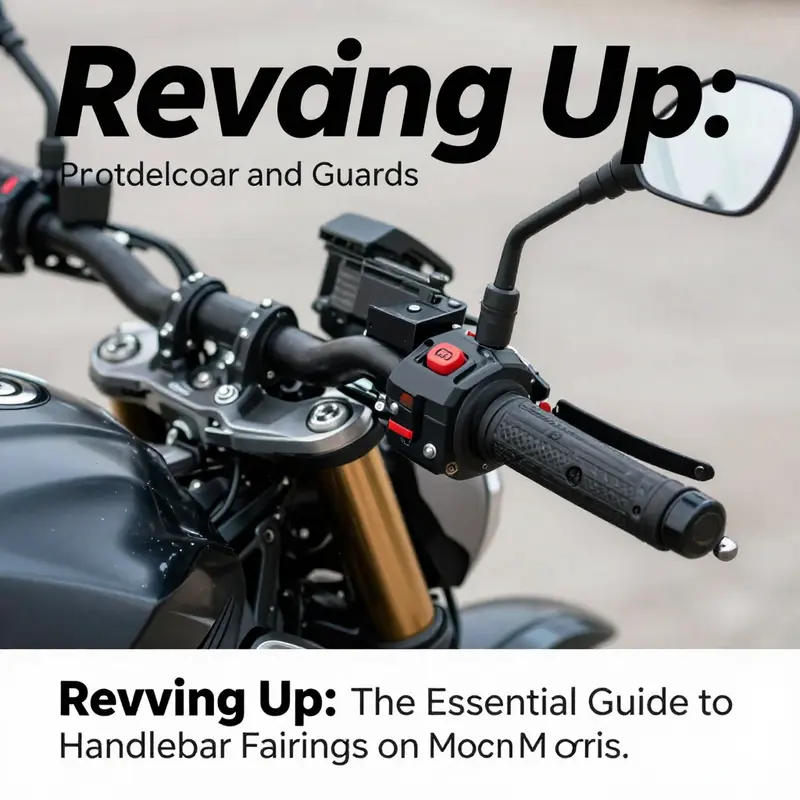
What if the term handlebar fairing ever becomes a clearer shorthand for the mix of protection, control, and comfort that surrounds the rider’s hands? In practice, it is not a standard motorcycle component, yet the concept of guarding what the hands rely on—levers, grips, controls, and the delicate junctions where cables meet hydraulics—has a long and consequential lineage. This chapter advances a unified understanding of how protectors and guards—commonly mounted near the handlebars—play a critical role in safety, riding experience, and the long arc of a machine’s life. It is through the lens of these accessories that the broader topic of aerodynamics and bodywork around the cockpit comes into focus. Fairings, whether full or half, step into the story as part of a larger system. But the immediate guardians of the rider’s grasp are the handguards, lever protection, and related shield elements that edge the handlebars into a safer, more controllable space, particularly under duress and on challenging terrain. In this sense, protectors and guards are not mere embellishments. They shape how the bike communicates with the rider, how the rider negotiates wind fatigue, and how resilient the machine remains after a high consequence moment on the trail or road.
The most fundamental function of handlebar protection is straightforward yet essential: to shield the handlebars, levers, and hands from impacts. Off-road riders know this as a practical necessity, whereas street riders discover it as a durable safeguard against unexpected branches, loose gravel, or pebbles kicked up by heavier traffic. When a rock strikes a lever or an unfriendly branch rakes across a handguard, the immediate value is clear. A well-designed protector preserves control, prevents the lever from bending or snapping, and minimizes the chance that a crash or slip will result in a loss of steering or brake performance. Beyond the obvious, protectors contribute to a rider’s confidence. When your hands feel shielded, you also feel less compelled to grip the bars in a death grip during gusty conditions or when passing through narrow canyons with inconsistent crosswinds. The hands, after all, are not just contact points; they are the primary interface through which a rider reads the bike’s intention and translates thought into controlled motion.
Diving deeper, one finds a spectrum of designs that reflect how riders balance protection with accessibility and ergonomics. Universal handguards aim for broad compatibility and can be mounted on many different handlebars. They typically employ durable materials such as aluminum alloy or reinforced plastics and feature adjustable pivot points so the protection frames can align with the rider’s grip and lever reach. This universality is a practical boon for riders who own more than one bike, or for shops looking to stock adaptable solutions that fit diverse models. In contrast, model-specific or alloyed designs tailor fitment to a particular chassis or family of motorcycles. They are not simply about geometry; such guards harmonize with the bike’s lines and the rider’s posture, often offering streamlined airflow that tidily integrates with the bike’s front end. Even if the primary purpose is safety, the added benefit of a near seamless aesthetic can be a meaningful factor for riders chasing a particular look or a cohesive, factory-like appearance.
Material choices tell a story of trade-offs and priorities. Aluminum, especially the versatile 6061-T6 alloy, is a recurring favorite for handguard systems because it offers a robust strength-to-weight ratio, good fatigue resistance, and corrosion resistance. The design language around aluminum emphasizes clean lines, crisp joints, and predictable deformation behavior in the event of an impact. Plastic components, including high-strength polycarbonate or reinforced composites, contribute to a lighter footprint while still providing meaningful protection against branch strikes and debris. Steel elements appear in certain inner frames or clamp hardware to maximize rigidity where it matters most. Each material interacts with the overall system to influence weight distribution, vibration behavior, and the ease with which a rider can maneuver in tight spaces or on rough trails. The choice of material also intersects with maintenance: metal guards may demand periodic checking of fasteners and mounting hardware to prevent looseness, while plastic parts require vigilance against UV degradation or cracking after repeated flexing.
The design vocabulary around handguard systems can be understood through two broad categories: universal guards and inner-mount or inner-shell designs that attach in a way that minimizes grip interference. Universal guards typically mount around the bar without committing the rider to a single handlebar diameter or shape. They commonly use a clamp or a two-piece mounting system that accommodates a range of bar thicknesses, with pivot points that allow the guard to rotate away from the rider when not needed or to strike a balance between wind deflection and lever clearance. The trade-off here is flexibility versus a potentially bulkier silhouette or minor control interference in certain bar configurations. For riders in the dirt, the universal approach offers the practical advantage of swapping between bikes that share common handlebar dimensions, preserving protective coverage across a broader set of machines. Inner-mount designs, by contrast, emerge from the desire for a tighter, more integrated profile. These systems bolt onto the handlebars or the fork tubes, wrapping around or adjacent to the handgrip, and in doing so they often deliver more efficient wind shielding and less lateral intrusion into the rider’s control space. They can preserve a sportier feel and a closer alignment with the bike’s geometry, yet they demand careful measurement to ensure interference-free lever operation and clutch or brake reach across various rider sizes.
An important, sometimes overlooked, aspect of protection is the way these guards influence ergonomics and control leverage. Clip-on handguards, for example, mount directly to the handlebars or fork tubes and can be tuned to maintain or even improve the rider’s lean into the wind without forcing a dramatic change in grip geometry. This is not merely a matter of fashion; it is about how the rider’s hands meet the levers and how the wrists rotate under load. A guard that closes the angle between the handlebar and the hand can create a slight impediment for quick lever engagement, especially if the rider uses a light touch for clutch modulation. Conversely, a guard that gracefully clears the lever arc and provides a comfortable palm rest can reduce fatigue on long sessions and give a rider greater tactile feedback through the bar, a factor that translates into more precise throttle control and smoother braking responses over the course of a ride. The practical upshot is that the most effective protectors are those that honor both protection and the rider’s ability to read and respond to the machine’s signals without interruption.
In addition to the mechanical and ergonomic concerns, the protective system at the handlebars also engages with wind and weather in meaningful ways. A well-positioned handguard can establish a micro-shielding zone that reduces wind buffeting at the grips, which is particularly valuable on long highway stretches or brisk days when wind can magnify fatigue and numb the fingers. The handguards become part of a broader aerodynamic conversation about cockpit comfort. They do not replace the fairing itself but connect with the surrounding bodywork in ways that manage the air stream right at its most intimate interface with the rider. The result is a smoother, quieter ride with less torque transfer through the wrists, a subtle but real benefit when the road stretches ahead and the rider needs to stay alert for hours on end. To understand this synergy, think of protectors as the first line of defense and the fairing as the larger system that channels air around the rider. In that sense, a half fairing mounted near the handlebars represents a small but meaningful step toward optimizing the cockpit’s aerodynamics without sacrificing grip access or lever reach. For readers curious about the broader aero context, a practical point of entry is the Kawasaki fairings category, which explores how different fairing approaches integrate with cockpit protection and rider comfort. See Kawasaki fairings for a concrete sense of how manufacturers balance form and function around the front end of sport and adventure bikes.
Beyond raw protection and aerodynamics, there is an enduring aesthetic dimension to handlebar guards and their mounting systems. The world of motorcycle customization embraces finishes such as matte black, brushed metal, or even vintage-inspired textures that echo a rider’s personal narrative. The goal here is not merely to mask rough edges but to harmonize the guard with the motorcycle’s overall visual language. A well-chosen guard can accentuate the machine’s geometry, echoing the lines of the fuel tank, the sweep of the fairings, and the stance of the rider. Yet the aesthetic dimension should never overshadow function. Guards must withstand the realities of riding—mud, branch scrapes, and the occasional tumble—without showing fatigue or failing at a critical moment. The best designs integrate both looks and resilience, delivering a cohesive, purposeful presence that reads as an extension of the rider rather than a detachable accessory. In many modern configurations, a guard line-up also acts as a protective frame for the cockpit that can be refreshed with new shields or inner linings as tastes evolve or as the bike’s identity shifts through weathered use or a new paint job.
From a maintenance perspective, guarding systems demand ongoing attention to hardware integrity. Bolts and clamps can loosen through vibration, particularly on rough surfaces or aggressive riding styles. A quick inspection routine before every ride—checking for looseness, play in the pivot joints, and signs of wear at attachment points—can prevent a surprisingly common failure: a loose guard that rattles against the bar, distracts the rider, or, in a worst-case scenario, interferes with lever operation. The materials themselves also guide care: aluminum guards benefit from periodic cleaning and light lubrication on pivot points to preserve smooth motion, while plastic shields benefit from UV-protective attention to avoid chalky surfaces or brittleness with age. Maintenance routines are part of a broader philosophy of a bike that remains dependable under load: gearboxes should shift crisply, brakes should respond instantly, and hand control should offer consistent feedback across a rider’s entire repertoire of maneuvers. A well-kept guard system contributes to that reliability, quietly extending the time between more invasive interventions and preserving the integrity of the bike’s cockpit when conditions demand sustained performance.
When it comes to purchasing decisions, riders weigh suitability against cost and effort. The universal versus model-specific debate informs not only fitment but also the return on investment. Universals are often more accessible and adaptable, but model-specific systems can offer tighter integration with the bike’s geometry and a more refined feel under normal riding conditions. Riders must consider handlebar diameter, clamp design, lever clearance, and the potential need for additional spacers or adapters. They should also consider the motorcycle’s overall use profile: a dirt-focused rider may place a premium on maximum impact protection and a strong wind barrier, while a sport rider may value a lighter setup with minimal interference during aggressive cornering. Aesthetics, as noted, play a role but should not overshadow the practicalities of robust mounting, weather resistance, and long-term durability. In the broader marketplace, the selection is extensive, and the range of options mirrors the diversity of riding styles from casual touring to high-adrenaline off-road exploits. The point is to find a configuration that respects the rider’s hand sensitivity, lever reach, and the need to maintain a direct, unfettered feel with the road. The ultimate test of any protector is not how it looks in a shop display but how it behaves in action: does it shield without obstructing, does it feel integrated rather than tadded on, and does it hold up when the road gets rough or the weather turns. A rider who has learned to read that balance will ride with a sense of readiness rather than hesitation, confident that their grip remains secure and their controls discoverable under all conditions.
In the larger ecosystem of motorcycle parts, handguard systems sit alongside a suite of cockpit enhancements designed to balance safety, comfort, and performance. They are a reminder that the cockpit is not a static zone but a dynamic interface in which rider input, control feedback, and air flow all converge. When the biker steps into turn and throttle, the body and the machine exchange information at rates our senses begin to register as feel and intuition. The protector and guard, in this sense, serve as a translator and a shield, preserving the line of communication between rider and motorcycle while smoothing the path of air around the rider’s hands. They also become a practical bridge to half fairings and other cockpit-friendly bodywork that share a common goal: to tame wind noise, dampen buffeting, and preserve lever usability so that the rider can stay focused, responsive, and in command of the machine. For anyone exploring the broader aero-structure of motorcycles, the connectors between handlebars, guards, and small aerodynamic appendages are worth appreciating as a system rather than as a collection of parts. The handguard then is not merely a barrier; it is a functional element of the cockpit’s aerodynamics and a guardian of the rider’s ability to connect with the bike in a direct, unbroken line of communication.
To conclude this exploration without reducing the topic to a single ideal solution, it is important to recognize that the best approach to handbar protectors and guards is contextual. It depends on the rider’s discipline, the terrain, the climate, and the bike’s overall design philosophy. The right solution can differ from motorcycle to motorcycle, and even from season to season as a rider’s needs change. The guiding principle remains simple: protect what is essential for safe operation, while preserving or enhancing the rider’s sense of control, feedback, and comfort. In other words, the guard should not feel like a barrier but like a trusted companion at the edge of the rider’s hands, one that can absorb the unexpected tap of a branch, the surprise gust of wind on an open highway, or the occasional tumble, and still allow the rider to recover and continue with confidence. For riders who want to deeper explore how cockpit protection fits into a complete aerodynamic strategy, exploring related fairing configurations can be enlightening. See the Kawasaki fairings page for a practical sense of how near-handlebar protection and broader front-end design can harmonize in a single package, and consider how the next upgrade you outfit might not only shield you but also contribute to a calmer, more controlled ride. External resources provide further real-world examples of universal handguard concepts and their practical installation considerations, such as consumer-oriented guard solutions available online. For a representative reference to an accessible universal handguard option, you can consult a widely available resource: https://www.aliexpress.com/item/10050058891447.html.
In short, handguard protectors and guards are a crucial, often underappreciated category of motorcycle hardware. They are not a misnomer for a single component but a family of protective and ergonomic systems that bridge the rider, the bike, and the road in a way that enhances safety, comfort, and longevity. They complement half fairings and other cockpit enhancements by providing targeted protection where it matters most while reinforcing control and reducing fatigue. The right choice—universal or model-specific, aluminum or composite—depends on a rider’s needs and riding context. The result, when well chosen and well maintained, is a cockpit that feels safer, more precise, and more satisfying to ride, no matter the road ahead.
Final thoughts
Understanding the nuances of motorcycle fairings and handlebars is fundamental for optimizing performance and safety. While fairings enhance aerodynamics and protect components, handlebars significantly influence rider control and comfort. Additionally, accessories such as guards can prevent damage and increase durability. Business owners in the motorcycle industry can leverage this knowledge to better serve their customers, enhancing the overall motorcycling experience and driving sales. Keeping abreast of design innovations ensures that riders can enjoy their passion on the open road with confidence.