
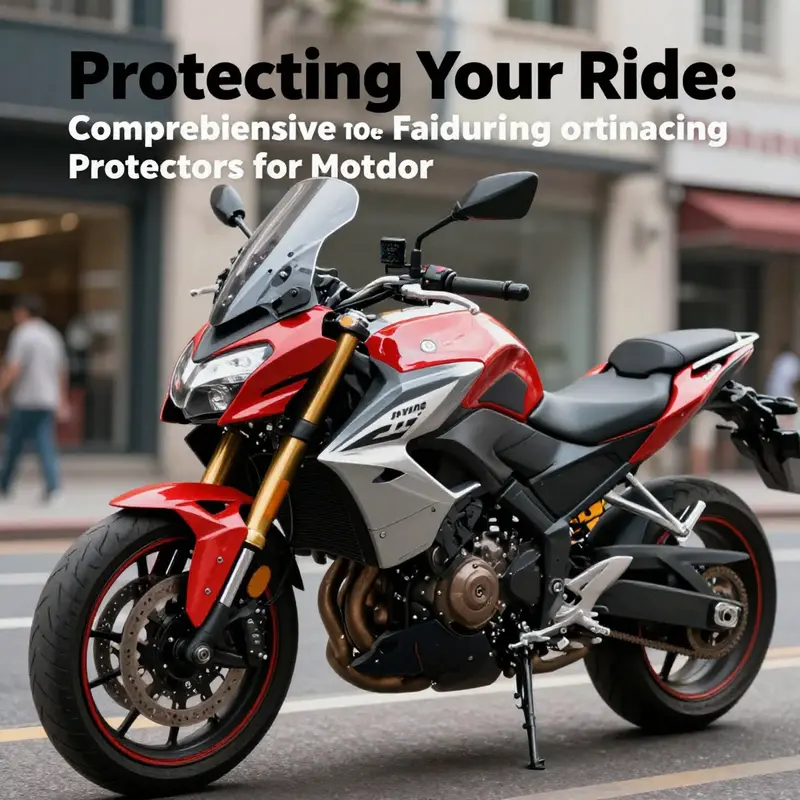
Fairing protectors are not just accessories; they are critical components for safeguarding the bodywork of motorcycles. With increasing urban riding and the popularity of both sport and touring models, motorcycle owners are prioritizing protection against potential damage from minor impacts or low-speed accidents. Consequently, understanding the various types of fairing protectors, their benefits, and the current market trends is essential for business owners looking to cater to this growing demand. Each chapter will delve into a specific aspect of fairing protectors, providing a richer understanding of how they can enhance customer satisfaction and business offerings.
null
null
Guarding the Guts: How Fairing Protectors Shield Bodywork, Safety, and Longevity in Motorcycle Riding
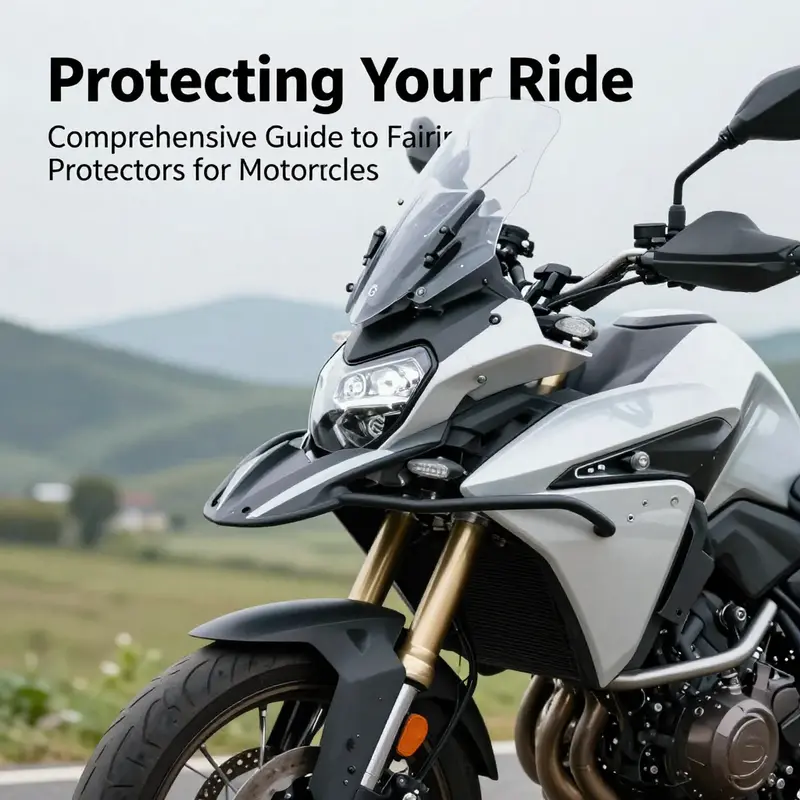
Fairing protectors are often seen as practical accessories that riders bolt onto the outside of their bikes. Yet their value runs deeper than surface appearance or a splash of color. They are buffered shields that translate the rough algebra of everyday riding into something gentler for both machine and rider. In this chapter, the discussion flows from the physics of protection to the psychology of riding, from material science to maintenance rituals, all while keeping sight of the everyday realities that push riders to consider fairing protection in the first place. The road, after all, is a place where minor miscalculations, stray gravel, or a quick slip on a slick patch can turn a routine ride into a panel repair bill and a slowing of plans. Fairing protectors address that risk with a logic that is both pragmatic and surprisingly refined: they are designed to absorb and redistribute impact energy, to shield vulnerable bodywork, and to preserve the aesthetic and structural integrity of the motorcycle over the long haul.
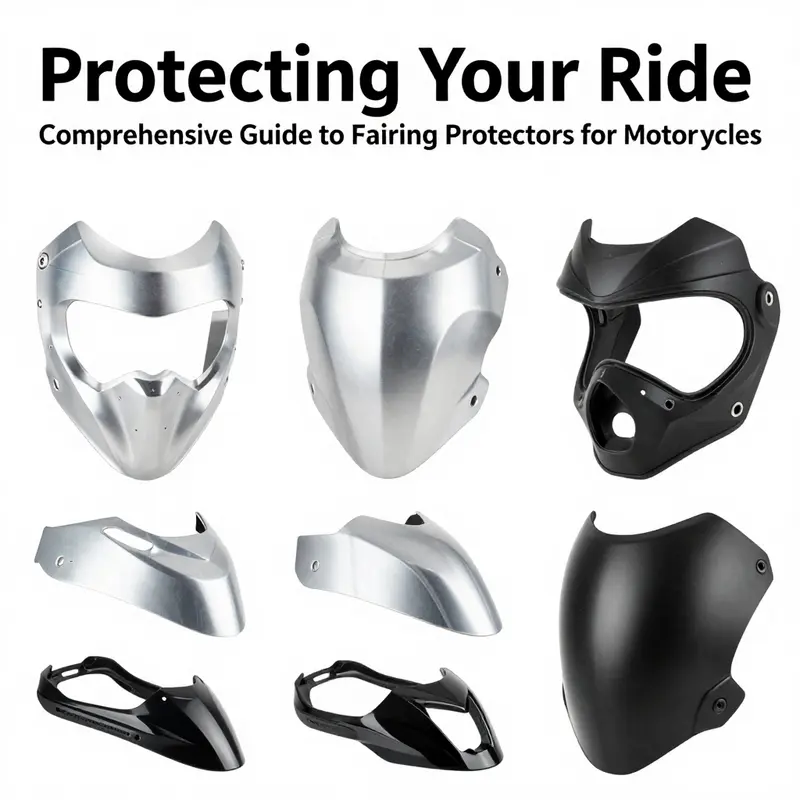
The fundamental premise is simple: fairings are large, flat, delicate surfaces that can take a disproportionate share of the damage when a bike is subjected to misadventure. They are what you see when you glance at a bike in the showroom and what you notice first in a roadside photo after a tumble. As such, they bear the load of everyday hazards—stone chips on a city street, branches brushing by on a forest road, or a low-speed tip-over in a parking lot. Protectors made from high-strength steel, aluminum, or impact-resistant plastics act as a sacrificial layer. They take the hit, shed some of the energy, and leave the fairing and its underlying structure less scarred and less prone to cracking. In addition to direct impact absorption, many protector designs spread loads more evenly across the mounting points and adjacent panels. That distribution matters because a single sharp edge can become a crack starter if the energy of a contact is concentrated in a small area. By broadening that impact footprint, protectors reduce the likelihood of micro-cracks spreading through the fairing panels, a process that can escalate repair costs and downtime.
The choice of materials is not incidental. Metal guards, with their stiffness and predictable deformation patterns, perform well in high-energy, direct-contact scenarios. Plastics, especially advanced composites or impact-modified polymers, bring some weight advantages and a degree of forgiveness when the hit is glancing or at an angle. A mixed-material approach—where metal frames provide the core strength and polymer panels absorb momentum—can hit a balance between durability and manageably low weight. The modern rider often encounters a spectrum of riding contexts: city streets with unpredictable debris, highway commutes where wind and traffic dynamics exert continuous forces on the bike, and weekend excursions that blend highway miles with gravel or damp forest lanes. In each of these contexts, fairing protectors play roles that are both protective and preventive. They guard not only against cosmetic blemishes but against deeper, more costly damages to mounting points, fuel tanks, or the radiator shrouds that sit behind the outer shell.
The protective logic extends beyond mere impact resistance. A well-designed protector system can act as part of a broader safety ecosystem that includes engine guards and crash bars. In practice, this integration becomes crucial when a rider experiences a low-speed drop or a slide that carries momentum from the front end toward the engine compartment. The protectors, positioned to catch and disperse energy before it reaches more sensitive components, help maintain the bike’s structural integrity. They can also support the engine guard systems by sharing load paths, reducing the risk that a single mounting bracket bears the brunt of a slide or twist. This coordinated approach is more than a sum of parts; it is a philosophy that reduces the probability of catastrophic damage in scenarios that are, by their nature, uncertain and variable. For riders who spend time on twisty back roads or gravel trails, this integrated protection translates into a greater likelihood of continuation after a mishap, rather than a forced halt to the ride while panels are replaced or straightened.
The aesthetic dimension is not incidental, either. Modern fairing protectors can be color-matched or finished to harmonize with the bike’s paint scheme. The visual coherence matters because it reinforces a rider’s pride in the machine. When a protector looks as carefully considered as the rest of the bike, it signals ownership of the whole riding experience rather than a quick add-on to chase lower risk. This is not merely vanity; it is about presenting a cohesive, well-maintained appearance that reflects an investment in durability and reliability. The ability to customize finishes—from gloss to matte textures and even protective coatings—means riders can choose a level of gloss that complements the bike’s character and the owner’s personality. It is a reminder that functional gear can also be expressive gear, aligning safety priorities with personal style.
A practical, often overlooked aspect of protectors is maintenance and serviceability. Some designs are readily removable for maintenance or replacement, a feature that can save significant time when a fairing assembly needs to be removed for access to the subframes, radiators, or electrical components. Other designs rely on robust, permanent fixing methods that emphasize long-term durability and weather resistance. The decision between removable and fixed protectors is not purely about convenience. It also affects how a rider approaches cleaning, inspection, and ongoing performance. Removable guards can simplify washing and inspection cycles by providing easy access to components behind the fairings. Permanently attached protectors, conversely, may streamline the overall silhouette of the bike and reduce the risk of vibration-induced loosening because they share mounts that are designed to stay in place through routine maintenance.
The practical value of protectors scales with the rider’s typical environments. Urban riders, who navigate dense traffic and frequent slow maneuvers, encounter a different risk matrix than touring riders, who spend long miles on open roads and in varied weather. For urban riders, the touchpoints are often curb scrapes, parking-lot encounters, and occasional contact with shop door frames or posts. In these contexts, protectors serve as a first line of defense against cosmetic scrapes and minor structural damage that would otherwise require panel replacements and paint touch-ups. For touring and long-distance riders, the protection budget shifts toward preserving panel rigidity and keeping the fairings free of creases that can trap moisture or degrade aerodynamics over time. In such cases, a well-engineered protector system becomes a quiet multiplier of durability, allowing the rider to extend service intervals and focus on miles rather than maintenance bills.
From a rider-safety perspective, the shields offer an additional, less visible benefit. When a fall or slide occurs, the presence of a protector can reduce the likelihood that a rider is shaved by a sharp edge of the bodywork. In high-energy events—whether on a race-paced curve or a gravel-lleck in a rural road—every extra margin of safety matters. While no protector is a substitute for careful riding, it can provide a small but meaningful buffer that improves overall crash survivability by limiting direct contact with hard surfaces. This is particularly relevant when the bike trades paint for contact with the ground or roadside obstacles, where the line between a minor incident and a serious injury can hinge on the presence of a protective layer absorbing the initial energy. The result is a rider who, after a mishap, preserves more confidence to recover and re-enter the ride rather than being forced off the horse permanently.
The regulatory and competitive dimension adds another layer of context. Racing organizations, historically attuned to rider safety, have codified protections in response to observed risk patterns and post-incident analyses. In this sense, protectors evolve from practical, on-the-ground solutions to formal standards that shape how bikes are prepared for competition. The trajectory is instructive: as protectors prove their value in real-world conditions, governing bodies translate that experience into rules that minimize danger while preserving fair competition. The 2011 rule change in a major racing series, mandating brake protection devices to address safety concerns, exemplifies how hands-on experience with failure modes can move from the workshop to the track, altering what engineers and teams consider baseline equipment. This historical note underscores a broader truth: protective components are not merely optional add-ons; they are part of a living safety ecosystem that adapts as riding and racing contexts change. For riders and teams alike, the takeaway is clear—protection is not a fixed investment but an evolving priority guided by real-world outcomes and evolving safety narratives.
To connect these threads to the everyday rider, consider the accommodating logic behind fairing protectors as a long-term investment. They reduce repair costs, maintain resale value, and preserve the bike’s aerodynamics and balance, all of which contribute to a rider’s confidence and comfort. When a bike is well protected, the rider can push a little farther into a corner, test a new route, or endure a weather change with less second-guessing about damage that might occur in a slip or a stone-riddled pass. The mental dividend—knowing the bodywork is shielded and the engine is guarded by shared structural pathways—translates into more consistent riding performance and greater willingness to undertake ambitious itineraries. In other words, fairing protectors are not merely cosmetic or defensive; they enable a rider to pursue their preferred riding style with a measurable reduction in risk to the bike’s most vulnerable and most valuable surfaces.
Designers and manufacturers continue to refine the balance between protection, weight, and aesthetics. The best solutions are those that slip into the bike’s overall architecture with minimal intrusion on the rider’s control inputs, steering geometry, and footrest clearance. The result is a system that feels like a natural extension of the bike rather than an afterthought bolted on at the last minute. For riders evaluating options, the question is not only which material or finish offers the most protection, but how the protector system complements the bike’s handling, maintenance routine, and riding goals. A good protector should feel as if it belongs to the bike—quietly doing its job while you focus on the ride ahead. When the rider returns to the road, the bike looks as though it could have been designed with the protector in mind from day one, rather than as a retrofit after a mishap. In practice, this means choosing protectors that align with the bike’s weight distribution, mounting points, and the expected kinds of impact in your typical routes.
For riders seeking to explore options that fit common models without becoming overwhelmed by the sheer number of aftermarket choices, it can help to navigate through dedicated fitment options that group products by model families. If you’re evaluating options for fitment across models, consider the BMW fairings category BMW fairings. This kind of centralized category can serve as a starting point to understand how protectors are designed to interface with a bike’s frame, its radiator and engine covers, and how mounting hardware interacts with other protective elements. It is a reminder that even within the vast landscape of parts and accessories, the most durable and satisfying investments come from coherent design language and thoughtful integration rather than ad-hoc additions.
Beyond the immediate practicalities, fairing protectors reflect a philosophy about riding: that protective gear is not a single-layer shield but a multi-layered approach to risk management. AProtectors that are well designed respect the bike’s intended use, the rider’s style, and the environment in which the bike operates. They are not merely devices to keep paint pristine; they are components that help preserve the underlying structure, sustain performance characteristics, and protect the rider’s safety interests. The result is a motorcycle that remains faithful to its original intent for longer, responding to the rider’s commands with predictable behavior even after contact with the world outside the polished showroom floor.
This chapter has sketched a spectrum of considerations—material choices, energy distribution, integration with engine guards, aesthetics, maintenance practicality, and the broader safety and regulatory context—that underpin the value of fairing protectors. The takeaway is not that protectors eliminate risk; rather, they transform risk into a more manageable, survivable variable in the long arc of a bike’s life. In the busy rhythm of urban streets, in the long miles of touring, and in the precise cadence of a race track, protectors are part of a rider’s toolkit for responsible ownership and confident riding. They offer a tangible assurance that every ride begins with a stronger, steadier platform, and every stop becomes a moment to appreciate the balance between protection, performance, and personal style.
For riders who want to place protection at the center of their bike’s ongoing care, the next step is to understand installation and maintenance practices that keep the system performing as intended. This involves careful measurement during fitment, selecting hardware that resists corrosion and vibration, and establishing a routine where protectors are inspected for cracks, loosened mounts, or misalignments after rough roads or weather events. By integrating these practices into how you care for the bike, you can maximize the life and effectiveness of the protection system while maintaining the bike’s intended geometry and ride feel. In this sense, fairing protectors are not only tools of defense; they are partners in the ongoing relationship between rider, machine, and the road.
External context that informs these decisions can be found in racing safety discussions, where protective devices are scrutinized and refined as part of a broader safety agenda. For a broader view on how racing safety standards have shaped protective measures over the years, see the MotoGP safety FAQ referenced in the detailed research results. This external perspective helps connect the practical, on-bike choices with the regulatory and safety principles that ultimately guide safer performance on two wheels.
null
null
Final thoughts
In summary, fairing protectors play a vital role in enhancing motorcycle durability and aesthetics, offering substantial benefits to both riders and business owners. By understanding the various types available, the advantages of their installation, and the insights into market trends, businesses can position themselves effectively in a competitive landscape. Investing in quality fairing protectors is not just a commitment to safety but also an opportunity to drive customer loyalty and satisfaction.