
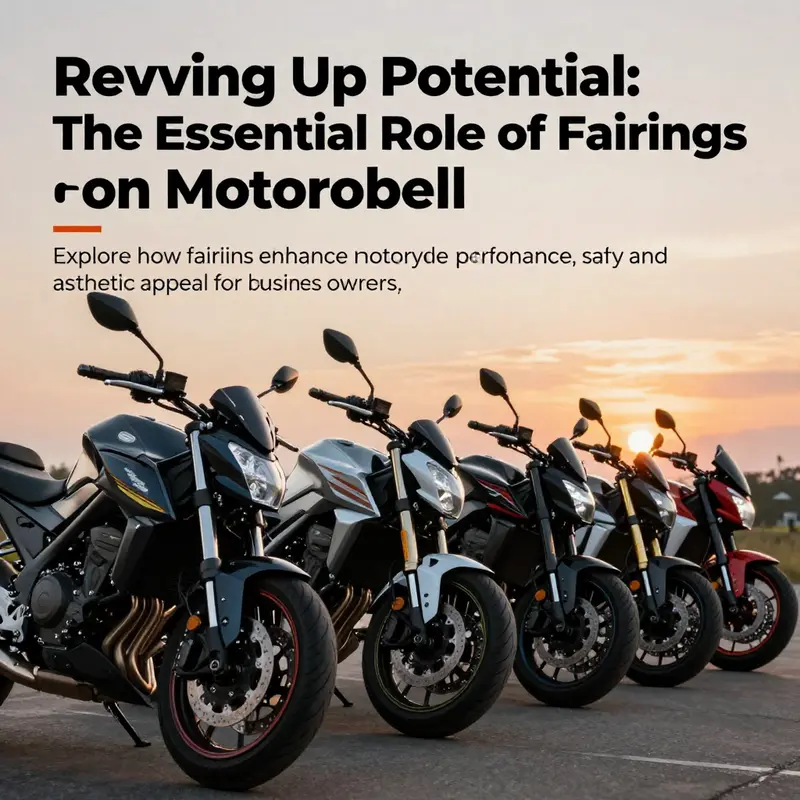
Fairings on motorcycles are more than just sleek designs; they are crucial components that enhance performance, safety, and rider comfort. Understanding their aerodynamics can provide insights into how they contribute to efficiency and speed. Additionally, the materials used in fairings play a critical role in their effectiveness and design flexibility. For business owners in the motorcycle industry, grasping these elements is vital for making informed decisions about product offerings and customer engagement. This article delves into three key areas: the aerodynamics of fairings, the materials and design considerations that create them, and their impact on motorcycle performance and safety. Each chapter reveals how fairings are not only functional but also contribute significantly to the overall riding experience.
Riding the Wind: Aerodynamics, Stability, and the Craft of Motorcycle Fairings
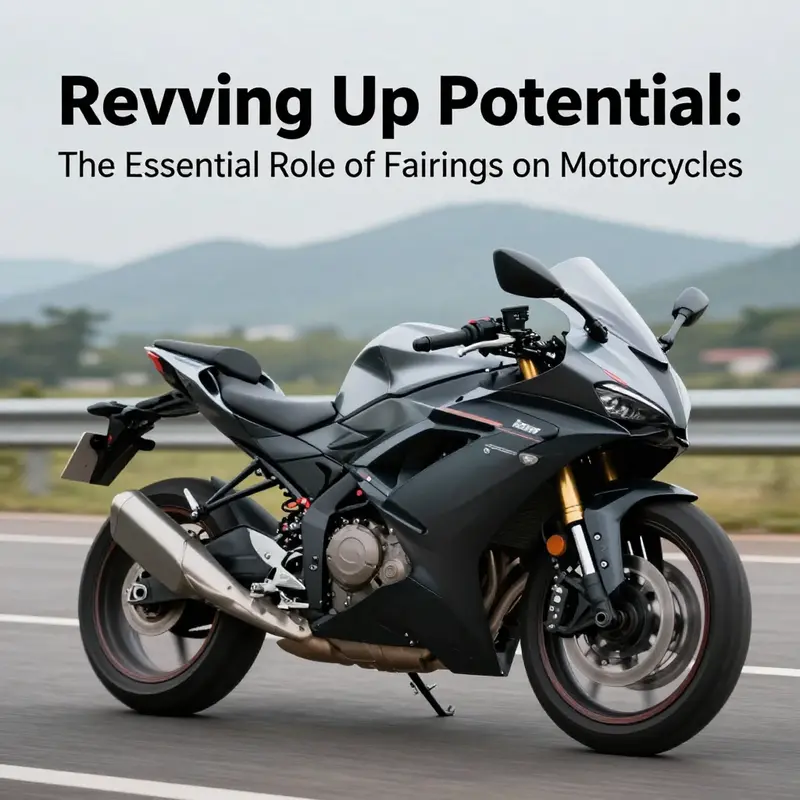
The bike slides into the air like a sculpture carved by the wind, a living instrument whose performance hinges on how air behaves around its curves. The fairing, that sculpted shell of plastic, composite, or resin, is more than a shield against rain or a shield against the rider’s own fatigue. It is a carefully engineered system that shapes flow, controls pressure, and nudges the motorcycle toward its most efficient self. To understand the fairing is to understand a dialogue between form and physics, between the rider’s comfort and the machine’s hunger for speed. In this chapter we move beyond the casual appreciation of sleek lines and look at how fairings translate air into measurable gains in stability, efficiency, and control. We begin with a simple truth: drag is not merely a curve on a chart; it is a force translating into fuel consumption, top speed, and the confidence a rider feels when pressing into a gust or a crosswind. When we talk about aerodynamics in the context of motorcycles, the bodywork becomes part of the engine’s breathing pattern, smoothing the chaotic, swirling wake that would otherwise buffet the front end and scatter the rider’s attention. The fairing, in this sense, functions as both shield and guide, defending the rider from wind blast and steering the air so it kisses the bike rather than pushes against it. This dual role—protection and performance—defines the craft of fairing design and explains why different configurations exist for different kinds of riding.
Drag reduction begins with a simple principle: air follows paths of least resistance. A fairing reshapes those paths, guiding air over, around, and sometimes through the bike’s most open spaces in a way that lowers the overall propulsive drag while maintaining or even increasing lift at the front where it matters most. Wind tunnel studies have demonstrated that even modest additions—like a handlebar fairing or a windscreen—can contribute to improved aerodynamic stability. In practice, this translates to enhanced yaw damping, a property that stabilizes the front end as speeds climb or winds shift. When the front wheel is forced to fight crosswinds, the rider’s input multiplies with the air’s resistance, and the result can be a twitchy steering feel or even a dangerous wobble. A well-tuned fairing dampens that tendency by shaping the pressure distribution at the nose, reducing the crosswind’s nose-into-wind torque, and making the front end more predictable. The upshot is not merely numbers on a sheet; it is a rider who can lean into a corner with more assurance, knowing the bike will hold its line instead of chasing gusts.
The topic of drag reduction invites a look at how the type of fairing matters. A full fairing, wrapping the bike from the head stock to the tail, offers maximal coverage, which translates into smoother airflow and better weather protection. It creates a low-pressure region that pulls air along with the motorcycle, reducing the wake behind the rider and letting the bike slice through air with less resistance. The trade-off for this level of aero discipline is weight, cost, and sometimes reduced accessibility for maintenance. Full fairings are favored on sport bikes and long-range tourers where high-speed stability and rider comfort at altitude or on fast highways justify the added complexity.
Half fairings—often referred to as clip-ons or sport fairings—present a different philosophy. They shield parts of the engine and frame and can dramatically reduce weight, improving agility and maintenance access. They do not, however, offer the same wind protection, and riders may notice increased wind noise and greater exposure to weather at highway speeds. The reduced weight can also alter the bike’s own aero balance, particularly when the rider shifts position or changes their grip height. In many racing scenarios, engineers prefer the lean profile of half fairings to shave seconds off lap times or to expose the rider’s control inputs to the wind, a factor that becomes part of the rider’s signal repertoire in high-speed disciplines. The choice between full and half fairings is rarely about a single metric; it is about the rider’s goals, the bike’s intended use, and the way a particular chassis responds to airflow in the real world.
A crucial concept in this landscape is integration. The sum of fairing, handlebar, and windshield is greater than the parts. When these components are designed to work together, they produce a coherent airflow pattern rather than a patchwork of edges and gaps. Static and dynamic simulations show that properly positioned fairings can reduce cross-wind sensitivity by altering how air pressure acts on the front end. This is particularly meaningful for sport bikes and track riders who demand precision and stability at high speeds. The result is a smoother transition from straight-line stability to cornering grip, where the rider’s inputs are translated into predictable, repeatable behavior rather than a cascade of unexpected yaw motions. It is here that the craftsmanship of the designer meets the empirical data of the wind tunnel, and the rider benefits from a chassis that feels more alive, more connected, and more controllable.
In the continuum of fairing design, materials and construction methods are not afterthoughts but essential determinants of the aero equation. Fiberglass has long been a mainstay, valued for its affordable mass production and reasonable strength-to-weight ratio. Carbon fiber, by contrast, offers superior stiffness and a lower weight, at a higher cost, yielding a lighter shell that can sharpen handling at speed and maintain a cleaner aero profile through rigidity. Polyurethane, with its flexible and impact-tolerant characteristics, can form complex shapes with good surface finish and weather resistance, though it may incur a higher weight than carbon fiber for certain thicknesses. These material choices influence not only performance but also durability, repairability, and how easily a fairing can be molded into a design that respects both the rider’s comfort and the bike’s aesthetic. In practical terms, this means that the bike’s fairing is a composite of choices: geometry, stiffness, panel layout, and surface treatment combine to deliver a targeted airflow pattern. The designer’s job is to forecast how a panel will behave under varied speeds, wind directions, and rider postures, and then translate those insights into a shape that can be manufactured within cost and weight constraints.
The interplay between design and ride experience becomes especially evident when considering rider comfort. Aerodynamics is not solely about reducing drag; it is also about controlling the air that reaches the rider. A wind-impacted ride at triple-digit speed is not only a matter of speed but of fatigue mitigation. A well-placed fairing reduces buffeting on the torso and arms, lowers wind noise, and minimizes the gust-driven vibrations that can travel through the handlebars and into the rider’s hands. On longer journeys, the effect translates into reduced fatigue, allowing the rider to maintain focus and form for more laps around a track or hours on a highway. Here we encounter a practical truth: the fairing’s job includes shaping the rider’s experience as much as shaping the air. This is why the fairness of a ride—its sense of calm under pressure—depends on small, sometimes almost invisible, design decisions: the curvature of a panel around the steering axis, the angle of the windscreen, the clearance between the fairing and the handlebars, and the way the air carves past the mirror housings without creating quiet hotspots of eddying flow.
The choices made in windscreen and handlebar fairings illustrate the idea that aero performance is not a single number but a set of outcomes: reduced drag, improved yaw damping, lower cross-wind sensitivity, and enhanced rider comfort. When a rider leans forward into the wind, the fairing must provide a delicate balance of shielding and airflow. Too much shielding can increase pressure buildup on the chest and shoulders, which can affect breathing and fatigue; too little can leave the rider exposed to wind pressure and noise. The optimal design therefore seeks a harmony where the rider feels protected yet not boxed in, where the air stream is coaxed to remain coherent and attached to the bike’s surface, rather than forming chaotic separation behind the rider. Achieving this harmony is a marriage of mathematics, material science, and an appreciation of human physiology under motion.
As we examine the fairing as a system, it is useful to reflect on the broader engineering choices involved. The design process often begins with a set of riding scenarios: highway cruising, mountain passes, canyon tracks, or long tours. Each scenario imposes a different set of aero priorities. A touring configuration might prioritize weather protection and quiet air at lower-to-mid speeds, emphasizing a broader front for shielded airflow and a more generous cockpit. A sport or track configuration, by contrast, might emphasize maximum clean airflow around the engine and rider with a chiseled silhouette to minimize wake and maximize top speed. In practice, engineers must choose a fairing height, a windscreen angle, and a panel layout that yield acceptable drag values across a speed envelope while ensuring that the bike remains predictable if the rider enters gusty conditions or a patch of turbulence near a truck. These trade-offs are not mere theoretical exercises; they shape the day-to-day feel of the motorcycle and define how a rider interacts with the machine at the limit of performance.
The design discourse around fairings has become more nuanced as materials and manufacturing techniques evolve. Composites offer design freedom—curved planes that would be costly or impractical with traditional sheet metal. This freedom enables smoother transitions between panels and more efficient air channels that optimize pressure distribution at the nose and along the sides. The result is not only a sleeker look but a more precise control over how air behaves as it encounters the front of the bike. Yet the allure of advanced materials must be weighed against repairability and cost. A carbon fiber shell, while light and stiff, may demand specialized repair methods and higher price, while fiberglass offers robustness and easier repair in a field context. Through this lens, the fairing becomes a practical instrument, one that must balance the elegance of aerodynamics with the realities of maintenance, manufacturing tolerances, and rider expectations. The craft of fairing design, thus, is a synthesis of fluid dynamics, materials engineering, and human-centered design, all aimed at letting riders ride farther, faster, and more comfortably.
The practical implications of these considerations show up in everyday riding. A rider choosing a fairing configuration might weigh the benefit of a fuller windscreen against the potential for increased buffeting at certain speeds or the way the fairing’s kinks and lines influence the presence of rain spray in wet conditions. An investigation into crosswinds reveals that the shape and mounting of a fairing can influence how much the wind pushes on the bike’s side, which in turn affects steering inputs. The better the integration of fairing with windscreen and handlebars, the more stable the front end feels, especially when a gust enters from the side. These real-world effects reinforce a broader principle: aerodynamics is not an abstract discipline but a lived experience, shaping the sensation of riding as much as it shapes the objective measures of speed and efficiency. This is why riders often notice differences in handling when switching from naked bikes to bikes with fairings or when altering the position of a windscreen. The sensation of air becomes part of the feedback loop through which a rider tunes posture, throttle response, and cornering strategy.
To understand the practical outcomes in context, consider the way fairing design informs maintenance and customization. Fairings must be accessible for service, even as their shapes become more integrated with the bike’s chassis. The balance between a seamless look and the ease of access to the engine and electronics drives how panels are attached—whether they snap on, hinge, or require bolts that tolerate quick removal for track weekends. For riders who relish personalization, the fairing ecosystem becomes a canvas for expressing a riding identity while preserving or enhancing aerodynamics. It is not unusual to see riders explore subtle changes in panel geometry or windscreen height to tailor the airflow to their physique and preferred riding stance. In this sense, the fairing is a dynamic interface rather than a fixed shell, one that accommodates shifting demands as riders adapt their posture for faster corner entries, longer straights, or more upright touring positions.
In reflecting on the broader implications for motorcycle engineering, neat parallels emerge between fairings and other aerodynamic bodywork in motor sport. The same principles that govern racecar wings or airplane fuselage shaping appear in the way fairings are designed and tested. The discipline requires a careful orchestration of geometry, material behavior under load, and an understanding of how air flows change when the bike’s speed, rider position, or weather conditions vary. The fairing thus stands as a microcosm of the larger aero engineering landscape: a field where a small change in curvature or panel alignment can ripple through to a meaningful change in drag, stability, and rider confidence. It also hints at a central truth for riders and engineers alike: aero gains do not exist in isolation; they come embedded in the ride’s overall behavior, influencing everything from fuel economy on a long highway day to the precision of a split-second turn in a race. The narrative of the fairing, then, is a narrative of integration—between air and machine, between rider comfort and performance, and between aesthetics and efficiency.
For those exploring the realm of fairings further, the Honda fairings collection exemplifies the practical ways in which design decisions translate into real-world configurations. Within this category, the emphasis remains on creating a balanced aero profile that respects the bike’s chassis geometry while offering the rider a measure of comfort and protection. The experience of browsing such a collection can illuminate how different shapes and mounting philosophies translate into distinct ride sensations, and it underscores the broader point that fairings are not mere cosmetics but integral components of a motorcycle’s aero performance. Honda fairings illustrate the spectrum of choices from windscreen height to panel curvature, all tuned to the goals of stability, efficiency, and rider comfort. Of course, the exact choices will depend on the bike’s weight, engine size, and intended use, but the guiding principles remain consistent: smooth airflow, coherent pressure distribution, and a front-end that feels both quiet and sure at speed.
Ultimately, the art and science of motorcycle fairings converge on a practical philosophy: the right fairing is not the most aggressively styled nor the lightest piece, but the one that best harmonizes the bike’s aerodynamics with the rider’s needs. The decision rests on an evaluation of how fairings influence drag, weight, maintenance accessibility, wind protection, and the perceived stability of the front end. It is a balancing act where each design choice carries a set of consequences, some beneficial and some not, and the skill of the designer lies in predicting and optimizing those consequences across a wide range of riding scenarios. The fairing is not a final ornament; it is a living part of the bike’s aerodynamic storytelling, a performer in a continuous duet with the air as it flows past at speed, leaving behind a clear path for the bike to chase its own potential.
External reading can deepen this understanding and connect it to broader design considerations. For example, the technical guide on fairing structure and applications offers a structured exploration of how materials, geometry, and assembly influence both function and form in Honda models and similar platforms. For those who want to connect theory with practice, such resources provide a grounded framework for evaluating how fairings contribute to performance in different riding contexts, from city commutes to track days. The dialogue between research and riding practice is ongoing, and each new design iteration invites riders and engineers to rethink how air, weight, and posture come together to define the experience of speed and control.
In sum, motorcycle fairings embody a compact, powerful blend of physics and craft. They reduce drag and stabilize handling while delivering weather protection and rider comfort. They are, in short, the aerodynamic handshake between machine and rider, a shared posture that makes speed feel easier, straights feel longer, and corners feel more precise. The fairing’s job is to guide air with restraint and intelligence, to shelter and to sharpen, to protect the rider while enabling the bike to act as a precise instrument of motion. When that balance is achieved, the rider does not feel overwhelmed by wind; instead, they feel invited to lean a little further, trust the front end a bit more, and ride with a sense of quiet confidence that comes from knowing the air has been invited to cooperate rather than to resist.
Further exploration of the aero-conscious design approach can be enriched by examining how specific fairing configurations interact with different chassis geometries, engine duties, and rider physiques. The interplay between the rider’s posture and the fairing’s stance on the bike becomes a central theme in tuning for comfort and performance. For those who enjoy modifying and customizing their machines, the fairing offers a meaningful canvas for testing ideas about airflow, weight distribution, and even the derived effects on fuel economy and endurance performance. The evolving toolkit of materials, simulations, and measurement methods makes the field both rigorous and accessible, inviting riders to participate in a practical experiment: how small tweaks to shape and position can yield noticeable improvements in how the motorcycle behaves when the road and wind demand precision.
To close this trajectory of thought, it is useful to recall that the true value of a fairing lies not in its ability to chase speed alone but in its capacity to make speed sustainable. A well-designed fairing reduces the effort required to sustain high-speed travel, lowers fatigue on long rides, and makes aggressive riding feel controlled rather than risky. It is the quiet, almost invisible partner that helps a rider convert raw mechanical power into a confident, repeatable line through a corner. Aerodynamics, therefore, is not simply about the pursuit of higher top speeds; it is about crafting an experience—one where air becomes a collaborator rather than an adversary. The fairing does this by shaping the air in a way that respects the rider, the bike, and the road, guiding wind and machine toward a shared velocity without sacrificing control or comfort. This is the essence of the craft: a continuous negotiation with air that yields a smoother, faster, and more intuitive ride for those who choose to ride with attention to the wind and the road alike.
External references and further reading can ground these discussions in a practical framework. For researchers and enthusiasts seeking a structured, authoritative overview of fairing structure, composition, and applications, the external guide provides a detailed lens on how design choices influence functionality and aesthetics in Honda models and beyond. It invites readers to connect the dots between theory, empirical testing, and real-world riding experiences, creating a richer understanding of how fairings shape the modern motorcycle.
External link for further reading: A Technical Guide to Fairing Motorcycle For Honda: Structure, Composition, and Applications
Streamlining Performance: Materials, Methods, and the Design Logic Behind Motorcycle Fairings
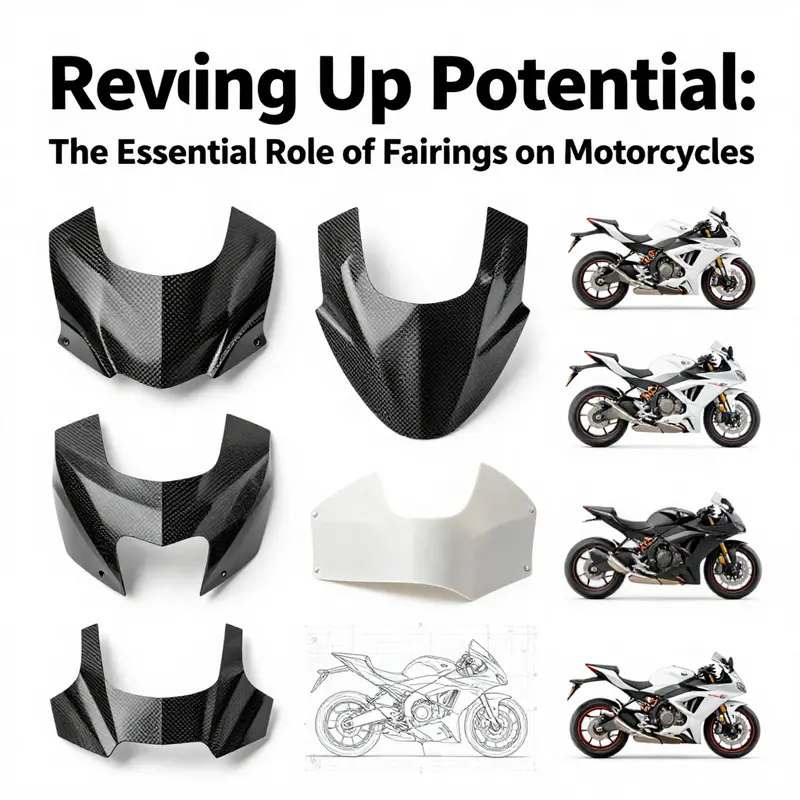
The fairing on a motorcycle is more than a cosmetic shell. It is a carefully engineered interface between rough road surfaces, turbulent air, and a rider who demands both speed and comfort. When we speak of the fairing, we are really describing a system—an aerodynamic shield that channels air with precision, houses essential components, and forms a protective cocoon around the rider. The design logic behind this system rests on a delicate balance among several forces: how much drag to shed at highway speeds, how light the assembly can be without sacrificing strength, and how well it can withstand the rigors of vibration, impact, and weather. It is a negotiation that unfolds in the materials chosen, the geometry sculpted, and the way the paneling integrates with cooling systems, lighting, and other functional elements. In practice, the best fairings do not merely reduce wind resistance; they optimize airflow to improve high-speed stability, reduce fuel consumption, and keep the rider shielded from wind blast that can impair concentration and endurance during long rides. A modern approach treats the fairing as a modular yet cohesive assembly, one that can be tuned for different performance envelopes—from the quick responsiveness of a sport chassis to the steady, long-ride comfort sought by touring machines. The material choices—fiberglass, carbon fiber, and high-strength polymers like ABS and polycarbonate blends—play a central role in this optimization. Each material carries its own signature of stiffness, toughness, weight, and cost, and each interacts with the design geometry to determine how air flows around the machine, how easily the structure supports fasteners and electrical integrations, and how well it resists environmental exposure in real-world riding conditions. The modern engineering conversation about fairings begins with a clear recognition that aerodynamics cannot be reduced to a single metric. Drag coefficient and cross-sectional area matter, but the distribution of pressure and the path of turbulent wake behind the bike influence handling behavior just as much as the rider’s position and the bike’s suspension. In this sense, fairing design is less about a single perfect shape and more about a family of shapes that work together with engine cooling and rider ergonomics. The literature highlights the hybrid nature of most contemporary fairings, where a basic aerodynamic philosophy guides the largest panels, while smaller sections, vents, and channels address cooling, intake routing, and stability margins at high speed. For riders who demand speed, the choice of material becomes a statement of intent: lighter panels reduce inertia and inertia-related steering effort, while stiffer panels resist flex that could change the perceived air gap and noise profile. Yet a lighter structure must still survive accidental contact, debris, and vibrational fatigue over thousands of miles. These competing needs demand a materials strategy that looks beyond a single property and instead considers a matrix of performance criteria—strength-to-weight ratios, impact resistance, UV stability, and long-term durability under heat exposure. Such considerations become particularly nuanced when electric powertrains enter the design conversation, where thermal management introduces new channels and radiative pathways for heat rejection. In those contexts, fairings may double as air channels that guide cooling air toward radiators or battery packs, turning the shell into an active participant in thermal regulation rather than a passive cover. The integration of such features requires attention to joint design, cutouts, and surface finishes that preserve smoothness while accommodating ducts and vents. Material choices therefore do not exist in isolation; they set the ceiling for what the form can achieve and how reliably it can perform under diverse riding conditions. The panel material that envelopes the bike acts as a bridge between the world of structural engineering and the rider’s subjective experience of wind, noise, and vibration. Fiberglass is frequently chosen for its favorable strength-to-weight ratio and its resilience in the hands of skilled fabricators who can shape it into complex, aerodynamically efficient forms. It achieves a compelling balance of cost, workability, and performance, making it a staple on mid-range to high-performance machines where aggressive geometry and aggressive riding styles demand robust, repairable panels. The glass fibers within the composite weave work to distribute load and dampen some of the vibrations that would otherwise travel through a solid shell. However, fiberglass requires protective coatings to mitigate UV degradation and to preserve its appearance and mechanical properties over time. The presence of UV rays means that color fading, matrix embrittlement, and surface chalking can occur if a clear coat or pigment layer is misapplied or wears away. Consequently, maintenance intervals and protective finishes become a practical part of the owner’s responsibility when fiberglass fairings are involved. Carbon fiber, by contrast, is celebrated for its exceptional stiffness and lightness. When weight reduction translates into improved handling at the limit, carbon fiber becomes a natural ally for sport-focused models where the rider pushes the chassis toward the edge of grip. The material’s high specific strength makes it possible to realize very aggressive camber lines, slender profiles, and tight internal radii without the penalty of excessive mass. The stiffness characteristics of carbon fiber panels also contribute to a more direct, precise feel in steering, especially at higher speeds where transient gusts and dust streams can buffet the bike. Yet carbon fiber brings a premium to the design table: it demands specialized manufacturing techniques such as vacuum-assisted resin transfer or autoclave curing, and the cost of raw materials and skilled labor can be significant. These realities are not merely academic; they shape what is feasible for different market segments and different brand strategies. In practice, carbon fiber is most commonly found on premium, performance-oriented models and limited-edition builds where every gram saved translates into meaningful gains on track or in fast-road contexts. For mass-produced motorcycles, high-strength plastics—commonly ABS (Acrylonitrile Butadiene Styrene) or polycarbonate blends—offer a balanced, scalable solution. These polymers are compatible with streamlined injection molding and multi-cavity tooling, enabling the rapid production of complex geometries required for integrated lighting, ventilation, and rear-light housings. ABS and polycarbonate blends resist impact reasonably well and can be engineered to hold up in sun-drenched, rain-drenched, and heat-swollen environments that fairings inevitably encounter. They also permit color-fast finishes and easier repairability, which can be a decisive factor for everyday riders. The trade-offs are real: standard plastics are typically heavier than carbon fiber for panels of equivalent stiffness, and their resistance to long-term deformation under sustained loads and high-speed fatigue may not match that of reinforced composites. Still, modern plastic formulations, when properly reinforced and layered with UV inhibitors and clear coats, perform robustly in most common riding scenarios. To appreciate how these material choices interact with design decisions, it helps to consider the geometry of the fairing itself. Aerodynamic performance emerges from smooth surface transitions, carefully managed boundary-layer behavior, and the elimination of abrupt discontinuities that can generate drag or create unstable flow. The simplest drag-reduction strategy—tweaking the silhouette—cannot work in isolation. It must be paired with an understanding of how surface roughness, edge radii, and junctions with the frame influence the path of air around the rider and engine. The fairing’s upper contours set the primary flow direction over the rider’s helmet, and the lower panels guide air toward the radiator intakes and side vents. Subtle curvature adjustments can reduce drag without triggering flow separation that would lead to a turbulent wake behind the motorcycle. The design must account for the rider’s posture, too. A rider who sits upright requires different shading and tapering than one who leans forward in a racing crouch. Even the small lips and flanges along the surface—often treated as vents or micro-spoilers—contribute to pressure distribution across the fairing and, by extension, to the stability of the whole bike. Practical fairing design integrates both function and aesthetics, acknowledging that form communicates performance. A fairing must present a clean, cohesive look that signals alignment with the bike’s mechanicals and its intended use. This involves careful sculpting of the nose, side panels, and tail to avoid visually discordant gaps that could imply weaknesses or misalignment. Designers therefore pay close attention to material performance boundaries and the manufacturability of the shapes they propose. Where possible, designers exploit the strengths of each material to push the envelope of what is allowed by production realities. A fiberglass panel can be coaxed into relatively complex curves with relatively straightforward tooling, enabling aggressive air channels that aid cooling and minimize turbulence around the radiator and engine bays. Carbon fiber enables the creation of thinner skins along high-load sections, reducing inertial mass and delivering a more subtle, tactile sense of stiffness. Polymers, with their versatility in color and impact resistance, often function in areas that experience more frequent debris impacts on public roads, such as the lower saddle panels and the flanks near the foot rest area. The discussion of materials would be incomplete without addressing the attachment mechanisms that secure the fairing to the bike. The joints must endure vibrations, wind loads, and occasional minor impacts. Engineers design attachment points to distribute loads across multiple fasteners, avoiding stress concentration that could lead to cracks or panel delamination. Bonding methods, mechanical fasteners, and interlocking joints are chosen in concert with the panel materials to ensure long-term durability. The synergy between attachment design and material characteristics is especially critical for modular or removable sections. Modern fairings sometimes embrace modular architectures that enable easier maintenance and customization. The idea is not merely aesthetic—modularity can be a practical response to the reality of service life on the road. For a rider who undertakes routine maintenance or who likes to customize the appearance of the bike, modular sections offer a path to access cooling channels, replace damaged panels quickly, or experiment with different aerodynamics without committing to an entire new set of bodywork. Visual coherence remains essential, however. The challenge is to keep the modular interfaces seamless, with clean seams, consistent gaps, and a unifying surface texture that preserves the perception of an integrated structure. In this regard, the finish—the last mile of the design process—becomes as critical as the initial geometry. UV-protective coatings, abrasion-resistant clear coats, and color finishes must be chosen with an eye toward environmental exposure: sun, rain, dust, and road salt. A well-finished fairing resists yellowing, chalking, or micro-scratches that can accumulate over time. This is not only about aesthetics; surface integrity influences perceived quality, aerodynamic smoothness, and even the micro-level boundary-layer behavior that can marginally affect drag. The material and finish choices also intersect with thermal management strategies. Larger engines or electric powertrains generate more heat, and fairings often function as conduits for cooling air. The design must prevent overheating by maintaining channels, vents, and ducts that stay open and free of obstruction under the rider’s posture and dynamic loading. This operational requirement can influence where the radiators, sensors, and battery packs sit within the bike, and how the surrounding panels guide air toward those critical components. A well-integrated fairing, therefore, does not merely protect the rider; it becomes a contributor to the engine’s thermal health and, in electric applications, the overall efficiency and range. When we look across the spectrum of motorcycles—from nimble sport bikes to long-haul tourers—the fairing demonstrates a practical adaptability: it can be lighter and more aggressive on one model, or heavier and more protective on another, depending on the target rider and the expected road conditions. The design decisions that lead to this adaptability consider manufacturing realities, supply chain constraints, maintenance cycles, and the evolving expectations of riders who demand both performance and reliability. The literature on fairing design underscores a growing emphasis on standardized processes for evaluating material performance in real-world conditions. These processes include accelerated aging tests, fatigue testing, and impact simulations that help engineers anticipate failure modes under repetitive use. The goal is not merely to survive a few seasons, but to maintain shape fidelity and functional performance across many miles. In practice, many designers turn to a pragmatic blend of materials—employing carbon fiber for critical, load-bearing panels where weight savings justify the cost, while using fiberglass or high-strength plastics for less-critical sections to meet budget and manufacturing constraints. This blended approach allows a bike to realize a high level of performance without becoming prohibitively expensive to produce or maintain. For riders, the result is a fairing that feels coherent, offering consistent wind protection and a quiet, controlled ride. The sound of air streaming past the rider becomes part of the sensory package—part of the signal that the bike is tuned for speed and efficiency rather than a noisy, drag-prone silhouette. The plausible path forward for fairing design points toward smarter integration of electronics and sensing, better attention to long-term material behavior, and more refined, data-driven approaches to airflow management. Designers will increasingly rely on simulation tools that couple computational fluid dynamics with structural analysis to predict how a panel will behave under a given rider position, wind condition, and speed. The aim is to discover novel combinations of shape and material that achieve drag reduction without compromising durability or cost. In the end, the best fairings are those that serve multiple masters—rider comfort, aerodynamic efficiency, thermal management, and ease of maintenance—while remaining faithful to the bike’s overall character. The practical implication of this is clear: when choosing or evaluating fairings, look for a coherent material strategy that aligns with the bike’s performance goals. A fiberglass shell might be ideal for a versatile mid-range machine that prioritizes repairability and cost, while carbon fiber could be a compelling choice for a high-end sport model where every gram matters. For many riders, a well-designed high-strength plastic fairing will deliver reliable performance and ease of service without sacrificing the essential aerodynamic aims. For practitioners in design studios and engineering shops, the challenge remains to translate performance targets into durable, producible forms that can withstand the test of time and the unpredictability of real-world riding. The path forward invites continued collaboration among material scientists, aerodynamicists, and mechanical engineers to refine surface finishes, channel designs, and attachment methods. In parallel, the rider’s evolving expectations—greater comfort on long rides, more efficient cooling, and the desire for personalized aesthetics—will continue to push fairing designers toward more sophisticated, integrated solutions. For those who want a tangible look at how fairings are positioned within a broader ecosystem of bodywork, the Honda fairings category offers a useful reference for how a major manufacturer organizes fairing design around modular concepts and performance-driven lines. Honda fairings provides a glimpse into how the same underlying material strategies can be applied across multiple model families, reaffirming that the science of fairing design is as much about system thinking as about individual parts. Ultimately, the fairing is a battlefield where air, heat, and vibration meet human need. The best solutions acknowledge that reality: performance, protection, and practicality can all be advanced without forcing trade-offs that compromise one for the sake of another. The materials, processes, and design philosophies discussed here do not exist in isolation; they are the visible outcomes of decades of experimentation, testing, and refinement. They reflect a craft that respects the rider’s desire for speed and comfort while recognizing the realities of manufacturing, service, and the changing landscape of propulsion technologies. As the ride continues to evolve—whether through lighter, stiffer composites; smarter thermal channels; or more seamless human-machine interfaces—fairings will remain a central thread in the woven story of motorcycle engineering. Externally, riders notice only the result: a panel that seems to disappear into the wind, a cockpit that stays calm at blistering speeds, and a sense that the machine has been sculpted to work with air rather than against it. Internally, engineers know that the success of a fairing depends on materials chosen, manufacturing finesse, and the ability to integrate myriad functional requirements without compromising form. The fairing, in its quiet way, embodies the practical ideal of engineering: to accomplish more with less, to push performance without provoking fragility, and to deliver a riding experience that feels effortless precisely because it has been engineered to be anything but. External references and ongoing research—from accelerated aging campaigns to the latest in composite science—continue to feed the design loop, ensuring that every curve, edge, and junction remains a testament to the careful alliance of physics, materials science, and human use. For those who study or practice this craft, the message is clear: success lies in a holistic approach that treats the fairing not as a single component but as an integrated system tuned to the bike’s power, ergonomics, and the rider’s expectations. And as with any evolving technology, the best designs will be those that stay adaptable—receptive to new materials, new manufacturing methods, and new ways of thinking about how air moves, how heat exits, and how a rider’s confidence is shaped by the shell that wraps around the machine.
Riding the Air: How Motorcycle Fairings Shape Speed, Stability, and Safety
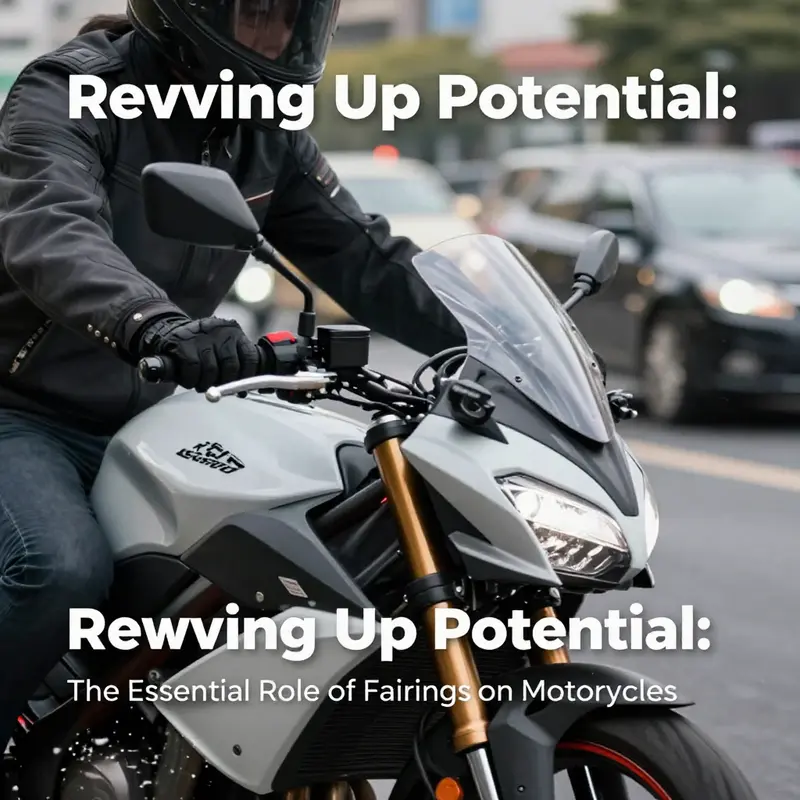
The fairing is more than a stylistic cloak for a motorcycle; it is a carefully engineered interface between machine and atmosphere. When a rider twists the throttle and the bike surges forward, air becomes a collaborator and sometimes an antagonist. The fairing governs how that air travels around the machine, how much resistance the engine must overcome, and how much protection the rider retains from the elements and potential debris. In modern motorcycles, especially those designed for speed and endurance, fairings are crafted from a mix of materials—fiberglass, carbon fiber, and polyurethane—each chosen for a balance of stiffness, weight, and cost. The choices are not purely cosmetic; they determine how a bike slices through wind at triple-digit speeds, how vibrations are dampened through the chassis, and how heat from the engine is managed as air is forced to move along a defined pathway. The result is a coherent system where form and function align to deliver performance, comfort, and safety in equal measure.
Aerodynamics governs much of what a fairing can achieve. Drag, a force that opposes forward motion, scales with the square of speed, so even small reductions in drag become large advantages at high velocity. The fundamental relationship—drag increases with velocity squared, while power required to overcome drag grows even faster—means that shaving even a few percentage points off a bike’s drag coefficient can translate into higher top speeds and, perhaps more importantly, improved fuel economy on long rides. A fairing’s job is to reduce pressure drag by shaping airflow so it remains attached to surfaces rather than peeling away in turbulent pockets. This involves a careful sculpting of the front silhouette, the belly under the engine, and the tail’s exit path to minimize wake regions that would otherwise churn behind the bike like a ripple in windy water.
The mathematics behind this is not a lab-only abstraction; it translates into the everyday experience of riding. A well-designed fairing lowers the coefficient of drag and reduces the effective frontal area that confronts oncoming air. When air streams smoothly over the visor, around the windscreen, and along the engine cowl, the rider experiences less buffeting and fatigue, especially on long highway miles. At speed, the cautious rider notices that a bike with an optimized fairing holds a more stable line through gusts and crosswinds, resisting the tendency to dart or drift. The narrow, continuous curves of a modern fairing are not simply about sleek lines; they are about maintaining a consistent pressure distribution along the bike’s hull so that the center of pressure remains predictably placed as speed varies. This predictability is a core contributor to stable handling, enabling precise steering input without overcorrecting after a gust.
Stability at high speed owes much to how the air flows around and over the rider’s space and the machine’s mass distribution. A streamlined bodywork package can push air away from the rider’s chest and torso, directing it upward and outward, which reduces the blunt force of wind on the rider’s body. This has a twofold benefit. First, it reduces fatigue, allowing a rider to maintain a more consistent posture for longer periods. Second, it narrows the gap between the rider’s actions and the bike’s response, which translates into a more composed sense of control. A well-executed fairing also manages the boundary layer—the thin layer of air in direct contact with the bike’s surface. By maintaining a healthy boundary layer, the fairing minimizes drag-inducing flow separation and reduces the formation of wake turbulence that can buffet the rider and destabilize the rear end at high speeds. In practice, this means that riders feel a steadier ride with less wind-induced wobble, a subtle but important factor in confidence on long sweeps and straightaways.
Rider protection is another essential dimension of the fairing’s value proposition. The most obvious benefit is shielding from wind, rain, and gravel. The windscreen and the fairing’s curvature form a cocoon around the rider’s upper body, enabling a calmer riding environment. That relief matters because fatigue compounds over miles; when wind pressures are spread over a larger surface area and directed away from vital joints, the body expends less energy fighting against drag, which translates into less muscular strain and a clearer focus on road texture and traffic. In rain or inclement weather, effective weather sealing around the fairing and cockpit reduces the intrusion of water, helping maintain visibility and comfort. The rider’s hands, wrists, and shoulders are also partly protected by the fairing’s sweep, which reduces wind chill and helps preserve grip strength, especially on longer trips where fatigue could otherwise loosen a rider’s control.
Beyond everyday weather, fairings contribute to safety by deflecting small debris and reducing the chance that loose gravel or stone chips will strike the rider directly. The angle and curvature of the surface influence how effectively a small object is redirected away from the rider. While a fairing is not a substitute for proper riding gear or helmets, its role in lowering the probability of wind-driven debris reaching the rider is meaningful, particularly on fast highway segments where there is less time to react to road hazards. In addition to shielding the rider, the fairing helps protect sensitive components of the bike. A well-integrated front and side skin can prevent stones or moisture from reaching cooling ducts and air intakes, contributing to more consistent engine temperatures and fewer heat-related performance dips on long, high-speed runs.
Crashes introduce a more nuanced set of dynamics. A crash may involve a collision, a tumble, or an impact with the ground that can deform or shear off the fairing pieces. In such events, the fairing can absorb some energy through controlled deformation, which can mitigate the severity of injury to the rider and contribute to slower, more predictable secondary impacts. The goal is not to replace protective gear but to complement it; a fairing that absorbs some energy while remaining attached long enough to shield the rider holds real value in the broader safety equation. Sophisticated fairing configurations aim to split and channel impact forces, distributing energy across reinforced panels and mounting points. This energy management works in concert with the bike’s chassis and subframes to avoid concentrating loads in a single vulnerable spot. Importantly, badly designed or damaged fairings can turn into hazards themselves: sharp edges, loose fragments, or suddenly detached panels create new risks for both rider and bystanders. This is why ongoing maintenance and inspection are integral to safety in any fairing-equipped motorcycle.
From a practical standpoint, the materials that form fairings—fiberglass, carbon fiber, and polyurethane—each bring distinct traits to the table. Fiberglass offers a favorable balance of stiffness, impact resistance, and cost, making it a common choice for everyday sport and touring bikes. Carbon fiber provides exceptional strength-to-weight performance, yielding lighter panels with greater rigidity, but at a higher price point and with more complex manufacturing processes. Polyurethane, often used for its resilience and affordability, can be molded into complex shapes and offers reasonable resistance to impacts and surface finishes. The selection among these materials is rarely about a single attribute; it is about an optimized compromise among weight, stiffness, cost, and the intended riding context. A fairing is typically a layered assembly, where outer shells bear the brunt of airflow, inner ribs contribute stiffness, and bonding agents handle the transfer of loads. This assembly must withstand dynamic stresses that change with speed, road texture, and riding posture. The result is a fairing that remains functional under a wide range of conditions while preserving the motorcycle’s aesthetics and silhouette.
Manufacturing processes also shape how a fairing performs. The shaping of the airfoil-like contour, the smoothness of the surface finish, and the precision of mounting points all affect drag performance and ride quality. Surface imperfections, such as scratches or pitting, can increase skin friction and disrupt laminar flow, nudging the bike toward less efficient aerodynamics. The mounting hardware—bolts, brackets, and fasteners—must resist vibration and fatigue to prevent panel detachment. Even small misalignments can create buffeting or alter the bike’s attitude at speed. Hence, the integration of fairings into the overall chassis is a dance between exterior design and internal structure. In a sport-bike context, for instance, the fairing often interfaces with a compact cockpit, guiding air toward radiators and engine compartments while steering air currents around the rider’s torso.
The design philosophy behind fairings varies with the bike’s intended role. A sport bike prioritizes razor-sharp aerodynamics and aggressive body lines that look as fast as they feel; the emphasis here is on reducing drag and stabilizing the bike at high velocity. Touring and adventure-oriented machines favor larger, more protective enclosures that still respect airflow, but with a focus on rider fatigue reduction, weather protection, and practical storage integration. In both cases, the fairing is not an ornament but part of a system that aims to maximize efficiency without compromising control. Integrated features, such as carefully concealed lighting, turn signals, and sometimes storage components, reflect a philosophy of multifunctional surfaces rather than a loose collection of panels. The aesthetic is inseparable from the function: the curves that define the fairing are the same curves that shape the airflow, and this dual purpose is why many designers view the fairing as the motorcycle’s aerodynamic signature.
The interplay between fairing design and engine cooling is another critical consideration. As air is redirected around the engine and radiator, the fairing can influence cooling efficiency. Strategic vents and ducts ensure that hot air is expelled without creating dangerous recirculation zones that could raise temperatures. This is especially important for high-performance engines that operate near their thermal limits during sustained high-speed riding. The art here is to balance cooling needs with aerodynamic goals. Too many vents or poorly shaped ducts can compromise stability and drag, while too few can lead to overheating. Achieving the right equilibrium requires iterative testing, computational analysis, and real-world validation across a spectrum of speeds and riding conditions. The result is a system that maintains engine performance and longevity while preserving the rider’s comfort.
A chapter like this would be incomplete without acknowledging the evolving design language that shapes modern fairings. Designers study computational fluid dynamics, wind tunnel data, and empirical field tests to refine shapes that previously existed only as sketches. They also consider the rider’s seating position, steering geometry, and the bike’s mass distribution. Each adjustment to a panel’s angle or curvature reverberates through the bike’s aerodynamic profile. Even small changes—such as a marginal tweak to a side panel’s taper or a slight adjustment to the tail’s sweep—can alter how air adheres to surfaces, where separation occurs, and how the wake forms behind the machine. The cumulative effect is a fairing that embodies a philosophy of harmony: beauty in motion, efficiency in speed, and safety through protective design.
All of this explains why fairings are a central topic in technical discussions about performance bikes. They are, in essence, a practical demonstration of the adage that air is a relentless partner on the road. Designers deliberately craft each panel to manipulate airflow, dampen undesired vibrations, and protect the rider without compromising weight. The benefits accrue in faster acceleration, higher top speeds with lower fuel consumption, and more stable handling at speed. They also extend rider comfort by reducing wind fatigue and shielding from the elements. The risk, of course, lies in neglecting maintenance or mismanaging material integrity; a cracked, misaligned, or poorly fastened fairing can negate aerodynamic gains and introduce new hazards. This is why regular inspection, proper mounting, and respect for the fairing’s role as a system component are essential practices for riders who demand peak performance from their motorcycles.
For readers seeking a deeper dive into the structural specifics and design rationales behind fairings, several technical resources offer comprehensive guidance. In particular, an authoritative technical guide focused on the structure, composition, and applications of motorcycle fairings provides insights into how design choices affect functionality and aesthetics, with a close look at how these principles play out across different motorcycle families. To explore a broader context of fairing design and its practical implications, the domain knowledge within this guide can illuminate how changes in materials, construction methods, and integration patterns impact both performance and safety. For a practical glimpse into contemporary fairing options and to see how this knowledge translates into real-world choices, readers can consider exploring a curated collection that emphasizes 2023 new styles and configurations. This collection highlights how designers respond to evolving performance demands while maintaining the rider-centered focus that defines modern fairing systems. 2023 new fairings collection.
In this narrative, the fairing emerges not as a mere accessory but as an integrated language between the rider, the machine, and the atmosphere. It is the visible expression of aerodynamic discipline, where every contour speaks to expectations of speed, stability, and protection. The careful choice of materials, the precision of manufacturing, and the thoughtful arrangement of vents and contours all contribute to a package that can perform as reliably in a day-long ride as it does on a sprint around a track. The best fairings are adaptive: they meet the rider’s needs in different contexts, protect against the elements without overwhelming the machine with weight, and maintain their structural integrity when the unforeseen occurs. In short, fairings are the practical embodiment of how design and physics come together on two wheels. They are the quiet enablers of performance, the shield against wind fatigue, and the stage on which the motorcycle performs its most visible act: moving swiftly through air with grace and security.
For readers who want to see how these principles manifest in practice beyond the text, consider exploring the broader ecosystem of fairing options and configurations that emphasize diverse riding needs. The landscape of fairings reflects a spectrum from minimalist, performance-focused shells to more protective, feature-rich enclosures. Each approach teaches a lesson about the trade-offs between drag reduction, rider protection, weight, and cost. With an informed eye, a rider can select fairing components and configurations that align with their preferred terrain, climate, and riding style, recognizing that the fairing is a partner in performance, not a mere cosmetic shell. The result is a bike that not only looks purposeful but also behaves purposefully on the road and track alike.
External resources provide additional context for industry standards and safety considerations, anchoring these design principles in collaborative guidelines that manufacturers and riders alike rely on. For a broader overview of how fairings fit into the broader safety and performance ecosystem, see the Motorcycle Industry Council’s guidance and research materials. https://www.motorcycle.org/.
Final thoughts
Emphasizing the importance of fairings on motorcycles is essential for business owners looking to enhance their product offerings. Fairings significantly improve aerodynamics, which translates to better fuel efficiency and high-speed stability. Additionally, understanding the material choices and design considerations can be crucial for maintaining product quality and appeal. The impact of fairings extends beyond performance; they also play a vital role in rider safety and comfort. Investing time in understanding these elements can lead to better user experience and encourage customers to embrace motorcycle riding.