
Custom motorcycle fairing fabrication is a highly specialized domain that not only enhances the aesthetics of motorcycles but also significantly impacts their performance and usability. By leveraging advanced composite materials and technologies, businesses can create bespoke bodywork tailored to various models, from track bikes to touring motorcycles. This article explores the essential elements of custom motorcycle fairing fabrication, delving into the materials and techniques involved, the performance implications, economic factors, and the latest design trends that are driving innovation in the industry. Understanding these facets is vital for business owners looking to excel in the competitive realm of motorcycle customization.
Shaping Speed and Style: The Craft of Custom Motorcycle Fairing Fabrication
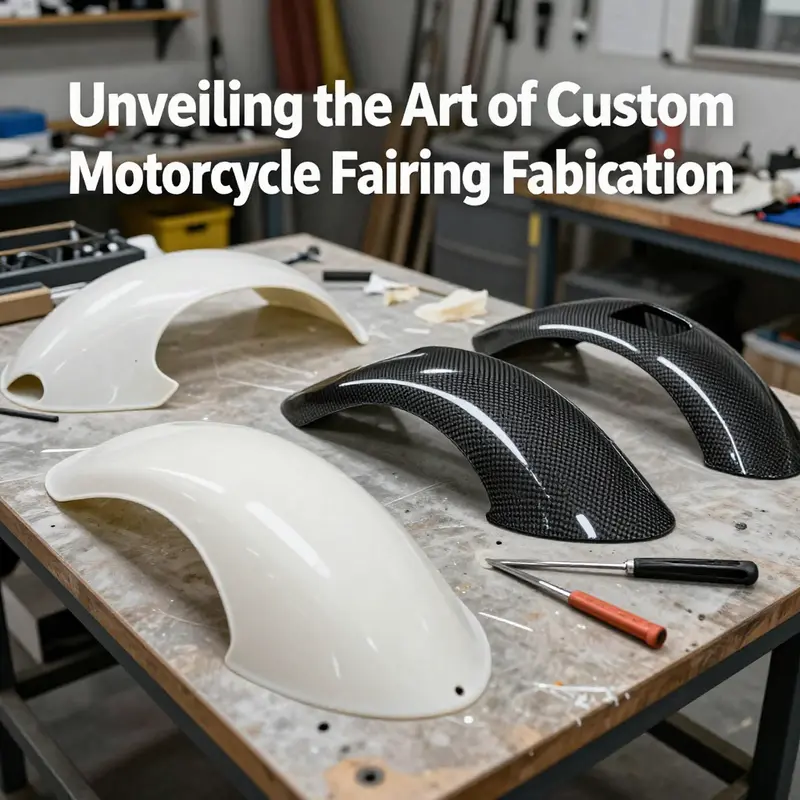
In the workshop where speed is defined by airflow and the line of a rider’s silhouette, a custom fairing is more than an artful shell. It is a carefully engineered skin that must blend aerodynamics, strength, and personality into a single, coherent system. The craft sits at the intersection of design and engineering, where material science informs shape and where the shape, in turn, dictates how the material behaves under load, at speed, and in the edge cases of a ride. This chapter explores how builders choose materials and apply techniques to create fairings that perform as reliably as they look, and it traces how those choices ripple through every stage of fabrication and partnership, from mold to finished shell.
At the heart of any fairing decision lies material selection. The three most common families—fiberglass, polycarbonate, and carbon fiber—each bring a distinct set of advantages and trade-offs. Fiberglass has earned a solid place in the lineup because of its stiffness, resilience, and the ease with which it can be molded into complex aerodynamic forms. For track-minded or racing-oriented builds, fiberglass offers a robust, forgiving platform where strength and shape can be dialed in through controlled layups and careful finishing. Its surface, when protected by gel coat or a high-quality paint system, can resist weathering and UV exposure while preserving the crisp lines that define a fairing’s silhouette. Yet fiberglass comes with a weight penalty compared to the newer composites and ABS plastics, and its performance under sharp impact can be unforgiving. It rewards skilled craftsmanship in sanding, priming, and painting, because the final surface quality and the illusion of a seamless form depend heavily on meticulous finishing work.
Polycarbonate, in contrast, emphasizes toughness and impact resistance. It is a thermoplastic capable of precise thermoforming, which makes it ideal for complex yet predictable geometries where safety and resilience are prioritized. For riders who demand dependable insulation, reduced risk of shattering, and the flexibility to create smooth, modern profiles, polycarbonate provides a compelling balance between weight and durability. It does not carry the same stiffness as fiberglass, but its toughness across a wide temperature and impact spectrum often translates to longer-term liveability on rough roads or in unpredictable conditions. The material’s processability—easy heating, shaping, and bonding—also opens pathways for rapid iterations during development, a practical advantage when the rider’s needs evolve or when the neck of the fairing must accommodate instruments, mounts, or vents.
Carbon fiber stands at the apex of performance for those who aim to minimize weight while maximizing stiffness and aerodynamic efficiency. The premium experience of carbon fiber fairings comes from their exceptional strength-to-weight ratio and the high rigidity that supports precise control of airflow around the rider. The downside, in practical terms, is the technical complexity and cost. Dry carbon prepays labor-intensive steps, specialized tools, and strict quality control during layup, cure, and post-processing. The result, when executed well, is a shell that can hold its shape under high loads, produce cleaner laminar flow, and contribute to handling and acceleration metrics that matter on the track. In the hands of skilled fabricators, carbon fiber becomes a canvas for sophisticated geometries, where the weave pattern and resin system interact with the mold to produce a surface that is not only strong and light but also aesthetically disciplined.
With these materials as the canvas, the fabrication techniques become the brushstrokes that translate intent into reality. Mold-making is the foundational step. A fairing mold can be formed from a foam model or a plaster pattern that captures the exact curvature and contour the designer envisions. The mold is both guide and guardrail, ensuring repeatability across units while preserving the nuanced lines that distinguish a track-focused form from a street-friendly silhouette. In fiberglass work, the mold must be prepared with release agents that guarantee unobstructed part removal and a surface free of micro-scratches that would compromise paint adhesion or gel coat integrity. In carbon fiber applications, the mold must be exceptionally smooth and dimensionally stable because even minute imperfections can become visible as the final laminate takes shape.
Next comes layup, the stage where the chosen reinforcement material is laid with resin to build the part’s structural matrix. For fiberglass, layers of woven or chopped fibers are carefully oriented to resist torsion and bending along expected load paths. The engineer’s intent is to align the fibers so that the fairing can endure the gusts, the engine heat, and the rider’s weight transfer during deceleration and cornering. Polycarbonate relies less on a fibrous lattice and more on precise shaping and bonding of sheets, with adhesives and sometimes mechanical fasteners forming the joints that hold the structure together. The process is forgiving in some geometries but unforgiving in others; small misalignments in a complex surface can become visible as a waviness in the final paint job. Carbon fiber, conversely, depends on meticulous layups with pre-impregnated or wet layup techniques, and the curing sequence must be tightly controlled to prevent voids, gel pockets, or warping. Each layer’s orientation matters—a discipline that rewards careful planning, precise measurements, and a quiet confidence in the data gathered during mold development.
Vacuum bagging is often the quiet workhorse that ensures consistent resin distribution and compaction across the laminate. This technique, applied across composite fairings, removes air pockets and reduces resin-rich areas, yielding a consistent density profile. The absence of trapped air translates into fewer delaminations and a more predictable surface when the laminate is finished. In practice, vacuum bagging demands attention to peel ply, release film, and the right porosity of the bagging stack. It also emphasizes the role of resin content: too much resin adds weight and dulls stiffness; too little invites porosity and weakness. Achieving the sweet spot depends on the resin system chosen and the repeatability of the layup process. The craftsman’s skill shows in the control of this stage, when a shell emerges from the mold with a uniform surface and a confidence in its ability to resist the aerodynamic and mechanical demands of real-world riding.
Finishing and sanding come as the most visible test of workmanship. A fairing that transitions from mold to road must lose the shine of the mold and acquire a finish that resists chips, UV exposure, and weather effects. Gel coat is popular in fiberglass builds as a protective skin that seals the surface and presents a resilient barrier before base coats and clear finishes are applied. For carbon fiber, clear coatings can reveal the weave and add gloss depth, but they must be chosen to avoid micro-cracking and yellowing over time. Polycarbonate parts often require edge finishing and scratch-resistant coatings to preserve clarity around instrument cutouts or mounting interfaces. The sanding process is iterative, demanding an eye for symmetry, a sense of tactile smoothness, and a patient hand that can coax even the finest imperfections away without obscuring the geometry that defines the fairing’s aerodynamics.
Beyond the raw materials and the hands-on craft, the performance story of a custom fairing hinges on how well the fabricator translates aerodynamic intent into real-world behavior. The shape of a fairing affects front-end lift and downforce, the pressure distribution across the rider’s torso, and the overall drag coefficient. The shape is not a mere fashion statement; it conditions the bike’s response to gusts, lean angles, and the rider’s posture. A well-made fairing can smooth turbulent wake behind the rider, reducing buffeting and improving stability at high speeds. It also plays a tactile role in the rider’s confidence, offering a platform that feels integrated with the bike’s chassis rather than bolted on as an afterthought.
The choice of material and the selected process must align with the rider’s objectives, budget, and the expected operating environment. Track-focused builds often justify the extra weight and expense of fiberglass or carbon fiber by the gains in stiffness, surface quality, and aerodynamic precision. Street-oriented machines may favor polycarbonate for its impact resistance and safer, easier repair scenarios. In practice, many projects blend approaches: a carbon fiber primary structure for weight savings and stiffness, with fiberglass or polycarbonate skins adapted to non-structural areas where resilience and surface finish are paramount. The result is a composite tapestry where each material is placed where it makes the most sense, rather than a monolithic sheen that might look striking but falter under real-world use.
A crucial consideration for anyone pursuing a custom fairing project is the willingness and capability of the fabrication partner to provide a complete production cycle. This means more than just shaping a shell; it encompasses mold creation, layup, curing, finishing, paint, and quality assurance, all backed by documented procedures and traceable material records. The modern supply chain can support shorter lead times through localized sources of epoxy resins, release agents, gel coats, and specialty fabrics, reducing delays and ensuring consistent material properties. Reports of lead time reductions—up to the order of forty percent—often reflect suppliers that have integrated machining, resin delivery, and part sequencing into tight, repeatable workflows. For a builder, this translates into more predictable delivery, easier planning for paint booths, and reduced risk when scheduling installation on a customer’s bike or a race program. In practice, this means a partner who is comfortable with specifying and controlling the entire process, from the first mold draft to the final clear coat, and who can stand behind the finished part with process documentation and warranty on workmanship.
When selecting a fabrication partner, there is value in looking beyond unit price and immediate turnaround. The best collaborations are grounded in reliability, technical capability, and long-term compatibility. A partner who can demonstrate full-cycle support—covering mold design, resin selection, fiber routing, cure control, post-processing, and a rigorous inspection protocol—offers a more stable foundation for a project that aims to last several seasons or evolve through future iterations. The alignment between your design intent and the supplier’s capacity to reproduce and refine that intent over time defines the potential for ongoing development and upgrades. This is not merely a single transaction; it is the start of a relationship in which your needs as a rider or team are understood and anticipated.
In the broader spectrum of sourcing, the conversation often turns to how raw materials reach the shop and how knowledge of manufacturing steps travels with them. Localized supply chains for epoxy resins and release agents can dramatically shorten lead times and improve predictability. This practical advantage—coupled with a transparent quality control regime—helps ensure that a fairing’s performance remains consistent across multiple units and over years of service. It also underpins a sustainable ethos: the ability to respond quickly to design refinements, to recover from a damaged mold through rapid re-casting, or to implement a new surface finish without abandoning an established workflow. A well-chosen partner thus offers not only technical prowess but a dependable cadence, a willingness to document every stage, and a shared commitment to durable performance.
Ultimately, the craft of custom fairing fabrication is a dialogue among design, materials, and process. The rider’s goals—whether they are fiercely performance-driven, aesthetically driven, or a disciplined combination of both—shape choices about weight, stiffness, and finish. The fabricator’s skill translates those goals into a physical form that can withstand air, heat, and vibration while preserving the rider’s silhouette and confidence. The supplier network and production discipline convert a creative idea into a supply-ready part and support a relationship that can weather the uncertainties of development, production, and field use. In this sense, the fairing becomes less a single object and more a bridge between intention and reality, a boundary where imagination is tempered by the realities of speed, airflow, and rider comfort.
For those curious about deeper technical grounding, a detailed external resource offers a broader synthesis of materials and techniques that informs practical application in this field. This reference provides a rigorous look at how different composites behave, how fiber orientation affects strength and stiffness, and how resin systems interact with various cloths and forms to yield predictable performance under load. It complements the firsthand experience of builders by situating craft in a wider technical context. See the external reference for a more in-depth exploration of custom motorcycle fairing materials and techniques.
Internal link to a related cataloging resource can also help you visualize how fairing shapes align with broader parts ecosystems and compatibility considerations. For a generic overview of compatible fairing categories and a sense of how custom panels integrate with existing chassis and subframes, explore the catalog section dedicated to fairings in the product category. This page provides a practical sense of how different fairing configurations are organized and how a builder might plan upgrades or replacements over time. fairings product category, crafted as a general anchor, offers a sense of the breadth of configurations available while keeping the focus on the design-to-production continuum rather than brand specifics.
As with any advanced fabrication endeavor, the key to success is aligning capabilities with the rider’s aims and the project’s timeline. The question is not only what material to choose, but how that choice will inform mold design, layup strategy, curing schedules, finishing plans, and the overall lifecycle of the part. A thoughtful approach choreographs these elements into a singular process where each decision reinforces the others. When that coherence exists, the fairing becomes more than a protective shell or a heat-dissipating form; it becomes a precise, adaptive interface between machine and rider, one that embodies the promise of speed and the artistry of material science.
In closing, the journey from concept to completion in custom fairing fabrication is a disciplined exploration of how materials behave under real-world conditions and how skilled hands coax geometry into aerodynamic efficiency. Fiberglass offers reliable stiffness and formability for many track-leaning projects; polycarbonate lends resilience and design flexibility where safety and durability are paramount; carbon fiber delivers unmatched weight savings and stiffness for the highest-end opportunities. The techniques—mold-making, layup, vacuum bagging, and finishing—are not just steps but a sequence that shapes how the final shell will perform, age, and respond to the rider’s evolving needs. The right fabrication partner balances technical capability with reliability and a collaborative spirit, ensuring the project can weather changes in design, supply, and schedule. When these elements cohere, a custom fairing becomes a living part of the motorcycle—the visual identity of the rider and the engine’s aerodynamics fused into one purposeful form.
External reference: https://www.bikeexif.com/2024/10/15/custom-motorcycle-fairing-materials-and-techniques/
Airflow as Architecture: Performance and Precision in Custom Motorcycle Fairing Fabrication
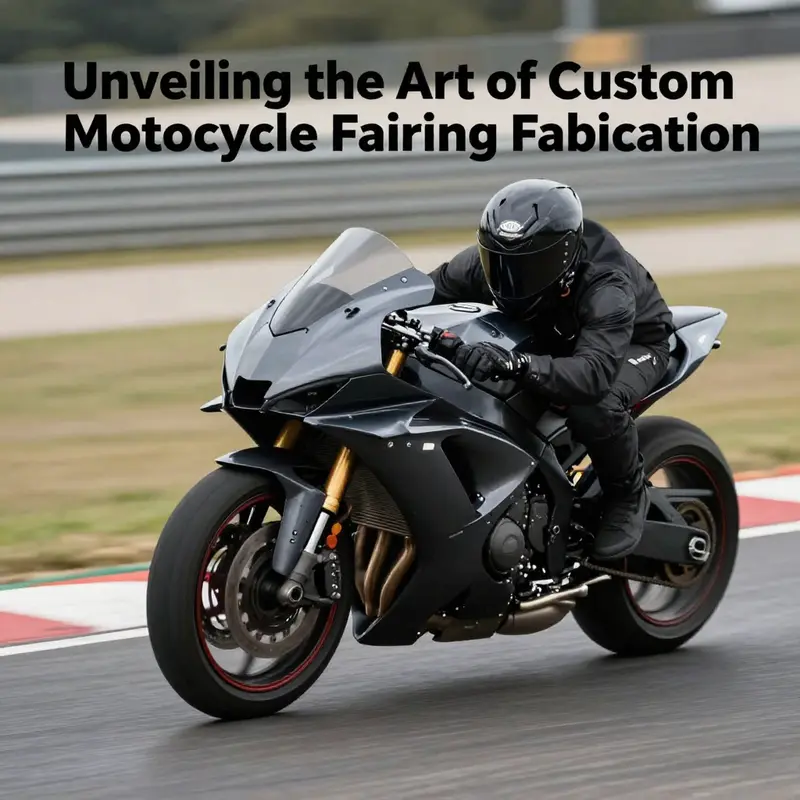
In the world of custom motorcycle fairing fabrication, performance does not arrive by accident. It is the product of deliberate choices that begin long before a single layer of composite is laid up. The fairing, at its core, is an aerodynamic instrument shaped to interact with the machine’s existing geometry, rider position, and the tempo of the road. When well executed, a custom fairing tames wind, reduces drag, and guides air with the same intent a sculptor uses to reveal form. The result is not merely a faster bike, but a more stable, controllable, and less fatiguing ride at the upper end of speed. The craft draws on a blend of engineering rigor and artisanal skill, because even the smallest deviation from the intended profile can ripple through the bike’s behavior at high velocity. This is why performance in custom fairing fabrication hinges on a holistic approach that treats aerodynamics, weight distribution, and thermal management as an integrated system rather than a set of independent parts to be bolted on after the fact.
Aerodynamics drives much of the performance conversation. The front fairing—the first encounter between wind and rider—set the tone for how air interacts with the bike. A properly designed front segment smooths the oncoming flow, lowers pressure drag, and minimises flow separation along the shoulders of the rider. It can also influence the wake behind the bike, which in turn affects stability and vibration levels at speed. The more precise the shaping, the more consistent the airflow across the surface, the less wind buffeting the rider experiences, and the cleaner the path of the air as it wraps around the head, shoulders, and upper body. These effects compound when the rest of the bodywork is harmonized with the rider’s riding position and the exhaust and cooling components that sit beneath or behind the fairing.
Yet the pursuit of aerodynamic gain is a balancing act. Deviation from OEM—whether by error in the shaping, misalignment with mounting points, or simply an overly aggressive profile—can quickly erode the intended benefits. A fairing that is not properly tuned to the bike’s baseline geometry might introduce turbulence in places where a smooth flow is essential. This can manifest as increased drag, unwanted chatter or vibration at high speed, or a shift in the pressure field that unsettles the rider’s sense of control. In racing or endurance settings, where every second and every degree of comfort matters, such misalignments can be decisive. Precision in layout, symmetry, and seam alignment matters as much as the cosmetic finish. The most successful projects read like a continuous chain of decisions where aerodynamic intent, material behavior, and mounting constraints walk hand in hand from mold creation through final fitment.
Material choice is inseparable from performance. The selection between lightweight carbon fiber, high-strength fiberglass, or even advanced thermoplastic composites influences the bike’s dynamics as much as the shape does. Carbon fiber, with its superior strength-to-weight ratio, offers a path to very low mass without sacrificing stiffness. When layups are carefully engineered, carbon fiber enables tighter tolerances and thinner skins, reducing overall weight and potentially sharpening steering response and acceleration. However, carbon fiber demands meticulous process control. The dry fabric must be paired with the right resin system, cure schedules, and release agents to avoid microcracking or resin pooling that could undermine stiffness or create frost-like blemishes that propagate under stress. With fiberglass, the stiffness and handling signpost are different; the material is more forgiving in layup variances but heavier, which can shift weight distribution and CG in ways that subtly affect handling dynamics. Other composites—polycarbonate formations or reinforced ABS blends—offer different tradeoffs, such as impact resistance or cost considerations, but they also require careful evaluation of temperature performance, UV stability, and long-term durability when exposed to sun, wind, and racing heat.
A careful designer weighs these material traits not only for peak horsepower or top speed, but for how the bike behaves in a real-world spectrum of loads. Weight reduction matters, yet it is not a goal in itself. The placement of that weight—how the skin is bonded to a chassis, how it resists flex under gusts, and how it interacts with the radiator’s airflow—can alter the bike’s center of gravity, its yaw stability, and even its engine cooling dynamics. A lighter skin that deforms under aerodynamic pressure might distort the intended nozzle shapes and ducts, diminishing cooling efficiency or altering air bleed paths near critical components. In some builds the integration of cooling intakes, ducts, and channeling becomes part of the performance system, not just a cosmetic feature. This is why many skilled fabricators treat the fairing as a living part of the engine’s thermal strategy: the ducts and vents must be designed with the same regard as the engine’s porting or exhaust routing, so airflow remains predictable at speed and under cornering loads.
Another axis of performance is how the fairing interacts with the rider and the bike’s broader propulsion system. The most successful customizations consider not just wind, but steering feedback, ride quality, and fatigue. A wind profile that reduces drag can also minimize rider effort, preserving core strength for longer stints on track or highway. The smoother the air, the less buffeting the rider experiences, and the more precise the rider’s input translates into on-track or on-road behavior. At the same time, designers must be mindful of the fairing’s influence on engine cooling and air intake pressures. Any disruption to front-end cooling can hamper performance, especially during sustained high-speed riding or aggressive acceleration where heat buildup becomes a limiter. In practical terms, this means forming a coherent thermal strategy around the fairing: ducts that feed radiators should be traced and validated, and the skin should not obstruct critical airflow pathways.
The complexity of these decisions becomes evident when considering the different forms fairings can take. Full, semi, or modular configurations each carry distinct aerodynamic footprints. Full fairings offer the most integrated wind management, smoothing the rider’s path from the headstock to the tail. They are often the most efficient at reducing drag and shielding the rider from wind fatigue on long stints, but they demand meticulous fitment and balance with the chassis. Semi-fairings, which cover the front and upper body while leaving portions exposed, present a lighter, more flexible compromise. They can yield significant wind protection with less aerodynamic mass, and they are often easier to service or replace after a crash or a track-day mishap. For riders who value practicality, this modular approach can be the sweet spot between performance and daily usability, enabling rapid repairs and straightforward customization without the burden of a full-body replacement. The choice among these configurations is not a purely aesthetic one. It is a statement of intent about speed, comfort, maintenance, and how the bike will live on the road or the circuit.
In the realm of racing and high-speed touring, the performance payoffs from well-executed custom fairings can be measured in top speed, fuel efficiency, and rider endurance. A well-engineered surface reduces wind drag and buffeting, allowing the engine to operate with a more favorable power balance and potentially lower fuel consumption at sustained speed. The rider experiences less fatigue as the wind loads become more predictable and the cockpit remains stable through long stretches. Conversely, poor execution can erode these gains. A misaligned seam, a poorly terminated edge, or a subtle shape error can spawn turbulent pockets that not only raise drag but also generate oscillatory forces that the rider must counter, reducing control and increasing energy expenditure. The takeaway is clear: performance is a function of design, manufacturing discipline, and validation. The most robust projects rely on a suite of engineering checks that extend beyond the initial concept: computational fluid dynamics (CFD) simulations, wind-tunnel or track testing feedback, and iterative prototyping before full-scale production. In practice, this translates into a workflow where molds are designed with tolerances that anticipate real-world mounting and vibration, where layups are tuned to resist fatigue, and where finishes are selected to resist cracking, warping, or color degradation under heat and UV exposure.
The design process itself is a study in integration. It begins with a clear aerodynamic intent, translated into a precise form that respects the bike’s geometry and the rider’s posture. It then demands a manufacturability assessment: can the desired contour be produced reliably with the chosen materials? Will the resin system cure without shrinkage that would alter critical dimensions? Do the release agents and mold geometries reproduce the texture and finish required for a clean paint or gel coat, while maintaining the integrity of edges and joints? These questions guide the fabrication sequence from mold making to laminate layup, curing, trimming, finishing, and coating. The best fabricators adopt a disciplined approach, treating each stage as a checkpoint for performance verification rather than a purely cosmetic step. This helps ensure that the final product remains faithful to its aerodynamic intent under service conditions and that it continues to perform as designed across a range of speeds, temperatures, and riding styles.
Partnerships matter in achieving that level of reliability. Beyond raw capability, a supplier’s readiness to support the full production cycle—from initial mold exploration to final assembly and long-term after-sales service—becomes a differentiator. A dependable partner can offer robust process controls, consistent material availability, and responsive troubleshooting when field conditions stress the components. Local supply chains for resins, hardeners, release agents, and compatible tools can shorten lead times and improve predictability, a practical advantage when a project must move from concept to track-ready status within a tight schedule. In addition, a fabricator’s adherence to safety standards and testing protocols provides the rider with confidence that the fairing will behave as intended when challenged by high-speed airflow, gusts, or hard landings during practice.
The sourcing narrative also intersects with customization goals. A bespoke project may demand a thermal optimization tailored to a specific engine and radiator layout, or a sculpted surface plan that minimizes radar-like reflections around sensitive components. A careful balance is struck between the customization’s aesthetic aspirations and its performance promises. This is not a matter of chasing the lightest possible skin at any cost; it is about achieving predictable, repeatable performance that remains consistent across the bike’s lifecycle. At its best, a custom fairing fabrication project reads as a single, coherent engineering initiative, where every decision—shape, material, process, finish, and fitment—contributes to a more stable, responsive, and efficient machine.
For readers who want to explore the breadth of catalog options without compromising this performance discipline, a general pathway through available fairing categories can be informative. Browsing a dedicated category page for fairings can illuminate how vendors organize profiles, profiles that address different riding needs—from aggressive sport profiles to more protective touring forms. Such resources can help designers calibrate their expectations about manufacturability, compatibility with mounting systems, and the kinds of detailing (ducting, edge shaping, and surface finishing) that commonly accompany high-performance builds. This broader view can be especially helpful when coordinating with a fabrication partner to ensure the final product aligns with both the bike’s mechanical constraints and the rider’s goals. Fairings catalog.
All these considerations—airflow, weight distribution, material behavior, and system integration—underscore a central truth: the performance of a custom fairing is the outcome of a rigorous, iterative design process that respects the machine as a whole. It requires an alignment of aerodynamic intent with manufacturing feasibility and field-tested reliability. When done well, it yields a skin that is not merely cosmetic but a functioning element of the bike’s performance envelope, enhancing speed, stability, and rider confidence under demanding conditions. The craft is thus a synthesis of science and craft, where CFD-informed proposals meet the tactile realities of layup schedules, mold design, release dynamics, and the unglamorous, indispensable work of finishing. The payoff, for riders who value precision and feel, is a fairing that moves the bike closer to its ideal balance point: a platform with a more predictable aerodynamic footprint, a lighter but stiff shell, and a cooling system that remains uncompromised as speed climbs. In this sense, custom fairing fabrication becomes a form of architectural engineering for the motorcycle—the art of shaping air in service of speed and control rather than just spectacle.
External resource for further reading on aerodynamics and performance in fairing design, which complements the practical guidance discussed here: https://www.motorcyclecruiser.com/tech/understanding-motorcycle-fairings-aerodynamics-and-performance
Riding the Economy: How Macro Forces Shape Custom Motorcycle Fairing Fabrication
Economic forces are not abstract in the world of custom motorcycle fairing fabrication. They ride along with the riders who want speed, style, and protection, shaping every decision from material selection to timeline management. The small studios and artisan shops that craft bespoke fairings operate at the intersection of craft and commerce, where market conditions, supplier reliability, and macroeconomic signals translate into real consequences on the shop floor. To understand how these forces flow through a disciplined process is to see why some sessions begin with a precise quote, a carefully staged mold, and a plan that can bend without breaking under pressure. The conversation between design and economics is ongoing, and it reveals as much about the craft as about the customers who commission the work.
At the core of the economic picture is consumer spending power. Custom fairings are discretionary goods by definition. When disposable income tightens—driven by inflation, higher interest rates, and uncertainty—enthusiasts often pause or scale back upgrades. The data behind recent market behavior illustrate a broader truth: even a niche, passionate segment reacts to the same macro winds as other discretionary categories. A reported decline in the broader motorcycle market by mid-decade signals how rapidly demand can cool when households tighten belts. In practice, a fabricator may see longer lead times, more scrutiny around budgets, and a shift toward balanced packages that blend form with proven performance. In this environment, the ability to articulate clear value becomes essential. Customers look for fairings that not only look good but also contribute to stability in performance, weight, and protection—features that matter when every dollar spent is weighed against competing needs such as maintenance, fuel, or even a future upgrade.
This context also magnifies the role of supply chain dynamics. The supply chain for advanced composites, resins, carbon fiber sheets, and specialized release agents remains vulnerable to disruption. Even small delays or price spikes can push a project from on-schedule to backlogged territory, shrinking margins for small builders that operate with tight cash cycles. When suppliers encounter port delays, fluctuating commodity costs, or transportation bottlenecks, lead times extend and quotes become riskier. That reality pushes fabricators to rethink procurement strategies. Local sourcing and stronger regional networks can reduce exposure to global shocks, while strategic stockpiling of non-perishable materials can dampen volatility. The goal is not to eliminate risk but to manage it so clients receive reliable delivery without paying a premium that undermines affordability.
The economics of material choice also shift in response to price signals. Full carbon fiber fairings, lauded for stiffness and weight savings, command premium pricing and longer lead times. Fiberglass remains attractive for its rigidity and classic finish, yet it carries a heavier weight and sometimes a more labor-intensive finish process. ABS and other plastics present a lower-cost option but can trade off durability and impact resistance in demanding riding conditions. The decision matrix grows more complex when a shop must balance cost, performance, and client expectations in a volatile market. A fabricator may offer tiered options: a base fiberglass shell with gel-coat protection for durability, a mid-tier carbon look using dry carbon layers, and a premium, fully realized carbon composite system for riders who demand maximum performance. Each tier responds to different willingness to pay and different timelines, creating a spectrum that can keep a shop generating revenue even when appetite for top-tier, one-off work cools.
Directionally, the industry trend toward regional networks is both practical and strategic. The ability to source components and resins from nearby suppliers reduces exposure to international freight costs and customs delays. In regions where epoxy resins, release agents, and sheet products are readily available, fabrication cycles shorten and reliability improves. This local optimization often comes with a cultural payoff: closer collaboration, faster iterations, and a stronger sense of partnership between fabricator and client. When a client asks for a rapid prototype or a quick customization, a fabricator with a well-developed regional supply chain can respond with confidence rather than a cautious estimate that drifts into days of delay. The shift toward local ecosystems is not merely a reaction to prices; it reflects an ambition to build resilient operations that weather economic downturns and supply disruptions with less disruption to those who rely on them.
Pricing strategy becomes a central hinge in this economy-driven narrative. Where once emphasis rested primarily on aesthetics and fit, today’s projects require a more nuanced approach. Tiered pricing, modular design, and standardized production processes help maintain accessibility while preserving quality. A shop might standardize mold designs for common chassis families, then layer in customization options such as venting configurations, venturi shapes, or aero-integrated details. This approach reduces per-unit costs over multiple projects, cutting turnaround times and improving predictability in both scheduling and cash flow. It also accommodates price-sensitive enthusiasts who still desire a custom appearance and aerodynamic efficiency. The practical effect is a smoother pipeline: fewer last-minute changes, more predictable material usage, and better alignment between customer expectations and the real constraints of the workshop’s capacity.
Beyond immediate cost pressures, macroeconomic stability remains the lifeline for long-term growth. The market research landscape suggests a cautious optimism: growth projections for the motorcycle fairing segment through the mid-2020s hinge on inflation cooling, interest-rate normalization, and the restoration of consumer confidence. In this setting, a fabrication partner must balance the urgency of a project with the realities of the broader economy. The best relationships in this space are built on reliability and continuity: a partner who can deliver consistent quality across multiple cycles, who can scale capacity when demand spikes, and who communicates clearly when external factors threaten schedules. In choosing a partner, buyers are advised to assess not only price and speed but also the capacity to sustain a full production cycle. From mold creation and prototyping to finishing and color-matching, the ability to maintain standards at every step is what preserves value when conditions wobble.
The craft itself remains intertwined with material science and manufacturing discipline. The choice between carbon fiber, fiberglass, and advanced polymers is not simply a matter of cost; it is a calculated decision about aerodynamics, stiffness, and durability under the strain of high-speed riding. In a volatile economy, the preference for carbon fiber—while costlier—is often justified by the performance gains that can translate into shorter tuning cycles and better, more repeatable results across a client base that expects accuracy and precision. Yet the discipline of the craft also supports practical choices. For some projects, fiberglass may offer a desirable balance of rigidity and shapeability that keeps the project within budget while still delivering competitive aerodynamic benefits. The decision calculus, then, is a blend of physics, client expectations, and economic prudence. The fabricator who can articulate these trade-offs clearly becomes a trusted adviser rather than a mere shop doing work.
In the same breath, digital tools and process rationalization play a crucial role in weathering economic headwinds. The adoption of computer-aided design, precise 3D scanning, and streamlined mold production reduces waste and shortens iteration cycles. By validating forms in a virtual space before any resin touches a mold, shops can avoid costly reworks. This efficiency is not a luxury; it is a hedge against rising material costs and uncertain lead times. A well-practiced workflow integrates design, testing, and finishing into a seamless value chain. It also creates a robust platform for collaboration with clients who want to explore variations quickly and see tangible outcomes without incurring prohibitive expenses.
The internal decision-making thread for fabricators often loops back to one practical question: how to maintain accessibility without sacrificing quality when the market tightens? The answer lies in a blended strategy that emphasizes reliability, technical capability, and long-term partnerships. A shop that can demonstrate a proven track record across the full spectrum of activities—from initial concept sketches to final curing and paint—stands a better chance of weathering episodic downturns. Clients who value consistency may be willing to invest more upfront if they know the partner will deliver on time and with predictable results. The narrative, then, is not simply about surviving a rough patch; it is about building a sustainable, trust-based ecosystem that aligns supplier capacity with client demand, even when both are tested by economic forces.
The logic of this approach extends to the broader market signals observed in industry analysis. While the U.S. market and other key regions are expected to grow, growth is conditional on improved supply chain resilience and a gradual restoration of consumer confidence. A fabricator who can anticipate these conditions and prepare accordingly—through local sourcing, tiered pricing, diversified materials, and efficient production cycles—will be better positioned to capture demand as it returns. For customers, this translates into more reliable timelines, more transparent pricing, and a clearer understanding of how the final product aligns with budget and performance goals. In a sense, economic factors are not obstacles to artistry; they are the variables that shape how artistry is delivered in practice.
For readers who want to explore real-world product breadth without losing sight of economy, many shops curate diverse offerings across brands and categories to meet variable demand. Within such catalogs, a well-structured partner will emphasize consistency in finish, fit, and protection while offering scalable options that fit different budgets. If you’re evaluating a fabrication partner, consider how their capabilities line up with your priorities: Do they have a reliable production cycle from mold to finish? Can they accommodate regional supply dynamics? Are they prepared with tiered options that keep you on budget without compromising safety and aesthetics? The answers to these questions reveal much about a partner’s resilience and long-term viability, which ultimately matters more than the pace of a single project.
Ultimately, the chapter on economic factors is really a chapter about planning. It is about how a design brief moves from concept to a finished fairing and how the business around that process navigates volatility without eroding quality. It is about the calm decisions that keep a workshop performing when headlines threaten to unsettle the market. And it is about the empathy that comes from recognizing that every client is balancing a dream of performance with a real-world budget, just as every fabricator balances a skilled hand with the cold arithmetic of costs. In this landscape, the heart of the craft stays steady: a commitment to aerodynamics, protection, and beauty, delivered with reliability and care, even when the weather outside grows uncertain.
Internal link for further context on product breadth and category alignment: Honda fairings. This page illustrates how a shop can maintain a versatile catalog while catering to a range of models and performance requirements, a practical reflection of how regional sourcing and tiered offerings can translate into accessible customization for a broad client base. The best partnerships leverage such breadth to meet diverse needs while preserving the core values of precision and finish.
External resource for market context: for a broader industry perspective on the drivers behind fairing fabrication economics, see the Motorcycle Fairing Market Report. It outlines disposable income trends, supply chain dynamics, and growth forecasts that illuminate the environment in which custom builders operate. https://www.mordorintelligence.com/industry-reports/motorcycle-fairing-market
Sculpting Speed and Style: The Art and Engineering of Modern Custom Motorcycle Fairings
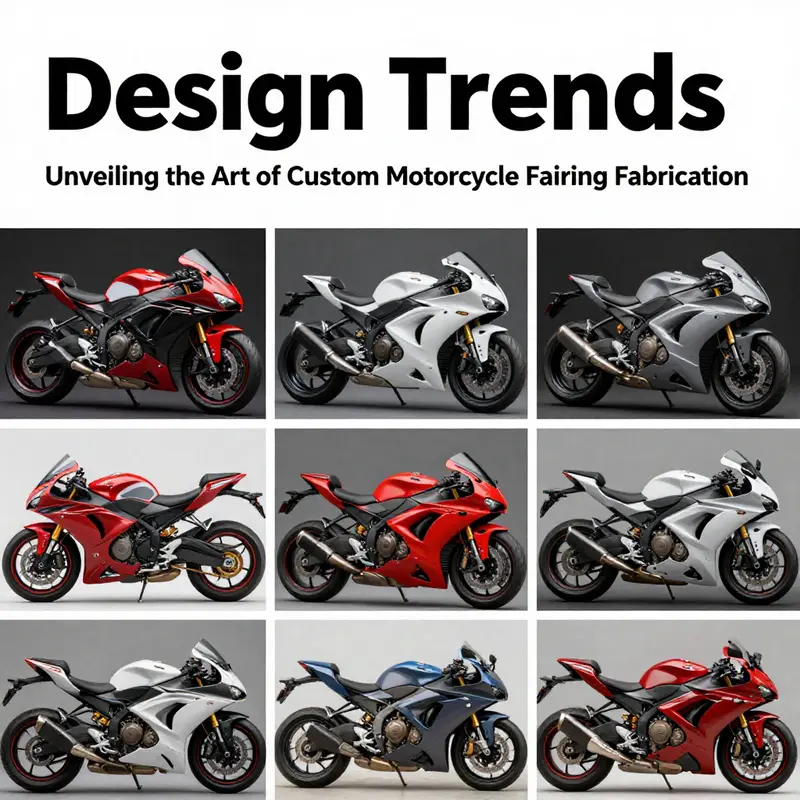
In 2025, the world of custom motorcycle fairing fabrication sits at a crossroads where aerodynamic science meets personal storytelling. Builders treat fairings not merely as exterior shells but as critical components that influence handling, cooling, and rider confidence. Each line carved into a fairing carries intent: to slice through air with minimal resistance while framing the rider’s silhouette in a way that communicates character. The best designs emerge from conversations among engineers, artists, and riders who want to push the machine beyond factory limits.
The shift toward bespoke design has accelerated. Gone are the days when a single, mass produced form could fit every bike. Today, a precise, model-agnostic approach allows a shape to be tuned for a given chassis, a particular riding style, and weather conditions. It is less about fitting a stickered look and more about a dialogue between the bike and the road. The craft is to ensure every curve, every seam, and every attachment point works in harmony with the frame, the suspension, and the rider’s posture.
Aerodynamics dominates the conversation, but it does not erase aesthetics. The 2025 norm favors low-profile, integrated shapes that reduce drag while maintaining enough surface area to shelter the rider and engine from wind shear. The wedge, the taper, the cutaway—these are not merely cosmetic choices; they are decisions about stability at speed, about how air flows around and under the machine. A well conceived fairing guides air cleanly to the sides, creating a pocket of smooth flow that can improve cooling and reduce buffeting, especially in mid to high speed ranges where stability matters most.
Materials have become the language of this design discipline. Carbon fiber remains the gold standard for enthusiasts chasing performance, because its stiffness-to-weight ratio unlocks quicker response and reduces gyroscopic load. Yet the cost and the manufacturing complexity are real. Reinforced composites and advanced fiberglass stay in heavy rotation because they offer a workable middle ground—great strength, decent weight, and the ability to bend into sculptural forms that express a rider’s personality. In many shops, dry carbon sheets laid into epoxy resins are used for the stiff, load-bearing panels, while interior sections may utilize reinforced fiberglass with precise gel coat finishing. The choice of resin systems, including UV-stable gels and anti-static formulations, matters because it affects long-term weathering, finish longevity, and electrical interference around sensitive components. The result is a spectrum of options rather than a single path, and that spectrum encourages builders to experiment with thickness, weave, and layup schedule to balance stiffness, impact resistance, and cost.
The integration of functional elements has matured into a defining feature. Modern fairings are little more than a platform for performance hardware when the design calls for it. Built-in lighting, strategically placed air ducts for engine cooling, discreetly concealed storage compartments, and integrated mounting structures all become part of the overall geometry. These features require careful routing to avoid interfering with the rider’s line of sight, to remain serviceable in the field, and to preserve the clean visual language that signals quality. When a fairing houses LEDs, the wiring must be routed within channels that stay hidden from view yet remain accessible for maintenance. Air ducts must feed the radiator or intercooler efficiently without creating pressure hotspots or turbulence. And storage, when included, must not compromise aero efficiency or add unnecessary drag. The most successful examples balance form, function, and accessibility in ways that are invisible to casual observers yet profoundly meaningful to the rider.
Craftsmanship continues to separate the good from the great. Surface finishes, seam alignment, and precision fit become tangible indicators of a builder’s skill. The surface is more than a visual canvas; it is a measure of aerodynamic continuity and protective durability. The prep work—careful sanding, consistent primer, and deliberate gel coat application—lays the groundwork for a flawless paint or carbon weave finish. Seams must disappear into the line of the fairing, with adhesives and bonding methods chosen for longevity under vibration, wind pressure, and temperature cycling. In smaller shops, artisans often treat the finishing stage as a final sculpture, smoothing transitions from the fairing to the frame and blending in edge radii that minimize sharp corners where cracks could initiate. A well finished surface not only looks expensive; it also reduces drag by eliminating micro-imperfections that could disrupt the boundary layer flow around the bike.
Technological advancements have become standard in contemporary practice. Digital modeling and CNC machining enable precise replication of complex curves, even when the donor bikes deviate from standard geometries. Builders begin with a digital twin—an accurate 3D model of the bike’s intake, shoulder, and tail sections—before translating it into a physical layup or a machined plug. This approach reduces lead times and increases repeatability, especially when multiple iterations are needed to achieve the exact silhouette and fit. Scanning existing bikes, projecting new fairing shapes, and testing airflow with simplified computational tools allow designers to visualize performance before a single fiber is laid. The result is a more predictable production process, less waste, and a higher probability that a final piece will mate perfectly with the chosen chassis.
The balancing act between form and function remains central. The best modern fairings do not sacrifice speed for style, nor do they sacrifice identity for efficiency. They create a unified expression where the rider’s voice is legible in the silhouette, the color language, and the textural contrasts of weave and gel coat. A sculpted belly line might hint at low drag, while a high kick at the tail nods to aggressive stance. When designers push this balance, they often borrow ideas from broader design disciplines—industrial design, aerospace, and even marine hull research—yet they apply them with a hyper-focused sensitivity to motorcycle dynamics. The result is a living surface that responds to wind direction, rider weight shifts, and braking forces with a sense of cohesion that feels almost natural.
The selection of a fabrication partner is more strategic than ever. Buyers should consider operational reliability, technical capability, and the potential for a long-term partnership. It is not enough to chase the fastest lead time or the lowest price when the final piece must endure weather, vibration, and road debris. The ideal partner can manage the full production cycle—from mold creation to final finishing—while maintaining strict quality control and clear communication channels. Vendors with a proven track record in both prototyping and volume production reduce risk and enable smoother scaling if the rider decides to tweak the design or select different finishes for different rides. In this ecosystem, collaboration matters. The best outcomes arise when the builder, the customer, and the fabricator share a clear vision of the bike’s role, the track or road environment, and the rider’s preferences for weather sealing and maintenance accessibility.
Sourcing and supply chain considerations shape what is possible in practice. The proximity of raw material suppliers—epoxy resins, gel coats, release agents—can shorten lead times by a meaningful margin, sometimes by forty percent, depending on geography and logistics. Localized supply chains reduce risk from global disruptions and help ensure stable delivery calendars for every stage of the build. In parallel, the track record of a partner in managing a complete workflow—mold making, tool design, surface finishing, and curing considerations—becomes a decisive factor. A reputable operation will document tolerance stacks, observe temperature profiles during cure, and test for UV stability in the gel coats that shield the outer surface from sun exposure. It is not just about the final weight or the gloss level; it is about the predictability of the process. The best shops create buffers, plan for contingencies, and communicate milestones early so riders can align their expectations with reality.
Inspiration travels across disciplines and through time. Designers pore over resources that celebrate both traditional craft and modern experimentation. They study techniques that range from time-tested layups to budget-friendly, clever substitutions that achieve the same spirit with different materials. This is where the culture of fabrication becomes important—the willingness to learn from peers, swap ideas, and iterate quickly. For those chasing ideas beyond their immediate toolkit, online compilations and design galleries can be a springboard. As with any creative field, a healthy reference library helps keep the practice honest and fresh. For readers seeking concrete examples and practical pathways, a wealth of ideas exists in curated collections that showcase how fairings can be formed, joined, and finished—whether as full-body kits or modular add-ons—without overextending a small shop’s resources. The cross-pollination between disciplines keeps the craft from stagnating and invites new spectators to imagine their bikes anew. BMW fairings.
The design conversation now hinges on a practical synthesis of efficiency, resilience, and identity. The modern fairing is not a single object; it is an assembly of skin, structure, and signature. It carries aerodynamic loads, hides essential cooling passages, and frames the rider’s persona in a way that can be read from a distance. The craft of making fairings has matured into a discipline where the right choice of material, resin system, and surface technique interacts with a rider’s feedback, the bike’s geometry, and the anticipated weather and track conditions. This synthesis is ongoing, not finished. Each project teaches something about stiffness distribution, seam continuity, or the subtle curve that prevents interference with the steering head. In this sense, the best builders are relentless organizers of complexity, filtering the possibilities through a rigorous assessment of performance goals and aesthetic intent. The result is a fairing that feels inevitable—like it belongs to the bike as if it grew there, not because it was attached later.
For those exploring this field, a practical stepping stone is to study the broader fabrication landscape while keeping a clear eye on the rider’s experience. The 2025 trend report reveals that success lies not only in clever shapes but in a whole ecosystem of tools, partnerships, and skill transfer. A robust workflow couples digital design with hands-on finishing, ensuring that the final surface holds its appearance under heat and sun and that the assembly tolerances meet the demands of dynamic riding. The chapter of a bike’s life that covers fairing fabrication ends up being a sequence of small decisions—how a mating edge is beveled, what weave direction yields the most forgiving surface, how many hours of cure time deliver the most stable gel coat. When these details are tuned, the rider feels the difference as soon as they lean into a corner or stand in a headwind. The fairing becomes not a barrier but an ally, shaping airflow to keep the rider calm and the machine responsive.
In closing the arc of this chapter’s exploration, it helps to remember that custom fairing fabrication thrives on dialogue—between form and function, between craft and science, and between a rider’s dreams and the workshop’s constraints. Designers who can translate a passion for speed into a sculpted surface that also protects inner components are defining the next wave of motorcycling identity. The fairing is the place where performance and personality converge, where a race-proven airfoil can be paired with a colorway that tells a personal story. This is a living craft, one that rewards curiosity, meticulous attention to detail, and a willingness to depart from the conventional. And while the road ahead will keep reshaping materials, tools, and processes, the essence remains constant: a finely tuned fairing is a language spoken by the bike, the rider, and the wind alike.
For further ideas and inspiration, see the external resource: https://www.fabricatebikes.com/490-motorcycle-fabrication-design-ideas-to-save-today/
Final thoughts
As the demand for custom motorcycle fairing fabrication continues to rise, understanding the interplay of materials, performance, economic viability, and design trends becomes crucial for business owners. High-quality fabrication not only meets aesthetic desires but also addresses the performance needs of riders, thus setting the path for future innovations in motorcycle customization. Embracing these insights will empower businesses to foster lasting relationships with customers and sustain competitive advantage in this vibrant industry.