

Bullet fairings for motorcycles have established themselves as a vital component for enhancing both aesthetics and performance. Recognized for their sleek, teardrop-shaped design, these fairings not only reduce wind resistance but also improve rider comfort at high speeds. The historical roots of bullet fairings can be traced back to classic British motorcycles, a testament to their enduring appeal. In this comprehensive exploration, we will delve into the design intricacies and aerodynamics of bullet fairings, highlighting the materials and manufacturing processes involved, the performance benefits they offer, and a look at the thriving aftermarket options available for motorcycle enthusiasts seeking to upgrade their rides.
Bullet Fairings Unveiled: Engineering for Speed, Stability, and Rider Comfort
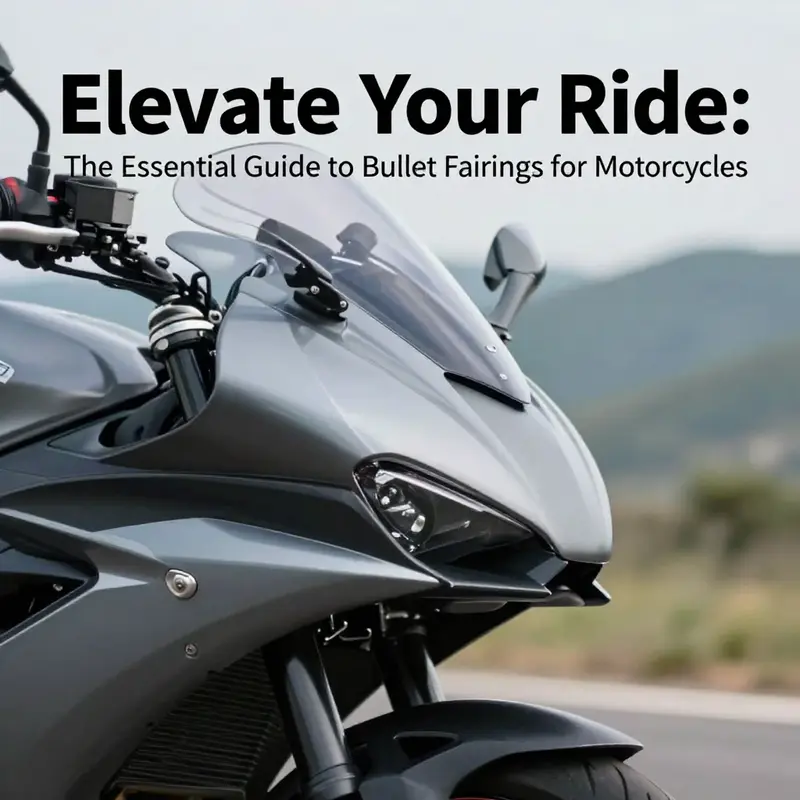
Bullet fairings have long been more than a stylistic flourish; they are functional instruments of aerodynamics, shaping the air that rushes past a motorcycle at speed. The teardrop silhouette tapers to a pointed nose, a geometry tuned to guide airflow around the front end and over the rider’s torso. This shaping reduces pressure drag and disrupts turbulent wake behind the bike, translating into lower effort for the engine and a calmer ride for the rider. The result is not just a smoother silhouette, but a more efficient machine overall. The evolution from classic British bikes to contemporary custom builds has kept the fundamental idea intact while expanding the engineering toolkit available to designers and riders alike. The modern bullet fairing is typically a cover for the front wheel and the headlight cluster but can extend rearward to shield the shoulders and upper body. Materials range from affordable ABS to composite fiberglass and high‑tech carbon fiber, each trade-off offering different stiffness, weight, and cost profiles. In practice, the choice of material influences how a fairing absorbs impacts, how it behaves in heat and sun, and how practical it is to repair in a roadside stop.
We can describe the design not as a single shape but as an integrated system: the nose, the sides, and the lower edge all working in concert to control boundary layer flow, minimize separation, and maintain stability at speed. A well-designed bullet fairing channels air into subtle hollows and channels that reduce turbulence around bulky components such as the headlight housing and the instrument panel. In doing so, it also creates a more uniform pressure distribution across the front of the bike, lowering lift and preserving the front tire’s contact with the road. When the rider seeks long-haul comfort, this kind of airflow management matters as much as raw horsepower; the wind pressure that would otherwise buffet the chest and shoulders is redirected and softened, turning what might be a tiring ride into a more sustainable one.
In design terms, the nose of a bullet fairing is not simply a cap but an active partner with the bike’s geometry. A streamlined nose helps direct gusts up and over the fairing rather than catching them and creating buffeting noise or a fluttering feel at high speed. The profile remains sleek and aggressive, yet the goal is to keep the smooth flow continuous from the front to the rider’s chest. This continuity is crucial because any abrupt change in direction risks the formation of high-pressure zones that can lift the nose or destabilize the front end. A fully encapsulated front, with integrated lighting and a carefully shaped surround for the cockpit, increases visual coherence and reduces opportunities for turbulent eddies to form around sharp corners.
The shape’s sculpted edges matter as well. Subtle curves and knuckles along the fairing’s surface guide the air around the handlebars, around the rider’s torso, and along the tank. The result is a more laminar flow that travels quietly past the rider, reducing the kind of wind shear that can fatigue the upper body over hundreds of kilometers. For a rider who wants a balance between wind protection and cockpit openness, the sculpted fairness again points toward versatility: a design that shields the torso without sacrificing the sensation of being connected to the bike’s movement and the road beneath.
Engineering teams rely on modern methods to translate these aerodynamic intentions into real hardware. Three-dimensional computer models allow designers to test countless form variations in a fraction of the time it would take to build physical prototypes. Computational fluid dynamics (CFD) simulations go deeper, offering a window into air pressure distributions, boundary layer behavior, and the onset of airflow separation. A comparative, data-driven approach helps identify which configurations hold the line in real-world riding conditions—from calm highway stretches to gusty urban corridors and long, exposed highways. The goal is not merely theoretical drag numbers but a tangible improvement in rider comfort and fuel efficiency that translates into lower operating costs and less fatigue after hours in the saddle. In practice, engineers examine how a fairing integrates with other components—the windscreen, mirrors, mounting hardware, and instrument cluster—so that a single cohesive airflow solution emerges rather than a set of conflicting constraints.
Taken together, the design philosophy behind bullet fairings blends timeless form with contemporary engineering discipline. The promise lies in the fairing’s ability to fade into the background air, letting the motorcycle reach its potential with less drag and more steady handling. To realize this, modern fairings embrace modular construction patterns that ease installation and later maintenance. A modular approach means that sections of the fairing can be swapped or upgraded without disassembling the entire unit. That not only reduces downtime for the rider but also makes field repairs more practical after chips, cracks, or minor modifications from an off-road excursion. In addition, the use of lightweight materials such as carbon fiber composites introduces blistering stiffness with a minimal weight penalty, further improving handling and hesitation when maneuvering in crosswinds. Yet cost and durability still steer the material choice; ABS offers economy with respectable impact resistance, fiberglass provides a middle ground of rigidity and price, and carbon fiber delivers top-end stiffness and weight savings at a premium. The trade-offs matter because a fairing’s performance is not only about the outer skin but how that skin behaves under stress and sunlight. Ultraviolet exposure, for instance, can degrade some plastics over time, so automotive-grade finishing processes and UV stabilization become critical components of long-term reliability.
The story extends beyond raw materials and geometry into the broader ecosystem of motorcycle fairings. Bullet fairings sit within a spectrum that includes side panels and windshield modules, all designed to fit a variety of frame geometries and mounting standard sites. This flexibility becomes particularly important for riders who customize a bike to reflect a personal aesthetic while preserving the bike’s aerodynamics. For riders exploring compatibility, there are buying guides and category pages that gather a wide range of components in one place. If you’re considering a shooter’s silhouette with a modern twist, you can explore available options in the BMW fairings category, which aggregates several compatible panels and mounting arrangements across multiple bike platforms. That kind of indexing matters because fairings must be compatible with headlight clusters, instrument displays, and mounting points that vary from model to model. A well-chosen fairing supports a clean, integrated look where form mirrors function rather than fighting it.
The practicalities of installation and upkeep receive growing attention as well. Modern bullet fairings are increasingly designed with user‑friendly interfaces: modular construction that allows quick swaps, simple clip-on assemblies, and studious alignment guides that speed up fitting. In the workshop, this reduces the time between a customer’s order and their first ride, which matters in a market where riders value both aesthetics and performance. Alongside the alignment aids, a well-thought mounting strategy distributes loads so that the wind forces that surge around the machine during acceleration or in gusty conditions do not overwhelm the fasteners or the frame. The result is a fairing that remains stable at highway speeds and survives minor bumps without cracking or loosening. In addition, the integrated front section often houses the instrument cluster, which means that electricians and technicians can access the electrical harness and the wiring channels without invasive disassembly. This arrangement fosters reliable operation of the rider’s lights and gauges in all weather and road conditions, reinforcing the fairing’s role as a protective and functional shield as much as a styling cue.
The aerodynamic reasoning behind bullet fairings does not occur in isolation. It is part of a broader discipline that blends knowledge from automotive design, aerospace thinking, and even structural optimization methods borrowed from high-speed environments. The parallels with elevator engineering standards, where precise airflow and motion are essential for comfort and safety, illuminate how disciplined engineering mathematics can feed into motorcycle design. While civilians may not ride elevators, the underlying principle remains: flows are optimized through robust modeling, experimental validation, and iterative refinement. This cross-disciplinary resonance underscores why fairings now routinely incorporate CFD-driven iterations of shape, matrix materials, and mounting options, ensuring that the final product performs under a spectrum of real-world conditions. The result of this approach is a bullet fairing that is more than a cosmetic shell; it is a carefully tuned aero-mechanical system whose primary mission is to reduce drag and lift while supporting rider comfort and long-term reliability.
For riders and builders, the practical impact of such engineering translates into measurable benefits: less fatigue on long journeys, improved fuel economy, and a more stable ride in gusty crosswinds. The numbers matter, but so does feel—the sense that the air is cooperating rather than fighting the machine. A rider who has tested a well-calibrated fairing will notice that the cockpit remains quiet and that the bike tracks with minimal input to maintain steady speed. The small comforts—clearer instrument visibility, less headwind pressure against the chest, and a calmer upper body—accumulate into a more confident riding experience. The modern bullet fairing thus acts as an enabler: its shape enables the engine to deliver power more efficiently, its construction resists damage and wear, and its mounting and integration preserve the bike’s original geometry while adding the rider-focused protection that makes long days in the saddle feasible.
In sum, the design and aerodynamic story of bullet fairings is a narrative of precision and patience. It begins with a desire to slice through air with minimal resistance and ends with an practical, ride-ready component that blends form, function, and endurance. By embracing both the time-honored teardrop silhouette and the most current computational and testing methods, designers create fairings that not only look purposeful but also perform predictably across a wide range of speeds and conditions. The modern bullet fairing is not a fashion statement alone; it is an aerodynamic instrument, a rider’s shield, and a modular platform for future upgrades that keep pace with evolving engines and electronics. For those who ride long distances or chase performance with a taste for classic styling, such a fairing can be the difference between a comfortable slog and an exhilarating, efficient ride.
External resource note: For a deeper technical dive into CFD-based aerodynamic optimization of complex fairing shapes in similar high-speed flow environments, see the referenced peer-reviewed study here: https://www.nature.com/articles/s41598-025-69531-7.
From Mold to Mach: Crafting Bullet Fairings Through Material Science and Manufacturing Precision
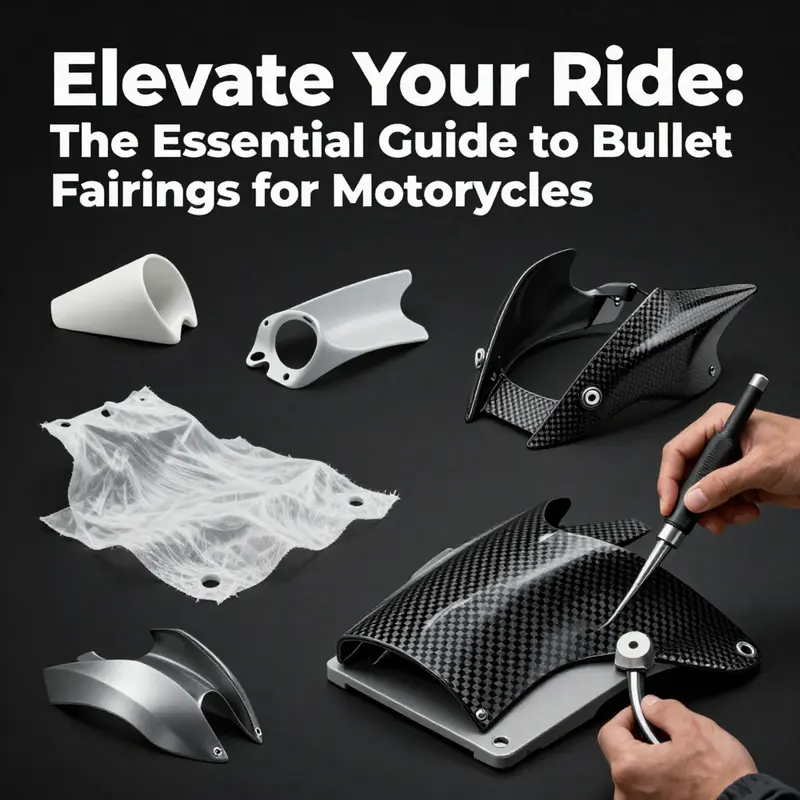
The bullet fairing has long stood as a striking intersection of aesthetics and aerodynamics in motorcycling. Its teardrop silhouette, tapering to a sharp front, is more than a stylistic flourish; it is a carefully engineered shield against wind, a conduit for rider comfort at speed, and a contributor to overall efficiency. In the modern workshop or the high-end production line, the journey of a bullet fairing begins not with the finished piece, but with the choice of materials and the sequence of manufacturing steps that bring that form to life. This journey is a thoughtful dialogue between form and function, where each material choice carries a weight in performance, cost, and longevity, and each process step serves to preserve the precision demanded by both the rider and the machine. The result is a fairing that can range from a cost-conscious, OEM-friendly ABS panel to a lightweight, performance-oriented carbon-fiber skin, all shaped to minimize drag, maximize rigidity, and maintain a clean, rider-focused aesthetic.
At the core of material choice lies a simple truth: every material brings a unique mix of weight, stiffness, impact resistance, and surface finish. ABS plastic, for instance, offers a pragmatic blend of toughness and moldability. Its impact resistance makes it well-suited for OEM and aftermarket components that must survive the rigors of daily riding while keeping production costs in check. ABS can be injection-molded into consistent shapes with tight tolerances, a critical factor when the fairing must align with headlight housings, instrument clusters, and mounting points. The result is a fairing that is durable, relatively inexpensive to manufacture at scale, and straightforward to repair or repaint when a rider wants a new look or a fresh color.
Fiberglass stands as a bridge between mass production and customization. It can be laid up in a variety of thicknesses and fiber orientations, allowing manufacturers to tailor stiffness and impact resistance to a given design. The material’s versatility shines in aftermarket and small-batch production where a precise geometry is required but tooling costs for advanced composites are prohibitive. Fiberglass fairings can be shaped to accommodate complex curves and integrated features, while also offering a more forgiving repair pathway than carbon fiber when mishaps occur. In the hands of skilled builders, fiberglass becomes a canvas for personal expression, enabling unique contours that still respect the aerodynamics of the original silhouette.
When performance is paramount, composites—especially carbon fiber or carbon-kevlar blends—offer a dramatic reduction in weight without sacrificing rigidity. These materials can deliver a strength-to-weight advantage that translates into more responsive handling, improved acceleration feel, and a higher threshold for high-speed stability. The downside is cost and process sensitivity. Carbon fiber is not a universal solution; it demands precise layups, controlled curing environments, and often more expensive tooling or prepregs. The result, however, is a fairing with a crisp surface finish, excellent fatigue resistance, and the kind of stiffness that helps the entire bodywork resist flutter and flex under wind loads at the upper end of speed ranges. Carbon-kevlar blends add a touch more abrasion resistance and impact tolerance, offering a balanced path between pure carbon fiber and fiberglass in terms of price, weight, and performance.
The manufacturing narrative for bullet fairings does not hinge on a single technique but rather a spectrum of processes, each aligned with the chosen material. Mold creation is the first decisive step. For fiberglass and composites, a master model or plug is crafted, then a negative or female mold is produced in suitable materials—often aluminum, composite plies, or gel-coated resin molds. The mold defines the fairing’s outer geometry, the critical interface where the rider’s line of sight, wind pressure, and aesthetic lines converge. Precision here matters because even minute deviations in curvature or edge radius can influence airflow, noise, and perceived quality. In contrast, ABS fairings leverage the efficiency of injection molding. A mold is milled to tolerances that guarantee part-to-part consistency, then molten polymer is injected, cooled, and ejected with careful venting to prevent warping. The process is fast, scalable, and repeatable, which is why it remains the backbone of mass-market fairings.
Layering with resin is where fiberglass and composites truly reveal their character. Wet layup and hand layup are traditional routes, where fiberglass cloth or fabric is laid into a mold and saturated with resin—usually an epoxy or polyester variant. The resin permeates the fibers, binds each strand, and, in combination with the layup schedule, sets the panel’s stiffness and impact behavior. Vacuum bagging has become a standard practice to compress the layup, expel excess resin, and improve fiber content. This is essential not only for weight control but also for achieving a smooth surface that accepts paint and decals evenly. In carbon fiber builds, prepregs (pre-impregnated with resin) can be laid into a mold and then cured under heat and pressure, often in an autoclave or a robust vacuum bag setup. These conditions promote high fiber content and a congruent resin distribution, delivering the high strength-to-weight ratio that defines premium bullet fairings. Curing, the third pillar in this triad, locks in the material’s final structure and hardness. Temperature and time profiles are carefully tuned to the resin system and fiber layup. The goal is to avoid internal stress, microcracking, or delamination that would compromise structural integrity or surface quality.
To complement the technical backbone, a growing body of technical guides, including detailed treatment of fiberglass fairing construction, serves as reference for designers and builders. These guides emphasize how layering sequences, resin choice, and curing regimes influence the finished part’s mechanical properties and surface aesthetics. The knowledge embedded in these references helps ensure that a fairing remains durable through ride vibrations, UV exposure, and weathering, while still presenting a flawless surface that accepts paint and clear coats evenly. The end result is a panel that can withstand the rigors of urban commutes and the rigors of open-road gusts, all while preserving the rider’s line of sight and cockpit clarity.
Beyond the raw material and curing science, modern bullet fairings increasingly embrace modular design and adaptable assembly. A modular approach enables quick swaps of panels or subcomponents, easing installation, maintenance, and on-the-fly customization. The engineering logic behind modular construction is straightforward: break the fairing into compatible, standardized sections that can be replaced or upgraded without reconstructing the entire shell. This approach dovetails with the maintenance realities of riders who routinely upgrade panels for color changes, weather protection, or weight-shaving goals. For riders seeking a broader ecosystem of options, a broad catalog of fairing categories exists, and for those exploring specific brands or styles, internal linking to the relevant product families becomes a practical way to navigate choices. In particular, riders often search a catalog featuring a dedicated section for Honda fairings, where variations in shape, mounting schemes, and finish options reflect the broad possibilities of the market. See the Honda fairings category for a representative sense of how different materials and manufacturing approaches translate into real-world options: Honda fairings category.
A crucial thread running through these manufacturing decisions is the balance of performance, durability, and cost. The choice of material directly affects the fairing’s weight, which in turn influences the motorcycle’s handling feel and fuel efficiency. A lighter composite skin reduces inertial loads during acceleration and braking, potentially improving throttle response and cornering behavior by slightly shifting the mass balance. Yet lighter does not always mean cheaper; carbon fiber, with its outstanding strength-to-weight ratio, carries a price premium and requires more elaborate fabrication steps and quality control. Fiberglass, while heavier than carbon fiber, provides a cost-effective path for riders who want a stiffer, more rigid shell than ABS can offer and who are willing to accept more weight than a carbon-based option. ABS, with its injection-molded consistency, gives predictability and ruggedness that suit typical riding conditions, while still enabling a bright, glossy finish after paint and clear coats.
Durability and environmental resistance also shape material and process choices. Many bullet fairings are exposed to UV light, temperature fluctuations, road salt, and insect life that can dull color and crack surfaces if the wrong resin or topcoat is used. UV-stable paints and clear coats, along with resin systems designed for environmental resilience, help preserve gloss and structural integrity over time. The refurbishment story also matters; fiberglass shells are often repairable with resin and fiberglass patches, whereas carbon fiber may require more delicate patching methods to maintain strength in high-stress zones. The decision tree becomes a negotiation among weight, stiffness, impact resistance, ease of repair, and the long-term cost of ownership. And because fairings cover the front portion of the bike, they play a direct role in rider comfort by shaping airflow to reduce buffeting and drag. The smoother the surface and the more precise the edge radii, the less turbulent wake forms behind the rider, translating to a calmer upper body posture and improved control at speed.
From a production perspective, the landscape splits into OEM and aftermarket tracks. OEM fairings often rely on large-scale tooling and a tightly controlled supply chain, optimizing for uniformity, interchangeability, and consistent fit with other bodywork components. The injection-molded ABS route can deliver high volumes with predictable tolerances, enabling rapid assembly lines and standardized mounting arrays. In contrast, aftermarket routes—particularly for fiberglass or carbon fiber options—can pursue shorter runs, more aggressive customization, and the opportunity to push design boundaries. The flexibility of fiberglass layups and the high performance of carbon fiber allow designers to tailor stiffness and layer count to the desired balance of weight and rigidity, while also accommodating unique stylistic expressions that speak to a rider’s individual taste.
Repairability and maintenance are practical considerations that often influence a rider’s material choice. Fiberglass fairings lend themselves to field repairs, with resin patches and limited-cost laminates able to restore structural integrity after a minor impact. Carbon fiber, while offering superior stiffness and weight savings, can demand more precise repair methods to avoid introducing delamination or visible cosmetic defects. ABS, with its ductility and impact resistance, is forgiving in impact events and simpler to repair with common body-shop techniques. The trade-offs are clear: the material choice affects not just the initial performance and aesthetics, but also the long-term maintenance path and the ease with which a rider can return to the road after weathered wear or unexpected scrapes.
In sum, bullet fairings embody a practical philosophy: every gram shaved from the shell, every edge radii tuned for predictable airflow, and every layer of resin chosen for a specific interaction with sunlight and weather matter. The modern fairing is a product of deliberate material selection and a disciplined manufacturing sequence that preserves a precise geometry through the curing process and into the finished surface. The result is a shell that does more than cloak the bike; it harmonizes air, weight, strength, and style into a single, cohesive performance envelope. For the rider who wants a classic silhouette with modern performance, the fairing becomes not just a cover, but a carefully engineered ally in the ride, a canvas on which material science and manufacturing discipline converge to deliver comfort at speed, efficiency on the highway, and the enduring satisfaction of a design that looks as good as it performs.
External resource: https://www.motorcyclefairings.com/guides/fiberglass-fairing-construction.pdf
Bullet Trajectories: Aerodynamics, Materials, and Real World Impacts of Bullet Style Fairings

The idea of a bullet like fairing has long drawn interest from riders who want speed and comfort. A teardrop silhouette helps air flow smoothly around the bike and rider, reducing drag and smoothing the wind over the chest and helmet. The result is less fatigue at high speeds and a more confident ride in gusty conditions. Material choices such as ABS, fiberglass and carbon fiber each bring trade offs in cost, weight and durability. ABS is affordable and impact resistant, fiberglass offers a balance of stiffness and curvature, and carbon fiber provides light weight and stiffness at a premium. Modern fairings also rely on internal channels and vents to guide air to cooling ducts and to minimize turbulent wake behind the rider. A modular design allows easier maintenance and customization without a full teardown of the bike. Weight distribution, fitment to the frame and mounting points, and UV resistant finishes all contribute to long term reliability. In practice, a well designed bullet inspired fairing can improve efficiency and top speed while keeping rider comfort high on long journeys. The riding experience benefits from calmer wind around the shoulders, reduced helmet noise, and more stable handling in cross winds. Overall, the fairing becomes a system that works with the bike and rider rather than a purely cosmetic shell.
Beyond Stock: Exploring Aftermarket Bullet Fairings for Modern Motorcycles

Riding a motorcycle with a bullet fairing is less about fashion and more about a precise dialogue between wind, weight, and willingness. When riders consider aftermarket bullet fairings, they enter a conversation that blends aerodynamics with aesthetics, and practicality with personal expression. The teardrop silhouette, tapered to a pointed nose, is more than a nostalgic nod to classic engineering; it is a practical path to reducing wind resistance, smoothing airflow around the rider, and protecting the upper torso at speed. This lineage, rooted in vintage designs yet continually refined today, has produced a spectrum of aftermarket options that cater to retro-inspired builds and modern machines alike. Far from a one-size-fits-all accessory, bullet fairings in the aftermarket realm are a study in material science, precision fitment, and modular thinking that aims to make installation as seamless as possible while preserving or enhancing the bike’s line and stance.
The materials used in these aftermarket offerings reflect a balance of performance, cost, and durability. Fiberglass remains a mainstay for riders seeking a middle ground between strength and affordability. Its relatively forgiving manufacturing process allows for custom shapes and punchy aesthetics, while still demanding attention to repair strategies if chips or cracks occur after a tumble or a mishap. Carbon fiber represents the premium end of the spectrum, delivering a marked advantage in stiffness-to-weight ratios and a compelling look for riders chasing that high-tech edge. The downside—cost and repair considerations—requires careful budgeting and a willingness to maintain a pristine finish to protect the weave from UV degradation. ABS plastics occupy another space in this ecosystem, providing rugged impact resistance and cost efficiency, which makes them attractive for riders who want a robust, weatherproof shell that resists daily commuting hazards and road grime.
For most enthusiasts, the promise of an aftermarket bullet fairing is not only cosmetic; it is about how the fairing negotiates the air that encounters the bike from the moment the fairing leaves the fairing mold. The teardrop shape is engineered to coax the boundary layer of air into a more orderly flow around the machine, reducing turbulent wake that can buffet the rider and destabilize high-speed handling. The result is a calmer cockpit, with less wind fatigue, even as the motorcycle tracks straight and true through long highway miles or adventurous mountain straights. Modern iterations of these fairings often integrate lightweight composite panels with carefully designed internal ribs and airflow channels. These features minimize drag and can contribute to modest gains in efficiency over the life of a tank of fuel, a practical perk that resonates with riders who log frequent long rides or who value lower energy costs over time. It is also common for aftermarket fairings to feature a modular construction, which serves two essential purposes: ease of installation and straightforward maintenance. If a single panel sustains damage, it can be replaced without disposing of the entire shell, a factor that lowers overall ownership costs and reduces downtime between rides.
The marketplace for bullet fairings reflects a broad spectrum of design intent. Some offerings lean into the nostalgic language of classic bikes, celebrating smooth lines and period-appropriate detailing that harmonizes with retro paint schemes and brass-finished hardware. Others pursue a more contemporary, sporty look, with sharper shaping and integrated windscreen profiles that echo modern sportbike aesthetics while preserving the core teardrop silhouette. This duality speaks to a central truth: aftermarket bullet fairings are more than a single style; they are a toolkit. The rider’s choice is influenced by the bike’s base architecture, the intended riding context, and the desired balance between weight, wind protection, and look. A well-chosen fairing can transform a patient daily rider into a more comfortable, confident machine on a long weekend or a stable platform for a more aggressive stance on a twisty road. Aesthetics remain meaningful, but the story often begins with the rider’s comfort and the bike’s performance envelope—and only then pivots toward color, decals, and finish.
When selecting aftermarket bolt-on or modular bullet fairings, compatibility sits at the top of the checklist. The best-fit scenarios align with the original geometry, ensuring the fairing’s mounting points line up without forcing the rider to improvise mounting brackets or trim critical components. The headlight assembly, instrument cluster, and the upper fairing edges must play nicely with the selected shell to avoid interference with controls, cables, and weather seals. The modular approach often means panels that attach with a mix of quick-release fittings and traditional fasteners, allowing for cleaner access during maintenance and easier field repairs after occasional mid-ride debris encounters. The installation narrative, then, becomes part of the rider’s customization journey: a careful blend of alignment, torque, and patience, followed by a test run that confirms no contact occurs between panel edges and the bike’s bodywork or the rider’s leathers.
Color and surface finish are more than cosmetic touches; they are a way to reinforce the bike’s identity and to extend the life of the fairing itself. Many aftermarket suppliers offer paint-ready or pre-finished options that tolerate UV exposure and weather cycles without cracking or yellowing. In addition, a growing number of makers provide color-matching services or decals that can be applied to replicate a particular era, team, or personal motif. The ability to choose a finish that is resistant to fading helps preserve the fairing’s appearance through changing seasons and regular road use. The surface preparation before paint is as critical as the paint itself: sanding, priming, and clear-coating form a protective barrier that guards against weathering, stone impacts, and the occasional asphalt shard. Riders who want to invest in a truly bespoke look often opt for a multilayer finish that includes a satin or gloss topcoat, a carbon-fiber weave visible through a transparent layer, or an accent stripe that runs along the fairing’s contour, underscoring the bike’s silhouette in a way that is both subtle and striking.
The aftermarket landscape also invites riders to consider the windscreen and cockpit integration as part of the overall package. A fairing is not a standalone silhouette; it is the face of a system that includes the windscreen, the instrument cluster, and the surrounding cockpit shield. Some manufacturers offer complete kits that pair a bullet fairing with a compatible windscreen, mounting hardware, and weatherproof seals designed to perform together. The result is a cohesive assembly that minimizes gaps through which wind can rush at high speed, creating buffeting and noise. In other configurations, riders may choose to mix and match a fairing with a different windscreen to achieve a unique balance between airflow, glare reduction, and the look they want from their bike. The key is to test-fit the entire assembly on the stand and, when possible, on the road, to verify that air flows smoothly across the visor and helmet, and that the fairing’s lower edge does not trap road spray or debris.
In this ecosystem of options, color customization and finish choices coexist with practical concerns like weight, stiffness, and impact resistance. The choice between fiberglass, carbon fiber, and reinforced plastics is not only a question of cost but of how the rider uses the bike. A lightweight, performance-focused rider may prioritize carbon fiber for its strength-to-weight advantages and a sleek contour that complements a sport-oriented riding posture. A rider who uses the bike for weekend cruising or touring may lean toward fiberglass or reinforced ABS for cost efficiency, repairability, and ease of maintenance, especially if the bike encounters long miles and unpredictable weather. For city riders who value durability and impact resistance, ABS-based shells can provide a reliable shield against the usual wear and tear of urban environments, while still delivering the essential aerodynamic benefits of a bullet shape.
To navigate this market with clarity, riders should look for compatibility notes, mounting diagrams, and warranty terms that reflect real-world use. A reputable aftermarket source will typically publish detailed fitment data, including compatible model years, required mounting hardware, and any trim or accessory considerations that may affect the fairing’s performance. They may also provide installation tutorials or offer professional installation services, which can be a prudent investment for riders who do not want to negotiate mechanical fitment alone. User reviews are another valuable compass. Feedback from fellow riders who share similar bikes and riding conditions can illuminate potential fitment quirks, such as the need for additional weather seals in damp climates, or the way a certain panel accommodates a taller rider’s seating position without compromising shoulder clearance. As with any major aftermarket upgrade, a balanced approach—assessing fit, function, finish, and cost—often yields the most satisfying long-term ownership experience.
For riders who want to explore the breadth of options without committing to a single look, the catalog approach is particularly appealing. A multibrand catalog can illustrate the spectrum of shapes, profiles, and mounting solutions that exist within the bullet-fairing family. This is the kind of resource that helps the rider imagine how a fairing will transform their bike’s stance while remaining faithful to the project’s starting point. A practical way to begin is to study how the fairing integrates with the bike’s existing lines, then evaluate whether the chosen option preserves the machine’s silhouette or boldly alters it. The right choice should feel like an evolution rather than a departure: a smooth extension of the bike’s personality that enhances its aerodynamic efficiency, rider protection, and visual cohesion.
For those seeking a structured entry into this space, it is useful to explore a dedicated online hub that curates a broad array of fairings. The hub can help you map the terrain of compatibility and finish options, while also revealing how different shapes interact with the bike’s frame and front-end geometry. In the same vein, a respected source in this field emphasizes the importance of professional reviews and user feedback, underscoring that real-world impressions often reveal nuances that specifications alone cannot. This approach to research—combining manufacturer data with community experience—helps riders avoid common missteps and identify fairings that align with their riding goals and budget. If you would like to start with a broad, brand-aware catalog, consider exploring the BMW fairings category as a representative entry point to the multibrand landscape. You can visit the page here: BMW fairings.
Ultimately, choosing aftermarket bullet fairings is about shaping a relationship between a rider’s ambitions and the machine’s capabilities. It is about embracing a design philosophy that respects the bike’s original geometry while enhancing its wind management, protection, and personality. A well-chosen fairing can reduce fatigue during long rides, enable steadier high-speed handling, and provide a visually cohesive theme that unites frame, wheels, and rider in a single narrative. The process rewards patience and practical testing: careful measurement, thoughtful selection of material and finish, and a willingness to iterate. With the right combination of fitment precision, aerodynamic intent, and aesthetic alignment, the aftermarket bullet fairing does not merely cover the front of the bike; it completes a rider’s vision of how a machine should slice through air and weather, while turning heads along the way.
External resource for further insights: Motorcycle Fairings USA offers extensive guidance and product options in this domain, and can serve as a practical starting point for riders seeking high-quality aftermarket fairings. https://www.motorcyclefairingsusa.com/
Final thoughts
Bullet fairings are more than just aesthetic enhancements for motorcycles; they represent a blend of engineering excellence and artistic design. From their aerodynamic shapes that minimize wind resistance to the variety of materials that cater to durability and weight savings, these fairings elevate the motorcycle riding experience. The growing aftermarket availability means that riders can not only restore classic designs but also innovate and customize their motorcycles for better performance. As business owners in the motorcycle industry, understanding the importance and appeal of bullet fairings can significantly inform your product offerings and marketing strategies, enabling you to meet the evolving demands of motorcycle enthusiasts.