
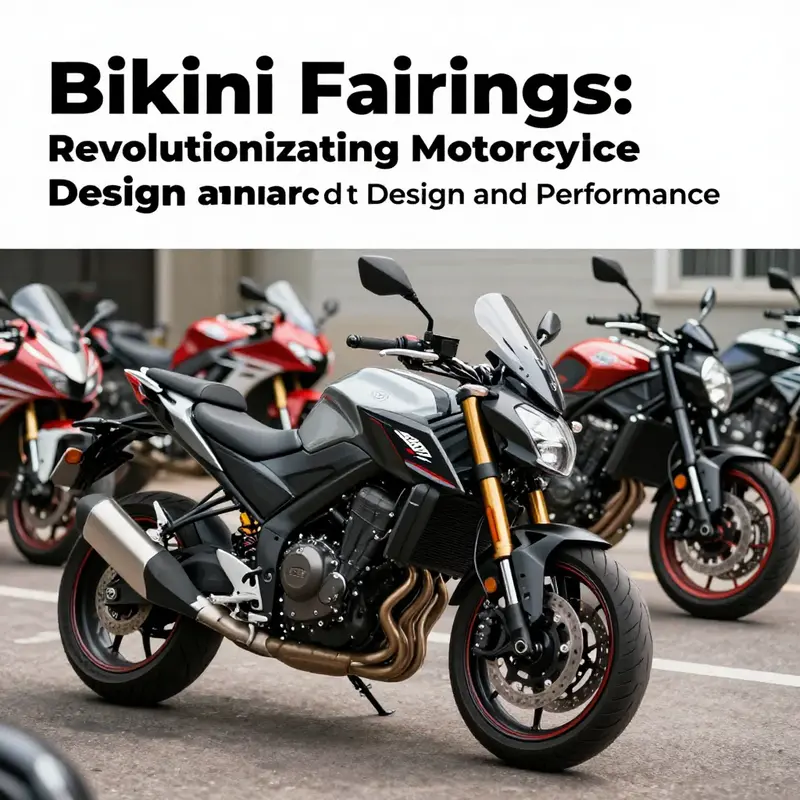
Bikini fairings represent a distinct and influential category within motorcycle design, notably appreciated for their unique blend of lightweight construction and sleek aesthetics. These components play a pivotal role in enhancing rider comfort through effective wind protection while preserving the agile handling characteristics essential for urban riding and sport-oriented experiences. As business owners in the motorcycle industry, understanding the functional relevance and popular appeal of bikini fairings can guide product offerings and customization options that meet market demands. Each chapter of this article will delve into key aspects of bikini fairings: their design and performance implications, aesthetic customization opportunities, comparative advantages over other fairing types, and emerging market trends shaping their adoption.
Lean Aerodynamics, Bold Style: How Bikini Fairings Redefine Lightweight Performance on Modern Motorcycles
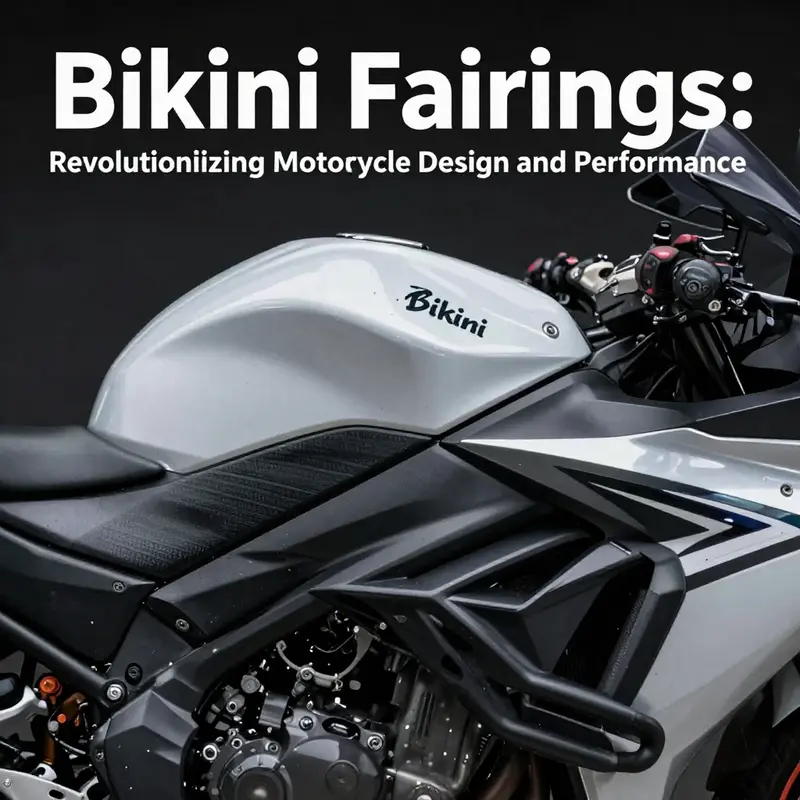
A motorcycle’s silhouette is a sentence written in air, every line predicting speed, stability, and the rider’s experience. In this landscape, bikini fairings—a term that sits somewhere between misnomer and design philosophy—emerge as a deliberate choice to balance wind protection, weight, and aesthetics. They occupy a nuanced niche that respects the rider’s need for agility while acknowledging the relentless pull of wind on longer stints, city commutes, or spirited riding on winding lanes. If the broader fairing family is understood as a spectrum—from full to semi to minimalist—the bikini fairing sits near the lighter, front-end boundary, offering a tailored shield for the torso and hands without enveloping the bike in a shell. The result is not simply a look, but a performance posture: less frontal area, less mass, quicker transitions, and a profile that invites riders to lean into a machine’s personality rather than bury it beneath sculpted armor.
Yet the term itself invites scrutiny. In rigorous design language, the standard categories name a motion and a function: full fairings enclose the engine and frame for maximum aerodynamics and weather protection, semi-fairings cover the front and upper portions, and quarter fairings pull away from the bulk toward a sculptural statement. In that taxonomy, bikini fairings can be viewed as an interpretation of partial front coverage—a lightweight compromise positioned to maximize handling, turn-in precision, and daily usability. This chapter does not pretend to rewrite engineering textbooks; instead, it builds a coherent argument for why riders and builders gravitate toward this approach when the riding context calls for speed with restraint, sport with street practicality, and style that reads as both aggressive and refined.
From an aerodynamic standpoint, the appeal of a bikini-style front fairing rests on a simple truth: reducing unnecessary frontal area lowers parasitic drag and reduces the energy required to slice through air at common highway and track speeds. The mathematics is straightforward, but the engineering remains layered. A semi- or half-fairing configuration typically clears a rider from the worst of the wind blast while preserving the bike’s natural balance and center of gravity. This matters because a motorcycle’s handling is a dialogue between rider input and the air’s resistance. When the rider’s torso and arms are partially shielded, the rider can maintain a steadier line through a corner, modulate throttle feel with more consistent feedback, and experience less fatigue on a long ride. The overall effect is a chassis that feels lighter, not merely in mass but in the mental effort required to control it. The rider senses speed, not wind; the bike becomes an extension rather than a barrier.
The practical upshot for urban riders is particularly compelling. City streets demand quick directional changes, rapid lane filtering, and a steadier ride in gusty gaps between buildings. A bikini fairing delivers a wind deflection pattern that reduces buffeting at modest speeds while still allowing enough airflow to keep radiator temperatures in check and the air to remain curious rather than accusatory around the rider’s upper torso. For sport-oriented riders who values quick acceleration and lean angles, the light fairing can shave precious milliseconds from a corner exit by lowering inertia and lifting the potential moment of wind-induced steering jitter. It is not that the rider tunes out wind completely; rather, the wind is re-sculpted into a predictable, manageable force that makes the bike’s temperament more legible at the limits of grip. The rider then has more bandwidth to precisely place the bike and shape the line through a turn.
This is where the lines blur with aesthetics. Fairing design is never a mere afterthought; it stitches together function, form, and identity. A bikini-style front fairing is almost always a visual statement as much as a functional one. The lean, exposed lines around the headlight, the sculpted intake lips, and the subtle undercutting of the fairing’s lower edge all contribute to an aggressive stance that communicates velocity even when the bike is standing still. For riders who see customization as self-expression, the bikini approach offers a canvas that can be tailored with material finishes, graphics, and color choices without surrendering the bike’s inherent agility. In this sense, the fairing becomes a signature of the rider’s aspirations: to feel cornering, to hear the intake stirs, and to know that their machine is not a museum piece but a tool that breathes and moves with intent.
Material selection matters as much as geometry. The balance between weight, stiffness, and cost guides the path from concept to road-ready reality. Fiberglass and ABS plastic are among the common choices, prized for their favorable mix of resilience, moldability, and affordability. Fiberglass brings a degree of rigidity that helps hold a clean line against wind loads, while ABS offers impact resistance and relatively forgiving manufacturing tolerances. The challenge lies in shaping a fairing that can take road life—vibration, weather exposure, pebbles, and the occasional off-ride tumble—without compromising the rider’s comfort or the bike’s performance. For builders and shops, this means aligning the fairing’s mounting points with the bike’s frame and substructure, ensuring that brackets and fasteners distribute loads evenly, and planning for heat management near the radiator and engine while preserving easy access for maintenance.
Aesthetics and ergonomics are not independent streams. They converge at the rider’s point of contact: the chest, the forearms, the knees, and the line of sight. A well-conceived bikini fairing should not only catch the light with its edges but also guide the air in a way that informs steering input and body position. Subtle radiused edges can help direct airflow toward under-body channels, while a carefully placed windscreen or its absence can influence head position during braking and acceleration, affecting rider posture and therefore the bike’s overall mass distribution. In practice, that means decisions about glass height, angle, and curvature are not cosmetic, but integral to how the bike communicates its intent under power. As riders test configurations on track days or relaxed weekend sessions, they discover whether a particular fairing’s intake lips, rake compatibility, and mounting geometry encourage or restrain their preferred riding style. This iterative relationship between rider, machine, and wind is what makes the bikini-style option feel deeply legitimate rather than merely fashionable.
Compatibility is another important thread in this narrative. Bikes vary widely in frame geometry, engine layout, and mounting hardware, so a one-size-fits-all approach rarely yields a satisfying outcome. The process often begins with a careful assessment of the bike’s front-end architecture: steering head angle, fork offset, the height of the triple clamps, and the space available beside the radiator. A bikini fairing must respect these realities, offering a practical mounting plan that minimizes intrusive modification to the frame while preserving quick access to service points. It also needs to consider downstream effects—cooling airflow, radiator efficiency, and the potential for shielding of instruments or headlights—so that the rider’s visibility and the bike’s reliability are not compromised. In some designs, the fairing’s edges are sculpted to avoid obstructing the rider’s line of sight or the instrument cluster, allowing the display to remain legible in bright sun and rainy gloom alike. The result is a modular sense of integration that makes the fairing look and feel like a natural extension of the motorcycle’s DNA rather than a bolt-on afterthought.
From the rider’s perspective, the decision to adopt a bikini fairing often rests on a hybrid calculus of comfort, performance, and budget. The reduction in weight directly translates to improved acceleration and nimbleness, especially noticeable in midrange responses and quick direction changes. Weight savings also contribute to a more responsive suspension setup; with less unsprung mass and lower overall inertia, the rider can feel faster wheel response through chicanes and sweeping turns. This is particularly meaningful for riders who value a lively, communicative bicycle-like feel in a sport-oriented machine. Yet the decision is rarely a pure performance calculation. The urban rider who wants shelter from wind and rain without losing the thrill of a hot-rod edge will find the bikini fairing’s protection adequate for a daily ride, provided the fairing is tuned to direct wind away from the chest and shoulders rather than simply deflecting it outward. It is here that the aesthetic of aggression and the practical reality of daily riding align, offering a package that is robust enough for weekday commutes and refined enough for weekend track sessions.
The market for these fairings, while not as expansive as that for full fairings, reflects a community of riders who prize customization, lightness, and personal expression. It is a space where builders can experiment with shapes, material blends, and surface finishes. Craft ingenuity often shines through in niche projects: sculpted lower edges that improve airflow to the engine, integrated mounting points that reduce the number of fasteners, or even modular panels that allow riders to switch configurations with relative ease. The dialogue between rider preference and manufacturer capability in this space is ongoing, driven by a desire to push the envelope of what a minimalist wind deflector can achieve without surrendering the bike’s essence. For readers who want to peek into the broader catalog of fairing options as they compare balance points, a practical touchstone lies in the Honda fairings category, which illustrates how different brands approach front-end protection, aerodynamics, and style in similarly constrained packages. This link serves as a guide to the spectrum of front-end design choices that exist beyond a single model or riding style.
If we step back to consider the bigger picture, bikini fairings reflect a design philosophy that favors readability and direct rider feedback. They acknowledge that speed is a narrative told not only by raw horsepower but by how a machine’s aerodynamics translate into control, steering response, and rider comfort. In this sense, they complement rather than substitute the broader purpose of motorcycle design: to deliver a machine that communicates with clarity, moves with intention, and invites the rider to participate in the act of riding with a sense of immediacy. For builders and enthusiasts, the bikini approach becomes an invitation to rethink what a fairing can do, to ask not only how much air is blocked but where it is blocked and how that air then interacts with the rider’s body and the bike’s chassis. It asks for attention to the small things—the bend of a lip, the curve of a shield, the strength of a mounting tab—and it rewards those who listen by delivering a riding experience that feels both more responsive and more personal.
As this exploration closes in on the practical implications, it is important to reiterate that the language of fairings remains a living conversation. The term bikini fairing may appear ambiguous in technical documentation, but it functions as a shorthand for a conscious choice: to pursue a lighter, more agile aesthetic without surrendering essential wind protection or weather resistance. In the hands of a skilled builder, a semi- or half-fairing configuration becomes a compact platform for testing ideas about how air, rider, and machine can co-create a unified performance envelope. The rider’s body becomes a part of the system, and the fairing becomes a facilitator of that system rather than a barrier. In this sense, the chapter’s core message aligns with the broader article’s aim: to illuminate how thoughtful design—whether in a full, semi, or minimalist package—can unlock a motorcycle’s potential by preserving the very qualities that first drew riders to two wheels: immediacy, connection, and the exhilaration of speed tempered by control.
For readers seeking a clearer sense of how engineering decisions translate into real-world performance, the fairing’s role is a reminder that every choice has consequences. The mass saved by a lighter front end reduces the energy required to initiate changes in direction. The wind buffered at the upper torso alters the rider’s posture, which, in turn, can influence load transfer and cornering stability. The materials selected influence both cost and durability, shaping long-term ownership experiences and maintenance considerations. In urban streets, the right fairing can mean fewer days spent fighting fatigue and more days spent chasing the next bend with confidence. On the track, the same fairing can contribute to more precise line selection and faster lap times by presenting a more predictable aerodynamic environment for the rider’s body and inputs. Across contexts, the bikini fairing embodies a practical philosophy: lightness where it matters, protection where it counts, and a design language that remains unmistakably modern without becoming overbearing.
As this narrative threads toward its next moment in the broader discussion, the central takeaway is clear. Bikini fairings are not merely stylistic experiments; they are purposeful tools that respond to the nuanced demands of contemporary riding. They offer a credible solution for riders who want performance to feel immediate and personal, without surrendering the everyday practicality of wind protection. They invite builders to engage in a conversation about form and function that respects the bike’s existing architecture while creating room for innovation in materials, geometry, and mounting strategies. In the end, the appeal rests in how quietly effective they can be: a lean face that cuts through air, a design that pleases the eye, and a riding experience that feels accelerated by intention rather than stoked by excess weight.
External resource for deeper aerodynamic context and fairing design considerations:
For a deeper aerodynamic framework, see this MIC guide: https://www.motorcycleindustry.org/technical-resources/fairing-design-and-performance
Internal reference for comparative fairing ranges and cataloging approaches can be explored through the Honda fairings catalog as a practical exemplifier of how front-end protection and visual language are balanced in a semi-fairing package. See the collection here: Honda fairings.
Contours of Confidence: Bikini Fairings as Personalization and Performance
In motorcycle bodywork, bikini fairings sit between full race shells and naked bikes. They provide wind protection around the chest and shoulders while preserving light handling. The chapter explores how these shells influence ride feel, weight, and aerodynamics. Material choices matter: fiberglass and ABS offer a pragmatic balance of stiffness, weight, and durability, while carbon fiber adds a premium look with minimal weight impact. The aesthetic payoff comes from how texture, color, and subtle logos interact with the bike’s lines. Customization centers on balance: logos, subdued patterns, and light doodles can signal refinement or personality without overwhelming the silhouette. Engineers ensure the fairing fits with tank geometry and rider ergonomics so airflow remains predictable and controls stay within easy reach. The design process blends form and function, where small curvature tweaks tune wind flow and cooling demands. Communities and digital tools let riders preview finishes, share ideas, and align trends with personal taste. The result is a coherent visual language that respects heritage while letting the rider tell their own story. Bikini fairings thus become a compact instrument of performance and expression, enabling speed and style to coexist.
Less Is More at the Windscreen: The Practical and Aesthetic Case for Bikini Half-Fairings on Modern Motorcycles
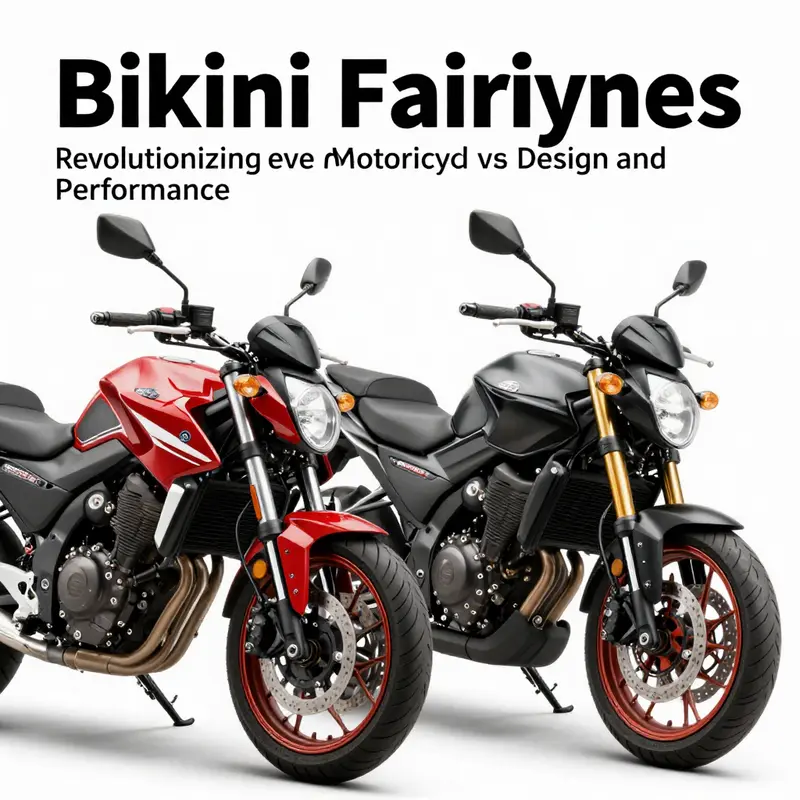
Form and function often travel in tandem on motorcycles, and nowhere is that more evident than in the rise of bikini fairings. Though not an official category in most technical catalogs, this term captures a real design impulse: a minimal front-end cover that trims weight while still delivering meaningful wind protection for the rider. In practice, what riders call a bikini fairing typically aligns with what engineers and shops would classify as a half fairing. The distinction matters because it frames what the component can do, where it shines, and where it falls short compared with bigger, more enveloping fairings.
Design features render the concept tangible. It covers the upper front portion of the bike, from the handlebars back to just behind the front wheel, and usually includes a modest windscreen plus partial side panels. The idea is not to chase every gust with a wall of plastic, but to sculpt a smoother airflow around the rider’s torso and head at everyday speeds. This approach yields a practical blend of wind protection and visibility, allowing the rider to maintain a natural posture without the encumbrance of full-body shielding. The resulting silhouette often emphasizes the bike’s lines and intent, giving it a sharper, more aggressive stance that appeals to riders who value customization as a form of self-expression.
On the aerodynamics side, half fairings provide a middle path. They reduce edge-induced turbulence around the cockpit and help keep the wind off the rider’s chest and shoulders at mid-range speeds, improving comfort and reducing fatigue on longer urban commutes. Yet they do not overhaul the bike’s overall drag profile in the way full fairings do. The drag reduction is meaningful but incremental, which suits riders who prize agility and quick handling over absolute highway stability. It is this balancing act that makes bikini fairings or their half-faring cousins appealing to sport-touring and daily commuting riders alike.
Weight is a recurring theme. The lighter construction of half fairings translates into a more responsive front end, aided track-side by quicker turn-in and less inertia when steering through tight corners. In practical terms, this can translate to faster acceleration off the line, a braver feel in maneuvers, and, over the course of many kilometers, lower fuel consumption when speed is kept within ordinary ranges. The flip side is that the rider gives up some weather protection and protection from debris, a trade that matters in rain or gravel days. The weight difference may seem modest in isolation, yet on a used bike or a track-ready build, every kilogram saved at the front end contributes to the crispness of steering and to a more connected sense of the machine’s intent.
Maintenance and access are another quiet advantage. Since half fairings cover a smaller chunk of the bike, mechanics and owners can reach critical components more easily than they can with a full fairing. Quick checks on the radiator, hoses, and electrical connectors become less of a scavenger hunt, and fuel lines beneath the tank stay accessible without disassembling a large shell. This accessibility can translate into lower maintenance time and cost, which matters to riders who log regular miles and like to tinker themselves. The tradeoffs, of course, include more frequent exposure to heat and dust on exposed areas and the need to inspect the panels for light stress or cracking after rough road surfaces. In practice, a well-chosen half fairing uses strong jointing and durable mounting points to prevent rattling or loosening under vibration, particularly on longer rides and at higher speeds where wind loads increase.
Material choices sit at the heart of this balance. Commonly used materials for these minimalist shells include fiberglass and ABS plastic, both offering a capable blend of light weight, stiffness, and cost. Fiberglass can be tuned for stiffness and shape memory, giving a premium feel and a smoother finish, but it often requires more labor in finishing and repair. ABS plastic offers excellent impact resistance and lower cost, with easier repair pathways after minor scrapes. Either choice keeps the weight down relative to full fairings while ensuring the surface can take road wear. The right mix also depends on how the fairing will be produced—the precision of molding, the thickness of the panels, and the quality of edge finishing all influence longevity and cosmetic wear over time. Riders who live in climates with dramatic temperature changes might note how the resin or plastic behaves under sun, rain, and cooling cycles, with slight warping possible if the mounting is not adequately supported. In other words, the performance story of bikini fairings rests as much on manufacturing discipline as on the raw material spec.
From an integration perspective, the fit matters as much as the look. A well-executed half fairing needs to align with the bike’s headlight geometry, instrument cluster, and fork crown without introducing new gaps that invite wind whistles at highway speeds. Mounting points must be able to withstand the steady gusts that pass through the gap between handlebars and the fairing edge. Rigid but adaptable mounting systems keep the fairing square as the frame flexes under load. Some riders prefer a simple, bolt-on approach that can be swapped in a weekend, while others opt for a more integrated kit that seeks to align with the bike’s paint and line. The aesthetic payoff is real: a clean silhouette that preserves the machine’s character while adding a tailored layer of form and function. If one looks across the aftermarket ecosystem, a category known as BMW fairings illustrates the broad spectrum of shapes, finishes, and mounting philosophies available for different machine archetypes. The point is not to chase a single look but to find a design that respects the bike’s proportion and the rider’s intention.
Seasoned builders and riders understand that the decision to install a bikini fairing also involves weather and climate considerations. In regions with frequent rain or cold mornings, the lower torso and legs remain exposed in this configuration, which can amplify wind chill and fatigue after hours of riding. For a commuter who rides in urban canyons or on mixed roads, a half fairing can be swapped between seasons to suit the conditions, providing flexibility that larger fairings might limit. It is a modular philosophy: you trade some shield for greater access, lighter weight, and easier maintenance, while preserving enough shelter to keep mid-range comfort intact. The choice thus becomes less about a rigid rule and more about a rider’s daily reality and the bike’s role in that life. The minimal shell can also be a platform for personalization, allowing graphics, textures, and color schemes to express a rider’s taste without overwhelming the bike’s fundamental lines.
Ultimately, bikini fairings—or half fairings—live in the space between naked bikes and full fairings. They are not a substitute for a cold, windy, or rainy ride, nor should they be mistaken for a complete performance package. They are a design philosophy that foregrounds select wind management, weight savings, and accessibility, while giving riders room to adapt and evolve their machines as needs change. For some, that is a rational path: the bike remains agile, the engine breathes freely, and the rider keeps a direct connection to the road. For others, the first gust of highway wind can remind them of the limitations of a lighter shield. The balance struck by a bikini fairing is not universal; it depends on what a rider values most—instant acceleration and nimble steering, or all-weather comfort and relentless aero protection. The narrative is not about a single solution but about a toolkit: a way to tailor aerodynamics and aesthetics to a specific riding life.
To understand how this toolkit sits within the broader landscape, it helps to compare it with other fairing philosophies. Full fairings maximize airflow management, shield the rider from rain, and preserve the engine’s optimum cooling in high-performance contexts, but they impose more weight and restrict engine access. Quarter fairings, by contrast, offer a minimal front-end cover with limited wind protection and a focus on aesthetics, while naked bikes celebrate exposure and simplicity as a deliberate stance. The half fairing, in its nuanced version, offers a compromise that honors both speed and soul. The result is a bike that breathes with its rider: the wind is deflected enough to reduce fatigue off long commutes, yet the rider still hears the engine clearly and feels the chassis respond to every input with clarity. In this sense, the bikini fairing is a design instrument, not a final verdict on what a motorcycle should be. It asks what amount of shielding, weight, and accessibility best serve a rider in a given context, and it invites ongoing experimentation and customization.
Choosing this path means weighing practical elements alongside personal style. A rider who spends hours in city traffic, where air is still and the bike spends most of its time below highway speeds, may find a bikini fairing ideal for achieving comfort without committing to the bulk of a full shell. A rider who values the sensation of lean lines and the sense of speed that comes from a lighter front end might prefer the immediate responsiveness that accompanies lower mass and less air resistance. In either case, the decision should be guided by compatibility with the motorcycle’s frame, the rider’s climate, and the willingness to maintain a lighter, more exposed surface that will require periodic checkups for cracks or UV wear. The spectrum of options—from the lightest nose cowl to the most integrated half shell—reflects an industry that recognizes riders’ desire to tune aerodynamics with personal aesthetics.
As this chapter moves forward, the emphasis turns to fit, materials, and the practical steps a rider takes to choose, install, and care for a half fairing. For a broader technical grounding on fairing materials and standards, see the external resource linked here: Understanding Chinese Motorcycle Fairings: Composition, Standards, and Industrial Benefits.
Riding Light, Moving Fast: The Rise of Bikini Fairings and What It Means for Market Trends
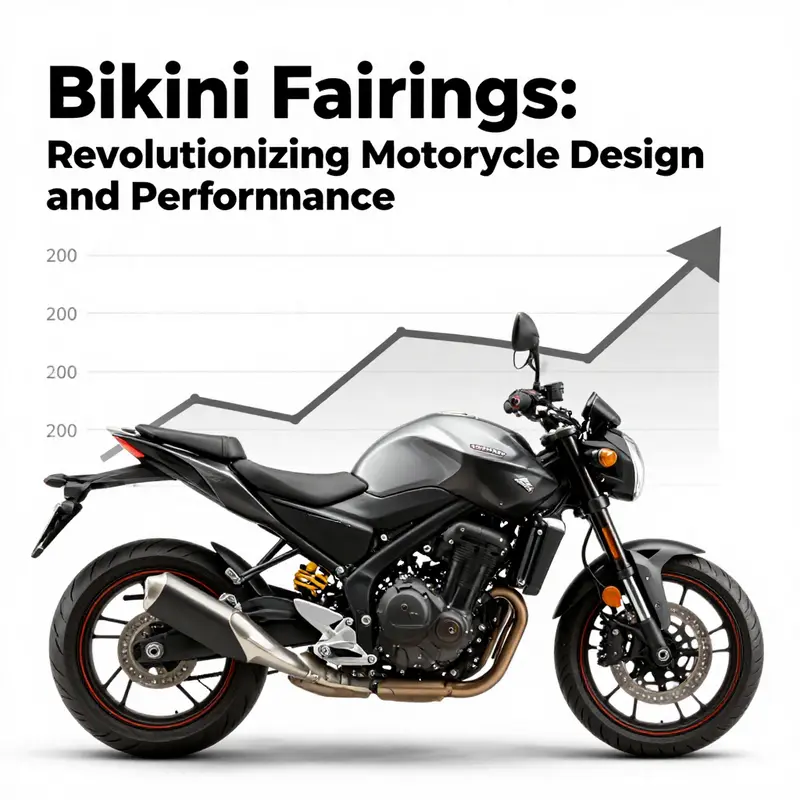
In the evolving landscape of motorcycle design, bikini fairings have emerged as a deliberate compromise between protection, weight, and style. They sit between the pared-down naked bike aesthetic and the enveloping shelter of full fairings, offering the rider a shield from wind without swaddling the bike in plastic. This balance matters because urban riders want agility and morning commuters demand comfort, while weekend enthusiasts seek a frame that looks as fast as it feels. The appeal of bikini fairings is not merely cosmetic; it is a careful intersection of aerodynamics, weight savings, and practical maintenance that translates into real-world advantages on the street and on the track. What begins as a visual statement becomes a functional choice that can influence acceleration, handling, fuel efficiency, and even the ease of customization over the life of the motorcycle.
From a design perspective, the bikini fairing is a compact, front-end shell that covers the upper frame and portions of the engine in a way that reduces parasitic drag without the bulk of a full fairing. The engineering logic is straightforward: less mass means less rotational inertia to overcome, and less frontal area means lower wind resistance. In practice, riders experience smoother airflow around the chest and shoulders, reduced buffeting at moderate highway speeds, and a more connected sense of the bike’s mass distribution. The rider remains exposed to some wind, which is precisely the point for those who value tactile feedback and a direct sense of riding because it translates into quicker, more intuitive throttle and steering inputs. For sport-focused riders, this translates into improved handling and sharper responses during corner entry, where every gram of weight and every degree of aerodynamic drag can influence line and pace.
Beyond performance, the attractiveness of bikini fairings is inseparable from their aesthetic versatility. They offer a crisp silhouette that emphasizes geometry and lines, letting a bike express aggression or elegance through clean, uncluttered surfaces. The visual impact matters because it communicates intent—this is a machine tuned for speed and precision, not a sport-tourer built for comfort at the expense of edge. This visual language resonates with riders who want personalization without sacrificing the core ride feel. Materials like ABS plastic and fiberglass strike a practical balance between weight, stiffness, and cost, while advancements in composites and layer tuning promise further gains in rigidity and durability without a corresponding weight penalty. The ongoing material science work also expands the potential for finishes, textures, and color-matching that can be integrated with existing paint jobs, decals, or aftermarket graphics.
As markets trend toward modularity, bikini fairings are increasingly positioned as adaptable systems rather than fixed, single-purpose components. The modern rider often imagines a front end that can be reconfigured quickly to suit different riding styles or seasons. This modular perspective aligns with a broader consumer appetite for customization. A fairing that can be swapped or adjusted without significant downtime or specialized tools supports a DIY approach to personalization. It also aligns with the economics of mid- to high-end sport and naked bikes, where owners routinely rotate through several look-and-feel configurations during the bike’s life cycle. The modular approach does not only apply to the outer shell; it also enables compatible mounting points, integrated headlight assemblies, and cable routing that can be adapted to alternate electronics packages. In other words, bikini fairings are not simply protective shells; they are design platforms that accommodate evolving engineering and styling choices.
Industry dynamics help explain the rising adoption of bikini fairings. A recent market analysis highlights a growth trajectory for the global motorcycle fairing market that positions bikini designs as a key driver. The projection of a compound annual growth rate of roughly 6.8 percent from 2024 to 2033 signals more than cosmetic appeal. It reflects a shift toward modular, customizable systems that can serve both electric and internal combustion motorcycles. As powertrains diversify, so too must the leading-edge front-end solutions. OEMs and aftermarket suppliers are responding with lighter, more durable materials—ABS plastics and carbon fiber composites—paired with refined manufacturing processes that balance strength, heat resistance, and cost. The result is a front-end solution that can endure the rigors of daily urban riding while preserving the nimble, race-inspired feel that many riders crave.
Geographic variance in adoption further clarifies the market trajectory. In North America and Europe, where sleek, modern aesthetics hold sway, bikini fairings have become standard or near-standard features on select models. The emphasis here is on reducing weight and simplifying maintenance while delivering a contemporary look that aligns with the fast-moving, performance-oriented identity of many brands. In contrast, regions with intense urban trade-offs, such as parts of the Middle East and Africa, are embracing bikini fairings for their affordability and low maintenance demands. In these markets, the appeal centers on practical acceleration, fuel efficiency, and the ability to keep costs manageable while still achieving a sharper, more modern silhouette. The common thread across regions is a premium-on-performance without overburdening the rider with complexity.
A critical element of this adoption is the evolving sourcing framework that OEMs and distributors use to evaluate suppliers. Price is no longer the sole gatekeeper. Buyers now weigh production capacity, compliance with international safety standards, and responsiveness to customization requests. The best suppliers offer modular design platforms, which enable rapid adaptation to different models, powertrains, and headlight configurations. For the rider, this translates to faster realization of new looks and faster turnarounds when a fairing needs to be updated to reflect new styling cues or regulatory changes. The emphasis on design flexibility and R&D capability suggests a future where fairing ecosystems are more closely tied to the way bikes evolve over their lifecycles, rather than being static parts that must fit a single model forever. The market therefore rewards forward-thinking manufacturers who invest in design libraries, scalable production processes, and intelligent materials that respond to both performance needs and consumer desire for personalization.
From a rider’s perspective, the practicalities of bikini fairings are just as important as their performance and appearance. Maintenance simplicity is a recurrent theme: smaller shell areas mean easier access to the engine and front-end components for routine service, quicker cleaning, and reduced risk of stone chips or weather damage over time. The lighter weight also reduces the overall un-sprung mass when combined with carefully engineered mounting hardware, which can improve damping feel at the front end and support more precise steering under load. This matters whether the motorcycle is carved through tight urban canyons or pushed along a winding road at the edge of its grip. The combination of reduced wind load, easier maintenance, and agile handling creates a compelling value proposition for riders who want sport-like performance with a lower barrier to ownership and upkeep. It is not simply a case of trading full coverage for bare metal; it is about delivering a net-positive riding experience that aligns with the daily realities of many riders’ lives.
For designers, the bikini fairing represents a design challenge that rewards a holistic, systems-thinking approach. The front end must integrate smoothly with the bike’s aerodynamics, frame geometry, and heat management while leaving room for headlights, instrument clusters, and electrical harnesses. The solution often relies on precise shaping, targeted curvature, and a judicious distribution of stiffness to maintain aerodynamic benefits without introducing unwanted flutter or resonance at speed. Engineers also consider how the fairing interacts with the rider’s body to manage wind pressure and fatigue. The goal is not to wrap the rider in a rigid shell but to create a balanced aerodynamic envelope that supports comfort, control, and confidence on every ride. When done well, a bikini fairing enhances forward visibility, emphasizes the bike’s lines, and quietly contributes to a rider’s sense of speed even at moderate velocities.
If the industry continues along its current path, the bikini fairing will increasingly serve as a testbed for evolving materials science and digital design methods. Lightweight composites, closed-molds with tight tolerances, and optimized surface finishes will push the limits of what is possible at a given price point. Designers may experiment with integrated cooling channels or airflow ducts that tune how air moves around the engine and under the rider’s torso, further refining efficiency and heat management. Digital tools—simulation, generative design, and rapid prototyping—will shorten the cycle from concept to production, accelerating the rate at which new bikini fairing configurations reach the street. As electrification matures, fairings will also adapt to new packaging constraints and front-end electronics footprints, maintaining the same visual and tactile benefits while accommodating batteries, sensors, and lightweight cooling systems. In short, bikini fairings are poised to evolve from stylish enhancements into integral elements of a bike’s performance architecture.
For readers who want to explore how these shifts are taking shape in practical terms, consider how a modular front end can be tailored to different riding moods. A base bikini fairing set can be augmented with lightweight add-ons for additional wind shielding in colder climates or swapped out for a more aggressive, feature-rich version for track days. This is the essence of the market’s forward motion: the front end becomes a flexible platform, not a fixed fixture. As a rider, you can begin with a minimal setup and gradually upgrade to more complex configurations as your needs, budget, and riding ambitions grow. The market’s trajectory supports this evolution.
In closing, bikini fairings embody a precise synthesis of form and function. They are not merely a design flourish but a practical response to the realities of modern riding. They offer meaningful advantages in weight, maintenance, and aerodynamics while preserving or enhancing the visual language of sport and street riding. The growing emphasis on modularity, adaptability, and advanced materials signals a future where riders can customize front-end performance with the same ease that they choose paint schemes or exhaust tones. This convergence of aesthetics, performance, and practicality helps explain why bikini fairings are no longer a niche curiosity but a significant factor shaping the design language and market strategies of contemporary motorcycle brands. For enthusiasts curious about how modular platforms are shaping fairing design across brands, a reference point in the field can be found in the dedicated category that groups compatible front-end configurations—a reminder that the road to speed is as much about thoughtful packaging as it is about raw power. bmw-fairings.
External reading can deepen this perspective. Industry analysis from Grand View Research highlights the growth trajectory of the motorcycle fairing market, underscoring the shift toward modular, lightweight, and customizable systems that support both electric and internal combustion models. The report notes how material innovations, production capacity, and compliance with safety standards influence adoption across regions and segments. This broader context helps to frame bikini fairings not as a niche styling option but as a consequential element of the evolving market for motorcycle front-ends. External resource: https://www.grandviewresearch.com/industry-analysis/motorcycle-fairing-market
Final thoughts
Incorporating bikini fairings into motorcycle design has proven to be a game changer for both aesthetics and performance. By providing essential wind protection while maintaining a lightweight profile, they cater to the needs of contemporary motorcycle enthusiasts who prioritize agility, handling, and style. The growing trend of customization in the motorcycle industry highlights the importance of offering a variety of bikini fairings to meet diverse consumer tastes. As the market continues to evolve, embracing these design elements not only enhances product lines but also positions businesses favorably in a competitive landscape.