
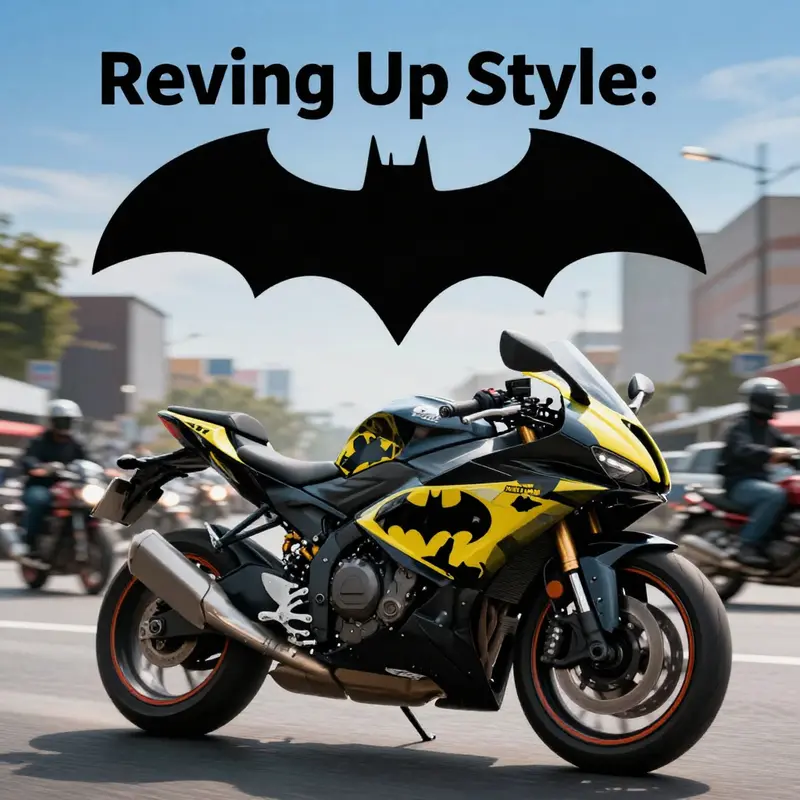
As the world of motorcycling evolves, enthusiasts seek ways to express individuality and connect with popular culture. Batman motorcycle fairings, with their distinct batwing design, provide an exceptional opportunity for customization that resonates with fans of the Dark Knight. These unique components not only enhance the visual appeal but also offer functionality and robust manufacturing opportunities. In this article, we will explore the market landscape surrounding Batman motorcycle fairings, delve into their technical specifications, analyze the economic impacts of their production, and discover the latest trends in customization and design that are shaping this niche industry.
Batwing on the Horizon: A Market Pulse for Batman-Themed Motorcycle Fairings
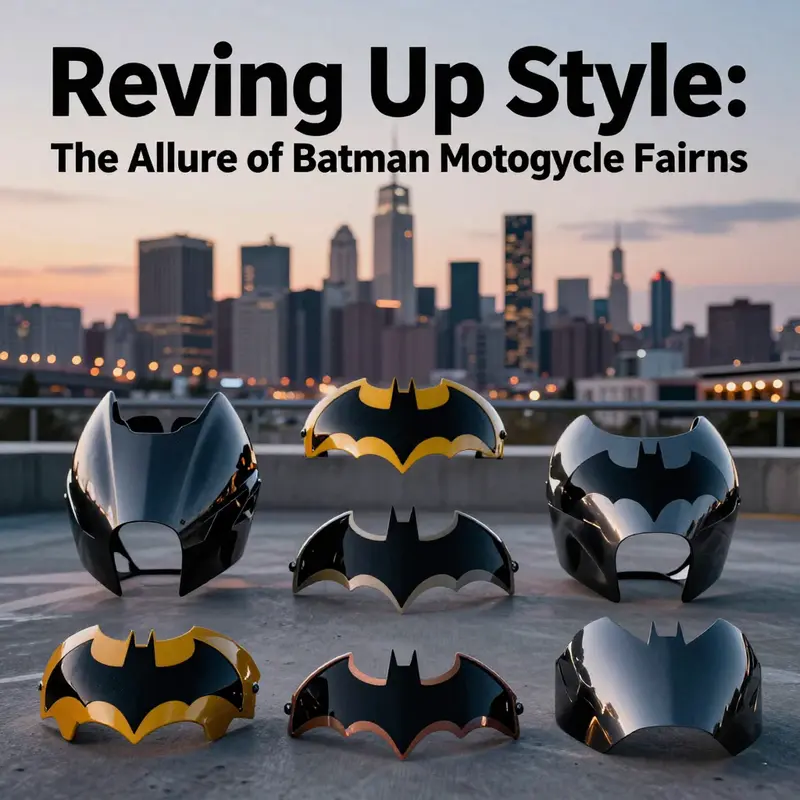
A motorcycle dressed in a Batwing silhouette cuts through the city like a whispered legend, the blend of performance and myth drawing eyes as surely as the engine’s cadence. This image hints at a broader phenomenon shaping the aftermarket: a growing appetite for customization that lets riders translate pop culture, fantasy, and personal identity into visible, tactile form on two wheels. The Batman-themed or Batwing-inspired fairings sit at a curious intersection of aesthetics, engineering, and commerce. They are not merely cosmetic; they embody a statement about how riders want to be seen, how they want to be heard on the road, and how they value the ability to tailor a machine to a narrative. In this sense, the theme is less a niche novelty and more a marker of a market that increasingly rewards expressive design without sacrificing the essentials of fit, finish, and durability. The broader market context helps illuminate why a Batwing or Batman-inspired fairing could find steady, though specialized, demand within the global ecosystem of motorcycle bodywork.
At the macro level, the motorcycle fairing market has matured into a sizable segment of the two-wheeler aftermarket. Recent analyses place the global fairing market well into the billions of dollars territory as riders seek both protection and personality in equal measure. A key takeaway from these studies is not just the size but the trajectory: a solid, resilient CAGR driven by ongoing demand for customization, performance-oriented styling, and the willingness of riders to invest in distinctive aesthetics. As a framework, consider a market that has been valued in the vicinity of a little over a billion dollars, with expectations of continued growth that could lift the market toward two and a half billion dollars in the longer horizon. This growth is not driven by a single trend but by a constellation of them: the fashion-like appeal of unique designs, the practical value of better aerodynamics and weather sealing, and the cultural pull of iconic characters or themes that resonate across demographics. In such an environment, Batman-themed fairings are positioned to ride the coattails of customization while tapping into fan communities that prize limited editions, story-driven graphics, and collectible aesthetics as much as, if not more than, raw performance alone.
Even when the Batman theme is not explicitly referenced in every catalog, the impulse behind it—personalized storytelling through the bodywork of a motorcycle—aligns with a broad consumer segment that seeks differentiation without compromising quality. Typical fairing sets in the general market span a price range that reflects material choices, refinement of finish, and the complexity of mounting hardware. In most cases, complete exterior shell kits fall within a mid-to-upper price bracket, with lower-cost options catering to beginners or budget-conscious riders who still desire a bold look. The presence of memory of iconic visuals in popular culture makes themed variants naturally appealing. In the Batwing concept, the silhouette invites a striking visual identity: a bold profile that leverages negative space and shadow to evoke speed and stealth. The interplay between the dark palette and the smooth curvature of the fairing adds psychological weight to the riding experience, enabling a rider to feel as if their machine belongs to a narrative rather than simply existing on the road.
From a manufacturing and supply-chain perspective, the Batwing-inspired idea benefits from the same regional dynamics that have underpinned the broader fairing industry. The concentration of production capacity in certain manufacturing hubs enables faster prototyping, more efficient iteration, and scalable output for limited runs. Regions with advanced polymer processing, precise tooling, and durable, UV-resistant materials have become the backbone of the global supply chain. These capabilities translate into consistent fitment across a range of motorcycle platforms, which in turn lowers the barrier to introducing themed variants that aim to cater to a broad range of riders. The practicality of producing a Batwing-like fairing hinges on modular design philosophies—assembly features that accommodate different frame geometries, mounting points, and accessory integrations. This modular approach also clarifies how a themed fairing can be more than a static shell: it can be a platform for optional add-ons such as mounting brackets, speaker enclosures, or weatherproof seals that preserve the rider’s comfort and the system’s reliability in real-world riding conditions.
As with any design that leans on a well-known cultural symbol, licensing and IP considerations inevitably surface in conversations about Batman-themed products. The risk of unauthorized clones or derivative graphics can shape how manufacturers and buyers approach development. A responsible pathway emphasizes licensing where feasible and a commitment to quality control to ensure that a themed fairing meets functional standards. Even when licensing is not pursued, the market can still flourish through high-quality, fan-informed interpretations that honor the essence of the motif while avoiding infringement. The potential for a Batman-inspired project often rests less on chasing a direct licensing deal and more on delivering a premium, carefully crafted aesthetic that resonates with fans and riders alike—paired with robust engineering that protects the rider’s safety and the bike’s integrity.
In terms of pricing dynamics, the Batwing niche has a few practical benchmarks to guide expectations. On mainstream e-commerce platforms, the entry point for a basic fairing component can be surprisingly accessible, sometimes starting at a nominal price that belies the need for proper fitment and long-term durability. For full sets that include interior and exterior panels, the price can rise into a more substantial range, reflecting the complexity of the design, the quality of the materials, and the breadth of finish choices. While a Batman-themed set might command a premium relative to a generic design due to its unique appeal, the market typically maintains a balance by offering a spectrum of options—from economical, expressive graphics to more refined, high-fidelity reproductions. This price ladder, common across the broader fairing market, supports a diversified range of buyers: casual riders seeking a bold look, serious enthusiasts chasing a limited-edition feel, and professional shop operators aiming to satisfy a niche but loyal customer base. The practical reality is that most riders care about three pillars: fit, finish, and function. If a Batwing-inspired shell delivers on those pillars, the themed narrative becomes a compelling bonus rather than a risky gimmick.
The route from concept to consumer in Batman-themed fairings is as much about collaboration as it is about craft. Designers and manufacturers tend to engage in a dialogue with prospective buyers through B2B platforms and direct outreach. The advantage of such collaboration is clear: prototype feedback accelerates development cycles, while small-batch production helps test acceptance without absorbing the risk of a large stock commitment. The broader market supports this approach because customization remains a dominant driver of growth. When buyers want something distinctive yet reliable, they look for a partner who can translate an idea into a physically accurate, well-finished product. In this sense, the Batwing concept becomes less about a single, static piece and more about a flexible design language that can be adapted across different bike families, mounting configurations, and aesthetic options.
For readers who want a tangible sense of how these products are cataloged and conceived, a glimpse into the broader fairing ecosystem can be instructive. Catalogs that feature diverse brands and platforms illustrate the range of mounting patterns, aerodynamic considerations, and surface treatments that practitioners must reckon with when offering themed variants. The underlying lesson is simple but powerful: successful Batman-themed fairings must integrate with existing bike architectures while delivering on the promise of a distinct, cinematic silhouette. The result is a product that feels both custom-made and durable enough to withstand daily riding, urban commutes, and weekend sessions on winding roads. When the engineering is solid, the imagination that motivates fans translates into a tangible upgrade that enhances visibility, pride of ownership, and the thrill of personal storytelling through design.
As the market evolves, the Batwing-inspired fairing could become a notable case study in the interplay between culture and commerce in motorcycle customization. Enthusiasts increasingly expect not just a look but a narrative, a lifestyle, and a sense of belonging to a community that shares a passion for iconic imagery and mechanical excellence. The broader context—the overall trajectory of the motorcycle fairing market—suggests that there is room for niche concepts to flourish within the mainstream, especially when they are supported by credible engineering, quality materials, and reliable supply chains. In practice, this means designers and manufacturers who focus on modular, scalable solutions, robust finish options, and careful attention to fit across a spectrum of models can deliver products that satisfy both the impulse for fantasy and the discipline of real-world riding. The result will be a more vibrant market where a Batwing silhouette is not a novelty but a recognized, dependable means of personal expression on two wheels.
For readers seeking a broader frame of reference, the evolution of the fairing market offers a useful map of the terrain in which Batman-themed variants travel. The referenced market analysis points to ongoing expansion, with sustained demand driven by customization, performance, and the allure of themed designs. It is a reminder that fan-driven aesthetics can coexist with technical rigor, provided both sides value quality and practical utility. If you want to explore current catalogues that illustrate how themed graphics are presented in practice, consider browsing the available fairing categories in established online catalogs that organize by bike models and mounting standards, such as the BMW fairings collection, which demonstrates how diverse models share common mounting logic while accommodating distinctive graphics. BMW fairings This kind of reference helps translate the Batwing idea into a realistic product strategy.
In the final reckoning, Batman-themed motorcycle fairings embody a broader truth about the modern rider: customization is not a frivolous indulgence but a pathway to personal narrative in a world of highly customizable machines. The Batwing silhouette becomes a canvas on which riders project identity, mood, and even a little cinematic drama, while manufacturers and distributors respond with durable materials, precise engineering, and supply chains capable of turning a bold idea into a reliable, widely available product. The market dynamics justify optimism for niche innovations that align with the culture of customization. And as the ecosystem matures, the Batwing project could serve as a clarifying example of how a strong visual concept, paired with solid manufacturing practices and thoughtful licensing considerations, can translate fandom into transformable, ride-ready form. For those who follow the trend closely, the path from concept to street-ready fairing is less about chasing spectacle and more about delivering a credible, well-executed piece of art that riders can actually ride, maintain, and enjoy for years to come.
External resource for broader context: Grand View Research’s motorcycle fairing market analysis provides a comprehensive backdrop to understand the scale, drivers, and outlook for these kinds of products, including themed and customized variants. https://www.grandviewresearch.com/industry-analysis/motorcycle-fairing-market
Shadows Kept in Steel: The Craft, Context, and Cult of Batman-Inspired Motorcycle Fairings
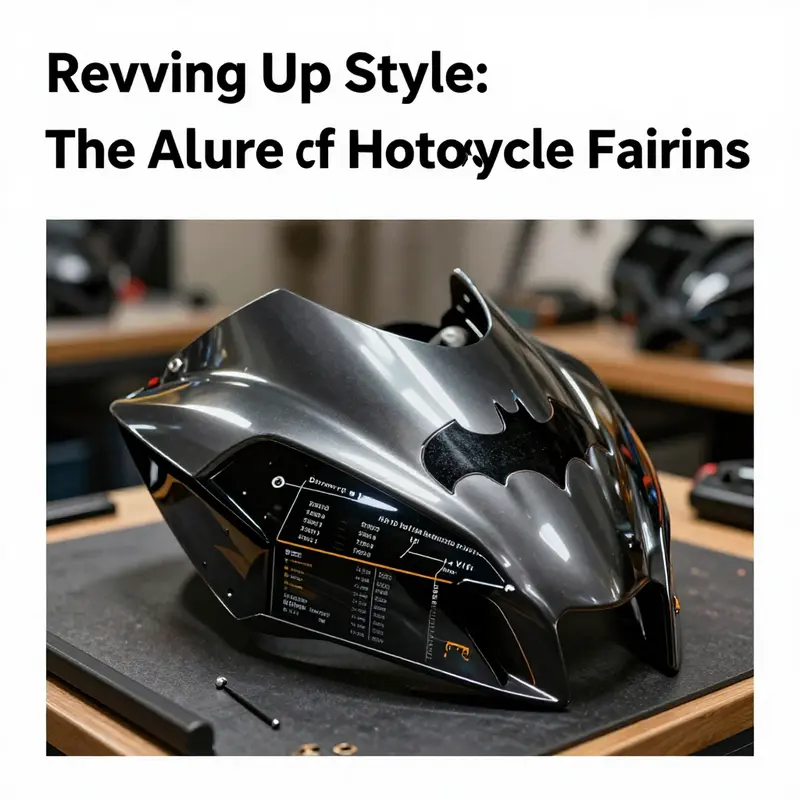
In the world of motorcycle customization, silhouettes carry as much meaning as the machines themselves. Among the most striking are the batman-inspired fairings, the curving wings that sweep over the front end in a gesture both dramatic and practical. They are not simply cosmetic additions; they are a statement about how a rider wants to inhabit the road and how the machine translates myth into motion. The bat-wing or batman-inspired fairing, with its broad, rising canopy and tapered leading edge, evokes a narrative of concealment, speed, and controlled power. The visual language is instantly legible: the rider is signaling allegiance to a myth of precision, daring, and nocturnal movement. Yet behind the drama lies a careful balance of engineering and aesthetics, where form must follow function without sacrificing the clean lines that give the silhouette its iconic presence.
The design philosophy behind these fairings is rooted in a blend of cinematic homage and practical aerodynamics. The bat-like canopy is not just a symbol; it is a shaping tool that diverts wind, reduces fatigue, and guides the rider’s line of sight toward the horizon with a focused, tunnel-like experience. In daylight, the silhouette reads as a bold graphic, a negative space carved out of the rider’s frame that catches the eye and invites a closer look. In darkness, the shape seems to breathe with the rider’s momentum, an almost living thing that frames the headlight like a beacon in a shadowed city street. The cultural impulse behind this aesthetic is to transform a motorcycle into a character—one that can project mood, allegiance, and narrative with a single, sweeping contour.
The actual craft of turning a bat-wing concept into a road-ready fairing hinges on material science and manufacturing technique. Modern fairings rely on composites that deliver high strength with relatively low weight. Carbon fiber, often woven into a dense lattice, is a favorite for performance-minded builds, while high-grade polycarbonate can offer impact resistance and clarity for integrated windshields. The choice of material is not incidental; it shapes how the fairing responds to air at speed, how it withstands road grit and UV exposure, and how faithfully it can be finished in a glossy black or a deep, story-saturated paint job. Beyond the material, the manufacturing process—whether it involves traditional lay-up methods, vacuum infusion, or more contemporary resin transfer molding—determines the ultimate surface quality and the margin for customization. A smooth, uniform finish is essential when the aesthetic is about black planes catching the light in just the right way. Any waviness or inconsistency can betray the sheen that makes the silhouette so compelling and can undermine the perception of precision that the design promises.
The alignment of form and function becomes especially critical when fitment and installation enter the equation. These fairings are crafted to fit specific model geometries, accounting for the complex curvature of the bike’s chassis, the location of headlights, instrument clusters, and the mounting points that must bear the additional load and wind pressure. In practice, installation is a precise operation that often requires professional handling. Mounting brackets must align with preexisting anchors, gaps must be tuned to avoid interference with turning signals and mirrors, and any integrated electronics, such as audio mounts or communication systems, must be re-seated or re-routed to preserve both performance and safety. The result is a package that looks seamless on photos and in showrooms but demands meticulous calibration on the road. The rider’s experience—how the wind hits the chest, how the shoulders remain relaxed, how the hands guide the bike through corners—depends on this fine-tuning. It is not enough to select a shape; one must also secure a harmonious relationship between the rider, the fairing, and the bike’s overall balance.
In the broader marketplace, the batman-inspired fairing sits at an intersection of craft, commerce, and culture. The supply chain for such components has become highly centralized in regions known for polymer processing and rapid prototyping. Producers in these corridors leverage a combination of skilled labor, advanced tooling, and scalable production workflows to meet both boutique orders and larger runs. The result is a capability to deliver not only a visually dramatic product but also a reproducible one, with consistent tolerances and paint finishes across orders. For buyers who want to customize further, the same hubs can accommodate variable thicknesses, different surface textures, or bespoke artwork layers that echo the character’s nocturnal mystique or a rider’s personal story. The logistical advantage is significant: a rider can begin with a mid-range kit that provides the Batwing aesthetic and then layer in additional features—dust-seal edges, UV-protective coatings, or reinforced inner panels—without altering the exterior language of the design. The regions shaping this market are deeply integrated into the global supply chain, offering a path from an initial prototype to a full-scale production run while maintaining quality and delivery timelines that riders rely on.
That practical backbone often interacts with a strong subculture of customization. Riders arrive with a vision of how the bat-inspired form should sit on their metal curved surface. They may seek a darker, more stealthy interpretation, or they may want a high-gloss finish that makes the silhouette gleam under streetlights and showroom lights alike. This culture treats the fairing not as a mere add-on but as a canvas—one that can carry subtle pinstripes, laser-etched motifs, or gradient transitions that intensify the three-dimensional reading of the bat wings. The artistry here is not merely about printing a logo or slapping a graphic on a curved surface; it is about shaping light and shadow across a volume that must still steer cleanly through air. The artist-engineer sits at the same drafting table as the designer, calibrating the curvature so that a slight optical illusion might make the wings appear to rise more sharply at certain speeds, reinforcing the sense of motion and menace that the Batman myth embodies. In this sense, the fairing becomes a theater where physics and folklore perform side by side, and the rider is the lead actor.
To the curious observer, the economics of this niche might seem fantastical. Yet the price spectrum reflects a practical continuum: core inner and outer shells at the lower end serve as entry points for enthusiasts testing the waters of big visual impact, while complete, pre-finished kits that span the front fairing, side panels, and windscreen can escalate to higher tiers as additional hardware and refinishing services are bundled in. The market responds to demand for both authenticity and affordability by offering modularity—allowing a rider to start with a bold silhouette and evolve toward a more integrated aerodynamics package over time. The economic logic aligns with the broader reality of aftermarket parts: high customization, relatively low incremental costs for individual pieces, and the potential for scaled production when a design resonates with a wider audience. The result is a dynamic that rewards ingenuity and persistence, inviting riders to co-create the appearance of their machine while staying mindful of the practicalities of road use and maintenance.
For readers who want to explore a broader catalog of aftermarket fairings while keeping the Batman-inspired aesthetic in view, a hands-on option exists to examine lines that emphasize compatibility across popular model families. For example, you can explore fairings associated with certain brands in dedicated sections of major aftermarket platforms, where the design language mirrors the bat-wing motif while offering model-specific fit and finish. This approach preserves the dramatic silhouette while respecting the vehicle’s underlying geometry. It also opens a door to customization beyond the exterior; riders can coordinate color, texture, and protective coatings with their chosen model family to achieve a cohesive, bespoke look across the bike’s surface. The result is a tailored narrative told through plastics and paint, where every curve and edge serves a story about speed, stealth, and personal identity. In a culture that celebrates bold statements at every turn, the batman-inspired fairing remains a definitive way to translate a nocturnal legend into a real-world machine that can ride as confidently as it looks.
When we consider the practicalities of bringing such a project to life, it is worth noting how buyers often approach sourcing and collaboration. The most reliable path involves engaging with established manufacturers and experienced fabricators who understand the delicate balance between aesthetics and structural integrity. A thoughtful buyer will inquire about prototyping capabilities, material options, and customization workflows that preserve the silhouette while ensuring compatibility with the chosen model. They will also discuss finishing processes, such as UV protection, weather resistance, and color stability, which are essential for a piece that must withstand daily exposure to sun, rain, and road debris. The end goal is a cohesive system in which the fairing, the windscreen, and the rider’s posture work together to reduce fatigue and enhance the ride. This collaborative approach often yields the most durable, expressive results, because it treats the bike as a system rather than a collection of individual parts.
For readers who gravitate toward a broader exploration of related components, it can be instructive to consider the surrounding ecosystem of aftermarket fairings that exist for several iconic model families. Among the most relevant entry points is a category that focuses on brand-compatible fairings. These collections allow riders to maintain brand-specific linework and mounting geometry while still embracing the bat-inspired silhouette. Such options provide a practical bridge between fantasy and real-world riding, honoring both the myth and the machine. They also invite the rider to reflect on how the silhouette might be adapted for riding conditions, weather, and personal comfort without losing the visual essence that makes the bat-wing form instantly recognizable.
In the end, the batman-inspired fairing is more than a dramatic sheet of plastic or composite. It is a translation of a mythic figure into a kinetic, live experience. It asks the rider to balance storytelling with engineering, to accept that beauty in motion depends on precise fit and resilient materials, and to understand that a silhouette, when executed with care, can alter the way a rider perceives speed. The phenomenon invites conversation about design, material science, and the evolving craft of customization—about how a single, sweeping outline can fuse cultural memory with a rider’s present tense on the road. For those curious about the ongoing evolution of fairings across brands and styles, the door remains open to exploration, experimentation, and dialogue, with each new build adding another page to the road-legal mythos of a machine that rides like a character from a midnight story. To learn more about related modular fairings and the broader catalog available within this ecosystem, you can explore BMW fairings as a gateway to how model-specific hardware can complement a bat-inspired silhouette without losing mechanical harmony.
External reference: https://www.ossbennett.com/batwing-fairing-kit-performance-specifications-and-how-to-apply-it-in-industry
Winged Economies: The Hidden Currents Behind Batman Motorcycle Fairings Manufacturing
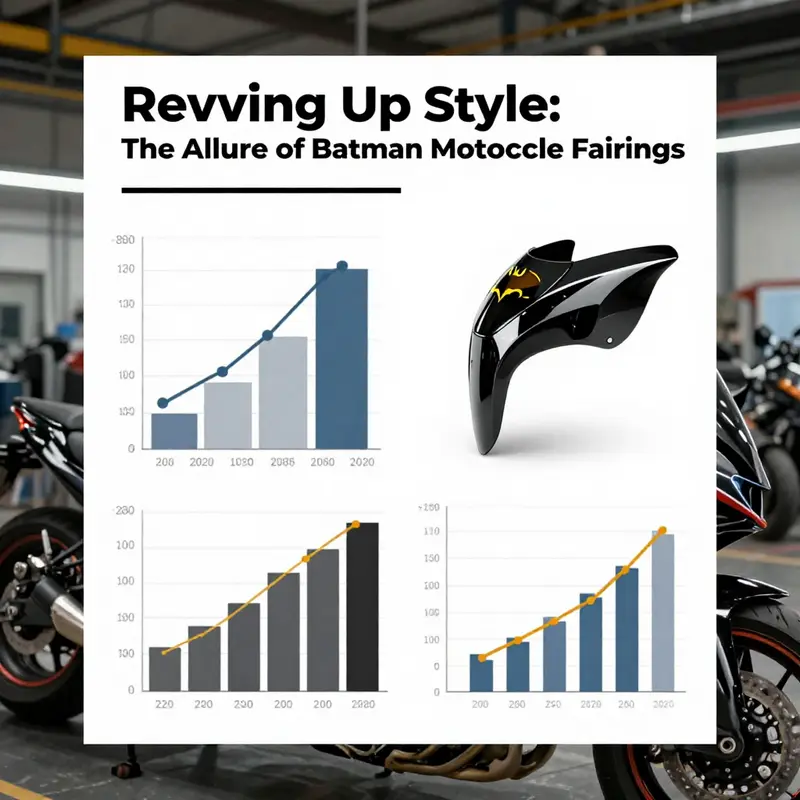
A Batman-themed motorcycle fairing is more than a cosmetic upgrade. It sits at an intersection of culture, material science, and global trade, acting as a small but telling fixture in the larger ecosystem of aftermarket motorcycle parts. The Batwing silhouette, whether rendered as a bold umbrella of polymer or refined with precise airfoiling, captures a moment when design and function converge to create value that travels far beyond its own production line. When we examine the manufacturing side, the story shifts from a single rider’s choice to a mosaic of incentives, constraints, and relationships that shape the price, availability, and quality of these pieces. What begins as a niche aesthetic ends up exposing the mechanics of a modern, globalized supply chain, the pressures of low-cost fabrication, and the subtle economics of customization that power a thriving, if sometimes underappreciated, sector of the motorcycle aftermarket.
The market for Batwing-inspired or Batman-flavored fairings is driven by a diverse set of buyers and shop owners. Some are casual hobbyists seeking a striking visual departure, while others run small-to-mid-sized shops that rely on quick prototyping and rapid turnarounds to meet customer requests. The appeal lies not only in appearance but in the promise of improved street presence and a protected, more aerodynamic shell. In this context, price signals matter. The research that frames this chapter notes a broad spectrum: from inexpensive interior or unpainted inner fairings priced just above a few dollars to full external sets that can climb toward the mid-three-figure range. Those price points reflect a combination of material choice, finish quality, and the level of customization involved. They also hint at the role of scale and process specialization in shaping costs. When a manufacturer can produce large volumes of the same silhouette, unit costs fall and lead times shrink. When a shop pays for a bespoke design or detailed hand finishing, the premium is earned through perceived value and the precision of the fit for specific models or custom requests.
Behind the visible variety lies a disciplined production logic. Global suppliers of motorcycle fairings, including many of the connector nodes in the chain, tend to cluster in a handful of regions where polymer processing expertise, tooling capabilities, and a culture of rapid iteration converge. The most active hubs are often found in coastal or export-oriented provinces where established mass-production ecosystems support quick prototyping, tooling, and scalable manufacturing. In the broader research landscape, this concentration is described in terms of a China-centered supply network, with Guangdong, Zhejiang, and Fujian singled out for their capabilities in lightweight, UV-stabilized polymers and responsive logistics. The advantages are clear: high-volume injection molding capacity, strong surface-finishing ecosystems, and the ability to translate an idea into a physical part with a relatively short cycle time. For buyers, these conditions translate into shorter lead times and more competitive pricing, especially for orders that require little customization or that can leverage standard Batwing-inspired geometries.
The economics of this manufacturing reality hinge on several interlocking factors. The cost of materials—polymer resins, pigments, UV stabilizers, and protective coatings—set the floor for any fairing project. Then there are tooling costs for molds and dies, which can be significant upfront but amortize over large batches. Labor costs, energy prices, and shipping commonly become variable inputs that shift with global trade conditions. When a batch runs smoothly, the benefits accrue as margin preservation and the ability to offer discounts or bundle options, such as integrated mounting brackets or speaker installations that add perceived value without substantial increases in unit cost. Conversely, when design changes are required or when quality control flags appear late in the process, costs can escalate quickly and erode margins. In a market that prizes both aesthetics and performance, the balance between cost discipline and the fidelity of the final product becomes a crucible for manufacturers and retailers alike.
The dynamics of distribution and demand are equally telling. Online marketplaces and B2B platforms have lowered barriers to entry for small workshops seeking to source materials or to sell finished fairings to a global audience. The ability to procure components in smaller lots, test fitment on a single bike, or run limited-edition colorways accelerates experimentation. This capability fuels a cycle of innovation where many variations can be tested with minimal risk, and where the economics of mass customization begin to feel practical. The price and availability of Batwing-inspired fairings are not simply a function of raw material costs; they are also a reflection of the ease with which a shop can translate an idea into a deliverable product, the reliability of suppliers, and the speed with which quality can be verified and reworked if needed.
An important facet of the economic narrative is the relationship between demand for distinctive styling and the risks that accompany it. The Batman motif taps into pop culture, making licensing risk a consideration even if many products fall into the realm of fan art or unofficial design. While the specific legal contours of licensing are beyond the immediate scope of this chapter, the implications for manufacturers and retailers are real: uncertain IP exposure can influence pricing, line continuity, and the willingness of banks or distributors to finance certain runs. This tension—between the thrill of an instantly recognizable silhouette and the caution encouraged by IP exposure—favors producers who can offer clear, consistent quality and rapid response to customer feedback. In turn, buyers become more likely to place repeat orders when they can rely on predictable fit, durable finishes, and warranties that reassure them they are receiving value for their investment.
The impact on local economies is another layer worth examining. When shell parts and associated accessories are sourced and finished in regions with mature polymer processing and abundant skilled labor, nearby communities often benefit from job creation and supplier diversity. Workers acquire expertise in finishing, painting, and assembly that can spill over into related manufacturing activities, elevating the overall capability of the regional ecosystem. The clustering effect supports faster problem solving, shared quality standards, and a more resilient supply chain. In turn, the buyers who import these parts—for retail shops or for custom build services—gain access to a wider range of options, more stable pricing, and the capacity to scale orders in line with demand. The net effect is a micro-economy where design, fabrication, logistics, and retail converge around a single aesthetic impulse, producing employment and value that extend beyond the riders who ultimately install the fairings.
Yet even as the economics of Batman-themed fairings reveal opportunities, they also reveal vulnerabilities. The market’s dependence on a few international manufacturing nodes means that shifts in exchange rates, tariff regimes, or shipping costs can ripple through to end-user prices. Quality control remains a perennial concern: a few poorly finished shells or ill-fitting brackets can undermine confidence in a brand, prompting returns or warranty claims that disrupt cash flow. The emphasis on lightweight materials and UV stability places a premium on material science expertise; should suppliers falter in providing consistent resin formulations or durable coatings, performance discrepancies may emerge. In a sector where visual impact and fit are judged quickly by customers and shop staff, reputation matters as much as price. This creates a reputational incentive to invest in rigorous testing, standardized fitment data, and transparent documentation so that retailers can confidently promise a reliable after-sales experience.
The broader trajectory of these economics points toward a future in which customization accelerates, not recedes. Additive manufacturing and rapid tooling could shrink prototyping timelines further, enabling even more elaborate Batwing-inspired geometries or hybrid designs that blend aerodynamics with personal expression. Automation could improve consistency in surface finishing and paint application, lowering defect rates and enabling more predictable pricing. At the same time, rising environmental and regulatory expectations will push suppliers to optimize waste streams and to adopt more sustainable practices in resin usage and energy consumption. The intersection of sustainability, speed, and customization suggests a market that remains small in absolute scale but rich in strategic value for those who master the balance between design freedom and production discipline. It is a reminder that the economics of a niche product can illuminate the mechanics of a larger ecosystem—the way a single, recognizable silhouette can catalyze a network of innovation, trades, and skills that travels far beyond the bike it adorns.
For readers who want to see how these dynamics translate into concrete product categories, the broader world of aftermarket fairings offers a spectrum of options, from base shells to fully integrated assemblies. The breadth of the category underscores how supply chains, design cycles, and consumer preferences converge to determine what arrives on a shop floor or on a rider’s bike. In practical terms, buyers should weigh not only price but the reliability of fit, the availability of replacement parts, and the stability of coatings when evaluating a Batwing-inspired project. The economics described here is not a grand abstraction; it is the lived experience of shops and riders negotiating one of the most visually striking forms of personalization in contemporary motorcycling. When future chapters turn toward licensing, materials science, and design workflows, this same frame of reference—costs, lead times, and quality—will continue to shape decisions, investments, and outcomes across the aftermarket. For anyone curious about how such a category evolves, exploring representative fairing collections can offer tangible insights into the practical trade-offs that define modern motorcycle customization. As a tangible facet of the larger article, consider the broader scope of aftermarket fairings—the way a single silhouette can unlock a chain of opportunities, collaborations, and markets that ripple through communities of riders and builders alike. In this sense, the Batman motif is not just a stylistic flourish; it is a window into the economics of taste, craft, and global manufacturing at work in a corner of the two-wheeled world.
To connect the discussion to practical navigation of the aftermarket landscape, readers can explore a broad category of fairings that demonstrates how manufacturers and retailers present options to customers. For instance, a representative range of fairings categorized under various brands and styles can provide a sense of the choices available and the trade-offs between price, fit, and finish. This lens helps demystify the market for potential buyers and underscores how a consistent approach to quality and service can support sustainable demand for distinctive, performance-minded cosmetic components. The bottom line is that the economics behind Batman-themed fairings, while specialized, reveal fundamental truths about how design-driven products are produced, priced, and distributed in a global economy that rewards speed, reliability, and a keen sense of customer value. And as the market continues to evolve, the ability to blend cultural appeal with technical excellence will remain a defining driver of success for those who design, manufacture, and sell these winged enhancements.
For additional context on the broader ecosystem of aftermarket fairings and related products, consider exploring the general category that hosts a wide array of options, including those that emphasize sport-oriented performance as well as visually bold styling. The breadth of these offerings reflects the consolidation of design ambition with manufacturing capability, a combination that continues to shape the accessible, craft-oriented corner of motorcycling where the Batman motif finds its place among other expressive, performance-enhancing choices.
Batwing at Speed: The Aesthetic and Engineering of Batman Motorcycle Fairings
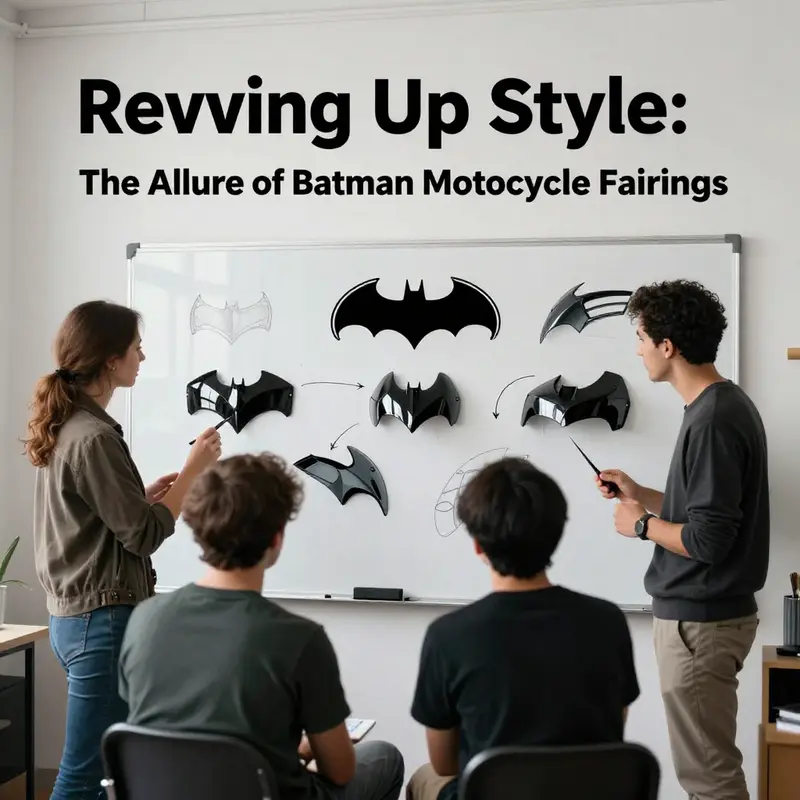
When the rider slips behind the silhouette of a Batwing-inspired fairing, a conversation unfolds between cinema’s shadowy iconography and the hard mathematics of aerodynamics. The Batwing motif is more than a costume on metal; it is a design language that signals intent, speed, and identity. In the contemporary market, these fairings walk a line between theatrical drama and practical engineering. They are not merely cosmetic accessories; they are functional modifications that influence how a bike slices through wind, how rider fatigue accumulates on long rides, and how the machine communicates with the road. The best examples of this category emerge from a sophisticated ecosystem where stylized aggression meets performance criteria. The result is a convincing blend of cinematic memory and engineering discipline that appeals to riders who want their machines to tell a story while they ride them hard. The market reality behind this fusion is clear and instructive: the most effective Batman-inspired fairings are developed through a process that respects both form and function, and they rely on a supply-chain framework that has become highly specialized in lightweight, UV-resistant polymers and composite blends. Across the world, the manufacturing backbone for these parts is nurtured in a handful of provincial hubs, particularly in China’s industrial corridors, with Guangdong, Zhejiang, and Fujian serving as the principal engines of development. These regions offer a mature environment for rapid prototyping, precise molding, and scalable production, enabling makers to move from a tactile prototype to a finished set that can be installed on a broad range of touring and sport-touring platforms. The logic is simple: if the question is how to render a bat-wing silhouette while preserving ride quality, the answer lies in materials science, CNC precision, and the ability to tune the aerodynamics to the specifics of a given bike’s rake, trail, and overall geometry. Polycarbonate and advanced composite blends provide a useful balance of stiffness, impact resistance, and lightness, while clever fairing shapes reduce wind pressure on the chest and shoulders at highway speed, lowering fatigue and improving steering confidence. In practice, full or partial fairings crafted with these materials can shield the rider from wind buffeting without turning the bike into a barn-door on the motorway. The visual language, meanwhile, is shaped by a constellation of cues that have become almost clichés in the best sense: sharp, angular lines that trace the bat-like arc of the wing, a commanding presence at the front end, and a silhouette that reads as both lethal and efficient. LED lighting has become a signature element in this category, transforming the fairing from passive shell to an active, glowing identifier on the road. The all-LED signature lighting system does more than illuminate; it creates a menacing, futuristic aura that aligns with the cinematic vibe while enhancing daytime and nighttime visibility. The use of high-contrast color schemes—deep blacks paired with metallic accents or midnight hues—further amplifies the visual impact. Graphics that nod toward heritage insignia or a stylized eagle motif can echo the broader branding language of iconic touring lines, giving the fairing a sense of lineage without drowning its modern performance cues in ornament. These aesthetic decisions are not arbitrary. They are born from a recognition that riders want a machine that communicates who they are while delivering measurable ride characteristics. The fairings themselves are engineered to improve high-speed stability by smoothing the flow of air around the rider’s torso and the front wheel, thereby reducing fatigue and allowing for longer, more comfortable highway sessions. The practical impact is nuanced: wind fatigue is not merely about keeping a rider upright at speed; it’s about maintaining control and reducing the micro-adjustments a rider makes as wind gusts roll across the bike’s surface. In this sense, the Batwing-inspired fairing is a hybrid of art and physics, where the visual drama supports a rational performance envelope. The design process behind these pieces often begins with a clear concept: a silhouette that evokes the bat-wing without compromising the bike’s existing geometry. Designers work with wind tunnel analyses and computational fluid dynamics to refine the curves, ensuring that the resulting fairing does not introduce adverse flow separation at critical speeds. The result is a shape that looks aggressive yet behaves predictably in the real world. As a consequence, modern Batman-inspired fairings can be seen as part of a broader shift in motorcycle culture toward purpose-built machines. Riders are increasingly seeking identity in their hardware—an outward sign that they belong to a lineage of riders who value both style and substance. The design cues—an angular edge here, a shallow vent there, a crisp line that follows the fairing’s edge—register instantly with observers as a statement of intent. Yet the same cues are chosen with a practical eye: the vents contribute to cooling, the edge lines help manage separation, and the overall geometry preserves leg and hip clearance for long-distance comfort. A contemporary touring model that embodies these trends demonstrates the convergence of lighting upgrades, wheel finishes, and seating arrangements with a Batwing aesthetic. LED accents can outline the fairing’s silhouette, while wheels with contrast-cut finishes echo the high-contrast theme and add to the bike’s perceived performance. A one-piece seat design, while primarily oriented toward rider comfort, also complements the fairing’s clean lines by reducing visual clutter at the rear of the bike. The result is a holistic package in which the Batman motif is not an afterthought but a cohesive design language that threads through the bike’s front and rear aesthetics and the rider’s experience. The commercial landscape that supports this category is equally telling. A global supply network for motorcycle fairings centers on a few major production nodes, with large-scale manufacturers offering a spectrum from prototype services to turnkey, mass-produced sets. This is the engine behind the ability to offer both smaller batch runs for enthusiasts and larger runs for shops and distributors. The practical takeaway for buyers and builders is that the cost and lead times can vary widely depending on the level of customization, the complexity of the fairing, and the quantity ordered. It is here that B2B platforms and direct collaboration with Chinese manufacturers become a practical route to bring an idea to fruition. Buyers who want to push the envelope in terms of shape, material, and finish can leverage these channels to achieve a tailored solution, from the initial sculpt to the final painted surface and mounting hardware. In short, Batman-inspired motorcycle fairings are the product of a design philosophy that treats the bike as an extension of the rider’s persona, while also respecting the mechanics that keep a motorcycle stable, efficient, and predictable at speed. The current moment invites riders to balance identity with utility, to demand a silhouette that looks like a cinematic hero and behaves like a well-engineered machine. For those who want to explore how the market organizes its offerings, a broader category page such as the BMW fairings section offers a useful glimpse into how manufacturers segment designs and fitments across different platforms. BMW fairings. This cross-brand framework helps illustrate that the Batman aesthetic is not tied to a single model line; instead, it travels across a spectrum of platforms, with customization being the common thread that binds engineering and style. As the design language continues to mature, riders can anticipate more integrated lighting systems, smarter air-management features, and more deliberate choices about color, contrast, and texture. The push toward a one-piece seat and refined rider ergonomics signals a broader shift toward performance-minded touring, where the rider’s comfort is treated as a driver of the overall dynamic rather than a separate consideration. The chapter of the story that remains unwritten is how future materials and fabrication techniques might push the Batwing form even further. Advances in light- weight composites and UV-stable polymers could unlock thinner, stiffer shells that deliver more aggressive lines without sacrificing impact resistance. More sophisticated manufacturing workflows, such as modular fairing systems and rapid-prototyping cycles, could shorten the distance from an initial sketch to a complete, fully painted set that’s ready for installation. In the meantime, riders who crave this look will continue to navigate a market that blends cinematic reference with practical aerodynamics, and will value suppliers who can deliver on both fronts: a striking silhouette and dependable performance. External resource: https://www.harley-davidson.com/us/en/motorcycles/2026-street-glide-liberty-edition.html
Final thoughts
In summary, Batman motorcycle fairings represent more than just visual upgrades for motorcycles; they signify a unique intersection of design, culture, and economic opportunity. Understanding the market dynamics, technical specifications, and customization trends surrounding these products can empower businesses to tap into a profitable niche. By leveraging the popularity of the Batman brand and the demand for personalized motorcycle aesthetics, stakeholders can capitalize on an exciting market trend that appeals to a broad audience. As the customization movement continues to grow, those in the motorcycle industry should remain vigilant and innovative to stay ahead of emerging trends.