
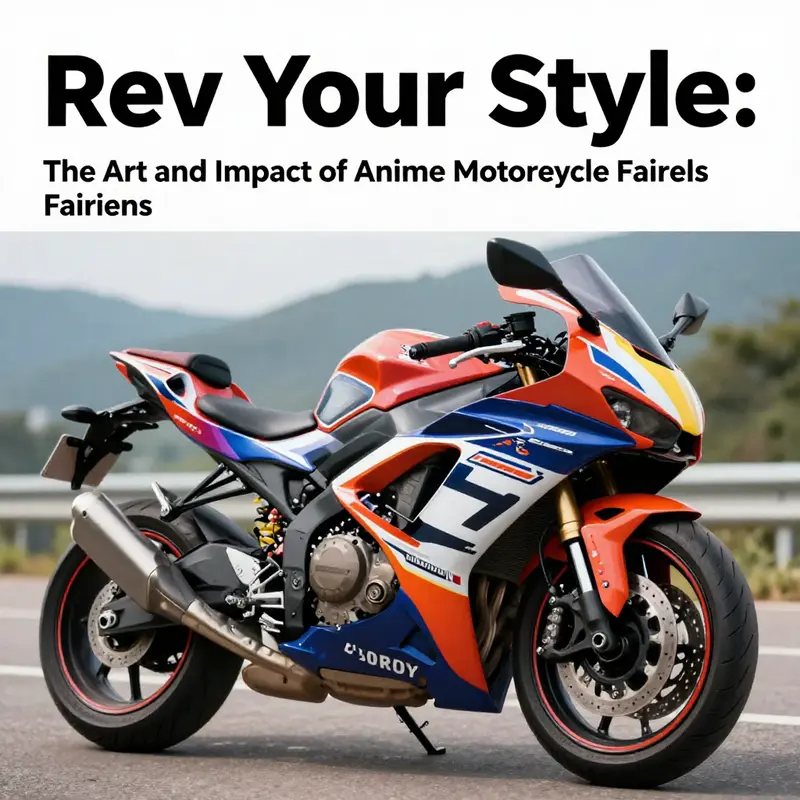
Anime motorcycle fairings have emerged as a striking fusion of functionality and artistry in the world of motorcycling. As business owners in the motorcycle accessories market, understanding this trend is crucial for tapping into a growing demographic. These custom-designed body panels not only enhance the aerodynamics of motorcycles but also transform them into vibrant expressions of popular anime and manga culture. In the upcoming chapters, we will delve into the aesthetic appeal of these fairings, the materials and manufacturing processes behind them, current market trends, the installation process, and their cultural impact on the motorcycle community. Each chapter will provide insights that can help businesses better position themselves in this niche market.
Rolling Canvas: How Anime-Inspired Motorcycle Fairings Turn Bikes into Moving Portraits
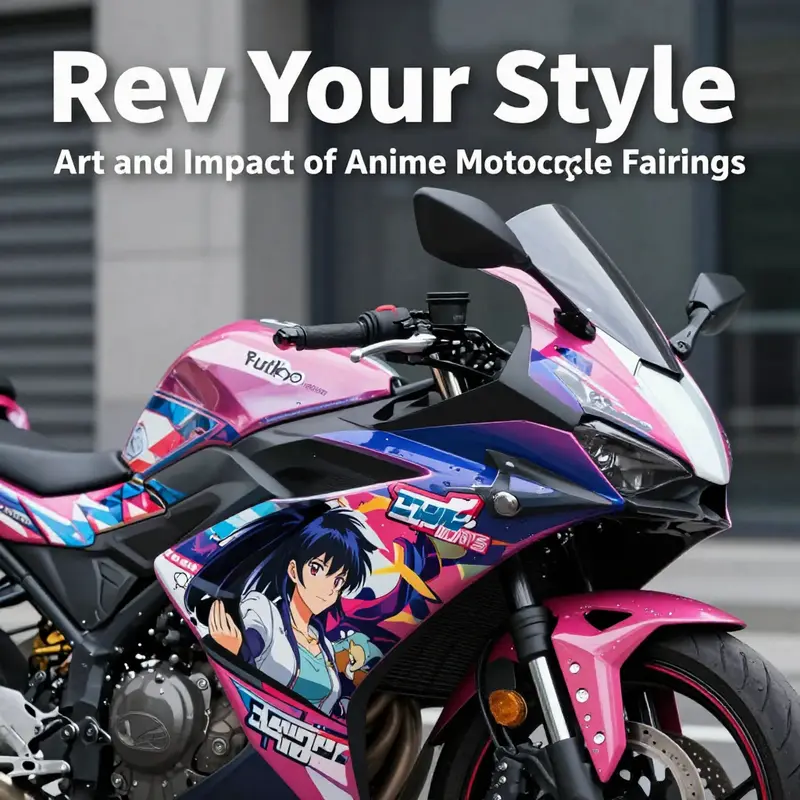
On the open road, a motorcycle is more than a machine; it is a moving stage where form meets function, speed meets narrative, and practicality gathers an edge of fantasy. Anime-inspired fairings amplify that edge by transforming the bike’s silhouette into a rolling canvas. They are not mere body panels; they are carefully engineered surfaces that manage air, reduce drag, and shield the rider from the elements, while carrying the bold lines and vivid color palettes that define anime and manga aesthetics. The marriage between high-performance engineering and dynamic artwork creates a dual-purpose object: something you ride and something you carry with you in your imagination. When a rider leans into a turn or slices through a gust, the fairings perform their aerodynamic duty with the same precision that a seasoned animator uses to pace a shot. Yet at every moment, they also tell a story, whispering about favorite characters, favorite scenes, and favorite moments of storytelling from a culture that has long blurred the line between art and life. It is this duality—the efficiency of a road-ready shell and the expressive language of popular animation—that makes anime fairings feel less like accessories and more like a personal manifesto in motion.
The aesthetic grammar of these panels is unmistakable. Bold color fields collide with dramatic line work to create a sense of motion even when the bike is at rest. The stark contrasts, gradient skies, or electric neons that characterize many anime universes translate into the fairing’s surface as a conversation between light and shadow. The artwork is not a mere decal slathered on by chance; it is a carefully composed composition that considers how the rider’s body position, the bike’s curves, and the wind’s path over the panels will reveal or conceal parts of the image as speed changes. The effect is cinematic. A rider can feel the same surge of storytelling as a viewer feels watching a pivotal chase scene unfold on screen, except in this case the chase happens on asphalt and the protagonist is the rider themselves. In this sense, the fairing becomes a lens through which everyday transport becomes theater, where the mundane act of riding is reframed as a live performance of fantasy and identity.
The materials behind this transformation are chosen to honor both art and performance. Fiberglass and ABS plastic are commonly employed because they provide a balance between lightness and rigidity. A lighter shell helps preserve handling and acceleration, which matters as soon as the wind starts to bite or the curve tightens. Yet the need to carry intricate artwork also nudges designers toward substrates that can hold fine detail and resist weathering. The finishes—clear coats that deepen color while preserving subtle shading, or matte and gloss textures that modulate how light plays across a scene—are part of the art direction as much as the ink and pigment on a page. Even the layering of decals, airbrushed gradients, and hand-applied elements is a choreography of texture and tone. The goal is not to overwhelm the eye but to invite it to travel across the bike’s profile: first a bold silhouette, then a cascade of hues, then a foreground figure or motif that catches the gaze, and finally a last, lingering impression shaped by the way light reflects off the surface at different angles.
This visual language also reflects a broader culture of pop culture appreciation that has long circulated online and in maker communities. Platforms like Pinterest have become a bustling archive of ideas, sketches, and color studies, where enthusiasts collect references, swap techniques, and envision the next turn of a fairing’s story. The result is a democratization of design—a space where an individual can curate a personal lexicon of characters, scenes, and color schemes and translate that lexicon into a tangible, rideable object. The appeal extends beyond pure aesthetics: such fairings offer a sense of belonging and shared language among fans who recognize the iconography and nod to the narratives that shaped their passions. For riders exploring how to fuse their favorite franchises with their daily transport, model-specific options provide practical starting points. For example, if a rider wants to align anime-inspired artwork with a particular bike geometry, there are dedicated fitments and kits that respond to the bike’s unique contours. This makes the dream feel workable, not merely aspirational. To see what’s possible in a model-focused context, one can explore the Honda fairings category, which showcases how different bike architectures accommodate high-impact designs while maintaining performance and fit. Honda fairings offers a window into how aesthetics can respect the machine’s engineering language while still making a bold visual statement.
Yet the aesthetic appeal lies not only in the image itself, but in the way such imagery communicates a rider’s relationship to popular culture. For younger riders especially, anime fairings become a form of self-expression—an outward sign that the bike is not just transportation but a book of personal interests, a manifesto written in color and line. The artwork becomes a narrative shorthand: a favorite character can evoke certain values—courage, cunning, humor—and the rider can draw from that shorthand in the way they ride, respond to wind, and engage with the world around them. This is where the fairing’s artistry meets daily life. The bike’s lines, which are initially chosen for aerodynamics and balance, become the canvas for a story that unfolds with every mile traveled. The result is a scooter, a sportbike, or a touring machine that carries the rider’s history and tastes into a shared, public space where others can read the artwork as a form of visual conversation.
As with any specialized form of customization, the practice invites practical considerations that balance artistry with durability. The fairing must resist the onslaught of weather, debris, and occasional mishaps without dulling the vibrancy of the artwork. This is where finish quality and protective layers matter as much as the initial concept. A robust clear coat can help maintain color richness and prevent micro-scratches from becoming a visually disruptive feature. However, care with installation and maintenance remains essential. The panels must be mounted to preserve factory alignment, ensuring that airflow and cooling pathways remain efficient. The art also benefits from thoughtful edges and seams that minimize wear and tear, especially in areas where hands and knees repeatedly engage during cornering and braking. When done well, maintenance becomes a ritual of care that extends the life of the artwork as much as the mechanical performance of the bike itself. In this way, the fairing’s beauty is not a fragile ornament but a durable, evolving statement that riders can cherish over many seasons.
The cultural resonance of anime fairings grows as communities discuss favorite motifs, color theories, and the ways in which different art periods and styles can be harmonized with motorcycle geometry. This is where the aesthetic work becomes a social act—an invitation to share, critique, and remix. The result is a vibrant ecosystem in which artists, builders, and riders collaborate across borders and disciplines. The bike becomes a collaborative canvas that can be reimagined again and again, each reimagining a new chapter in the rider’s ongoing story. In this ecosystem, the line between art and engineering blurs, and the rider’s journey is inseparable from the artwork that rides along with them. It is not simply about looking fast; it is about feeling seen—by the art you carry, by the culture you honor, and by the road that proves the message is not merely theoretical but lived in motion.
To those exploring how the world of animation intersects with the mechanical realities of riding, the experience is especially inviting because it blends imagination with accessibility. The visual vocabulary is familiar to fans, yet the medium—three-dimensional, high-performance transportation—adds a layer of tactile immediacy that a screen cannot. The fairing becomes a bridge between two realms: the staged, cinematic language of anime and the street-level language of everyday travel. It is this bridge that explains why such fairings have grown from a niche hobby into a widely acknowledged form of personal expression within motorcycling culture. For readers who want a practical entry point into this aesthetic, there are ways to explore fairings that honor the rider’s taste without compromising the ride. The blend of artistry and engineering invites riders to become curators of color and form, to design their own micro-universes, and to share those universes with a community that speaks the language of speed and storytelling in one breath. If you’re curious about how these concepts translate into product ideas and implementation, consider visiting sources that showcase a broad palette of fitments, finishes, and art styles that can guide a first or next project toward a cohesive, artful result.
External resource: For a concise primer on fairings and how they influence both aesthetics and performance, see this external guide: https://www.gomototrip.com/motorcycle-fairings/
From Mold to Motion: The Materials and Manufacturing Craft Behind Anime Motorcycle Fairings
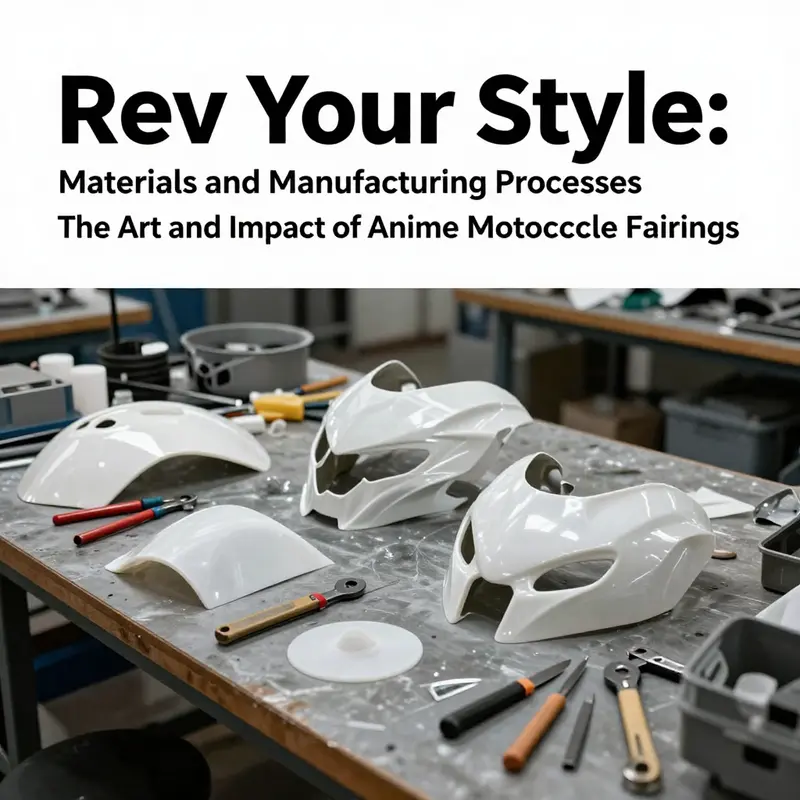
The spectacle of anime-inspired motorcycle fairings rests on a quiet, methodical craft that blends engineering pragmatism with artistic bravura. These panels are not merely decorative shells; they are aerodynamic surfaces that must survive wind, vibration, and the rough etiquette of open-road travel while carrying intricate artwork that celebrates beloved characters, scenes, and themes from Japanese animation. To understand why these fairings look the way they do and hold up under pressure, it helps to trace the journey from raw materials to finished pieces, and to appreciate how each choice in material and process ripples through performance, durability, and visual fidelity. The dialogue between form and function begins with the materials themselves—three main options recur in the life of anime-styled fairings—and then moves through a sequence of manufacturing steps that translate a flat sheet into a curved, aerodynamically conscious skin for a motorcycle.
ABS plastic is typically the most approachable starting point for many mass-produced fairings. Its appeal is largely economic: it is affordable, relatively impact-resistant, and simple to shape. In production terms, ABS parts are often formed by injection molding or vacuum forming. Injection molding excels when a high volume of identical parts is required, delivering precise geometries and repeatable wall thicknesses. Vacuum forming, while less costly upfront, is equally capable of creating smooth, contoured surfaces suitable for graphic overlays. The result is a base that can ride the line between durability and lightness, which is essential when speed and handling are on the line. Because ABS responds predictably to heat, designers can push it into the elegant curves that anime design loves—graceful swells and sharp, intentional interruptions that correspond to character lines in the artwork. The practical value of ABS lies not only in its price but in its amenability to post-processing: it sands well, accepts paints evenly, and tolerates a clear coat that can protect an image at the front line of wind exposure.
Fiberglass composites provide a different vocabulary for the same cinematic dream. When a design requires more daring aerodynamics or a greater sense of mass and rigidity, fiberglass becomes the tool of choice. The material is laid up in a mold through a process known as hand-laying, where layers of fiberglass fabric are saturated with a resin matrix—polyester or epoxy are common choices—and then cured to a solid, rigid structure. The weight profile shifts upward relative to ABS, but with that extra mass comes exceptional stiffness and the ability to reproduce highly detailed, large-scale shapes. This is where form fidelity truly shines: the smooth, uninterrupted surfaces that carry intricate contours can be carved with a degree of precision that is harder to achieve with cheaper plastics. Finishing options extend the aesthetic potential: gel coats can yield a glossy, museum-like surface, while paint layers add depth and texture, allowing subtle shading and highlights that work in concert with the artwork applied on top. Because fiberglass can be tailored in thickness, builders can modulate stiffness in critical areas such as the lower edge where air pressure is most demanding during high-speed runs. The durability is robust, but weight and manufacturing time increase, so fiberglass is often reserved for fairings that demand drama in their silhouette or that target riders seeking a commanding visual presence on the road.
A third material, calendared vinyl, does not form the structural shell in the same way as ABS or fiberglass, yet it plays an indispensable role in the visual narrative of anime fairings. A vinyl wrap, typically around 80 microns thick with a gloss laminate, is applied directly to the fairing surface. The appeal here is faithful reproduction of graphic detail, color vibrancy, and durability of the image under UV exposure. Vinyl allows artists to render complex character artwork, scenes, and symbols with high fidelity, including subtle gradients and fine line work that would be recalcitrant to paint alone. The wrap’s UV resistance keeps colors bright even after miles of sun exposure, rain, and the occasional abrasion from road debris. The practical advantage is also in serviceability: a vinyl finish can be replaced or refreshed without removing the underlying panel if the artwork shows wear or if the rider desires a new theme. The vinyl layer is a vital bridge between the base material and the visual narrative—the medium that makes the artwork legible at a glance, even when the bike is in motion and the stall of a fairing’s edge is catching gusts of air.
These material choices do not exist in isolation; they are woven into a broader manufacturing workflow that respects both the craft and the performance of the motorcycle. The journey from concept to riding fairing begins with a precise mold or a digitally defined template. For mass production, the mold captures standardized geometries that ensure uniform fit across batches and across models. Small variances in a mold can magnify across hundreds of panels, so engineers invest heavily in mold maintenance and quality checks, balancing tolerances with the realities of real-world mounting points on different bike frames. For custom or limited-run pieces, artisans might commission hand-fabricated forms or modify existing molds to accommodate unusual bodywork or a bespoke silhouette. In either case, consistency remains a central objective because misalignments can compromise aerodynamics or create gaps where wind and water intrusion threaten the finish.
When the base fairing is formed, attention shifts to finishing and assembly. A common approach for ABS starts with a thorough surface prep: deburring, sanding, and priming to ensure the subsequent layers bond cleanly. If the base is painted, the primer layer establishes a uniform surface that helps prevent color sinks and ensures even gloss. For fiberglass parts, the curing stage is critical. The resin cures through a chemical reaction that develops a stable, rigid matrix, but it also generates heat and can lead to internal stresses if not controlled. Builders mitigate this with slow curing schedules, careful ventilation, and sometimes post-cure heat treatments to relieve internal stress and reach the desired hardness. Sanding between coats is part of the discipline, smoothing out any irregularities and preparing the surface for the next layer—be it base color, clear coat, or a protective gel coat that seals the exterior from the elements. The result is a smooth, uniform surface that provides a ready canvas for artwork and graphics.
If the focus leans heavily toward the graphic language of anime, calendared vinyl steps in as the painter’s brush on a flexible canvas. The artwork is printed on durable film and then applied with meticulous alignment to protect seams and maintain continuity with the fairing’s geometry. The vinyl’s adhesive must endure the bumps and vibrations of ride quality while resisting peeling at the edges. This is a delicate balance: the graphic must stay crisp as the panel flexes ever so slightly with temperature changes and road conditions. A laminated or clear protective layer often seals the vinyl against abrasion and moisture, extending color longevity and helping to maintain the intended visual impact over time. Color management becomes a practical science here: color matching, gloss levels, and edge deflection are all considered to ensure the artwork remains legible at varying angles of light and from a distance that riders typically view their machines.
Beyond the materials and processes themselves, the craft of anime fairings embraces a broader philosophy about customization, fit, and performance. The fairings are designed not only for beauty but for compatibility with the motorcycle’s existing hardware. Mounting points must align with the bike’s frame, fairing stay brackets, and turn signals, while air intake ducts and ventilation paths must be preserved or cleverly integrated to avoid compromising engine cooling and electrical routing. The aerodynamic profile is not merely a silhouette; it is a functional component that influences stability, wind buffering, and the rider’s sense of control at speed. Designers must account for the added surface area from a large graphic panel while also considering weight distribution, center of gravity, and the potential need for quick maintenance access to critical components beneath the skin. The result is a synthesis where artistry—an homage to beloved anime worlds—coexists with engineering discipline that protects, enhances, and respects the machine’s core performance.
In practice, the lifecycle of an anime-themed fairing often involves a careful sequencing of material choice, fabricating a precise form, and applying graphics with an eye toward durability and fidelity. The decision tree hinges on the rider’s priorities: if cost and ease of production take precedence, ABS with vinyl graphics can deliver a compelling look without demanding extensive labor. If sculptural drama and maximum rigidity are paramount, a fiberglass-based approach may be favored, even if it invites longer lead times and higher weight. Regardless of the path chosen, the finishing rituals—priming, painting, sealing, and graphic application—stand as the final, decisive steps that translate a concept into an on-road reality.
Riders and builders alike appreciate the value of sourcing that aligns with performance goals and artistic intent. The materials and processes described here are part of a larger ecosystem of customization that must balance mechanical compatibility with expressive design. This balance is what makes anime motorcycle fairings so compelling: they offer a canvas for storytelling while maintaining the practical grammar of riding performance. The vocabulary of this craft—the terms ABS, fiberglass, and vinyl—belies the complexity of decisions that govern how a fairing behaves at 80 miles per hour and how it still looks fresh after a season of rides and shows. It is in this tension between imagery and engineering that the true artistry of fairings emerges: the way a character’s gaze seems to follow the rider as the bike leans into a corner, or how the color palette resonates with the bike’s lines at dusk, when the world around the rider shifts from chrome and asphalt to silhouettes and light.
For those who want to explore this craft more deeply, a practical path often starts with models that share similar mounting strategies and base geometries. The choice of base panels—whether a stock fairing line or a compatible aftermarket alternative—affects both the feasibility of a given artwork and the confidence with which the rider maintains performance. See a model-specific entry such as those found in the Honda fairings category for a sense of how form and fit can influence the choice of materials and the pace of production. This approach keeps the narrative grounded in real-world practice while inviting exploration of what the material palette can achieve in different contexts.
Ultimately, anime motorcycle fairings embody a living synthesis of art and engineering. The materials chosen—ABS for cost-effective mass production, fiberglass for sculptural power and durability, and vinyl for graphic fidelity—each tell a part of the story. The manufacturing methods—thorough molding or hand-laying, careful curing, meticulous sanding, and precise graphic application—translate that story into a surface that meets the road bravely and looks extraordinary while doing so. As riders push toward bolder expressions of personality on two wheels, these fairings offer a tangible way to wear a favorite narrative on the bike’s exterior, turning speed into a stage and everyday travel into a roaming gallery. For those curious about integrating such graphics with a motorcycle’s existing ecosystem, exploring model-specific pathways can provide practical insight into how these materials and processes align with the bike’s geometry, performance needs, and the rider’s creative ambitions.
External reference for broader context on materials and customization workflows can be found here: https://www.aliexpress.com/wholesale?catId=0&initiativeid=SB20260126181643&SearchText=anime+motorcycle+fairings
Riding the Spectrum: Market Trends Shaping Anime Inspired Motorcycle Fairings
The bike on the open road is no longer a machine bound only to function. It is a moving canvas for personal narrative, a wearable sculpture that speaks before the rider does. In this light anime inspired fairings emerge as a distinctive niche within motorcycle aesthetics. They fuse the practical demands of aerodynamics, weather resistance and rider protection with the vibrant narrative artwork that characterizes anime and manga culture. The result is not merely decoration but a calculated expression of identity a way for riders to announce who they are what they love and how they see themselves in the global subcultures that orbit two wheels. The market for custom cartoon tinged body panels grows because it speaks a language that modern riders understand personalization as storytelling that travels on wheels.
The logic behind this trend rests on a few converging forces: novelty that travels well on the street. Riders want parts that do more than fit; they want parts that communicate. The visual impact of a fairing the way light catches it the way color and line work interact with the bike silhouette plays a pivotal role in first impressions. When those visuals draw on a beloved animation or manga aesthetic they do more than attract attention. They create a shared shorthand among enthusiasts who recognize the reference and feel a kinship with the creator level detail. In an era where social media rewards highly distinctive instantly recognizable imagery anime inspired fairings offer a potent form of wearable art that can be photographed shared and celebrated online just as much as in the real world.
The broader customization economy has lowered barriers to entry for designers who want to translate pop culture into three dimensional form. Digital fabrication lightweight materials and modular production processes enable small shops and independent artisans to prototype iterate and bring bold graphic concepts to life without the same overhead once required for bespoke bodywork. The materials commonly used for these fairings fiberglass and ABS plastics strike a careful balance between stiffness and lightness ensuring the art does not impose a heavy penalty on handling acceleration or fuel efficiency. The panels can be shaped to maintain clean airflow around a rider preserving the aerodynamic intent of traditional fairings while offering a larger more expressive surface area. In this context art is not a luxury it is a practical extension of performance design.
The market dynamics surrounding protective gear and accessories underpin the appeal of anime themed fairings. While the primary function of a fairing remains protection and aerodynamics it exists within a family of products that speak to the rider’s sense of identity. Helmets jackets gloves and even decals have long carried the language of pop culture into the everyday riding experience. The alignment between helmet graphics and fairing artistry is no coincidence. When a rider coordinates their gear with their bike’s visuals the result is a cohesive personal narrative rather than a disparate collection of parts. This alignment helps explain why brands that bridge licensing with iconic franchises can cut through saturation and offer a sense of authenticity that resonates with fans who want their gear to mirror their passions. In light of this the fairing becomes a natural partner to helmet graphics in a broader ecosystem of expressive, culture forward equipment.
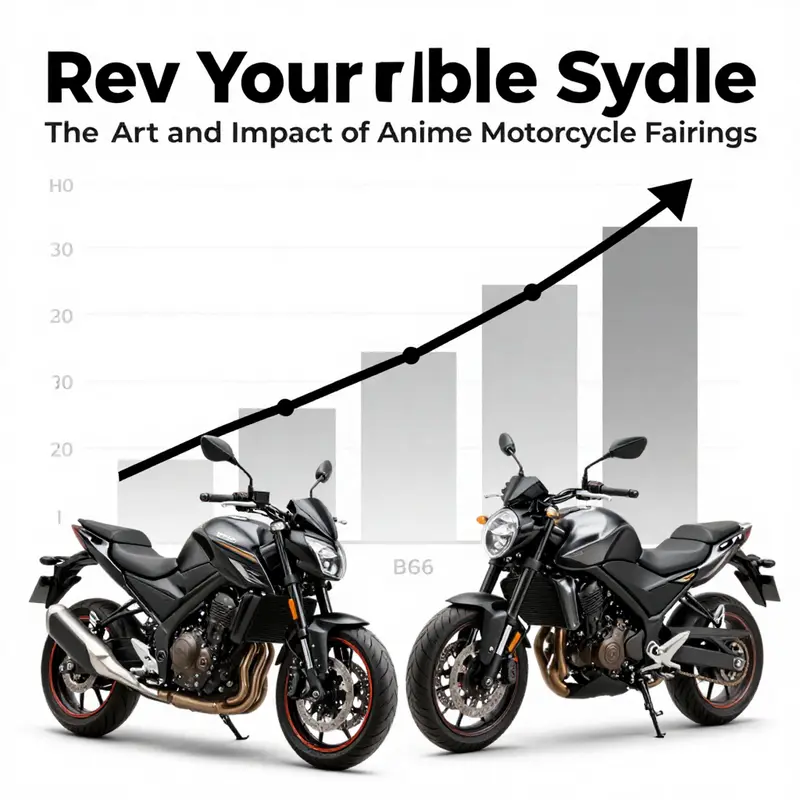
From a market perspective the currents are clearly favorable. The global helmet market which supports the ecosystem of protective headwear and its decorative variants is forecast to reach substantial scale in the coming years. Industry projections point to a sizable expansion through 2032 driven by heightened safety awareness ongoing design innovation and a willingness among consumers to invest in statement pieces that blend performance with personality. While hard data on anime themed fairings in particular remains nuanced and sometimes scarce the alignment with general trends in customization and pop culture merchandising suggests a strong sustainable demand for graphic panels that speak to younger riders and cosplay communities a demographic that values both aesthetic impact and the ability to personalize a vehicle as an extension of self.
As these dynamics unfold the once tailored world of motorcycle bodywork expands into a space where licensing franchise partnerships and cross media storytelling begin to influence product development. Designers now imagine fairings not as static shells but as platforms for narrative scenes character silhouettes or thematic motifs that can be updated swapped or reimagined as a rider’s tastes evolve. The possibility of collaborating with franchises to produce limited edition runs or rotating art collections is more than a marketing curiosity it is a practical strategy for keeping a model line fresh and relevant in a crowded market. In this sense the fairing becomes a bridge between the rider’s personal fandom and the broader world of two wheeled performance culture. Even as performance must remain credible wind resistance rigidity and fit are non negotiable the aesthetic layer gains strategic importance as a differentiator in a landscape of increasing competition and commodification.
The economics of this niche also reflect a broader shift in how custom parts move from concept to consumer. Wholesale and independent production channels enable designers to reach enthusiasts who crave personalization without the hour long one off fabrication that once defined custom bodywork. The workflow often blends small batch production with order specific customization allowing riders to select base shapes adjust color schemes or add specific graphic elements while maintaining feasible lead times. This balance between customization and efficiency is critical it preserves the art’s integrity while ensuring the product remains accessible to a community that values both exclusivity and practicality. As a result the anime fairing segment may grow not as a mass market category but as a robust designer led micro market that thrives on collaboration licensing opportunities and the responsiveness of agile manufacturing partners.
Riders today are increasingly adept at navigating the visual economy that surrounds their passions. They curate their online portfolios share build stories and participate in collaborative projects that extend beyond the bike itself. The public facing story of a bike with its anime inspired surface its careful integration of form and character and its attention to silhouette and color becomes a kind of social currency. This phenomenon reinforces the idea that customization is not merely a hobby but a lifestyle signal an outward display of how riders relate to communities including cosplay circuits fandoms and automotive subcultures that celebrate artistry on wheels. In such an environment the most successful products will be those that respect the rider’s need for safety and performance while offering a compelling crafted narrative on the skin of the machine.
For readers exploring the practical side of integration there is a clear pathway from concept to street those who study or design within this space should consider how licensing options material choices and production methods interact with rider expectations. Designers who grasp the importance of color theory character composition and dynamic line work will deliver panels that not only survive the weather and the road but also invite a second and third glance. They will understand that the fairing is a stage set for movement a surface that becomes more animated as the bike learns to lean drift and accelerate through corners with confidence. The audience for these pieces is not a monoculture it is a cross section of street riders hobbyists and digital communities that celebrate the fusion of sport art and narrative possibility.
As the chapter of this market unfolds one can observe a broader implication the rise of anime fairings signals a shift toward experiential customization. Riders are less content with a paint job that merely looks good in a showroom or on a glossy catalog they want something that can tell a story in motion something that responds to the rider’s evolving tastes and something that can honestly be called art in a functional medium. The fairing in this sense becomes a living canvas that grows with its owner a piece of gear that carries memory fandom and identity across miles of asphalt. This is how a niche becomes a trend through resonance accessibility and the enduring appeal of story told in color and contour.
For those seeking practical touchpoints the conversation remains anchored in the essentials of fit finish and feasibility The fairing must align with the motorcycle’s frame retain rigidity under wind pressures and accept fasteners and gaskets that ensure a reliable seal against the elements It must also allow for effective maintenance easy access for repairs and reasonable serviceability if the artwork shows signs of wear or fading In other words the aesthetic impulse cannot outpace the engineering reality Yet the ongoing dialogue between form and function is precisely what sustains growth in this market With digital tooling advancing and consumer appetites for expressive character inspired gear continuing to expand anime themed fairings are well positioned to become a recognized and respected facet of motorcycle customization an invitation to ride as a moving living art piece that communicates as clearly as a rider’s voice.
For riders who want to explore the cross section between customization and performance while staying rooted in a broader ecosystem of parts and accessories it helps to keep an eye on how the industry evolves Product categories and design languages will continue to mix matching traditional aerodynamic considerations with bold narrative driven artwork In the end the fairing serves not only as protection from wind and weather but as a symbol of the rider’s passion a compact portable manifesto that travels with every turn of the wheels The result is a market that honors both the craft of making and the joy of belonging a spectrum where art and engineering share the same horizon.
If you are curious about how panels pair with specific fitments you can explore model specific offerings that align with widely used platforms and styles in the market For instance many riders look for options that work with popular fairings designed for a variety of brands and models ensuring compatibility across a spectrum of motorcycles while preserving the integrity of the artwork For readers who want to see how this plays out in the real world of design and assembly a practical example can be found in Honda fairings This resource showcases how base shapes and cover sets can be customized with graphic elements to achieve a cohesive look that respects the underlying engineering.
Rolling Canvas on Two Wheels: A Precision Guide to Installing Anime Motorcycle Fairings
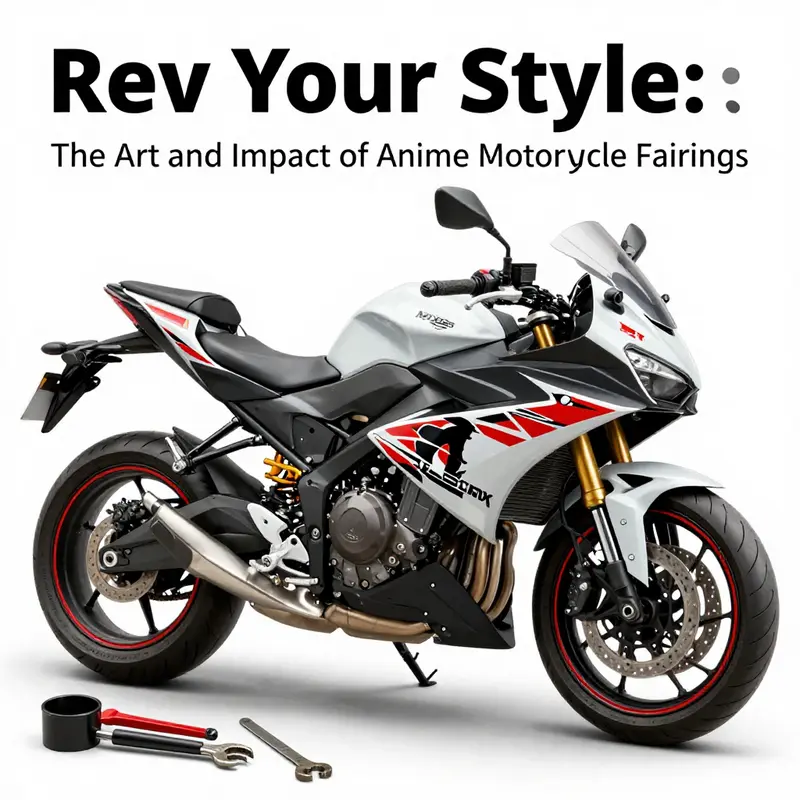
The idea of anime motorcycle fairings is more than skin and color; it is a statement of personal artistry that sits where air meets attitude. When you roll out with panels painted in scenes, characters, and colors inspired by anime, the bike stops being a machine and becomes a mobile gallery. Yet translating that vision from a sketch on a napkin to a clean, aerodynamic form on the road requires a careful, methodical approach. Installation is not just about snapping parts into place; it is a dialogue between style and performance, between the bike’s geometry and the rider’s intent. The goal is to preserve the bike’s original handling and reliability while letting the artwork speak through its silhouette. This is the moment where craftsmanship and imagination converge, and the process becomes a shared ritual between creator and machine.
Choosing the right fairings is the opening act of that ritual. Anime fairings are often crafted to fit a range of models, but compatibility still matters as much as the art. A kit that looks perfect in photos can compromise the bike if it does not align with the frame mounting points, body lines, or wheel clearance. The fitment challenge is real: too tight and the edges can rub, too loose and the panels may flutter in wind or shift under braking. Before you lay hands on tools, confirm the model compatibility and mounting points with the seller. The fitment details guide, sometimes tucked into product pages or manufacturer specifications, are not merely bureaucratic steps—they are the map that keeps your bike safe and your artwork intact. For riders who want a broader sense of how fairings align with different models, a trusted fitment guide offers an excellent reference point and can help you anticipate what to measure before you order. This planning phase is the backbone of a successful transformation, because a confident plan reduces improvisation on the lift and keeps the bike balanced.
As you move from plan to practice, gathering the right tools and materials becomes the next hinge point. A basic toolkit is not enough here; you need a thoughtful setup that respects both performance and finish. A socket wrench set and a full set of drivers are essential, but so are a torque wrench, protective gloves, and eye protection. Cleanliness is a silent ally in a project like this. Isopropyl alcohol and microfiber cloths help preserve paint, while surface prep inside and around the mounting areas prevents misalignment that could show up after a ride. The right fasteners are critical too. Many anime fairing kits rely on factory-style clips and hardware, but some may require slightly different spacers or longer bolts to accommodate a new profile. Substituting parts can alter the center of gravity, increase vibration, or change how the panels flex at speed, so follow the kit instructions to the letter unless the manufacturer explicitly says a modification is acceptable.
The removal of existing bodywork marks the first hands-on moment of the installation. It is a moment of respect for what came before and a recognition that every screw and clip has a memory of past rides. Photograph each step so you can retrace your path during reassembly. Label small parts in a labeled container; you will thank yourself when it is time to reattach a stubborn clip or replace a missing fastener. As you detach mirrors, lights, and the old panels, you begin to see the bike as an architecture rather than a collection of parts. The new anime fairings, with their lighter substrates like fiberglass or ABS, will typically add a touch of weight distribution but not enough to demand a reevaluation of your suspension. In fact, many riders appreciate how a well-tuned kit preserves the machine’s balance while delivering a dramatic visual upgrade. A body that hugs the frame and respects the line of the fuel tank can visually elongate the silhouette and emphasize a rider’s stance without compromising the ride quality.
Installation itself is a careful sequence, not a rush through steps that look similar on camera. Start with the most critical anchor points, usually at the front where the fairings meet the fork crown and upper triple clamp. Align the fairings as if you are guiding a conversation between the nose of the bike and the rider’s line of sight. The goal is to achieve a flush, even contact along the frame. A good practice is to mock-fit the panels first by lining up edges and confirming gaps around the headlight area, the engine cover, and the under-tail region. Then, with the fairings in their near-final positions, begin the actual fastening. Use the supplied hardware and adhere to the recommended torque values. The temptation to overtighten is real—where a panel feels secure, it is easy to turn the wrench a bit further. Resist this; too much force can crack a panel, strip a thread, or distort the fairing shape enough to cause misalignment later. The torque wrench is your quiet ally, delivering precise clamping that preserves both the panel and the paint job.
As you work backward along the bike, the side panels will begin to mirror the front’s alignment—edges laying against the frame, seams seeking the clean line that keeps wind from prying at the joins. It is here that the artistry of the install becomes a fusion of form and function. The alignment should feel effortless when you slide the pieces into position, with panels resting flush against each other and the frame. Any gaps at seams are a warning flag: wind can catch them, water can intrude, and the overall aerodynamics can change in subtle, undesirable ways. The process invites a patient, methodical rhythm rather than a single-flash moment of triumph. If a panel refuses to land evenly, back off a degree or two, check for a hidden clip, or re-check the mounting points. Rushing this step is a risk to both performance and the artwork; misalignment can distort the design, especially when painted with fine line work or gradient shading that demands continuity across panels.
Once the panels are loosely mounted, a final set of checks guides the transition from fit to finish. Turn the handlebars through the full travel, test the throttle, and, with the bike on the stand, rotate the wheel to inspect clearance around the front fairing corners. The fairings should not rub hoses or wiring harnesses and should leave room for normal steering movements without interference. Then comes the critical ergonomic test: do the fairings intrude on the rider’s reach or the mirror field of view? If the fairing edges come close to the rider’s knees or the line of sight to the mirrors, a recalibration is in order. The goal is to preserve the rider’s relationship with the bike, even as the aesthetic language becomes bolder.
The electrical, lighting, and any integrated features deserve careful attention too. If you have integrated turn signals, running lights, or a tucked wiring harness within the new panels, verify that nothing is pinched during steering lock or suspension travel. It is common to encounter a few additional routing challenges when fairings are redesigned, so plan for a little extra time to ensure that hoses, connectors, and the headlight wiring sit cleanly in their channels. A final mind-set check is worthwhile: does the new silhouette influence the bike’s center of gravity in a way that should prompt a suspension re-tune? Even a small shift can alter how the bike feels at the limit, particularly for sportier rides that rely on precise feedback from the front end. If there is any doubt about the impact on handling, consult a professional technician or a dedicated custom shop. The installation of anime fairings is not a one-size-fits-all modification; it is a conversation between a rider, a frame, and a painted surface that deserves respectful calibration.
With the hardware secured and the panels aligned, the last mile is about preserving the finish as much as the form. Inspect seams for gaps and edges for sharpness that could scratch a glove or the paint during cleaning. A light protective film or careful edge sealing can help maintain the artwork against road debris and weather. The final documentation of the transformation—photos from multiple angles, a checklist of torque values, and notes on any nonstandard hardware used—becomes part of the bike’s ongoing story. And if you plan to revert to stock in the future, keep the original fairings and hardware as a safety net. This isn’t just maintenance; it is a thoughtful archive of a bike’s life as a rolling artwork.
For riders who want to broaden their options or understand how anime-inspired panels can fit with different brands and model families, exploring model-specific fairing pages can provide context. As one practical step, consider looking at Honda fairings to understand standard mounting patterns and how they align with factory points, which can illuminate how an anime-themed panel might be adapted without compromising alignment. Honda fairings offers a clear sense of the typical mounting interfaces and spacing you may encounter when working with panels that deviate from stock shapes. Keeping this context in mind helps maintain harmony between art and aerodynamics, ensuring the final look stays true to the design while performing as expected on the road.
In the end, installing anime motorcycle fairings is a project that rewards patience, precision, and a respect for both art and engineering. If you approach it with a plan, the right tools, and a willingness to iterate, you can achieve a result that looks as dramatic as a manga panel and rides with the same reliability you expect from any well-built bike. The process becomes a narrative about balance—between the new visual language and the bike’s original physics, between artistic boldness and practical safety, between the moment of unboxing and the miles of road that follow. It is slow, deliberate work that yields a faster, more expressive machine. And when the day comes to show off your creation, the bike stands not only as a mode of transport but as a canvas that carries a story in every air-sculpted line and every vividly imagined color.
External resource for further guidance: https://www.revzilla.com/motorcycle-fairings-fitment-guide
Rolling Canvases: The Cultural Imprint of Anime Motorcycle Fairings on Communities
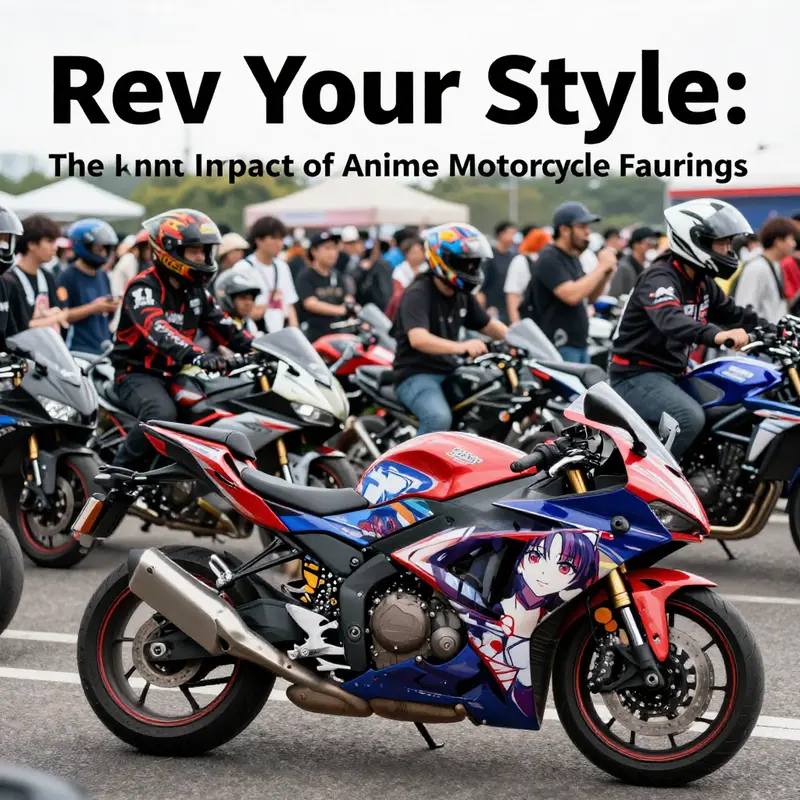
A motorcycle is rarely only a machine; it is a moving stage, a rolling canvas, and a conversation starter all in one. When the bodywork wears a design borrowed from anime, the bike becomes a portable portrait, a statement of taste, and a thread in a broader dialogue about art in motion. The fusion of aerodynamics with intricate illustration is more than decoration. It translates a rider’s devotion to a story, a character, or a mood into a public display that changes how people perceive a street ride and how riders perceive themselves. In this sense, anime-inspired fairings extend the language of riding beyond speed and function. They invite spectators to read a narrative in real time and invite riders to see themselves as part of a larger constellation of fans, artists, and technologists who treat the highway as a gallery and the commute as a rite of shared culture.
The art on these fairings often borrows from iconic series and cinematic visions, weaving them into the very geometry of the bike. Characters, scenes, and motifs from influential anime become volumetric expressions of identity. The choice to feature a line of blue sparks against a lacquered black surface, or to render a lone hero silhouette across a side panel, communicates a personal alliance with a particular universe. These choices operate on multiple planes: they honor the rider’s memory of a story, they signal a type of cultural literacy to onlookers, and they calibrate the bike’s presence within a crowd. The designs frequently balance the crisp, high-contrast aesthetic typical of anime with the practical contours of a motorcycle’s fairing. The effect is a hybrid beauty where form follows fantasy, yet remains attentive to wind, weight, and the rider’s control. Designers and painters shoulder both an artistic and a technical brief, ensuring that the artwork doesn’t just look good in a showroom but also withstands wind, rain, sun, and the wear of road life.
In talking about these creations, it is important to acknowledge the materials and engineering that anchor their artistry. Traditional fairings favor lightweight substances such as fiberglass or ABS plastic. These choices help preserve handling and acceleration while offering a receptive surface for detailed imagery. The paintwork itself often relies on durable coatings capable of resisting UV fade and road grime, a practical necessity when a bike is meant to be ridden rather than displayed. The artist’s brush or airbrush layer must contend with the fairing’s curvature, seams, and mounting points so that the final image remains legible at speed and under different light conditions. The technical discipline required to preserve the fidelity of a complex design under real-world riding conditions makes the artwork feel earned rather than ornamental. It is a reminder that creativity and performance can coexist when builders respect the bike as both instrument and platform for storytelling.
Artistic expression becomes a proxy for community, a way to crystallize a shared passion into visible culture. Riders carry their favorites not only as a personal tribute but as a public affiliation badge. The presence of a character inspired by a beloved series signals a certain cultural literacy, a readiness to engage with others who recognize the reference and appreciate the technique. This is not merely about liking a cartoon; it is about joining a transnational conversation where fans from different backgrounds recognize common visual languages—flashes of color, dynamic composition, and iconic silhouettes. The impact extends into online spaces as well. Photographs of these bikes proliferate on social platforms, where wry captions, close-up shots of brushwork, andafter-market paint stories become threads in a digital tapestry. Enthusiasts exchange tips on color theory, layering, and finish techniques, while connoisseurs compare the storytelling strength of one design to another. The community becomes a school of design thinking, where the motorcycle is the classroom and the road is the corridor.
Identity and affiliation sit at the core of this culture. For many riders, the fairing is a portable sign of why they ride and whom they ride with. It signals a kinship with a broader fan ecosystem—one that appreciates the synthesis of high-speed engineering with character-driven narratives. The result is a subtle form of belonging, a way to acknowledge shared tastes in a way that is both public and personal. This sense of belonging strengthens social bonds among riders who may otherwise diverge along different brand loyalties, riding styles, or geographic communities. The fairing becomes a talisman that travels from city to city, gathering new admirers and potentially sparking a conversation between strangers who recognize a familiar frame from a shared cinematic moment. In this sense, the bike’s artwork acts as a social cornerstone, inviting people to pause, admire, and reflect on the intersection of technology, art, and popular culture.
Equally important is the way these designs foster community building beyond the frame of a single ride. A vibrant online ecosystem has grown around the concept of anime-inspired fairings, where enthusiasts share bike photos, discuss design approaches, and celebrate the craftsmanship involved. This virtual space complements real-world meetups and shows, turning a hobby into a continuous cultural practice. When riders post their fairing setups, they often receive feedback that ranges from nuanced critique of line work to practical advice on materials and finishing techniques. The resulting cross-pollination can elevate local projects, sparking collaborations between painters, airbrush specialists, and fabricators who might not otherwise meet. The cycle—design, feedback, iteration, and display—mirrors the broader rhythms of art communities: it is ongoing, collaborative, and oriented toward collective enhancement as much as personal expression.
A key outcome of this cultural moment is storytelling. Each bike becomes a narrative artifact, a chapter in the rider’s long-form story and a fragment of the larger cultural library surrounding anime. A rider who chooses a design inspired by a post-apocalyptic world may be signaling resilience and defiance; another who opts for a more hopeful hero’s journey may be inviting conversations about perseverance and courage. The fairing, then, is a three-dimensional story told through color, composition, and texture. It holds memory—the artist’s initial sketches, the trials of fitting graphic onto curved surfaces, the patience of layering finishes—and it hands that memory back to the rider every time the bike rolls out of the garage. This narrative aspect helps explain why collectors and casual observers alike are drawn not just to the imagery but to the way it feels when the bike is in motion: the artwork seems to breathe with the engine’s rhythm, turning speed into a shared tempo for storytelling on the street.
Events and gatherings serve as focal points where the culture crystallizes in public, tangible forms. Anime conventions and motorcycle meets become stages where fairings are evaluated, celebrated, and sometimes traded as part of the living culture. The bikes on display in these settings function as three-wheeled conversations between art and engineering, inviting spectators to engage with the rider’s choices and the artist’s touch. Such displays can influence design trends, encouraging newer riders to experiment with bold color palettes, historic line work, or composite textures that echo the look of their favorite frames from anime history. The social energy at these events reinforces a sense of shared belonging—a sense that the road is a common canvas and that the craft of painting, shaping, and assembling fairings is a collaborative art form rather than a solitary hobby. In this way, the practice of adorning motorcycles with anime imagery contributes to a broader narrative about how pop culture can intersect with technology to build communities that are creative, welcoming, and technically informed.
The cultural thread extending from painting a bike to shaping a local scene also raises questions about authenticity, ethics, and representation. Enthusiasts weigh respect for the original artwork against the needs of a rider to adapt a design to their own experience and mechanical constraints. How faithful should a depiction be to its source material? How much license should a painter have when translating a two-dimensional character into a three-dimensional panel with rivets and vents? These questions do not derail the romance; they enrich it by inviting dialogue about technique, ownership, and the responsibilities that come with transforming public space into a gallery. The rider becomes a curator and the painter a collaborator, with both parties contributing to a vibrant ecosystem where art travels with the machine and the machine becomes a moving museum. In this ecosystem, modern printing methods and hand-painted details coexist, offering options that range from ultra-polished, photo-real surfaces to bold, painterly gestures that emphasize texture and brushstrokes. The result is a spectrum of possibilities that honors craft while honoring the dynamic, unrepeatable nature of each ride.
For readers seeking a practical entry point into this world, the journey begins with an appreciation of how a fairing’s form shapes its function as a canvas. Riders learn to balance the visual intensity of a design with the bike’s ergonomics, airflow, and aerodynamics. The result is not a clash of art and engineering but a negotiated harmony where the rider’s voice and the machine’s capabilities speak in concert. As a culture, this space thrives on dialogue—between designers and riders, between fans and painters, between street and showroom. It invites participation, not just admiration, and that invitation is what sustains a community that is as much about process as product. If you are curious about what design options exist for different models, you can explore the broader range of fairings in the category dedicated to the bike you ride. Honda fairings.
Ultimately, the cultural impact of anime motorcycle fairings lies in their ability to fuse speed with story, craft with character, and street with screen. They are not merely decorative; they are the visible seam where technology, art, and fandom meet on the open road. They create a sense of belonging that transcends borders and languages, a shared vocabulary built around color, line, and legend. They remind us that riding is not just about getting from A to B; it is about moving through a culture that values imagination, precision, and community as equally essential ingredients in the experience of speed. For those who want to understand this blending of disciplines more deeply, the broader conversation about how design and culture intertwine within Japan’s dynamic relationship with technology offers rich context and insight into why these rolling canvases matter beyond their visual appeal.
External perspective: https://www.japantoday.com/category/culture/feature-articles/inside-japan-s-motorcycle-culture
Final thoughts
The integration of anime motorcycle fairings into both the aesthetic and cultural fabric of motorcycling illustrates their significant impact on the community. For business owners, understanding this trend can unlock potential markets and foster deeper connections with customers. By providing high-quality, artisanal fairings, businesses can cater to a niche audience that values both creativity and performance. Expanding offerings in this area not only appeals to passionate enthusiasts but also strengthens the cultural narratives that unite the motorcycle and anime communities. As demand grows, those who embrace the charm of anime motorcycle fairings can drive innovation and creativity within their brands.