
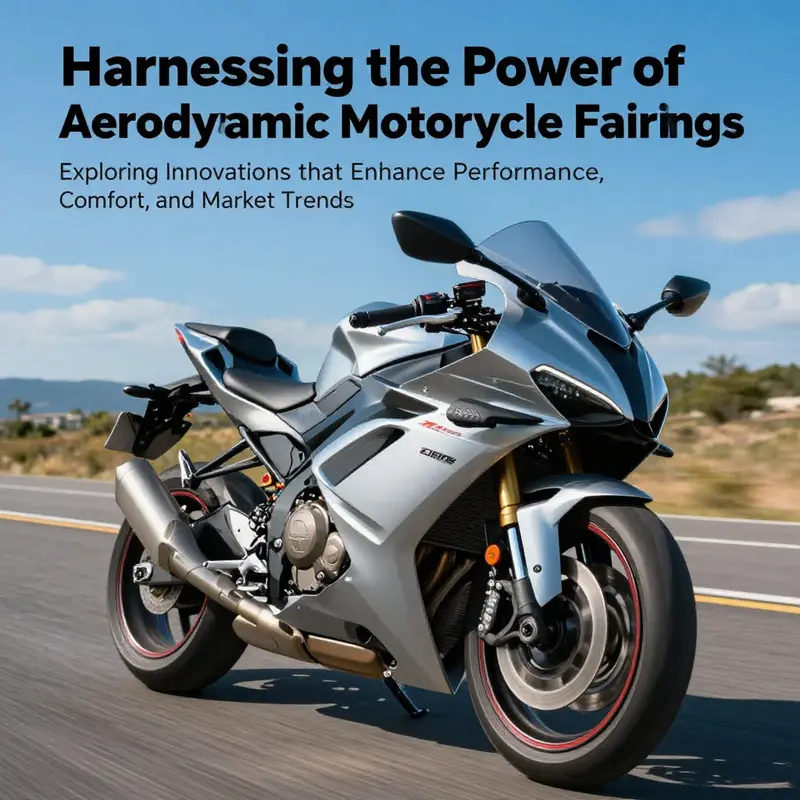
Aerodynamic motorcycle fairings are more than just aesthetic additions to bikes; they are pivotal in optimizing performance and enhancing rider safety. By reducing drag, these components significantly improve fuel efficiency and stability at high speeds. Business owners in the motorcycle industry, whether manufacturers, aftermarket suppliers, or retailers, need to understand how innovations in fairing designs contribute to overall motorcycle effectiveness. As we delve deeper into the role these fairings play in performance enhancement, explore the latest design innovations, assess their impact on rider comfort and safety, and analyze market trends, you’ll be equipped with insights that can inform strategic decisions and enhance offerings in this competitive market.
null
null
Flow Masters: How Modern Motorcycle Fairings Redefine Speed, Stability, and Rider Comfort
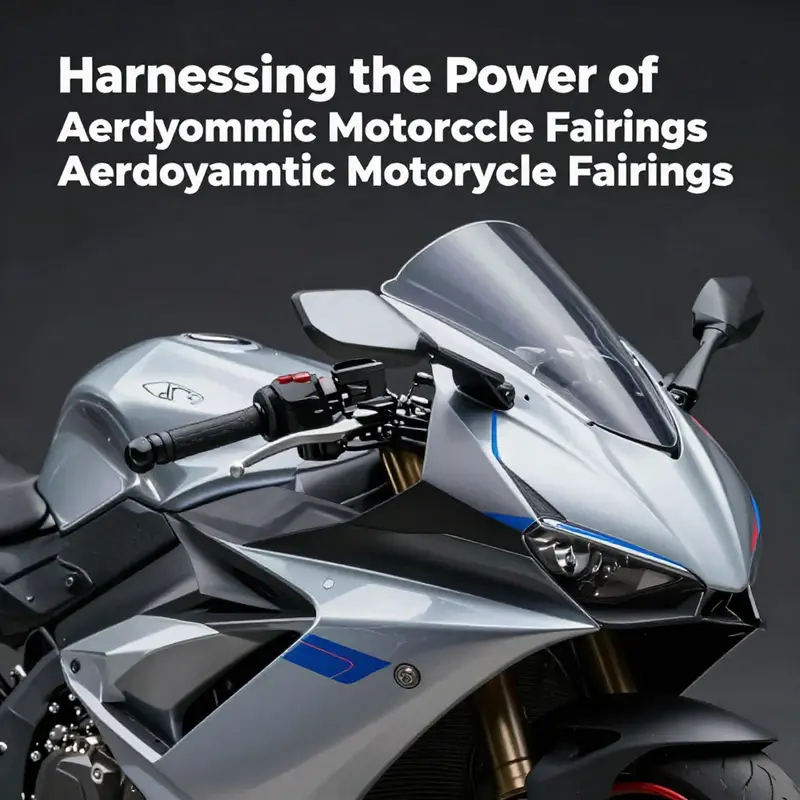
A motorcycle’s fairing is more than a rider’s shield from wind. It is a carefully engineered surface that governs the way air behaves around and under the machine at speed. In the broad arc from early shells to today’s high-tech forms, fairings have evolved into precision instruments. They are designed to shed drag, to coax the air into a stable, predictable pattern, and to shield the rider from fatigue caused by wind pressure and turbulence. The modern fairing does not merely cover the bike; it choreographs the flow of air so that every component beneath it can work with greater efficiency. When air glides smoothly over the front and around the rider, the engine breathes easier, the chassis feels lighter, and the ride becomes more controllable at the edge of the speed range. This is a story of science meeting surface, of wind tunnel data translating into real-world performance, and of the countless small decisions—the contour of a corner, the angle of a winglet, the size of a vent—that compound into measurable gains on the road and on the track.
At its core, the design goal is straightforward in concept and exacting in execution: reduce form drag without compromising cooling, protection, or rider ergonomics. The latest generations of aerodynamic fairings are built from materials chosen for a disciplined balance between strength, stiffness, and weight. High-impact polycarbonate and glass-reinforced composites are common choices, valued for their clarity, impact resistance, and rigidity. The material selection supports complex, integrated shapes where every curve and joint has a purpose. The result is a smooth, continuous surface that minimizes abrupt pressure changes and ripples in the boundary layer. That seamless form is not accidental; it is the outcome of iterative testing and meticulous manufacturing, where even minute misalignments can degrade performance in measurable ways. The ride quality this enables—reduced wind fatigue for the upper body, steadier steering feel at high speeds, and more confident cornering—often translates into a rider choosing higher speeds with greater composure and safety.
The contemporary fairing design process blends computer-aided engineering with hands-on wind tunnel work. Engineers sculpt virtual models that respond to turbulence in three dimensions, then validate those models in wind tunnels where real air, not simulations alone, reveals how the shape behaves. Computational fluid dynamics (CFD) allows rapid iteration: tweak a contour, add a feature, test thousands of angles in a virtual environment before a physical prototype is built. When the model finally moves to the wind tunnel, the focus sharpens. Flow visualization, pressure measurements, and force balances provide a granular map of where energy is lost and where it is preserved. This data-driven approach is essential because the highway is not a uniform stream. The air wraps around the bike differently depending on the rider’s posture, the bike’s lean angle, and even the presence of accessories like racks or tall mirrors. The fairing must perform across this matrix of conditions, not just in the still air of a laboratory.
Within this framework, several innovations have become especially influential. Integrated air intakes, for instance, serve dual roles. They channel coolant to the engine while shaping the front profile in ways that reduce drag pockets that typically form behind the forks and radiator area. The best solutions provide a natural path for air to reach cooling channels while keeping the intake lip streamlined and flush with the surrounding surface. In practice, this reduces the energy required for cooling at high speeds, helping to keep engine temperatures stable even when the rider is pushing toward the upper limits of performance. The integration is delicate. If intakes are too large or poorly contoured, they become drag sources or create unsightly hotspots in the flow. The artistry lies in balancing cooling needs with aerodynamic purity, a balance that continues to evolve as powertrains demand more efficient thermal management.
Another pillar of modern design is the deliberate use of vortex generators. These small, carefully positioned fins or bumps energize the boundary layer—the thin layer of air that clings to the surface. By re-energizing this layer, vortex generators delay flow separation, which in turn reduces wake turbulence behind the bike. The practical upshot is smoother airflow, less drag, and more stable handling at high speeds or in gusty conditions. The placement of these devices is not arbitrary; it requires a precise understanding of where separation would otherwise occur and how to trigger beneficial vortices without creating new disturbances that offset the gains. The result is a fairing that feels more planted at speed, with a more predictable transition of air as the bike enters or exits corners.
Streamlined contours are the visible face of a deeper engineering philosophy. Contours are not merely aesthetic; they are the outcome of carefully tuned pressure gradients. A well-shaped fairing guides air along a path that minimizes flow separation and reduces pressure differentials between the front and sides of the body. This leads to a cleaner stream around the front wheel and under the belly of the bike, with less turbulent wake behind. The design also considers crosswinds and the asymmetric stresses they can impose on the bike’s steering feel. By shaping the surface to harmonize with typical crosswind directions, the rider experiences a more confident and composed ride, especially during lane changes or in exposed stretches where gusts can stress steering and stability.
All of these design choices—integrated intakes, vortex generators, and streamlined contours—interact with the motorcycle’s overall aerodynamic architecture. The fairing does not function in isolation; it interacts with the rider’s posture, seat height, wind deflectors, and even the fairing’s own internal channels for air. The aim is a stable, laminar-like flow over and around the rider, with controlled separation zones that generate beneficial downwash or downforce when appropriate. In racing scenarios, these interactions can translate into measurable improvements in lap times through two channels: enhanced top speed due to reduced drag and tighter control at the aero-critical phases of the track, where small speed losses become expensive. In production motorcycles, the same principles contribute to improved fuel efficiency, reduced engine strain at highway speeds, and a more relaxed riding experience during long trips. The practical benefits are tangible: riders can maintain higher cruising speeds more comfortably, generate more consistent acceleration, and feel more confident when the weather tests the bike’s stability.
The concept of a well-rounded fairing is also a reminder that aesthetics and function are deeply entwined. A clean, sculpted surface communicates a philosophy of efficiency and control. The best designs resolve conflicting requirements—cooling versus downforce, protection versus access for maintenance, lightness versus strength—into a cohesive, market-ready product. The texture and finish of the surface matter as well. Abrupt transitions or gaps can disrupt the smooth flow of air and degrade performance. Conversely, a seamless, continuous surface with flush joints reduces interference drag and contributes to a perception of precision and quality in the rider’s mind, which in turn reinforces the confidence that speed can be managed safely.
For readers curious about the current catalog of options, a snapshot of contemporary design philosophy can be found in the broader market category that highlights recent releases and updates—an accessible window into the practical side of these innovations. This overview reflects how manufacturers translate laboratory insights into street- and track-ready forms, blending computational optimization with real-world testing to produce shapes that look as purposeful as they perform. 2023new offers a glimpse of this ongoing evolution, illustrating how new geometries, mixing of materials, and integrated features are being introduced to address the evolving demands of riders who seek both performance and protection without compromise.
The convergence of racing-inspired design and everyday usability is not accidental. MotoGP and other top-class disciplines constantly push the boundaries of what a fairing can achieve. Teams experiment with fairing elements designed to redirect high-speed airflow around the front wheel and torso, creating a cascade of effects that reduce pressure drag and add downforce where it matters most for stability. Flow redirectors, as one line of investigation, exemplify this approach. By carefully shaping the redirect path, engineers can modulate the wake and minimize the energy lost to turbulence. The real-world implication is not merely faster lap times in a controlled environment; it is better stability for riders who encounter real-world road dynamics at speeds that demand precise aerodynamic behavior. The line between racing innovation and street-ready practicality is intentionally porous here, as the most effective concepts in race settings often migrate into production designs after further validation and refinement.
In the literature, the trajectory of these ideas is well-documented. Peer-reviewed studies that delve into the optimization of fairing shapes, boundary layer control, and flow redirectors contribute a rigorous backbone to the design narrative. They show that small, targeted changes in geometry can yield meaningful gains in a range of metrics—from reduced drag coefficients to increased downforce at certain yaw angles, and from improved cooling efficiency to enhanced rider comfort. The value of such research lies not only in the gains themselves but in the replicability of the methods. When a design team can reproduce a wind tunnel result through simulation, iterate quickly, and then confirm the outcome with controlled experiments, the road to production becomes shorter and more reliable. This is the bridge between the lab and the highway—a bridge that has grown sturdier as computational tools, materials science, and manufacturing precision continue to advance in step.
The story of modern fairings is, at heart, a narrative about precision—about how a surface can do more with less when every corner, every line, and every opening is justified by testing, data, and intent. The resulting forms are not merely aerodynamic shells; they are integrated systems that manage heat, reduce wind-induced fatigue, and contribute to the chassis’ overall balance. They support the rider by shaping the experience as much as the function, making long rides more comfortable and track sessions more controllable. And they illustrate a broader principle that the most meaningful engineering often emerges not from a single breakthrough but from a disciplined, patient synthesis of multiple ideas: flow management, structural integrity, materials performance, and human factors. In this synthesis, the fairing becomes a high-performance interface between rider and road, translating the language of air into tangible advantages on every mile.
For those who want to explore the science behind these transitions beyond general principles, the field offers robust, peer-reviewed analysis that digs into how specific aerodynamic features perform under challenging conditions. The interplay between drag reduction and downforce, the effect of flow redirectors on complex vortices, and the practical translation of race-era research to street bikes are all documented with data and careful experimentation. As technology continues to evolve, today’s streamlined silhouettes may look conservative tomorrow, only because the limits of what airflow can be coaxed to do keep moving forward. The fairing remains one of the motorcycle’s most dynamic performance tools, shaped by wind, bound by physics, and empowered by human ingenuity.
External resource: https://www.mdpi.com/2076-3417/13/18/9857
Flow in the Wind: How Aerodynamic Motorcycle Fairings Improve Rider Comfort and Safety

Riding a motorcycle on an open highway is as much a negotiation with the air as it is with the pavement. Air does not merely rush past; it wraps around the rider, creates pressure differentials, and can become a constant companion that saps strength, focus, and pleasure from a long ride. The aerodynamic fairing is the bike’s response to that wind, a carefully sculpted interface between rider, bike, and atmosphere. When designed and integrated well, it turns a chaotic medium into a controlled environment, smoothing the ride and, in the process, enhancing safety in tangible ways. The pursuit of comfort and safety through aerodynamic efficiency is not about vanity or spectacle; it rests on sound physics, precise engineering, and a practical sensitivity to the rider’s experience across miles and conditions.
The primary function of a fairing is to shape the flow of air around the motorcycle and rider. At speed, a blunt front section pushes a wake behind the bike. That wake creates drag, yes, but more importantly for the rider, it generates turbulence and buffeting. Buffeting is not simply a nuisance; it translates into fluctuating forces that can strain the neck, shoulders, and arms. Over hundreds or thousands of kilometers, those forces accumulate into fatigue, which dulls reaction times and reduces situational awareness. A well‑proportioned fairing redefines the wake, guiding air in a way that minimizes abrupt separation and reduces the intensity of turbulent pockets that would otherwise press against the rider’s body. In practical terms, this means smoother air pressure on the torso and limbs, lower wind noise, and a more linear distribution of forces that allows the rider to maintain posture and balance with less conscious effort.
The mechanics of comfort begin at the wind-energy balance around the chest and arms. A streamlined fairing channels air past the rider’s torso rather than forcing it directly at the chest cavity. This reduces the gust-like buffets that can cause the rider to brace shoulders, lift the chin, or tense the back muscles. Because wind pressure is not uniform around the body, a carefully contoured fairing also governs how air interacts with the rider’s helmet, neck, and upper arms. Even modest improvements in how air streams and eddies wrap around the rider translate into meaningful reductions in fatigue over hours on the bike. What might seem like a small gain in comfort—less chest lift, quieter wind, gentler helmet buffeting—can compound into a rider who remains focused, relaxed, and ready to respond to evolving road conditions.
Beyond pure comfort, the safety implications of aerodynamic design extend to stability and control. When a motorcycle moves through crosswinds, the wind’s direction and speed can push the bike sideways or lift the front end slightly, amplifying steering inputs and demanding quick corrective actions from the rider. A well‑designed fairing helps dampen these crosswind effects by shaping the front profile so that the incoming air remains attached to the surface longer and deflects more smoothly around the bike’s sides. This reduces sudden gust-induced yaw and keeps the bike tracking more faithfully through gusts. The predictable handling that results from such stabilization is especially valuable on highways where gusts from trucks or passing vehicles can rattle the chassis and throw off a rider’s line. For riders who balance sport performance with long‑haul reliability, this steadiness is a safety feature nourished by aerodynamics.
Debris, rain, and weather‑related hazards are constant considerations on real roads. A fairing offers a shield against small projectiles, rain spray, and road spray that otherwise strike the rider directly. While a fairing cannot make a rider invulnerable to weather, it redistributes velocity and streamlines exposure, reducing the time the rider spends in direct rain and splatter. This protective function is particularly meaningful during long tours or rides in variable climates, where uninterrupted visibility and consistent posture matter for rider concentration. In addition, the fairing’s shielding can influence the rider’s perception of the environment. By directing airflow away from the torso and arms, the rider experiences a calmer ambient environment, which translates into steadier visibility and a steadier grip on the handlebars as conditions change.
In track environments, aerodynamics take on a more aggressive role. The same forms that improve comfort on the highway also enable more controlled handling at high speeds. The fairing’s shape influences how air flows over and around the radiator and engine, helping to manage underbody and front‑end pressure. The result can be a more stable front end and steadier cornering feel, where the rider relies on repeatable feedback from the chassis to place the bike precisely on apex lines. In these circumstances, speed itself becomes a variable that is easier to manage because the rider is not fighting a shifting wind stress in every turn. This is not a matter of creating excessive downforce; rather, it is about achieving a balanced aerodynamic profile that preserves front‑wheel feel and keeps lift and wobble to a minimum, so the rider can focus on line, tempo, and rhythm rather than brute wind resistance.
The materials and construction of modern fairings contribute to both comfort and safety by balancing stiffness, weight, and resilience. High‑impact polycarbonate and fiberglass‑reinforced composites are common choices, selected for their impact resistance, lightness, and dimensional stability. In practice, the ideal material combination provides a shell that can be thin enough to preserve aerodynamics while remaining tough enough to withstand road debris and minor drops. The structural integrity of the fairing is not simply about keeping a curved shell in one piece; it is about maintaining the smooth, continuous surface that governs airflow. Even tiny imperfections—scratches, nicks, or a slightly misaligned panel—can disrupt the intended flow, creating micro‑turbulence that compromises the very gains the fairing is designed to deliver. This is why manufacturers and skilled aftermarket suppliers insist on precision manufacturing, exacting fitment, and meticulous inspection during assembly.
The engineering behind these panels extends into the realm of optimization, often employing computational fluid dynamics (CFD) and wind‑tunnel validation to anticipate how a surface will behave in a range of speeds and conditions. CFD allows engineers to simulate rider position, helmet shape, and even gear options to predict how air navigates around the rider’s silhouette. The insights are then tested in wind tunnels to verify real‑world behavior. The aim is not just to minimize drag in the abstract; it is to minimize drag while maintaining favorable pressure distribution that cushions the rider from buffeting and supports stable, controlled movement of the handlebars and body. In this sense, the fairing becomes a partner in the riding experience, one that helps the rider maintain posture, reduce fatigue, and respond to hazards with calm, measured inputs.
Riding comfort and safety are, however, not solely the product of integrated form. The fitment of the fairing to the motorcycle frame, its interaction with other components, and its ease of maintenance all influence how reliably the aerodynamic goals are realized over time. A full fairing, common on sport and sport‑touring motorcycles, shields both rider and engine from direct exposure to weather and debris. Yet the same enclosure can complicate routine maintenance, access to the engine, and even air–cooling pathways if not designed with serviceability in mind. Lower fairings contribute to aerodynamic balance by improving underbody airflow and cooling while providing partial protection for the engine and frame. Sellers and riders must weigh these practical considerations against the aerodynamic and safety benefits. The larger the fairing, the more it can influence cooling airflow, heat buildup, and radiator performance, especially in slow traffic or hot climates. Thoughtful design, therefore, includes not only the visual and flow‑oriented attributes but also thoughtful space planning for maintenance points, inspection access, and heat management.
The race between form and function is most evident when considering accessibility for service. The very characteristics that optimize airflow can complicate engine access. The right fairing preserves airflow integrity while still offering reasonable access to essential components. This balance is achieved through modular panels, quick‑release fasteners, and strategically placed access points that reduce the need to disassemble large portions of the shell for routine checks. A well‑engineered fairing minimizes downtime, encouraging riders to perform routine inspections, which in turn preserves safety by ensuring that fasteners, vents, and mounting points remain secure after miles of high‑speed use. The practical upshot for riders is a fairing that remains a faithful ally, not a cumbersome obstacle, in both the long highway run and the tight pit lane.
Different riding disciplines call for different aerodynamic priorities. A sport rider who seeks top‑end speed and precise handling benefits from a fairing that provides clean airflow, reduces drag, and sustains a steady, streamlined profile at altitude and in the slipstream of other bikes. A touring rider values stability and comfort at extended highway speeds, where even small drag reductions can yield meaningful reductions in fatigue and fuel consumption over hundreds of miles. A track rider, meanwhile, relies on predictable air pressure around the rider’s torso and the front of the bike to deliver consistent handling through corners at high velocity. Across these scenarios, the fairing’s ability to smooth the rider’s wind exposure and to protect against the felt impact of wind, rain, and debris remains a central safety concern, one that intertwines with comfort in a continuous loop of feedback and improvement.
For riders drawn to the visual and tactile experience of sport bike aerodynamics, the fairing is also an aesthetic statement. Streamlined contours, carefully sculpted edges, and integrated wind deflectors convey a sense of speed even when the bike is at rest. The eye catches the same lines that the wind respects when the bike moves: a reminder that performance and comfort are inseparable aspects of the same design challenge. In this way, the fairing serves not only as a protective and performance‑enhancing component but also as a storytelling device—signaling a rider’s intent, discipline, and approach to the road ahead. For those who want to explore the practical implications of this balance, a dedicated look at the fairings designed for sport machines—such as those configured for the Ninja family—offers concrete examples of how the same core principles translate into different silhouettes and mounting strategies. Fairings for Kawasaki Ninja gives a sense of how a factory‑inspired balance of protection and performance can be realized in a modular, serviceable way.
In the end, the rider’s comfort and safety are not accidental byproducts of a sleek exterior. They arise from an integrated design process that treats airflow as a living constraint—one that must be managed across speed, posture, gear, and weather. The best aerodynamic fairings are not merely shaped to be fast; they are shaped to be predictable, to reduce the physical and cognitive load of riding, and to keep the rider’s awareness centered on the road and the ride rather than on the wind. As engineers and riders continue to push the boundaries with new materials, novel venting schemes, and advanced simulation methods, the core purpose remains clear: to create a riding environment that minimizes fatigue, enhances stability, and fortifies safety without erasing the exhilaration of speed.
External resource: https://www.bikeexif.com/2025/12/24/understanding-fairing-kawasaki-ninja-blue-composition-standards-and-applications/
Shaping the Wind: Market Trends and Consumer Choices in Aerodynamic Motorcycle Fairings
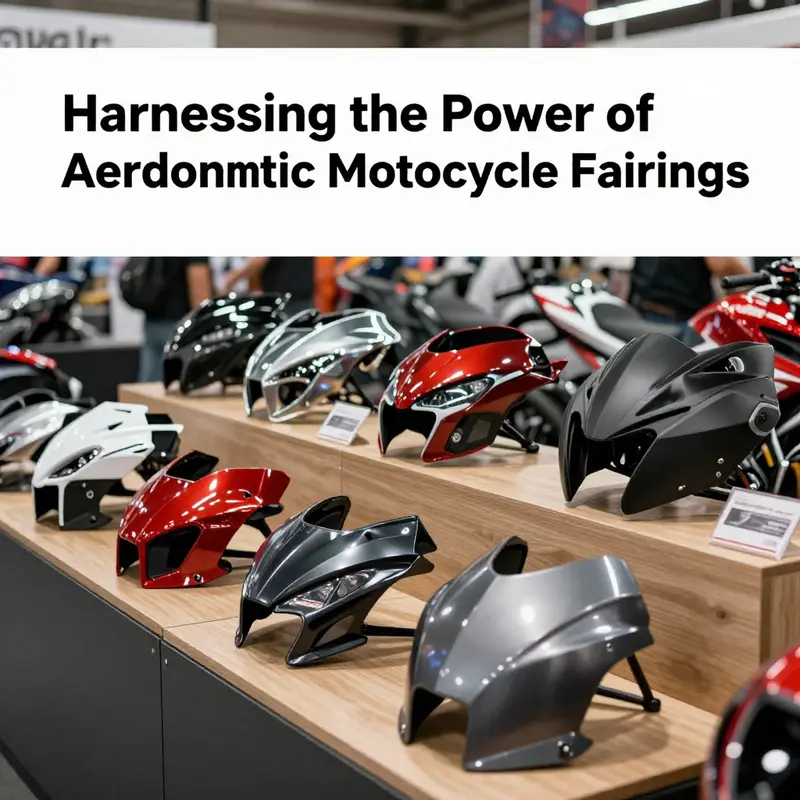
For readers seeking further empirical grounding, the latest market analysis provides a comprehensive landscape of the growth trajectory and the factors shaping it. The global motorcycle fairing market is projected to grow at a compound annual growth rate of 9.2% from 2025 to 2031, reflecting strong demand across touring, sport-touring, and commuter segments. Consumers are prioritizing enhanced aerodynamics not only for performance benefits but also for rider comfort and protection from wind and weather. A key trend shaping preferences is the shift toward lightweight, durable materials that balance cost and performance. While OEM fairings traditionally used high-grade ABS plastic, aftermarket options now offer competitive substitutes such as reinforced composites and advanced polymers. This has made affordable yet high-performance fairings accessible to a broader range of riders, especially budget-conscious commuters and enthusiasts seeking customization. The rise of modular and customizable designs, as well as the popularity of half and quarter fairings, underscores a demand for versatility and a streamlined aesthetic between naked and fully enclosed configurations. The full report offers deeper analysis for those seeking to understand regional variations, pricing strategies, and technology-driven design innovations. External readers can explore the detailed findings here: https://www.grandviewresearch.com/industry-analysis/motorcycle-fairing-market.
In sum, the market trajectory for aerodynamic motorcycle fairings merges engineering rigor with expressive rider needs. It rewards those who treat fairings as a system—one that harmonizes efficient air management, rider protection, and personal style. The ongoing convergence of lightweight materials, modular design, and data-driven validation will likely sustain the industry’s momentum. As riders push for longer rides, higher speeds, and greater comfort, fairings will continue to evolve from simple shells into intelligent, adaptive components of modern motorcycles.
Final thoughts
The evolving landscape of aerodynamic motorcycle fairings highlights their critical role in performance, rider safety, and comfort. As innovations continue to emerge, business owners must stay attuned to the latest trends and advancements to meet consumer needs. Investing in high-quality aerodynamic fairings not only enhances bike performance but also adds significant value to the rider experience. By understanding these aspects, businesses can better position themselves in the market, ultimately leading to increased customer satisfaction and loyalty.