
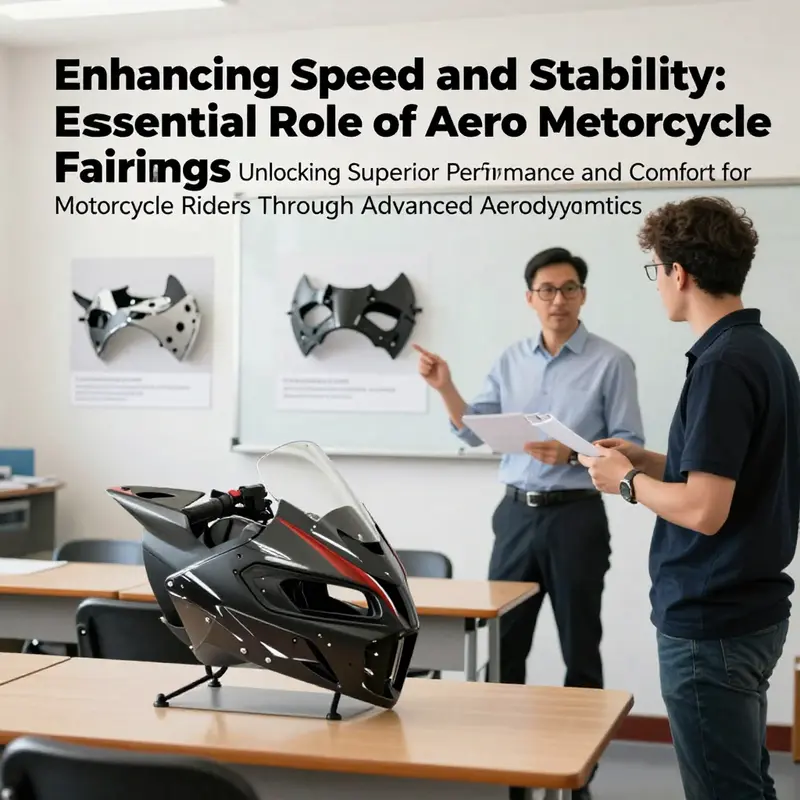
Aero motorcycle fairings represent a significant advancement in motorcycle design, crafted primarily to enhance aerodynamic performance. These fairings effectively minimize drag, allowing riders to experience improved speed, stability, and fuel efficiency, particularly at high velocities. For business owners involved in the motorcycle industry, understanding the importance of aero fairings is crucial, as they contribute to enhanced performance and rider satisfaction. This article delves into critical aspects that highlight the relevance of these fairings, from aerodynamics and material trends to maintenance considerations and economic impacts. Each chapter aims to provide a comprehensive overview of how aero motorcycle fairings not only elevate individual riding experiences but also influence market dynamics and business growth.
Wind as Wing: The Integrated Science of Aero Motorcycle Fairings
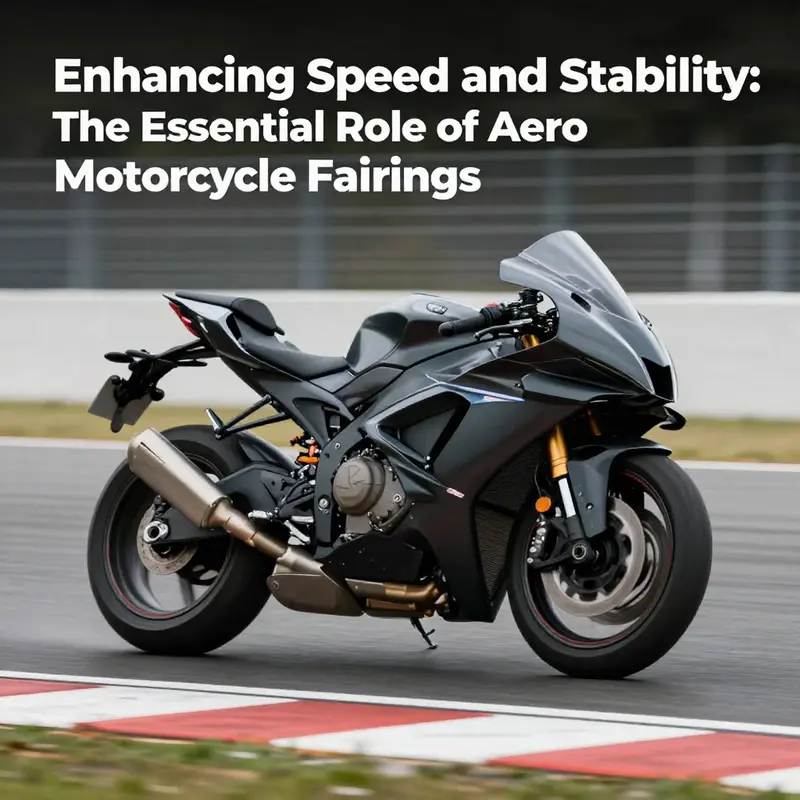
Aero motorcycle fairings do more than cloak an engine in glossy panels. They are a carefully tuned system where contour, material choice, mounting geometry, and rider posture all work in concert to turn wind into a manageable ally rather than a disruptive force. Designers approach aero fairings as a problem of flow management: drag is the enemy, but not a single number to chase. Drag is the symptom of a stream that detaches, swirls, and feeds turbulence into the chassis. The aim is to shape that stream so it follows the bike’s silhouette, hugging the body, wheels, and engine with minimal separation. In practice, this translates to a smooth, continuous silhouette that blends with the front wheel and the rider’s line of sight, then sweeps back along the sides and under the belly to guide air toward optimized paths. The result is a bodywork package that feels inertial in motion—almost as if the bike were cutting through air rather than pushing against it.
The core payoff from such careful shaping is a measurable drop in drag and a more favorable interaction with the bike’s lift. At high speeds, wind can lift components and destabilize the rider’s position, especially during long highway stints or aggressive cornering where the rider’s body becomes part of the aero system. An effective aero fairing reduces the strength of those adverse lift forces and lowers the buffeting that otherwise hits the helmet and shoulders. Reduced drag directly improves top speed potential and fuel efficiency, but the benefits run deeper. By smoothing airflow, the fairing also helps equalize pressure over the engine and brakes, contributing to steadier heat transfer paths and better thermal management across sustained riding conditions. In other words, aero fairings are not just about speed in a straight line; they influence stability, control, and the long-term reliability of the bike’s powertrain and chassis.
This is why the best aero concepts are conceived as integrated systems rather than a sum of individual panels. The windscreen, ducts, side panels, belly fairing, and even the wheel arches are designed to interact with the rider’s position. A rider tucked forward alters the effective cross-section and the wake behind the helmet. The fairing’s shape can be tuned to the typical riding posture, reducing the chance that the upper body acts as a sail when the bike is leaned into a corner. Modern fairings also incorporate micro-deflectors and strategically placed vents that nudge airflow where it is most beneficial. These features are not decorative flourishes; they are the practical interfaces where fluid dynamics meet human factors. When done well, the rider notices less wind pressure on the chest, more consistent stability through gusts, and a seat of the wind that feels predictable rather than erratic. The rider’s confidence grows as the visual cues from the fairing align with the responses from the handlebars and footpegs, creating a sense of harmony between machine and body.
The materials chosen for aero fairings reinforce that sense of precision. Polycarbonate, ABS plastic, and fiberglass offer a blend of rigidity, impact resistance, and the ability to hold tight tolerances under stress. The goal is to preserve the crisp lines of the aerodynamic profile even after vibration, heat cycling, and minor impact events. Transparent sections, when used, must stay clear and resist yellowing, while opaque panels must keep a paint finish that resists chipping at the edges where airflow is most aggressive. A fairing that deforms or sags under load will disrupt the intended flow path, creating new turbulence and defeating the purpose of the shape. Therefore, the mounting hardware and the junctions to the frame are engineered to minimize flex, with attention to how the fairing behaves in cornering and under braking loads. In effect, every connection point becomes part of the aero equation.
Advances in computational fluid dynamics (CFD) and wind-tunnel testing have accelerated progress in this field. Once a shape is proposed, CFD runs explore countless variants of curvature, section thickness, and inter-panel gaps. The results guide decisions about where to introduce a slight rake to the nose for better attachment of the boundary layer, or where a subtle tuck can reduce separated flow near the front wheel. This level of digital experimentation translates into tangible performance: faster lap times in track conditions, steadier high-speed handling, and better predictability when the rider has to correct course quickly. The modern aero fairing thus embodies a marriage of engineering discipline and artistic sensitivity—the curves must look poised and purposeful, while their function is to shepherd air with surgical precision. In practice, engineers also factor in thermal pathways. A well-designed fairing channels cooler air toward engine radiators or cooling ducts and makes room for heat exchangers to shed energy without becoming a flow impediment. The benefit is twofold: sustained engine performance at pace and reduced risk of heat soak that can sap throttle response and component longevity.
Alongside performance, aero fairings provide essential protection for sensitive components. The engine, electrical systems, and exhaust are shielded from debris, rain, and the dust of long runs. This protection supports reliability in varied weather conditions and protects the investment riders make in high-performance equipment. The fairing’s outer shell thus serves as a weather barrier, while its inner layers and seams are engineered to resist moisture ingress that could over time degrade fittings or sensors. The combination of aerodynamic efficiency and protective function makes fairings a central piece of what riders expect from a high-performance motorcycle. In the race-inspired context, the aero package is a safety feature as much as a speed-improving device, since a smoother airflow reduces buffeting that can impact helmet stability, visibility, and rider fatigue during extended sessions.
For enthusiasts tracking the evolution of styles and integration, the fairing becomes a lens into brand philosophy and engineering culture. Some manufacturers emphasize a clean, uninterrupted line that reads as a single continuous surface, while others allow for modular panels that can be swapped for different riding goals or weather conditions. The choice of fairing lines, mounting architecture, and even the cut of the windscreen is a statement about how a company envisions rider interaction with the machine. In market practice, this means you can find a spectrum of aero packages that balance the demands of weight, cost, and stiffness against the need for serviceability. Yet even with variability, the underlying principle remains consistent: the fairing is designed to flow with the bike’s motion and the rider’s intent, delivering a quiet fluency of air that translates into faster, more confident riding.
A practical takeaway for riders contemplating upgrades or replacements is that aero efficiency is rarely about a single feature. It is the cumulative result of shape accuracy, panel fit, material selection, and proper alignment with the rider’s posture. When these factors are coordinated, the fairing acts almost like a wing, generating a small amount of downforce at speed that helps keep the front wheel planted and the chassis settled through gusts and lean angles. This does not imply dramatic handling shifts; rather, it means less effort is required to maintain line and speed, especially on courses or routes with long, demanding straights followed by rapid transitions. For those who want a tangible sense of how these ideas translate into a real-world buying or customization decision, examining a catalog that presents a cohesive aero strategy—such as the BMW fairings category—can illuminate how designers balance aesthetics with performance, weight, and serviceability. BMW fairings showcase how a brand can treat the fairing as a universal interface that harmonizes with other structural components while offering variety in styling and fit across models.
As the field continues to evolve, new materials and manufacturing processes promise even finer control of the exterior’s interaction with a moving air column. Lightweight composites, improved edge sealing, and adaptive features that respond to airflow in real time are beginning to appear in advanced concept bikes and race programs. The broader takeaway is that aero fairings embody a systems-thinking approach to motorcycle design. They require careful attention to how air behaves at speed, how a rider’s stance shapes the wake field, and how the outer shell can protect and sustain performance under diverse conditions. This is why fairings are treated not as cosmetic add-ons but as a central language of performance engineering. They are the visible interface through which speed, stability, and reliability communicate with the rider. The next chapters will explore how these principles translate into practical customization options, maintenance considerations, and ride-improving features that stay faithful to the aero-first philosophy.
For a practical overview of how aero fairings translate to real-world performance and safety, see this explainer: https://www.bikeradar.com/uk/road/technical-explainer/motorcycle-aero-fairings-how-they-improve-performance-and-safety/
Carbons, Contours, and Clever Engineering: How Materials Shape Aero Motorcycle Fairings
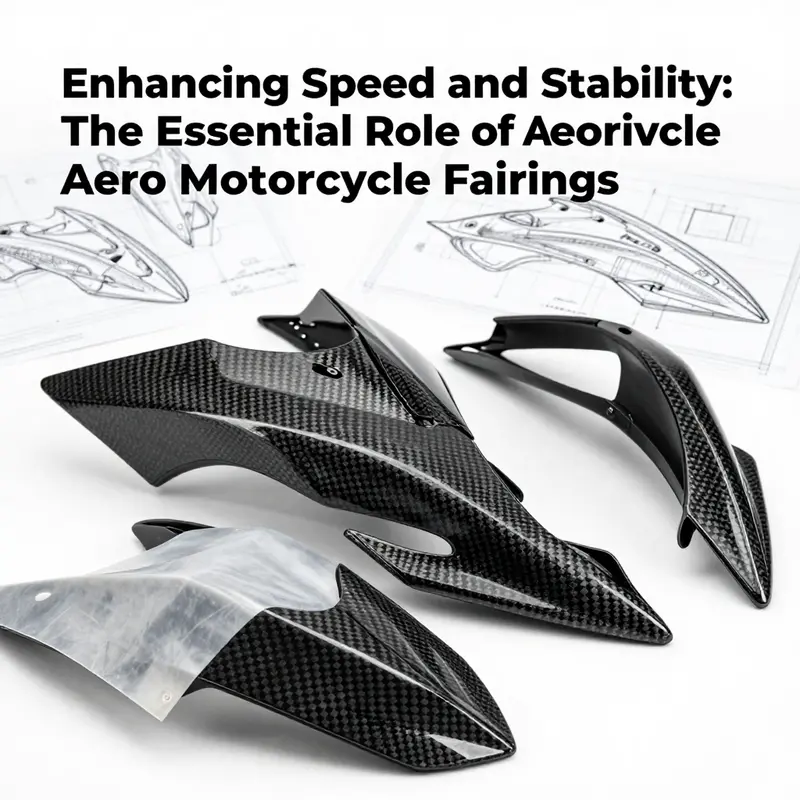
The material choices behind aero motorcycle fairings have moved from simple, cost-minded plastics to a sophisticated palette that blends performance, durability, and manufacturability. In the modern scene, the push toward lighter, stiffer skins is no longer a niche concern for race teams; it informs everything from the bite of a single line on the nose to the overall stability of the machine at triple-digit speeds. At the core of this shift is carbon fiber, whose exceptional strength-to-weight ratio enables thinner skins and more aggressively sculpted shapes. The ability to thin a fairing without sacrificing stiffness translates directly into reduced drag, smoother airflow, and the option to tune fans of downforce that help maintain control as wind pressures rise. When carbon fiber is expertly laid up and resin-rich, the surface finishes can be remarkably precise, allowing the fairing to mirror the engineer’s intent: a continuous, low-drag profile that looks as purposeful as it functions. Yet carbon fiber is not a universal solution. Its value hinges on the entire manufacturing chain—from prepreg layups and autoclave curing to careful handling during assembly and finishing. The result is a premium skin that rewards deliberate engineering decisions with measurable gains in speed, stability, and sport-riding confidence.
Beyond carbon, fiberglass continues to hold a crucial role in the aero fairing landscape. It remains a practical baseline for many track-focused or custom applications, balancing performance with cost. Fiberglass can be molded into robust, moderately stiff shells more quickly and at lower expense than carbon, making it a versatile choice for midrange performance where durability and serviceability matter as much as weight savings. The resin systems used with fiberglass are typically chosen for impact resistance and predictable behavior under heat, which matters when fairings encounter prolonged sun exposure or the thermal cycling that accompanies aggressive riding. In this tier, the fairing’s surface quality often emphasizes durability and repairability, ensuring that track sessions don’t escalate maintenance into a barrier.
For everyday performance, ABS and polycarbonate-based formulations remain widely employed. These thermoplastics are forgiving to mold, accessible to manufacturers at scale, and relatively straightforward to repair. They also offer excellent surface finishes that can be protected with paints and clear coats designed to resist UV and drivetrain grime. The trade-off with these materials is a higher drag profile when used in bulk, compared with the thinned, more thermally stable composite skins. Nevertheless, for riders who balance cost, repairability, and on-road resilience, traditional plastics still provide a dependable platform upon which aerodynamic refinements can be layered. A nuanced approach often blends these materials—an ABS or polycarbonate inner layer for impact resistance and a carbon fiber or fiberglass outer skin that carries the aerodynamic load. The outcome is a fairing that respects both performance targets and practical ownership realities.
Design trends today reveal how closely aero performance and material science have become intertwined. Contemporary fairings favor sharp, aggressive contours that sculpt the air rather than surrender to it. The idea is to minimize flow separation by guiding the boundary layer along the body with minimal disruption. Integrated vented ducts are not mere stylistic flourishes; they are purposeful devices that channel air to cool leads, brakes, or even radiators while shaping the wake in a way that reduces buffeting. These ducts often terminate in carefully engineered exits that reattach airflow efficiently, maintaining a clean surface profile at the highest speeds. Another visible trend is the introduction of aerodynamic winglets or wing-inspired elements. These features, borrowed from high-level racing practice, contribute additional downforce at speed, helping to stabilize the front end and preserve tire contact with the road or track as headwinds and lift forces rise.
The pursuit of mechanical efficiency also pushes design toward greater integration. A modern aero fairing is not a separate shell but an element that speaks to the bike’s overall silhouette, the rider’s posture, and the chassis’s innate geometry. The goal is a seamless family of surfaces that reduces drag without creating new points of turbulence. In practice, this means surface continuity at the junctions where nose, fairing side, and tail meet, along with consistent radii that prevent abrupt changes in the airflow just ahead of the rider. The rider’s position—shoulders aligned with the fairing’s lines, a compact torso, and a tucked helmet—becomes a dynamic parameter in the longer equation of stability and energy use. When done well, the fairing helps cradle the rider in a smooth air column, reducing buffeting at speed and contributing to reduced fatigue over long, straight highway stints.
A parallel strand in these trends is the growing interest in active aerodynamics, a field once confined to theory and expensive prototypes. Movable flaps or micro-adjustable sections hold the potential to tune the fairing’s profile to changing conditions, offering more downforce on straights or less drag in corners. The engineering challenge here is as much about reliability and maintenance as it is about performance. Actuators, control logic, and sensors add weight and complexity, and they must withstand vibration, temperature swings, and potential debris exposure. In practice, only select components of the fairing system will likely adopt active solutions in mass production, with a broader adoption possible as materials science and actuator tech mature. Even without active elements, the passive geometry—the sharp edges, the venting, the integrated ducts—remains a powerful lever for aerodynamic efficiency.
The material story also intersects with manufacturability and lifecycle decisions. Carbon fiber, while light and stiff, demands careful tooling and consistent cure cycles. Autoclave-based processes deliver uniform resin distribution and minimal voids, but they require capital equipment and trained labor. Resin infusion methods can lower per-part cost and still achieve robust performance, though they may introduce more variability if not tightly controlled. Fiberglass systems, while generally easier to process, still demand attention to layup schedules and cure kinetics to prevent warping and delamination during service. The choice of resin chemistry—whether vinyl ester, epoxy, or phenolic systems—affects heat resistance, UV stability, and crack propagation under load. These material decisions reverberate through the fairing’s surface finish, its color stability, and even the way paint adheres over time. A high-performance fairing, then, is as much a product of intelligent material selection as it is of clever contouring and duct integration.
Repairability and serviceability must also be weighed. A carbon-fiber shell might deliver superior performance in drag reduction and stiffness, but damage can be more challenging to repair in the field, and color-matching on complex contours can be delicate work. Fiberglass and certain advanced plastics, by contrast, are more forgiving for field repairs, with patchable surfaces that can keep a bike looking and performing well between races or track days. This practical consideration weighs into the long-term ownership experience, guiding decisions about spare parts, replacement strategies, and the overall life cycle cost of the fairing ecosystem. In many cases, designers aim for modularity—quickly swappable panels or easy-to-replace sections—that preserve aerodynamic continuity while simplifying maintenance. The holistic aim is to keep the bike’s performance envelope intact across the wear and tear of real-world riding.
To connect these threads with brand ecosystems and real-world availability, riders and builders often explore category-specific options. For readers curious about how these design choices map onto production lines and aftermarket programs, one practical path is to examine a brand’s fairings catalog. For example, you can explore the Honda fairings category to see how contours and finish choices translate into specific panels and protective shells that align with engineering goals. This internal link provides a window into how the general material and design trends discussed here play out in concrete product lines: Honda fairings category.
As the landscape evolves, a future-focused view suggests a continued blending of materials and forms. Thermoplastic composites, for example, promise lower tooling costs and faster production cycles while enabling repair-friendly architectures. 3D printing and advanced resin systems could accelerate prototyping, enabling designers to iterate shapes that push the boundary between drag reduction and crash protection. Sustainability considerations may influence material choices as well, pushing developments in recyclable or hybrid systems that balance performance with end-of-life outcomes. Although the ultimate configuration of aero fairings will reflect a rider’s discipline, climate, and road type, the unifying thread remains clear: materials empower contours, and contours, in turn, empower control. The most effective aero fairing emerges when the shell’s stiffness and its surface finish cooperate with the bike’s geometry, the rider’s posture, and the conditions of the ride. In that sense, material science is not a backdrop but a dynamic instrument of performance, shaping how riders experience speed, stability, and efficiency on every kilometre of asphalt.
External reference: https://www.motorcycle.com/tech/aero-fairings-materials-design-trends-2025/
null
null
Aerodynamics as Economic Engine: The Market Momentum of Aero Motorcycle Fairings
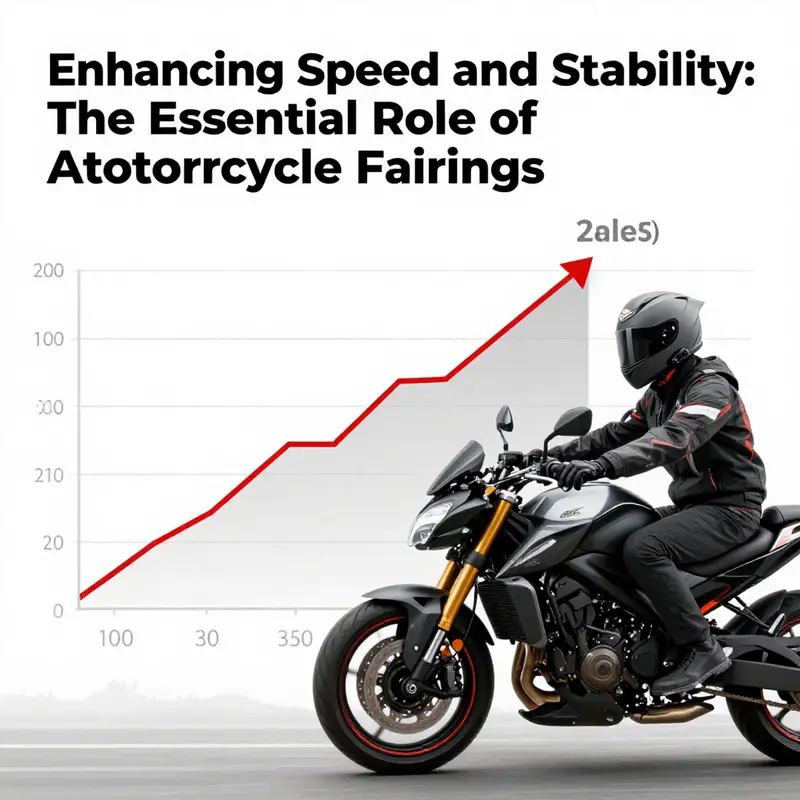
Aero motorcycle fairings have evolved from cosmetic shells into performance hardware that reshapes riding dynamics and the economics of motorcycling. The modern fairing is not merely a cover; it is a wind tunnel tuned component that affects top speed, stability, rider comfort, and fuel efficiency at high speeds. Market analyses point to a sustained growth trajectory as aero efficiency becomes a core value across sport, touring, and naked segments. Riders recognize that even small drag reductions can translate into meaningful gains in performance and range, especially on long rides.
Geographic and segment momentum explains much of the market trajectory. North America, Europe, and the Asia Pacific region together account for a substantial share of demand, with riders investing in upgrade kits, complete panels, and modular wind management solutions. The aftermarket channel is a major route to high quality, durable options at accessible price points, contributing to a democratization of premium aerodynamics. Today’s kits often rely on ABS plastics or lightweight composites and increasingly match OEM standards, enabling more riders to pursue upgrades without sacrificing safety or longevity.
From production floors to installation bays, economics hinge on materials, tooling, and supply chain efficiency. The shift toward ABS plastics and reinforced composites offers a compelling balance of impact resistance, form stability, and cost. Modern injection molding and precision assembly enable tighter tolerances, smoother finishes, and faster cycle times. These improvements lower unit costs and expand compatibility across a wide range of bike models, helping erode the price gap between aftermarket and OEM performance. The result is a virtuous cycle: better production efficiency lowers end user prices, more riders upgrade, and higher volumes drive continued innovation in surface finishes, modular attachment points, and integrated wind management.
The practical benefits extend beyond acceleration and top speed. Aerodynamic kits shield the rider from buffeting, reduce wind lift on exposed sections of the chassis, and smooth airflow around mirrors, handlebars, and front forks. A well integrated package works with the rider’s posture and the bike geometry to provide a stable platform for aggressive riding and long distance comfort alike. As a result, comprehensive upgrade bundles that include fairings, mounting hardware, seals, and protective coatings become attractive, saving time and improving long term ownership value.
The economic ripple goes further. As more riders purchase well engineered kits, demand grows for installation services, finishing, and customization. Specialized toolsets, jigs, and installer training feed into shops and independent ateliers that build expertise in panel alignment and weather sealing. This ecosystem supports employment in fabrication and service sectors, accelerates adoption of new materials, and encourages ongoing testing and validation of fit across model years. In addition, the perceived reliability and value of upgraded fairings can influence resale dynamics and encourage ongoing upgrades.
Finally, the aesthetics matter as much as the physics. The shape language of a modern fairing imparts a kinetic, performance oriented silhouette that resonates with a culture of customization. A well executed aero design signals intent and capability, aligning with performance milestones and personal expression. The result is a market that rewards quality engineering, precise fit, and durable finishes while accommodating a broad spectrum of tastes and budgets. In sum, aero fairings are becoming a central element of a motorcycle package, driving value through performance, durability, and long term ownership.
Winds of Comfort: How Aero Fairings Shape Rider Experience on High-Speed Roads
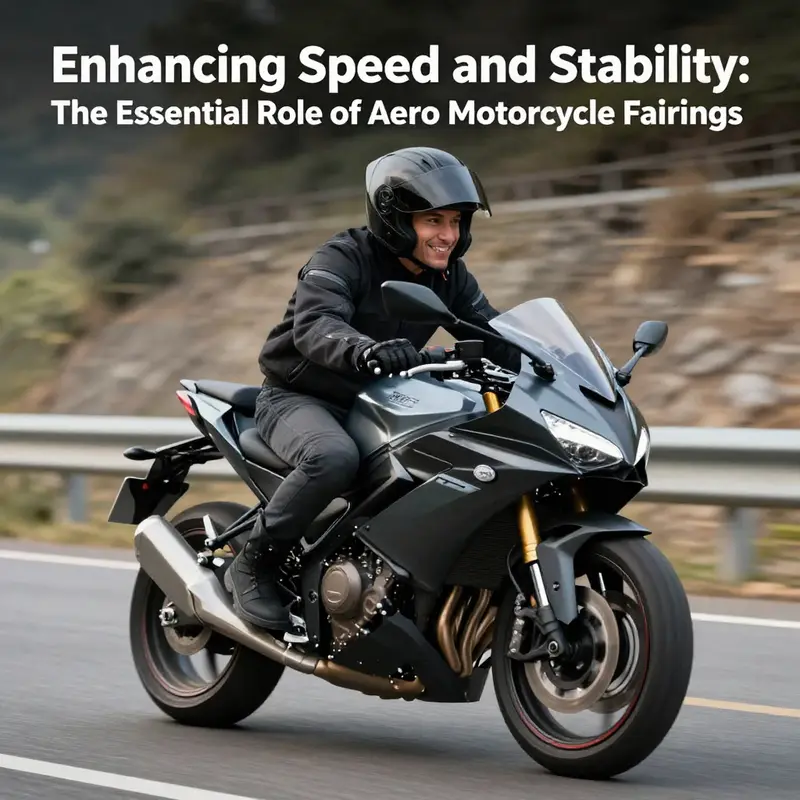
Riding with aero motorcycle fairings shifts the entire sensory equation of speed. The air rushing past the rider is not just a backdrop; it becomes an active participant in comfort, fatigue, and even focus. When a bike is equipped with a carefully sculpted fairing, the rider senses a steadier feel at speed, less buffeting around the helmet, and a more predictable wind pressure on the torso. The experience is not a single sensation but a composite of aerodynamics, ergonomics, and the rider’s personal preference for balance between protection and access to the bike’s controls. At the heart of this experience lies a design challenge: to channel airflow in a way that serves the rider without compromising the bike’s agility or the engine’s cooling requirements. Aero fairings aim to reduce drag enough to improve stability and efficiency, but their real payoff is how they translate that physics into daily riding comfort, long-distance stamina, and even quiet confidence on a track side-by-side with the elements themselves.
From a rider’s seat, the visible virtue of an aero fairing is the reduction of direct wind pressure. When speeds rise, wind acts like a steady force pressing against the chest and helmet. A well-contoured fairing redirects much of that force away from the rider, smoothing the airflow around the shoulders and upper arms. This translates into less neck fatigue over hours on the highway and a more relaxed posture earlier in the ride. Yet the benefits are not merely about diminishing strain; they are about shaping the rider’s perception of velocity. With less turbulent air and fewer eddies around the head, a rider can maintain a comfortable line of sight and better helmet stability. The sensation of wind whispering through the rider’s line of sight diminishes, making long journeys feel less like a battle against the elements and more like a controlled slide through air that has been choreographed for ease.
The types of fairings in the aero family influence that experience in concrete ways. Three-quarter fairings, which envelope the upper portions of the bike while preserving a lean weight, strike a balance many riders appreciate on sport-touring platforms. They create a shield that reduces buffeting without trapping the rider in a cocoon of plastic. The rider still senses wind, but it is filtered through a design that keeps the torso protected while allowing for a natural range of shoulder movement and arm reach. This balance matters on mixed-use rides that weave between city streets and open highways, where abrupt gusts can surprise even experienced riders. In contrast, belly pan fairings offer protection below the rider but leave the torso exposed to air. The result can be a different kind of fatigue, where the lower body receives wind resistance while the upper body remains more exposed. Some riders find this arrangement liberating for spirited riding on fast sections, while others note increased fatigue on longer stints where sustained wind pressure can accumulate around the midsection and neck.
The most protective variant—full fairings—presents a more complete aerodynamic envelope. A full fairing can channel air in a way that minimizes direct wind impact on the rider while shaping the flow around the engine and chassis to reduce turbulence perceived by the rider’s upper body. This comprehensive coverage brings comfort on long freeway runs and track sessions alike. Yet the trade-offs are real. Full fairings tend to be more complex to manufacture, heavier, and sometimes harder to access during maintenance. The extra elements required to seal gaps and integrate wind deflectors or adjustable screens can add weight and cost, complicating the straightforward idea of comfort. A rider who values rapid serviceability or easy access to the engine bay might weigh those factors carefully against the comfort benefits. The decision often comes down to the rider’s primary use: the sport-focused rider who cherishes top-end stability, the sport-touring rider who prioritizes a steady ride across long miles, or the commuter who wants weather protection with practical daily usability.
Beyond the overarching shapes, the rider experience is significantly influenced by how the fairing interacts with the rider’s position and the bike’s overall comfort architecture. Ergonomic shaping that respects human anatomy—curved inner surfaces that cradle the chest, gentle tapering at the collarbone level, and contoured waistlines that reduce pressure points—can transform a fairing from a mere aerodynamic device into a personal comfort system. Removable or adjustable wind screens add another layer of customization, allowing riders to tailor the front-end air profile to their height,Helmet type, and preferred riding tempo. Ventilation features can play a quiet but meaningful role as well. Small ports and routed air paths can reduce heat buildup around the chest and neck, which matters on long, humid rides when the rider’s temperature mirrors the bike’s cooling demands. The goal is not just to keep air off the rider, but to create a stable, breathable air environment around the torso and head so shoulders stay relaxed, the lower back remains supported, and the rider’s attention remains on the road rather than fighting wind turmoil.
Rider comfort also depends on how fairings handle wind at the rider’s extremities. The hands and forearms are often a point of contact where wind pressure translates into fatigue. Good aero design channels air along the fairing’s outer surfaces to reduce direct wind hitting the forearms, while still allowing tactile feedback through the handlebars. For riders who spend hours in the saddle, this is more than a matter of preference; it shapes the endurance of the ride. The neck and shoulders benefit when off-throttle wind sensitivity reduces abrupt gusts that cause sudden tension. Noise is another facet. While drag reduction can quiet the ride, the interaction of airflow with helmet geometry can amplify or dampen wind noise. A well-integrated fairing can smooth the onrushing air enough to lower wind noise amplitude without creating new tonal problems from turbulent jets around the helmet shield. The result is a calmer cockpit, where the rider can interpret road surfaces and traffic cues with greater clarity.
A rider’s perception of stability is closely tied to the fairing’s ability to reduce lift and side wind effects. At high speeds, wind can push upward against the rider’s chest, amplifying fatigue and subtly altering the rider’s stance. An aero fairing that directs air to minimize lift helps maintain a stable seating position and predictable handling. This is especially valuable during long straightaways where fatigue can creep in not through heavy steering actions but through subtle, cumulative forces that nudge the rider’s posture toward stiffness. In twisty sections, the fairing’s influence on wind pressure can also affect how the rider experiences grip and balance. A well-calibrated fairing reduces micro-turbulence that might otherwise upset precision through rapid transitions. The rider feels more connected to the machine, not as a separate actor fighting against wind, but as a partner in negotiating the road’s energy.
No discussion of aerodynamics would be complete without acknowledging the limits and maintenance realities. Aero fairings add complexity to the bike’s silhouette, and this complexity can translate into higher costs and longer maintenance cycles. When fairings are more densely contoured, gaps must be sealed, fasteners must be precise, and access panels may require more steps to reach the engine and service points. For riders who prize quick maintenance or occasional field repairs, these factors matter. Yet many riders accept or even embrace the trade-off because the net comfort gain over hundreds or thousands of miles can be transformative. The best practice is a careful matching of the fairing type to the rider’s typical use: a commuter who wants weather protection with easy access may lean toward a lighter three-quarter design, while a rider who spends substantial time on highways and track days might prefer a full fairing with adjustable wind deflectors and ventilated features.
The ultimate takeaway centers on alignment. The choice of fairing should match the rider’s primary use case—commuting, sport-touring, or track-focused riding—without pretending aerodynamic glamour alone guarantees comfort. A properly chosen aero fairing becomes part of the rider’s extended cockpit, shaping how wind, heat, noise, and movement interact with the body over hundreds of miles. Test rides, careful attention to riding posture, and a willingness to adjust wind deflectors and screen height can reveal a configuration that feels almost tailor-made. The rider’s sense of ease, stamina, and concentration often reveals the true value of aero efficiency: comfort that keeps pace with performance, not at the expense of it.
For readers who want a practical entry point to exploring fairing options beyond personal experimentation, a broad catalog that groups fairings by coverage and function can be helpful. bmw-fairings offers a sense of how different front-end envelopes map to riding comfort and stability, providing a conceptual frame to compare differing approaches to airflow and protection. While each rider experiences aero features differently, a shared thread remains clear: the best aero fairing is the one that respects the rider’s body, the bike’s balance, and the road’s demands.
External resource for further reading: https://www.motorcyclecruiser.com/riding-techniques/aero-fairings-and-rider-comfort/
Final thoughts
Understanding the integral role of aero motorcycle fairings is essential for business owners in the motorcycle industry. These fairings not only enhance speed, stability, and fuel efficiency but also significantly improve rider comfort. As market demand for high-performance motorcycles continues to grow, investing in innovative fairing designs can elevate a company’s offerings and appeal. In an increasingly competitive landscape, integrating the latest technology and materials into motorcycle design will be key to meeting customer expectations and driving profitability. The future of motorcycle performance and rider satisfaction hinges on the advancements represented by aero motorcycle fairings.