
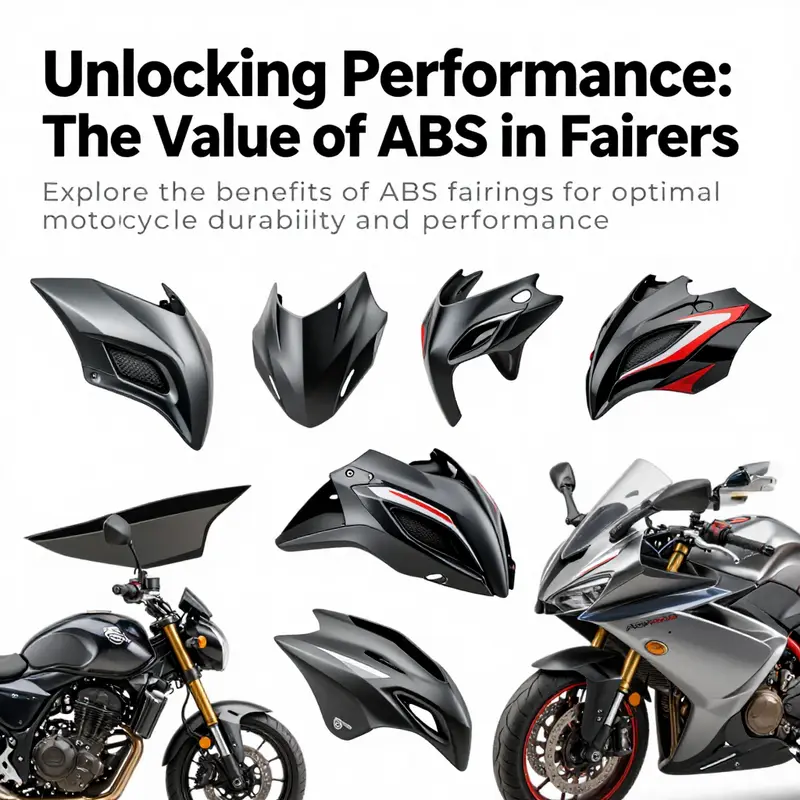
As the motorcycle industry evolves, the materials used in motorcycle customization have seen significant advancements. ABS motorcycle fairings have emerged as a leading choice for riders and business owners alike due to their exceptional balance of durability, lightweight properties, and economic feasibility. This article delves into the multifaceted advantages of ABS fairings, examining their durability and performance, weight benefits, resistance to environmental factors, customizability, and economic implications. By understanding these components, business owners can make informed decisions that enhance their product offerings and meet customer expectations.
Rugged Lightness: How ABS Fairings Redefine Durability and Aerodynamics in Modern Motorcycling
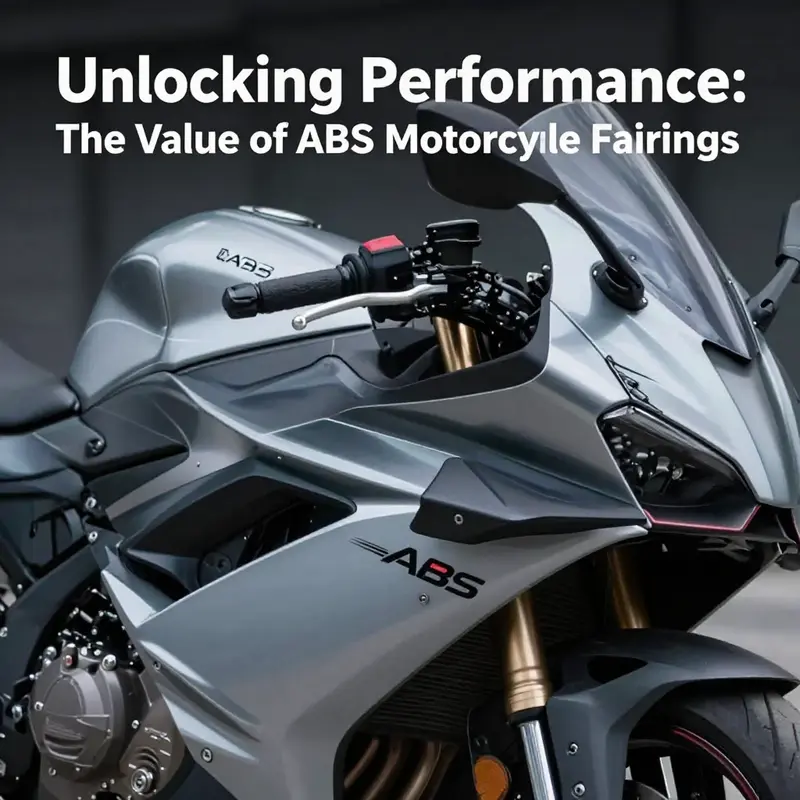
ABS motorcycle fairings have quietly become a cornerstone of how riders approach protection, performance, and style. At first glance, a fairing is a shield against wind and debris, but when it is made from Acrylonitrile Butadiene Styrene, it becomes something more capable: a composite of toughness, lightness, and practicality. The appeal lies not just in a single quality, but in how ABS threads together resilience with responsiveness. For riders who balance daily commuting with weekend carving on a twisty lane, ABS fairings promise a durable shell that does not demand compromises on speed, comfort, or cost. This balance matters because every gram saved, every line drawn in the wind, and every square inch of surface that reduces drag translates into a smoother ride, steadier handling, and a longer stretch between maintenance sessions. In the realm of plastics, ABS stands out for providing a remarkably consistent mix of impact resistance, weather resilience, and moldability, which is essential when the goal is near-perfect fit across a range of models, from nimble sport bikes to more relaxed standard configurations. The real-world consequence is a fairing that not only endures the knocks of road debris and occasional lowsides but also behaves predictably at speed, contributing to rider confidence as mile after mile passes beneath asphalt and sky.
Durability, in the ABS context, begins with impact resistance. Road surfaces throw stones, grit, and gravel at every rider, and the last thing a fairing should do is crack or warp under pressure. ABS inherently cushions the moment of impact, absorbing energy enough to prevent larger damage to the core frame and engine shrouding. This structural integrity matters most when the bike is leaned into a corner and pressed by wind and debris, or when a sudden encounter with a widened lane seam pushes the fairing into a harsh, localized load. The capability to resist such stress without fracturing is a practical safeguard for engines and radiators tucked behind the panels, and it translates to fewer replacements and less downtime for riders who rely on their machines for daily transportation or long-haul sport touring. Alongside impact resistance, UV degradation resistance plays a pivotal role. Sunlight, heat, and temperature cycles can slowly undermine color and rigidity in some plastics, yet ABS shows a sturdy resistance to ultraviolet exposure. The surface retains its structural integrity and color over time, reducing the need for frequent refinishing and repainting. Weather resistance follows closely, with ABS fairings maintaining their shape and surface quality across a broad spectrum of climates—from the cold dampness of dawn rides to the heat of late afternoon sun in dry, arid conditions. Taken together, these durability traits support a longer lifecycle for fairings, a key consideration for anyone who wants a dependable exterior without the ongoing expense of frequent panel replacement.
The performance side of ABS fairings flows from the same core materials science that grants resilience. Aerodynamically, ABS is molded with precision, allowing engineers to craft streamlined profiles and tight tolerances that merge with a motorcycle’s original bodywork. The resulting geometry can reduce drag and manage airflow more efficiently than heavier, more rigid composites, which contributes to more stable high-speed behavior and better fuel economy over long trips. In testing scenarios and real-world riding alike, the aerodynamic gains can manifest as calmer steering at highway speeds, reduced wind fatigue for the rider, and an improved sense of connectedness to the bike as the wind pressures are distributed more evenly across the fairing’s surface. These gains, while modest in isolation, compound with other performance factors to yield a more confident ride—especially when the rider spends long hours in the saddle or pushes through long, outdoor commutes where wind is a constant ally or adversary depending on direction and velocity.
Weight is a decisive factor in how a motorcycle responds to inputs from the road. ABS fairings typically sit lighter than traditional metal or heavier glass-reinforced options, and in many cases this translates to a noticeable improvement in handling and acceleration responsiveness. The mass reduction lowers the overall inertia of the bike, allowing quicker corrections in cornering, easier changes of direction, and more nimble throttle control as riders move through a series of curves. Lightweight fairings also ease the load on the suspension and chassis, enabling more efficient damping of road irregularities and a crisper feel through the bars. It is not a miracle cure for every variable, but for riders who value a responsive front end and a bike that behaves more like an extension of their own limbs, ABS fairings offer a practical path to enhanced daily riding dynamics without sacrificing protection or aesthetic appeal.
Modularity and precise fitment complete the picture. Modern ABS fairing kits emphasize modular components that are designed for straightforward installation. This modularity means riders can tailor their setup, swap panels, or replace sections after a scuff without overhauling the entire bodywork. The precision of molding techniques ensures a factory-like fit that aligns with existing mounts, gaps, and mounting points, preserving the visual continuity of the bike and avoiding the awkward gaps that sometimes plague aftermarket alternatives. For the builder curious about how a new look or improved durability can be achieved without a radical structural change, the modular approach offers a practical path forward. It also supports customization trends, where riders want to express personal style while maintaining the protective and aerodynamic functions of the fairing. In this context, the idea of a kit that ships with ready-to-fit panels and clearly labeled mounting points becomes more than convenience; it becomes a way to sustain performance with a personal touch.
Within this framework, the rider’s experience is central. Expert advice in the customization community emphasizes that a well-engineered ABS fairing does more than shield the bike; it contributes to comfort by reducing wind exposure and lowering the effort required to maintain steady riding posture on long journeys. When wind push and turbulence are managed effectively by the fairing design, the rider experiences less fatigue, enabling more attentive riding on city streets and more controlled stamina on longer rides. The visual appeal—clean lines, crisp edges, and the opportunity for dynamic, high-contrast graphics—often goes hand in hand with the functional benefits, creating a sense of pride and ownership that reinforces a rider’s commitment to maintenance and care. The practical takeaway is clear: a well-chosen ABS kit supports protection, performance, and personalization in a way that aligns with both the budget and the riding philosophy of the operator.
For readers exploring options within a broader catalog, it helps to view compatibility as a baseline responsibility. Before purchasing an aftermarket ABS kit, verify fitment to your specific motorcycle make and model. A well-fitting kit minimizes alignment issues, reduces additional labor, and helps preserve the intended aerodynamics and protection profile. For those who want a sense of the options available within mainstream catalogs, a look at the Honda fairings category can be instructive. This collection showcases how manufacturers approach integration with existing lineages, and it can serve as a practical reference point for evaluating how a particular ABS kit will align with your bike’s geometry and mounting system. You can explore this catalog here: Honda fairings catalog.
The discussion would be incomplete without touching on real-world expectations for durability and performance as a living, evolving standard. ABS fairings perform consistently across a diverse array of riding styles and weather patterns, blending resistance to impact with the ability to endure sun exposure and temperature swings that would degrade lesser plastics. The combination of lightweight construction, solid impact tolerance, and reliable weather resistance makes ABS a compelling option for riders who demand longevity without paying a premium in weight or cost. The best outcomes arise when riders pair careful selection with mindful maintenance—regular cleaning to prevent grit buildup, periodic inspection of fasteners, and attention to color finish to preserve the surface’s protective qualities. In practice, this means fairings that look and perform well after thousands of miles of highway, backroad adventures, and daily commutes, while staying within a reasonable budget and offering avenues for personalization that keep the riding experience fresh.
For those seeking additional context and technical specifics beyond the general narrative, the durability and performance profile of ABS fairings is well documented in industry listings. A detailed product listing on an established marketplace highlights the material’s resistance to impact, UV degradation, and weather exposure, along with quantified aerodynamic advantages and weight savings. This external reference complements the chapter’s synthesis by grounding the discussion in tangible data and real-world application. External link: https://www.alibaba.com/product-detail/ABS-Motorcycle-Fairing-Kits-for-Honda-MSX-125_1601248773615.html
In sum, ABS motorcycle fairings embody a practical philosophy: protect the machine, enhance the ride, and offer room for personal expression without imposing heavy penalties in weight or cost. The material’s intrinsic properties—toughness, resilience to sunlight, weather resilience, and easy molding—combine with thoughtful design to yield a product that upgrades safety, comfort, and efficiency. When riders choose aftermarket ABS kits with careful attention to fitment and maintenance, they gain a reliable platform for a more confident, enjoyable, and personalized riding experience. As the conversation about fairing materials evolves, ABS remains a benchmark for durability and performance, inviting riders to explore both functional upgrades and stylistic possibilities with equal assurance.
null
null
Sunlight, Salt, and Speed: How UV Resistance Keeps ABS Motorcycle Fairings Ready for Any Ride
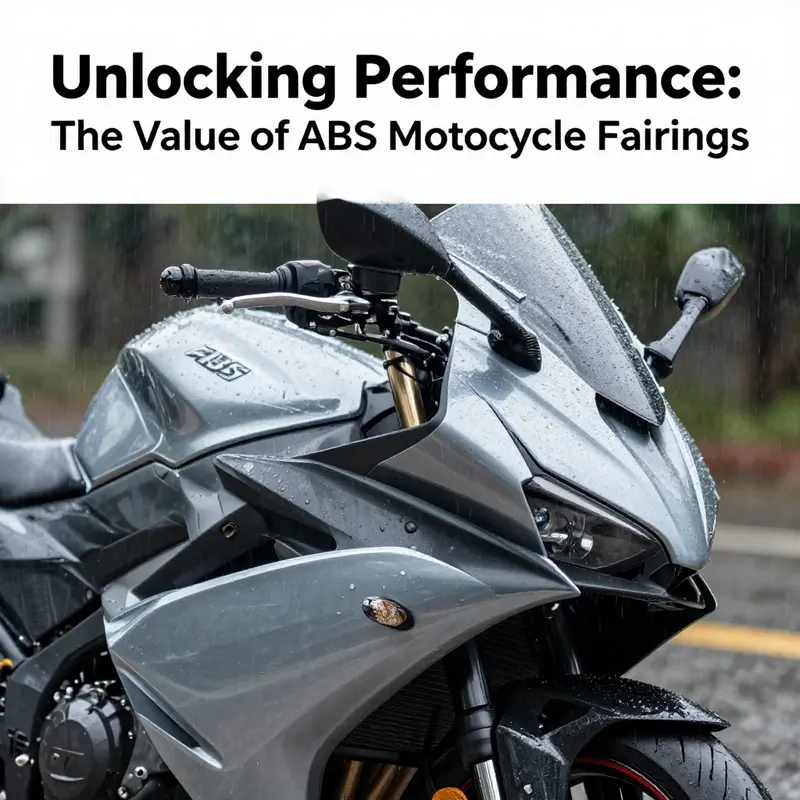
ABS motorcycle fairings have earned their place in the rider’s toolkit not just for cost or weight, but for a crucial, often overlooked trait: how well they stand up to the sun and the weather. The open road exposes every panel to a cycle of heat, moisture, and ultraviolet (UV) radiation that can slowly erode performance and appearance. Over time, unprotected plastics tend to fade, become brittle, or develop microcracks that can widen with road vibration and temperature swings. ABS fairings, when engineered with UV resilience and weather conditioning in mind, behave differently. They retain color and gloss longer, resist the drying and cracking that sun exposure can trigger, and stay tougher against impact from road debris. In practical terms, this translates to less frequent cosmetic upkeep, steadier aerodynamics, and a more predictable ride across diverse climates and seasons. The modern fairing is not a simple shell but a tuned composite crafted to withstand both the sun’s energy and the capricious weather that follows riders from city streets to mountain passes.
At the heart of UV resistance is chemistry. Premium ABS formulations are often reinforced with UV-stabilized resins. These additives intervene in the photochemical chain reactions that UV rays provoke in plastics. Instead of the pigment and plastic binding channeling energy into bonds that fracture under prolonged exposure, stabilized resins suspend or slow those reactions. The result is slower fading, reduced chalking on surfaces, and less embrittlement as the years roll by. It is a quiet safeguard that keeps fairings looking closer to new even after many miles and seasons. This is not about a single coating or a clever paint job; it is about the material’s inherent resistance built into its backbone. When UV-stabilized resins are part of the manufacturing recipe, the fairing’s core maintains its integrity even when parked in a sun-drenched driveway or exposed to midday glare on an open highway.
Many kits also employ post-production UV coatings or protective treatments. These are not mere aesthetics; they reinforce abrasion resistance and chemical durability. A clear or pigmented layer applied after shaping can significantly slow the wear seen on high-contact surfaces and edges that experience more sun exposure. Such post-UV treatments help the finish resist the daily grind of dust, grit, and rain-splashed road chemicals. The goal is to preserve the glossy surface that contributes to visibility and styling while extending the life of the underlying ABS. In practice, riders notice not only a longer-lasting appearance but also a more uniform color across panels that might otherwise show patchy fading.
Beyond the surface, heat management plays a key role in weather conditioning. ABS, while flexible and light, can respond to thermal stress differently under intense sun or high ambient temperatures. Manufacturers incorporate heat-shield technologies and high-heat-tolerant formulations to prevent warping, deformation, or softening that might alter the fairing’s fit. When a panel remains dimensionally stable, the aerodynamic channels stay aligned, the attachment points stay true, and the overall integrity of the bodywork remains intact after long stints in direct sun or under engine heat. This stability contributes to consistent airflow, reduced drag, and reliable protection for the engine and rider alike.
Weather resilience goes beyond UV exposure. Real-world riding means rain, sleet, snow, and humidity. ABS panels are designed to resist these elements through a combination of material elasticity and protective coatings. The elasticity ensures the panels can absorb minor impacts from gravel or debris without cracking. In freezing or rapid heating cycles, the material’s ability to resist thermal contraction and expansion helps maintain a tight fit with the substructure of the bike. The rain and moisture resistance stems not only from the polymer’s own properties but from finish systems that repel water and resist swelling or swelling-induced detachment at fasteners. When you combine UV stabilization with weatherproof coatings and robust heat resistance, the fairings become a durable skin for the motorcycle’s vulnerable spine.
Riders often report tangible benefits that go beyond the cosmetic. A well-engineered ABS fairing system reduces wind fatigue, a factor that grows with sun glare and heat. A smoother, stable surface means less buffeting and more consistent throttle response, which in turn can contribute to more stable fuel economy during long rides. As a respected voice in motorcycle customization notes, riders who upgrade to high-quality, weather-ready fairings frequently mention improvements in comfort and maintenance efficiency over time. The logic is straightforward: if the shell holds its shape, finish, and fit through months of sun and weather, less maintenance time is needed to address fading or cracking, and less upkeep is required to preserve aerodynamics and performance.
Compatibility remains a practical concern, and here UV resistance and weather conditioning become part of fit and longevity. When choosing an aftermarket kit, it is essential to verify that the materials and processes align with the bike’s model family and climate demands. Fortunately, many modern ABS kits are designed with precise molding and modular design in mind, ensuring a factory-like fit across sport and standard models alike. This means you can preserve clean lines and consistent gaps without sacrificing the protective benefits of UV stabilization and weather-ready finishes. For riders exploring options, a quick browse through the Honda fairings category reveals a spectrum of ABS-based kits that emphasize both aesthetics and durability, highlighting how different styling choices can coexist with robust weather resilience. Honda fairings.
In considering the broader landscape of ABS fairings, it helps to keep in mind that UV resistance is not merely about color retention. It is about preserving the mechanical performance of the panels as well. The polymers’ ability to resist microcracking and maintain impact resistance under sun-exposed conditions reduces the likelihood of panels deforming after a scrape or a tumble. This, in turn, helps protect the engine and frame from debris and exposure, preserving the bike’s structural integrity and resale value. The combined effect—surface longevity, consistent fit, and sustained performance under extreme heat—underscores why UV resistance and weather conditioning are indispensable, not optional, features of modern ABS fairings.
For riders who want to deepen their understanding beyond anecdotal assurance, several technical resources detail how UV stabilization works in practice and why post-coating strategies matter. A respected external resource offers an in-depth look at how UV resistance in ABS fairings operates and what it means for long-term maintenance and performance. This background can inform decisions about when and how to refresh or upgrade panels to sustain their protective and aesthetic roles over many seasons. For more thorough technical background on UV resistance in ABS, see this external resource: UV-resistant ABS motorcycle fairings guide.
In sum, UV resistance and weather conditioning transform ABS fairings from simple plastic shells into enduring guardians of both form and function. Through stabilized resins, protective post-coatings, and heat-aware design, these fairings stand up to sun and weather with confidence. They keep their color and gloss, hold fast in varied climates, and maintain the rider’s comfort and control by preserving aerodynamics and reducing maintenance needs. The outcome is a fairing system that ages gracefully, supporting a ride that remains both stylish and reliable across the seasons and miles ahead. As riders continue to demand smarter, longer-lasting parts, the emphasis on UV resilience and weather conditioning will remain central to the evolution of ABS-based fairings. External weather cycles may be unpredictable, but the sunlight shield built into modern ABS keeps the ride consistent and capable for years to come.
Customizability and Fitment of ABS Motorcycle Fairings
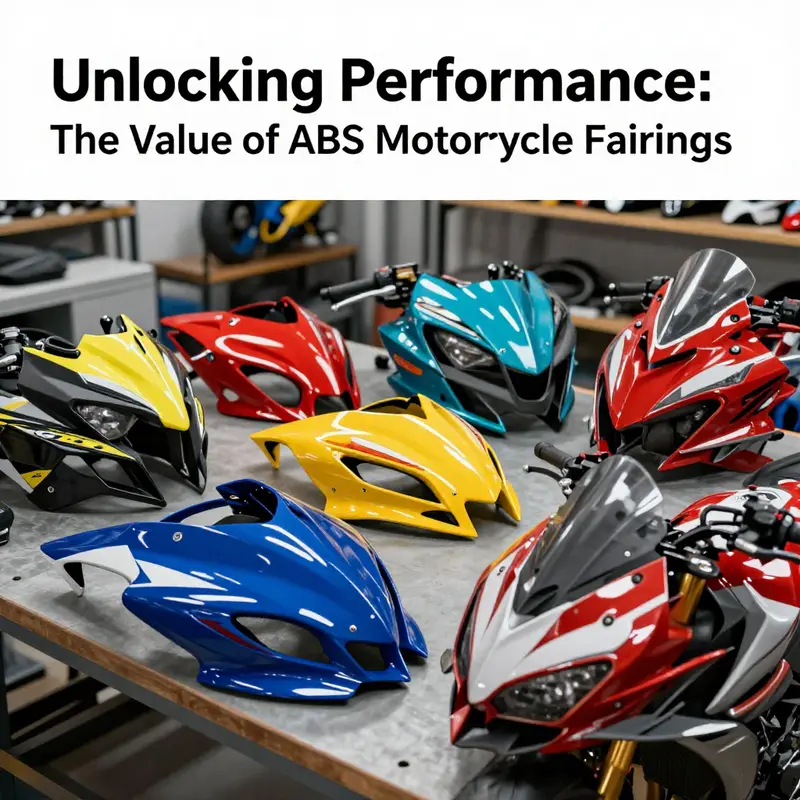
ABS motorcycle fairings sit at a crossroads of personal expression and practical engineering. They are designed not merely to cloak a bike in color and shape, but to wrap the rider in a streamlined, durable shell that supports performance with every turn of the wheel. The appeal of ABS fairings lies in modularity: pre drilled holes and standardized mounting that mirror OEM standards, enabling straightforward, repeatable installation even when swapping looks or upgrading from stock panels. Good fitment preserves aerodynamics and chassis geometry; when panels sit flush and gaps align, wind pressure is distributed as designed, improving stability and reducing fatigue at speed. Beyond aesthetics, modular kits allow mixing and matching sections, swapping colorways, or adding logos without replacing the entire set. This flexibility is especially appealing for riders building cafe racer or sportier street machines, where a cohesive look should respect the bike’s lines and performance posture. Production fitment emphasizes compatibility across models through standardized mounting schemes and profiled edges, yielding repeatable, factory like contours and fewer installation surprises. In terms of material performance, ABS resists corrosion and weather exposure, offers UV stability to maintain color and gloss, and helps keep weight down compared with metal. Depending on design and thickness, ABS fairings can shave weight and drag, contributing to better handling and efficiency, especially at highway speeds. When choosing a kit, riders benefit from verifying model compatibility, reviewing mounting diagrams, and confirming available installation guides. The result is a balanced package: a look that reflects the rider while preserving the bike’s original aesthetic language, fit that stays true over time, and the practical durability to support everyday riding and longer trips.
The Economic Edge of ABS Motorcycle Fairings: Durability, Efficiency, and Smart Upgrades
Choosing motorcycle bodywork isn’t simply a matter of style; it is an economic decision that unfolds over miles and seasons. ABS motorcycle fairings sit at a practical crossroads where durability, weight, and cost intersect, shaping not only how a bike looks but how it performs and pays for itself over time. Built from Acrylonitrile Butadiene Styrene, ABS blends toughness with lightness. Its impact resistance helps shield key components—the engine, radiator, and delicate body panels—from road debris and minor stalls during spills or tip-overs. Crucially, ABS is engineered to resist UV exposure and endure varied weather without cracking or color fading, so the fairings retain their appearance and structural integrity much longer than lower-grade plastics. This combination matters for riders who commute daily, chase weekend rides, or embark on long-distance journeys, where the difference in upkeep between a robust fairing and a fragile one translates into real dollars and fewer headaches.
Weight matters, and here ABS earns a practical advantage. In typical configurations, ABS fairings shed a meaningful portion of weight compared with heavier composite materials. The lighter mass reduces overall bike inertia, which enhances handling, accelerates response, and contributes to more efficient fuel use. The gains aren’t just about speed; they’re about predictable, repeatable performance across a rider’s entire usage pattern—from slow-speed maneuvers in city streets to sustained highway cruising. When every gram matters, the reduced mass becomes part of the bike’s daily economics, lowering wear on drivetrain components and reducing fatigue-inducing wind forces on the rider. In the real world, that translates into comfortable rides that demand less energy to maintain a desired speed, especially on longer trips.
Another critical economic facet is manufacturing precision. Modern ABS production employs precise molding techniques that yield a tight, factory-like fit across a range of motorcycle models—from sport bikes to standard cruisers. A well-fitted fairing minimizes gaps, reduces the likelihood of rattles, and cuts the amount of time a technician spends aligning parts during installation. This precise fit is not just a cosmetic boon; it lowers labor costs for professional installers and minimizes subsequent maintenance or adjustment work. The result is a smoother ownership experience and a lower lifetime cost of ownership. As riders consider upgrades, the prospect of a straightforward swap with minimal modification appeals to those who want to protect their investment without turning a simple cosmetic upgrade into a lengthy workshop project.
The economic calculus of ABS fairings extends beyond one bike or one owner. When riders choose ABS, they often encounter lower lifecycle costs driven by durability and maintenance reductions. High-quality ABS fairings are less prone to cracking or warping under stresses that would threaten cheaper plastics or ill-formulated composites. This resilience lowers the frequency of replacements, repainting, or expensive repairs after minor incidents. In the long run, the reduced need for panel replacements and the diminished probability of damage to underlying components like headlights or engine casings produces tangible savings that accumulate over years. Industry observers note that riders who upgrade to well-engineered ABS kits often report fewer maintenance issues, which, in practical terms, means fewer trips to the shop and more miles logged between service visits.
Aerodynamics is another layer of value, tied intimately to both performance and cost. A properly designed ABS fairing doesn’t simply shield; it can streamline airflow to reduce drag. While the exact drag reduction depends on the model and the fairing’s precision, advanced ABS kits designed for aerodynamic efficiency can lower drag by meaningful margins—up to around 15% in some configurations. That reduction translates into smoother highway cruising, steadier fuel economy, and less wind fatigue for the rider. Across a year of routine riding—commuting, longer trips, and weekend escapes—the cumulative fuel savings can become noticeable on a rider’s fuel bill. Even modest gains in efficiency accumulate, especially for riders who spend a lot of time on the road or who log significant touring miles.
The economic story of ABS fairings is reinforced by broader manufacturing dynamics. As demand for high-performance, standardized ABS kits grows, production lines become more efficient, pushing unit costs downward while maintaining quality and consistency. This economies-of-scale effect makes each subsequent purchase a little more affordable and encourages broader adoption across different bike segments. The industry’s ability to deliver precise fitment at scale means more riders can reap the benefits of durability and efficiency without paying a premium for bespoke, labor-intensive solutions. For many riders, this translates into a balanced cost-to-benefit equation: solid protection, improved aerodynamics, and a clean, tailored look without an exorbitant price tag.
Of course, the practical experience of upgrading to ABS fairings hinges on fitment and installation. ABS’s malleability during molding allows for tight tolerances that align with a bike’s original body lines, but compatibility remains a critical verification step. Riders should confirm model-specific compatibility before purchasing any aftermarket kit. The promise of a snug, nearly factory-like appearance is most fully realized when the kit matches the bike’s exact geometry and mounting points, reducing the risk of misalignment, vibration, or the need for aggressive modification. In combination with careful selection and professional installation when needed, the economic advantages of ABS fairings become clearer: fewer surprises, faster service, and a more dependable end result that looks right, performs well, and lasts.
For riders exploring compatible options within a single brand ecosystem, the variety of ABS fairing lines can still feel expansive. The ease of integration encourages enthusiasts to pursue not only protection but also personalization. By selecting ABS, they pursue a practical blend of durability, lightness, and aesthetics that aligns with both daily use and longer adventures. The choice often becomes less about a quick aesthetic tweak and more about a strategic upgrade that supports comfort, reliability, and cost efficiency over the bike’s lifecycle. As customization continues to evolve, ABS remains a dependable foundation for riders who prize consistent performance and thoughtful investment over mere surface appeal.
In communicating these benefits to potential buyers, it helps to emphasize that compatibility checks are essential and that the right ABS kit can harmonize with the bike’s lines, rider posture, and wind profile. When done thoughtfully, the result is not just a refreshed silhouette but a more predictable, efficient, and protective platform for riding. To those considering a broader view of options within the vast landscape of fairings, a visit to the Honda fairings collection offers a glimpse of how a well-organized catalog can present models and accessories that fit a variety of bikes while preserving the advantages of ABS—fit, finish, and form aligned with purpose. Honda fairings
The narrative of ABS fairings is ultimately a narrative about balancing risk with reward. The material’s inherent resilience lowers the risk of expensive repairs after minor mishaps, while the weight savings contribute to enjoyable handling and potential fuel savings that compound over time. The promised longevity and weather resilience guard against the creeping costs of maintenance and repainting that degrade the value of lower-cost alternatives. And the precision molding that supports a tight fit ensures that this upgrade looks and performs as a coherent part of the motorcycle, not a mismatched add-on. Taken together, these factors create a compelling economic value proposition: ABS fairings offer a durable, efficient, and accessible path to upgrading protection, appearance, and overall riding experience without imposing an excessive upfront cost.
For readers seeking a deeper understanding of how these dynamics play out across different markets and manufacturing contexts, the broader literature on Chinese motorcycle fairings and their industrial benefits provides useful context. It examines material composition, standards, and the scale-driven efficiencies that underwrite affordable, high-performance bodywork. That broader lens helps explain why ABS, as a widely adopted material, continues to be a cornerstone of affordable quality in motorcycle customization and replacement parts. External perspective can deepen appreciation for how local rider choices feed into global supply chains and how innovations in one region ripple through the industry,
and why ABS remains a trusted choice for riders who value durability and long-term cost efficiency. For readers who want to explore that external context, a detailed resource on the composition and broader industrial benefits of Chinese motorcycle fairings can offer further insight: https://www.motorcycleparts.com/chinese-motorcycle-fairings-composition-standards-industrial-benefits/.
Final thoughts
The integration of ABS motorcycle fairings into the motorcycling world offers undeniable advantages for riders and businesses alike. Their robust nature ensures longevity, while their lightweight properties enhance overall motorcycle performance. With excellent resistance to UV rays and external weather conditions, these fairings not only maintain aesthetic appeal but also contribute to the rider’s comfort. The customizability and precise fitment of ABS fairings cater to diverse motorcycle models, making them a favorite among customizers. Moreover, their economic viability makes them an accessible option for budget-conscious consumers. By embracing ABS motorcycle fairings, business owners can elevate their offerings and satisfy the growing demand for high-quality motorcycle customization products.