
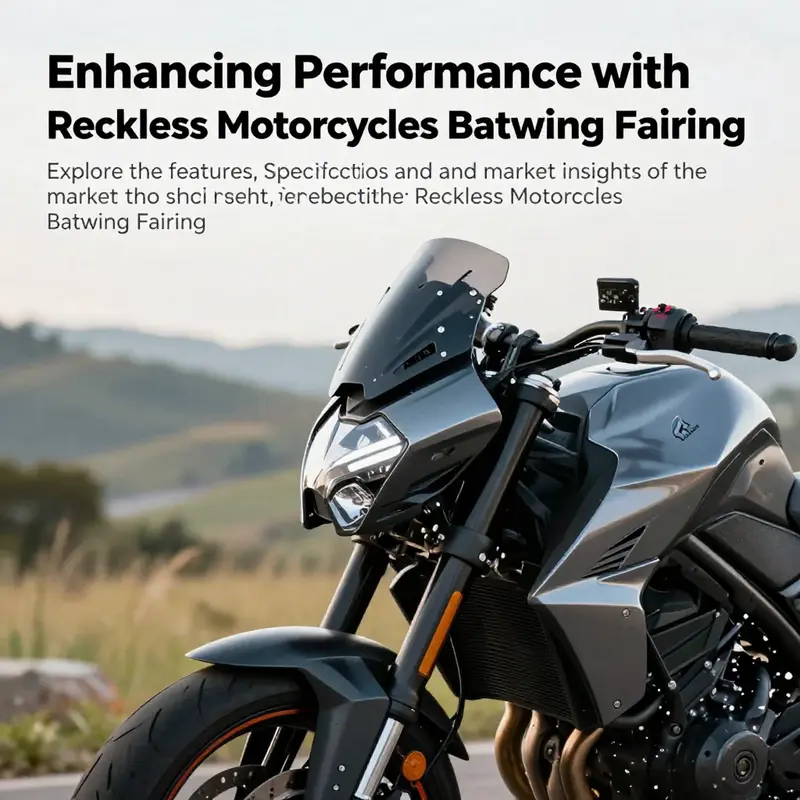
Motorcycle enthusiasts and business owners in the automotive accessories sector are increasingly drawn to modifications that enhance both aesthetics and performance. The Reckless Motorcycles Batwing Fairing stands out as a notable component in this realm, offering not only a visually striking appearance but also functional benefits. This article delves into the essential aspects of the Batwing Fairing, providing an overview, detailed features, specifications, and insights into market availability. By understanding these elements, business owners can better position themselves in the growing motorcycle aftermarket industry.
Winged silhouette: how a batwing fairing reshapes look, feel, and ride
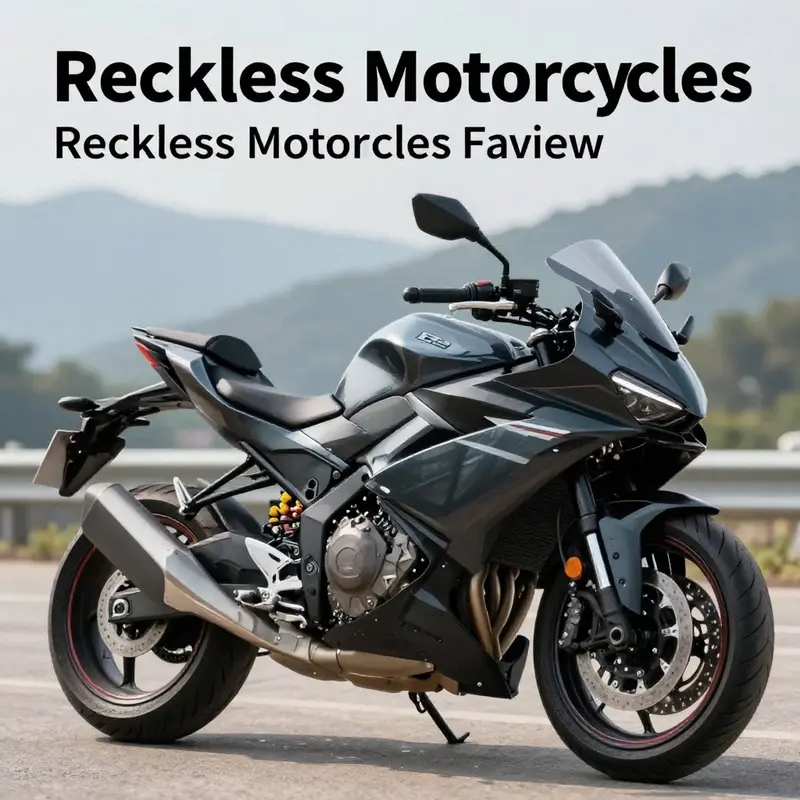
A batwing fairing instantly alters a motorcycle’s profile. From the moment it is mounted, the bike gains a bold silhouette that suggests movement even when it stands still. The shape is more than decoration; it is a statement about wind, posture, and purpose. Wind management is the core performance story. The fairing directs air around the rider, reducing buffeting at speed and helping to smooth the ride. A well designed batwing balances front profile with a taper to avoid creating new eddies at the shoulders. The result is more comfortable long distance riding and a more confident riding stance. Materials range from ABS plastic to fiberglass and composites. ABS offers impact resistance and easy shaping, while fiberglass can be stiffer and lighter, with greater detail. The choice influences paint finish, durability, and maintenance. A good gel coat adds resistance to micro cracks and keeps the surface looking sharp through sun and rain. Installation can be a project. Mounting points, handlebar geometry, and potential interference with cables must be checked. Some models require brackets or minor frame tweaks. The process rewards patience with a clean fit that looks like the fairing came with the bike from the factory and with room for mirrors, lights, and windscreen. From an aesthetic perspective the batwing offers dramatic lines and color play. It invites varied finishes from gloss to matte, bold color contrasts, and chrome or black hardware to emphasize the wing like look. For many riders the fairing becomes a personal canvas that reflects riding style and personality. In the used market the value depends on condition and what pieces are missing. A windscreen, mounting hardware, and the interior brackets may be absent. Cosmetic flaws can be acceptable if the structure is sound and repairable with repaint or touch ups. Buyers often weigh the cost of retrofit against the benefit of wind protection and styling. Finally the decision to upgrade should consider riding goals. For long highway runs wind protection matters; for show rides the visual impact may be the driver. When combined with the right tires suspension and brakes the batwing can help deliver a more controlled, composed, and expressive ride.
Shadow Wings on the Open Road: Reading the Batwing Fairing as Craft, Velocity, and a Used Cruiser’s Story
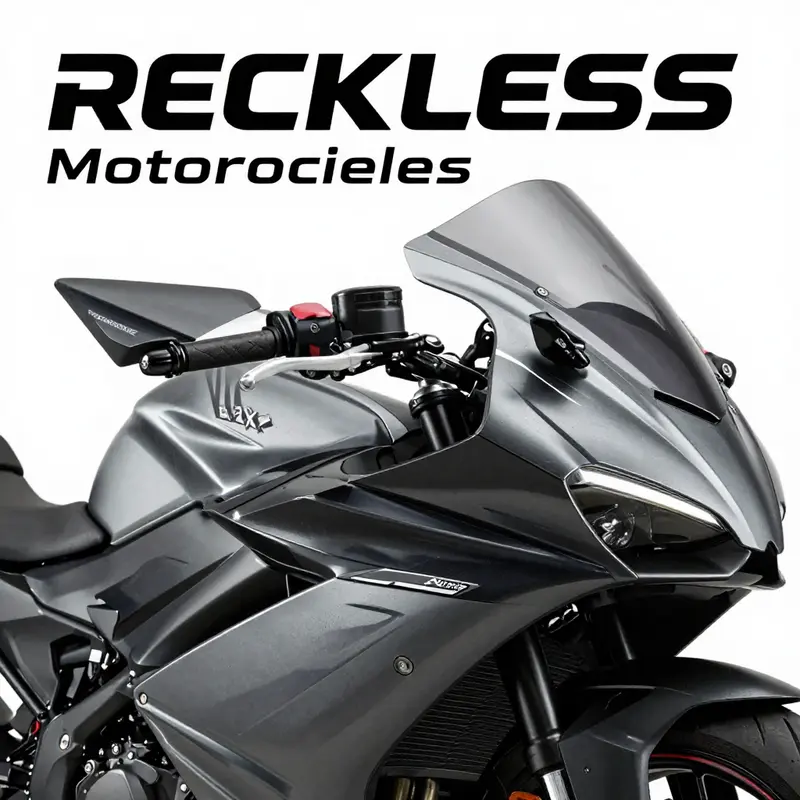
The batwing fairing is more than a simple shield against wind. It is a sculptural statement that carries the rider’s identity forward, a pair of wing-like panels that frame the machine’s line and, simultaneously, the rider’s posture against the roar of the world. In the language of motorcycle design, the batwing is a character—not merely a utility—speaking in curves and planes about speed, control, and the urge to press beyond the ordinary line. When you encounter a used batwing fairing, as a package—a secondhand unit with scratches, paint wear, and missing windshield or mounting hardware—you are not just looking at a part. You are peeking into a fringe of the riding culture where aesthetics meet engineering, where the discourse about aerodynamics and personal expression collides with the practical demands of purchase, fitment, and maintenance. The chapter that follows moves through this object as a hinge between style and function, a way to read what the fairing can offer, what its faults reveal, and how a rider might navigate the negotiation between the longing for speed and the realities of a secondhand purchase.
Batwing fairings, in their most recognizable form, present a silhouette that is instantly legible on a cruiser chassis. The wings sweep out from the front of the bike with a deliberate, almost theatrical balance. The effect is not just about wind deflection; it is about a mood. The fairing reduces buffeting around the rider’s chest and head at high speeds, channels air toward the sides, and, in many configurations, houses lighting elements that extend visibility while also contributing to the motorcycle’s character at night. The integration of lighting—the beacons of LED daytime running lights and turn signals—transforms a once purely protective shell into a moving, lit sculpture. In this sense, the batwing is both shield and stage, protecting the rider from the elements while broadcasting an unambiguous message to oncoming traffic and to the world: this is a machine built for control, for long hauls, and for a certain defiant style.
From a materials standpoint, batwing fairings can be built from a spectrum of substrates. Some are molded from ABS plastic for a blend of resilience and lightness; others rely on fiberglass or composite laminates for greater rigidity and a smoother finish. Modern iterations may incorporate carbon fiber or other lightweight skins to shave weight and raise stiffness, contributing to improved stability at speed and nuanced handling when the wheel meets uneven pavement or crosswinds. The choice of material influences not only performance but also the feel of the ride. A fairing that resists flex in the face of gusts preserves the rider’s sense of control and reduces the sense that the bike is being driven by the wind rather than by the rider’s hands on the bars. The body of the fairing also dictates how easy it is to maintain, to repair, and to resurface when a scratch or blemish arises. In the realm of used components, these materials carry a story of use—sun-exposed paint, micro-scratches from road debris, and the occasional dent from a curbside misjudgment—all of which color the value proposition of a secondhand purchase.
One cannot discuss batwings without acknowledging their dual role as both performance devices and design icons. Aerodynamically, the fairing is a nonlinear system. It does not simply push wind aside; it redirects, splits, and pressures the air in a way that changes the bike’s torque feel, its front-end stability, and even the rider’s breathing dynamics in the saddle. The fairing’s upper edge, its mirror-like surface, and the inner contours influence the boundary layer around the rider’s torso. At highway speeds, these effects accumulate. The rider experiences lower fatigue because the wind’s direct force on the chest and shoulders is mitigated, while the chin and helmet are subject to a different, often more manageable stream. The result is a ride that can feel more planted, more controlled, and less racked by the constant gusts that would otherwise become a second rider. Yet these gains come with trade-offs. The batwing’s size and mass alter steering feel, especially when the bike is at low speeds or maneuvering in tight spaces. The mounting points, the integrity of the brackets, and the way the fairing integrates with the dash, the headlight, and the instrument cluster all contribute to a chain of dependencies that the rider must respect when selecting and installing a fairing.
In the used-market context, where a fairing may arrive with a history of exposure to sun, rain, heat, and vibration, the careful inspection becomes a form of narrative reading. The scratches and paint wear, noted in product descriptions, are not merely cosmetic. They are record-keeping marks that tell you about the environment in which the bike lived and the stresses it endured. Paint loss may reveal layers of weathering, and it can hint at the underlying gelcoat or primer condition. When a windshield is missing, something more than aesthetics is missing: the protective interface that shields the rider from the most extreme wind blasts at high speed and the glare that can impair visibility in bright sun. Missing mounting hardware is another sign of past disassembly or incomplete maintenance. The combination of these factors means that a secondhand batwing fairing, while potentially a bargain, requires a practical and technical strategy before it becomes a safe, reliable addition to a ride.
Evaluating a used fairing involves a careful blend of visual inspection and fitment analysis. The eye will scan for structural cracks along the mounting points and along the edges where the fairing mates with the bike’s front-end geometry. Small cracks, especially near the scribe lines where the parts join, can propagate under the vibrations produced by long highway runs. A deeper assessment should check for delamination or deformation—a sign that the fairing has absorbed hard impacts or sustained repeated flexing. Even if a fairing looks relatively pristine at first glance, it is essential to verify that the internal mounting tabs, brackets, and fasteners are intact and undamaged. The absence of a windshield complicates this process, as the windshield typically anchors not only the front’s seal but also helps preserve the alignment of the fairing with the fork crown and the instrument cluster. If the windshield is included later, ensure that the mounting hardware aligns with the bike’s fork tubes and that the hardware can be sourced or fabricated without compromising the integrity of the fairing’s mounting surfaces.
Beyond the physical condition, compatibility looms as a central concern. Batwing fairings are often designed for specific model generations or for broad families of bikes with shared front-end geometry. An item listed as a fairing for a cruiser can still require auxiliary brackets, specific turn-signal housings, or a particular headlight assembly to fit without interference. The challenge intensifies with model-year changes. Even when two bikes share a broadly similar frame geometry, subtle shifts in dash placement, fuel tank height, or fork rake can affect clearance between the fairing and other components when the handlebars are turned to the side or when the front wheel is in full lock. When evaluating a used batwing, one must compare the fairing’s inner contour with the bike’s neck and nacelle structure. A mismatch in geometry can lead to painful compromises: binding around the handlebars, interference with the headlight, or rubbing against the instrument cluster at full steering lock. In the absence of original hardware, the buyer now faces the challenge of sourcing brackets that can align the fairing’s mounting holes to the bike’s brackets, all while maintaining the symmetry of the fairing so that the aesthetic balance of the wings remains true.
The aesthetic dimension of a batwing is inseparable from its functional profile. The silhouette is a visual language that communicates more than power. It signals a rider who is committed to a certain driving tempo—a pace where wind, sound, and vibration come together to create a sensory gradient that is both exhilarating and demanding. The paint and finish are not merely decorative but also a statement of care, a testament to the rider’s willingness to invest in the bike’s personality. In the used market, evidence of repainting can indicate previous crash repair or cosmetic updating, and it may also reveal an owner’s attempt to align the bike with a particular era or style. A well-preserved, thoughtfully restored fairing can enhance a bike’s value, especially if the repaint matches the bike’s original colorway and the repair work is clean and thorough. Conversely, a hasty repaint or mismatched shade can betray a rough history, affecting not only the resale value but also the bike’s perceived authenticity and cohesion.
To understand the batwing’s place in the broader ecosystem of motorcycle fairings, it helps to look at the spectrum of options, from OEM designs to aftermarket reinterpretations. OEM batwings are typically designed with precise fitment for a given model, with carefully integrated lighting and dashboards tailored to that bike’s instrumentation. Aftermarket options may broaden the range of finishes, colors, and materials, offering codified fitment kits or universal mounting solutions that require more intensive measurement and alignment work. Both paths share a common aim: to optimize rider comfort at speed, improve visibility, and create a distinctive look. The trade-offs become especially salient when a fairing is sourced used. The ideal scenario is to find a unit that already integrates with the owner’s bike in a way that minimizes modification and preserves the bike’s originality. The more a buyer can maintain the original riding geometry and electrical system, the more predictable the performance becomes. Yet for enthusiasts who crave a unique look or who ride in a climate that demands a specific wind management strategy, a used fairing can be a doorway to customization, a way to shape the bike’s face while staying within a reasonable budget.
The design conversation surrounding batwings also extends to illumination and cockpit integration. In higher-end or modernized versions, the fairing may feature a complete LED lighting array, not only for daytime visibility but also for the signature glow that characterizes many contemporary cruisers. The LED system is typically integrated with the bike’s electrical system in a way that preserves the dash’s readability and the front lighting’s effectiveness in adverse weather conditions. Some batwings even push toward seamless digital integration, with dashboards that present information in an unobtrusive, high-contrast format. In the used market, electrical compatibility becomes a practical concern. If the fairing’s lighting is not present or if its connectors have been damaged, retrofitting becomes a project that involves not just new hardware but also careful wiring, fuse protection, and possibly a reprogramming of the bike’s electrical harness. The challenge is not simply to achieve a functional light cluster; it is to maintain a clean, integrated look that preserves the fairing’s aesthetic unity and, just as important, its structural integrity.
As with any major cosmetic and functional add-on, the decision to pursue a batwing fairing as a used purchase is not only about dollars and cents. It is about whether the item allows the rider to regain a particular sense of tempo and freedom without sacrificing reliability or safety. The condition described in the initial research snapshot—a used batwing with visible scratches and paint wear, missing windshield and mounting hardware—illustrates a typical scenario in which the buyer must plan for a multi-step restoration. The flight from a dream to a defensible purchase requires a careful mix of technical verification, budget for parts, and a realistic sense of the installation timeline. A used batwing can be a gateway to personalizing a ride and achieving a look that is instantly recognizable on the road. But it can also be a trap if the buyer does not account for the cascading costs of necessary components: the windshield, the mounting hardware, the brackets, any electrical connectors, and the possibility of paint or finish corrections. Each piece has its own price point and its own timeline, and each contributes to the ultimately perceived value of the purchase.
In this sense, the batwing fairing becomes a portal to the rider’s narrative of risk, exploration, and self-expression. A used unit underscores the mutable, personal nature of motorcycling: the bike is a canvas on which the previous owner has left traces of their journey, and the buyer writes the next chapter by deciding how much of that past to preserve and how much to alter. The fairing’s wings, in their spreading silhouette, invite the rider to imagine the horizon, to anticipate distance, and to measure the road in scales of wind and time. The decision to pursue such a component engages more than technical competence; it requires a readiness to accept the fairing’s story as part of the ride itself. The rider, in selecting a used batwing, chooses a pathway that rewards patience, precise measurement, and a respect for the object’s history while maintaining a commitment to safety, fitment, and the ride’s long-term reliability.
For researchers, designers, and riders alike, a batwing fairing embodies a joining of lines and a philosophy of motion. Its wings are not simply decorative; they are a record of aerodynamic thinking, a reflection of a riding culture that prizes the balance between raw speed and the discipline required to ride with control. The used market, with its scratches and missing hardware, offers a practical lens on this broader design conversation. It highlights what is gained when the rider negotiates the limits of available parts, when the bike’s geometry is reimagined through careful measurement and skilled mounting, and when the right combination of materials, finish, and fit brings the fairing’s wings to life in concert with the bike’s core identity. In the end, reading a batwing’s story is a way to read the rider’s own story—the willingness to chase velocity, to embrace a certain aesthetic, and to invest in a technique that makes the road feel both shared and personal.
To ground this discussion in a practical reference for readers who want to explore the broader universe of fairings and their fitment across brands and models, consider exploring catalogs and resources that illustrate the range of fairing styles and their compatibility. A catalog focused on specific manufacturers can give a sense of how different bikes accommodate a batwing’s geometry, how mounting strategies evolve between generations, and how design language changes in response to wind tunnel data and rider feedback. As you study these options, you may notice the recurring theme that the batwing is at once protective gear and a statement about the rider’s relationship to the road. It’s a dialogue between physics and personality, a negotiation that continues as long as the bike remains a moving canvas and the rider remains ready to test the limits of control and expression.
In this continuum, the used batwing fairing reveals a quiet paradox. It represents an opportunity to reclaim the beauty of wind-sculpted lines and a chance to participate in a lineage of designs that have defined the cruiser genre for decades. Yet it requires a patient approach: an appraisal of structural health, a plan for sourcing missing components, and a readiness to adapt the part to the bike’s current architecture. The rider who undertakes this path learns not only about the fairing’s anatomy but also about their own posture toward risk, their budget for restoration, and their resolve to preserve a piece of riding culture that valorizes both aesthetics and function. The journey from a sighting of a used batwing to a confident installation is not merely a transaction. It is a process of alignment—between fairing and machine, between rider and road, and between the present purchase and the ride’s evolving future.
Internal resources: For readers who want to explore a broader selection of fairing options and to gain insights into how different designs approach the same aerodynamic and aesthetic goals, you can browse a catalog that consolidates various fairing styles and fitment considerations. A practical starting point is the BMW fairings catalog, which showcases how different motorcycle platforms address the needs of wind management, rider comfort, and seamless integration with instrumentation. This resource provides a sense of the range and specificity that fairings demand across models and generations. (BMW fairings catalog)
External reference: For a deeper look into how next-generation batwing fairings are conceptualized and implemented in contemporary cruiser design—along with a detailed account of lighting integration, TFT dashboard compatibility, and material optimization—see the Harley-Davidson Street Glide page, which presents official specifications and design language that have influenced industry expectations for batwing architecture. https://www.harley-davidson.com/en-us/motorcycles/cruisers/street-glide.html
null
null
Final thoughts
The Reckless Motorcycles Batwing Fairing represents a significant opportunity for business owners looking to tap into the motorcycle accessories market. With its unique blend of aesthetics and enhanced performance, this fairing appeals to a broad range of motorcycle enthusiasts. Understanding its features and specifications allows business owners to effectively market this product, while insight into market availability helps them navigate their inventory decisions. By leveraging this knowledge, they can not only meet customer demand but also establish a prominent presence in the competitive motorcycle aftermarket landscape.