
Motorcycles are not only a means of transport but also a passion for many. As a business owner in the motorcycle industry, understanding how to fix fairings is crucial for maintaining customer satisfaction and enhancing service offerings. Motorcycle fairings, which protect the bike’s body and improve aerodynamics, often suffer damage from falls, road debris, or age-related wear. Recognizing how to assess damage, prepare surfaces, select the appropriate repair methods, and finish with precision can significantly enhance the value of your services. Each chapter will guide you through these essential processes to establish a solid, informed approach to fairing repairs.
Reading the Cracks: A Thorough Damage Assessment as the Compass for Safe and Satisfying Motorcycle Fairing Repairs
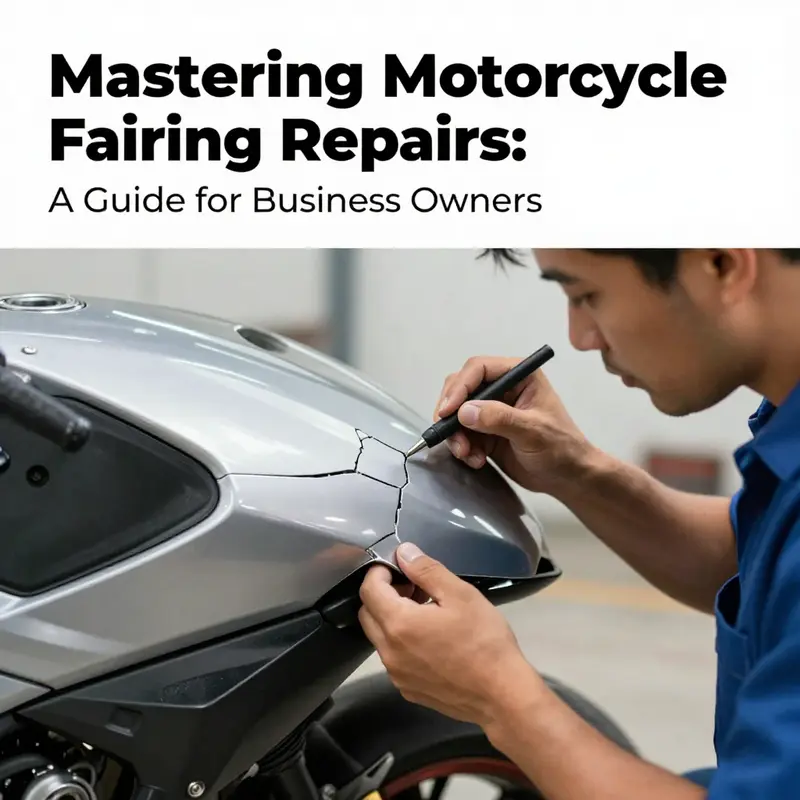
The moment a fairing shows signs of impact, a rider’s instinct often leans toward quick fixes and a reassuring patch. Yet the first, most decisive step in any repair journey is not the method of bonding or the color of the finish but the accuracy of the damage assessment. A fairing is more than a cosmetic shell; it is a critical element in aerodynamics, protection, and styling. A precise assessment sets the trajectory for the entire repair, from material choice to color match, and even whether replacement is the wiser path. When you approach damage with calm scrutiny, you preserve not only the bike’s look but its safety, performance, and resale value. The road to a durable repair begins with a methodical, almost forensic examination that treats the fairing as a three-dimensional part of a larger system rather than a solitary panel to be slapped back into place. This chapter threads together the essentials of this assessment and shows how a careful appraisal informs the repair technique, material selection, and future longevity of the repair work.
A thorough damage assessment begins long before any resin, epoxy, or filler touches the plastic. It starts with a deliberate clean and a patient gaze. Dirt, grime, and wax residues can obscure cracks or mislead about the true depth of damage. A gentle wash with water and mild detergent helps reveal the real profile of the injury, from hairline fractures along edges to deeper breaks that pierce the fairing’s internal shell. This clarity matters because the extent of the damage often dictates the feasibility of repair versus replacement. If you can see the damage clearly, you can plan a repair that honors the fairing’s original geometry. The inspection then moves into the realm of measurement and alignment. A good assessment doesn’t rely solely on what the eye sees at a single point; it uses alignment checks to verify whether joints, mounting points, and edge lines return to their intended factory geometry after restoration of the surface. If any of these anchors are out of line, the fairing’s fit, the consistency of the paint, and the air flow around the bike can all suffer.
The visual and structural inspection should be both broad and precise. Scratches, gouges, cracks, and missing sections must be tallied not only for cosmetic impact but also for structural implications. The edges—where panels meet and where the fairing attaches to the frame—are often the most telling regions. There, depth gauges, calipers, or even a simple map of light reflections can reveal whether the damage extends into areas that bear load or carry critical alignment. In some cases, technicians supplement the naked eye with more advanced tools such as a microscope or a digital measurement system to map micro-deformations. The objective is to detect any hidden distortions that could affect the fit once the piece is repaired or to confirm that a crack’s true extent has been fully resolved after surface preparation. When the damage penetrates beyond superficial surface texture, the likelihood of a successful repair without compromising strength diminishes. This is not a verdict of inevitability but a careful boundary to guide the decision.
Following the visual scan, an assessment of repair feasibility becomes central. The question is twofold: Can the damaged portion be repaired with acceptable strength and durability, or does it compromise critical geometry and require replacement? Minor cracks or chips in non-load-bearing zones often respond well to plastic adhesive bonding, specialized filler compounds, or two-part epoxies designed for automotive or motorcycle bodywork. These materials can seal the crack, restore rigidity, and preserve an almost seamless exterior when finished properly. But larger breaks, breaks at mounting points, or damage that affects the torques and aerodynamic profile tend to demand reinforcement or replacement. In some cases, the recommended path is to integrate a fiberglass or carbon fiber reinforcement for additional strength. Carbon fiber, while sometimes more expensive and complex to install, offers a lightweight boost that can improve the fairing’s resistance to future stress—especially on high-performance machines where aerodynamics are tightly tuned. The decision framework should also consider whether the damage affects load-bearing connections or alignment points where the fairing mounts to the frame, forks, or handlebars. If those anchors show deformation or misalignment after the repair, replacing the panel or even the entire fairing assembly becomes the safer choice, ensuring the bike preserves its intended aerodynamics and handling.
Another layer of assessment involves diagnostic tools that extend beyond direct observation. Modern repair environments increasingly rely on 3D measurement systems or laser scanners to compare the damaged area with factory dimensions. This approach protects the rider from a repaired panel that looks right but deviates from true geometry in ways that could disrupt airflow or fit previously unseen joints. The ability to measure, compare, and adjust ensures a tight return to original tolerances, which is especially vital for riders who demand precision for track days or competitive riding. The 3D data also proves invaluable when the damage is complex or multi-panel, allowing technicians to plan consistent repair across adjoining pieces and to anticipate how a repaired fairing will interfate with adjacent surfaces. The goal is not merely to fill a crack but to preserve or restore the fairing’s dimensional integrity so that it fits as it did from the factory.
Paint and finish considerations are inseparable from structural decisions because the fairing’s appearance is part of its identity. In some instances, repair work must honor the paint’s original thickness and texture to avoid visible seams after blending and color matching. Techniques like no-fill or no-paste restoration, when possible, are favored because they spare the original paint layer. These methods minimize the risk of cracking or peeling later caused by additional filler beneath the topcoat. When minor touch-ups are necessary, a color-matching workflow—often aided by digital color analysis—helps ensure a seamless blend with the surrounding panels. The aim is to achieve a repaired surface that, once dried and clear-coated, looks and behaves like the original finish. If the repair contradicts the paint’s integrity or if color re-creation proves too challenging, replacing the panel with OEM or carefully selected aftermarket fairings becomes a prudent alternative, preserving both aesthetics and consistency across the bike’s bodywork.
Cost estimation and project scope naturally flow from this assessment. An accurate appraisal hinges on a clear understanding of part prices, labor rates, and the complexities of the repair path chosen. Dealers and repair shops commonly reference standardized pricing models to estimate labor hours and to price replacement parts according to current market rates. In practice, the cost implications will differ significantly between a minor crack repair with a bonded seal and a full fairing replacement requiring several sub-panels and a new paint job. The assessment document that accompanies the repair should enumerate the damage, proposed methods, anticipated labor, parts, finishing, and any associated testing or inspection steps. This documentation is not simply an internal memo; it becomes a transparent record useful for insurance claims and for discussions between rider, shop, and insurer. A formal damage assessment report—complete with photographs, measurements, and the recommended course of action—helps everyone understand the rationale behind the chosen strategy and sets expectations for outcomes.
If the repair path favors replacement or OEM-part parity to preserve the bike’s original character, the rider has a reliable framework to compare options. In doing so, it is important to keep in mind the balance between aesthetics, performance, and cost. Some riders opt to pursue more ambitious cosmetic goals, including updated finishes or even a bold, custom paint job that respects the fairing’s shape while offering a refreshed personality. Even in such cases, the initial assessment informs the feasibility of color transitions and the need for more extensive preparation to guarantee lasting adhesion and uniform gloss. When the assessment points toward a high-risk repair scenario—perhaps due to extensive edge damage or a compromised mounting interface—the prudent choice often becomes replacement. This decision protects not only the visual continuity of the bike’s bodywork but also its structural harmony with the frame and aerodynamic profile.
The assessment process also has practical implications for ongoing maintenance and future reliability. A repaired panel should be checked for flex under load and vibration, particularly along joints and connection points that endure repeated stress. A fairing that has been structurally reinforced may still require periodic inspection to ensure the reinforcement remains bonded and that there is no creeping or fatigue at the repair border. The goal is long-term confidence; the rider should feel secure that the fairing will hold its shape, protect vital components, and not introduce unexpected drag or instability at speed. This is where the evaluator’s note about alignment, edge integrity, and dimensional fidelity becomes a living document that informs routine checks and, when necessary, careful rework rather than a return to the workshop.
As you move from assessment toward actual repair, you may find the path strategically clear or surprisingly nuanced. If the damage is localized, well-supported, and the original mounting geometry is intact, a well-executed adhesive bond, reinforced with a light fiberglass or carbon weave, can restore both strength and finish with a result that remains faithful to the bike’s original silhouette. If, however, the inspection reveals edge fracture, edge delamination, or any deformation that alters the external contour, the scales tip toward replacement. In either case, honoring the assessment’s recommendations ensures that the work—not just the appearance—meets the rider’s expectations for durability and performance. For riders seeking guidance on brand-specific panels or for those who want to explore a broader catalog of fairings, a practical starting point is to browse brand-aligned collections that curate compatible options while preserving the bike’s intended geometry. This approach helps ensure that any new panel or reinforcement aligns with the frame, fairing supports, and mounting points found on the model.
Additionally, the assessment framework remains relevant whether you aim to reproduce the factory look or pursue a custom aesthetic. The emphasis on precise measurement, careful material choice, and controlled finishing is universal. The aim is a repair that blends invisibly into the surrounding surfaces while delivering predictable, repeatable performance. The measurements tell you where tolerances matter most; the materials tell you how to restore or exceed the panel’s strength; the finishing steps tell you how to preserve the visual continuity across the bike’s lines. In this way, the assessment becomes less about a single fix and more about a disciplined process that safeguards the bike’s aesthetics, its aerodynamics, and its rider’s confidence for miles to come.
Within the broader landscape of motorcycle maintenance guidelines, formal damage assessments are recommended by authorities and professional organizations to ensure uniformity in evaluating damage across models and conditions. For readers who want to consult official standards on damage assessment and repair guidelines, the National Highway Traffic Safety Administration provides structured guidance that supports transparent documentation and consistent methodologies. This external reference can serve as a useful check against local practices and as a benchmark when documenting insurance claims or when coordinating with repair shops. It is a reminder that a responsible repair begins with a clear, defensible assessment and proceeds through a carefully chosen, well-executed plan that respects both the rider and the machine. External resource: https://www.nhtsa.gov/vehicle-damage-assessment-guidelines .
When the assessment concludes, the next stage—precise repair or strategic replacement—takes shape with a clarity born of methodical observation. The discussion around an internal option, such as OEM or aftermarket fairings, can be guided by the assessment’s findings about fit and finish. For riders who want to explore brand-specific panels, the following resource provides a catalog of fairings aligned with different makes: Honda fairings. This link offers a practical reference point for considering OEM-comparable options and evaluating how a replacement may influence the fairing’s interaction with the bike’s overall aerodynamics and aesthetics. The assessment thus acts as the navigator, aligning the rider’s expectations with the physics of the bike and the realities of repair work. In the chapters that follow, the journey moves from assessment into the hands-on process of repair, where the right materials, curing times, and finishing techniques will come into play to restore not only a panel’s appearance but its integrity and performance as well.
From Rough to Ready: Mastering Surface Prep for Motorcycle Fairing Repairs
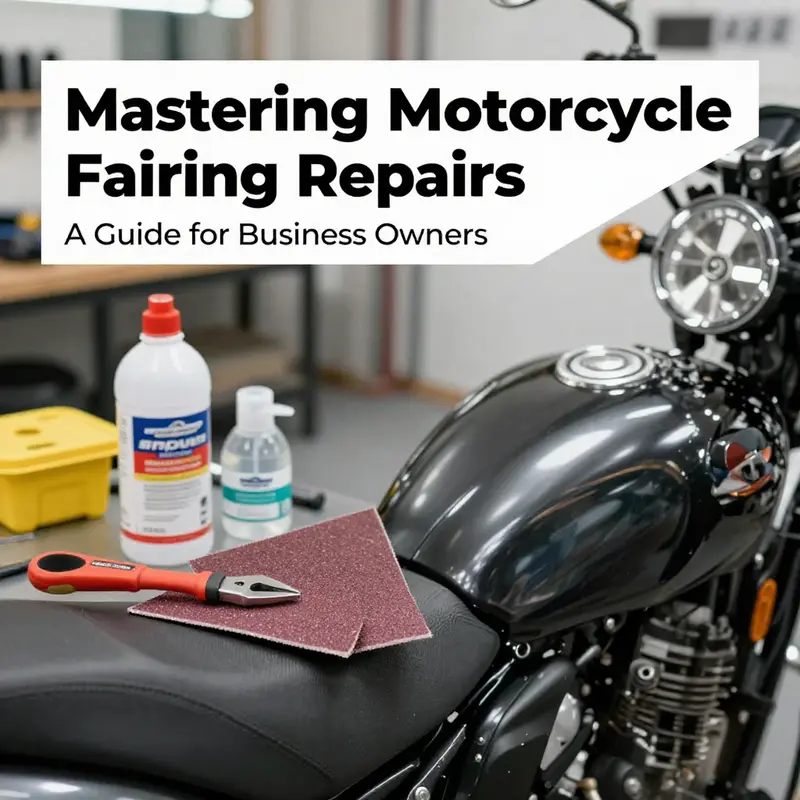
When a fairing is cracked or chipped, the repair story begins long before you mix epoxy or spray primer. The surface you work with sets the tone for every subsequent step. A well-prepared base ensures the adhesive grips and the filler behaves as intended, so the repair holds up under heat, vibration, and sun exposure. In this chapter we outline a cohesive prep workflow that keeps the repair clean and predictable. Key goals are cleanliness, purposeful abrading, careful filling, and a final, thorough inspection. Each step builds a solid foundation for a finish that looks right and wears well over time.\n\nBegin with a clean slate. Dirt, grease, and road grime are barriers to adhesion, so wash the area with a degreaser or mild soap and water until the surface is free of oil. Rinse and dry completely before you move on. A dry, contaminant-free surface helps primer and filler bond consistently.\n\nNext comes controlled abrasion. For most ABS- or polycarbonate-based fairings, start with 80–120 grit to establish a mechanical key, then step down to 180–220 grit to refine the edge and blend the damaged zone into the surrounding surface. Keep sanding evenly and extend the treatment slightly beyond the visible damage to avoid a noticeable border.\n\nClean again. Wipe away dust with a tack cloth or lint-free rag dampened with isopropyl alcohol. The goal is a uniform, slightly matte surface that accepts primer evenly. If you feel or see any polish or wax, repeat the cleaning.\n\nFilling, if needed, should follow the manufacturer’s directions. Apply the filler so it slightly overfills the area and then sand back to a flush contour using 180–220 grit, finishing with 400 grit for a smooth transition to paint.\n\nFinally, inspect the repaired area under good light. Run a gentle hand over the surface to feel for irregularities, re-sand if necessary, and confirm there are no hidden low spots. With a well-executed prep, primer, paint, and clear coat will lay down cleanly and match the surrounding fairing.
Repair Decisions That Endure: Mastering the Right Method for Motorcycle Fairings
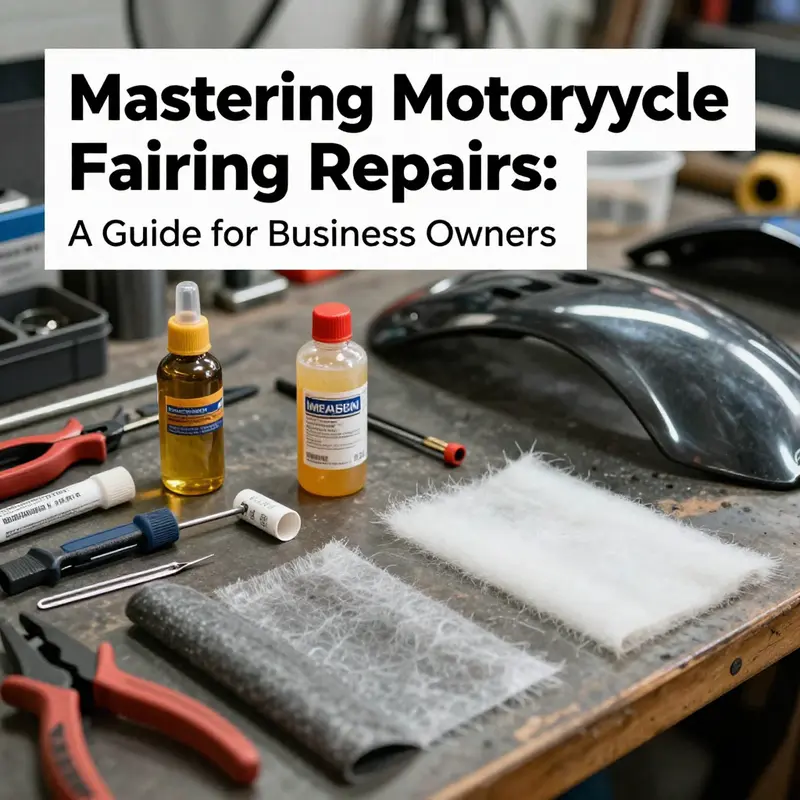
Repair is rarely a single action. It is a careful conversation between material, damage, and your riding ambitions. When a fairing is involved, the stakes rise: the panel not only shields the engine and rider but also shapes airflow and aero balance. The best repair method begins with a clear assessment and a patient, methodical approach. Begin by cleaning the affected area and its surroundings with water and a mild detergent. This isn’t cosmetic theater; dirt, wax, and oils interfere with adhesion and blend. A clean surface reveals the true nature of the damage—whether a hairline crack, a small chip, a substantial break, or a deformation that distorts alignment with adjacent panels. The more precise your initial survey, the more likely you will choose a repair route that preserves strength and appearance over the long haul. In practice, that means looking beyond the visible scar to the underlying substrate and how the fairing will bear wind, vibration, and stress at speed. The conversation you start with the damage should guide every subsequent step.
From there, surface preparation becomes the hinge that unlocks all repair methods. Plastic fairings, most commonly ABS or polycarbonate, respond best to a light but deliberate abrasion. Sanding with a fine grit, typically around 800–1200, removes the glossy finish that can impede bonding and creates microtexture that adhesives crave. This step is worth doing slowly because over-sanding can thin material or alter contour, while under-sanding invites future cracking or peeling. Protective gear is essential—gloves and a mask keep particles out of your lungs and off your hands. A well-prepared surface sets the stage for any repair path you choose.
The method you select should mimic the damage’s scope and the fairing’s function. For minor cracks or chips, a two-part epoxy resin or a specialized plastic repair kit is often sufficient. These products combine resin with a hardener to create a tough, ductile fill that can be shaped and sanded flush with the surrounding surface. For larger breaks or missing segments, reinforcement becomes desirable. Fiberglass or carbon fiber layups, properly applied, can restore structural strength without adding excessive weight. Carbon fiber, in particular, has gained favor with riders who want durability paired with a light touch on aerodynamic elements. The discussion here is not theoretical; it translates into real decisions about how you ride the bike, how you maintain it, and how you want it to look when you push it into a corner.
Applying the repair material is where discipline matters. Mix the epoxy or filler according to the manufacturer’s instructions, then work it into the damaged area. The goal is not merely to fill but to create a surface that can be shaped to vanish into the fairing’s lines. When you encounter a crack, fill from the base outward and slightly overfill to allow for smoothing. In the case of large breaks, you may lay a backing substrate—such as a fiberglass patch—before applying the resin. In any case, give the repair time to cure completely. Curing times vary by product and temperature; a standard rule is to allow about 24 hours before any sanding begins. Patience here yields a harder, more reliable repair and reduces the risk of later failure under stress.
The sanding and finishing stage is where the repair truly becomes invisible. Start with a coarser grade to flatten the filled area and restore the panel’s contour, then move through progressively finer grits. A typical progression runs from 600 to 1200, then 1500 and up to 2000 as you near the final smoothness. The objective is a seamless transition between repaired zones and the surrounding surface. This phase rewards attention to detail; rushed sanding creates feathered edges that catch light differently or leave micro-scratches visible under paint. A well-executed finish is the difference between a repair you’re proud of and a repair that looks patched. If the repair is more cosmetic than structural, you may proceed to paint matching. If the fairing shows an irregular shape, consider additional shaping to ensure the repaired area aligns with wind flow and the bike’s overall silhouette.
Paint matching is both science and art. After sanding, apply any necessary primer to create a uniform base. Then match the factory color as closely as possible using a spray gun or airbrush technique. Color matching can be straightforward for factory palettes, but customization adds a layer of complexity. Some riders opt for a fresh, custom finish that suits their bike’s personality, which is perfectly fine as long as the panel remains consistent with adjacent sections in tone and gloss. If you’re unsure about color work, it’s wise to consult a professional auto body shop. A painter with experience in motorcycle finishes can ensure the color, gloss level, and metallic or pearlescent effects stay faithful to the rest of the bike.
A clear coat protects the work you’ve done and adds UV resistance, gloss, and durability. A quality clear coat also gives you a sacrificial layer if future impacts occur. Let the clear coat cure fully in controlled conditions to avoid dust or solvent defects such as orange peel or runs. Some riders combine the clear coat with light buffing to achieve a glassy finish that blends with the rest of the bike’s panels. The result is not just cosmetic but also a practical defense against future weathering, stone chips, and the cumulative effects of high-speed exposure.
Beyond these mechanics lies a decision framework. The choice between DIY repair and professional service hinges on damage severity, the fairing’s location, and your comfort with high-precision work. Minor issues are often well within DIY reach, provided you follow cleaning, abrading, bonding, and finishing steps with patience. More serious damage—especially anything that threatens air filtration, radiator shielding, or structural alignment—deserves a professional assessment. The stakes escalate when a repair could affect aerodynamics, wind buffering, or crash protection. In such scenarios, the long-term durability and safety of the repair become paramount considerations. You should weigh cost, time, and the desired outcome. A DIY fix saves money upfront but may not deliver the same factory-like symmetry or long-term resilience as a full replacement or professional reinforcement. Conversely, a professional route incurs higher upfront costs but can return the fairing to precise tolerances and guarantee aerodynamic performance.
When considering the repair methods, it helps to imagine the fairing as a composite of layers, each with its own role. The torque of road vibration, the temperature cycles from sunlit heat to chilly nights, and the impact forces from a minor crash are all factors. Plastic welding, the option best for small, clean cracks or regular-shaped defects, melts and fuses the damaged area. It can restore strength to near-original levels but often leaves tiny traces of the weld visible if viewed up close. Filler repair, adequate for minor dents or surface irregularities, uses a specialized filler to recreate the surface and then relies on careful sanding and priming. Sand and repaint targets surface imperfections that do not penetrate into the structural layers, delivering a visually clean result when the base material remains intact. Complete fairing replacement, while the most dramatic option, is reserved for severe deformation or structural compromise, where rehabilitation of the existing shell cannot guarantee safety or aerodynamic integrity. In those cases, replacing with OEM or compatible aftermarket parts is a more reliable path to performance and appearance.
To refine your decision in practice, consider a few guiding questions. Is the damage localized or widespread? Does the crack threaten alignment with neighboring panels or the mounting points? Can the affected area be restored without introducing weak points that will fail under vibration? Are you prepared for the time and effort required to achieve a smooth, color-consistent finish? Do you have access to a controlled environment for painting and curing? Each answer nudges you toward a method that balances cost, time, and reliability. Remember that the best repair is one that preserves or restores the fairing’s original performance while preserving the bike’s look. The road test soon after repair will tell you whether the method chosen stands up to real-world stresses and speeds.
As you navigate these choices, an important practical note emerges: the availability of suitable materials and compatible panels matters. If you’re pursuing a straightforward, cost-conscious fix, your best bet may be a DIY epoxy repair with careful sanding and repainting. If the damage involves aerodynamic features or tail sections, reinforcement with carbon fiber or fiberglass can provide extra strength and allow you to maintain performance without a heavy spoil in weight. For riders who want a precise factory-like finish, a professional paint job after repair becomes a sensible investment. The balance of performance, aesthetics, and budget defines the path you take, not the other way around.
For riders who want to explore parts compatible with their bike’s bodywork, the Honda fairings category offers a practical starting point for identifying panels that can be integrated with your repair plan. This is not a promotion, but a navigational aid to ensure you consider parts that fit your bike’s lines and mounting arrangements while you decide whether you should patch, reinforce, or replace. The goal is to keep your machine in a state that respects its design intent and ensures rider confidence on every ride. If you’re contemplating a more radical finish—like a carbon fiber accent or a color shift that emphasizes speed rather than concealment—remember that the repair route might inspire a broader restoration approach. A well-executed repair can become the catalyst for a customized look that reflects your riding voice while preserving the bike’s performance envelope.
In closing, the right repair method is not a single technique but a thoughtful sequence that begins with inspection and ends with confirmation under load. With proper cleaning, careful surface preparation, and a disciplined approach to bonding, filling, sanding, painting, and coating, you can restore a damaged fairing to a state that feels nearly new. The path you choose should honor the bike’s performance needs and your personal preferences. A small, well-executed repair can be both practical and satisfying, while a larger, more deliberate reinforcement or replacement can deliver a long runway of reliability and pride on the road ahead. For deeper, step-by-step guidance on professional repair techniques, consult the official guide linked in the research resources. External resource: MMI guide.
Strengthening the Shell: A Practical Guide to Repair Materials for Motorcycle Fairings
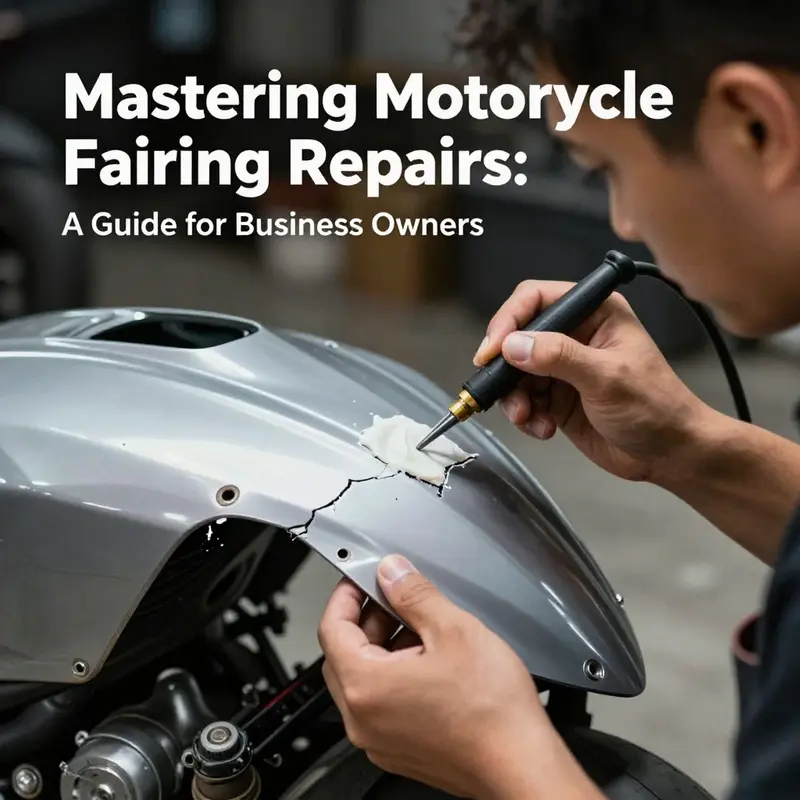
The fairing on a motorcycle is more than a shield against wind; it is a critical piece of the bike’s aerodynamics, structural integrity, and visual identity. When a fairing cracks or breaks, the decision to repair or replace becomes a test of materials, technique, and patience. This chapter stitches together the practical choices riders face with the art of restoring a shell that must endure vibration, heat, and road grime while preserving the bike’s stance and performance. The core idea is simple: the right material in the right place, applied with careful preparation, yields a repair that works as hard as the bike does. The path from assessment to finish begins with a clear view of the damage and a clean slate on which to work. Cleaning the area with water and a mild detergent removes oils, dirt, and wax that would otherwise sabotage adhesion. As the surface dries, you can see the true extent of the damage, from micro-scratches that barely catch light to deep cracks that threaten the fairing’s shape and mounting points. ABS and polycarbonate comprise the most common plastics for modern fairings, and their different properties guide the repair approach. ABS offers good impact resistance and edge stability, while polycarbonate provides toughness and clarity in some windshields and light housings. Knowing the material helps you choose adhesives, fillers, and reinforcing methods that will bond and cure without warping the part. Once the damage is mapped, surface preparation becomes the bridge between damaged plastic and durable restoration. A light abrasion with fine grit, typically in the 800–1200 range, dulls the glossy finish and exposes a fresh layer for bonding. The goal is not to remove material but to provide a micro-mechanical key that the adhesive can grip. Protective gear is essential during this stage; a mask and gloves guard against dust and inhalation of fine particles, and a well-ventilated area reduces fumes from solvents and curing agents. With the surface prepared, the repair method rises from a menu of options aligned with the level of damage. For minor cracks or chips that do not penetrate the structural layer, a high-quality two-part epoxy resin or a specialized plastic repair kit designed for automotive or motorcycle bodywork often suffices. These systems typically include a filler compound and a hardener, and they cure to a tough, sandable surface. The application should fill the crack or chip completely, with a slight overfill to allow for shaping and feathering during finishing. After cure, the next act is sanding: progression from roughly 600 grit up through 1200 and beyond, to blend the repair with the surrounding contour. The smoother the transition, the less visible the repair will be once painted. Finishing touches then move toward color and protection. A primer compatible with the chosen plastic primes the repaired area, followed by a color-matched paint applied in thin, controlled coats. The spraying environment should be as dust-free as possible, with temperature and humidity monitored for best results. Several light coats are preferable to a single thick layer, as they minimize sags and runs that betray a repair. Matching color precisely can be challenging, given factory finishes that include metallics, pearlescents, and subtle clear coats. Many riders opt for a fresh paint job after repair to restore the fairing’s factory look or to upgrade its appearance with a custom scheme. The final clear coat seals the work, guarding against UV damage and micro-scratches. When the damage is more substantial—cracks that reach the mounting points, or missing areas where the structural integrity is compromised—more robust strategies come into play. Plastic welding, using compatible rods to melt and fuse the broken edges, creates a bond that can rival the original in strength. This method demands precision and skill, as improper heat or misalignment can introduce seams, warping, or new weak points. For those who prefer a less technical route or who face budget constraints, filler repair with a two-part epoxy or polyester-based filler can rebuild missing pockets and smooth indents. The filler method is accessible and straightforward but requires meticulous sanding and multiple finishing layers to hide the repaired area. It’s a balance between effort and result; sanding and repainting can mask the repair, but achieving a flawless finish tests patience and technique. In cases of extensive damage, when deformation is widespread or the repair cost eclipses the value of the part, replacement becomes the most sensible option. Modern aftermarket and OEM fairings offer a broad range of shapes and sizes designed to restore fit, function, and appearance without compromising aerodynamics. Choosing between new shells and repaired panels often comes down to cost, time, and the bike’s use. If the fairing is a performance component, such as a tail section that contributes to stability, it may be worth investing in a new piece or reinforced laminate. Reinforcement can be introduced into repairs where the stress concentrates, using materials like fiberglass or carbon fiber overlays. Glass fibers provide a tried-and-true strength-to-weight ratio, while carbon fiber offers a lighter, stiffer alternative that some riders prefer for high-performance setups. The choice of reinforcement depends on the damage pattern and the area involved. For large or structurally compromised sections, a rebuild that integrates a reinforcement patch can restore rigidity and prolong life without sacrificing aesthetics. Yet even the strongest repair should be protected from future damage. A high-quality primer and a durable clear coat go a long way toward preventing UV damage, chalking, and micro-delamination that can emerge as the bike ages. The finishing sequence—sand, prime, paint, clear—requires patience and a steady hand. Rushing any step invites a finish that peels, chips, or looks mismatched against the rest of the bike. Preparation remains the unsung hero of a professional-looking repair: masking surrounding areas, maintaining a clean spray zone, and ensuring good ventilation to control fumes and dust. While the training and tools for professional-grade results can be beyond the home workshop, many riders achieve excellent outcomes with careful adherence to the fundamental steps of cleaning, sanding, priming, painting, and sealing. For those who want to explore broader repair ecosystems beyond the local shop, the world of fairings offers a wider catalog of panels and replacement options that can be integrated into a broader restoration plan. If you are considering sourcing panels or identifying compatible shapes, a broader catalog such as the BMW fairings category provides a sense of the design language and mounting patterns used across generations and models. This exposure helps you assess whether a repair aligns with your bike’s original geometry or if a replacement might better preserve performance and aesthetics. BMW fairings catalog can serve as a reference point for understanding fit, mounting screw patterns, and the general contours of factory designs. It’s not a recommendation to replace every damaged piece, but a guide to gauge what the repair is aiming to emulate in the line of sight and air flow around the bike. The narrative of repairing fairings is ultimately about reconciling function with finish. The fastest path to a durable repair is built on the recognition that minor scratches and shallow cracks can often be coaxed back to life with adhesive bonding and careful finishing, while deeper fractures demand a blend of specialization, practice, and sometimes replacement. Advanced methods like carbon fiber reinforcement offer a bridge between traditional repairs and modern performance expectations, delivering a combination of strength, lightness, and a slick appearance that suits riders who push their machines toward the edge of design limits. However, the discipline of repair also recognizes the value of staying within a realistic budget and time frame. A repair that looks good but fails under vibration or heat is no fix at all. The goal is to restore not only the fairing’s appearance but its role in guiding air smoothly around the bike, protecting internal components, and preserving the machine’s silhouette. The repair journey is a conversation between material science and artistry, where the right choice depends on the extent of damage, the plastic type, and how the bike is used. For riders who want a deeper dive into techniques, the Cycle World Motorcycle Fairing Repair Guide remains a valuable reference that outlines materials, tools, safety precautions, and detailing techniques used by professionals to repair fairings with precision. You can consult the guide to expand your understanding of sanding, priming, painting, and welding, and to see how those steps translate to real-world outcomes. External resource: https://www.cycleworld.com/motorcycle-repair/2024/10/motorcycle-fairing-repair-guide/.
From Rough to Radiant: The Precision Path of Sanding, Finishing, and Painting Motorcycle Fairings
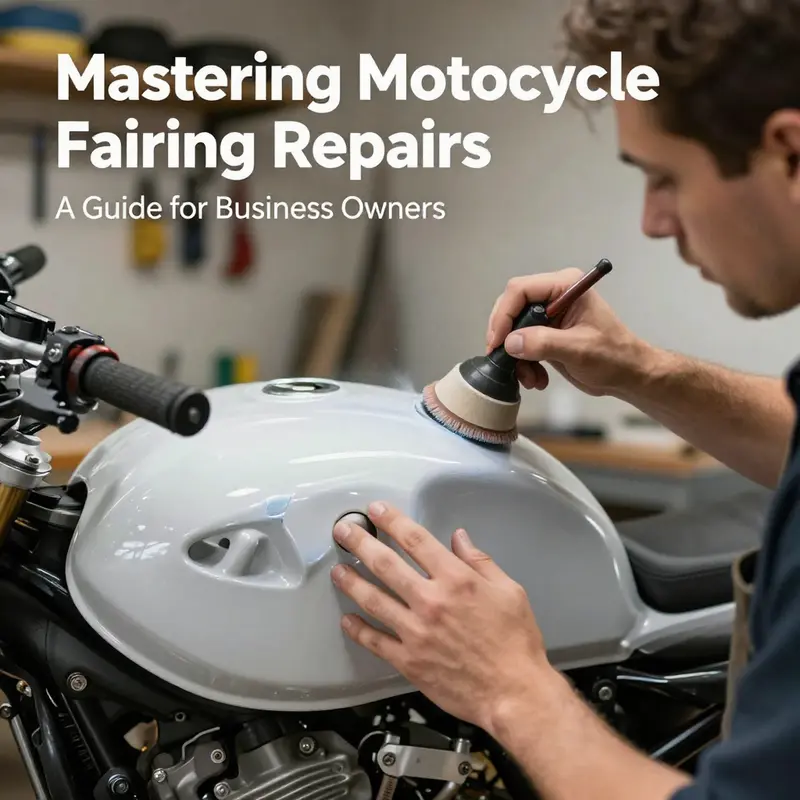
Sanding, finishing, and painting are the quiet artisans of motorcycle fairing repair. They transform a repaired shell from a visibly repaired surface into something that behaves like a single, continuous part again. This stage requires patience, steady hands, and a careful eye for detail. It starts with a clean slate, a surface free of grease and dust, so every subsequent layer can grip and lay down evenly. Cleanliness is not ornamental; it is the foundation of a durable, high quality finish. Begin by wiping the fairings with a degreaser or isopropyl alcohol, and ensure the area is dry before you pick up any sandpaper. The finish you end up with depends as much on the air you breathe as the tools you use, so a well ventilated space matters as much as the grit you choose. The goal at this stage is not merely to remove roughness but to create a micro texture that invites adhesion. That texture is the handshake between old plastic and the new materials you will apply, whether that is epoxy, filler, primer, or paint.
Sanding is a dialogue with the surface. Start with light to medium grit sandpaper in the 400–600 range. This grit is gentle enough to erase minor flaws, dull gloss, and flatten micro high spots without digging into the plastic. Work in smooth, overlapping passes, keeping the surface damp when possible to minimize dust and heat buildup. A dry pass can generate heat that may warp thin sections, especially around curves and edges. If you encounter a deeper gouge or a small crack that survived the initial repair step, you can use a plastic appropriate filler to level the surface before moving on. The filler should be applied in thin layers, allowed to cure, and then feathered back with a light sanding. The aim is a surface that feels uniform to the touch and looks uniform under angled light.
As the surface becomes smooth, the finishing phase invites a new level of precision. For fiberglass or composite fairings, a body filler or a plastic-specific primer filler is the ally that seals imperfections and creates a uniform base. After the filler has cured, a gentle re-sanding with the same or slightly finer grit will help the transitions blend seamlessly into the surrounding contours. This is the moment to address feathering along the edges where the repaired patch meets the original material. A well-feathered edge is the difference between a repair that looks repaired and one that looks restored.
Priming follows with equal parts patience and discipline. A high-quality primer not only seals the surface but also offers a robust base for the color coat and the clear coat that follows. If the surface is prone to lifting or solvent attack, a two-part epoxy primer can be a wise choice, as it creates a tougher, more durable foundation that resists the stresses of road heat and sun exposure. Plastic-friendly primers are designed to bond with ABS and polycarbonate blends commonly used in fairings, reducing the risk of delamination. After spraying or brushing on primer, allow it to cure fully according to the manufacturer’s instructions. Then inspect the primed surface under varied lighting. Look for pinholes, runs, or areas where the primer has failed to adhere properly. If needed, a light sanding with 600–800 grit helps smooth those imperfections and reconditions the surface for the next layer.
Sanding the primer is a ritual in itself. The goal is to achieve a surface that is perfectly even to the naked eye and feels smooth to the touch. Lightly sand the primed area, paying attention to any high spots that catch the light. Clean the surface again to remove dust and oils. A clean primer surface is essential for paint to lay down evenly and for the color to be uniform across the entire panel. At this point, consider masking areas you do not want to paint. Tape lines should be sharp and well-adhered; a soft caulking line or edge mask can help prevent bleed of the topcoat into seams or fastener areas.
Painting is the moment when the repaired fairing becomes what riders see every day: race-bred precision or showroom-quality finish. In controlled environments, such as a spray booth, professional-grade urethane paints are preferred for their color depth, UV resistance, and the flexibility they offer for layers. The process typically involves applying multiple thin coats rather than a single thick one. Each coat should be allowed to flash off to a point where the solvent has largely evaporated but the film remains tacky enough to bond to the next layer. Thin coats reduce the risk of runs, sags, and orange-peel texture. Across these coats, maintain an even distance from the surface to preserve a smooth, uniform appearance.
Color matching is a careful art. If you’re aiming for a factory-like look, you must account for color drift due to age, sun exposure, and the material’s inherent translucency. A thoughtful approach to color layering—often starting with a base color that matches the surrounding panels and then blending at the edges—helps achieve a cohesive look once the entire fairing is reassembled. In some cases, a test panel helps you preview the final shade before committing to the whole set. If color matching becomes challenging, a professional paint shop can be worth the investment. When the color coats have cured to a solid finish, you’ll be ready for the clear coat, which provides ultraviolet protection and the high-gloss depth that makes a repaired panel feel complete.
The clear coat stage is where the finish reveals its resilience. A clear coat should be applied in multiple light layers, with sufficient curing time between coats to avoid solvents trying to reflow the underlying color. The final coat should seal the color and impart a glossy, durable surface that resists chips and minor abrasions. After the final coat cures, the panel can be carefully dried and prepared for finishing touches. A final stage of polishing with progressively finer compounds and a gentle high-luster buff can yield a mirror-like surface. The buffing step is where a well-executed repair truly comes to life, as the light catches the sculpted lines of the fairing and the color sits like a seamless skin over the underlying reinforcement.
With the structural integrity already addressed, finishing and painting also demand attention to edge protection and masking quality. The edges should be sharp, not rounded, to maintain the original contour lines. Tape respect and careful masking prevent paint bleed into hinges, mounting points, and joints. In the case of vibrant or complex color schemes, it can be advantageous to plan color blocking on a test sheet or a spare panel to confirm color proportions before final application on the actual fairing. The aim is not only beauty but longevity: the layers should resist UV damage, weathering, and the flex that bodywork experiences at highway speeds.
For readers who want to explore the practical path of up-close reference or to consider related components during repair, a broader catalog of fairings can be helpful. For instance, the Honda fairings collection offers models with contours and mounting realities that can serve as a tactile reference when you’re shaping and blending the repaired portion. You can explore that collection here: https://ultimatemotorx.net/product-category/honda-fairings/. This link provides context on typical shape, curvature, and mounting considerations that influence how you feather edges and blend color transitions with the rest of the bodywork.
Of course, the painter’s craft benefits from discipline and process consistency. Temperature and humidity influence curing times, solvent evaporation rates, and the final hardness of the clear coat. A stable environment around 20–25 degrees Celsius with controlled humidity helps you avoid fisheyes, solvent pops, or microcracking. If you must work in variable conditions, compensate by adjusting drying times and using slower-curing topcoats to maintain film integrity. Taking notes about the conditions during each stage helps you reproduce a similar outcome in future repairs or adjustments.
In the end, the aim is a finish that not only looks correct but behaves correctly under stress. A well-sanded surface provides a robust anchor for adhesives and topcoats, while a carefully applied primer ensures long-term adhesion. The layers of paint and clear coat then create a finish that resists UV and weathering, while the edges and transitions maintain the seamless lines that define a motorcycle’s profile. When done with patience and precision, the fairing looks as if it never suffered damage at all, even as it continues to endure the demands of the road.
External resources can offer deeper practical immersion in the painting techniques described here. For an in-depth, step-by-step treatment of painting motorcycle fairings, see How To Paint Motorcycle Fairings Like A Pro, which provides practical demonstrations that complement the guidance laid out in this chapter: https://www.motorcyclecruiser.com/how-to-paint-motorcycle-fairings-like-a-pro/.
Final thoughts
Repairing motorcycle fairings is a skill that can dramatically enhance a business’s service portfolio. By following the steps of assessing damage, preparing surfaces, choosing appropriate repair methods, applying the right materials, and ensuring meticulous finishing, business owners can not only restore but also elevate the aesthetic and functional quality of motorcycles. Making these repairs efficiently may lead to increased customer loyalty and trust in your services. Embracing these practices will empower your business to thrive in the competitive motorcycle repair market.