
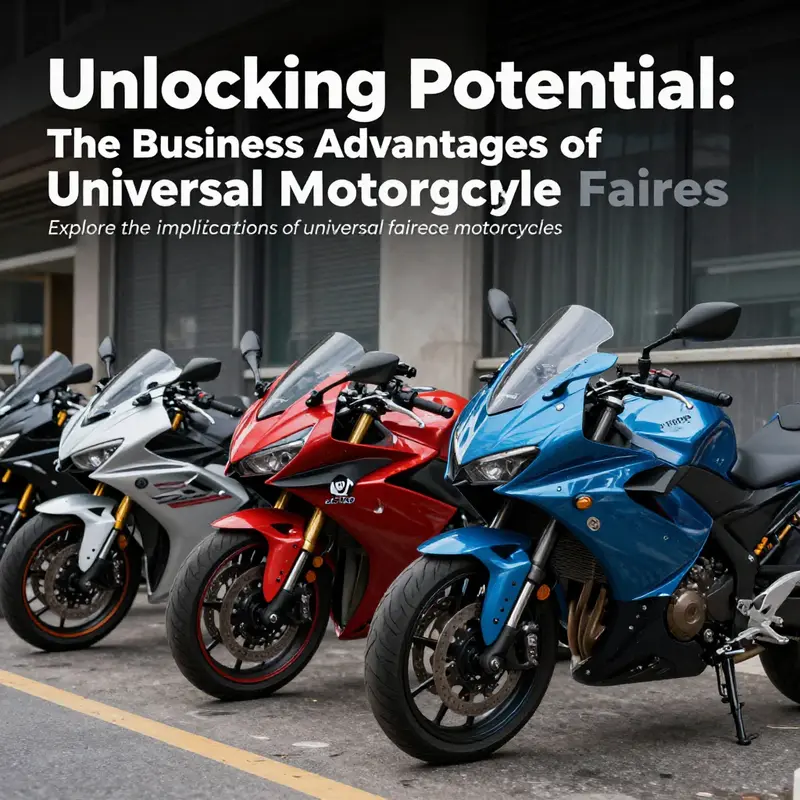
The landscape of motorcycle manufacturing and customization is rapidly evolving, necessitating adaptable components that meet diverse market needs. Universal motorcycle fairings emerge as a fundamental solution by providing versatility across various models, from scooters to adventure bikes. Understanding their significance can empower business owners to make informed sourcing and manufacturing decisions. This article delves into key aspects, including the versatility of universal fairings, their economic implications, technical configurations, material standards, and the global market landscape—each chapter building a comprehensive picture of how these components can enhance operational efficiency and market reach.
Adaptable Armor: How Universal Motorcycle Fairings Redefine Fit, Function, and Flair
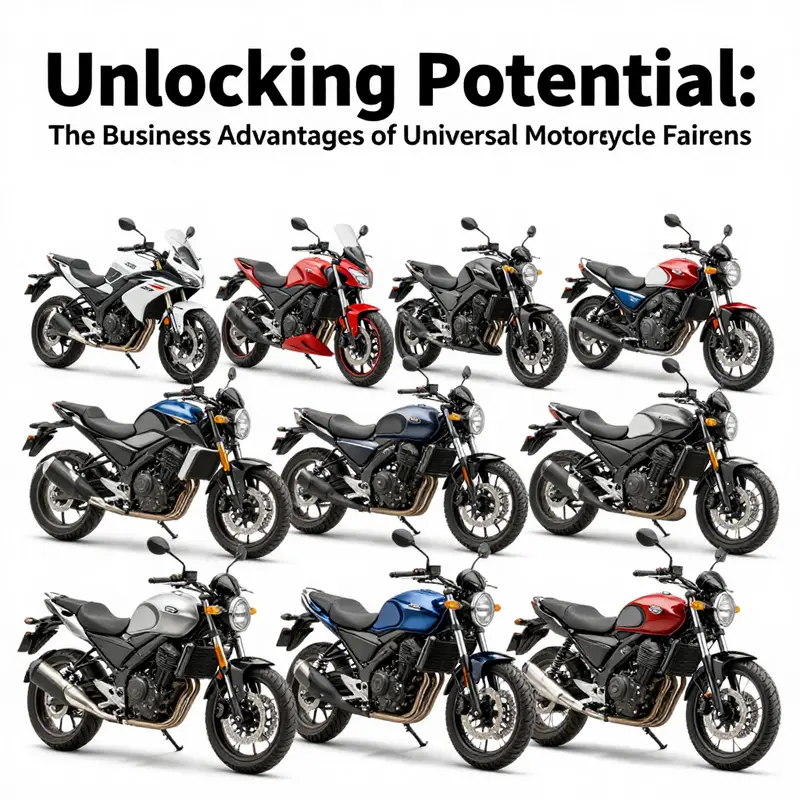
A universal fairing is more than a piece of molded plastic. It is a philosophy about touchpoints, geometry, and the way a rider interacts with a machine that carries both speed and identity. When a fairing is designed to fit a wide spectrum of models, it must balance three intertwined objectives: aerodynamic efficiency, rider protection, and visual coherence. This balance is not accidental; it is achieved through careful consideration of mounting geometry, scalable dimensions, and the flexibility of the underlying frames that carry the bike. The result is a component that can slip into a diverse lineup of motorcycles—scooters, supermoto machines, sporty nakeds, and adventure-touring bikes alike—without forcing a rider into a brand-specific look. In practice, universal fairings become a language of adaptation, offering a practical solution for riders who want to swap parts without accepting a single, rigid brand vision for their bike’s silhouette.
The practical appeal begins with the mounting system. Unlike factory-fitted pieces that are engineered around a particular chassis, universal fairings rely on adjustable mounting plates, versatile bracketing, and flexible stud patterns. This modularity makes it possible to align fairings with varying frame geometries and handlebar configurations. A single kit can be coaxed into fitment on bikes with different rake angles, wheelbases, and even fork offsets, provided the rider is prepared to do a precise measurement and some careful alignment. That process—though it demands attention—gives builders a remarkable freedom. It allows retrofit on older bikes whose original fairings have aged or become scarce, and it enables the café racer trend to thrive on machines that were never conceived as cafe racers from the factory. The result is a new sense of ownership: a bike that wears its story in the lines of its bodywork rather than the badge on its tank.
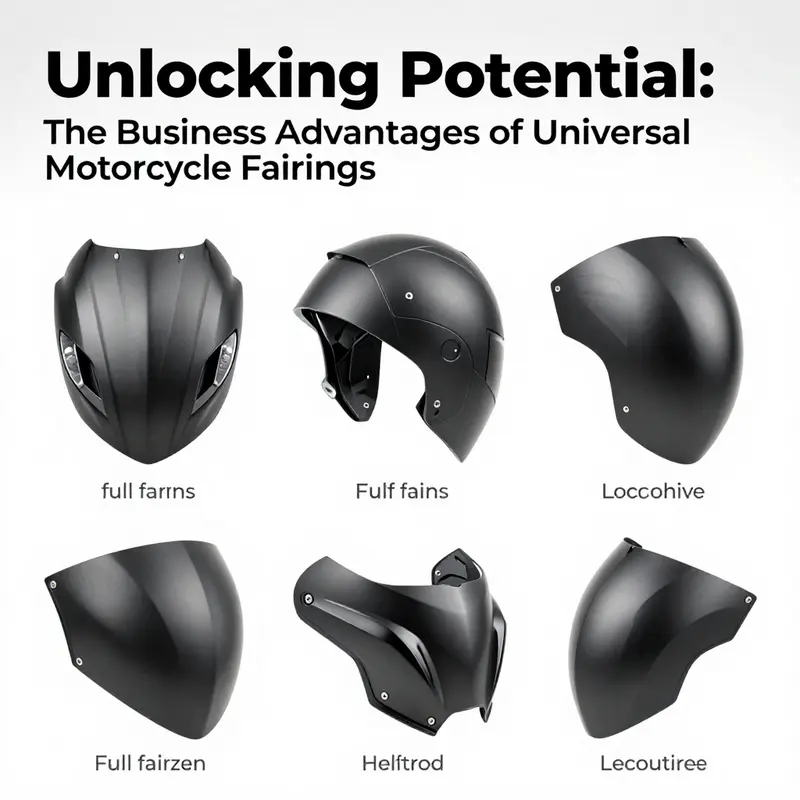
In terms of configuration, the universal approach embraces a spectrum of coverage. Full fairings sweep over the front, sides, and upper surfaces to minimize wind resistance and maximize stability at higher speeds. They create a continuous surface that guides air smoothly around the rider, reducing drag and buffeting during long journeys. Half fairings, by contrast, foreground the sport aesthetic while preserving easier engine access and serviceability. They offer a bold, minimalist profile that still provides meaningful wind protection for the rider’s chest and shoulders. Lows, those lower panels that hug the engine bays and undercarriage, focus on airflow management and debris shielding rather than rider protection. The practical takeaway is that riders can curate not just the look of their machine, but its thermal and acoustic environment as well. Integrated windshields, where included, add another layer of comfort by directing air away from the eyes and face, a small but meaningful enhancement on longer rides or in gusty conditions.
This versatility is not merely about how a bike looks. It is also about how a rider feels while riding. Aerodynamics matters, but so does wind shear at the chest and arms. A well-chosen universal fairing can reduce fatigue by smoothing the air currents hitting the rider, which in turn helps maintain focus during highway stretches or winding mountain passes. The visual impact matters, too. When a rider selects a universal front fairing that leans toward retro lines, it can evoke a café racer lineage without sacrificing modern protection or reliability. Conversely, a more aggressive, angular design can harmonize with contemporary sport bikes or adventure-touring platforms, keeping the motorcycle’s identity intact while upgrading its protective envelope. The result is a harmonized package where form follows function, and function is expanded by the breadth of fit rather than narrowed by model-specific constraints.
Material choices anchor this broader adaptability. ABS plastic and fiberglass are the most common foundations due to their strength-to-weight ratio and their processability into complex curves. ABS offers impact resistance and surface durability, which helps when fairings take the occasional stone hit or curb scrape. Fiberglass affords additional stiffness and sometimes a more refined finish, though it can require more meticulous post-processing to achieve a uniform surface. Both materials handle weather exposure well if the finish includes UV stabilizers and proper coatings. The production philosophy behind universal fairings also leans on consistency: consistent wall thickness, predictable bend radii, and repeatable mounting holes to maintain a predictable fit across varying platforms. Certification considerations—such as safety and quality standards—play a quiet yet essential role here, signaling that the parts meet an expected level of reliability and performance under typical riding conditions. In day-to-day use, riders will notice that the surface feels solid, the seams align, and the color remains stable after exposure to sun and rain.
The broad applicability of universal fairings extends beyond raw performance. It opens doors for a kind of personal storytelling through the bike. A rider who wants a retro look can transform a modern chassis into a time-waded icon by selecting a fairing with vintage-inspired lines and a modern weather seal. A café racer enthusiast can achieve a clean, continuous silhouette that complements a narrow tail and a sculpted fuel tank, while a touring rider might opt for a full enclosure that reduces wind pressure on the torso during multi-hour days in the saddle. These are not cosmetic tricks alone; they are pragmatic adjustments that influence endurance and confidence on the road. Even the exposure to the elements—the wind, rain, and dust—changes with the surface geometry. A well-chosen universal fairing can reduce wind noise, preserve helmet integrity, and keep the overall cockpit temperature more comfortable, which matters on both hot days and cool mornings.
From a sourcing perspective, universal fairings present a different sort of value equation than OEM components. They are a contemporary solution for OEMs exploring private-label opportunities as well as for independent builders who want a flexible platform for experimentation. The customization ecosystem surrounding these fairings often includes branding options, packaging customization, and even design iterations that preserve the original aesthetic while delivering a tailored look for a given model or market. This makes it feasible for a small workshop to offer a line of visually cohesive bikes without committing to a model-by-model inventory. For the private-label side of the market, the appeal lies in the ability to maintain consistent branding across a range of platforms, providing a uniform customer experience while still offering model-specific tailoring through color, decals, and finish.
Importantly, the procurement landscape for universal fairings emphasizes standards and supply chain reliability. A rider or shop can expect to work with suppliers that provide clear technical documentation, tolerance ranges, and installation guidance. The ability to source from certified factories with robust quality assurance processes gives builders confidence that the parts will align with brake lines, headlights, and the fairing’s own interface with the frame. In practice, this reduces rework and the risk of misalignment after installation. It also sets the stage for a more sustainable approach to riding: fewer part numbers to manage, more interchangeability, and a lifecycle that can grow with the bike as it evolves through upgrades, retrofits, and color changes.
For riders who are navigating the decision to move toward a universal solution, the narrative often centers on how fit, function, and form interact with the broader goal of personal expression. A universal front fairing can be the starting point for a transformation that respects the bike’s original DNA while enabling a new chapter of customization. It invites a more inclusive design conversation where the rider is not confined by the sticker on the side or the badge on the tank but rather challenged to think about how air, sound, sightlines, and tactile feel converge on the saddle and in the rider’s field of vision. In this way, universal fairings become not just an accessory, but a framework for creative interpretation and practical engineering.
For those who want a direct pathway toward accessible, brand-agnostic exploration, a practical entry point is the broad category of fairings offered for various platforms. If you’re exploring a specific aesthetic or a particular brand lineage, consider starting with a model that aligns with your target look and then evaluate how the universal piece integrates with the bike’s cables, mounts, and windscreen geometry. The broader takeaway is not about replacing OEM parts indiscriminately, but about recognizing that for many riders, a universal option can serve as a bridge—connecting a bike’s existing identity with new performance and weather protection, all without forcing a single manufacturing lineage onto the machine.
For readers pursuing deeper exploration into compatible visual cues and installation pathways, you can browse the Honda fairings category to see how universal principles translate into model-appropriate styling while maintaining the possibility of cross-platform installation. This approach supports a practical exploration of fitment, finishing, and color coordination, helping riders imagine how a universal solution might live on a range of bikes. Honda fairings offers a concrete example of how a category can reflect both universality and specificity—an important reminder that there is no one-size-fits-all answer, only a spectrum of options that empower riders to shape their bikes without losing the essence of what makes them feel like their own machine.
External resource: https://www.alibaba.com/product-detail/Universal-Motorcycle-Front-Fairing-Fender-for-Scooter_1600785439204.html?spm=a2700.galleryofferlist.normal.1.2a9c7b11iHfFjX&urlShowDesc=true
Riding the Margin: The Global Economics of Universal Motorcycle Fairings
Among the moving parts of modern motorcycle design, universal fairings occupy a quiet but pivotal role. They are not merely plastic shells; they are a strategic instrument in a global economy where volume, speed to market, and cross-model compatibility determine profitability as surely as aerodynamics determines speed. In this light, universal fairings become more than components. They are enablers of scale, adapters for diverse regulatory landscapes, and canvases for the branding and styling that riders increasingly expect from factory and aftermarket ecosystems alike. The economic story of these fairings unfolds not just in materials and molds, but in the way a single, adaptable design can unlock a broad spectrum of bikes—from efficient commuters to nimble sport-touring machines—without forcing manufacturers or retailers to chase a new tooling cycle with every model shift. The result is a discipline where engineering decisions, supplier networks, and market dynamics converge to shape margins as much as roads shape rides.
Market dynamics in this sector are driven by a broad convergence of demand for versatile, reliable, and visually compelling front and bodywork. As riders increasingly seek equipment that balances aerodynamics, protection, and aesthetic appeal, universal fairings become a practical response to the realities of a diverse model landscape. They appeal to manufacturers who want to streamline their accessory programs and to aftermarket distributors who need parts that fit multiple frames with predictable performance. The appeal rests on a simple premise: standardization can lower unit costs, shorten lead times, and reduce the risk of obsolescence when a model evolves. The global market for motorcycle fairings is positioned for sustained growth as more riders gravitate toward sport-touring and commuter formats where wind protection and attractive silhouette matter every day on the ride. In practical terms, universal fairings provide a cost-efficient way to expand product offerings without committing to bespoke tooling for each model line, a factor that resonates in markets where price pressures and fast-moving consumer tastes intersect.
Economic influences that ripple through the supply chain are as much about macro forces as they are about the specifics of plastic and resin. Global economic growth, currency fluctuations, and trade policies directly influence the affordability and availability of components like universal fairings. When supply chains faced shocks—whether from geopolitical tensions, port congestions, or commodity price swings—manufacturers learned to value resilience alongside efficiency. Those lessons contributed to a trend toward regionalized production footprints and diversified sourcing networks. In a world where lead times and quality assurances can swing a project from on-time to back-of-the-queue, the ability to source certified parts with consistent standards becomes a competitive edge. The story here is not only about the parts themselves; it is about the chain that turns a design concept into a finished product on a showroom floor or a consumer’s doorstep.
A particularly telling driver of change is the rapid expansion of electric two-wheelers and the global push toward greener mobility. The economic logic of universal fairings aligns well with electrified platforms that often share a core design language and packaging constraints across multiple models and markets. Even when the platform is different, the need for streamlined, high-quality bodywork that can be swapped or redesigned with minimal tooling remains constant. Chinese manufacturers leading in e-mobility have begun to invest aggressively in overseas production facilities across regions like Southeast Asia and the Americas, signaling a strategic shift toward global manufacturing footprints designed to slash costs and improve market access. The scale of this shift is underscored by recent performance indicators from the e-mobility sector: a leading producer reported multiyear increases in unit sales and revenue in the first half of a recent year, underscoring how a broader push into standardized components can support expansive export activity. This momentum suggests that universal fairings, with their adaptable fit and durable construction, are well positioned to capture a growing share of both traditional and electric motorcycle markets because they can be produced at scale and adapted to evolving powertrains without requiring complete reengineering of the core shell.
Sustainability and innovation further color the economics of universal fairing production. Green mobility has evolved from a regulatory buzzword into a market demand signal. Companies that couple lightweight, recyclable materials with design-for-disassembly approaches can lower lifecycle costs while meeting tightening environmental standards across different regions. In practice, that means choosing materials such as durable polymers and composites that balance stiffness, impact resistance, and recyclability. It also means engineering the fairing for long service life and easy repair or replacement of worn sections, which reduces waste and enhances customer satisfaction. Innovation here is twofold: first, the optimization of airflow and heat management through smart contouring that minimizes drag without compromising rider protection; second, the standardization of mounting interfaces that simplifies assembly on a variety of frames. When these threads converge, the economic advantages multiply. Designers can deliver a uniform aesthetic across a family of motorcycles while still allowing regional customization in color, texture, and branding without a costly redesign cycle. This is the crux of what makes universal fairings attractive to both OEMs and aftermarket players: the ability to meet diverse regulatory and consumer preferences with a single, scalable platform.
At the intersection of design pragmatism and broader industry trends, the economics of universal fairing production hinge on decisions about scale, quality assurance, and channel strategy. The toolset is simple in concept but demanding in execution: a modular front end that can be adapted to multiple chassis geometries, production runs that optimize material use and tooling utilization, and an aftermarket model that supports both direct-to-manufacturer supply contracts and third-party distribution networks. The cost calculus favors products that can be sourced in bulk, certified to global standards such as CE and ISO, and delivered with consistent fit across a spectrum of models. That consistency matters because fit quality directly affects rider perception of value and, by extension, brand equity for suppliers and retailers. In other words, the rational mathematics of universal fairings is not merely about raw material cost per piece; it is about the management of tolerance stacks, packaging efficiencies, and return rates that can erode margins if mismanaged.
The supplier landscape for these parts underscores the importance of rigorous sourcing practices and quality certification. Buyers increasingly look for parts that meet international safety and performance benchmarks, ensuring that the fairings can withstand the rigors of daily riding while remaining compatible with a wide array of mounting hardware. Beyond the technical specs, the economics of sourcing emphasizes supplier reliability, lead time predictability, and the ability to tailor packaging and branding to specific markets or OEM programs. The sourcing ecosystem also supports customization, including branded logos or private-label packaging, which adds value for distributors seeking to differentiate their catalog while leveraging the cost efficiencies of bulk manufacturing. Although the catalog of options is broad, the economic payoff lies in choosing partners who can consistently deliver certified components on schedule, with predictable quality and a clear path to scale. For readers exploring a broad catalog of fairing styles, a convenient reference point can be found in the 2023new category, which aggregates a range of redesigned front-end shells and trim elements that illustrate how modern universal fairings balance form and function. https://ultimatemotorx.net/product-category/2023new/.
The broader market implications of universal fairings touch regulatory policy, consumer behavior, and the distribution landscape. Regulatory harmonization, or the lack thereof, affects how quickly a universal component can cross borders. When standards converge, the advantages of standardization are amplified, letting manufacturers, distributors, and service shops operate with a lower cost of compliance. Conversely, fragmentation can inflate rework and testing costs, dampening the economic appeal of universal designs. On the consumer side, preferences are shifting toward products that deliver not only protection and performance but also customizability and a sense of personal expression. The ability to apply different colorways, decals, or packaging concepts without altering the core tooling becomes a differentiator in a crowded marketplace. From an ecosystem perspective, universal fairings can stimulate aftermarket innovation—new mounting kits, quick-release mechanisms, and modular fascia elements—while enabling OEMs to refresh a line with minimal capital expenditure. The net effect is a more resilient market furniture that can absorb demand shifts and supply shocks without sacrificing the speed and reliability riders demand.
For industry observers seeking a wider sense of the market trajectories shaping universal fairings, the evidence points toward a robust role for standardized components in the evolution of two-wheeled mobility. Market analyses anticipate sustained growth, driven by demand for efficient, adaptable, and cosmetically appealing bodywork across a spectrum of models and regions. This is not merely a regional phenomenon; it is a global pattern in which manufacturing footprints, supplier networks, and consumer expectations align to reward scalable, quality-driven approaches to fairing production. The story is not about a single model or a single platform, but about how a modular design language can harmonize engineering, logistics, and aesthetics across continents. For those seeking further reading that frames the broader market context, external industry analysis offers a comprehensive perspective on the growth dynamics and competitive forces shaping the global motorcycle fairing landscape: https://www.marketsandmarkets.com/Market-Reports/motorcycle-fairing-market-12345.html.
In sum, the economics of universal fairing production reflect a delicate balance between scale and specificity. Scale confers cost efficiencies, faster time-to-market, and the flexibility to serve an expanding mix of riders and markets. Specificity, in the form of reliable fit, durable materials, and design language that resonates with multiple models, sustains value over time and reduces post-sale friction. The most successful players in this space will be those who knit together disciplined supply chains, responsible environmental practices, and a keen sensitivity to the evolving preferences of riders who want performance without compromising customization. As electric powertrains and new chassis concepts reshape what riders expect from aerodynamic shells, universal fairings are well positioned to adapt. They offer a pragmatic path to growth that harmonizes engineering ingenuity with the relentless logic of cost, cadence, and customer satisfaction.
null
null
One Shape, Many Bikes: Material Standards and Manufacturing Pathways for Universal Motorcycle Fairings
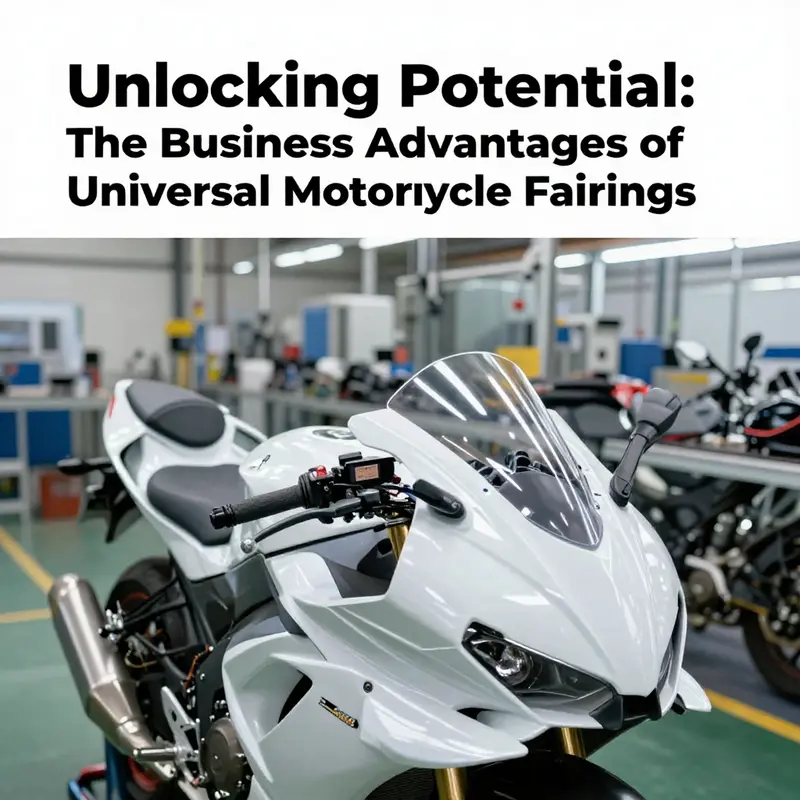
Universal motorcycle fairings sit at a quiet intersection of engineering discipline and design ambition. They promise more than a stylish silhouette; they offer a practical means to extend wind protection, shield vulnerable components, and streamline aerodynamics across a broad spectrum of machines. The chapter that follows traces how material choice and manufacturing technique breathe life into these seemingly simple shells. It reveals why a single fairing can fit diverse platforms while maintaining the performance, safety, and finish riders expect. At the heart of universal fairings lies a careful balance: the need to adapt to different mounting schemes, rider weights, and engine layouts without surrendering stiffness, durability, or aesthetic coherence. That balance is achieved not by a single recipe, but by a family of material options, each paired with a manufacturing pathway calibrated for scale, cost, and performance. When these elements align, the fairing becomes more than an accessory; it becomes a compact system that shapes the riding experience across many models and riding styles.
Fiberglass, ABS plastic, and carbon fiber compose the core material palette for universal fairings, each bringing distinct advantages and trade-offs. Fiberglass stands out for its strength-to-weight ratio and the freedom it offers in bespoke shaping. The hand-layup method, used with molds, allows designers to push the boundaries of form and curvature. This process supports intricate contours, complex junctions with other bodywork, and nuanced surface finishes that can be tuned for both aerodynamics and aesthetics. The trade-off is that fiberglass demands skilled labor and time, which translates into a higher unit cost for limited runs or one-off customizations. However, for riders and OEMs seeking a tailored look or a high-performance edge, fiberglass remains an appealing option, capable of delivering high-quality finishing and durability when executed with discipline.
ABS plastic represents the other end of the production spectrum: it is the workhorse of mass production. Injection molding permits rapid, repeatable cycles and tight tolerances, lowering per-piece costs while maintaining consistent fit across thousands of units. ABS is robust against impact, a practical characteristic for city commuting and touring where debris, wind, and weather can test a fairing’s resilience. The resulting parts are uniform, easy to assemble, and readily colorable, with surface finishes that stand up to daily use. Yet ABS has its limits. In extreme heat, it can bend or deform if not properly engineered, and its stiffness under load can be less than that of composite materials in higher-stress areas. Still, the economics of ABS make it indispensable for universal applications where a broad model fit is essential and production volumes justify automated tooling.
Carbon fiber, while the most premium option, represents a pursuit of peak strength-to-weight performance. The material’s natural stiffness and lightness make a compelling argument for riders who chase agility and precision. Manufacturing carbon fiber fairings involves advanced techniques such as vacuum bagging and autoclave curing. These steps ensure uniform resin distribution, eliminate air pockets, and achieve a high-quality, weather-resistant finish. The resulting parts exhibit exceptional strength with minimal weight, yielding noticeable gains in handling and ride feel. The drawbacks are clear: higher material costs, a longer lead time, and the need for specialized facilities and craftsmanship. In universal applications, carbon fiber is often reserved for sport or high-performance lines, where the premium price is offset by the demand for peak performance and distinct visual appeal.
The choice of materials directly shapes the manufacturing processes themselves. Fiberglass fairings are typically hand-laid using molds, a method that preserves the designer’s intent and allows for fine detailing and customization. In contrast, ABS fairings rely on precision injection molding, enabling rapid production with lower labor costs and highly repeatable outcomes. Carbon fiber parts lean on a combination of layup techniques with careful curing—vacuum bagging to remove excess air and resin pockets, followed by autoclave curing under controlled heat and pressure. Each pathway carries implications beyond cost and speed. They influence the smoothness of the outer surface, the ability to mount adjacent components cleanly, and the acoustic signature of the bike at speed. All of these factors feed into the rider’s experience of aerodynamics, sound, and perceived build quality.
From a performance perspective, the material and manufacturing pairings create tangible differences in aerodynamics, structural integrity, and riding comfort. A fairing’s surface finish can reduce turbulent wake behind the rider, with smoother surfaces and well-finished joints translating into lower drag and better fuel efficiency. The structural characteristics—stiffness, impact resistance, and fatigue life—determine how a fairing holds up against road debris, shifting loads, and the vibrations of highway cruising. Weight matters, too. Carbon fiber’s lightness can lower the unsprung mass and improve handling, but even fiberglass and ABS contribute to weight distributions that can influence steering feel and balance, particularly at higher speeds or when the fairing integrates with a front fender and lower panels.
To ensure universal applicability without compromising safety and reliability, manufacturers adhere to established standards and certifications. The reference materials highlight that such parts are commonly designed and tested to meet certifications like CE, BV, and ISO, ensuring that the components meet recognized safety, quality, and interoperability benchmarks. These standards are not abstract; they translate into practical checks: consistent wall thickness around mounting points, predictable resin-to-fiber ratios for composites, and repeatable color and finish across production lots. The certifications help OEMs and private-label suppliers streamline procurement, reduce variance across batches, and offer confidence to distributors and riders that the parts won’t fail under expected operating conditions. In a market where a single fairing might be pressed into service across many models, such reliability is fundamental.
Designing for universality requires more than selecting a material. It demands careful attention to mounting geometry, tolerances, and compatibility with electricals, vents, and brake lines that differ among models. A universal fairing must accommodate a spectrum of headlight configurations, radiator intakes, and instrument cluster placements. This necessitates modular design concepts, adjustable fasteners, and flexible edge treatments that can accommodate small variances in fit without sacrificing structural integrity. It also means thoughtful decisions about where to prioritize rigidity versus flexibility. For instance, upper sections may require a stiffer layup to preserve aerodynamics and silhouette at speed, while lower sections can tolerate slightly more give to absorb minor ground impacts or engine heat and to ease installation. In practice, these decisions emerge from iterative prototyping, wind tunnel or computational fluid dynamics analyses, and real-world testing with a range of bike frames and engine layouts. The result is a fairing system that reads as a cohesive whole on many bikes, even though the underlying supports, fasteners, and panel lines may shift from one model to another.
Sourcing universal fairings often involves a nuanced supply chain where material choice and process are tuned to volume and customization needs. The material path chosen—fiberglass for bespoke, ABS for mass-produced, carbon fiber for performance-focused lines—drives lead times, tooling requirements, and quality-control regimes. In many cases, manufacturers pair standard mounting templates with adaptable cutouts and scalable fastener patterns, enabling a single design to slip onto a broad catalog of bikes with minimal retooling. That flexibility is essential when dealing with private-label or original equipment manufacturing (OEM) programs, where branding, packaging, and compliance paperwork must align with buyer requirements. Customized packaging, branded logos, and even packaging inserts can be arranged at scale, creating a coherent brand experience for dealers and end users alike. From a buyer’s perspective, the economics of universal fairings shift as the scope expands: higher unit costs for advanced materials or intricate finishes can be balanced by lower overall purchasing costs through standardized components and streamlined logistics.
Practical insights into material performance and standards illuminate why universal fairings can be both economical and highly capable. A key point is that the surface treatment and finishing cycle extends the life of the part well beyond its initial fit. UV-curing clear coats, pigments, and surface sealants help combat sun exposure, temperature fluctuations, and road spray, preserving color fidelity and gloss. Surface prep between coats, careful mold release, and post-cure baking contribute to a consistent appearance across batches. These finishing steps matter as much as the raw material itself because visible wear, chalking, or color mismatch can undermine the perceived quality and market acceptance of a universal fairing. Even with robust materials and precise manufacturing, the long-term behavior under real-world conditions—vibration, heat cycling, and humidity—requires attention to packaging, storage, and installation instructions. The goal is not just a piece that fits today, but one that remains reliable and visually coherent across seasons and miles.
In addition to the engineering details, practical considerations around sourcing and documentation underpin successful universal fairing programs. Technical data sheets, resin compositions, and fiber orientations are part of the documentation trail that quality teams use to verify conformance with industry standards. For readers seeking a broader sense of the bodywork ecosystem, the Yamaha fairings collection provides a window into how universality is realized in practice across brands and styles. This kind of resource highlights how a single design language can traverse multiple chassis architectures while maintaining recognizable character and performance expectations. Yamaha fairings offers a concrete exemplar of how distributors and riders experience consistent fit and finish, even when the underlying bikes vary widely.
The dialogue between material science, manufacturing discipline, and market demand continues to shape the trajectory of universal fairings. As materials evolve—new resins, tougher composites, greener production methods—and as manufacturing technology advances, the potential to push universal fairings toward lighter weight, greater impact resistance, and more sophisticated finishes expands. Yet these advances must be balanced against cost, scalability, and the realities of dealer networks and owner expectations. The best universal fairings emerge when engineering precision meshes with practical production realities, turning a concept of broad compatibility into a dependable, aesthetically pleasing, and ride-ready component regardless of the riding scenario. They become a quiet but essential part of the motorcycle ecosystem, offering protection, performance, and a customizable look that resonates with riders who seek cohesion across a diverse lineup.
For readers seeking deeper technical references on materials and performance metrics, there is a detailed resource that surveys fairing materials and standards in the context of motorcycle design. It provides a foundational look at how material grades, quality standards, and performance metrics inform the selection and manufacture of protective shells for motorcycles, including universal fitments. You can explore this in depth at the official materials resource: Honda fairing materials and standards.
External link reference aside, the conversation around universal fairings is ultimately anchored in how material choice, manufacturing technique, and standardization converge to deliver a part that can gracefully serve a variety of bikes without compromising performance or safety. The right combination yields a fairing that not only looks the part but also integrates cleanly with electricals, vents, and mounting hardware, offering predictable fit, durable protection, and a riding experience that feels coherent whether the bike is a sport-focused machine, a light-treasure commuter, or a touring platform adapted to sudden twists and long stretches alike.
Riding Global Currents: Market, Supply Chains, and Innovation Behind Universal Fairings for Motorcycles
The global non-road two-wheeled motorcycle market has grown into a substantial economic arena, and universal fairings occupy a strategic space within it. Market data show that the sector reached approximately 75.6 billion dollars in revenue in 2023, a figure that reflects not only the size of consumer demand but the velocity of replacement cycles and the appetite for upgrade and customization. A compound annual growth rate around 6 percent signals steady expansion, with expectations of a broader reach into 2027 and beyond. Within this broader canvas, the electric off-road segment emerges as a significant growth vector, charting a course from modest beginnings toward a multi-billion potential as batteries, motors, and controller ecosystems mature. For riders, this translates into fairings that not only shield and streamline but also integrate with emerging powertrains and control systems without becoming a regulatory headache or a maintenance burden. The market’s vitality is powered by a global supply network, but the footprint is unevenly distributed, with manufacturing hubs in Asia able to scale production rapidly and price aggressively, while Western entities concentrate on premium design, advanced electronics, and higher-brand equity. The dynamic creates a pragmatic tension: how to reconcile affordability with durability, and how to ensure consistent quality across a vast range of vehicles and riding styles. In this setting, universal fairings become a practical instrument for OEMs, aftermarket distributors, and private workshops alike, offering a way to standardize parts and reduce the complexity of inventory management without sacrificing personalization. The elasticity of fit is crucial. Riders appreciate that a well-designed universal fairing can be trimmed and adjusted to align with a specific bike’s geometry, or layered with graphics and colorways that reflect a rider’s identity. The result is a marketplace where the line between “aftermarket” and “original-equipment-like” becomes increasingly blurred, as manufacturers invest in modular systems and standardized interfaces that respect varying mounting points, radii, and shield profiles. The implications for end users are concrete: quicker turnarounds on repairs, the ability to keep a model looking contemporary after years on the road, and the option to pursue a showroom-worthy appearance without committing to a single model family. Yet the story extends beyond consumer convenience. The supply chain dynamics behind universal fairings reveal a clear division of labor that is shifting as producers invest in capabilities that were once considered peripheral to core motorcycle manufacturing. Chinese manufacturers have built robust domestic ecosystems that enable high-volume, cost-competitive production. This scale is complemented by overseas market expansion strategies that emphasize local distribution, predictable lead times, and support networks that can respond to regional regulatory demands and consumer tastes. At the same time, Western brands—while often associated with premium pricing—are increasingly collaborating with, or learning from, these manufacturing pipelines to deliver products that blend advanced aesthetics with robust engineering. The most compelling evolution is the shift toward what analysts describe as value export: moving beyond simple product shipments to the creation of localized ecosystems that couple design, manufacturing, and after-sales support across dozens of countries. In practice, this means training and certification programs for suppliers, regional customization centers, and logistics footprints that minimize downtime for customers who depend on quickly sourcing parts. A key driver of this evolution is the ongoing investment in research and development, particularly in areas like lightweight composite materials, impact-resistant coatings, and faster, safer mounting systems that accommodate a broader range of frames and fairing geometries. While fiberglass and ABS remain mainstays due to their balanced performance and cost, designers continually test blends and finishes that offer better UV resistance, color stability, and impact toughness. Certifications and safety standards—ranging from CE to ISO and beyond—form another crucial axis of quality assurance. For a distributor or a rider, knowing that a universal fairing has been tested to meet recognized criteria provides confidence that its performance will be consistent, not just in a single bike, but across a spectrum of platforms and riding conditions. Adaptability to different environments also means that components must resist weathering, impact, and wear across continents with varying climates. The practical upshot is that riders can expect fairings that endure in harsh sun on arid routes or in wet, salt-laden coastal roads without cracking or delaminating. Beyond material choices, the supply chain logic favors modularity: standardized mounting interfaces, repeatable manufacturing tolerances, and a catalog approach that aligns with a wide variety of frames and fairing coverages. Full fairings, which envelop the front and sides for maximum aerodynamics, sit alongside half fairings that emphasize a sportier silhouette and simpler access to the engine bay, with lowers providing targeted airflow improvements and debris protection. This modular mindset makes universal fairings an attractive option for OEMs seeking to broaden model compatibility and for repair shops aiming to simplify inventory while offering a wider range of fitment options. For riders who follow catalog trends, a nod toward the latest catalogues often appears in digital storefronts and trade catalogs that categorize items by coverage type and compatibility, with emphasis on cross-model fit and scalable customization. A practical illustration of how the market operates can be found by examining how universal fairings are presented in contemporary cataloging and new category listings. For a snapshot of the latest cataloged offerings in one prominent online category, see the 2023new collection here: 2023new. The ease of access to such categories signals a broader movement toward transparent, standardized product data that helps buyers compare fit, color options, and packaging quickly and reliably. Consumers increasingly expect that a single page will reveal mounting points, material data, and certification details, reducing the guesswork that often accompanied older aftermarket purchasing. The net effect for the market is a feedback loop: greater transparency fuels stronger demand for universal fairings, which in turn drives investment in better materials, more precise fabrication, and smarter logistics. As production lines adapt, the emphasis transitions from a focus on pushing out a large quantity of parts to delivering a coherent, end-to-end supply chain that can support OEMs, retailers, and individual riders with equal efficiency. This shift promises a more resilient industry, better able to absorb shocks from regional fluctuations or supply chain disruptions while maintaining the flexibility that riders expect from a product designed to fit across many bikes. The broader implication for policy-makers and industry observers is clear: standardized interfaces, consistent quality benchmarks, and a collaborative approach to certifications can accelerate global trade and ensure that universal fairings remain accessible to a wide audience without compromising safety or reliability. For researchers and decision-makers, this means tracking how regional manufacturing centers respond to changing demand, how quality control practices scale with volume, and how innovations in materials science translate into longer-lasting, more protective products. The interconnectedness of markets and supplier networks underscores a central truth: universal fairings are a small but telling mosaic of a global manufacturing ecosystem that values interoperability as much as aesthetics. They illustrate how a niche can drive broader adoption of modular design principles, how supply chains can evolve from linear export models to multi-country, end-to-end ecosystems, and how riders benefit when innovation travels quickly from factory floor to street. For further context on the market dynamics and the evolution of supplier networks in this space, see the external industry analysis at Grand View Research: https://www.grandviewresearch.com/industry-analysis/non-road-two-wheeled-motorcycle-market.
Final thoughts
In summary, universal motorcycle fairings not only enhance the adaptability and aesthetic appeal of various motorcycle models but also present significant economic advantages, including cost efficiency and greater production flexibility. Business owners can leverage these components to expand their market offerings and meet diverse customer needs. By understanding the technical configurations, manufacturing standards, and global supply chains, companies can position themselves strategically in the evolving motorcycle industry.