
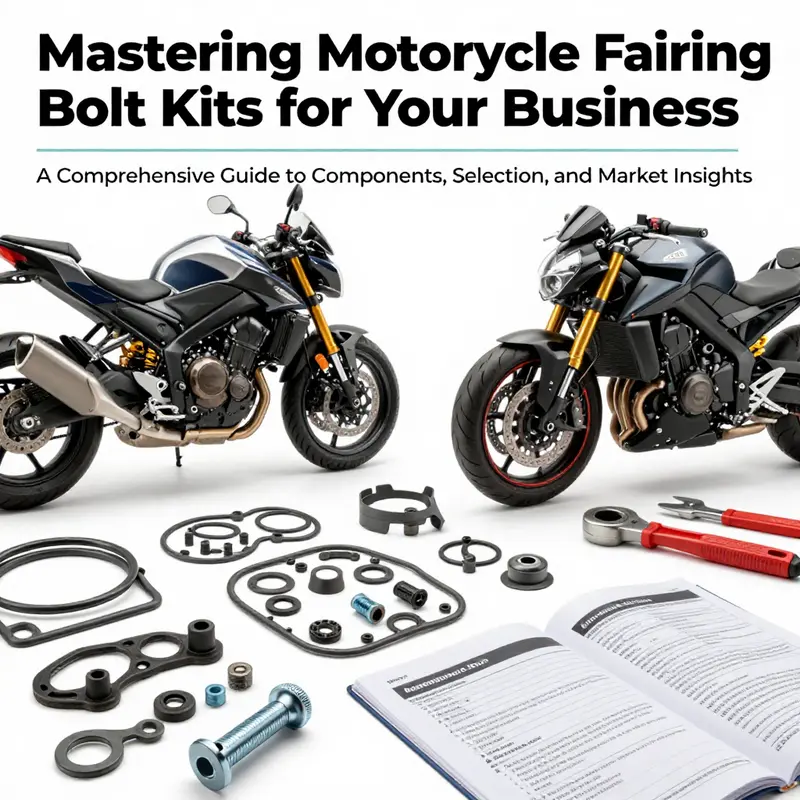
Motorcycle fairing bolt kits are integral for any bodywork repair, ensuring that components are securely fastened for safety and aesthetics. Each kit typically includes a variety of bolts, screws, and clips, crafted from durable materials such as aluminum. This article provides business owners with a thorough understanding of these kits—starting from the essential components and materials, moving to how to select the right kit based on compatibility and specifications, and finally exploring the latest market trends and options available. With the right knowledge, businesses can make informed decisions that enhance their service offerings and meet customer needs more effectively.
The Hidden Backbone of Bike Aesthetics: Components and Materials in Motorcycle Fairing Bolt Kits
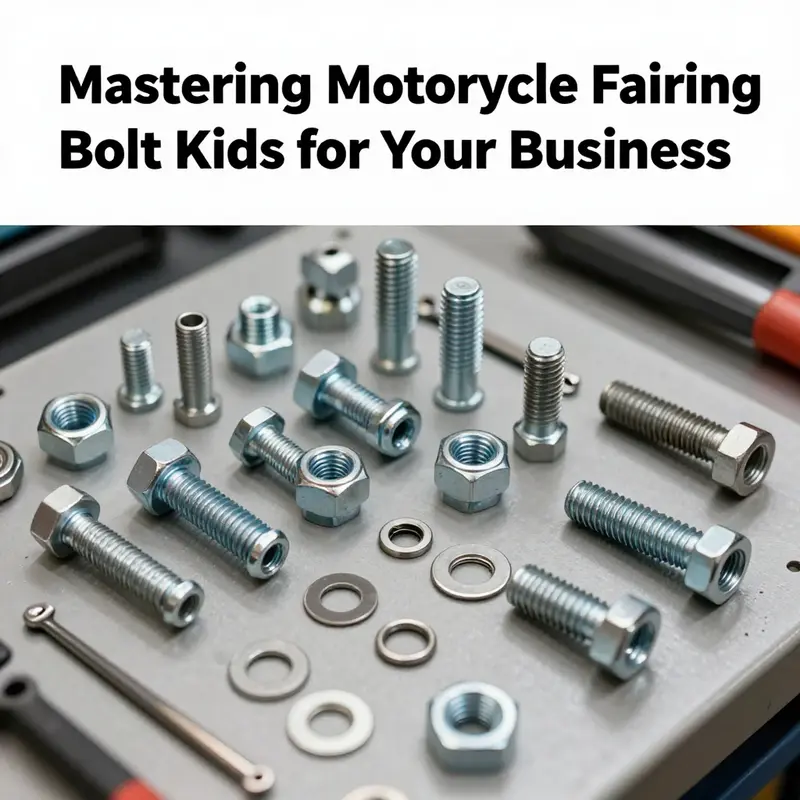
When riders compliment the silhouette of a motorcycle or notice how cleanly a fairing lines up with the tank and tail, they rarely pause to consider the hardware that makes that seamless look possible. Yet the bolt kit that secures the bodywork is more than a collection of fasteners. It is a carefully engineered system designed to withstand vibration, weather, and road grit while preserving the visual integrity of the panels. In the world of motorcycle fabrication and maintenance, the components and materials of fairing bolt kits determine not only fit and finish but also longevity, safety, and ease of service. The kit becomes a dialogue between form and function, a small but mighty toolkit that translates studio aesthetics into on-road reliability. To understand why this matters, it helps to move beyond the idea of a bag of screws and toward a holistic view of how each element plays a role in the life of a bike’s outer shell.
The heart of any fairing bolt kit is its assortment of fasteners. The most common foundations are bolts in precise metric sizes, with M5 and M6 threads dominating the landscape because they strike a practical balance between holding power and weight. These bolts come in several standard lengths, typically ranging from around 16 millimeters to 40 millimeters. The diversity in length is not cosmetic; it reflects the geometry of the mounting points on different models and the thickness of the panels being joined. A longer bolt may be needed where the fairing must bridge a gap between the frame and a bracket, while a shorter bolt might be perfectly adequate for a tight, flush mount against an ABS or fiberglass panel. Alongside these bolts, a kit often includes truss head screws and a handful of commonly sized speed clips. The phrasing—“speed clips”—speaks to their role in quick assembly and disassembly, a convenience that is especially valued during routine maintenance or during the process of panel removal after a tip-over or a minor impact.
Washers are an underappreciated but indispensable component of the system. They come in different thicknesses—0.5 millimeters and 5 millimeters are typical—so that load can be distributed evenly across a mounting surface. This is crucial when the mounting point is delicate, such as a thin ABS panel or a fiberglass composite, where concentrated pressure can lead to cracking or deformation over time. Washers may be paired with the corresponding hole size—often 5 millimeter and 6 millimeter holes—to ensure that the load is spread across a larger area, reducing the risk of pull-through or indentation in the panel. In some kits, these washers are matched with corresponding nuts or lock washers to prevent loosening, especially in climates characterized by heavy road spray, humidity, or frequent high-vibration conditions.
The collection of clips and clips-related hardware—such as M6 speed clips—serves a different but equally critical purpose. These clips secure the edge transitions and internal fastener points without relying solely on threaded engagement. They act as a first line of defense against panel flutter and wind-induced panel lift. When a panel must resist air flow at highway speeds, a robust clip system helps maintain alignment and reduces the stress that would otherwise be borne by bolts alone. The presence of well nuts in some kits also highlights another design principle: the transfer of load from a bolt to a gasket or rubberized anchor to isolate vibration and seal against moisture. A well nut, when properly installed, behaves like a tiny shock absorber, gently accommodating movement while maintaining a tight seal that keeps water and debris away from the mounting chassis.
From a materials perspective, the two most common metals used in these fasteners are aluminum and stainless steel. Aluminum offers a compelling blend of corrosion resistance, light weight, and a bright, durable finish that remains visually appealing even after long exposure to sun, heat, and rain. It is especially favored in high-end or performance-oriented kits where minimizing weight on the exterior surface matters for overall bike handling and fuel efficiency—though the weight difference at the bolt scale is modest, every gram can contribute to performance over time. Stainless steel, on the other hand, is prized for its durability and superior rust resistance in harsher environments. In regions with salted roads, frequent wash cycles, or heavy rainfall, stainless steel fasteners can deliver greater long-term peace of mind. The choice between aluminum and stainless steel is not merely a matter of appearance or cost; it is a signal about the expected life cycle of the installation and the rider’s tolerance for maintenance.
The surface finish is another important material consideration. Anodized aluminum bolts, for instance, resist corrosion and maintain a polished, consistent look that complements the sheen of contemporary fairings. Stainless steel can also be finished to resist tarnish and maintain a clean, matte, or bright appearance. The finish choice interacts with the broader bodywork aesthetic, because the hardware should disappear into the panel lines rather than shout from the surface. A kit designed with attention to finish will couple smoothly with panels made of ABS plastic, fiberglass, or composite materials, all of which have different susceptibilities to surface pressure, scratching, and chafing. Panels crafted from ABS plastic or fiberglass gain longevity when mounted with hardware that distributes force evenly and avoids abrasion along critical edges. A thoughtful kit thus blends material science with cosmetic intent so that the final assembly appears as if it grew from the bike rather than being bolted on as an afterthought.
Compatibility is a practical thread woven through the discussion of components and materials. While some kits are universal, others are tailored to specific mounting schemes tied to a model family or the variations across model years. Universal kits give riders and technicians a broad set of options, but they require careful matching of bolt length and thread pitch to avoid mismatches that can cause panels to sit off-line or loosen under vibration. Model-specific kits, by contrast, align more precisely with the intended mounting points and panel thicknesses, often simplifying installation and reducing guesswork. When you choose a kit, you are choosing a system that harmonizes with the fairing design language of your bike. This speaks to the broader design philosophy of fairing engineering: your hardware should disappear behind the scenes, enabling the panels to speak for themselves in lines, curves, and color rather than in the telltale gleam of mismatched fasteners.
In practice, installation considerations emerge as another layer of the narrative around components and materials. Correct sizing is essential. Using the wrong bolt diameter or length introduces a cascade of risks: protruding fasteners can rub against cooling fins or frame components, scraping paint or chipping protective coatings. Too short a bolt risks a loose panel, which can vibrate, create wind noise, or even detach in extreme cases. The washer selection matters, too. A washer that is too thick for the mounting surface can prevent a panel from seating flush, creating gaps that accumulate dirt and moisture. Conversely, a washer that is too thin or absent can cause point loading that crinkles edges or pushes the panel toward the frame, inviting crack initiation at stress points. The speed clips and clip-based fasteners are not just for convenience; they help maintain alignment during assembly and reduce the chance that a misaligned edge will be stressed by wind or road debris.
Another subtle but meaningful factor is the interaction between fasteners and panel materials like ABS plastic and fiberglass. ABS is tough and impact resistant but can suffer from stress concentrations if bolts are over-tightened or misaligned. Fiberglass, while sturdy, is still a composite that can crack if mounting hardware concentrates loads. A kit that emphasizes the right combination of bolt length, washer thickness, and clip type allows the installer to distribute load more evenly, reducing the risk of crack initiation and helping preserve the panel’s appearance over time. When the fasteners are chosen with this compatibility in mind, the result is not just a secure installation but a panel that maintains its intended geometry through years of riding, cleaning, and occasional off-road forays.
As the material science and mechanical design considerations converge, the purchasing context also matters. A fairing bolt kit is not simply a one-time purchase but part of a longer relationship with maintenance and customization. Some riders order a kit tailored to a particular model year range and find that it remains serviceable across several seasons or even multiple upgrades to their bodywork. Others embrace a modular approach, stocking a base kit with a robust set of M5 and M6 bolts, washers, and speed clips, while keeping a smaller subset of longer bolts in reserve for future panel arrangements or performance-oriented fairings that may introduce thicker mounting points. The ability to request samples or engage with OEM services can be invaluable for enthusiasts who aim to match exacting tolerances or who intend to explore customization with confidence. In this sphere, the practical value of a well-curated kit shows up as smoother installations, easier maintenance, and fewer late-night trips to the hardware store to replace a misfit fastener after a panel is removed for cleaning or repair.
For readers seeking a concrete sense of how these components come together in a real-world catalog, consider the broader ecosystem of fairing hardware. A well-assembled bolt kit will include a coherent mix of bolt sizes, clip types, and washers that map cleanly to the most common mounting points found across many sport and street bikes. It should also reflect thoughtful material choices—aluminum for light weight and corrosion resistance, or stainless steel for durability in demanding environments. The finish should be uniform, and the threading should feel precise when engaged with a corresponding tool. The inclusion of hex wrenches in the kit is more than a convenience; it is a sign that the kit is designed for complete serviceability in one package. Such deliberate packaging ensures technicians or motivated owners can perform field maintenance, make panel swaps, or restore a damaged section without scrambling for a missing nut or a stubborn screw.
From a practical standpoint, a well-chosen bolt kit contributes to riding safety. Loose panels create wind noise and drag, but more importantly, they can fret against moving parts or accumulate debris that becomes a larger maintenance concern. A panel that sits correctly contributes to the overall aerodynamic profile and can reduce flutter at high speeds. The right fasteners help maintain seal integrity around fairing seams, which can influence how well the bike sheds moisture and how effectively heat from the engine area dissipates through the bodywork channels. All these considerations—load distribution, vibration dampening, and seal integrity—revolve around the same core: the components and materials chosen for the fairing bolt kit. When this backbone is robust and well-engineered, the aesthetic and functional elements of the bike reinforce one another rather than competing for attention.
In closing, the story of motorcycle fairing bolt kits is a reminder that high performance and clean design do not emerge from a single grand component. They grow from a network of small, carefully chosen parts that work in concert with each other and with the materials of the panels they hold. The bolts, washers, clips, and nuts are not merely hardware; they are the governing layer between rider perception and the underlying engineering that keeps the bodywork in place, protects vital components, and preserves the visual integrity that drew most riders to their machine in the first place. When you select a kit, you are choosing a philosophy as much as you are selecting a set of parts: a commitment to reliable engagement, enduring finish, and the quiet confidence that every time you slide a panel back into its locks, the assembly will respond with the same steadiness it did on the showroom floor. For those who want to explore model-specific options that align with particular mounting schemes, a look at the Honda fairings category can offer practical context for how these parts fit into a broader ecosystem of bodywork pieces and hardware—an ecosystem where the right fasteners are a silent partner to the bike’s lines and performance. Honda fairings offers a window into how parts and panels come together in a living catalog of design and repair considerations. As you navigate choices around materials, lengths, and finishes, keep in mind that the true value of a fairing bolt kit is measured not just by how securely it holds a panel in place, but by how seamlessly it supports the ongoing relationship between rider, machine, and the road ahead.
External resource: https://www.alibaba.com/product-detail/BJ-Screws-2005-Manufacture-Aluminium-Motorcycle-Fastener-Clips-Fairing-Screw-Bolts1600793381255.html?spm=a2700.galleryofferlist.pproduct-detail.2.1f8a7b79UjKZgQ&from=product_detail&productId=1600793381255
Choosing the Right Fit: Compatibility, Specifications, and the Hidden Power of Motorcycle Fairing Bolt Kits
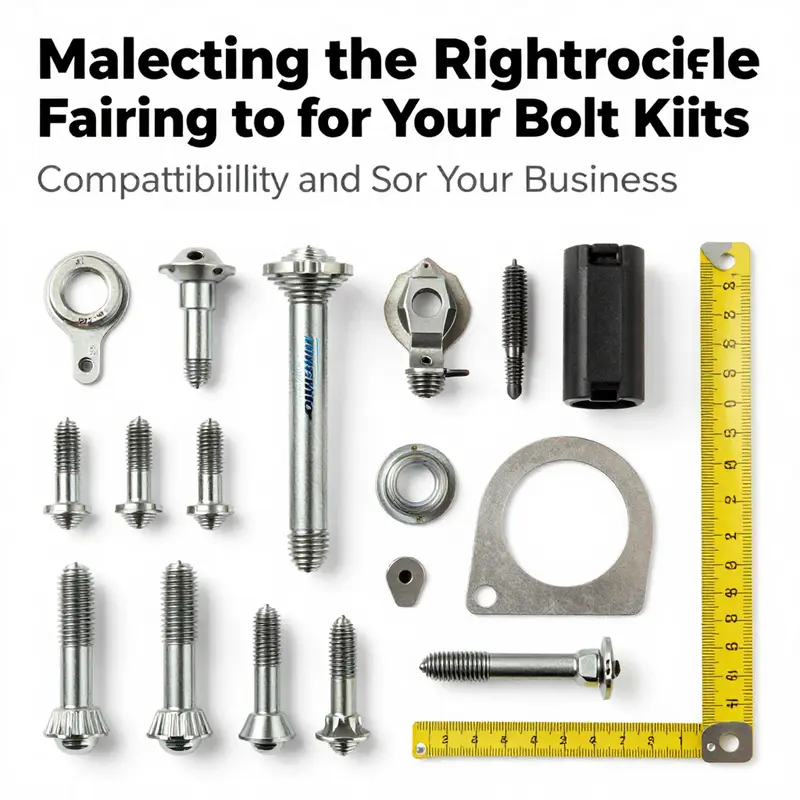
Every rider understands that the bodywork of a motorcycle isn’t just a pretty face. The fairings shield the engine, direct airflow, and contribute to rider comfort by shaping wind behavior at speed. The bolts, screws, washers, and clips that hold those panels in place may seem like small, unglamorous components, but they are the quiet guardians of stability and protection. Selecting the right fairing bolt kit is not a cosmetic choice or a convenience purchase; it is a maintenance decision that affects fit, performance, and even safety on the road. This chapter follows that thread of thought with a practical, model-aware perspective that treats compatibility and specification as one continuous discipline rather than a checklist of random hardware.
At the heart of any reliable fairing installation lies exacting compatibility. Bolts come in different sizes, thread pitches, head styles, and lengths, and the fairing design itself often evolves with model years. A kit that claims universal applicability might still fail in the details. The wrong thread size, even by a fraction of a millimeter, can leave a panel held in place by sheer force rather than true engagement. In a motorcycle, where high-speed air pressure and vibration multiply the consequences of a loose panel, such mismatches translate into rattling noise, fluttering edges, or, in the worst case, panel detachment. The careful reader will understand that compatibility isn’t a luxury feature; it is a core safety and performance attribute.
Among the most common configurations, many kits include a mix of M5 and M6 bolts in varied lengths, such as 40 mm, 20 mm, and 16 mm. These measurements matter because fairing mounting points are rarely uniform; some bolts secure cowls to the frame, others attach brackets to the subframe or clamps, and yet others anchor fasteners into the plastic or fiberglass skin itself. A 40 mm M6 bolt might be ideal for a rear upper fairing, while a 16 mm M5 could be perfect for a lower panel that nests near the engine cover. The head type matters as well—truss, button, or socket heads each interact with different washers, spacers, and the contour of the panel. The kit’s assortment of washers in varying thicknesses—0.5 mm, 1 mm, 2 mm, or even 5 mm—offers the essential micro-adjustment needed to seat a panel flush against bolts that aren’t perfectly aligned, while speed clips provide a faster, vibration-resistant alternative for certain fairing secures. These details may appear granular, but they are the levers that ensure a seamless surface and predictable aero behavior.
Material quality underpins all of this. High-grade aluminum fasteners are favored for many fairing kits because aluminum resists corrosion in a harsh riding environment, maintains strength under dynamic loading, and preserves a bright finish that looks like new after exposure to rain and road salt. Aluminum’s lighter weight relative to steel also matters in a system where mass distribution can influence handling, especially when panels have to snap in precisely and stay in place without warping. The finish quality matters too; aluminum bolts treated for corrosion resistance can resist oxidation, maintain a clean line along the edge of a panel, and minimize the risk of staining or discoloration that might otherwise become obvious after a few open-air seasons. These are not mere cosmetic considerations; superficial corrosion on a bolt can spread, seize threads, or erode the edge of a panel mounting hole over time, complicating future maintenance.
Model-year variation compounds the challenge. Fairings evolve as designers refine aerodynamics, access for service, or compatibility with updated subframes. A kit that matches a particular generation of a bike will often differ from one that fits a different year or a closely related model. The service manual will specify the exact fastener part numbers, including the thread pitch and allowed torque range for each mounting point. Without cross-referencing those specifications, a well-intentioned repair or replacement can create a mismatch that manifests as a “tight, not quite right” feeling when the bike is ridden, especially at highway speeds where the wind and vibration demand a solid, uniform clamping force. In short, the correct bolt kit integrates model-year specificity with the correct material and geometry to deliver a panel system that behaves as the original design intended.
To navigate this complexity, a disciplined approach is essential. Start with your motorcycle’s service manual or an official parts catalog to verify the precise fastener part numbers associated with your year and fairing design. This step is not about obsessive precision for its own sake; it’s about securing the engagement where the fairing meets the frame, bracket, or panel mount. Once you have the exact part numbers, you can compare those against the contents of a bolt kit you’re considering. A genuine or high-quality aftermarket kit will clearly specify which lengths, thread sizes, and head types are included, and it will align with the mounting points described in the manual. If the kit’s listing is vague, or if it touts “compatible with many models” without clarifying the exact fit for your bike, pursue clarity. The price is not the only value metric here—fit quality, durability, and the likelihood of a clean, repeatable installation are worth more in the long run.
Product details often emphasize material choices and finish longevity because those attributes influence both immediate fit and long-term resilience. Premium kits frequently use aluminum bolts with light, durable coatings designed to resist corrosion even after months of exposure to rain, road grime, and wash cycles. A well-chosen kit should not only endure the next year of riding but also maintain its aesthetic over time, avoiding the dulling or discoloration that can make a bike look neglected. While the appearance of fasteners might seem trivial, it is part of the overall premium experience that riders expect when they replace worn hardware after a minor fall or routine maintenance. The hardware is, in effect, the connective tissue of the bike’s exterior, and like any tissue under stress, it must be robust, compatible, and well-finished to perform without distraction when the ride matters.
A practical way to evaluate a kit is to think through its architecture in relation to the panel system you are preserving or upgrading. If you are repairing a crash-damaged set, the panels may have microscopic or visible deformation that complicates screw alignment. In such cases, the kit’s included pieces must be of the right length and head geometry to avoid forcing a panel into a misfit. A mismatched bolt length could bottom out in the panel mounting hole or fail to reach into a solid anchor point, producing the same outcome as a loosely attached fairing: flutter, wind noise, and the potential for panel separation at speed. On the other hand, a kit designed for a high-performance sports bike will often emphasize a precise, compact assembly where every bolt’s head sits flush with the surface of the panel, minimizing drag and reducing the chance that a protruding bolt will snag on clothing, levers, or air hoses during maintenance work. This is not merely about cockpit aesthetics; it is about predictable maintenance and safe riding.
The importance of model-specific guidance cannot be overstated. A compatibility guide from an original equipment parts source will typically map exact fairing bolt layouts to particular bikes and years, sometimes even down to sub-model variants. This kind of documentation is invaluable because it translates a handful of numbers—thread pitch, bolt length, head style—into a clear picture of how a panel should be fastened and how tight it should be. Torque specifications are the final piece of the puzzle. Over-tightening risks stripping threads or cracking plastic fairings, while under-tightening may allow panels to shift and flutter under windy conditions. The service manual will offer torque values that correspond to the material and gauge of the fairing and the mounting hardware. Observing these values preserves the panel fit and the integrity of the mounting points through the life of the bike.>
For riders who want to validate compatibility beyond the manual, reputable suppliers and catalogues provide cross-reference tools that align part numbers with the correct bike year and fairing design. These resources help distinguish between a universal-looking option and a truly model-appropriate kit. The right source will not only list lengths and head types but also confirm the inclusion of well nuts, speed clips, and the correct washer varieties. The presence of well nuts, for instance, is a small but significant detail: when mounting a plastic fairing to a metal frame, well nuts provide a compressive seal that cushions the panel and reduces the risk of stress cracking around mounting holes due to vibration. A kit that forgets to include this feature invites a cascade of issues, from panel looseness to accelerated wear at contact points.
Cross-referencing part numbers with the service manual remains the most reliable path to a successful fit. The manual provides the canonical reference for what should be installed where, how much torque to apply, and how to sequence tightening for a clean, evenly loaded mount. When you have the exact fastener layout, you can confidently order a kit that contains the precise assortment of bolt lengths, head forms, washers, and accessories for your bike. This approach reduces the risk of receiving a bulk kit that has many duplicate items or components that will never see service on your model. The result is a installation that feels engineered, not improvised, and that contributes to a fairing system that behaves consistently under wind and vibration.
To illustrate the relevance of model-specific documentation and compatibility checks, consider the compatibility guide for a well-known sport bike family. The official parts catalog provides a model-to-fastener map that confirms which bolt sizes and head types belong in which sections of the fairing system. This map eliminates guesswork and helps you build a kit that matches your bike’s original design intent. It is not merely about fastening panels; it is about preserving the intended aerodynamics, reducing noise, and maintaining the structural integrity the designers intended. In practice, this means a rider can return to the road with confidence that the panels will stay aligned, that wind noise will remain within expected levels, and that the visual lines of the fairing will remain pristine after routine maintenance or after an unfortunate incident.
When you are ready to explore options, a model-focused approach will also serve you well in the marketplace. Some providers offer universal bolt kits that promise broad compatibility. While such kits can be a pragmatic short-term solution in a pinch, they introduce a potential mismatch that becomes evident only after installation. If you are patching the work of inventory at a service shop or performing field maintenance on a late-night ride, you want to avoid the risk of discovering a misfit only after you have already removed the fairing for a ride test. A careful buyer will prefer a kit explicitly documented as compatible with their bike’s year and fairing design. In the end, the difference between a kit that simply fills holes and a kit that solidifies the fairing connection is the difference between a quiet, secure ride and ongoing maintenance headaches.
As you weigh options, keep in mind the practical realities of sourcing. Some riders opt for a kit that lists an array of sizes and standards because it’s easier to manage a single purchase rather than multiple part-numbered orders. Others prefer to source through specialized suppliers who stock model-specific kits with exact part numbers, which reduces the risk of a mismatch. The market increasingly supports customizable configurations, allowing buyers to request sample sets or OEM services to tailor a kit to their exact bike configuration. Delivery times can vary from a couple of days to several weeks depending on order volume and customization level, so planning ahead is essential for riders who are preparing for a track day or a road trip soon after a maintenance window.
In sum, choosing the right motorcycle fairing bolt kit is a disciplined craft that begins with understanding the exact mounting geometry of your bike, continues with selecting a kit that matches the precise thread size, length, and head type required by each mounting point, and ends with applying torque values that preserve the integrity of both the fasteners and the panels. The goal is not merely to attach panels; it is to re-create a seamless assembly where every bolt and washer performs within its design envelope. When done correctly, a fairing system becomes a faithful partner in performance, providing consistent fit, improved aerodynamics, and a finished look that reflects careful, informed maintenance. For riders invested in model-specific accuracy, the journey from compatibility to installation is not a detour but a direct path to preserving the bike’s original character and protecting critical components from the stresses of modern riding.
If you want to see a concrete, model-focused catalog in action as a reference point, you can explore model-specific fairing options within the Honda fairings category. This route helps ensure the parts you select align with the precise needs of your bike’s year and fairing design, rather than relying on generic compatibility claims. CBR1000RR fairings offers a concrete example of how a dedicated category can frame the conversation around fit, finish, and function, translating the language of part numbers into a practical, ride-ready result. The same approach can be applied across brands and models, reinforcing the principle that compatibility is the backbone of a durable, aesthetically cohesive fairing system. For those who want to corroborate compatibility through an official source, the Honda Parts Catalog remains a critical external reference. It provides authoritative torque values, mounting sequences, and the exact fastener configurations that each model requires, helping ensure your kit is not only correct in size but respectful of the engineering that defined the bike from the factory. External resource: https://www.hondapartsdirect.com
Securing Style and Structure: Emerging Trends, Materials, and Choices in Motorcycle Fairing Bolt Kits
Riders today pursue two goals that often seem at odds: naked performance and pristine aesthetics. In the world of motorcycle bodywork, these aims converge at the point where lightweight, durable hardware locks together panels that define a bike’s silhouette and its reliability on the road. The bolt kits that hold fairings, panels, and other add-ons in place are not merely fasteners; they are a quiet, critical discipline shaping how a bike looks, how it behaves, and how long it remains serviceable between maintenance sessions. As the market matures, the conversation around these kits has shifted from a simple locker-room of screw counts to a broader dialogue about material science, system integration, universal versus model-specific fit, and the ways in which a well-chosen kit can shorten downtime, improve protection of painted finishes, and elevate the final appearance of a machine without compromising safety or vibration management. The current market is moving toward a philosophy that favors complete, purpose-built packages, thoughtful material choices, and options that honor both the rider’s demand for customization and the shop’s need for predictable, repeatable installations. In short, this is a story about how small hardware decisions scale into meaningful benefits for riders who care about both function and form.
Material choices anchor the evolving narrative of fairing bolt kits. Traditional steel remains common because of cost, strength, and familiarity, but it is increasingly viewed through the lens of corrosion resistance and weight. Stainless steel, with its inherent balance of strength and long-term durability, has become a standout option for fasteners that live at the interface between metal skin and alloy frames. Its resistance to rust, staining, and salt exposure makes it well suited to climates where humidity, road salt, or frequent washing threatens a finish, and it pairs well with other high-end hardware in a complete kit. Aluminum alloy fasteners are celebrated for lightness without sacrificing structural integrity, a combination that matters in modern sportbikes where every gram counts toward handling response and track performance. The market has embraced these materials not merely as a trend but as a practical response to the dual pressures of longevity and performance. A universal kit that includes a range of M5 and M6 screws with varied lengths can illustrate this shift well. When such a kit is specified to accommodate many mounting points across a spectrum of brands and models, the result is a comprehensively reliable set that reduces the risk of mismatched threads or incompatible spacers. The availability of high-quality stainless or aluminum options in well-considered assortments underscores a broader preference for parts that resist corrosion, stay visually clean, and maintain a consistent finish after countless washes and rides through changing weather. In parallel, chrome CNC alloy products—crafted from billet aluminum and finished with a glossy, reflective surface—have found appeal among builders who emphasize aesthetics as much as strength. These premium-looking kits often employ truss head screws and nylon washers to dampen vibration, protect painted surfaces, and prevent galling or paint chipping at the mounting points. While they carry a higher price tag, their durability and visual impact can be compelling for riders who value a café-racer vibe or a showroom finish.
A second compelling trend centers on the idea of complete bodywork solutions. Rather than hunting for individual fasteners, washers, and clips from multiple suppliers, many riders and technicians prefer a single-kit approach that bundles the essential hardware needed to secure fairings and panels across all mounting points. This kind of packaging goes beyond convenience; it reduces the friction of repair or customization by ensuring that every piece is designed to work together. A complete kit might include stainless-steel clips and nuts, well nuts for weatherproof clamping, and a variety of washers to accommodate different thicknesses and tolerances. The benefit is a smoother workflow during installation, less guesswork when aligning panels, and fewer post-install vibrations or misalignment issues. The reduction in search-and-verify steps translates into meaningful time savings in a shop environment or during a personal project where time is spent in a garage rather than on a bench. For riders, the payoff is a final fit that looks right and stays tight, with fewer call-backs caused by panel shift or fastener loosening.
The market also reflects a clear move toward balancing universal compatibility with model-specific precision. Universal bolt sets are valued for their flexibility; they offer broad coverage across several mounting points and a wide range of vehicles. This is particularly advantageous for enthusiasts who own multiple bikes over time, or for shops that handle a diverse client base. However, universal kits are rarely a perfect fit for every coupling point; some mounting points require specific thread pitches, head shapes, or clip styles to avoid interference and to maintain alignment with fairing contours. This is where model-specific or model-tailored options fill a complementary niche. A kit designed around a particular fairing geometry will typically offer a tighter, more predictable match to the vehicle’s mounting points, which reduces assembly time and helps preserve the intended aesthetic line of the bodywork. The trade-off is coverage: a model-focused kit may not be suitable for off-brand or drift-barred custom builds without a careful cross-check of mounting points. The practical path for many riders and shops is the judicious combination of both strategies. A universal base set plus a smaller model-specific add-on kit can deliver broad compatibility while still ensuring precise fit where it matters most, such as near delicate fairing edges or where alignment tolerances are tight.
In practice, these decisions are not driven by hype but by tangible installation realities, which is why the market increasingly emphasizes the ease of installation and the protection of painted finishes alongside raw strength. Fasteners that feature a shoulder or a flanged head design help distribute clamping forces more evenly across mounting points, reducing the risk of cranky gaps or flex under load. Nylon washers or dedicated anti-vibration components help dampen the micro-movements generated by engine vibration and the continuous cadence of the road, a factor that matters for both street riders and track enthusiasts who ride with more aggressive ballast and cornering loads. A well-chosen kit acknowledges that hardware must not only hold a fairing in place but also preserve the integrity of the surface beneath. It must resist corrosion, tolerate heat cycles, and avoid painting interactions that can lead to micro-scratches or premature finish wear. That is why the combination of corrosion-resistant materials, vibration-damping features, and thoughtful finishing is now a central criterion in evaluating a fairing bolt kit rather than a peripheral consideration.
Aesthetics play a starring role in the decision process, too. The contemporary market includes finishes designed to blend with or accent the fairing’s color and texture. Black, chrome, or satin finishes can complement modern paint schemes and carbon-fiber accents without drawing attention to the hardware itself. For riders who crave a more muscular, industrial look, chrome CNC alloy options deliver a high-luster accent that can become a signature detail of the bike’s exterior. For those who want to preserve a stealth or after-market stealth look, black-coated or anodized finishes provide a low-key, cohesive integration with the bodywork. It is not merely about the color; it is about finishing that remains durable after repeated cleaning and polishing sessions. The right finish can help resist the visible effects of sun exposure and road grime, maintaining that polished, museum-like sheen that many riders want to preserve for as long as possible.
The sourcing landscape for these kits has also evolved in meaningful ways. Online marketplaces and specialty distributors offer a spectrum of options, from standard off-the-shelf assortments to customizable configurations that align with a rider’s specific needs. Buyers are increasingly skilled at reading the fine print: what exactly is included in a kit, the material composition of the fasteners, the thickness and range of washers, and how well the kit aligns with the panel geometry and mounting points on their particular model. Some platforms even offer sample requests or OEM services, acknowledging that, in a world of precise fitment, a small sample can prevent a large return or misfit scenario. Delivery times can vary widely depending on demand and order volume, but the trend toward streamlined fulfillment and flexible ordering illustrates the market’s attention to operational efficiency and customer satisfaction. Payment options may also play a part in decision-making, particularly for shop owners or builders who require secure, traceable transactions and the ability to manage inventories with predictable cycles.
From a rider’s perspective, the practical value of investing in a well-curated bolt kit becomes clear when considering maintenance cycles and the potential for damage during a crash or heavy impact. After an incident, the bodywork often takes the brunt, and those fairing panels rely on carefully engineered fasteners to reassemble correctly. The kit’s completeness reduces the likelihood of missing a critical fastener or, worse, installing a mis-sized piece that creates misalignment or stress at a mounting point. In everyday maintenance, a complete kit helps ensure that the process of removing and reinstalling panels—whether for routine cleaning, hardware inspection, or regular service intervals—remains smooth and predictable. The effect on the rider’s confidence is real; knowing that the hardware is robust, corrosion-resistant, and correctly sized underpins the trust a rider has in the bike’s overall reliability.
Accessibility and education are also increasingly central to how these kits are marketed. The growing demand for universal fit and model-specific options has pushed suppliers to develop more transparent documentation. Clear specifications, installation guides, and compatibility charts enable riders to cross-check the kit contents against their bike’s mounting points before purchase. These resources help reduce decision fatigue and shorten the path from unboxing to a secure, cleanly finished fairing. In a market that prizes both function and aesthetics, such clarity is not optional; it is part of the value proposition that separates reputable suppliers from lower-tier providers. The goal, ultimately, is to empower riders to make informed choices that maximize both performance benefits and visual appeal.
Within this evolving landscape, the role of learning from broader industry practice becomes important. The integration of a robust bolt-kit approach aligns with broader best practices in motorcycling maintenance and customization. A well-planned kit mirrors the emphasis on modular design, where components designed to work together reduce mismatch risk and simplify the service life cycle. It supports safer assembly by ensuring correct torque ranges, compatible thread types, and consistent clamp forces across all mounting points. It also supports resistance to environmental stressors, from rain and road spray to heat from engine compartments and exhaust or muffler surroundings. The cumulative effect is a quieter, cleaner, more predictable maintenance experience that encourages riders to engage with their machines more regularly, performing tweaks and upgrades with confidence rather than avoidance.
For riders who prioritize Honda fairings and similar aero-centric styling cues, the path toward a balanced kit becomes even more compelling. The combination of a universal base kit with a targeted add-on for specific fairing geometries can deliver the practical benefits of broad compatibility and the precise fit that preserves contour integrity. This approach helps maintain the intended lines of the bodywork, which matter not only for aesthetics but also for aerodynamics and airflow management around the bike’s skin. Integrating a well-chosen add-on where the panel curvature is most critical minimizes the risk of gaps or misalignment that could disrupt the visual flow and compromise a seal against wind or moisture. For readers exploring category options and product assortments, a resource focused on Honda fairings can serve as a practical starting point to understand how a model-specific kit complements a universal base, without implying endorsement of any particular item or brand.
The broader takeaway from these market dynamics is that riders now have more options than ever to tailor their hardware to their tastes and riding needs. The emphasis has shifted from “just buy a set” to a more considered process that weighs material performance, installation ease, completeness of the kit, finish aesthetics, and cross-model compatibility. Material quality is no longer a single feature among many; it is a foundational attribute that quietly governs how well a kit resists corrosion, how heavy it is, how it wears over time, and how it ages visually along with the bike’s bodywork. Completeness and thoughtful packaging are equally important because they influence the practical realities of fitting and upkeep. Universal compatibility offers convenience in some contexts, while model-specific precision offers reliability in others. The most satisfying outcomes typically arise when a buyer adopts a hybrid strategy—build a core universal set that covers the majority of mounting points and supplement it with a model-focused subset that ensures exact fit at the critical junctions where alignment matters most. It is a strategy designed not only for today’s ride but for the long arc of a bike’s life, where the fairing remains an essential piece of both character and function.
Those who are planning a project or a mid-life refresh should consider how the kit’s materials, finishes, and inclusions align with their climate, maintenance habits, and aesthetic goals. A rider in a damp, coastal environment will value stainless steel and complementary washers and clips more highly than someone in a dry climate where corrosion risk is lower. A rider who regularly aggressively tunes fit for a track-day setup might prioritize a lighter aluminum fastener selection to shave weight, provided the kit delivers the necessary strength. In contrast, a street rider who values a pristine, showroom look may lean toward chrome CNC alloys and a comprehensive finishing package that preserves a high-gloss surface for longer periods. In every case, the decision is shaped by the same core question: Will this kit help the bike look right, stay tight, and resist the wear and tear of real-world riding?
For readers who want a tangible starting point in the pursuit of a cohesive bodywork upgrade, an exploration of model-specific and universal kits can be a productive path. The conversation here is not about chasing the latest flash-in-the-pan solution but about choosing a set of fasteners and related components that harmonize with the bike’s design language and mechanical needs. In practice, that means looking for a kit that offers high-quality materials, a complete roster of hardware, and finishes that will hold up under daily use. It also means recognizing that the best outcomes come from thoughtful curation rather than a single, one-size-fits-all solution. The modern market rewards buyers who understand the value of compatibility, the importance of protective finishes, and the assurance that comes with a well-documented installation process.
To keep the narrative grounded in practical steps, consider how a rider can approach a purchase. Start with a clear list of mounting points on your bike and a sense of how much decorative versus functional hardware you require. Decide whether you want a universal kit as a baseline and a secondary, model-focused upgrade for pivotal points. Review materials first—stainless steel for longevity, aluminum for weight, or chrome CNC for a premium look—and weigh this against budget and intended use. Then confirm that the kit includes required components beyond screws and bolts—such as speed clips, washers of appropriate thicknesses, and well nuts—so you are not left hunting for essential pieces after unboxing. Finally, think about finish as part of the overall design. A subtly dark hardware scheme might integrate seamlessly with a matte black or smoked clear coat, while bright hardware can highlight the bike’s engineering, almost like jewelry on the frame.
As this market continues to mature, the promise of better, easier, and more aesthetically cohesive upgrades becomes more tangible. The blend of durable materials, complete kit packaging, and careful attention to fitment and finish can transform a routine service into an opportunity to enhance both the bike’s performance envelope and its visual narrative. The result is a rider experience that feels intentional—from the moment the panels come off for maintenance to the moment they are snugly reattached with everything in its proper place. The modern fairing bolt kit, in this sense, is less a single product and more a carefully engineered system designed to deliver reliability, efficiency, and a cleaner, more purposeful aesthetic for riders who want their motorcycles to look and feel precisely the way they imagined when they first rolled out of the garage.
Internal link reference for bike-specific customization and fairing category exploration can be useful during your planning. For riders focusing on Honda fairings as a base for customization, explore the dedicated category that collects relevant fairing pieces and related hardware here: Honda fairings.
External reference for a broader view of comprehensive bodywork kit components and packaging practices can provide additional context on how complete bolt-kit solutions are structured in the market: https://www.motorcyclepartspro.com/universal-abs-fairing-set-motorcycle-parts-pro-2025
Final thoughts
In conclusion, motorcycle fairing bolt kits are vital for any business involved in motorcycle repair or customization. Understanding their components and materials, selecting the right kits for compatibility, and staying informed about market trends will enable businesses to better serve their clientele. Investing time and resources into understanding these kits can lead to enhanced service quality and customer satisfaction, ultimately positioning your business for success in the motorcycle industry.