

Fiberglass motorcycle fairings are becoming a pivotal choice for businesses seeking to enhance customer satisfaction through performance, durability, and aesthetic appeal. As the market continues to evolve, understanding how these fairings can transform motorcycles is crucial for business owners. This article delves into the aerodynamic efficiency, strength, customization options, and sourcing strategies for fiberglass fairings, providing a comprehensive guide to help businesses leverage these benefits effectively.
Streamlined Surfaces: The Aerodynamic Edge of Fibreglass Motorcycle Fairings

The aerodynamic story of a motorcycle is written in its skin. For riders chasing that blend of speed, handling, and efficiency, fibreglass fairings offer a distinctive narrative. They are not merely shells that dress a bike; they are engineered surfaces whose shape, texture, and even finish actively influence how air moves around the machine at speed. When a fairing is crafted from fibreglass, the potential for precise contouring becomes a practical advantage. The material’s moldability allows engineers and builders to sculpt smooth, complex geometries that would be hard to achieve with stiffer, more brittle options. In the wind tunnel, those contours translate to streamlined airflow around the front end, the crowded junction where headlight recesses, panel gaps, and the upper spine of the bike collide with gusts and pressure differentials. A well-shaped fiberglass panel can coax air into a laminar, attached flow that minimizes needless separation, reducing pressure drag and promoting a steadier ride at high speed. The result is not just a few tenths shaved from a stopwatch but a tangible improvement in rider confidence, stability, and the bike’s ability to slice through air with less energy expenditure.
A defining advantage of fibreglass lies in its combination of strength and lightness. Compared with traditional ABS plastics or metals, fibreglass offers a superior strength-to-weight ratio when designed and manufactured with care. This is not a claim rooted in abstract theory; it manifests as lower unsprung mass and better hapless response to road irregularities. The rider perceives this as a smoother, more planted feel—especially important when cornering at speed or navigating gusty crosswinds. The lighter mass does not come at the expense of rigidity; thanks to careful layups and resin systems, fibreglass panels can maintain the stiffness needed to resist flutter and panel flex that could degrade aerodynamic performance. The upshot is a fairing that not only reduces drag but also supports a more controlled, responsive chassis behavior.
The sculpting of fiberglass panels intersects with the realities of performance demands. Three-quarter fairings, for instance, illustrate the balancing act between aerodynamics and rider protection. By covering the upper and front sections while leaving some of the sides open, they optimize airflow around the most critical zones where speed interacts with crosswinds and pressure gradients. This configuration can enhance top-end stability and throttle response while keeping overall weight down. Yet, the design carries trade-offs. The same reduced coverage that helps with airflow can diminish upper-body and neck protection from wind and weather, particularly at very high speeds or in long, exposed straights. The decision is not about chasing absolute protection but about aligning the fairing’s aerodynamic benefits with the rider’s mission profile. For track-focused riders, the gains in stability and speed may outweigh the reduced shielding; for sport-touring, the balance might tilt toward comfort and protection without sacrificing too much efficiency. In any case, the choice is intrinsically tied to the craft of shaping: each contour, edge, and transition must be deliberate, because in aerodynamics, small angles become big effects when air is rushing over a surface at hundreds of times the rider’s pace.
The aerodynamic calculus behind fibreglass fairings leans heavily on the interplay of form and function. A layer of nuance exists beyond the visible silhouettes—the distribution of fiber orientation, the thickness gradient through the panel, and the resin content all contribute to how air negotiates the surface. The laminate must resist fatigue while remaining supple enough to avoid cracking on impact. Delicate edges can become drag-inducing if they trip turbulence instead of guiding laminar flow. Consequently, the design process combines aesthetic ambition with rigorous engineering discipline. Engineers may test variations in curvature radii, nose shapes, and belly contours to minimize the onset of flow separation. The goals are concurrently modest and ambitious: reduce pressure drag, suppress separation-induced recirculation behind the windscreen, and maintain a profile that remains stable when the motorcycle’s velocity is pushed toward the practical limit. The Palanivendhan study on aerodynamic kits for two-wheeled vehicles underscores a similar message. It emphasizes how material choice, when coupled with intentional shape optimization, can materially affect aerodynamic performance. Fibreglass, with its moldability, plays a crucial role in enabling those optimized shapes, but the study also makes clear that the aerodynamics hinge as much on engineering discipline as on the material itself.
When a fairing is designed for a specific platform, there is an implicit pact with the bike’s overall geometry. The fit must be precise to avoid gaps that invite turbulent air along the helmet line or around the cockpit. A well-fitted, fiberglass panel helps seal the leading edge, smooth the transition into the cockpit, and maintain a continuous surface that air can glide along rather than break against. This is where the materials science meets practical assembly. Fibreglass sheets laid in carefully oriented plies bonded with strong resin systems yield panels that can be shaped to hug the curvature of a motorcycle’s frame, top fairing shoulder, and radiator cowl. The result is cleaner flow over the rider’s torso, reduced wake behind the rider’s helmet, and less energy wasted in churning turbulent air. In a sport where fractions of a second matter, these gains are not cosmetic; they are functional enhancements that support faster lap times and more confident high-speed cruising.
But the pursuit of aerodynamic efficiency with fibreglass is never a purely additive venture. It compels designers to reckon with trade-offs inherent to any fairing platform. Beyond drag reduction, the panel must deliver adequate impact protection, shield instruments from the elements, and endure the rigors of track or street riding. Fibreglass’s resistance to impact can be tuned through the choice of weave, thickness, and resin system, yet these choices influence weight and cost. The more layers and the thicker the laminate, the stiffer and slightly heavier the panel becomes, potentially dampening some off-the-shelf performance advantages. Conversely, a leaner layup may save weight and lift, but could compromise durability when the bike is dropped or bumped in pit lanes or urban congestion. A mature fiberglass fairing design acknowledges these real-world conditions, achieving an optimal compromise where aerodynamic advantage and protective functionality coexist without tipping into fragility or bulk.
The discussion of three-quarter fairings invites attention to the broader ecosystem of form-giving. Those who chase track performance may value the maximum aerodynamic payoff offered by integrated upper contours and tight radii that breathe clean air at elevated speeds. Riders who traverse varied climates may prioritize thermal management, cockpit wind protection, and weather sealing, even if that means some aerodynamic efficiency is sacrificed for comfort. Fibreglass makes it possible to tune this balance with a degree of granularity that is harder to achieve with alternative materials. The laminate can be engineered to accommodate precise intake ducts, mounting points, and instrument housings, all while maintaining a smooth exterior that preserves the aerodynamic surface. In this sense, fibreglass fairings are not a single monolithic solution but a versatile system. The same material can be molded for a race-spec canopy or adapted for a weather-ready touring shell, with changes in thickness, reinforcement, or surface finish guiding the air as if the bike itself were a living aerodynamic instrument.
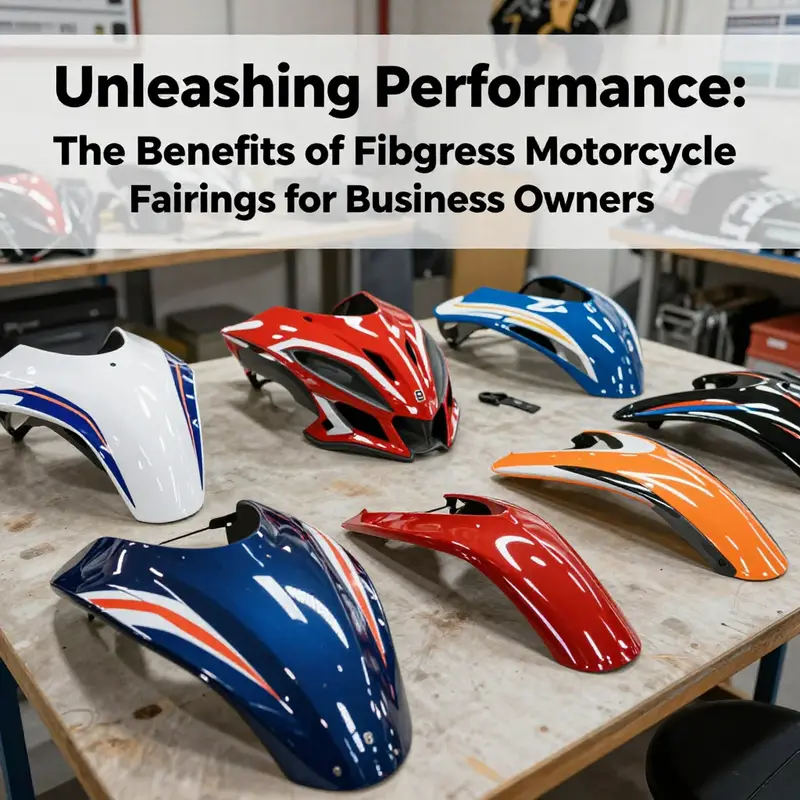
The aesthetic finish of fibreglass adds another layer of aerodynamic perception. A glossy, seamless exterior not only pleases the eye but also helps air glide over the surface with minimal friction at lower roughness levels. Surface imperfections, even small dents or scratches, can become micro-turbulence generators when air travels at velocity. The gloss finish in fibreglass panels becomes a practical contributor to performance by supporting smoother laminar flow across the nose and upper fairing. This synergy between visual appeal and aerodynamic function has an important implication for riders who invest in customization alongside performance. They can achieve a race-ready silhouette that looks as fast as it feels, reinforcing the perception that the bike is tuned for speed even before the first turn of the key.
From a maintenance perspective, fiberglass fairings offer a balanced profile. Repairs can be simpler than those required for composite systems with more exotic resins or fragile shells. Localized patching or resin touch-ups can restore a panel without replacing the entire part, which is a meaningful consideration for riders who want to preserve a cohesive look while keeping repair costs manageable. The ease of repair complements the aerodynamic argument: a panel that can be returned to its optimal shape after a minor impact quickly returns the bike to its low-drag state. In practice, this means riders can sustain performance gains over time without the downtime and expense that might come with alternatives. Yet, the maintenance mindset must be paired with cautious storage and careful handling. Fibreglass remains susceptible to cracking if over-stressed during a fall, so a well-maintained fairing demands thoughtful storage, gentle mounting, and periodic inspection of joints and edge finishes that are the most exposed to impact.
In the broader narrative of optimizing motorcycle performance, fibreglass fairings are a powerful instrument for shaping airflow while preserving an approachable balance between weight, durability, and cost. The design decisions—whether to pursue a full, sculpted canopy or a lean three-quarter profile—reflect a rider’s priorities: ultimate top-end speed, all-around handling, or a comfortable blend of performance with reliable protection. The engineering truth remains that while fibreglass offers substantial aerodynamic advantages, those gains crystallize only when formed by disciplined design practice, precise manufacturing, and informed material selection. The relationship between form and function is intimate; a fairing is not merely a cover but a carefully tuned element of the bike’s aerodynamic system. And as studies such as Palanivendhan’s remind us, the path to better air is paved with deliberate choices about geometry, material behavior, and the fidelity of execution.
For readers curious to see how contemporary catalogues frame the idea of modern fairings—while still maintaining a focus on the core aerodynamic questions—consider exploring a practical reference that highlights a broad spectrum of fairing categories and their applications. A concise way to contextualize the discussion is to explore a general catalog page that curates fairing options by category. This enables a sense of how designers think about coverage, airflow, and rider interaction across different motorcycle archetypes. Learn more about the available categories here: 2023 new fairings.
External resources extend the technical conversation beyond catalogues and marketing pages. A rigorous treatment of how aerodynamic kits influence two-wheeled performance offers a deeper theoretical framework for the design challenges discussed here. For a detailed, research-grounded examination of material impact and shape optimization, see the study by M. Palanivendhan: Design and analysis of an aerodynamic kit for a two-wheeled motorcycle. It provides a structured view of how fiber choice and deliberate geometry work together to alter aerodynamic characteristics. This resource complements the practical insights presented here and situates fiberglass within a broader engineering context: https://www.researchgate.net/publication/350476823Designandanalysisofanaerodynamickitforatwo-wheeled_motorcycle.
null
null
null
null
Sourcing the Shape of Speed: Availability and Access to Fibreglass Motorcycle Fairings
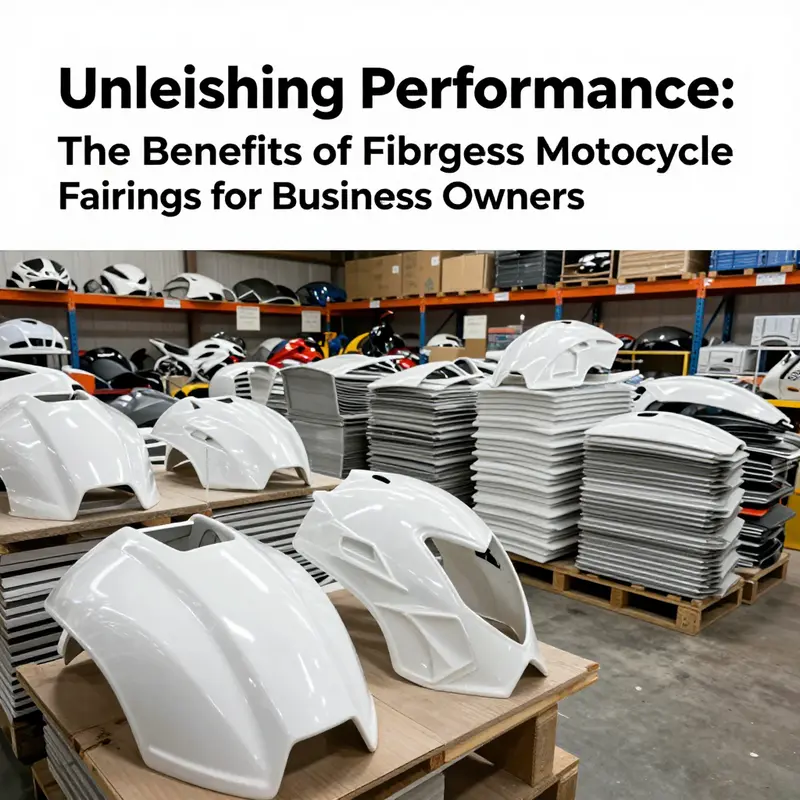
Fibreglass motorcycle fairings occupy a unique corner of the riding and racing world. They are not simply decorative skins; they are performance components that influence handling, aerodynamics, and even the rider’s experience of speed and precision. When a rider begins to explore the market for these parts, the first reality is breadth. The fiberglass fairing landscape stretches across online marketplaces, specialized shops, and direct-from-manufacturer channels, offering a spectrum that ranges from brand-new unpainted shells to race-ready composites engineered for high-velocity use. This variety serves different aims, from cosmetic refreshment and personal photo-worthy graphics to the exacting demands of track days and competition. Yet with breadth comes the need for discernment. A fairing is a critical part of a motorcycle’s envelope, protecting the engine, the instrument cluster, and the rider from debris, weather, and the occasional bump in a corner or straightaway. Its fitment to a specific bike, its surface finish, and its internal structure all determine whether it will meet a rider’s expectations for reliability and performance. In this sense, availability is inseparable from the practical questions of compatibility and quality, as well as the long-term implications for weight, aerodynamics, and heat management inside the engine bay or around the radiator. The market’s diversity is thus both an opportunity and a challenge, inviting riders to balance cost, speed, personality, and the intangible feel of a fairing designed to sing at high speed and stick to the chassis under load.
For buyers, the entry point is clarity about what fiberglass fairings can do and how they are sourced. Fiberglass offers a high strength-to-weight ratio that makes it a favored choice for riders who want better handling and acceleration without the rigidity or cost of metal and the fragility of some plastics. This advantage does not resolve itself in a single purchase; it unfolds through a considered evaluation of whether a kit is intended for street use, for weekend track sessions, or for serious competition. Available designs span from full fairing kits that enclose the front, sides, and tail to more modular sets that allow for customization and easier replacement of damaged sections. Some riders opt for fully assembled, painted kits that arrive ready to bolt on, while others prefer unpainted or primed shells that support a rapid, personalized paint job or a distinctive graphic treatment. In either case, the core benefits—stiffness, durability, and a streamlined silhouette—remain consistent across the spectrum. The aesthetic payoff is equally important. A glossy, polished finish signals professionalism and intent, while the lines and contours of the fairing speak to the rider’s relationship with the bike and with the road. The visual impact matters as much as the measured aerodynamic gains, because it reinforces the rider’s confidence in the machine and in the choice to invest in fiberglass as a strategic material for performance and identity.
Availability in today’s market is amplified by the coexistence of consumer-facing marketplaces and more specialized suppliers that cater to racers and restoration enthusiasts. General platforms host a wide array of fiberglass full fairing kits for motorcycles and scooters, often with search filters that help buyers identify compatibility by model and year and sometimes by the particular design lineage of a kit. A notable advantage of these platforms is the guarantee framework they offer; for example, a buyer can look for assurances like “fit guarantee” or “guaranteed compatibility” that help mitigate the risk of misfit when ordering across platforms or across international borders. The breadth of options can be especially valuable for those working on older or uncommon motorcycles, where original equipment manufacturer parts have become scarce or prohibitively expensive. In such cases, a fiberglass kit can provide a viable path to restoring not only the machine’s protective envelope but also its silhouette and weight characteristics. For the practical buyer, ease of acquisition is a major consideration. Shorter lead times, clear return policies, and straightforward installation documentation can tip the balance in favor of a particular seller or kit, even when price is comparable. Considerations such as how the kit attaches to the frame, how it integrates with existing wiring harnesses, and whether the kit can accommodate stock or aftermarket instruments are critical to success as soon as the box is opened. These factors influence whether a purchase becomes a straightforward swap or a longer project that requires careful adjustments and maybe even professional alignment during installation.
Pricing structures reflect both the design quality and the anticipated use case. In the current market, unpainted fiberglass fairings designed for a broad range of platforms can be sourced at an average price around the mid-two-hundreds per set, with wholesale discounts available for orders that begin at two units. This pricing reality is meaningful for both hobbyists and racers. For a weekend warrior, a fairing that can be quickly mounted, easily painted, and mass-produced at scale may offer the best value. For a racer or a shop building a fleet, the economics shift toward volume and the ability to negotiate better terms with a supplier. The emphasis, however, should remain on fitment accuracy and material integrity. A fairing that barely clears the headlight housing or interferes with the windscreen can erode the speed advantage that a lower mass and cleaner silhouette promise. Conversely, a well-designed fiberglass shell that mates neatly to the bike’s frame and subframe can unlock predictable aerodynamics, reduce turbulence around the rider, and contribute to a more stable ride at high speeds. The practical payoff—the combination of weight savings, strength, and an aerodynamically efficient profile—will be realized only if the kit adheres to the bike’s geometry and tolerances, and if the installation is completed with attention to detail and proper sealing against the elements.
The sourcing landscape today also accommodates performance-oriented needs through specialized manufacturers who craft race-inspired fiberglass fairings. These products are built with attention to aerodynamics and durability under demanding conditions. They are typically intended to withstand the rigors of track use, where consistent fit and fatigue resistance are pivotal. For riders who view speed as both function and identity, these high-performance designs offer a way to maximize efficiency while projecting a purpose-built, professional appearance on the track. The design language often emphasizes clean surfaces, precise edges, and compatibility with helmet clearance and rider ergonomics, all of which contribute to a rider’s ability to push the machine toward its limit without being constrained by the fairing itself.
From an installation perspective, the market’s modular approach is a central advantage. Many fiberglass fairings are designed to be modular, enabling riders to replace damaged sections without having to discard the entire shell. A modular approach also supports customization, allowing for unique graphics, color finishes, or clear-coat protection that preserves the glossy look that many riders crave. The option to personalize, within reasonable limits, appeals to enthusiasts who want their machine to reflect personal flavor while still benefiting from a performance-oriented platform. The practical implications of modularity extend to maintenance as well. Damaged portions can be swapped with minimal downtime, preserving track readiness and minimizing the downtime that a rider experiences when a repair becomes necessary. In a market that ranges from fully assembled, color-manded packages to simple, unpainted panels, the decision-making process centers on the rider’s technical comfort, the intended use of the bike, and the capacity to align parts with the existing electrical and mechanical systems. The result is a balance between economy and precision—an equilibrium that fiberglass fairings strike with a distinctive clarity when sourced from reputable suppliers who understand both the science of fit and the art of aesthetics.
Model-specific fitment remains a practical consideration even as the market broadens. Although fiberglass fairings can be compatible with a broad range of platforms, many kits are designed to align with specific models or families of motorcycles. This alignment matters not only for the exterior geometry but also for the under-the-skin fit around mounting points, the clearance between the fairing and the exhaust or frame rails, and the routing of wires and sensors. Riders who restore a vintage bike or upgrade a modern performance scooter will find that an appropriate kit can reduce the guesswork involved in adaptation, delivering a more predictable installation path and a more reliable end result. The trade-off is often a question of availability and the lead time attached to a particular design. In some cases, an accurate fit means selecting a kit that is marketed as model-specific, even if it comes with multiple cutouts and adjustable mounting points. In other cases, the kit will be advertised as universal or semi-universal, requiring more careful measurement and minor modifications to achieve a clean, secure fit. Either approach can deliver strong results when supported by clear documentation, a detailed mounting diagram, and the right tools for the job. The consumer should prioritize suppliers who provide thorough technical support and who articulate the compatibility landscape with precision, ensuring a smoother path from purchase to installation.
Sourcing decisions are also guided by the credibility of the supplier and the availability of documentation. For buyers who wish to cross-check fit and weight characteristics before purchase, looking for detailed specifications and installation guides helps manage expectations. OEM-certified and aftermarket options both exist, with different implications for quality control, support, and warranty. Wholesale channels and overseas suppliers can offer cost advantages but may require longer lead times, careful import considerations, and a willingness to manage potential language or shipping challenges. This is where the broader ecosystem—payment protections, return policies, and customer service—becomes a determinant of successful procurement. For many, the peace of mind that comes with a reliable return policy, tracking, and a clear warranty policy is as important as the raw price of the kit. When these elements align, a rider can secure a fairing that embodies the desired balance of light weight, rigid performance, and the aesthetic elegance that comes with a glossy, well-finished surface.
In the end, availability and sourcing are about aligning the rider’s goal with a practical, reliable supply chain. The market’s breadth supports both the hands-on builder looking to assemble a cost-conscious, paint-ready shell and the professional racer seeking a kit engineered for speed, durability, and precise fitment. The key to turning availability into value lies in asking the right questions before the purchase: Will this kit fit my bike? Is the mounting hardware compatible with my frame and substructure? Does the supplier offer installation guides or technical support for their design? Can the kit be unpainted or painted to a specific scheme, and will the surface finish withstand track temperatures and road debris without cracking? Answering these questions with care ensures that the fiberglass fairing becomes more than a cosmetic upgrade. It becomes a strategic component of the bike’s overall performance and identity, delivering not only the aerodynamic efficiency and protection riders expect but also the confidence to ride with a sense of purpose that mirrors the machine’s designed capabilities.
For readers seeking a concrete starting point in this landscape, consider exploring a dedicated category that highlights recent and upcoming products. This channel helps readers stay aligned with the latest options, configurations, and design philosophies in fiberglass fairings. 2023 new category offers a snapshot of current availability and a sense of the direction the market is taking as manufacturers refine fit and finish, improve mounting schemes, and balance weight with strength. Access to such a catalog can streamline decision-making, letting a rider focus on fitment, aesthetics, and performance rather than sifting through an oversized catalog. See the 2023 new category for a straightforward view of fresh offerings and the opportunities they present for customization and enhanced performance. For a broader sense of the market, online marketplaces remain indispensable, particularly those that emphasize fit and reliability. A well-curated listing can include “guaranteed fit” assurances, detailed photos, and clear measurement data that help buyers compare options with confidence. This approach reduces the uncertainty that sometimes accompanies online purchases and helps ensure that the chosen kit aligns with the rider’s bike and riding style. While the buying process is influenced by personal style and the bike’s intended use, the underlying criteria remain constant: fit, finish, and function, all of which contribute to a successful, satisfying upgrade.
Internal link to explore current availability and 2023 new products: 2023 new fairings. This gateway provides a practical next step for readers who want to see how the latest designs translate into real-world options, including unpainted sets, race-inspired kits, and model-specific fitment that has become a hallmark of modern fiberglass engineering. The market’s openness means buyers can compare materials, mounting philosophies, and aesthetic treatments side by side, making the decision process more precise and enjoyable. While price and lead time will vary, the core advantages of fiberglass remain clear: a favorable balance of strength and weight, robust protection, and an opportunity to tailor the bike’s appearance to reflect personal taste and competitive intent.
External resource: https://www.ebay.com/sch/i.html?_nkw=fiberglass+motorcycle+fairings+kits
Final thoughts
In conclusion, fiberglass motorcycle fairings present a multitude of benefits that are critical for business owners looking to enhance their product offerings. From superior aerodynamic efficiency to robust durability and extensive customization options, these fairings can significantly improve motorcycle performance and aesthetic appeal. Understanding these elements not only boosts customer satisfaction but also positions your business favorably in a competitive market. As you consider your inventory, prioritizing fiberglass fairings could be a strategic move to differentiate your motorcycle offerings.