
Introduction
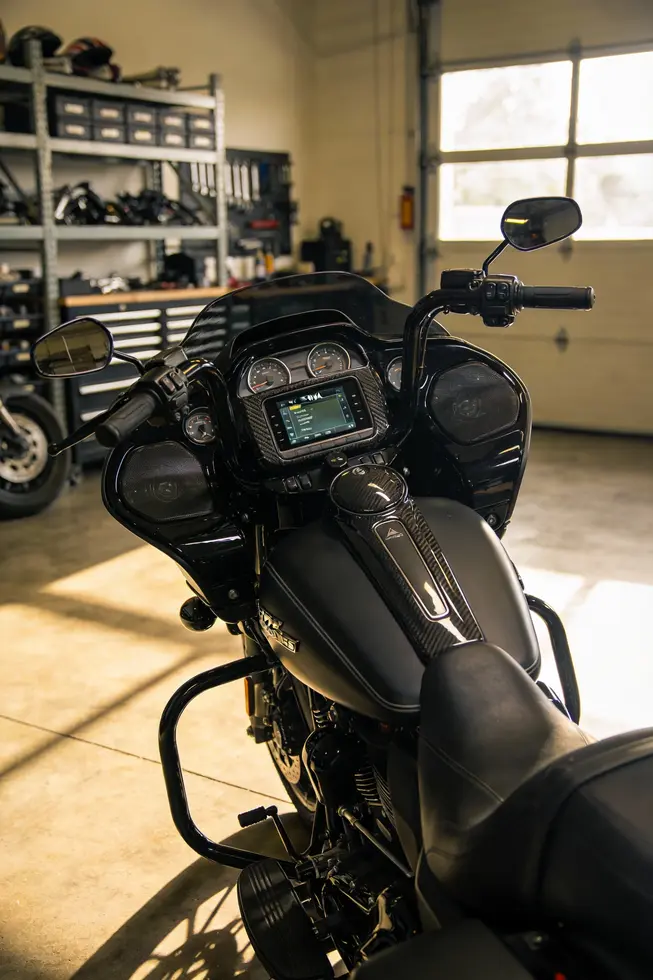
Riding into a crowded aftermarket landscape, Hoppe Industries positions itself with a focused proposition: high-quality motorcycle fairings engineered for Harley-Davidson Softail models, combined with modern tech ideas that appeal to riders and retailers alike. The company’s emphasis on Harley compatibility, premium materials, and design philosophy informs every fairing iteration, from standard fare to tech-enabled configurations like the HPKT-0056A 6×9 Touch Screen Fairing. For business owners and retailers, Hoppe’s approach translates into tangible advantages: clearly defined product scope, a tech-forward value proposition that can justify premium pricing, and a distribution strategy that aligns with established powersports channels such as Drag Specialties. The four chapters that follow map a holistic view of Hoppe’s fairings—what they are, how they integrate technology, how they improve rider comfort and long-distance performance, and how they sit within the broader market ecosystem. Chapter 1 delves into product scope, Harley Softail compatibility, and the guiding design philosophy. Chapter 2 examines tech integration through HPKT-0056A, its touchscreen UI, and audio capabilities. Chapter 3 connects engineering choices to real-world riding benefits—reduced buffeting, improved aerodynamics, and sustained comfort on long trips. Chapter 4 analyzes market positioning, distribution, and the retailer partnerships that make Hoppe’s fairings accessible to shops and riders alike. Together, these perspectives help business owners assess margins, inventory strategy, and channel partnerships in a way that aligns with current powersports trends.
Tables of Contents
Chapter 1: Chapter 1 Overview: Engineering a Modern Fairing Ecosystem for Heritage Cruisers and the Hoppe Approach to Compatibility and Design
- Technological Dimensions and Design Engineering in Hoppe Fairings: From CAD to Real-World Ride Dynamics
- Design as Dialogue: How Hoppe’s Softail Fairings Shape Riding Experience and Market Dynamics
Chapter 1: Chapter 1 Overview: Engineering a Modern Fairing Ecosystem for Heritage Cruisers and the Hoppe Approach to Compatibility and Design
1. Technological Dimensions and Design Engineering in Hoppe Fairings: From CAD to Real-World Ride Dynamics
In shaping Hoppe Industries fairings, the technological dimension is not a garnish but the backbone of value. The subchapter that follows maps how digital tools, material science, and rigorous engineering philosophies converge to produce fairings that blend heritage aesthetics with modern performance. The aim is to translate a rider centered philosophy into a robust design language that performs across varied cruising contexts, weather conditions, and road surfaces. This requires a holistic workflow that begins in CAD and ends in field testing, with every step calibrated to fit a widely used cruiser platform while preserving ease of installation and serviceability.
At the core of the technological dimension is a disciplined digital design and development workflow. Computer-aided design allows engineers to sculpt geometry that satisfies aerodynamic targets without compromising the visual language that defines the heritage look. Digital twins and assembly simulations are employed early to verify interference with forks, instrument clusters, and mounting points. This preemptive check minimizes costly revisions later in the development cycle and helps ensure that milestone builds resemble the intended production reality. Simulation extends beyond fitment; it encompasses airflow and pressure distribution around the fairing. Computational fluid dynamics provides insight into drag characteristics, buffeting tendencies, and crosswind sensitivity. In parallel, finite element analysis evaluates the resilience of mounting brackets, fasteners, and joint interfaces under vibration and load cycles typical of long highway passages.
Prototyping remains a crucial bridge between virtual concepts and physical performance. Rapid prototyping methods, including 3D printing and CNC milling of mock-ups, enable rapid validation of form, assembly accessibility, and ergonomic fit. Wind tunnel testing or real-world road tests validate whether the projected aerodynamic benefits translate into tangible rider comfort and stability at highway speeds. These tests also illuminate acoustic implications—how fairing contours influence wind noise and rider fatigue over extended journeys. Material choices frame the engineering trade-offs inherent in any fairing project. ABS offers favorable cost and formability, fiberglass and carbon fiber provide stiffness-to-weight advantages, and composites open avenues for tailored laminate structures. The manufacturing approach—whether vacuum-assisted resin transfer molding, hand lay-up, or infusion methods—shapes part thickness, surface finish, and tolerances. Each choice carries implications for weight, cost, repairability, and long-term durability under UV exposure and environmental conditions.
Design decisions also hinge on practical integration with the motorcycle ecosystem. Internal wiring and harness routing demand thoughtful pathways that minimize wear while preserving serviceability. Seals and gaskets protect delicate components from moisture and dust, yet maintain accessibility when maintenance becomes necessary. The aim is to balance weatherproofing with a straightforward mounting paradigm so installers can replace or upgrade components without reevaluating the entire system. An emphasis on modularity supports upgrades and customization while preserving compatibility across model-year variants. The ability to mix and match mounting brackets and hardware reduces the risk of misalignment and ensures a clean, repeatable assembly in a production line setting.
Compatibility with a broad cruiser platform remains a guiding constraint that informs both aesthetics and engineering detail. Mounting locations must align with frame rails and the headstock region, while minimum clearance from exhaust outlets, oil and cooling pathways, and sensor housings must be preserved. These considerations become more nuanced when accounting for variations across generations or different engine configurations. Design verification includes checking for potential interference with instrument visibility, fuel tank geometry, and rider controls. From an aesthetic perspective, the silhouette should honor classic lines while incorporating modern aerodynamics. The challenge is to achieve a look that communicates heritage and performance without appearing incongruent with contemporary technology, chrome finishes, or paint schemes.
A strong design philosophy underpins this technical rigor. Visual language should reflect legacy cues through lines, curves, and a recognizable silhouette, yet be adaptable to customization options that riders expect. Ergonomics play a critical role: wind protection must reduce buffeting without compromising rider posture or cockpit access. Acoustic and vibration considerations influence surface treatments and joint designs, reinforcing rider comfort over long distances. Integration with the motorcycle’s electrical system requires careful planning: routing for lighting, instrumentation, and accessory power must minimize interference with control systems and allow for straightforward servicing. The fairing must also be constructed with manufacturability in mind, featuring repeatable tolerances, streamlined jigs, and scalable processes that support both standard production and individualized runs.
Economic and environmental factors converge in this engineering narrative as well. Material selection and manufacturing methods must respect cost targets and lead times while maintaining durability and repairability. Surface finishes endure UV exposure and weathering, and the overall lifecycle should consider recyclability and end-of-life disassembly. In essence, the engineering toolkit becomes a bridge between design ambitions and real-world performance, ensuring that every polygon, laminate, and interface contributes to a ride experience that feels both timeless and technically confident.
Within this framework, designers and engineers view fairings as more than protective shells. They are an integrated part of the motorcycle ecosystem, shaping aerodynamics, rider comfort, and the ease with which riders personalize their machines. The iterative loop—concept, digital validation, prototyping, testing, and refinement—ensures that the final product aligns with the intended rider experience while remaining adaptable to future platform evolutions. This is why the subchapter emphasizes the synergy of CAD, CFD, FEA, materials science, and manufacturing strategy as a cohesive discipline rather than a sequence of discrete steps. If a rider enters the shop with a vision for a heritage-inspired, performance-oriented cruiser, the engineering narrative described here translates that vision into a physically realizable, maintainable, and dependable fairing system.
For readers seeking a concrete touchstone as they explore further chapters, the linked catalog section offers a practical view of how these design choices play out in product lines and accessory ecosystems. See Product category C61 for a sense of how modular fairing pieces are categorized and positioned within a broader offering. Product category C61.
2. Design as Dialogue: How Hoppe’s Softail Fairings Shape Riding Experience and Market Dynamics
Hoppe Industries’ motorcycle fairings operate as more than cosmetic shells. They are the interface between rider and machine, a deliberate dialogue among wind, weight, and electricity, continually balancing form with function. The product scope, in this light, includes not only the outer silhouette but the way that silhouette interacts with a rider’s posture, a bike’s electrical architecture, and the long-range demands of touring and cruising. On long rides, buffeting, noise, and rider fatigue can creep in as the wind moves around an exposed cockpit. A well-engineered fairing reduces that fatigue by guiding airflow, smoothing the boundary layer, and shielding the rider from abrupt gusts. But it must do so without compromising the bike’s iconic presence or imposing excessive weight. In practice, the most successful designs achieve a gentle synthesis: a shell that cleanly diverts air while preserving the Harley’s signature silhouette and maintaining easy access to controls, gauges, and ports for electronics. The result is a riding envelope that feels natural rather than imposed, almost an extension of the rider’s intent rather than a barrier between rider and road.\n\nCompatibility with the Harley-Davidson Softail platform introduces a further layer of complexity. Softails span a range of frame geometries, tank contours, and electrical harness routings across model years. The fairing must align with a variety of mounting points, clearance envelopes, and accessory ecosystems without requiring intrusive chassis modifications. Designers therefore pursue a modular approach that respects the bike’s heritage while offering scalable solutions for different trims and climates. The aesthetic language must honor the Softail’s identity—its lines, character, and proportion—while providing a platform for personalization through finishes, paint schemes, and optional electronics integration. A well-executed fairing reads as if it belongs to the bike from the moment of installation, with precise fitment and attention to the small but telling details—how the mounting hardware sits, how the edges respond to light, and how the surface treatments hold up to abrasion and weather. For riders, this translates into confidence that a part will remain reliable through miles of highway, backroads, and seasonal change.\n\nBeyond fit and form lies a design philosophy that seeks usable innovation without over-technicalization. The best iterations convey a respect for the bike’s original character while embracing modern realities like electronics and infotainment. In practice, this means ensuring that any integrated interfaces, if incorporated, are durable under vibration, weather, and temperature cycles. It also means choosing materials and geometries that support easy maintenance and serviceability—easy access to fasteners, cables, and mounting points, as well as compatibility with common repair and repaint workflows. The balance is delicate: a high-tech shell can alienate traditional riders if it reads as gimmick rather than upgrade; a purely classic look can fail to deliver practical advantages that today’s riders expect, such as integrated audio or navigation displays. The design philosophy, therefore, is a conversation about constraints and opportunities—between the bike’s lineage and the rider’s evolving expectations, between aerodynamics and aesthetics, and between production feasibility and aftermarket adaptability. This conversation is not a single note but a chorus of considerations that must harmonize in the final product.\n\nThe economic and geopolitical dimension threads through these technical choices as surely as the airflow around a fairing. Aftermarket components travel through global supply chains that source polymers, composites, fasteners, and coatings from diverse regions. Tariffs, currency fluctuations, and import duties can alter the cost calculus, influencing whether a retailer expands stocking options or focuses on core, consistently reliable lines. Retail networks—both independent shops and larger distributors—shape how riders encounter these products, balancing touch-and-feel experiences with online convenience. In this ecosystem, value is not measured solely by performance metrics but by certainty: consistent fitment, predictable lead times, transparent warranty positions, and accessible technical support. Such assurances reduce the friction often associated with upgrading a motorcycle and help sustain a thriving aftermarket culture where riders can express identity through customized aesthetics and enhanced comfort.\n\nSocietal trends magnify these pressures and opportunities. Personalization remains a central driver, with riders seeking gear that communicates taste and lifestyle as much as capability. The expectation for electronics-ready shells mirrors broader consumer habits toward connected devices, and yet it raises questions about compatibility, safety, and reliability in a moving vehicle environment. At the same time, the aftermarket community is closely tied to a culture of craft and shared knowledge. Small shops and regional manufacturers frequently blend local workmanship with global materials, offering tailored solutions that honor a bike’s heritage even as they push for incremental performance gains. This social fabric—of builders, retailers, and riders exchanging ideas and feedback—ensures that design decisions stay grounded in real-world use and long-term durability.\n\nInterwoven with these economic, geopolitical, and social currents is the practical reality of how fairings reach riders. A well-conceived product must fit not only a model year but a rider’s expectations for ease of installation, serviceability, and after-sales support. Retailers serve as the crucial bridge between engineering ambition and riding experience, providing hands-on evaluation, installation guidance, and maintenance advice. Online channels extend the reach of these design choices, letting enthusiasts explore options that align with their personal aesthetics and riding goals. For readers curious about the broader category of Harley Softail fairings within this ecosystem, see the Harley Softail fairings category here: Harley Softail fairings category (product-category/c61).\n\nLooking ahead, the chapters that follow will further dissect how Hoppe’s philosophy translates into production realities, material selections, and the trade-offs that define performance, weight, and cost. The aim is to illuminate not only what a fairing does, but how its design vocabulary—shaped by aerodynamics, compatibility, and a dynamic marketplace—speaks to riders who expect both heritage and innovation from their machines.
Final thoughts
Hoppe Industries frames a compelling case for business owners evaluating aftermarket motorcycle fairings as a growth vector. By delivering Harley-Davidson Softail-compatible products with a consistent design philosophy, a tech-forward fairing like the HPKT-0056A, and a distribution approach aligned with established powersports channels, Hoppe creates a differentiated offering that retailers can position as a premium upgrade. The four chapters collectively illustrate how product scope, technology integration, aerodynamic performance, and market partnerships converge to deliver value for shops, distributors, and riders. For business owners, the takeaway is clear: assess not only the fit and margins of Hoppe’s fairings, but also the potential to leverage tech-enabled products and strong retail networks to drive repeat sales, better inventory turns, and a stronger brand story in the Harley Softail niche.
Upgrade your ride with UltimateMotorX’s premium motorcycle fairings—durably crafted, precision-fitted, and stylish. Meeting OEM standards for easy installation, our collection suits upgrades or replacements. Shop now for fast shipping, secure checkout, and expert support. Give your bike the ultimate quality it deserves!
About us
At UltimateMotorX, we’re rider-founded experts in top-tier motorcycle fairings. We source premium materials, partnering with trusted manufacturers for perfect fits and durability. Enjoy expert advice, hassle-free returns, and seamless shopping. Ride with confidence—style and quality guaranteed!