
Introduction
Motorcycle fairings are a high-visibility, revenue-critical part of a shop’s service mix. They combine cosmetic and structural elements, keep riders protected, and influence a bike’s overall performance and resale value. For business owners, delivering reliable, durable repairs fast—without compromising safety or OEM fitment—translates directly into customer satisfaction, repeat business, and healthy margins. The repair process must balance material realities (ABS plastics vs. fiberglass), the tools and kits available, and the skill level of your technicians, all while maintaining a clean, safe workshop. This guide consolidates practical methods drawn from industry practice and reputable sources to help shop owners aligne operations with predictable outcomes. It outlines prep and assessment strategies, then dives into material-specific bonding and repair techniques for ABS plastic and fiberglass. It also covers general plastic cracking and welding strategies, followed by finishing, safety protocols, and thoughtful replacement considerations when damage is extensive. Each chapter builds on the previous ones to provide a holistic view of how a repair workflow can protect both integrity and profitability. By integrating proper prep, material-specific repairs, controlled finishing, and clear replacement thresholds, a shop can offer reliable, OEM-aligned fairing repair services that keep riders on the road and businesses thriving. The structure below translates hands-on techniques into a business-ready framework so owners can train teams, quote accurately, and standardize processes across service bays. From the front counter to the spray booth, the goal is consistent quality, safer work, and faster turnaround times that respect the value of the customer’s ride and the shop’s bottom line.
Tables of Contents
Chapter 1: Chapter 1: Motorcycle fairing repair — Preparation, Assessment, and Overall Methods
- Chapter 1: Motorcycle fairing repair — Preparation, Assessment, and Overall Methods — Subchapter 1: Foundations of Readiness: How Technology Guides Preparation and Objective Assessment
- Costs, Chains, and Choices: The Economic Landscape of Motorcycle Fairing Repair
- From Workshop to World: Geopolitics and Society in Motorcycle Fairing Repair
Chapter 1: Chapter 1: Motorcycle fairing repair — Preparation, Assessment, and Overall Methods
1. Chapter 1: Motorcycle fairing repair — Preparation, Assessment, and Overall Methods — Subchapter 1: Foundations of Readiness: How Technology Guides Preparation and Objective Assessment
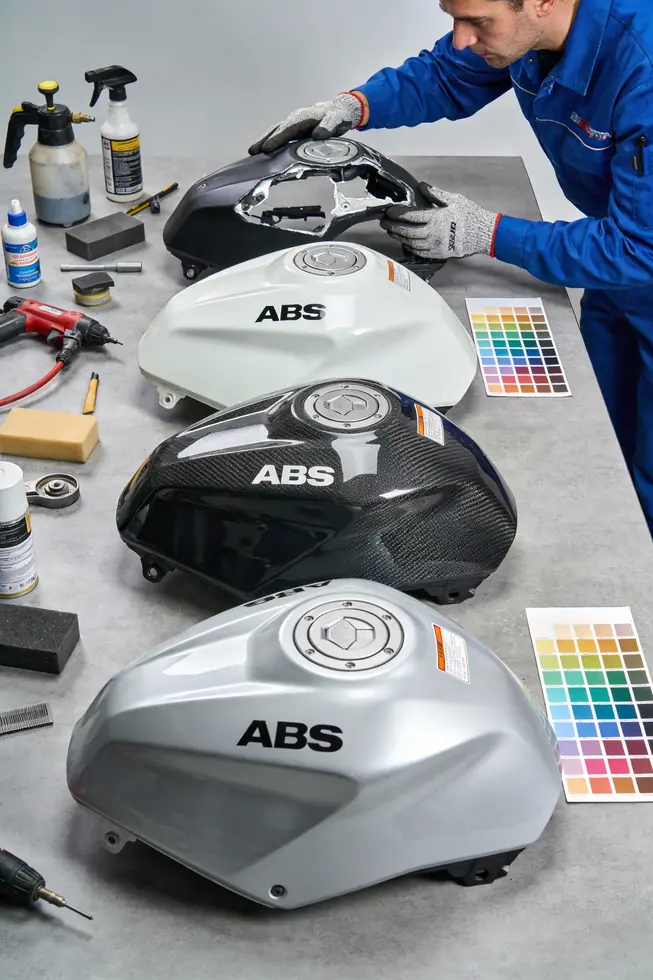
The technological foundations of preparing and assessing motorcycle fairings translate visual impressions into objective, repeatable data that guide every repair decision. This foundation is not a collection of isolated tricks; it is a cohesive workflow that spans materials from ABS and fiberglass to carbon fiber and painted substrates, ensuring consistency across inspection, repair planning, and repaint readiness. Visual inspection sets the tone for reliability. With standardized lighting and a neutral background, tiny cracks, crazing, and edge delamination become detectable, even when they are hairline or hidden beneath ragged paint. Every defect is labeled, mapped on a damage chart, and photographed for the job file and for clear customer communication. This record becomes the backbone of scope, risk, and time estimates, reducing rework and aligning expectations.
Dimensional and fit assessment then transforms those observations into measurable consequences. Digital calipers quantify boss diameters and hole spacing; feeler gauges and straightedges verify seam alignment; contour gauges capture the fairing’s profile for template work. When available, 3D scanning produces precise meshes that can be compared against a reference or CAD model, clarifying whether a deformation can be repaired in place or requires replacement. Non-destructive testing complements this data, especially on high-value or safety-critical parts. A simple tap test can reveal delamination, while ultrasound or phased-array methods uncover subsurface flaws. Infrared thermography highlights voids under coatings, guiding targeted repair rather than blanket overhauls. For plastics, quick solvent and heat-sensitivity tests help identify resin types so adhesive and weld parameters are appropriate, avoiding mismatches that undermine strength.
Surface preparation technologies bridge assessment and repair. Operators use a deliberate progression of abrasives and techniques: bulk shaping with orbital tools, refined edge work with detail sanders, and flatness checks with sanding blocks. Dry and wet sanding are balanced to control heat and dust, with micro-abrasive blasting reserved for textured areas or stubborn coatings. This careful prep creates the receptive surface required for adhesion and contour fidelity. Chemical preparation and compatibility testing then verify cleanliness and bonding potential: cleaners and degreasers remove contaminants, adhesion promoters condition the substrate, and lightweight patch tests confirm that primers and adhesives will hold without peel or distortion.
Joining and repair technologies must align with material behavior and service demands. Thermoplastic welding, structural bonding, and layup repairs each require specific surface roughening, controlled cure cycles, and post-repair finishing to restore strength and geometry. Finally, paint and clearcoat preparation defines the final feel and visibility of the repair. Surface cleanliness, primer compatibility, and disciplined sanding set the stage for color match and gloss. For practitioners seeking practical guidance that translates theory into field success, industry literature and case studies offer concrete examples of the assessment-to-repair workflow, such as the Kings Motorcycle Fairings blog. Kings Motorcycle Fairings — News
2. Costs, Chains, and Choices: The Economic Landscape of Motorcycle Fairing Repair
Beyond the benchwork of preparation and repair methods, the economics of restoring a fairing frame the decisions riders make after a crash. DIY repairs using adhesive kits and plastic-welding techniques promise substantial savings when compared with full panel replacement or professional labor. In typical moderate-damage cases, the cost delta often falls roughly in the 50 to 80 percent range, depending on the extent of cracking, tab damage, and the material involved. This economic benefit is a key driver for preserving original fairings, especially when labor and shipping for OEM parts would otherwise erode value. The goal is to recover function and appearance while maintaining the bike’s built identity.
Supply chain dynamics intensify the decision. Global markets influence the availability of compatible repair components and replacement panels. Large manufacturing hubs with low labor costs can drive down prices for aftermarket pieces and repair kits, expanding options for riders who cannot source expensive OEM shells. A modular repair approach—targeted fixes on cracked tabs, small chips, or failing mounts—reduces dependence on whole-fairing replacements and improves resilience against parts shortages. For shops and individual enthusiasts, this translates into faster turnarounds, lower inventory risk, and the possibility of offering refurbished panels as a budget option. The ripple effect supports a broader range of riding styles, from urban commuters to off-road enthusiasts.
Material choice also reshapes the economic calculus. ABS-based fairings are generally more forgiving on repairs and cheaper to replace or mend than carbon fiber sets, which can carry premium prices and different longevity risks, such as UV exposure or cracking under flex. When a repair would require extensive re-shaping or protection layers, the cheaper substrate often makes economic sense—even if a carbon-fiber alternative could offer marginal weight or stiffness benefits on high-end bikes. The critical test remains whether a fairing is repairable at a reasonable cost or should be totaled. If the repair burden nears the fairing’s actual cash value, replacing the part or the bike may be the smarter choice, and insurance handling will hinge on documentation.
Practically, a staged decision framework helps riders and shops. First, assess damage and gauge repairability. Next, estimate kit-based repair costs and compare them with the fairing’s ACV and any potential replacement. Consider finish durability, color matching, and UV resilience that affect long-term value. Documentation matters: keep records of damage, repairs, and any upgrades for insurance and resale. The growing availability of affordable, regionally produced components further improves access and keeps DIY options viable during gaps in the supply chain. Framed this way, the repair choice integrates technical feasibility with economic realities and the wider chapter context. It also reflects how local shops and DIY communities sustain access during parts shortages.
For a practical at-home procedure, see How to repair minor bike fairing.
3. From Workshop to World: Geopolitics and Society in Motorcycle Fairing Repair
Geopolitics rarely enters the workshop when a fairing cracks. The literature on motorcycle fairing repair focuses on materials, bonds, curing times, and finishes. Explicit geopolitical or societal context is largely absent, not because it is unimportant, but because scholarly attention has centered on technique and performance. That absence does not prove those factors do not matter; it simply notes where the sources stop. The repair act nonetheless sits at the edge of consumer culture, local economies, and environmental responsibility, and these relations deserve acknowledgement even when the data are sparse.
On the supply side, regional differences in material access and manufacturing rhythms can shape how riders approach repair. In communities with maker spaces or repair clubs, riders often lean toward methods that emphasize reuse and learning. Skill-sharing routines—crack preparation, reinforcement techniques, and finishing—become informal pedagogy that keeps older bikes on the road. Where replacement parts are cheap and plentiful, the economic calculus may tilt toward quick repairs or direct replacement, altering how often techniques like plastic welding or fiberglass layups are used. Such divergence shows how practice travels differently even when core methods remain the same.
Environmental considerations add a cross-border layer. Repair, when well executed, reduces waste and extends a fairing’s life, aligning with sustainability goals. The environmental payoff depends on meticulous surface prep, proper curing, and durable finishes. A poor repair can undermine both appearance and integrity, diminishing the environmental benefits. These procedural details matter because they shape whether repair remains a viable option over replacement, and they influence riders’ perceptions of long-term ownership.
Economic pressures color the decision to repair. In some locales, time constraints and hidden costs make a full fix impractical; in others, weekend DIY sessions become part of a rider’s identity and community participation. The social dimension—mentoring, documenting methods, sharing results—grows in many circles, knitting repair into local culture even as it remains under-evaluated in geopolitical terms. For readers seeking practical anchors within this discussion, consider how regional availability and trust in local suppliers influence which tools and kits riders actually use. See the C62 category for a tangible point of reference. C62 category
Final thoughts
In the lifecycle of a professional motorcycle repair operation, a disciplined approach to fairing repair yields dependable outcomes and strengthens customer trust. Preparation and assessment set the stage for material-specific methods, ensuring bonds are durable and finishes are cosmetically pleasing. ABS plastic repairs benefit from bonding and plastic welding methods that restore strength while preserving OEM fit, whereas fiberglass fairings require meticulous lamination and finishing to achieve a seamless appearance. General plastic cracks can be effectively addressed with welding strategies that provide robust seams and reliable back-up layers. Finishing, safety protocols, and clear replacement considerations cap the workflow, balancing aesthetics, safety, and economic realities. By standardizing these steps, a shop can reduce rework, shorten turnaround times, and protect margins—all while delivering high-quality results that keep riders satisfied and returning for future service or upgrades.
Upgrade your ride with UltimateMotorX’s premium motorcycle fairings—durably crafted, precision-fitted, and stylish. Meeting OEM standards for easy installation, our collection suits upgrades or replacements. Shop now for fast shipping, secure checkout, and expert support. Give your bike the ultimate quality it deserves!
About us
At UltimateMotorX, we’re rider-founded experts in top-tier motorcycle fairings. We source premium materials, partnering with trusted manufacturers for perfect fits and durability. Enjoy expert advice, hassle-free returns, and seamless shopping. Ride with confidence—style and quality guaranteed!